
Alexandria Sightseeing Guide 2026 | Top Attractions & Travel Tips with Traviaz
Perched along Egypt’s glittering Mediterranean coast, Alexandria blends ancient history with coastal charm, offering travellers a unique sightseeing experience that feels both timeless and vibrant. Once the cultural capital of the ancient world, the city still holds the spirit of Cleopatra and Alexander the Great in every corner—from its majestic sea views to its remarkable archaeological treasures. Whether you’re strolling along the scenic Corniche, exploring centuries-old monuments, or discovering hidden gems that tell stories of Egypt’s Greco-Roman past, Alexandria sightseeing promises a perfect mix of culture, history, and seaside relaxation.
If you’re ready to explore Egypt’s most captivating coastal city, plan your journey today with Traviaz Group and uncover the wonders of Alexandria through expertly guided tours designed for curious travelers and history lovers alike.
Top Alexandria Sightseeing Attractions You Must Visit
1. Bibliotheca Alexandrina—The Modern Jewel of Knowledge
Overview:
The Bibliotheca Alexandrina is more than just a library—it’s a cultural landmark that revives the spirit of the ancient Library of Alexandria. Opened in 2002, it’s one of the largest and most advanced libraries in the Middle East and a hub for learning, art, and technology.
Architecture and Design:
The building’s circular structure, tilted toward the Mediterranean Sea, symbolizes the sun rising on knowledge. Its granite façade is engraved with over 120 scripts from around the world, representing the unity of human culture and learning. The main reading hall stretches over 70,000 square meters, flooded with natural light that creates a serene study environment.
Museums and Exhibitions:
Inside the complex, visitors can explore multiple museums such as the Antiquities Museum, the Manuscripts Museum, and the Sadat Museum, all showcasing artifacts that link Egypt’s ancient and modern history. The Planetarium offers an immersive experience for astronomy enthusiasts, while the art galleries host international exhibitions throughout the year.
Visiting Tips:
- Plan for 2–3 hours to explore fully.
- Visit early in the morning to avoid crowds.
- Guided tours are highly recommended for a deeper understanding of the architecture and symbolism.
2. Catacombs of Kom El Shoqafa—The Underground City of the Dead
Historical Background:
Dating back to the 2nd century AD, the Catacombs of Kom El Shoqafa are one of Alexandria’s most fascinating archaeological sites. Discovered accidentally in 1900, this labyrinth of tombs, statues, and carvings beautifully combines Pharaonic, Greek, and Roman elements—a perfect reflection of Alexandria’s multicultural identity during the Roman period.
What to See Inside:
Visitors descend a spiral staircase leading to three underground levels. The highlight is the central funerary chamber, adorned with carvings of gods like Anubis depicted in Roman armour—a rare blend of two civilizations’ artistic styles. The complex also includes banquet halls used for funeral rituals and walls decorated with symbolic reliefs of the afterlife.
Cultural Significance:
The catacombs illustrate how Alexandrians viewed death not as an end but as a passage to eternity. Their art fuses Egyptian beliefs in the afterlife with Roman aesthetics, making this site a unique fusion of cultures that cannot be found elsewhere in Egypt.
Visiting Tips:
- Wear comfortable shoes; the steps are steep and can be slippery.
- Bring a flashlight or use your phone’s light for darker chambers.
- Photography is allowed, but flash should be avoided to preserve the wall carvings.
3. Citadel of Qaitbay – Guardian of the Mediterranean
Overview:
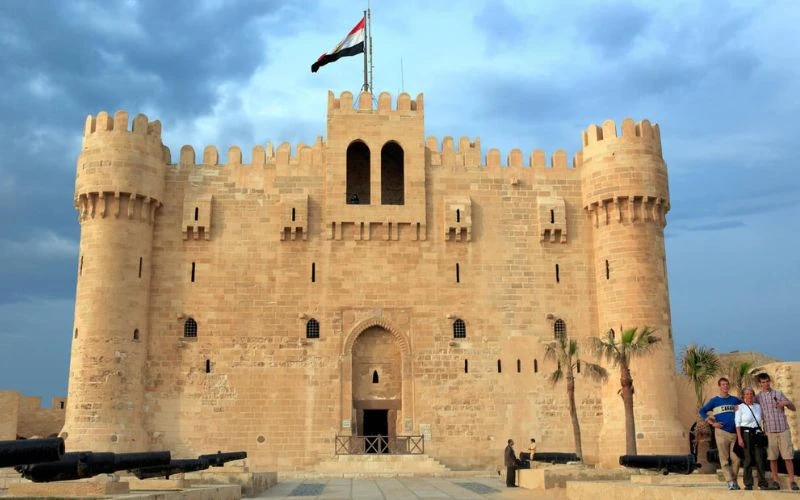
The Citadel of Qaitbay, built in 1477 by Sultan Al-Ashraf Qaitbay, stands proudly on the ruins of the legendary Lighthouse of Alexandria—one of the Seven Wonders of the Ancient World. It served as both a fortress and a naval defence point, protecting Egypt’s northern coast from invaders.
Architecture and Features:
The citadel is a masterpiece of Mamluk military architecture, with thick stone walls, narrow corridors, and high towers offering sweeping views of the Mediterranean. Inside, visitors can explore the main courtyard, ancient weapon chambers, and small museums showcasing maritime artifacts and models of ships.
Panoramic Views and Atmosphere:
Walking along the fortress ramparts, you’ll be surrounded by sea air and breathtaking views of the harbour. Fishermen still cast their nets along the rocky coast, blending the timeless with the present. The sunset from the citadel’s towers is particularly unforgettable.
Visiting Tips:
- Ideal visiting time: late afternoon, to catch the golden hour light.
- Combine your visit with the nearby Abu al-Abbas al-Mursi Mosque or a seafood lunch along the harbour.
- The site is family-friendly but has uneven surfaces—wear sturdy shoes.
4. Pompey’s Pillar and the Serapeum—Alexandria’s Towering Symbol
Historical Background:
Pompey’s Pillar is one of the most iconic landmarks in Alexandria, built around 297 AD in honour of Emperor Diocletian. Despite its name, it has no link to the Roman general Pompey. The monument stands on the ruins of the ancient Serapeum—a grand temple dedicated to the Greco-Egyptian god Serapis, symbolizing unity between Greek and Egyptian cultures during the Hellenistic period.
What to See:
The massive red granite column rises nearly 30 meters high and weighs over 300 tons, making it one of the tallest ancient monoliths still standing today. Around the site, visitors can also explore the remains of the Serapeum, including two sphinxes from the time of Ramses II and underground passages that once formed part of the temple complex.
Why Visit:
The site offers a powerful glimpse into the grandeur of ancient Alexandria and the religious fusion that defined its culture. Standing at the base of the pillar, you can almost imagine the magnificent temple that once surrounded it.
Visiting Tips:
- Visit in the late afternoon for beautiful lighting on the granite.
- Combine your trip with a visit to the nearby Catacombs of Kom El Shoqafa.
- Bring water and sunscreen, as the site is open and exposed to the sun.
5. Montazah Palace and Gardens—The Royal Escape by the Sea
Overview:
Montazah Palace and its lush gardens form one of the most beautiful and peaceful places in Alexandria. Built in the early 20th century by Khedive Abbas II, the palace blends Turkish and Florentine architectural styles and overlooks the Mediterranean, offering stunning sea views.
What to See:
Visitors can stroll through the vast Montazah Gardens—nearly 150 acres of manicured lawns, palm trees, and flowerbeds leading down to private coves and beaches. Although the palace itself is not open to the public, the gardens provide a perfect setting for a picnic or an afternoon walk. Along the promenade, cafés and seaside restaurants serve fresh seafood with unbeatable views.
Why Visit:
Montazah is ideal for families, couples, or anyone seeking a relaxing escape from the city’s bustle. It combines royal heritage, natural beauty, and modern leisure facilities, making it one of Alexandria’s top attractions.
Visiting Tips:
- Arrive early in the morning or during sunset for the best light and fewer crowds.
- Entry requires a small ticket fee.
- Wear comfortable shoes—the park is huge and perfect for long walks.
6. Royal Jewellery Museum—A Glimpse into Egypt’s Regal Elegance
Historical Background:
Located in the upscale Zizinia district, the Royal Jewellery Museum is housed in the former palace of Princess Fatma Al-Zahra, a member of Egypt’s royal family. The building itself is a masterpiece of architecture, featuring stained-glass windows, marble staircases, and gilded ceilings.
What’s Inside:
The museum’s collection showcases the exquisite jewellery and personal belongings of the Muhammad Ali Dynasty—the rulers of Egypt from the early 19th century until 1952. You’ll see diamond-encrusted crowns, emerald-studded watches, golden hairpins, and decorative boxes. Every piece reflects the royal family’s refined taste and the craftsmanship of the time.
Why Visit:
It’s one of the most underrated attractions in Alexandria, offering a rare opportunity to see the luxury and artistry that defined Egypt’s monarchy. The museum perfectly balances elegance and history in a beautifully preserved setting.
Visiting Tips:
- Photography is allowed without flash—bring a good camera to capture the interiors.
- The museum is fully air-conditioned, making it a great midday stop.
- Allocate 60–90 minutes to enjoy the exhibits at a relaxed pace.
7. Alexandria National Museum – The Story of a City Through Time
Overview:
The Alexandria National Museum is one of the most comprehensive cultural landmarks in the city, offering visitors a journey through over 2,000 years of history. Located in an elegant Italian-style mansion once owned by a wealthy merchant, the museum features more than 1,800 artifacts that tell the story of Alexandria from its ancient beginnings to the modern era.
What to See:
The museum is divided into three floors, each representing a different era of Egyptian history.
- Basement: Focuses on Pharaonic antiquities, including beautifully carved statues and ancient burial artifacts.
- First Floor: Highlights the Greco-Roman period with statues of gods, coins, and artifacts recovered from underwater excavations around Alexandria’s harbour.
- Second Floor: Showcases Islamic and Coptic artifacts, royal jewellery, and 19th-century decorative pieces that represent the cosmopolitan character of Alexandria.
Why Visit:
It’s the perfect place for anyone who wants to understand Alexandria’s evolution across time—from pharaohs to Greeks, Romans, and modern Egyptians. The museum beautifully weaves art, culture, and archaeology together in one immersive experience.
Visiting Tips:
- Plan for about 1.5 to 2 hours to explore the museum comfortably.
- Descriptive labels are available in English and Arabic.
- Photography is allowed but without flash.
8. Abu Al-Abbas Al-Mursi Mosque – The Spiritual Heart of Alexandria
Overview:
The Abu Al-Abbas Al-Mursi Mosque is one of Alexandria’s most important religious and architectural landmarks. Built in 1775 over the tomb of the revered Andalusian Sufi saint, it serves as a spiritual center and a masterpiece of Islamic architecture.
Architecture and Design:
The mosque’s design blends Mamluk and Andalusian influences, featuring towering minarets, intricate arabesque patterns, and stunning domes. Inside, the mosque glows with natural light filtering through stained-glass windows, illuminating the fine marble details and ornate calligraphy adorning the walls.
Cultural Importance:
It’s not only a place of worship but also a symbol of Alexandria’s multicultural identity. Pilgrims and visitors come from all over Egypt and North Africa to pay their respects. During festivals, the mosque’s courtyard becomes a gathering place filled with spiritual chants and local celebrations.
Visiting Tips:
- Modest dress is required; women should cover their hair.
- Visit in the morning or at sunset to enjoy the peaceful ambiance.
- The mosque is located near the Citadel of Qaitbay—ideal for a combined visit.
9. Abu Mena Heritage Site – Echoes of Early Christianity
Historical Background:
Located about 45 km southwest of Alexandria, Abu Mena is one of Egypt’s most significant Christian archaeological sites and a UNESCO World Heritage Site. It dates back to the 4th century AD and was once a major pilgrimage centre dedicated to Saint Menas, a revered Egyptian martyr.
What to See:
The site includes the ruins of a large basilica, baptisteries, residential quarters for pilgrims, and ancient cisterns used for holy water. Although much of the site lies in ruins due to groundwater damage, ongoing conservation efforts are preserving its unique structures and mosaics.
Religious and Cultural Significance:
Abu Mena reflects Egypt’s early Christian heritage and the spread of monastic life in the desert. Pilgrims once travelled here from across the Mediterranean to seek blessings and healing, making it one of the earliest Christian pilgrimage centres in the world.
Visiting Tips:
- The site is best visited with a guide who can explain its complex history.
- Wear sturdy shoes, as the terrain is uneven.
- Combine your trip with a day excursion from Alexandria for an educational and spiritual experience.
Best Time to Visit Alexandria
Seasonal Overview:
Alexandria enjoys a mild Mediterranean climate all year round, but the best time to visit depends on the kind of experience you’re looking for.
- Spring (March–May): Perfect for sightseeing and walking tours. The weather is pleasantly warm, and the gardens of Montazah are in full bloom.
- Summer (June–August): The busiest season, when locals and tourists flock to the beaches. Expect lively vibes and longer daylight hours—ideal for sea lovers, though it can be crowded.
- Autumn (September–November): Perhaps the best time to visit. The weather is cooler, the crowds have thinned, and the sea is still warm enough for swimming.
- Winter (December–February): Cooler and quieter, but still enjoyable for cultural exploration, especially museums and indoor attractions.
Travel Tip:
For the perfect balance between comfort and excitement, plan your Alexandria trip between March and early June or September and November, when the city offers both charm and comfort without the summer rush.
Travel Tips for Alexandria Sightseeing
Getting Around:
Alexandria is easy to explore by taxi or Uber, and the city’s Corniche makes for a scenic walk. For those wanting a local experience, trams are a charming and inexpensive option—a nostalgic reminder of Alexandria’s colonial past.
Where to Eat:
Seafood is the highlight here. Visit the harbour restaurants near Qaitbay Citadel or Montazah for fresh catches. Don’t miss the traditional sayadeya dish—fish cooked with rice and caramelized onions. For dessert, try local favourites like konafa and basbousa with Egyptian coffee.
What to Wear:
Light cotton clothing is ideal most of the year, with a light jacket for cool evenings. Comfortable walking shoes are a must, especially if you’re exploring historical sites or Montazah Gardens.
Where to Stay:
If you want sea views, choose hotels along the Corniche. For a quieter atmosphere, stay near Montazah or Stanley. Central Alexandria is perfect for visitors who want to be close to museums and shopping areas.
How to Plan Your Alexandria Sightseeing Tour
Choosing the Right Itinerary:
A well-balanced tour should include both cultural landmarks and time for relaxation by the sea. Start your day at the Bibliotheca Alexandrina and National Museum, then head toward Qaitbay Citadel for panoramic views. End the afternoon at Montazah Gardens for a peaceful stroll or a sunset picnic.
Why Choose Traviaz Group:
For those who prefer a professionally organized experience, Traviaz Group offers guided tours that make exploring Alexandria effortless and enriching. You’ll enjoy modern transportation, expert Egyptologists, and well-planned itineraries that allow you to experience more in less time.
Plan your Alexandria sightseeing adventure with Traviaz Group today!
Conclusion: A City Where History Meets the Sea
Alexandria is more than just Egypt’s second-largest city—it’s a living story of civilizations, where Greek philosophers, Roman emperors, and Egyptian kings once walked. Between its ancient ruins, golden beaches, and vibrant culture, every corner offers a new discovery.
Whether you’re exploring the mysteries of Kom El Shoqafa, relaxing at Montazah Gardens, or admiring the majesty of the Qaitbay Citadel, Alexandria promises moments that stay with you forever.
Ready to uncover Egypt’s coastal gem?
Book your Alexandria Sightseeing Tour with Traviaz Group today and experience the perfect blend of history, culture, and the Mediterranean breeze.