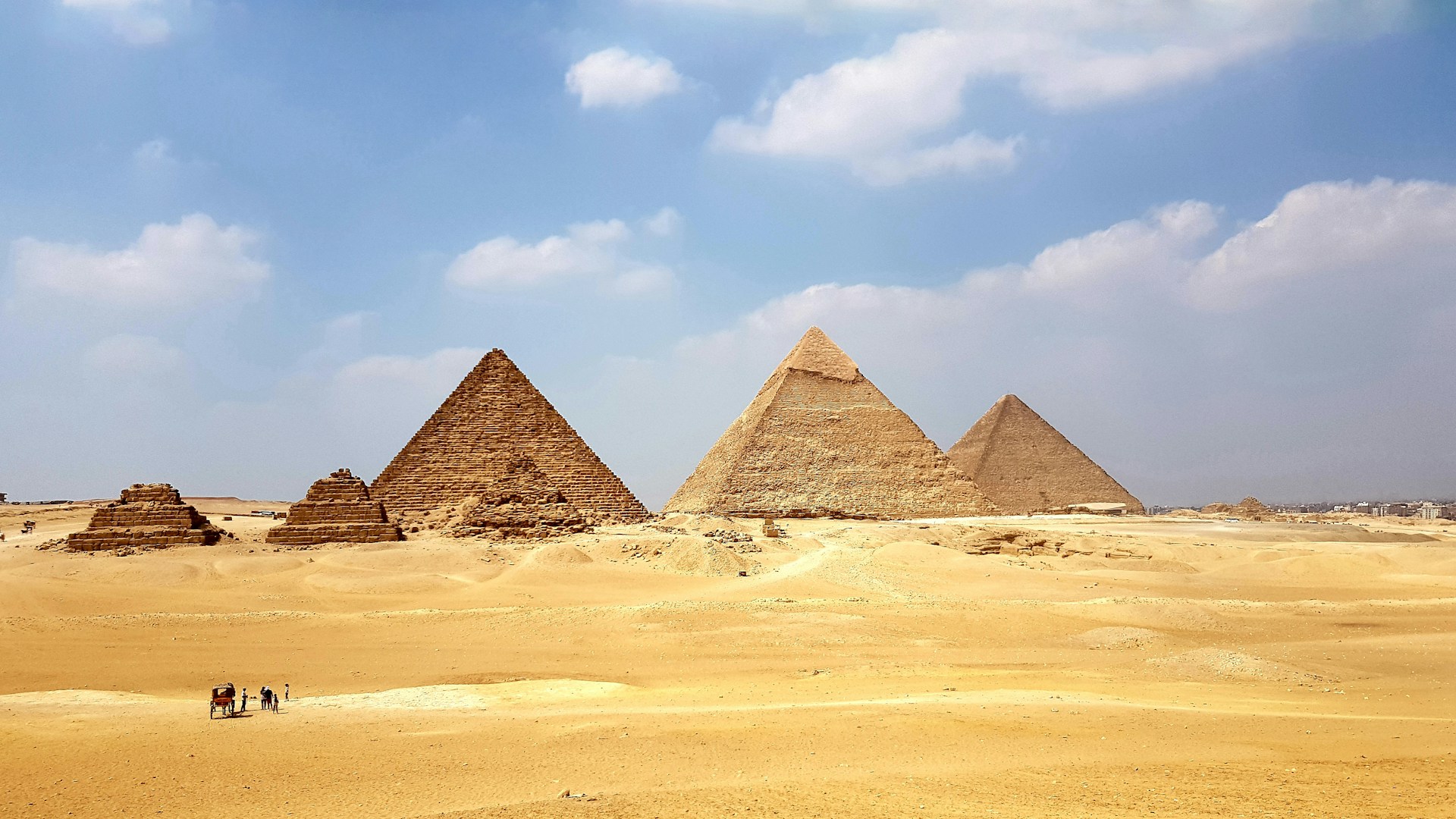
You can start at the most obvious site in Cairo, the Giza Plateau. The complex is one of the surviving prehistoric monuments built during Egypt’s Old Kingdom between 2686 and 2181 BC. At that time, each Pharaoh (Khufu, Khafre, and Menkaure) built a pyramid as their final resting place.
At that time, death was widely believed to be part of a journey to paradise, known as the fields of reeds (Aaru). These pyramids were meant to protect their mummies so their Ka (spirit) could return to the preserved body and ascend into the afterlife. Around the pyramids, you would see the valley temples where the Pharaohs were prepared and mummified to begin the sacred process.
These are the places you will explore at the Giza Complex. Overall, it is a place you want to start with because it's so rich in history.
If you loved exploring the Giza Complex, then you’d want to see the Saqqara Necropolis too. What makes Saqqara so special in the Pharaonic history is that it houses the very first pyramid ever constructed.
The Step Pyramid of Djosser was built in the 27th century by the architect Imhotep. It wasn’t just called the step for nothing because the tiered monument was the Pharaoh’s stairway into the afterlife.
Apart from the Step Pyramid, there’s also the Serapeum, the Pyramid of Unas and Teti, the Tombs of Nobles, the Imhotep Museum, and the Monastery of Jeremiah on site. It’s safe to say you’ll be spending a whole day in Saqqara, sightseeing and satisfying your curiosity.
After your Saqqara exploration, the next befitting place to visit is Luxor. Not only will you learn about the ancient afterlife belief, but you’ll also discover what continuity looked like to the Egyptians.
There’s no better place to start than at Karnak, the over 100-acre temple complex and currently the largest in the world. Karnak was built over 2000 years ago during the Middle Kingdom, but the development didn’t stop. Over 30 Pharaohs added to it from then throughout the Ptolemaic period.
Luxor Temple is another important site you should visit, and luckily, it’s not far from Karnak. In fact, you can just take a short walk through the connecting walkway, the Avenue of Sphinxes, to arrive there.
The Avenue of Sphinxes is such a significant pathway because Pharaohs passed through it as a ritual to renew their kingship.
The West Bank of Luxor is more about the afterlife of the pharaohs. In ancient Egypt, the people believed so much in life after death that they seriously prepared for it. That is why most ensured they were buried with treasures in guarded places, for a smooth journey crossing over into the afterlife.
When you enter some of these burial sites, like the Valley of the Kings and the Valley of the Queens, you will see reliefs on the walls depicting that journey into the afterlife. Although many of the tombs were later looted and their treasures stolen, the intention behind them meant everything at that time. So you might want to take your time exploring these sites.
From Luxor, go to Aswan to explore the calmer side of Egypt.
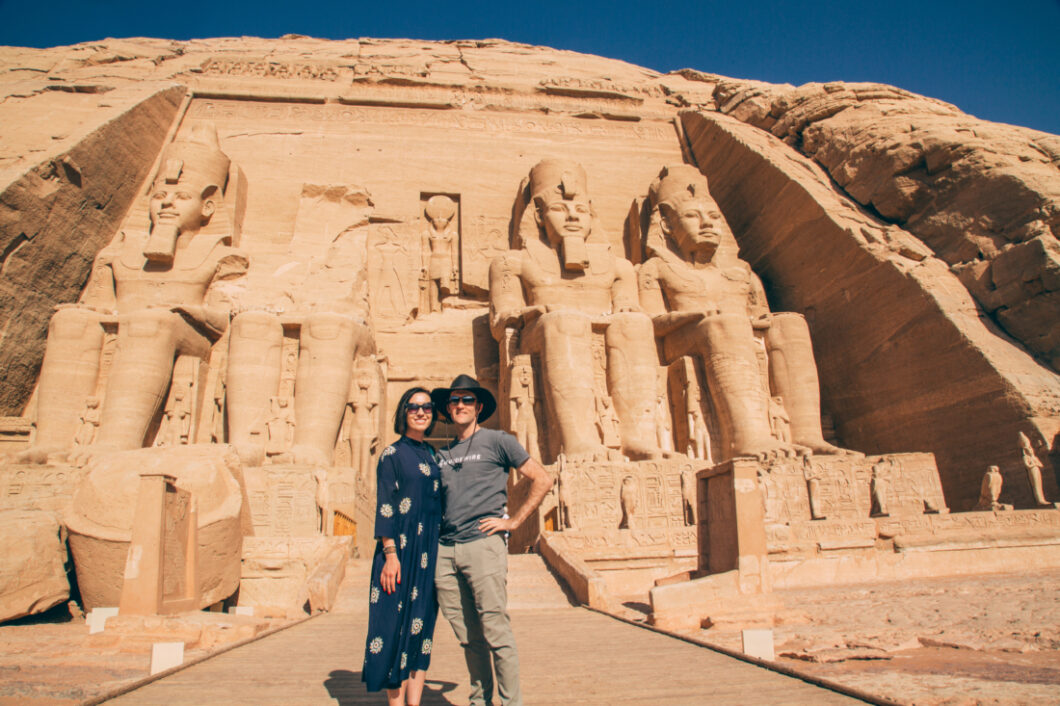
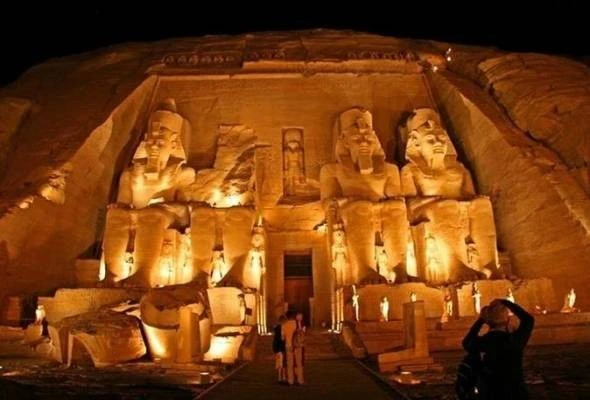
Aswan also has a Pharaonic history you’d find interesting. Some of the places worth visiting are Philae Temple, Abu Simbel Temples, Kom Ombo Temple, Qubbet el-Hwa, Elephantine Island, and Kalabsha Temple.
Welcome to Egypt! On your arrival at the Cairo International Airport, the friendly TRAVIAZ representative will be there to receive you and facilitate your arrival process. You will have someone to help you with the formalities of arrival, passport control, and handling of luggage so that you can start your journey in a comfortable and stress-free environment.
Upon leaving the terminal, you will be driven in a private air-conditioned vehicle to your luxury hotel in Cairo. Once you have checked in, relax, shower, and get comfortable in your place of stay before the fun-filled days begin.
During the evening, you can have one of the most unforgettable experiences of Cairo- a Nile River Dinner Cruise. Board a well-decorated floating restaurant and sail through the legendary Nile with the city lights glistening and sparkling around you. Enjoy freshly cooked meals and live performances that bring the Egyptian culture to your life, such as an elegant belly dancing show, and the color- spinning show of Tanoura, which is based on the folklore.
Following this stress-relieving and tranquilizing introduction to Egypt, get back to your hotel, where you can have a relaxing stay overnight.
Meals: Dinner. | Overnight: In a hotel in Cairo.
After breakfast, you will meet your private Egyptologist guide arranged by Traviaz and begin a full-day tour of Egypt’s most iconic archaeological sites, starting with the world-famous Giza Plateau.
Your tour starts at the Giza Pyramids Complex, home to the world-famous pyramids built during Egypt's Fourth Dynasty. Explore the biggest and oldest of the three pyramids, the Great Pyramid of Khufu constructed between 2580- 2560 BC. Once risen to a height of approximately 146 meters, this remarkable monument embodies the genius of engineering and architectural accuracy with which ancient Egypt was built.
The Great Sphinx of Giza is a magnificent structure constructed out of limestone that has the body of a lion and also the face that is believed to represent Pharaoh Khafre. Our guide will explain its symbolism, mysteries, and the famous Dream Stele of Thutmose IV, which narrates a legend of the young prince and the dead Sphinx.
The next visit is a trip to the Valley Temple, an essential part of the Giza funerary complex.
This highly preserved building was utilized in rituals of purification and mummification and provides a great deal of information about the mummification and burial practices and religious beliefs of ancient Egypt.
The Step Pyramid of Djoser is considered to be the world’s earliest large-scale stone monument. The monument was built between 2670 BC and 2650 BC This six-tiered structure began as a traditional mastaba before being expanded into a revolutionary stepped design for Pharaoh Djoser’s funerary complex.
Designed by the brilliant architect Imhotep, the pyramid marked a major turning point in ancient Egyptian architecture and royal burial traditions.
Located within the Saqqara is a complex that includes courtyards, temples, ceremonial structures, and symbolic shrines that reflect the religious beliefs of the Old Kingdom.
End your tour with a visit to Memphis. Memphis was once the capital of ancient Egypt and was founded around 3100 BCE by the legendary king Menes. The city used to be a center of power, religion, and culture, which is why it is also home to magnificent structures like the Great Temple of Ptah and the Temple of Apis. You will also see the amazing statue of Ramses II as you explore the open-air museum- a reminder of how great the city used to be.
Once you are done with your tour, our representative at TRAVIAZ will take you back to your hotel in Cairo so you can unwind after a full day of history and discovery.
Overnight: Hotel in Cairo
Meals: Breakfast, Lunch
After breakfast, you will check out of your hotel and will be transferred to Cairo Airport for your flight to Aswan. Upon arrival, you will meet your private Egyptologist guide arranged by Traviaz and begin your sightseeing tour of Aswan’s main attractions.
Your guided tour will start with a visit to the Aswan High Dam, an impressive engineering landmark that was completed in the 20th century. The dam is very important in controlling the floods along the Nile, generating hydroelectric power, and creating one of the largest artificial lakes in the world, Lake Nasser.
The next stop will be at the Unfinished Obelisk that is located in the ancient granite quarries of Aswan. Queen Hatshepsut commissioned this obelisk and was supposed to be the tallest obelisk ever constructed. During its carving, cracks were found that led to the abandonment of the project, leaving behind the rare and valuable experience of the ancient Egyptian method of stone-cutting.
You will enjoy a sumptuous lunch at a carefully selected local restaurant in Aswan before continuing your tour.
The tour then concludes with a visit to the enchanting Philae Temple, dedicated primarily to the goddess Isis. Dating back to the Greco-Roman period(380-362 BC), this temple is closely associated with the myth of Osiris, his death at the hands of Set, and his resurrection through the devotion of Isis. Philae Temple is, to this day, one of the most ambient and eye-catching places along the Nile.
After your tour, the team will transfer you to your hotel in Aswan for check-in and rest.
Overnight: Hotel in Aswan
Meals: Breakfast, Lunch
After breakfast, you will check out of your hotel and meet your Egyptologist guide arranged by Traviaz. You will be transferred to the train station to travel to Luxor, where you will begin a memorable day exploring the heart of ancient Thebes.
The trip will begin on the West Bank to the renowned Valley of the Kings, the royal cemetery of the New Kingdom ( 1550-1070 BC). Here, you will explore a selection of richly decorated underground tombs belonging to powerful pharaohs such as Tutankhamun, Seti I, and Ramses II. Your guide will tell you about the burial practices, the carvings on the walls, and the beliefs regarding the afterlife that defined this great period in the history of ancient Egypt.
After this, you will see the Colossi of Memnon, two massive seated statues of Pharaoh Amenhotep III that once guarded the entrance to the Theban necropolis. The monuments are iconic and have been in existence on the plain of Thebes more than three thousand years, and they are still one of the most prominent sights in Luxor.
The team will then take you to your hotel in Luxor to rest after the tour.
Overnight: Hotel in Luxor
Meals: Breakfast, Lunch
After breakfast, you will check out of your hotel and will be transferred to Luxor Airport for your flight to Cairo. You will begin a new sightseeing tour arranged by Traviaz.
The Egyptian Museum houses a brilliant collection of artifacts that spans over 5000 years of Egyptian history. Among its priceless treasures are artifacts that had remained undiscovered for over 3,500 years, until the 20th century, when most of them were discovered. The biggest and most valuable collection of ancient Egyptian art can be found in this museum, and it offers a unique and personal glimpse into the life, beliefs, and accomplishments of this great civilization. With your expert guide by your side, the stories behind these masterpieces will vividly come to life.
Continue to the historic Citadel of Salah El Din, a medieval fortress that once served as the seat of Egypt’s rulers. Inside the citadel, you will visit the iconic Mosque of Muhammad Ali. The mosque is renowned due to its large Ottoman-style and alabaster interior. The massive fortress was built in the late 12th century by Sultan Salah El Din Al-Ayyubi to protect Cairo from Crusader attacks.
Because of the strategic location, the citadel served as Egypt’s seat of government for many centuries. During your visit, you will learn about its defensive architecture and the famous Yusuf Well that supplied water to the fortress.
The next stop will be to the impressive Mohamed Ali Mosque. The mosque was built in the 19th century in the classic Ottoman style. The mosque is famous for its soaring domes and sweeping panoramic views across Cairo.
The National Museum of Egyptian Civilization (NMEC) provides an in-depth experience of the history of Egypt that dates back to the prehistoric period up to the modern period.
Visitors can trace the evolution of Egyptian society, culture, religion, craftsmanship, and daily life through the deep selection of galleries revealing the development of the culture over thousands of years. The most notable section of the museum is the Royal Mummies Hall, where families can view the amazingly preserved mummies of some of the most famous kings and queens of Egypt. Located in a majestic and captivating location, the hall gives a strong and reverential insight into the lives and legacies of these mythical rulers.
The tour concludes with a walk along Al Muizz Street, one of the oldest streets in Islamic Cairo, Al-Muizz Li-Din Allah Street. Stunning medieval architecture, mosques, madrasas, and palaces line the street and provide a clear insight into Cairo's Islamic Golden Age.
Then you will end the day with a visit to the well known Khan El Khalili Bazaar, a bustling and vibrant marketplace filled with traditional handicrafts, jewelry, spices, textiles, antiques, souvenirs, and authentic Egyptian street food.
It's the perfect place to explore and absorb the vibrant atmosphere of old Cairo.
At the end of the tour, our professional team at TRAVIAZ will drive you back to your hotel.
Overnight: Hotel in Cairo
Meals: Breakfast, Lunch
After breakfast at the hotel, you will check out from the hotel, and the team will transfer you to Cairo International Airport for your final departure. This concludes your memorable journey through Egypt, filled with history, culture, and unforgettable experiences.
Meals: Breakfast

Embark on a luxurious and exhilarating adventure with Respect Egypt Tours and experience 4 Days in Egypt for Christmas and New Year’s. This extraordinary journey will take you from Luxor to Aswan as you explore the wonders of southern Egypt.
Embark on a 9-day thoughtfully planned Christmas holiday tour across Egypt with TRAVAIZ. Expect to see what the festive seasons look like in historically rich cities like Cairo, Bahariya, Luxor, Aswan, Farafra, and White Desert. Enjoy fun activities like Nile cruises in Christmas-themed boats or feluccas, museum expeditions, hiking, shopping, dining, and lots more.
Enjoy a 7-day Christmas tour with TRAVAIZ, exploring the beautiful cities of Egypt. It features exciting visits to some of Egypt’s historical monuments in Cairo, Luxor, Alexandria, Aswan, and even the Red Sea. Book this thoughtfully created package for a memorable experience you’ll hold on to for a long time.