
Discover the Grand Egyptian Museum: A Journey Through Ancient Wonders
Introduction to the Grand Museum
Imagine standing at the edge of the Giza Plateau, the Great Pyramids rising in the distance, when a vast modern marvel comes into view, the one that brings 5000 years of history vividly to life. This is the Grand Egyptian Museum (GEM), Egypt's most ambitious cultural project and one of the largest archeological museums ever built.
Whether you are a first-time visitor to Egypt, a history Enthusiast or a family looking for an unforgettable educational experience, the GEM offers something truly extraordinary... Something you are sure not to forget anytime soon. The museum is not just a place to see ancient artefacts but a place to experience ancient Egypt in a way never before possible.
The new museum is located just minutes from the Giza Pyramids and is designed to be the new heart of Egypt’s cultural tourism. Inside the museum, there are more than 100,000 artifacts that tell the story of one of the world’s greatest civilizations, from its earliest dynasties to the height of its power. For the first time in history, visitors can explore the complete collection of King Tutankhamun, displayed together in a single, purpose-built space.
The Egyptian government wanted to make a statement by launching the GEM project to build a new institution that would showcase the country’s rich heritage and antiquities and, undoubtedly, delivered on that. They spared no expense in their quest to offer immersive tours that stand out from those of other museums in Egypt. The GEM offers experiences that go far beyond traditional museum displays. Many of the artefacts on show have never been exhibited before, meaning even travelers who have visited Egypt multiple times will find something entirely new to discover.
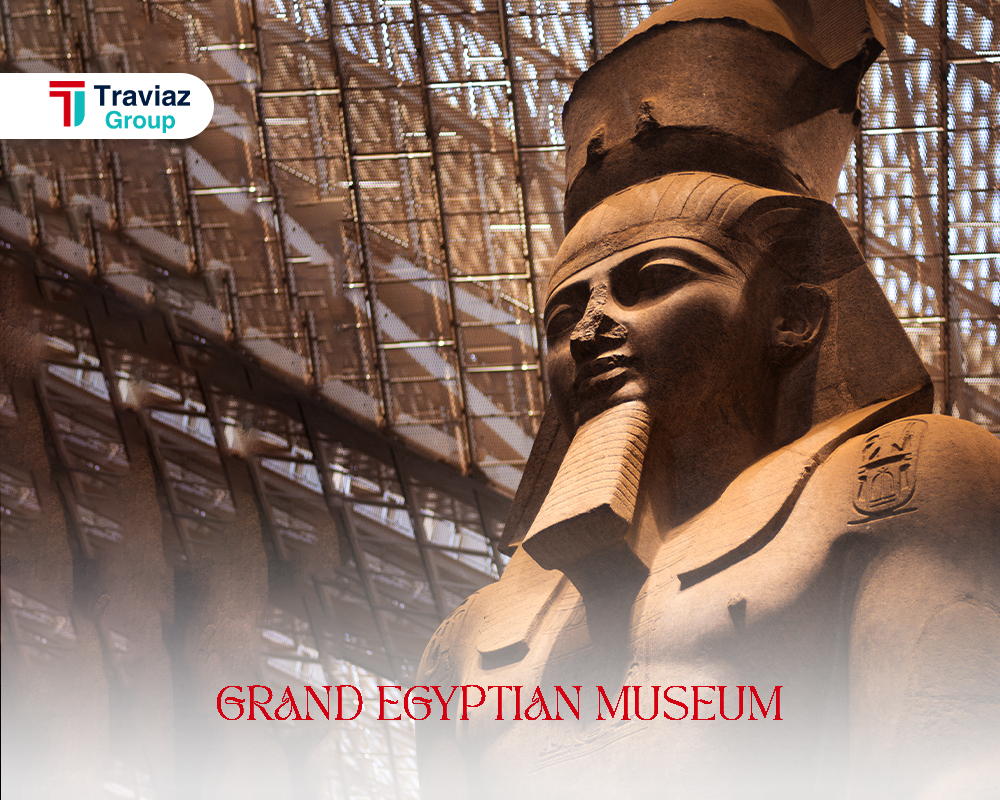
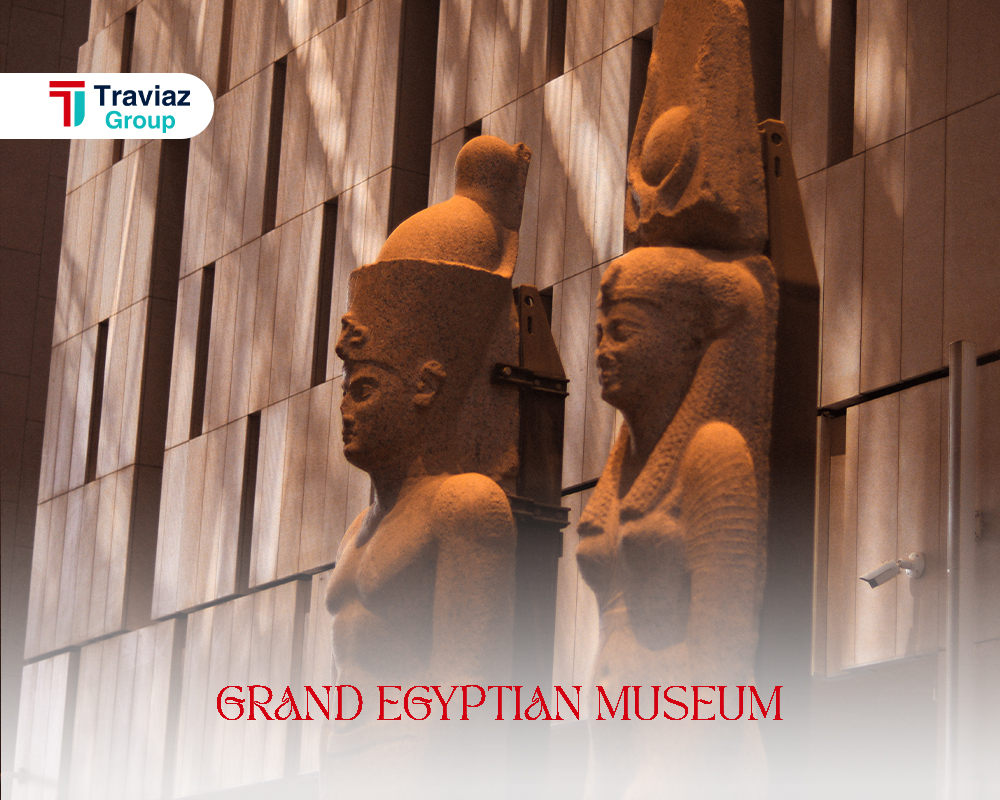
The sense of awe begins before you even step inside. The museum’s striking architecture has a blend of modern design with ancient symbolism, creating a powerful visual dialogue between the past and present... Tempted to include even the future... But let's be modest. As you enter the vast Grand Hall, you’re greeted by a monumental 3,200-year-old statue of King Ramses II, standing as a timeless guardian of Egypt’s legacy. From here, a sweeping grand staircase leads upward, guiding visitors toward the main galleries and signalling the start of an unforgettable journey through history.
Architecture and Design
The Museum's Facade
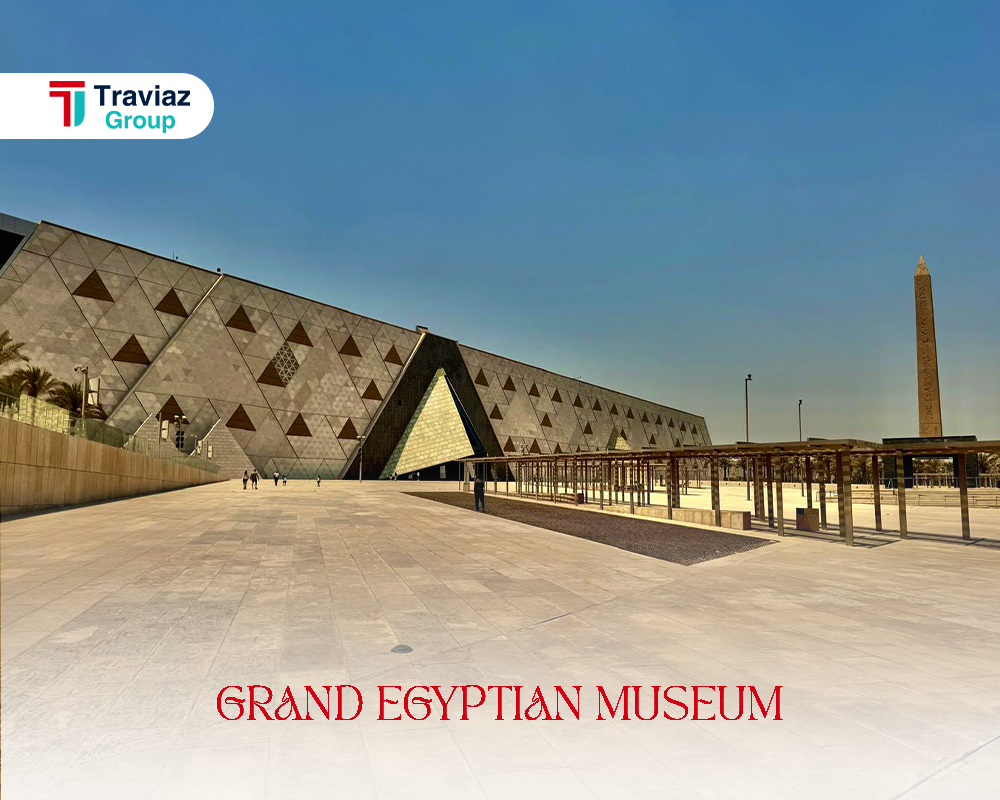
One look at the architecture of the Grand Egyptian Museum, and it becomes clear you’re in for a treat. The sheer size and opulence of its aesthetics make it an exhibition on its own. Whether you’re up close or distant, in the air or on the ground, under the sun or the starlit sky, the museum glitters like a gem in the dusty, brown terrain of the Giza Plateau. Add to that its proximity to the pyramids of Khufu, Khafre, and Menkaure, and its design gains some level of poetic significance. One wouldn’t be acting out of place if they wanted to give the museum’s architecture the same measure of attention as all the beautiful artefacts inside. After all, the design isn’t merely ornamental but is also inspired by ancient Egyptian architecture.
The Grand Egyptian Museum first existed as a concept in the early 90s when Farouk Hosni headed the country’s Ministry of Culture. The project was then officially launched in 1992 under the Hosni Mubarak-led government. However, the actual construction began in 2005 and was completed in 2023, having cost the Egyptian government a whopping sum of $1.2 billion. The GEM stands as one of the most significant cultural projects ever undertaken in the Middle East. It was partially open in October 2024. However, the official opening wasn't until November 2025.
From conception to completion, that’s about 33 years, which comes as no surprise given the conflicts that hindered the project's completion, including conflicts like the Arab Spring and the COVID lockdown. Early in its conception stage, the choice of who to design the museum had rested on an international design competition, the biggest ever held. Several decades later, it’s obvious how Heneghan Peng Architects came out on top. Blending modern and ancient styles was such an impeccable touch. The results: a seamless combination of the Egyptian traditional aptitude for geometry, stones, and wood in architecture, and modern design materials like glass to create a unique and impressive experience.
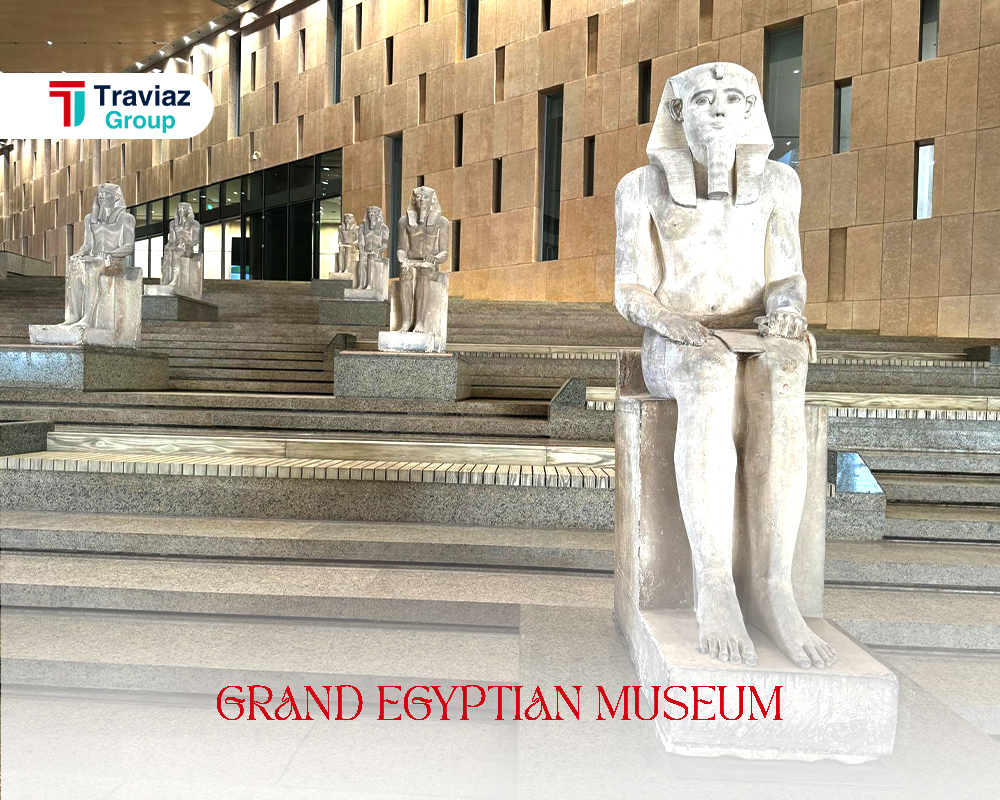
One of the main features is the grand atrium at the entrance. Roofed by a massive skylight, this grand hall is always flooded with natural light, creating an illustrious ambiance for the 11-meter statue of Ramses II transported from Ramses Square in downtown Cairo, and the grand staircase, lined with a procession of statues, that connects the different levels in the museum.
Exhibitions and Collections of a Single Civilization
Spanning an extraordinary 500,000 square metres, the Grand Egyptian Museum ranks among the largest museums on Earth. Let’s put that in perspective for you. If you’re American, that would be the size of roughly 94 football fields. In Europe, that’s about 71 FIFA-standard football fields; large enough to store and exhibit lots of historical objects. Since this site is dedicated to the preservation and display of ancient Egyptian history, it now holds the world record for being the largest museum of a single civilization.
This expansive site is home to 12 galleries, which are organized into four defining eras of Egyptian history: the Predynastic Period, the Old Kingdom, the Middle Kingdom, and the New Kingdom. As far as time machines go, the Grand Egyptian Museum does a great job taking guests back in time to watch Egypt develop. To help achieve this effect, the museum houses a vast collection of artefacts commensurate with its sprawling size. You’ll find numerous antiquities, ranging from monumental statues and intricately carved reliefs to everyday objects such as furniture, tools, jewelry, and ceremonial items, and a host of other items discovered in the tombs and temples of the pharaohs of ancient Egypt.
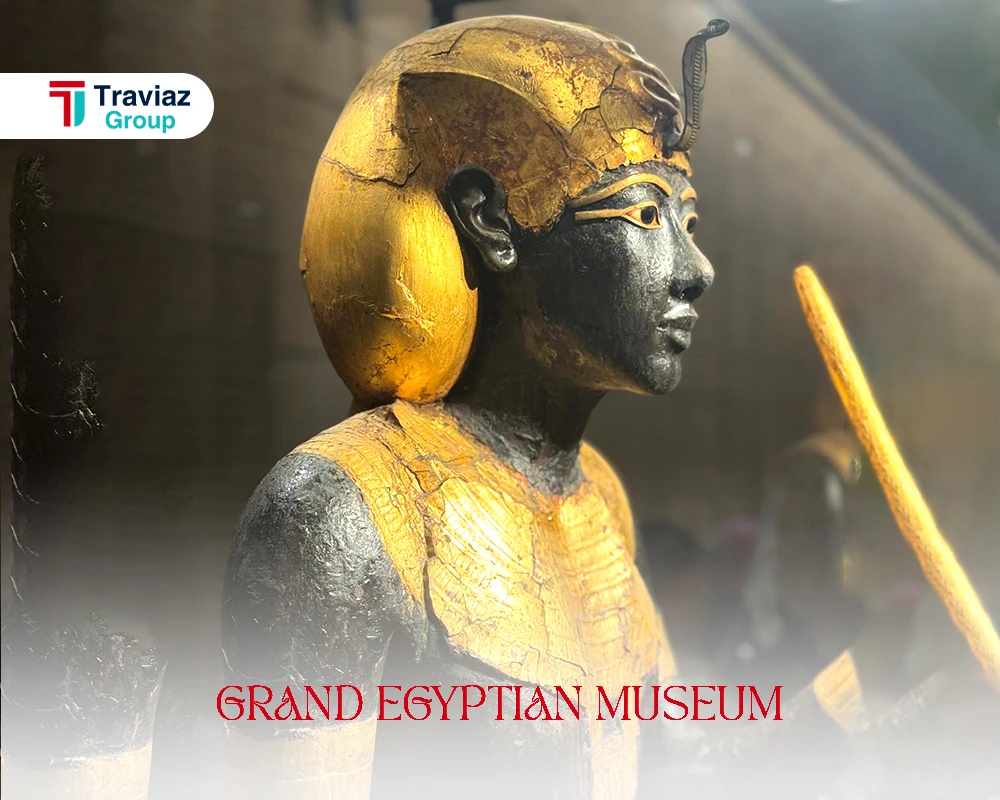
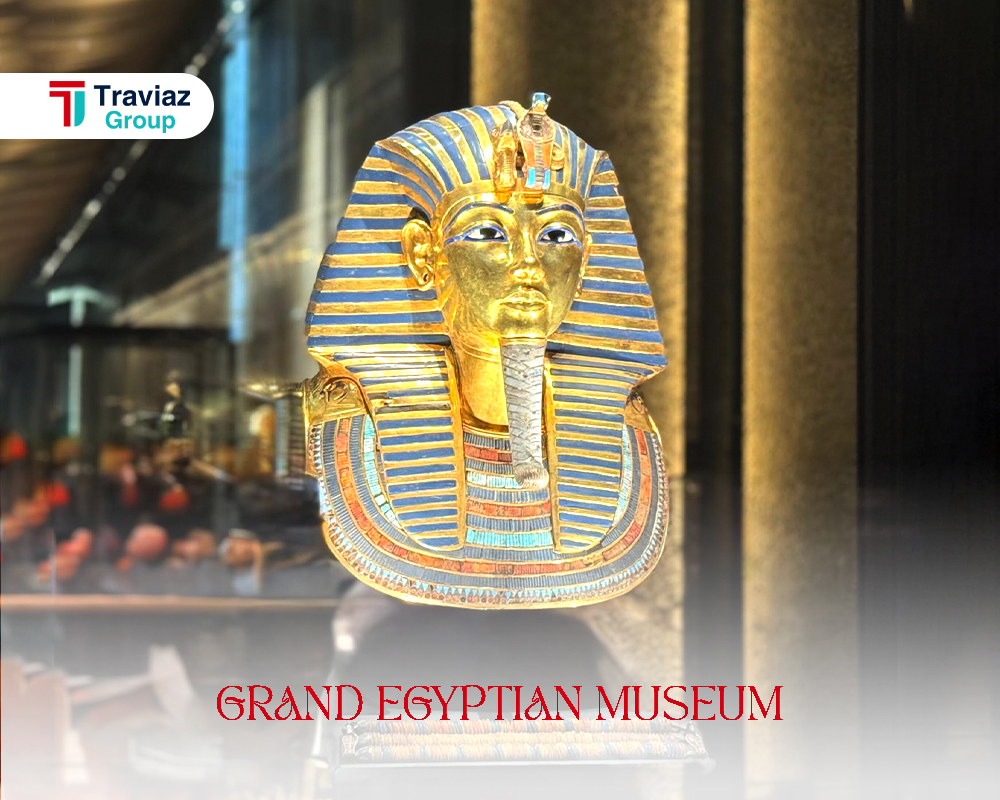
Speaking of Pharaohs, the Grand Egyptian Museum is home to the complete tomb of King Tutankhamun, which is displayed for the first time in a single establishment. Here’s a brief backstory. Tutankhamun was one of a few kings who were worshipped as gods during their lifetime. He ruled in the eighteenth dynasty of ancient Egypt from the age of 9 to about 18 or 19, when he died under mysterious circumstances. Tutankhamun's tomb, discovered in the Valley of the Kings in 1922, contains over 5,000 objects packaged for his journey into the afterlife. Those objects include the funerary mask of solid gold, which you’ve probably seen in The Mummy at least, furniture covered with gold, as well as chariots, weapons, jewelry, toys, and clothes. Tutankhamun might not be one of the most impressive pharaohs, but one of your children might learn a thing or two. You never know.
The grand museum also features a collection of solar boats, wooden ceremonial barges carved from cedar wood. These boats were symbolic constructions meant for pharaohs who wanted to journey across the heavens with the sun god Ra to the afterlife, and they’re part of GEM’s impressive exhibition. One of them is the 140-foot solar boat from King Khufu’s pyramid, also known as the Great Pyramid of Giza. This boat happens to be one of the largest and most impressive ever discovered.
Conservation and Preservation
There’s no doubt the Grand Egyptian Museum is committed to the artistic display of Egypt’s historical heritage. However, beyond its striking exhibitions, the institution is twice as dedicated to the preservation and conservation of its artefacts and antiquities, and owns a state-of-the-art conservation center to this effect.
Opened in 2010 during Phase II of the Grand Egyptian Museum Project, GEM-CC was designed not only to conserve and prepare artefacts for display within the museum, but also to function as a leading research institute for conservation sciences and applied restoration. Its work extends beyond the museum’s walls, providing technical expertise and professional support to institutions and heritage agencies both within Egypt and internationally.
At the heart of GEM-CC is its highly specialized, multidisciplinary team. Expertly trained conservators, scientists, and restorers work across a broad range of materials, including paper, textiles, murals, wood, rare books, papyrus, mummies, human remains, pottery, glass, faience, and stone sculptures. This breadth of expertise allows the centre to address the complex preservation needs of artefacts spanning thousands of years and diverse environmental conditions.
The site, a sprawling 32,000-square-meter area west of the GEM, is connected to the main building by a 200-meter-long tunnel. The conservation center, also known as GEM-CC, contains a total of 19 labs and 6 storehouses, which are divided into 3 lab categories: conservation labs, preventive conservation labs, and documentation labs. These labs are equipped with the latest tech and equipment required to handle every aspect of conservation. They are also manned by a routine of highly trained staff, consisting of excavators and restorers, working arduously to deploy remedial and preventive conservation science to preserve artefacts for future generations.
If you’ve ever wanted to see how these big institutions preserve historical relics that have survived harsh conditions across several millennia, the GEM has one of the largest and most comprehensive international conservation centers in the world, and its doors are wide open. It’s most definitely a cool place to show your children. They also offer regular training and education programs for conservators and restorers. This way, the knowledge required to preserve the country’s heritage survives across millennia, and guests can always count on a thrilling tour whenever they visit.
Visitor Experience
From the Grand Hall to the Grand Staircase
In addition to the preservation and exhibition of Egypt’s ancient tradition, the Egyptian government’s $1.2 billion splurge across 33 years also focused on the visitor experience. Yes, they had you in mind.
The museum wears its aims on its sleeves, and it aims to please. From its grand entrance, architectural opulence blends with historical and cultural facts to give visitors a unique and unforgettable experience, regardless of their age.
Guests can explore the museum’s main galleries, helping themselves to a clean view of the hundreds of thousands of interesting objects on display and the stories they tell. For a much deeper experience of the exhibitions, the museum also offers guided tours. These are led by expert guides who happily furnish visitors with a deeper understanding and discoveries as they journey through the exhibits. Here’s the icing on the cake. Through a mixed-reality experience that incorporates VR technology, guests can relive the construction of the pyramids and learn more about old Egyptian beliefs surrounding burial, death, rebirth, and the afterlife.
The GEM takes things further by offering specialized experiences. For instance, kids might have a much better time if they visit the Children’s Museum. There are lots of hands-on activities and fun programmes prepared to accommodate them and their families. The grand museum is also home to an Education Center, an Arts and Crafts hub, and facilities like dining and shopping. To enlarge the scope of your experience, the GEM also has a couple of gardens. The Palm Garden, Sculpture Garden, and Temple Garden exist for those tiny moments within your grand tour when all you need is to chill and unwind in an outdoor space. The impressive grand hall and atrium are also available for other events and functions. Imagine holding a wedding or conference surrounded by historical significance and architectural wonder on such a grand scale. That's definitely an event you'll never forget.
Community Engagement
Egypt’s Ministry of Culture may have gone all out to cement the GEM’s international appeal and status across time, but it did not forget the importance of maintaining its Egyptian roots. Guests who visit the museum have a chance to engage with the local community in Cairo through a number of community engagement plans. These include a range of programs and activities designed to promote a greater understanding of Egyptian culture and heritage by bridging the gap between the past and the present.
The GEM employs certain strategies, which include collaborating with schools, universities, and some community organizations to make educational resources on cultural and environmental sustainability open to everyone.
The museum also works actively to create an inclusive environment for all visitors. This includes the development of utilities that help the disabled participate in its programs and workshops. It also organizes festivals, concerts, and other events that help foster a consciousness of community and collective ownership among Egyptians and guests. By opening its treasure trove of knowledge, culture, and tradition to everyone, the GEM ensures that the responsibility of preserving Egypt’s antiquities rests equally on all shoulders, including yours.
Conclusion: Experience the Grand Egyptian Museum with Expert Guidance
The Grand Egyptian Museum is more than a place to visit. It is an experience that stays with you long after you leave. Bringing together monumental architecture, world-class exhibitions, and cutting-edge conservation, the GEM offers a rare opportunity to explore Egypt’s ancient heritage in a setting worthy of its global significance. Every element in this museum is designed to leave a lasting impression.
What should truly inspire a visit to the Grand Egyptian Museum is the experience itself. Exploring a site of this scale and depth is far more rewarding when guided by experts who understand its stories and historical context. With professional guidance, the artefacts are no longer just objects behind glass. They become narratives that reveal the beliefs, ambitions, and daily lives of ancient Egyptians.
This is why choosing our well-planned Egypt travel package can make all the difference. Carefully curated tours allow visitors to experience the Grand Egyptian Museum seamlessly, combining guided museum visits with iconic sites such as the Giza Pyramids, Cairo’s historic landmarks, and other highlights of Egypt. From private tours and family-friendly itineraries to in-depth cultural journeys, the right package ensures comfort, insight, and efficient planning throughout the visit.
Whether you are visiting Egypt for the first time or returning to deepen your understanding of its history, the Grand Egyptian Museum deserves a central place in your journey. With tickets now available and the museum fully open, there has never been a better time to experience this landmark destination as part of a thoughtfully designed Egypt tour that lets you focus on discovery while every detail is taken care of.


-webp.webp "Nubian Village Aswan")
-webp.webp "Abu Simbel Day Trip from Aswan")