
Serapeum of Saqqara: The Underground Tomb of the Sacred Apis Bulls
Egypt is known worldwide for its monumental pyramids, majestic temples, and ancient cities that reveal thousands of years of civilization. Yet beyond the most famous landmarks, Egypt also hides extraordinary archaeological sites that remain mysterious and fascinating even today. One of these remarkable places is the Serapeum of Saqqara, an underground complex that continues to intrigue historians, archaeologists, and travellers alike.
Located within the vast necropolis of Saqqara, the Serapeum of Saqqara is a series of underground tunnels that once served as the burial site of the sacred Apis bulls—animals worshipped in ancient Egyptian religion as living manifestations of the god Ptah. The enormous granite sarcophagi found inside these tunnels are among the most impressive and mysterious stone structures ever created by ancient engineers.
For travellers exploring the archaeological treasures of Egypt, visiting the Serapeum of Saqqara offers a completely different perspective on ancient Egyptian beliefs and funerary traditions. Unlike the towering pyramids above ground, the Serapeum reveals a hidden world beneath the desert, where massive stone chambers were carved to honour sacred animals believed to embody divine power.
Planning a visit to complex archaeological sites like Saqqara can be overwhelming for travellers unfamiliar with Egypt’s historical landscape. This is where expert travel planners such as Traviaz help transform a simple visit into a meaningful cultural journey. By organizing well-designed itineraries, knowledgeable guides, and seamless logistics, Traviaz allows visitors to explore the Serapeum of Saqqara alongside other important sites while gaining deeper insight into Egypt’s ancient history.
For anyone interested in archaeology, ancient religion, or the mysteries of early civilizations, the Serapeum of Saqqara stands as one of the most fascinating hidden wonders of Egypt.
Where Is the Serapeum of Saqqara Located?
The Serapeum of Saqqara is located in the Saqqara necropolis, one of the most important archaeological areas in Egypt. Saqqara lies approximately 30 kilometers south of Cairo, near the ancient city of Memphis, which once served as the capital of Egypt during the Old Kingdom.
The Saqqara plateau is a vast burial ground that was used for thousands of years by Egyptian royalty, priests, and noble families. It is most famous for the Step Pyramid of Djoser, the earliest pyramid ever built and one of the most important architectural innovations in ancient history.
Within this immense archaeological landscape lies the Serapeum of Saqqara, hidden beneath the desert sands for centuries before its discovery. Unlike the pyramids and temples that dominate the skyline of Saqqara, the Serapeum exists almost entirely underground.
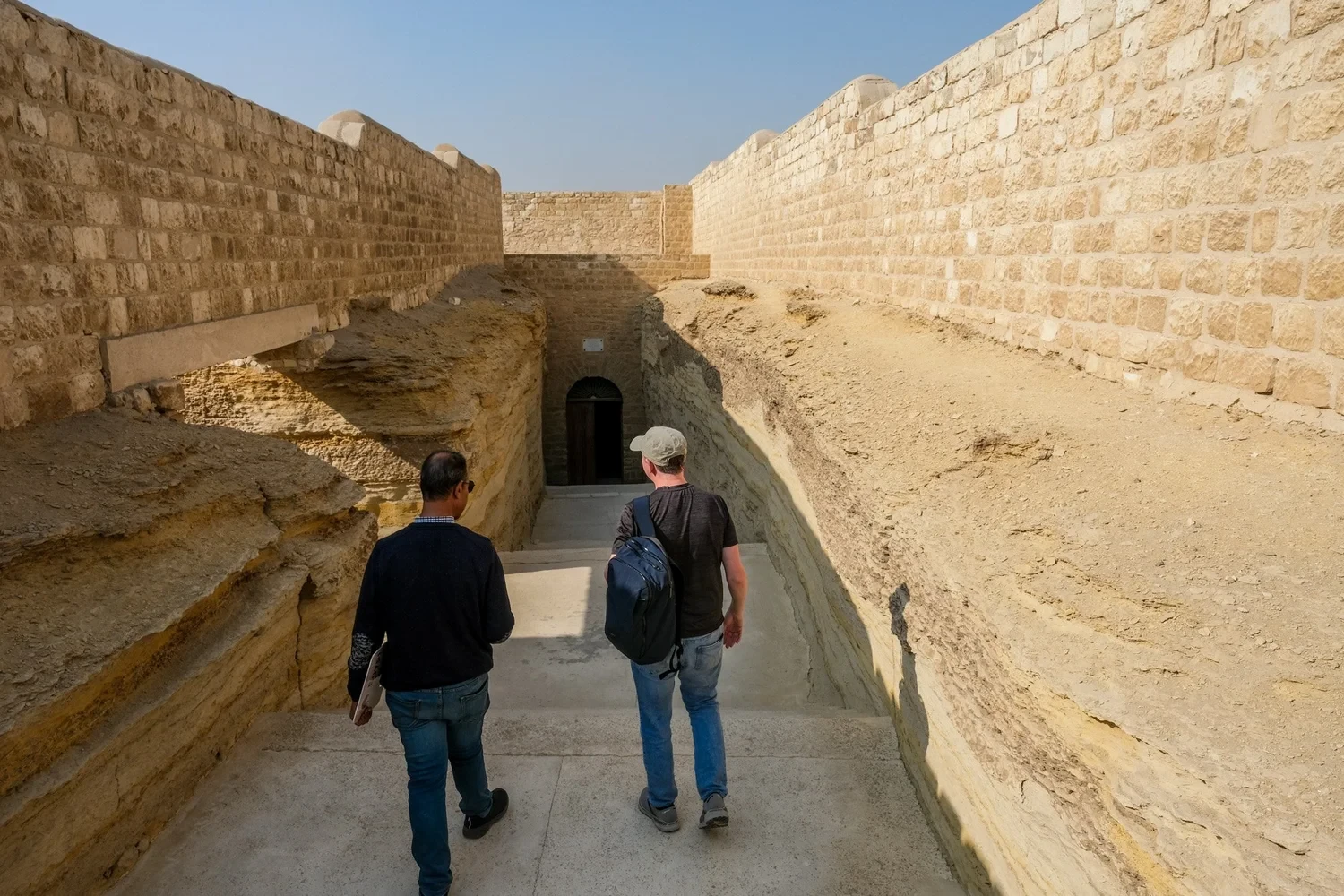
Visitors entering the site descend into long corridors carved into the bedrock. These tunnels lead to large burial chambers where massive stone sarcophagi once held the remains of the sacred Apis bulls.
Because of its location within the Saqqara complex, the Serapeum of Saqqara is often visited together with other nearby monuments, creating a full archaeological experience that reveals different aspects of ancient Egyptian religion and burial traditions.
The Serapeum of Saqqara is considered one of the most fascinating historical places to visit in Egypt, offering visitors a deeper understanding of ancient Egyptian religious traditions.
History of the Serapeum of Saqqara
The history of the Serapeum of Saqqara is closely connected to the religious traditions of ancient Egypt, particularly the worship of the sacred Apis bull.
In ancient Egyptian belief, the Apis bull was considered a living representation of the god Ptah, the creator deity associated with Memphis. When an Apis bull died, it was treated with the same respect and elaborate burial rituals as a pharaoh.
The tradition of burying these sacred animals began during the New Kingdom period, around the 14th century BCE, during the reign of Pharaoh Amenhotep III. Over time, the burial site expanded as more Apis bulls were honored with elaborate funerary ceremonies.
The Serapeum of Saqqara continued to grow throughout later periods of Egyptian history, including the Late Period and the Ptolemaic era. Each new burial added additional chambers and tunnels to the underground complex.
This long history transformed the Serapeum into one of the most important religious centres in ancient Egypt. Pilgrims and priests visited the site to honor the divine animals believed to carry the spirit of the gods.
Today, the Serapeum of Saqqara provides a remarkable insight into ancient Egyptian religious beliefs and the extraordinary lengths taken to honor sacred creatures.
For travellers looking to explore beyond the pyramids, the Serapeum of Saqqara is one of the most intriguing hidden gems in Cairo Egypt.
Discovery of the Serapeum
The Serapeum of Saqqara remained hidden beneath the desert sands for centuries until its discovery in the 19th century.
In 1851, French archaeologist Auguste Mariette began excavations at Saqqara after noticing a row of sphinx statues partially buried in the sand. These statues appeared to form a ceremonial avenue leading toward an unknown structure.
Following this pathway, Mariette eventually uncovered the entrance to a vast underground tunnel system—the lost Serapeum of Saqqara.
Inside the tunnels, archaeologists discovered enormous granite sarcophagi, each weighing between 60 and 80 tons. These massive stone coffins once held the remains of the sacred Apis bulls.
The discovery astonished the archaeological world and revealed a burial complex unlike any other in ancient Egypt. Even today, the engineering required to carve, transport, and position these enormous granite coffins remains a subject of debate among historians.
The excavation of the Serapeum of Saqqara became one of the most important archaeological discoveries of the 19th century and continues to attract researchers and travellers from around the world.
Architecture of the Serapeum of Saqqara
The architecture of the Serapeum of Saqqara is one of the most remarkable aspects of the site. The underground complex demonstrates both advanced engineering and deep religious symbolism.
Underground Tunnels
The Serapeum consists of long underground corridors carved deep into the limestone bedrock of the Saqqara plateau.
These tunnels extend for hundreds of meters and lead to large burial chambers where the sarcophagi were placed. Walking through these passages gives visitors a sense of the immense scale of the complex and the effort required to construct it.
The dark corridors of the Serapeum of Saqqara create a mysterious atmosphere that reflects the sacred nature of the site.
Giant Granite Sarcophagi
The most striking feature of the Serapeum of Saqqara is the series of enormous granite sarcophagi placed inside the burial chambers.
Each sarcophagus is carved from a single block of granite and weighs an estimated 60–80 tons. The precision of the stonework is remarkable, with smooth surfaces and tight-fitting lids that demonstrate advanced stone-cutting techniques.
Transporting these massive blocks from distant quarries and positioning them underground remains one of the most fascinating engineering achievements of ancient Egypt.
Burial Chambers
Along the corridors of the Serapeum are large chambers where the sarcophagi were placed during burial ceremonies.
These chambers were sealed after each Apis bull was interred, creating a sacred resting place for the divine animals. The arrangement of these chambers reflects the importance of ritual and religious symbolism in ancient Egyptian funerary traditions.
The Mystery of the Massive Sarcophagi
One of the greatest mysteries surrounding the Serapeum of Saqqara is the incredible size and precision of the granite sarcophagi.
Scholars continue to debate how ancient engineers managed to carve, transport, and place these enormous stone coffins within narrow underground corridors.
Several theories exist, including the use of advanced stone-cutting tools, sophisticated transport methods, and large labor forces working over many years.
Despite decades of research, the engineering behind the Serapeum of Saqqara continues to amaze archaeologists and inspire new studies into ancient construction techniques.
Many travellers who book a Hurghada to pyramids day trip also choose to explore nearby archaeological sites like Saqqara and the fascinating Serapeum.
Why the Serapeum of Saqqara Is One of Egypt’s Most Fascinating Sites
The Serapeum of Saqqara stands out among Egypt’s archaeological treasures for several reasons.
First, it reveals a unique aspect of ancient Egyptian religion—the worship of sacred animals believed to embody divine power.
Second, the massive granite sarcophagi demonstrate extraordinary engineering skills that remain impressive even by modern standards.
Finally, the underground nature of the site creates a mysterious and atmospheric experience that differs greatly from visiting temples or pyramids.
For travellers interested in archaeology and ancient history, the Serapeum of Saqqara offers a rare glimpse into the spiritual and technological achievements of ancient Egypt.
How to Visit the Serapeum of Saqqara
Visiting the Serapeum of Saqqara is usually part of a larger tour of the Saqqara archaeological complex.
Many travellers combine the Serapeum with visits to nearby sites such as the following:
- The Step Pyramid of Djoser
- The Saqqara tombs of nobles
- The ancient city of Memphis
Because the site involves underground exploration and historical interpretation, visiting with a knowledgeable guide greatly enhances the experience.
Why Travelers Explore Saqqara with Traviaz
Exploring ancient archaeological sites such as the Serapeum of Saqqara is far more rewarding when guided by experts who understand the history and significance of each monument.
Traviaz specializes in creating immersive travel experiences across Egypt that allow visitors to explore famous landmarks as well as hidden historical gems.
With carefully designed itineraries, professional Egyptologist guides, and comfortable transportation, Traviaz ensures that travellers can discover the Serapeum of Saqqara and other remarkable sites without the stress of planning complex logistics.
Travellers who explore Saqqara with Traviaz benefit from deeper historical insight, well-organized tours, and the opportunity to experience Egypt’s ancient heritage in a meaningful and engaging way.
FAQs About the Serapeum of Saqqara
What is the Serapeum of Saqqara?
The Serapeum of Saqqara is an underground burial complex where sacred Apis bulls were buried in massive granite sarcophagi.
How old is the Serapeum of Saqqara?
The site dates back to the New Kingdom period and continued to be used during later dynasties.
Why were Apis bulls buried there?
Apis bulls were believed to be living manifestations of the god Ptah and were honored with elaborate burial ceremonies.
Can tourists visit the Serapeum of Saqqara?
Yes, visitors can explore the underground tunnels and burial chambers as part of a tour of the Saqqara archaeological complex.
Conclusion
The Serapeum of Saqqara is one of the most intriguing archaeological sites in Egypt, offering a rare glimpse into the spiritual beliefs and engineering achievements of ancient Egyptian civilization. Hidden beneath the sands of the Saqqara necropolis, this underground complex continues to fascinate historians, archaeologists, and travelers who seek to understand the mysteries of the ancient world.
From its massive granite sarcophagi to its dark underground corridors, the Serapeum of Saqqara reveals a unique chapter in Egypt’s history—one that highlights the sacred role of animals and the extraordinary craftsmanship of ancient builders.
With expert guidance and carefully planned itineraries, travel specialists such as Traviaz help visitors explore this remarkable site alongside other treasures of Saqqara, transforming a simple visit into an unforgettable journey through Egypt’s ancient past.
For travellers looking to discover Egypt beyond the pyramids, the Serapeum of Saqqara remains one of the most fascinating and mysterious destinations in the country.

-webp.webp "Nubian Village Aswan")
-webp.webp "Abu Simbel Day Trip from Aswan")