
Temple of Dendera: Discover Egypt’s Best-Preserved Ancient Temple
Egypt is home to some of the most extraordinary temples in the world, yet beyond the famous landmarks of Luxor and Aswan lies a hidden masterpiece that many travellers overlook—the Temple of Dendera. Known for its exceptional preservation, rich symbolism, and stunning architectural details, this temple offers one of the most immersive experiences of ancient Egyptian culture.
Unlike many other archaeological sites where time has faded colors and carvings, the Temple of Dendera still showcases vivid reliefs, detailed inscriptions, and beautifully decorated ceilings. This allows visitors to experience ancient Egyptian artistry in a way that feels remarkably alive and authentic.
Many travelers searching for unique historical experiences are drawn to the Temple of Dendera because it offers something different—fewer crowds, deeper storytelling, and a stronger connection to ancient Egyptian beliefs. It is not just a temple; it is a complete cultural and spiritual experience.
Exploring such a rich historical site becomes even more meaningful when guided by experts. This is where travel specialists like Traviaz make a real difference. By offering curated Egypt travel experiences and professional Egyptologist guides, Traviaz ensures that visitors can fully understand the significance of the Temple of Dendera while enjoying a smooth and well-organized journey.
For travellers looking to go beyond the typical tourist route, the Temple of Dendera is one of Egypt’s most rewarding and unforgettable destinations.
Where Is the Temple of Dendera Located?
The Temple of Dendera is located approximately 60 kilometres (about 37 miles) north of Luxor, near the modern city of Qena in Upper Egypt. It sits on the west bank of the Nile, surrounded by fertile land and traditional Egyptian villages.
This location makes the Temple of Dendera an ideal day trip from Luxor. The journey itself offers a glimpse into local life along the Nile Valley, where agriculture, culture, and history blend seamlessly.
Unlike central Luxor sites, which can be crowded with tourists, the Temple of Dendera provides a quieter and more relaxed environment. This allows visitors to explore the temple at their own pace and truly appreciate the intricate details of its design.
Because of its proximity to Luxor, many itineraries combine the Temple of Dendera with other nearby sites such as Abydos, creating a deeper and more comprehensive historical experience.
Many travelers include the Temple of Dendera as part of a wider luxor sightseeing experience that covers temples and ancient monuments.
History of the Temple of Dendera
The Temple of Dendera is a remarkable example of layered history. While the current structure dates primarily to the Ptolemaic period (305–30 BCE), the site itself has been sacred for thousands of years, possibly as early as the Old Kingdom.
This continuity of religious use makes the temple especially significant. It reflects not just one era of Egyptian civilization but also a long evolution of religious practices and architectural development.
During the Ptolemaic and Roman periods, rulers invested heavily in temple construction to strengthen their connection with traditional Egyptian beliefs. By building temples like the Temple of Dendera, they aligned themselves with ancient religious traditions and reinforced their legitimacy.
As a result, the temple combines Egyptian, Greek, and Roman influences, making it one of the most historically rich and culturally layered sites in Egypt.
Who Is Hathor? The Goddess of Love and Joy
The Temple of Dendera was dedicated to Hathor, one of the most important and beloved goddesses in ancient Egyptian religion.
Hathor was associated with the following:
- Love and beauty
- Music and dance
- Fertility and motherhood
- Joy and celebration
She was often depicted as a woman with cow horns and a solar disc, or sometimes as a sacred cow. Her nurturing and protective nature made her one of the most widely worshipped deities across Egypt.
Unlike other temples that emphasize power or the afterlife, the Temple of Dendera reflects themes of joy, harmony, and life. This gives the temple a unique emotional atmosphere compared to other Egyptian monuments.
Visitors can see representations of Hathor throughout the temple, especially on the columns and relief carvings, reinforcing her presence in every part of the structure.
Adding the Temple of Dendera to a luxor tour package allows travellers to explore both iconic landmarks and hidden gems.
Architecture of the Temple of Dendera
The architecture of the Temple of Dendera is one of its most impressive features. It is considered one of the best-preserved temple complexes in Egypt, offering a rare opportunity to explore ancient design in exceptional detail.
Hypostyle Hall
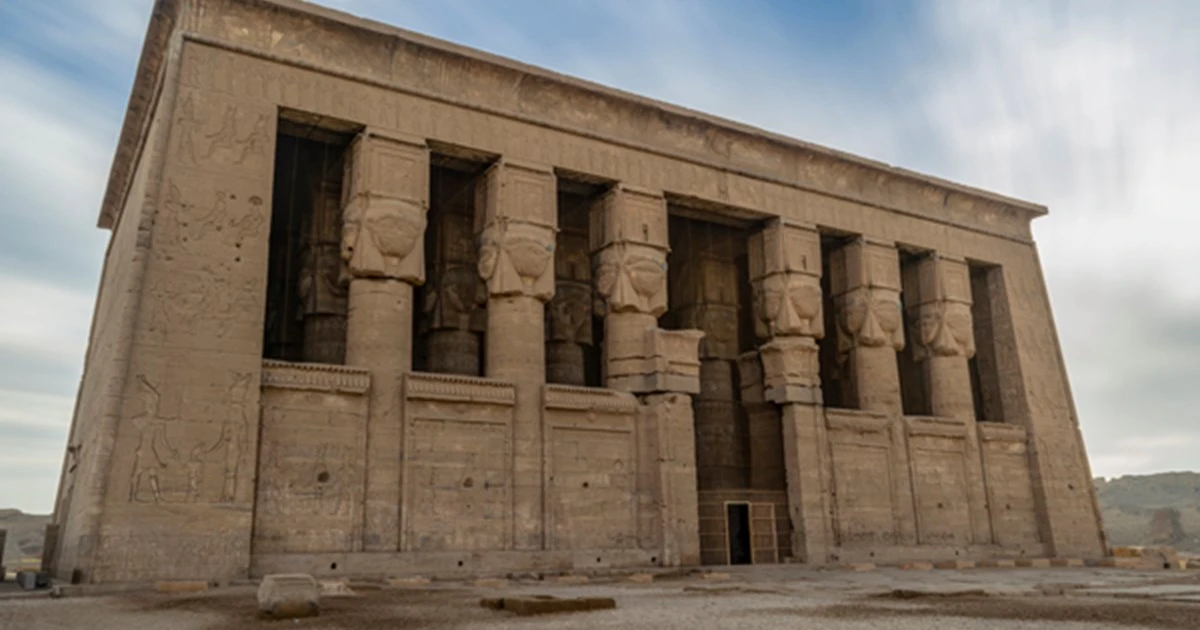
The hypostyle hall is one of the most striking areas of the Temple of Dendera. It features massive columns topped with beautifully carved faces of Hathor.
These columns create a grand and sacred atmosphere, guiding visitors into the heart of the temple. The carvings on the walls and ceilings are filled with detailed scenes depicting rituals, gods, and symbolic imagery.
Ceiling Reliefs
One of the most extraordinary aspects of the Temple of Dendera is its ceiling.
The ceilings are covered with intricate astronomical scenes, including stars, constellations, and mythological figures. These carvings reflect the ancient Egyptian understanding of the cosmos and their belief in the connection between the heavens and the afterlife.
The level of preservation makes these ceiling reliefs some of the most visually stunning in all of Egypt.
Sacred Roof
Unlike many other temples, visitors can access the roof of the Temple of Dendera.
The roof was used for important religious ceremonies, especially those connected to the cycles of the sun and the worship of Hathor. From the top, visitors can also enjoy panoramic views of the surrounding landscape.
This feature adds a unique dimension to the temple experience, making it more interactive and immersive.
The Famous Dendera Zodiac
One of the most famous elements of the Temple of Dendera is the Dendera Zodiac, an ancient astronomical relief that once decorated the temple’s ceiling.
The zodiac features a circular representation of the sky, including constellations and celestial symbols. It provides valuable insight into how ancient Egyptians understood astronomy and time.
The original zodiac was removed in the 19th century and is now displayed in the Louvre Museum in Paris. However, a replica remains at the temple, allowing visitors to appreciate its complexity and artistic beauty.
The Dendera Zodiac is considered one of the most important astronomical artifacts from ancient Egypt.
Travellers interested in ancient temples often combine the Temple of Dendera with visits to the well-preserved Edfu Temple.
Why the Temple of Dendera Is One of Egypt’s Best-Preserved Temples
The Temple of Dendera is often described as one of the best-preserved temples in Egypt, and for good reason.
Many of the original carvings, colours, and inscriptions remain clearly visible, giving visitors a rare opportunity to see ancient Egyptian art in near-original condition.
Another major advantage is the lower number of tourists. Compared to sites like Karnak or the Valley of the Kings, the Temple of Dendera offers a more peaceful and immersive experience.
Visitors can take their time to explore details, photograph the artwork, and truly absorb the atmosphere without feeling rushed.
How to Visit the Temple of Dendera
The Temple of Dendera is typically visited as a day trip from Luxor.
Most tours include:
- Transportation to and from the site
- Entrance tickets
- Guided tours with historical explanations
Because of the temple’s detailed symbolism and historical depth, visiting with a knowledgeable guide significantly enhances the experience.
Many travellers also combine the Temple of Dendera with a visit to Abydos, creating a full-day journey through some of Egypt’s most important religious sites.
Exploring the Temple of Dendera is considered one of the top things to do in Luxor and Aswan for travellers seeking unique experiences.
Why Explore Dendera with Traviaz
Exploring the Temple of Dendera becomes far more meaningful when guided by experts who understand its history and symbolism.
Traviaz specializes in creating curated Egypt travel experiences that go beyond standard sightseeing. Their tours focus on storytelling, cultural understanding, and seamless travel planning.
With professional Egyptologist guides, comfortable transportation, and well-structured itineraries, Traviaz ensures that visitors can fully appreciate the beauty and significance of the Temple of Dendera.
Instead of simply visiting the site, travellers gain a deeper understanding of its meaning, making the experience more memorable and impactful.
FAQs About the Temple of Dendera
How old is the Temple of Dendera?
The temple dates mainly to the Ptolemaic period, over 2,000 years ago.
Why is the Temple of Dendera important?
It is one of the best-preserved temples in Egypt and provides insight into ancient Egyptian religion and astronomy.
Can visitors access the roof?
Yes, visitors can often access the roof and explore additional areas of the temple.
Is the temple crowded?
No, the Temple of Dendera is generally less crowded than other major sites in Egypt.
Conclusion
The Temple of Dendera is one of Egypt’s most remarkable hidden treasures. With its beautifully preserved carvings, rich mythology, and unique architectural features, it offers an experience that is both visually stunning and historically meaningful.
For travelers seeking to explore beyond the most famous landmarks, the Temple of Dendera provides a deeper and more authentic connection to ancient Egyptian civilization.
With expert guidance and carefully curated itineraries, travel specialists like Traviaz help transform a visit to Dendera into a complete cultural journey—one that reveals the beauty, complexity, and timeless appeal of ancient Egypt.



-webp.webp "Nubian Village Aswan")
-webp.webp "Abu Simbel Day Trip from Aswan")