
Temple of Edfu: Explore Egypt’s Best-Preserved Temple of Horus
Along the banks of the Nile between Luxor and Aswan stands one of the most impressive and best-preserved monuments of ancient Egypt—the Temple of Edfu. Dedicated to the falcon god Horus, this extraordinary temple offers travellers a rare opportunity to experience ancient Egyptian architecture almost exactly as it was thousands of years ago.
What makes the Temple of Edfu truly special is not just its size or beauty but how complete it feels. While many ancient sites are partially ruined, Edfu allows visitors to walk through a structure that still maintains its original layout, walls, and symbolic spaces. This gives travellers a deeper understanding of how temples functioned in ancient Egyptian society—not just as monuments, but as living religious centres.
For travellers, the Temple of Edfu is more than just a stop on an itinerary. It is an immersive experience where history, mythology, and architecture come together. The moment you pass through its massive entrance, you begin to feel the scale and spiritual significance of ancient Egyptian civilization.
This experience becomes even more powerful when explored with experts. Travel specialists like Traviaz help visitors go beyond surface-level sightseeing by providing context, storytelling, and seamless travel planning. Through curated experiences, travellers can truly understand why the Temple of Edfu remains one of the most important temples in Egypt.
Where Is the Temple of Edfu Located?
The Temple of Edfu is located in the city of Edfu on the west bank of the Nile, positioned strategically between Luxor and Aswan. This location made it an important religious and cultural center in ancient Egypt and continues to make it a key stop for modern travellers exploring Upper Egypt.
Today, the temple is most commonly visited as part of a Nile cruise, where ships dock nearby and visitors travel a short distance into the town. This short journey often includes traditional horse carriage rides, which adds a unique cultural element to the visit and gives travellers a glimpse into local life.
The location of the Temple of Edfu is also important from a travel planning perspective. It naturally fits into a larger route that includes Luxor, Kom Ombo, and Aswan, making it an essential part of many Egypt itineraries. This positioning enhances its value, as visitors can explore multiple major sites in a single journey.
Many travellers include the Temple of Edfu as part of a full Luxor sightseeing experience covering the most iconic temples of Upper Egypt.
History of the Temple of Edfu
The Temple of Edfu was constructed during the Ptolemaic period, between 237 BCE and 57 BCE. Although it was built during a time of Greek rule in Egypt, the temple follows traditional Egyptian religious and architectural styles, showing the continuity of ancient Egyptian culture.
What makes the temple historically fascinating is that it represents one of the final phases of ancient Egyptian temple construction. By this time, Egyptian builders had perfected their techniques, resulting in a structure that is both highly detailed and architecturally complete.
The temple was dedicated to Horus, and it played a central role in religious ceremonies and festivals. It was not just a place of worship but a symbolic representation of divine power and cosmic order. The long construction period—nearly 180 years—also reflects the importance of the temple and the resources invested in its creation.
Who Is Horus? The Falcon God
Horus is one of the most important figures in ancient Egyptian mythology, and understanding his role is key to understanding the Temple of Edfu.
Horus was the god of kingship and protection, often associated with the ruling pharaoh. Ancient Egyptians believed that each pharaoh was the earthly embodiment of Horus, which made his worship central to the political and religious system.
The most famous myth involving Horus is his battle against Set, the god of chaos, to avenge his father Osiris. This story symbolized the triumph of order over disorder, a concept that was central to Egyptian belief.
Inside the Temple of Edfu, many carvings depict scenes from this myth. These are not just decorative elements—they were meant to reinforce the idea of divine justice and cosmic balance. For visitors, understanding this story adds depth to the experience and transforms the temple into a narrative space.
The Temple of Edfu is often included in a complete Luxor tour package that connects major historical sites along the Nile.
Architecture of the Temple of Edfu
The architecture of the Temple of Edfu represents one of the most complete examples of ancient Egyptian temple design. Walking through the temple is like moving through a carefully planned sequence of spaces, each with its own purpose and symbolic meaning.
The Massive Entrance Pylon
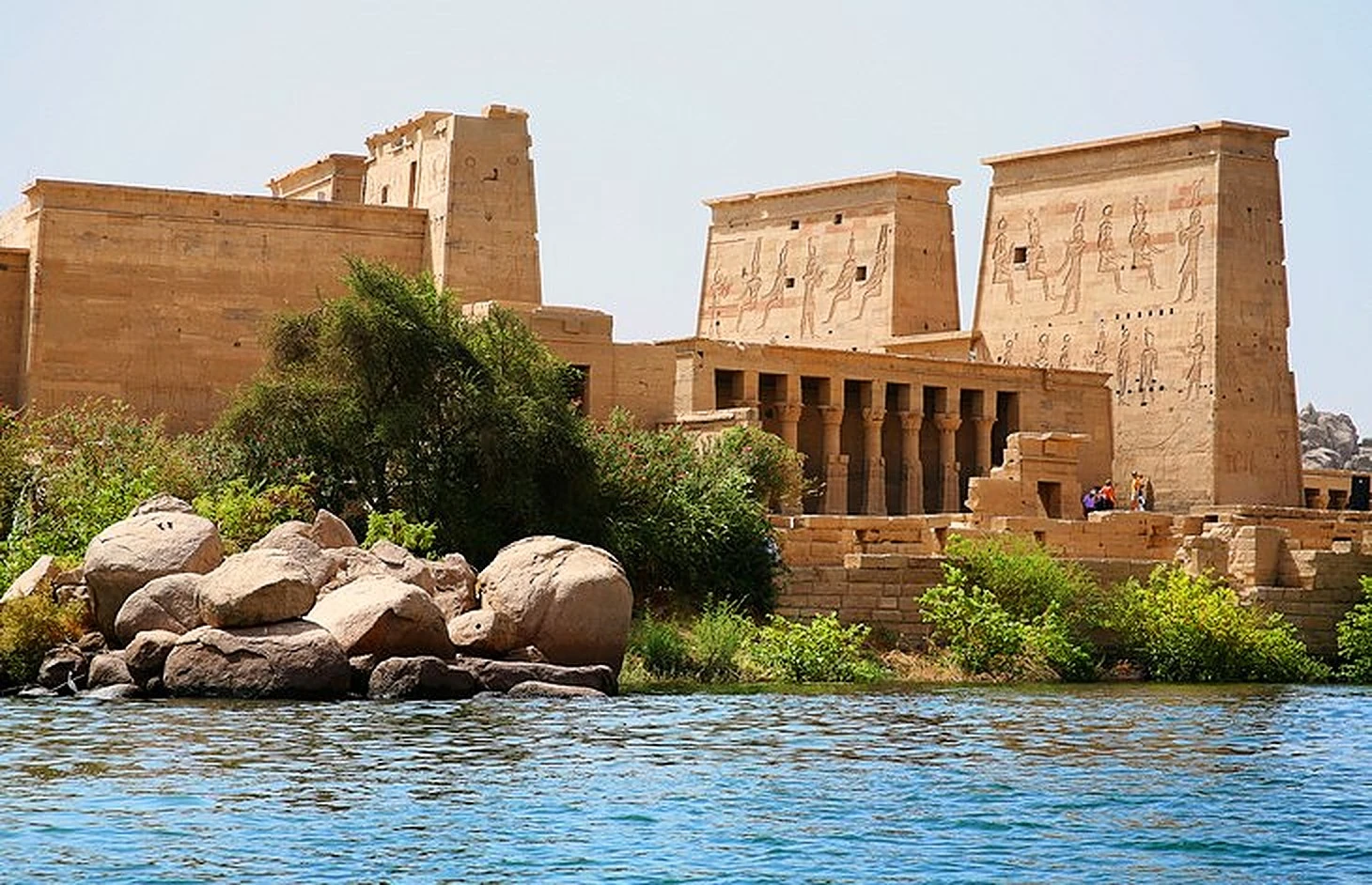
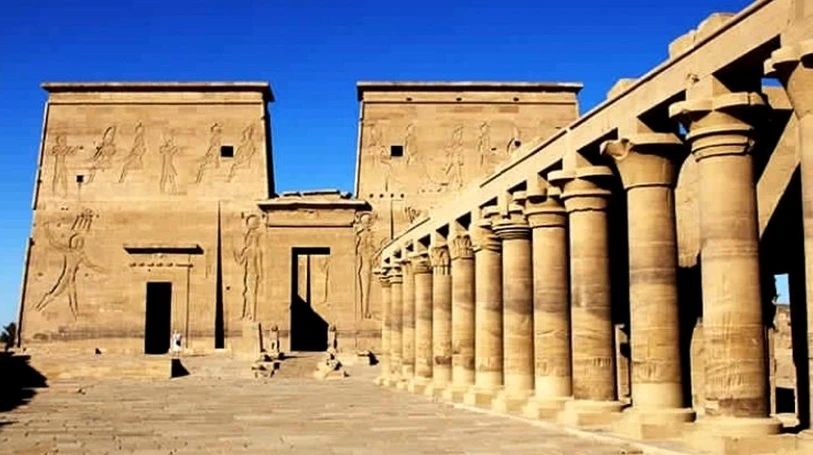
The entrance pylon is one of the most striking features of the Temple of Edfu. Towering above visitors, it creates a sense of scale and power that immediately captures attention.
The carvings on the pylon show scenes of the pharaoh defeating enemies, symbolizing strength and divine authority. This entrance was designed to impress and prepare visitors for the sacred experience inside.
Courtyard and Columns
After passing through the entrance, visitors enter an open courtyard surrounded by columns. This space served as a transitional area where public ceremonies and gatherings took place.
The openness of the courtyard contrasts with the more enclosed areas deeper inside the temple, creating a gradual shift from public to sacred space.
Hypostyle Hall
The hypostyle hall is darker and more enclosed, supported by large columns and covered with detailed carvings.
This space was used for religious rituals and reflects a more spiritual atmosphere. The reduced lighting and intricate decorations create a sense of mystery and reverence.
Sanctuary of Horus
At the centre of the Temple of Edfu lies the sanctuary, the most sacred area of the temple.
This is where the statue of Horus was kept, and only priests were allowed to enter. The sanctuary represents the spiritual heart of the temple, where divine presence was believed to reside.
After exploring the Temple of Edfu, many travellers head south to enjoy the highlights of Aswan sightseeing.
Why the Temple of Edfu Is One of Egypt’s Best-Preserved Temples
The Temple of Edfu is widely considered one of the best-preserved temples in Egypt, and this is one of the main reasons it attracts so many visitors.
For centuries, the temple was buried under layers of sand, which protected it from weathering and destruction. As a result, much of its original structure remains intact.
Visitors can clearly see hieroglyphs, carvings, and architectural features that have survived in remarkable condition. This level of preservation allows travellers to experience the temple in a way that feels authentic and complete.
The Mythological Carvings Inside the Temple of Edfu
The walls of the Temple of Edfu are covered with detailed carvings that tell stories from ancient Egyptian mythology.
These carvings act as a visual narrative, showing scenes of gods, rituals, and symbolic events. One of the most important stories depicted is the battle between Horus and Set.
For visitors, these carvings transform the temple into more than just a historical site—they turn it into a storytelling environment where each wall reveals a piece of ancient belief.
Visiting the Temple of Edfu is considered one of the top things to do in Luxor and Aswan for history lovers.
How to Visit the Temple of Edfu
Visiting the Temple of Edfu is typically done as part of a Nile cruise or a guided tour.
The experience often begins with transportation from the river to the temple, followed by a guided exploration of the site. Having a guide is especially valuable, as it helps visitors understand the meaning behind the carvings and the layout of the temple.
Temple of Edfu as Part of a Nile Cruise Experience
For many travellers, the Temple of Edfu is one of the highlights of a Nile cruise.
Cruising along the Nile allows visitors to experience multiple historical sites while enjoying a relaxed and scenic journey. The stop at Edfu provides a balance between travel and exploration, making it an essential part of the overall experience.
Why Explore the Temple of Edfu with Traviaz
Exploring the Temple of Edfu with Traviaz adds depth and value to the experience.
Instead of simply visiting the site, travellers gain insight into the stories, symbols, and historical context behind each part of the temple. Traviaz focuses on creating meaningful journeys, ensuring that visitors leave with a deeper understanding of what they have seen.
Their carefully curated itineraries and expert guides make the visit smooth, informative, and memorable.
Conclusion
The Temple of Edfu is one of the most complete and impressive temples in Egypt, offering a rare opportunity to experience ancient Egyptian architecture and mythology in its full form.
From its massive entrance to its detailed carvings and sacred inner chambers, every part of the temple tells a story that connects visitors to a civilization that shaped human history.
With the support of experienced travel providers like Traviaz, exploring the Temple of Edfu becomes more than just a visit—it becomes a journey into the heart of ancient Egypt.



-webp.webp "Nubian Village Aswan")
-webp.webp "Abu Simbel Day Trip from Aswan")