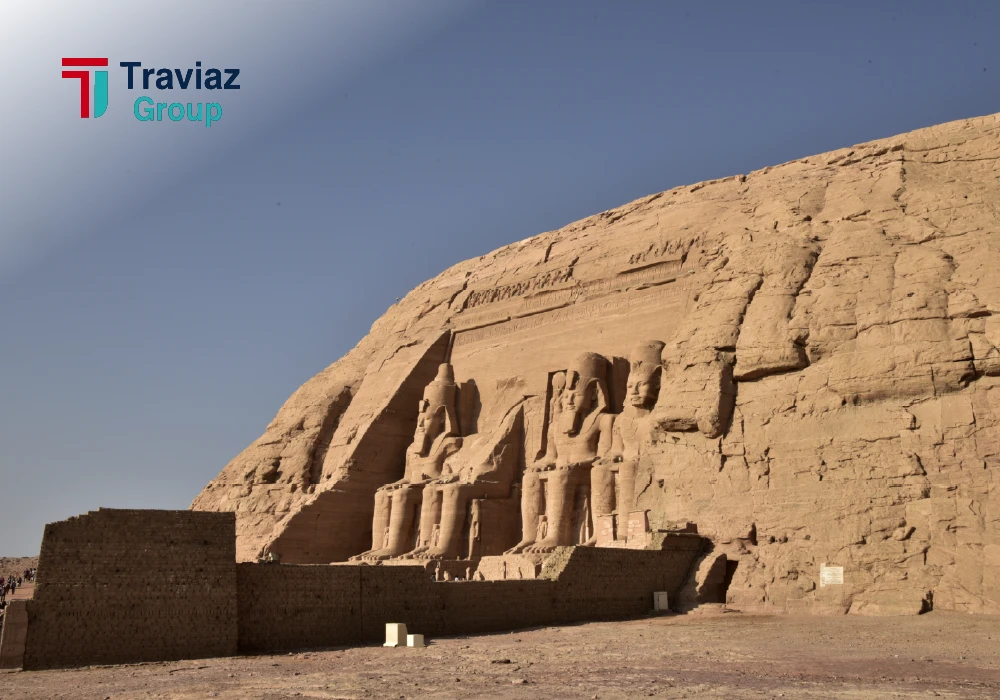
12 day egypt tour give you the chance to experience Egypt in depth, away from the pressure of fast-paced programs that compress Cairo into two days and Luxor into three.
On this trip you spend four nights aboard a five-star nile cruise egypt that docks directly in front of the temples, and you get a full free day in Alexandria to choose how you want to spend your time, alongside an optional day in Saqqara and Memphis for those who want to keep exploring.
The same guide accompanies you throughout the trip, so they know what you have already seen and what you have not yet visited, without the need to switch between guides or deal with complex logistical arrangements.
Traviaz handles all the trip details from the moment you arrive until departure.
As soon as you arrive at Cairo International Airport, a Traviaz Egyptologist guide will be waiting to assist you with arrival procedures and luggage collection.
You then transfer by private air-conditioned car to your luxury hotel in Cairo to begin the trip without any complicated post-arrival procedures.
The day begins after breakfast with a trip to the Giza Plateau and the Grand Egyptian Museum accompanied by a Traviaz guide, with time allocated to explore the most prominent archaeological landmarks in both areas.
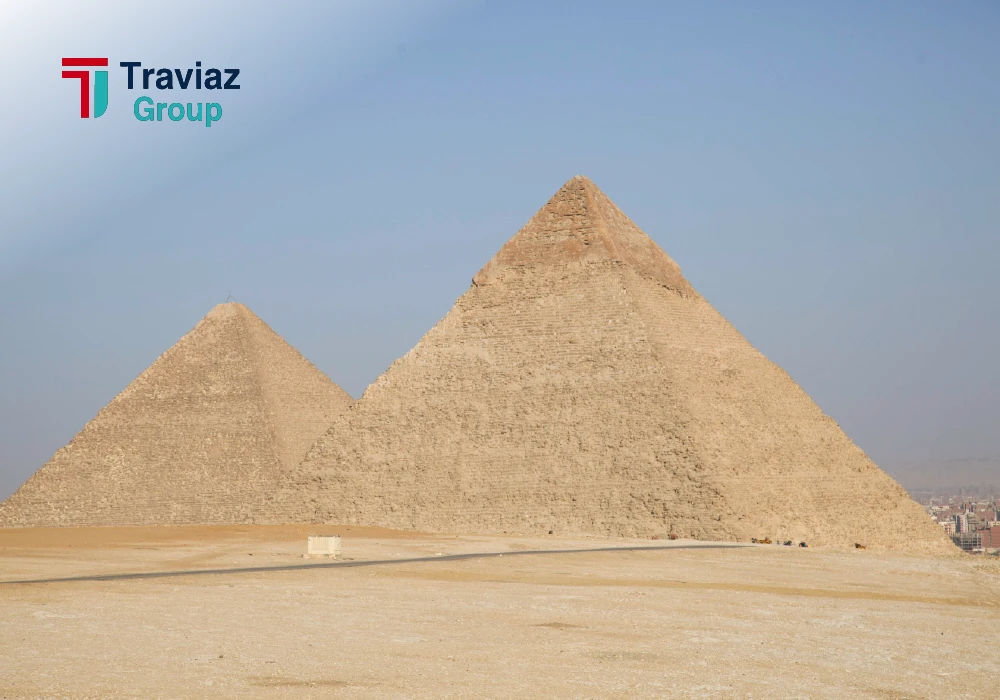
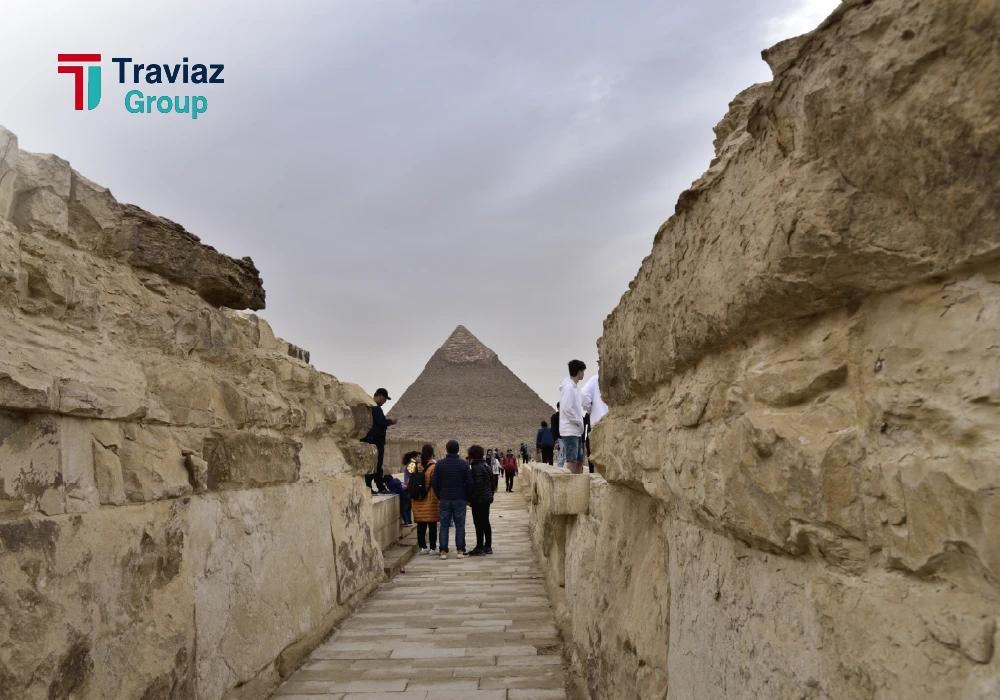
The Giza Plateau holds a royal funerary complex dating to the Fourth Dynasty and extending over more than 16,000 hectares.
The Pyramid of Khufu was built between 2580 and 2560 BC using approximately six million tons of limestone and granite, and remained the tallest structure in the world for more than 3,800 years.
The Sphinx, meanwhile, is carved from a single block of limestone measuring 73 meters in length, and faces the sunrise during the spring and autumn equinoxes.
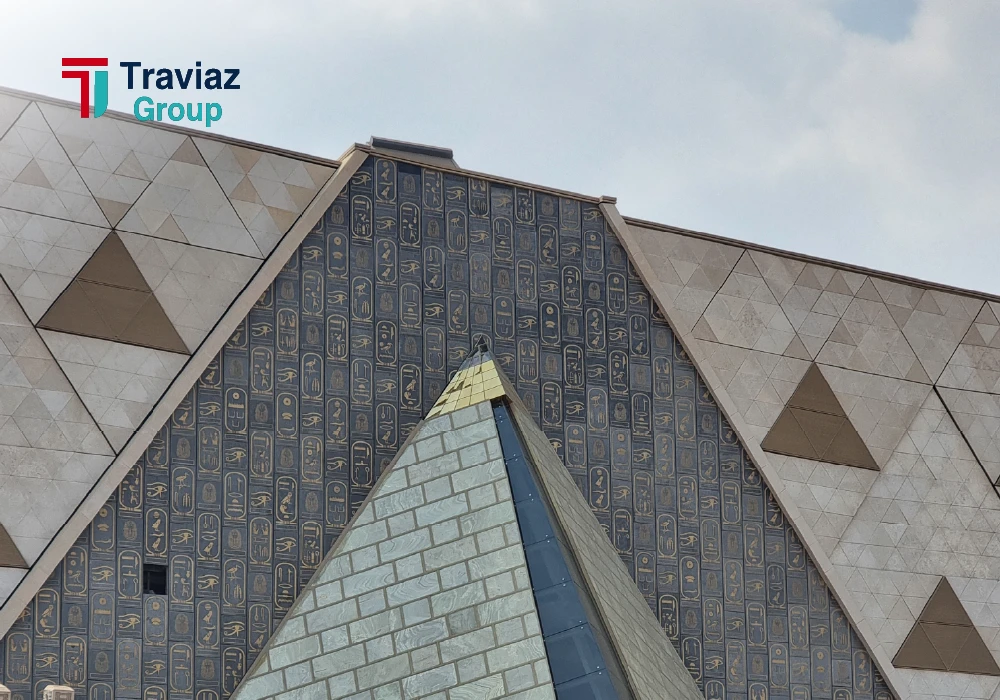
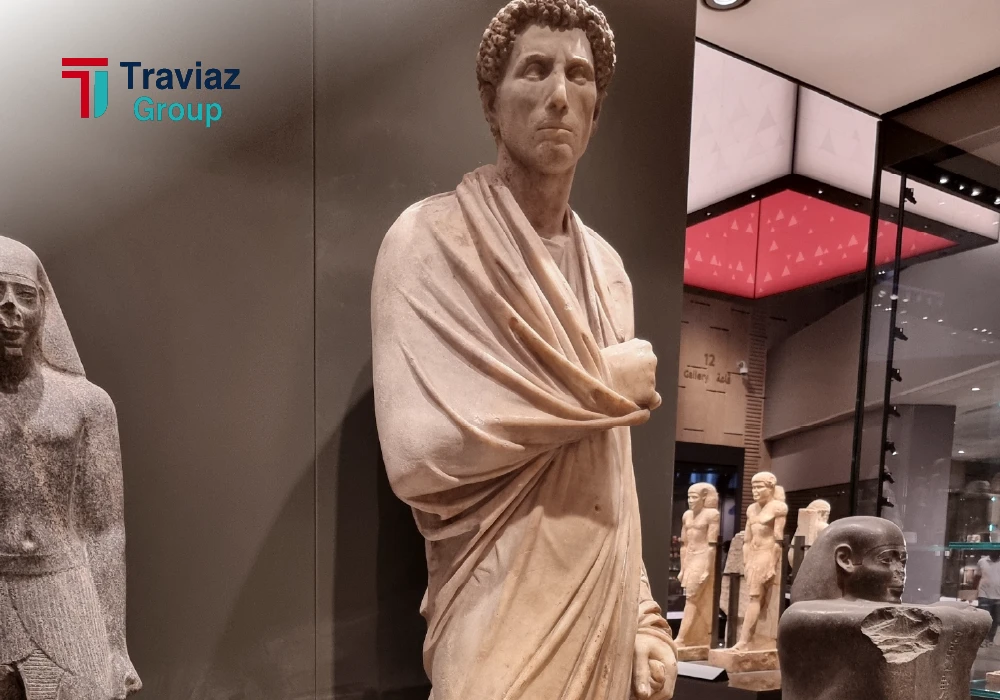
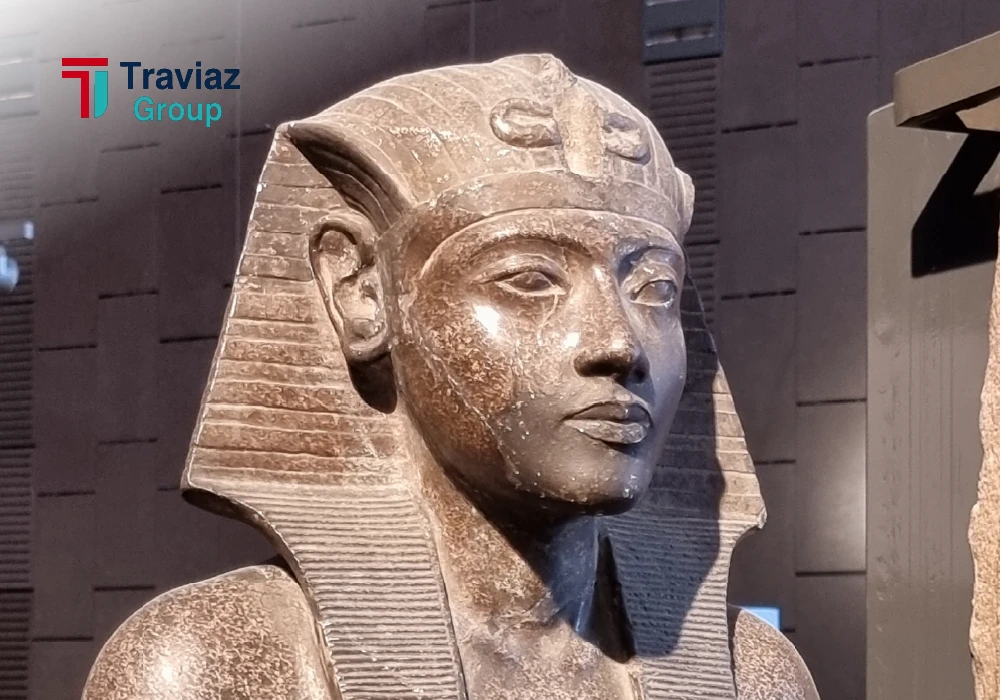
Approximately two kilometers from the Giza Plateau, the Grand Egyptian Museum opened officially in November 2025. For the first time, the complete Tutankhamun collection, comprising 5,398 artifacts, is displayed in a single sequence within a hall covering 7,500 square meters.
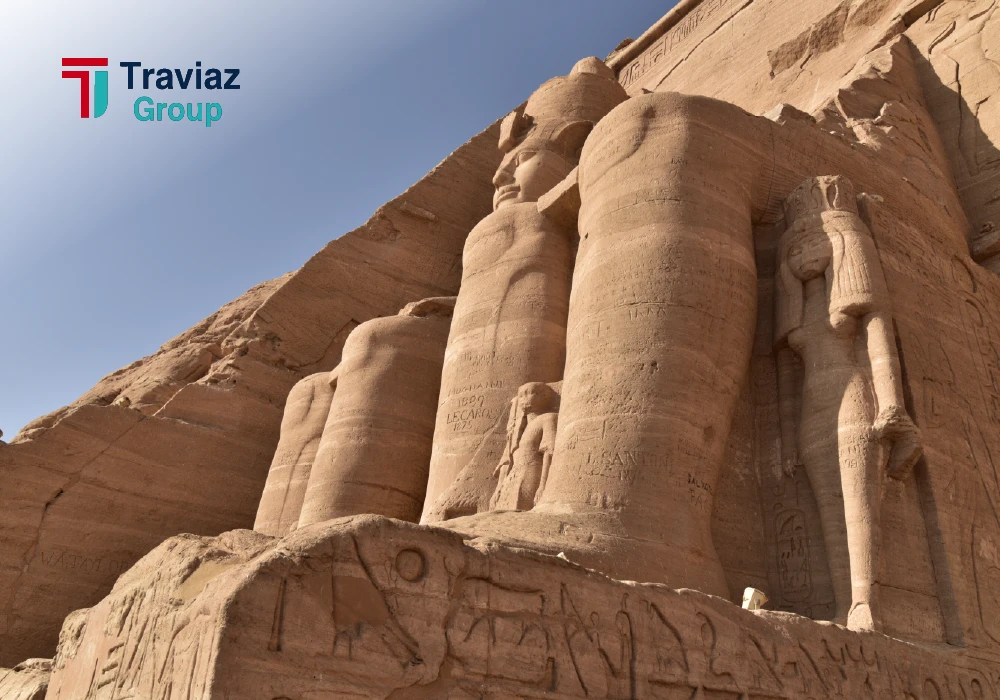
Upon entering, a statue of Ramesses II weighing 82 tons greets you, behind which extends the grand staircase surrounded by 87 large statues of pharaohs and gods.
After breakfast you head to the airport to fly to Luxor, where a Traviaz guide meets you upon arrival. From there you transfer directly to the cruise to check in before the archaeological tour begins.
The Karnak Temple Complex is considered the largest religious structure built in the ancient world, extending across 247 acres.
Its construction and development continued over approximately two thousand years, with a large number of pharaohs adding new sections.
Inside the complex stands the Great Hypostyle Hall, which holds 134 sandstone columns and covers an area of 5,000 square meters, making it the largest hall in any historic religious structure.
Luxor Temple was built around 1400 BC in the heart of the city, and was not dedicated to a single god but was associated with the renewal of kingship and the affirmation of the divine authority of the king.
The atmosphere of the place changes completely after sunset, when the columns and statues are illuminated and the temple's details appear in a way entirely different from a daytime visit. After the tour you return to the cruise for your first dinner on the waters of the Nile.
You take breakfast aboard the cruise before crossing the Nile to the West Bank with a Traviaz guide, where some of Luxor's most famous archaeological sites await.
The Valley of the Kings holds 63 tombs carved into the rock for New Kingdom pharaohs. The standard entry ticket allows visiting three tombs, while the Tomb of Tutankhamun requires a separate ticket.
On the walls appear carvings and vivid colours that have preserved much of their detail for approximately 3,000 years.
The Temple of Hatshepsut is located at Deir el-Bahari and was built during the fifteenth century BC in the form of three levels of colonnaded terraces in front of the rocky slopes.
Hatshepsut dedicated the temple to the god Amun, and it was one of her most prominent architectural projects.
Two colossal statues of Pharaoh Amenhotep III stand at the entrance of his funerary temple site, carved from quartzite and each measuring 18 meters in height.
The statues have remained in place for more than three thousand years and have become among the most famous landmarks of the West Bank of Luxor.
After breakfast aboard the cruise, you disembark at Edfu and transfer from the dock to the temple by traditional horse-drawn carriage, then continue your Nile journey toward Kom Ombo.
The Temple of Edfu was built between 237 and 57 BC and is considered the most completely preserved temple in Egypt. Its burial under sand and villages for centuries helped protect large sections of its structure and carvings.
The temple is dedicated to the god Horus and its entrance pylon stands 36 meters tall, while its carvings recount the details of the mythological battle between Horus and his uncle Set in a way that does not appear with this level of detail in many other Egyptian temples.
The cruise docks directly in front of Kom Ombo Temple, so you can walk down to it from the dock. The temple is distinguished by being the only Egyptian structure dedicated to two gods simultaneously: Sobek the crocodile god and Horus the falcon god.
Next to the temple lies the Crocodile Museum, which holds more than 22 mummified crocodiles and adds a different dimension of ancient Egyptian history to the visit.
With the cruise moored in Aswan, you take breakfast and then set out with a Traviaz guide to discover the city's most prominent landmarks and surroundings.
Construction of the High Dam was completed in 1970, and it became an essential factor in controlling the annual Nile flood and generating power.
The dam produces approximately 10 billion kilowatt-hours annually, and also led to the creation of Lake Nasser, which extends for more than 500 kilometers.
The Unfinished Obelisk is located inside the ancient granite quarries of Aswan and provides clear evidence of the techniques ancient Egyptians used to carve massive stones.
Its carving was halted after cracks appeared in the rock, so it remained in the quarry rather than being transported to its intended location.
Access to the Temple of Philae is by boat across the waters of the Nile to Agilkia Island.
The temple is dedicated to the goddess Isis and was moved in its entirety as part of a UNESCO-led rescue project, with more than 40,000 stone blocks dismantled and reassembled at their new location.
After breakfast aboard the cruise, you complete departure procedures then transfer to the airport to fly to Cairo. This day is dedicated to the transfer and rest after several days of exploration in Luxor and Aswan.
After breakfast, you depart by private air-conditioned car from Cairo to Alexandria, with the journey taking approximately two and a half hours before the tour of the city's most prominent historical landmarks begins.
Pompey's Pillar rises approximately 27 meters and is among the largest single-piece columns surviving from the ancient world, carved from a single piece of granite.
It was erected in 297 AD and stands amid the remains of the Serapeum temple, remaining one of the most famous Roman monuments in Alexandria.
The Citadel of Qaitbay was built in 1477 AD on the site where the Lighthouse of Alexandria once stood, one of the Seven Wonders of the Ancient World.
Stones from the ancient lighthouse were used in building the citadel, and its walls offer a direct view over the Mediterranean.
The Catacombs of Kom El Shoqafa descend through three floors to a depth reaching 35 meters and hold more than 300 tombs.
What distinguishes the site is the combination of ancient Egyptian Pharaonic decorations with elements of Greek architecture and Roman sculpture within a single complex.
The catacombs were discovered by chance in 1900. After the tour you transfer to your hotel in Alexandria.
After breakfast the day is entirely yours with no set program. The Alexandria Corniche extends approximately ten miles along the Mediterranean, from the Citadel of Qaitbay to the Montazah area, with cafes, restaurants, and sea views spread along it.
You can head to Stanley Beach or Cleopatra Beach for swimming and relaxation, or choose the new Bibliotheca Alexandrina with its museums and cultural centers if you prefer cultural activities. A Traviaz car remains available for any transfers you need throughout the day.
After breakfast you return to Cairo, then begin with a Traviaz guide a tour that uncovers aspects of Cairo's Islamic, Coptic, and Jewish history within a single day.
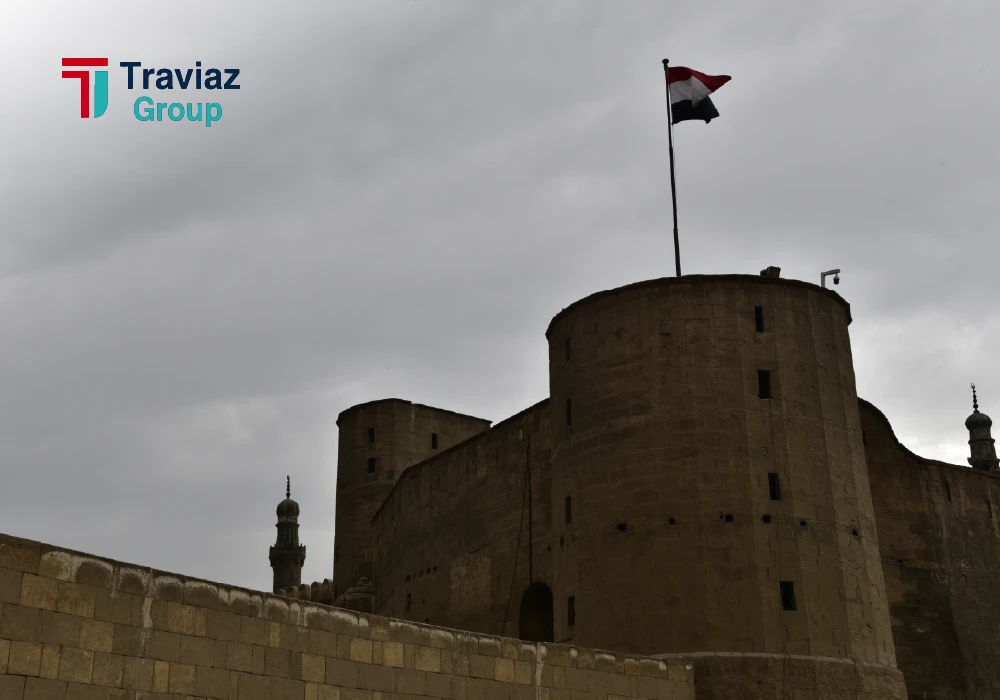
Construction of the Salah El Din Citadel began in 1176 AD, and it remained the seat of Egypt's governance for approximately 700 years.
Inside the citadel stands the Mosque of Muhammad Ali Pasha, distinguished by its Ottoman domes, soaring minarets, and alabaster-clad walls, alongside the Police and Military Museums.
The Hanging Church is among Egypt's oldest Christian churches, built above two towers of the Roman Babylon Fortress. Ben Ezra Synagogue, meanwhile, is the oldest preserved Jewish site in Cairo, and a local tradition links it to the place where the infant Moses was found.
After breakfast you have a free day in Cairo with no set program. If you wish to continue exploring, the Traviaz team can arrange an optional tour to Saqqara and Memphis, where you visit the Step Pyramid of Pharaoh Djoser, considered the first pyramid in human history, then visit Memphis, Egypt's first unified capital, with its colossal statue of Ramesses and the Alabaster Sphinx.
Those who prefer spending the day at a slower pace can explore modern Cairo neighborhoods, sit in downtown cafes, or visit Al-Azhar Park overlooking Islamic Cairo. A Traviaz car remains available for any transfers you need.
After your final breakfast at the hotel, a Traviaz representative arrives by private air-conditioned car to transfer you to Cairo International Airport. The team accompanies you through the departure procedures before your Egypt trip comes to an end.
Meals: Breakfast

Three faces of Egypt in five days: Hurghada with its beaches and safaris, Cairo with its Pyramids, and Luxor with its temples. History, adventure, and relaxation in a single package.
Most visitors to Egypt pass through Cairo, but only a few give it enough time to discover its different layers.
This 5 day Egypt tour extends over five days that begin in Cairo and end there, with an overnight transfer to Luxor to explore the most important landmarks of ancient Egypt on both banks of the Nile: