5 day Egypt tour opens a wide door for you into Egypt's history, from Cairo's pyramids and its grand museum to the Valley of the Kings, the Temple of Hatshepsut, and the temples of Luxor.
The Cairo Luxor tour does not rely on domestic flights in both directions, but instead gives you the experience of the overnight sleeper train from Cairo to Luxor, so that you arrive in the morning in the heart of ancient Egypt.
All of this takes place within a private tour with an Egyptologist guide, an air-conditioned car, and included meals, for those who want to discover Egypt away from the quick tourist experience.
Upon your arrival at Cairo International Airport, a Traviaz representative will be waiting to assist you with the arrival procedures and luggage collection.
After that, you transfer by private air-conditioned car to the hotel, while the rest of the day is dedicated to rest and acclimatization.
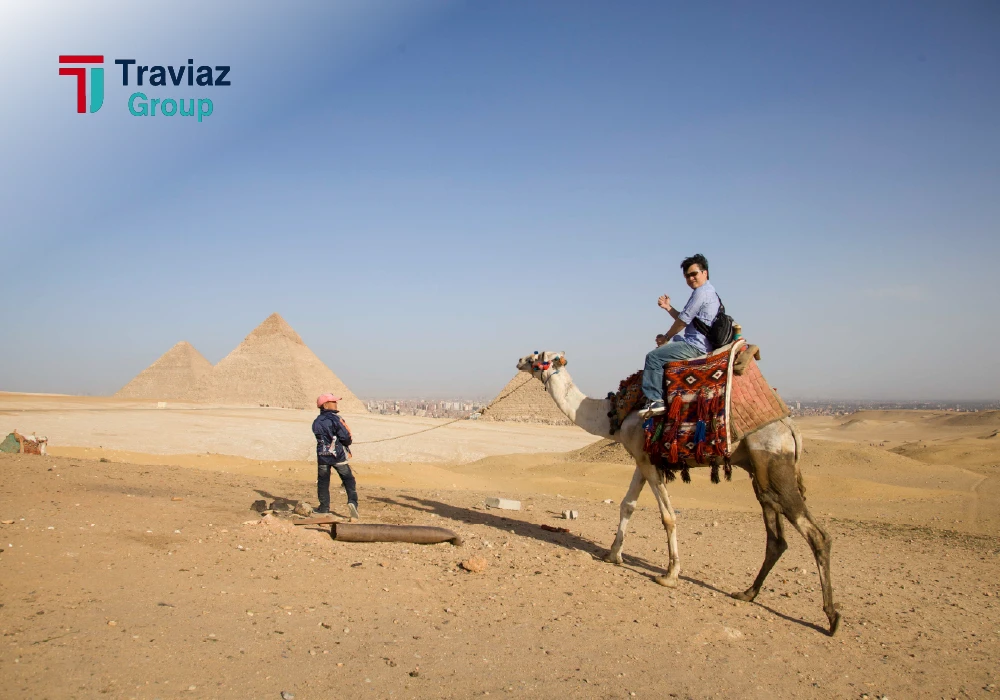
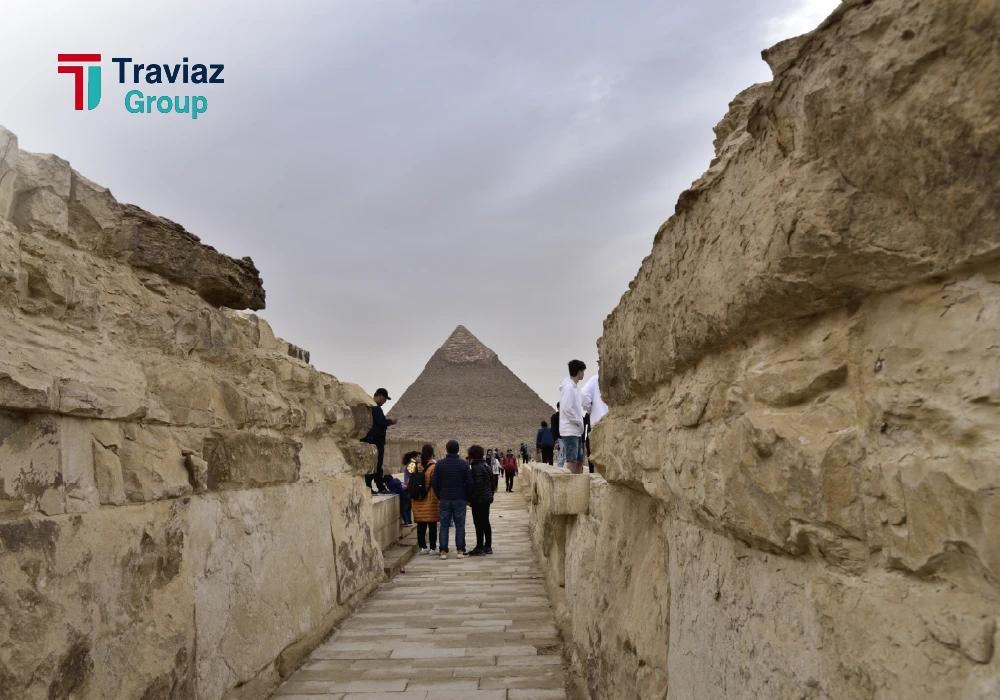
The day begins with breakfast at the hotel, then you head to the Giza Plateau before moving on to Saqqara, Memphis, and the Grand Egyptian Museum.
As evening approaches, you head to Cairo station to board the sleeper train heading south to Luxor.
Seven pyramids built for pharaohs of the Fourth Dynasty in the Old Kingdom period form the heart of the Giza Plateau.
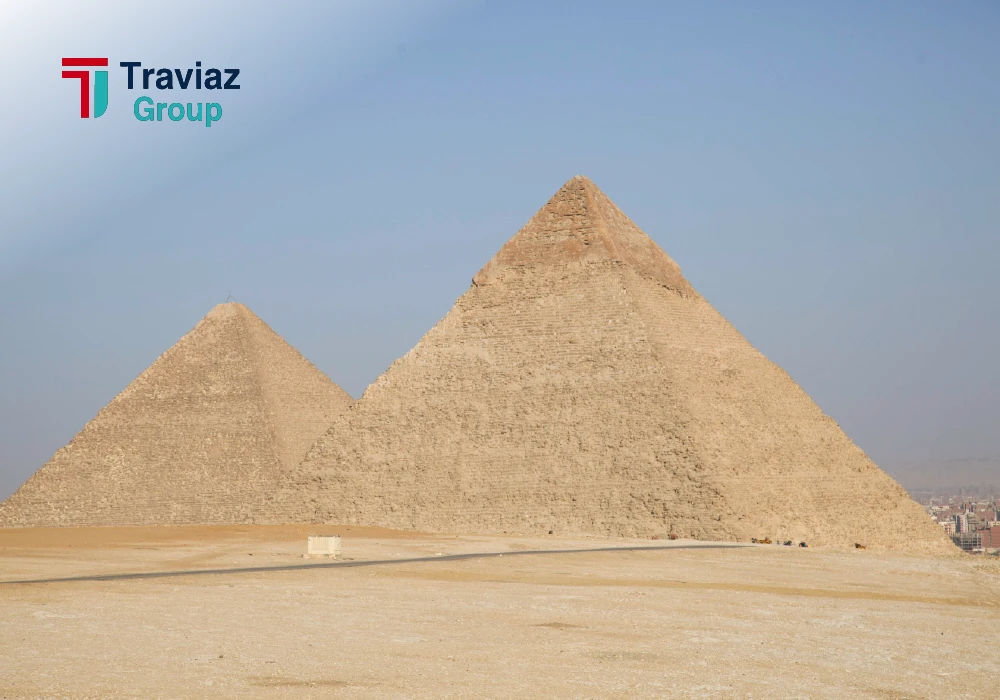
The Pyramid of Khufu was built between 2580 and 2560 BC with an original height of 146.6 meters and a base with sides of 230 meters, and it remained the tallest structure in the world for more than 3,800 years.
Near it stands the Pyramid of Khafre, retaining the remains of its white limestone casing at the summit, while red granite was used in the lower layers of the Pyramid of Menkaure.
From the panorama point all seven pyramids appear within a single scene.
A single block of limestone was carved into the Sphinx at 73 meters in length and a height reaching 20 meters. In front of the statue stands the Dream Stele, which Pharaoh Thutmose IV erected in 1400 BC, and it tells the story of the young prince who received a promise of kingship in exchange for removing the sands that had covered the statue's body.
25 kilometers south of Cairo lies Saqqara, the ancient necropolis of Memphis. Here the Step Pyramid of Djoser was built, designed by the architect Imhotep around 2650 BC, to become the first massive structure built entirely of stone in history and the first pyramid in Egypt.
Six stone steps raise the structure to approximately 60 meters, and this design was a turning point in construction engineering and a precursor to the great pyramids that appeared later in the Fourth Dynasty.
Memphis became the capital of Egypt after the unification of the two kingdoms in 3100 BC by King Menes, and it continued as a centre of power, religion, and trade for more than three thousand years.
Inside the open-air museum you see the large recumbent statue of Ramesses II made of pink granite, alongside the remains of the Temple of Ptah and obelisks.
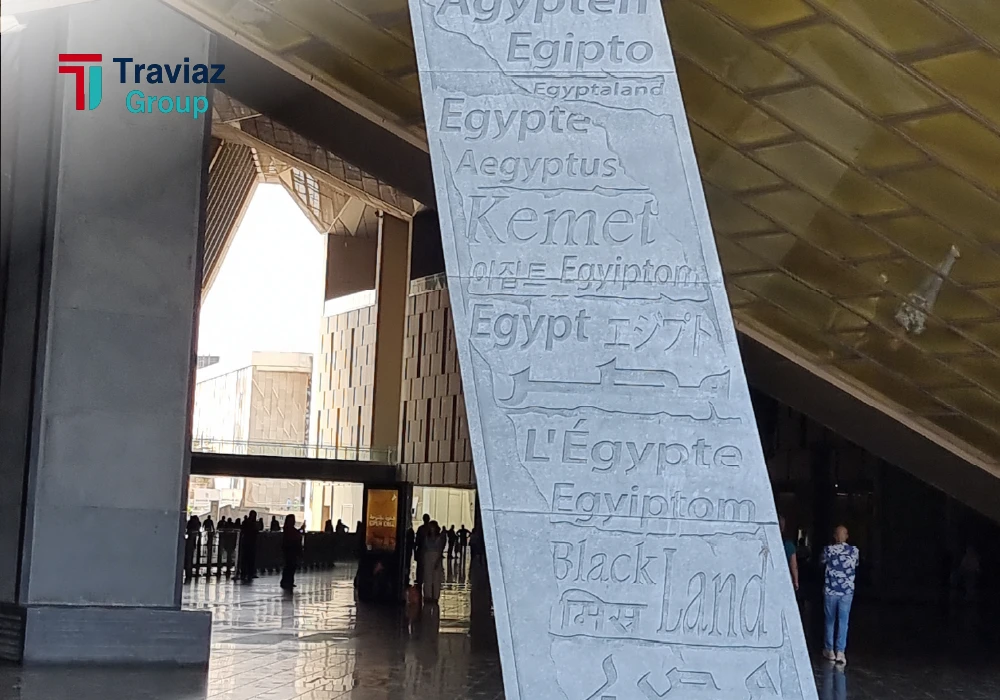
On the first of November 2025 the Grand Egyptian Museum opened officially in Giza. It covers 50,000 square meters and holds more than 100,000 artifacts, making it the largest museum in the world dedicated to a single civilization.
The massive statue of Ramesses II greets you in the atrium hall, and from there the Grand Staircase adorned with sixty artifacts leads to twelve halls.
The most prominent stop is the Tutankhamun hall, where 5,000 pieces from tomb KV62 are displayed together for the first time since its discovery in 1922, including the golden mask made from 11 kilograms of gold, the coffin, the throne, and the war chariots.
As evening approaches, you leave Cairo station aboard the sleeper train heading south. The private cabin provides a bed and blanket, while dinner is served in the dining car.
During the journey the window opens onto Egypt's nighttime scenes, and the trip continues for approximately ten hours along the Nile until you arrive in Luxor in the morning.
After arriving in Luxor in the early morning, your tour begins from the West Bank of the Nile. There the sites linked to the New Kingdom period and to the ancient Egyptians' beliefs about the afterlife follow one after another.
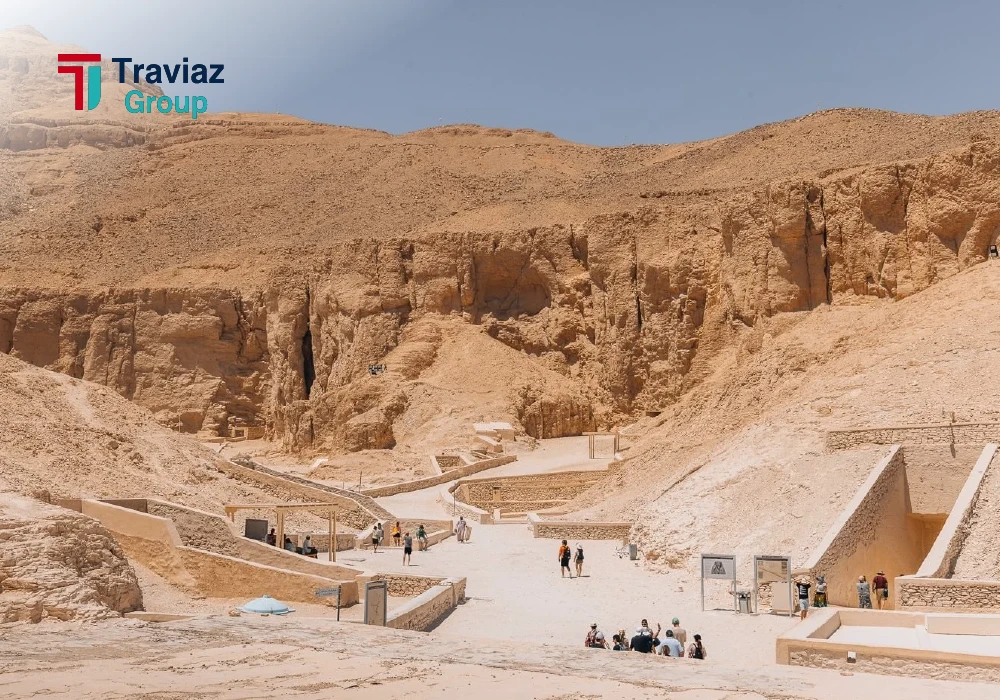
On the West Bank of Luxor, the royal necropolis known as the Valley of the Kings extended from the sixteenth to the eleventh century BC during the New Kingdom period.
More than 63 tombs and chambers were carved into the rocks, after the pharaohs chose this site as an alternative to exposed pyramids with the aim of reducing the risk of tomb robbery.
The basic ticket includes visiting three tombs, while tombs such as Tutankhamun (KV62) and Seti I (KV17) require separate tickets. On the walls appear religious texts and paintings recording the pharaoh's journey to the afterlife.
At Deir el-Bahari stands the Temple of Queen Hatshepsut, one of the most daring structures in ancient Egyptian architecture.
Hatshepsut took full control as pharaoh between 1473 and 1458 BC during the Eighteenth Dynasty, then she ordered the construction of her funerary temple which she named "Djeser-Djeseru," meaning "Holy of Holies."
Her chief architect Senenmut designed the building in the form of three terraced colonnades, so that clear horizontal lines extended in front of the limestone cliff and harmonized with it rather than relying on towering pylons and massive stone blocks.
The carvings record her trading expedition to the land of Punt, and they also display her divine lineage from Amun himself.
Approximately two decades after her death, Thutmose III attempted to erase much of her legacy by defacing her images and carvings, but the temple remained as a witness to her era.
On the Theban plain stand two massive statues of quartzite sandstone representing Pharaoh Amenhotep III of the Eighteenth Dynasty.
Each one reaches 18 meters in height and weighs approximately 720 tons, and they were erected around 1350 BC to guard his funerary temple, which was at that time the largest temple in Luxor.
The temple was destroyed by floods and earthquakes, leaving only the two statues. The ancient Greeks named them "Colossi of Memnon" after the legendary Trojan hero.
On the East Bank of Luxor extends the Karnak Temple Complex, the largest religious site in human history, covering an area of 200 acres.
Construction continued for approximately two thousand years, from around 2055 BC until the first century AD, and the main temple was dedicated to the god Amun-Ra, the god of sun and kingship.
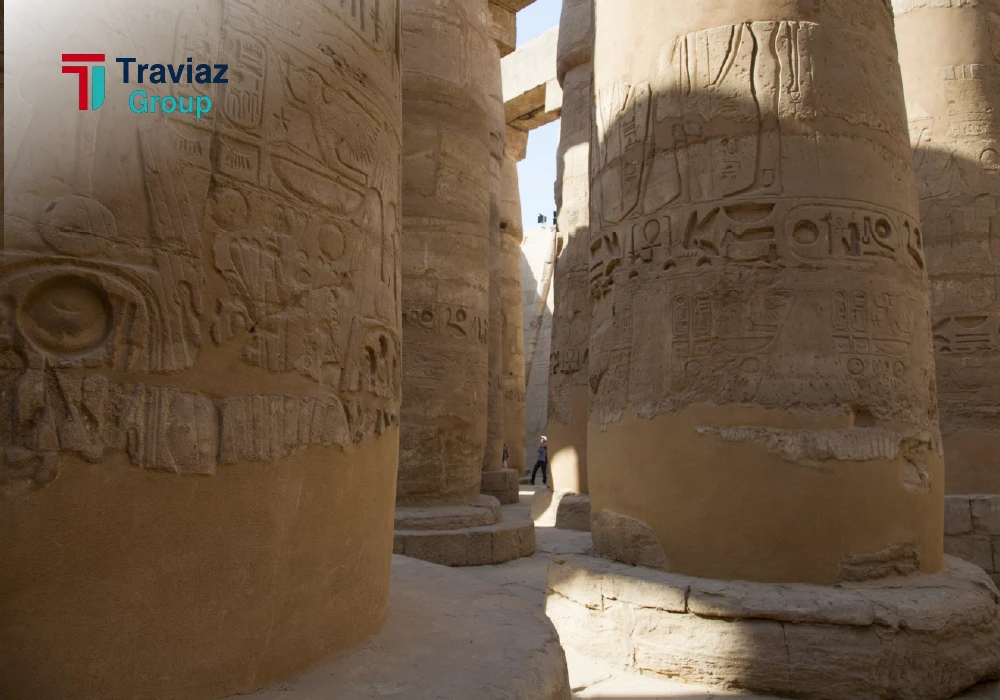
The architectural heart of the complex is the Great Hypostyle Hall, which covers approximately five thousand square meters and holds 134 massive stone columns arranged in 16 rows.
The twelve central columns each reach 24 meters in height, and they were originally covered with vivid colours of blue, red, and gold.
The day begins with breakfast at the hotel, then you make use of the morning hours in Luxor before heading to the airport in preparation for the afternoon flight to Cairo.
Directly in the centre of the modern city of Luxor, Luxor Temple stands on the East Bank of the Nile.
It was built in the fourteenth century BC during the reign of Amenhotep III, then sections of it were completed with the additions of Ramesses II. Its design gives it a more elegant and cohesive character compared to Karnak.
In front of the entrance stands an obelisk of pink granite, while the other obelisk has stood since 1836 in the Place de la Concorde in Paris, after Muhammad Ali Pasha presented it as a gift to France.
After the visit ends, you transfer by car to Luxor airport for your flight to Cairo. Upon arrival, you meet your guide to continue the tour in Islamic Cairo.
Since the fourteenth century AD, Khan El-Khalili has retained its status as a historic market within a network of covered alleys.
Its shops are spread throughout and they display spices, perfume, silver, copper, and textiles.
Saladin began building the citadel in 1176 AD, and it continued as the seat of governance for approximately seven centuries.
Inside its walls the Mosque of Muhammad Ali was built, also known as the Alabaster Mosque, between 1830 and 1848 in the Ottoman style, and it was the largest mosque built in Egypt during that era.
After breakfast at the hotel, you head to Cairo International Airport in preparation for departure and the conclusion of your trip.

Our most comprehensive sightseeing package. Cairo, Alexandria, and a complete Nile cruise between Luxor and Aswan with a private Egyptologist guide throughout the trip. For those who want to see all of Egypt.
Three faces of Egypt in five days: Hurghada with its beaches and safaris, Cairo with its Pyramids, and Luxor with its temples. History, adventure, and relaxation in a single package.
Most visitors to Egypt pass through Cairo, but only a few give it enough time to discover its different layers.