Many travelers believe that an Egypt Nile Cruise experience requires a large budget, but this trip brings together Egypt's most prominent landmarks in a seven-day program starting from $650 per person. From the Giza Pyramids and the Grand Egyptian Museum to Aswan, the Nile temples, and the Valley of the Kings in Luxor, the trip covers transportation, accommodation, and visits to the most important historical sites, making it a suitable option for anyone looking for a 7 day Egypt tour within a budget Egypt tours package
Upon arrival at Cairo International Airport, a Traviaz representative meets you to assist with arrival procedures and baggage collection, then you transfer by private air-conditioned vehicle to the hotel.
The rest of the day is reserved for rest and preparation for the tour program.
After breakfast at the hotel, your tour begins with a specialized guide to explore Cairo's most prominent historical landmarks.
Great Pyramids of Giza & Great Sphinx
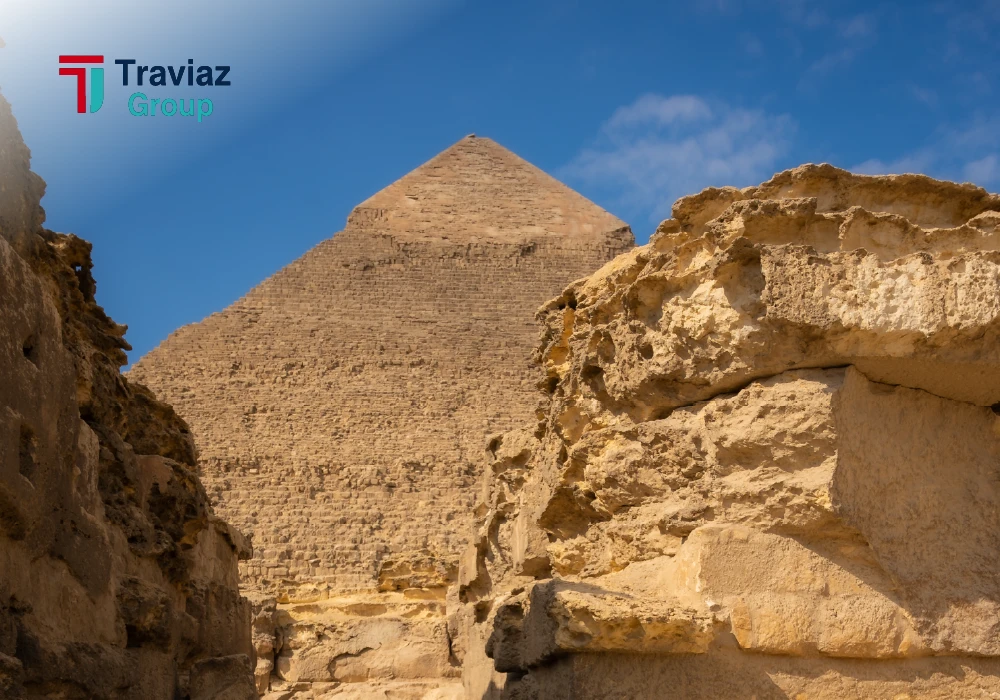
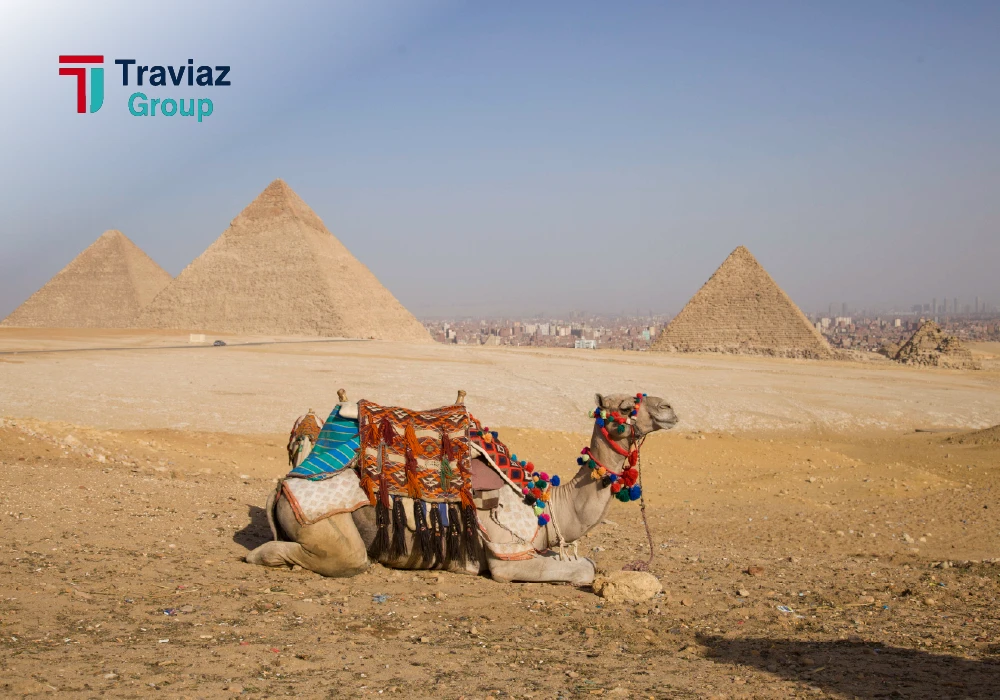
The Giza Plateau houses the pyramids of the Fourth Dynasty kings from the Old Kingdom era.
The original height of the Pyramid of Khufu was approximately 146.6 meters, built between 2580 and 2560 BC, remaining the tallest man-made structure for more than 3,800 years.
The Pyramid of Khafre retains remnants of its white limestone casing at its summit, while the Great Sphinx extends approximately 73 meters, with the Dream Stele erected between its paws by Thutmose IV around 1400 BC.
Grand Egyptian Museum (GEM)
The Grand Egyptian Museum is located in Giza near the Pyramids and officially opened on November 1, 2025.
The museum houses more than 100,000 artifacts connected to ancient Egyptian civilization.
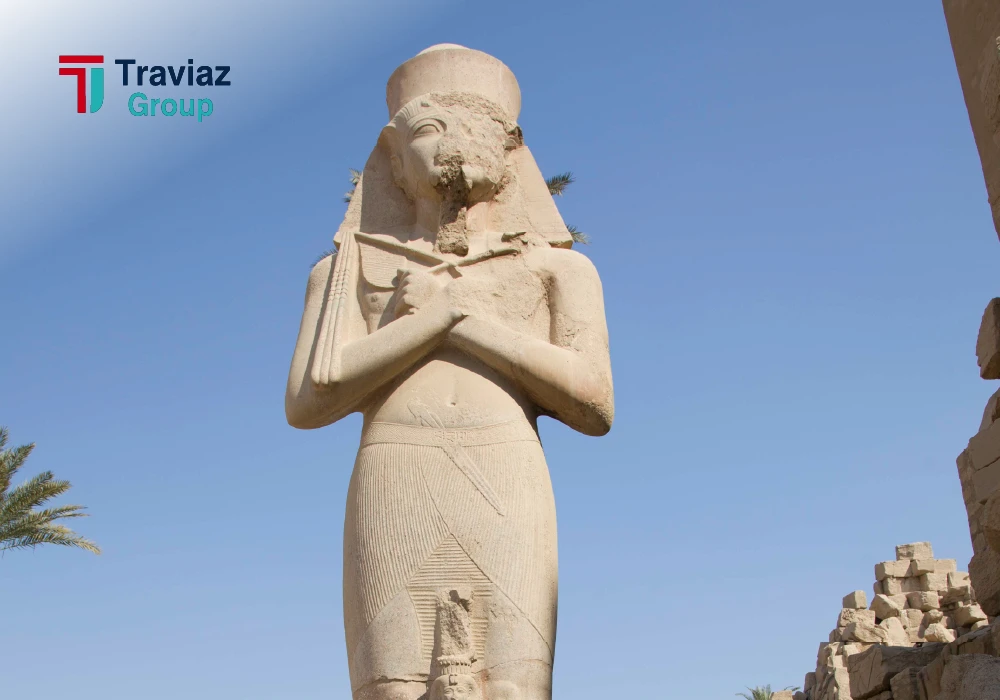
A statue of Ramesses II greets visitors in the atrium hall, while the Grand Staircase, adorned with 60 artifacts, leads to 12 exhibition galleries.
The Tutankhamun galleries contain more than 5,000 pieces from the king's collection, including the famous golden mask made from approximately 11 kilograms of pure gold.
Khan El-Khalili
Khan El-Khalili market dates back to the fourteenth century and sits in the heart of historic Cairo. Its alleyways are lined with shops displaying spices, perfumes, and silver and copper crafts, while its cafes offer a chance to rest and enjoy Egyptian tea before continuing the journey.
Overnight Train to Aswan
In the evening, you head to the train station to board a first-class sleeper train bound for Aswan. The journey includes a private cabin and dinner on board, as the train travels south through the Nile Valley for approximately ten hours.
You arrive in Aswan in the morning, where a Traviaz representative meets you for the city tour, then you head to the Nile cruise to begin the river journey.
Aswan High Dam
The Aswan High Dam was completed in 1970, after the project launched in 1960, making it one of the most prominent engineering projects of the twentieth century.
It stretches approximately 3,830 meters in length and 111 meters in height, while Lake Nasser extends behind it for approximately 550 kilometers to the south, ranking it among the largest artificial lakes in the world.
The dam's hydroelectric station has a production capacity of approximately 2,100 megawatts, and the project also contributed to regulating the flow of the Nile waters and reducing the effects of seasonal flooding.
Philae Temple
On the island of Agilkia stands Philae Temple, dedicated primarily to the worship of the goddess Isis, who is associated with motherhood, healing, and magic in ancient Egyptian beliefs.
The bulk of its construction dates to the Ptolemaic period in the third century BC, with additions built during the Roman era.
Religious activity continued there until the sixth century AD, making it one of the last ancient Egyptian temples to remain in use.
Reaching the temple requires a boat ride across the Nile, and its sound and light show offers the chance to experience the site in a distinctive evening atmosphere.
After the construction of the High Dam, the temple faced the risk of submersion, so UNESCO executed a project to relocate it stone by stone to its current location between 1972 and 1980.
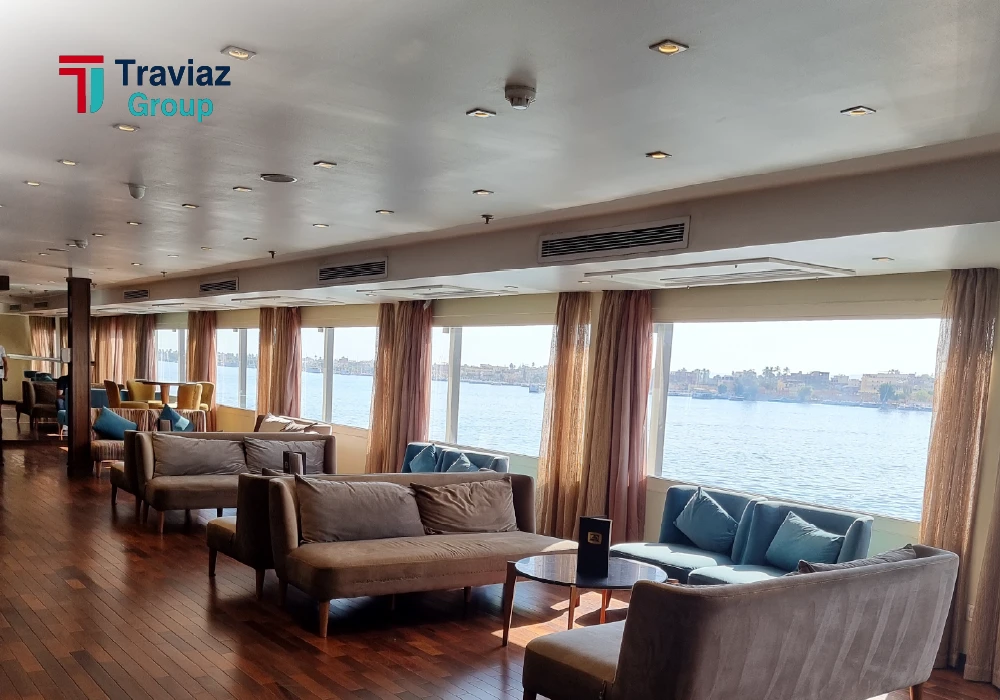
After the tour ends, you board the Nile cruise and settle into your cabin in preparation for sailing.
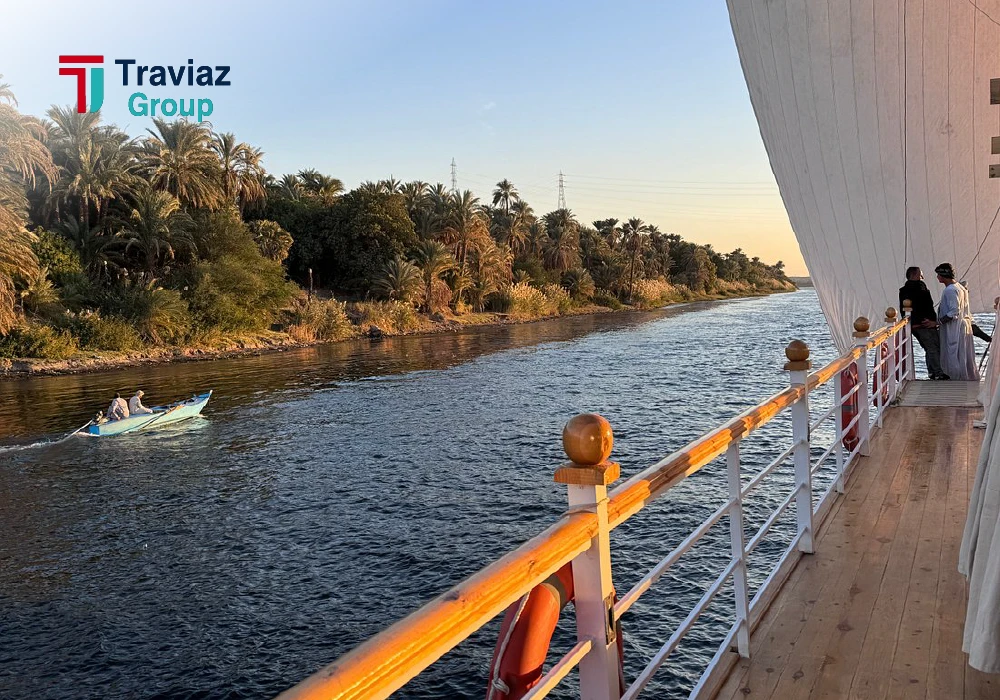
The day begins with breakfast on board the cruise, while the river journey continues toward Kom Ombo Temple and then Edfu Temple, two of the most prominent archaeological sites on the banks of the Nile.
Kom Ombo Temple
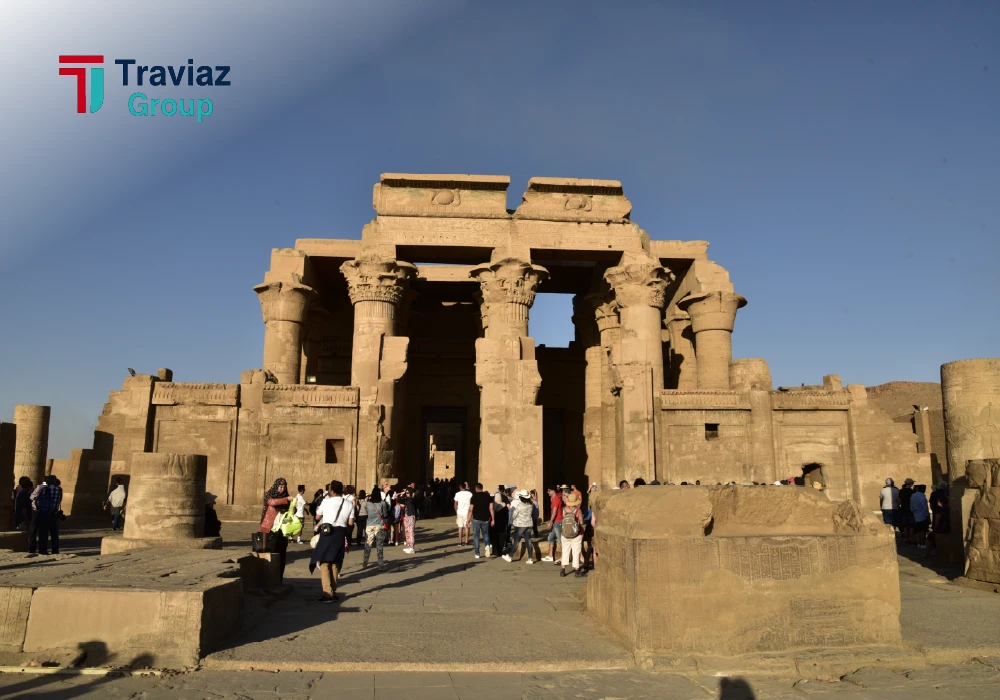
Kom Ombo Temple is distinguished by a dual design that brings together two nearly identical sections in layout, one dedicated to the god Horus associated with the falcon, and the other to the god Sobek with the crocodile head.
This design reflects the concept of duality in ancient Egyptian worship and gives the temple a unique architectural character.
The temple walls carry rare carvings of medical and surgical instruments, among them tools resembling scalpels, scissors, and suturing implements.
Nearby stands the Crocodile Museum, which displays mummies of sacred crocodiles connected to worship in the region.
Edfu Temple
Edfu Temple is considered one of the best-preserved ancient Egyptian temples, as the sand that covered it for centuries helped protect it from deterioration.
French archaeologist Auguste Mariette uncovered its buried sections during the nineteenth century. The temple was built in the Ptolemaic era between 237 and 57 BC and dedicated to the worship of the god Horus.
The magnificence of the design shows in the massive entrance gateway, the open courtyard, the hypostyle hall, and the detailed carvings.
The black falcon statue at the entrance stands as a testament to the temple's connection to Horus and gives the visitor a clear sense of religious temple architecture in ancient Egypt.
You arrive in Luxor in the morning, then begin your visit to the West Bank of the Nile, where royal tombs and funerary temples from the New Kingdom era are spread across the landscape.
Valley of the Kings
New Kingdom pharaohs used the Valley of the Kings as a royal burial ground from the sixteenth century through the eleventh century BC.
The site contains more than 63 rock-cut tombs and was chosen as an alternative to the pyramids to reduce the risk of royal tomb robbery.
The tomb walls are covered with religious texts and illustrations depicting the king's journey to the afterlife.
The standard ticket includes entry to three tombs, while visiting the tomb of Tutankhamun requires purchasing a separate ticket.
Temple of Queen Hatshepsut
The Temple of Queen Hatshepsut stands in the Deir el-Bahari area and was built between 1479 and 1458 BC during the reign of the Eighteenth Dynasty.
Hatshepsut ruled for more than twenty years and named her temple Djeser-Djeseru, meaning Holy of Holies.
The architect Senenmut designed the temple as three terraced levels that harmonize with the limestone cliff behind them.
The carvings record the details of the famous trade expedition to the land of Punt and address the divine lineage connected to the queen's legitimacy to rule.
Colossi of Memnon
The Colossi of Memnon stand on the Theban plain as two massive quartzite statues depicting Pharaoh Amenhotep III of the Eighteenth Dynasty. Each statue stands approximately 18 meters tall, with each one weighing around 720 tons.
They were erected around 1350 BC to guard the entrance to the pharaoh's funerary temple, which was damaged by earthquakes with only limited traces remaining.
After breakfast on board the cruise, you head to the East Bank to visit the Luxor temples, then transfer to the airport to fly to Cairo and continue the tour.
Karnak Temple Complex
The Karnak Temple Complex extends across approximately 200 acres and is considered one of the largest historical religious complexes in the world.
Its construction and development continued for approximately two thousand years, with successive generations of kings contributing to it.
The Great Hypostyle Hall contains 134 stone columns arranged in 16 rows, covering an area of approximately 5,000 square meters.
Seti I began building the hall and Ramesses II completed its sections, making it one of the most prominent examples of ancient Egyptian architecture.
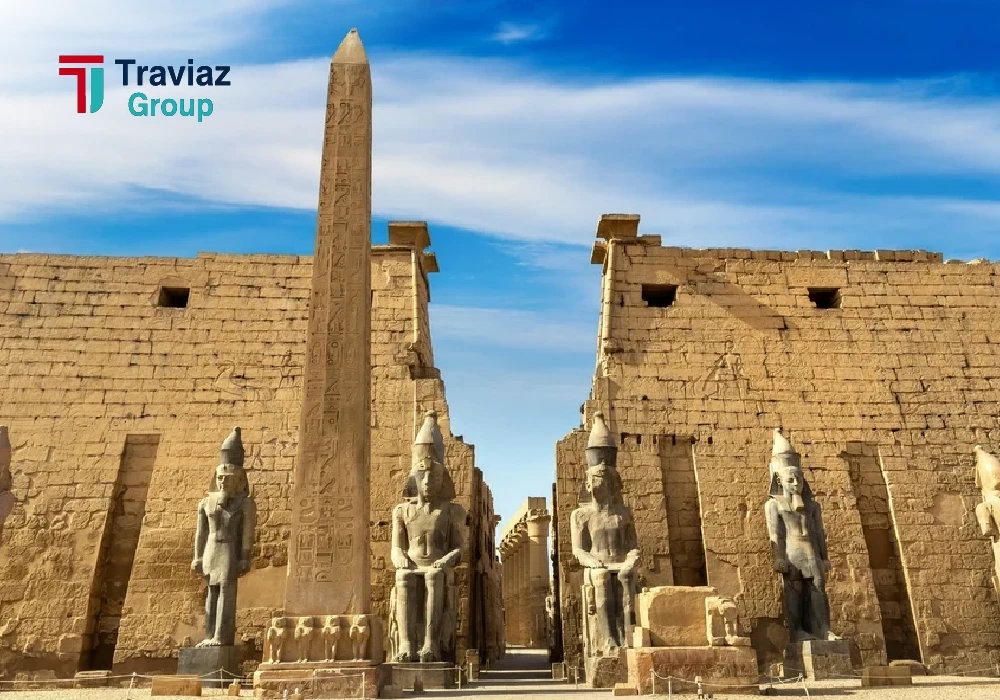
Luxor Temple
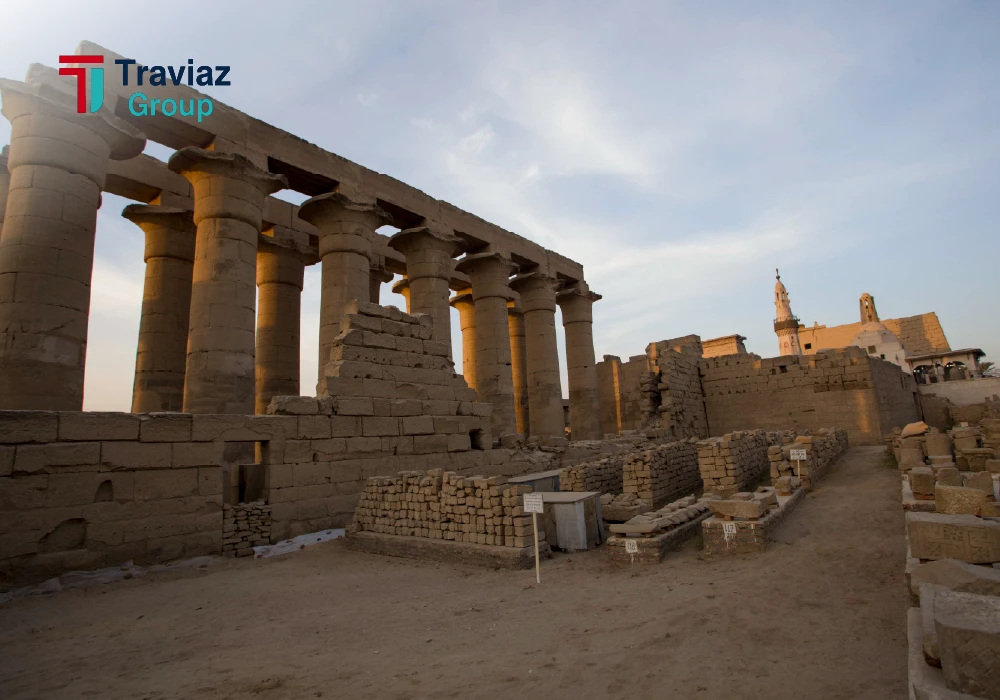
Luxor Temple sits in the heart of the modern city, with its main construction dating to the fourteenth century BC.
It is distinguished by a more unified and elegant design compared to the Karnak complex and is historically associated with religious rites and royal celebrations.
One of the temple's two obelisks still stands in its original position, while the other was relocated to the Place de la Concorde in Paris in 1836 during the era of Muhammad Ali Pasha.
After lunch, you head to Luxor Airport to board the flight to Cairo. Upon arrival, a Traviaz driver transfers you to the Citadel to complete the visit.
Citadel of Saladin & Mosque of Muhammad Ali
Construction of the Citadel of Saladin began in 1176 AD and it remained a center of governance in Egypt for many centuries.
The Citadel houses the Mosque of Muhammad Ali, built between 1830 and 1848 in the Ottoman style and considered one of the most prominent landmarks of historic Cairo.
From the Citadel's elevated position, a sweeping view of Cairo's skyline and urban landmarks stretches out before you.
After breakfast at the hotel, you transfer to Cairo International Airport in preparation for departure, concluding a trip that brought together the most prominent historical landmarks of Cairo, Aswan, and Luxor.

7 day egypt tour combines the Giza Pyramids, the Sphinx, and the Grand Egyptian Museum in Cairo, then the Luxor temples and the Valley of the Kings, with a private Egyptologist guide and at competitive prices.
The 5 day Egypt tour extends over five days combining Cairo, Luxor, and Alexandria, with domestic flights used to reduce travel time between the two main cities.
If 5 days is too much, we can do a 2-day tour of Egypt. Enjoy a thoughtfully designed 2-day women-only experience in Egypt, which will be perfect for you. This tour package was specially created to offer you comfort, meaningful exploration, and absolute confidence. On this 2-day tour, you will visit some of the most impressive landmarks in Egypt, all within a fully supportive, relaxed travel environment.