trip to giza pyramids & Cairo is can take a full week to discover, but three organized days with a private Egyptologist guide and an air-conditioned car give you the chance to see its most important landmarks more efficiently.
tours giza pyramids was designed to combine the Pyramid of Khufu, the Sphinx, and the Grand Egyptian Museum, which opened officially in November 2025 and displays the complete Tutankhamun collection for the first time, alongside Coptic and Islamic Cairo, the Citadel of Saladin, Khan El-Khalili, and Baron Empain Palace.
travel to giza pyramids is entirely private, so you will not share the program with other tourist groups or be bound by group schedules. The trip offers an integrated entry point into the most prominent features of Cairo and Giza.
Upon your arrival at Cairo International Airport, a Traviaz representative meets you and helps you complete the arrival procedures and collect your luggage.
You then set off by private air-conditioned car to your hotel in Cairo, while the rest of the day remains dedicated to rest and acclimatization before the main tour begins the following morning.
The day begins after breakfast at the hotel, then you head with the Egyptologist guide to giza pyramids visit to spend the morning among the Pyramids and the Sphinx, before moving in the afternoon to the Grand Egyptian Museum.
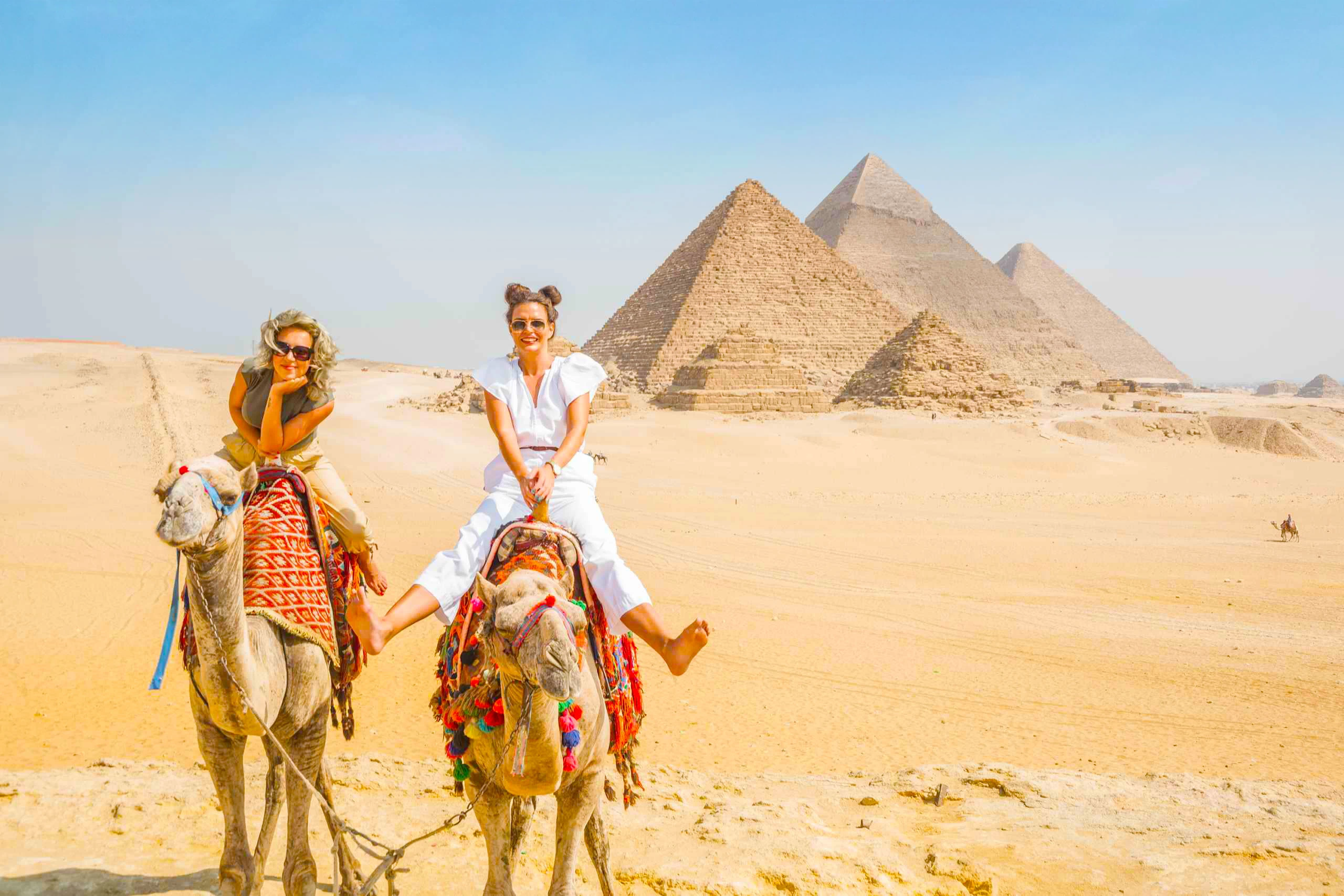
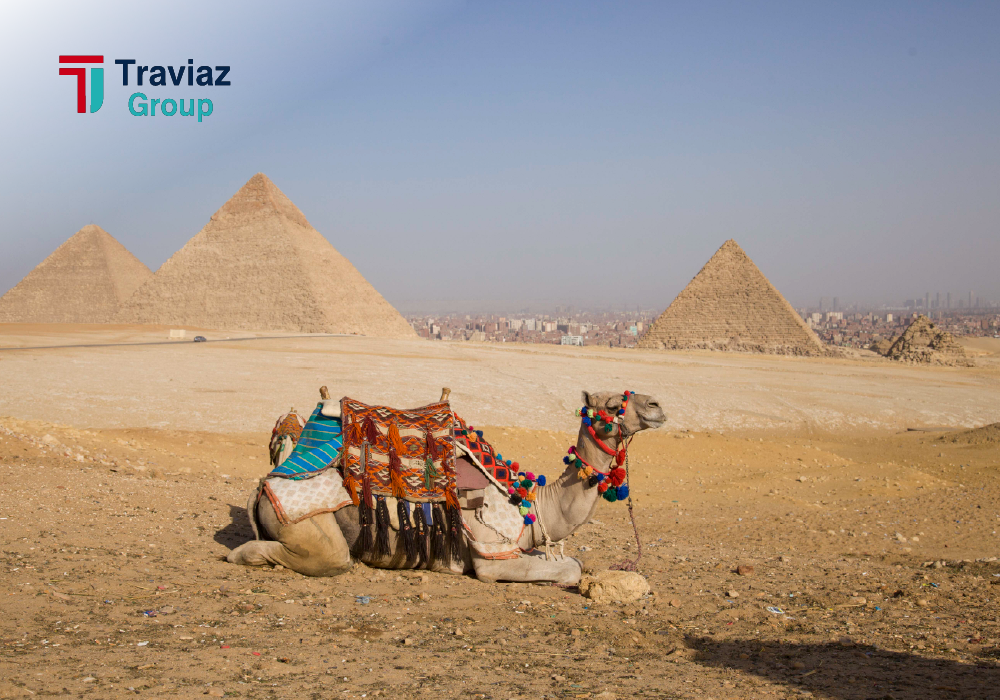
The Giza Plateau holds seven pyramids, but the three great ones remain its most prominent monuments, and they were built for pharaohs of the Fourth Dynasty during the Old Kingdom period.
The construction of the Pyramid of Khufu began between 2580 and 2560 BC, and its original height reached 146.6 meters, making it the tallest structure in the world for more than 3,800 years.
Near it stands the Pyramid of Khafre, on whose summit some sections of the original white limestone casing are still visible, while the Pyramid of Menkaure comes third and its construction was completed after the pharaoh's death by his successor.
The guide takes you to the panorama point to see all seven pyramids in a single frame, then the tour continues to the Valley Temple belonging to the Giza complex. Entry inside the pyramids is available through additional tickets for those who wish.
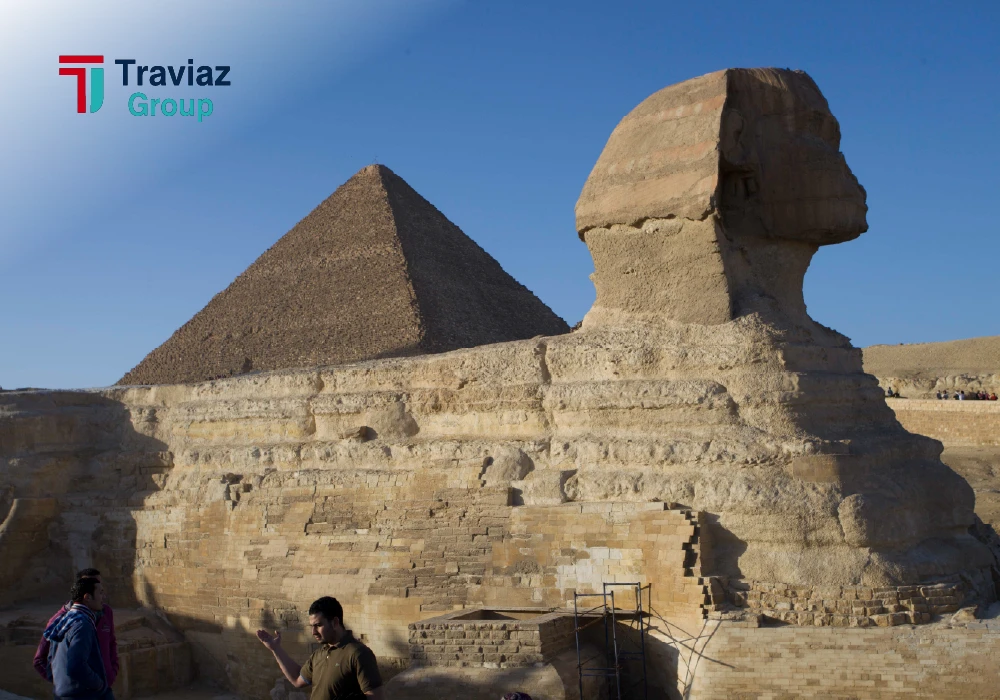
The Great Sphinx extends 73 meters from paw to tail, while its height reaches 20 meters, and it was carved from a massive block of limestone believed to date to approximately 2500 BC.
It is generally thought that the facial features represent Pharaoh Khafre, with this hypothesis remaining a subject of debate among Egyptologists.
Between the statue's paws stands the Dream Stele, which Pharaoh Thutmose IV erected around 1400 BC.
The stele tells the story of the young prince before he ascended the throne, when he slept near the statue and had a dream linked to his promise of kingship if he cleared the sands that had covered the Sphinx's body.
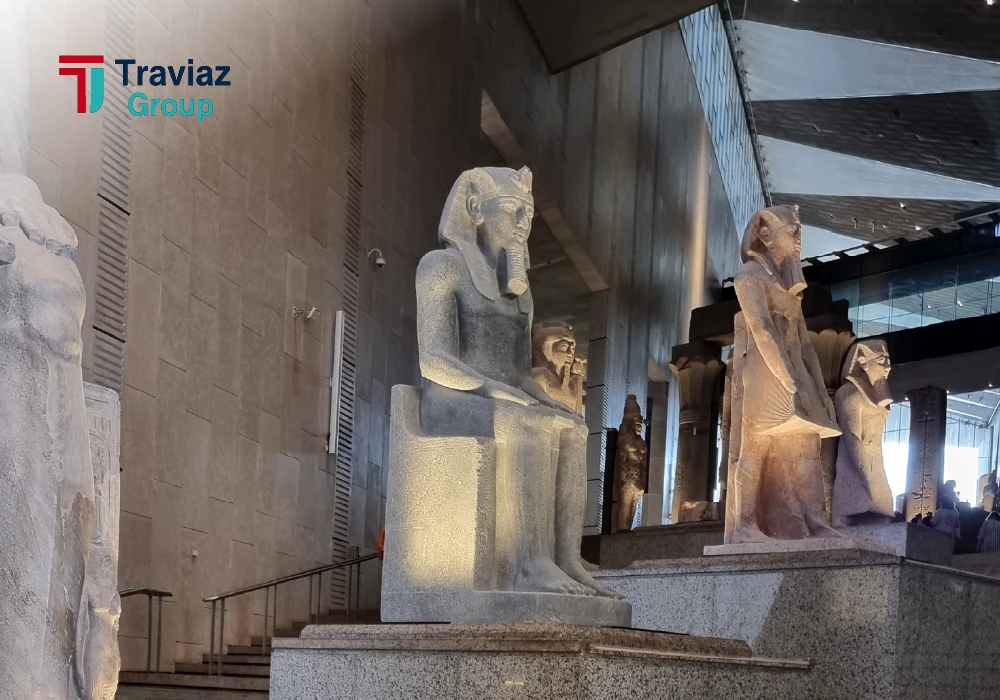
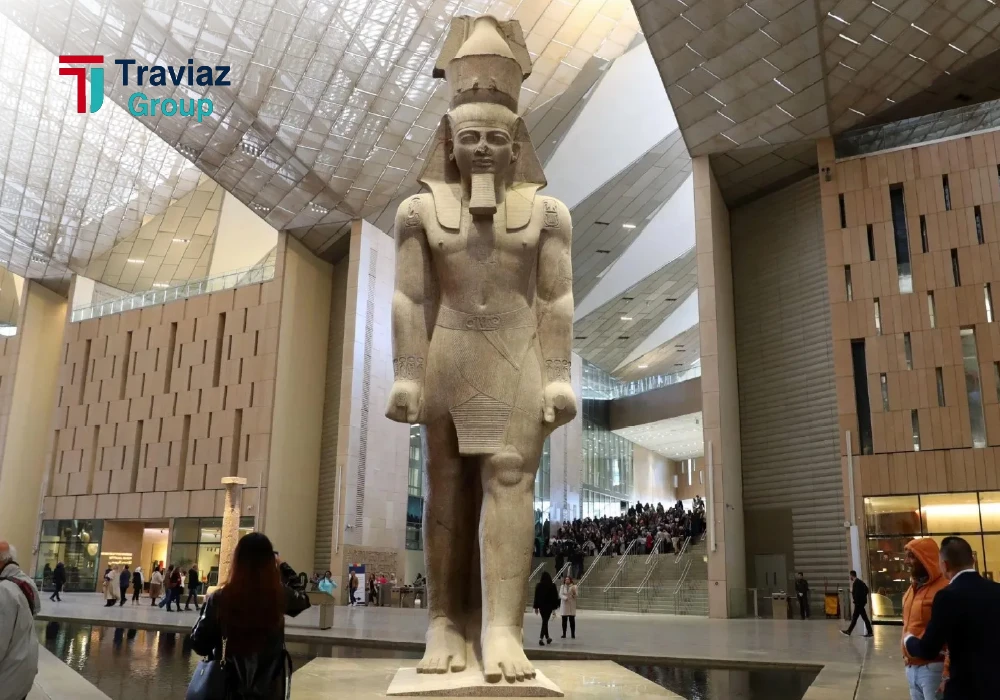
The Grand Egyptian Museum opened officially on the first of November 2025 and is located a short distance from the Giza Plateau.
The museum holds more than 100,000 artifacts covering periods extending from the Pre-Dynastic era to the Greco-Roman period, and it presents one of the largest displays of Egyptian antiquities in the world.
The centerpiece of the visit is the complete Tutankhamun collection, which includes more than 5,000 pieces and is displayed together for the first time since the tomb's discovery in 1922, among them the golden mask, the inner golden coffin, the throne, and the jewelry.
The mask was made from 11 kilograms of pure gold, while the Grand Staircase greets visitors with rows of large statues alongside views of the Pyramids through the museum's glass facade.
The last day takes you through different layers of Cairo's history, beginning from the Coptic area, then the Citadel of Saladin and the historic mosques, and on to Khan El-Khalili and Baron Empain Palace before heading to the airport.
Coptic Cairo developed above the remains of the Roman Babylon Fortress dating to the first century BC.
The Hanging Church, officially known as the Coptic Orthodox Church of the Virgin Mary, was built above the fortress's southern gate in the third century AD, and it got its name because its main nave was built above the fortress's passageway.
The church became the seat of the Coptic Orthodox Pope during the period extending from the seventh to the thirteenth century.
Nearby stands Ben Ezra Synagogue, which dates to the ninth century AD and is considered one of the oldest preserved Jewish temples in Cairo.
The site is also linked to the Cairo Geniza, a large collection of documents from the Jewish community, important sections of which date to the eleventh century and are currently preserved at Cambridge University.
The Citadel of Saladin stands above the Muqattam Hills, and Saladin began its construction in 1176 AD with the aim of protecting Cairo and Fustat from Crusader threats.
The citadel continued as the centre of Egypt's governance for approximately seven centuries, from the thirteenth to the nineteenth century.
Inside the citadel stands the Mosque of Muhammad Ali, known as the Alabaster Mosque, and it was built between 1830 and 1848 in the Ottoman style.
From the top of the mosque you can get a wide panorama of Cairo, while its two pencil minarets stand out on the city's skyline. Inside the mosque is also the tomb of Muhammad Ali.
The Fatimids founded Al-Azhar Mosque in 970 AD, and it later became one of the most prominent centres of religious education in the Islamic world.
Its wide courtyard covered with marble and its minarets that reflect different architectural phases attract attention during the visit, which makes the site important from both historical and architectural perspectives.
Since the fourteenth century AD, Khan El-Khalili has remained an essential part of the commercial scene in Fatimid Cairo. The old alleys interweave between shops of spices, silver, copper, pottery, and perfume, while bargaining over prices remains a well-known part of the shopping experience in the market.
In Heliopolis, Baron Empain Palace stands out as one of Cairo's most distinctive buildings. The Belgian industrialist Édouard Empain built it between 1907 and 1911, and the French architect Alexandre Marcel designed it inspired by Hindu temples in southern India and the temples of Angkor Wat in Cambodia.
On its facades appear statues linked to Hindu gods such as Krishna, Hanuman, and Vishnu, which gives it an unfamiliar appearance in the heart of Cairo.
After the palace was restored, it opened as a museum that tells the history of Heliopolis and the development of Empain's project, then a Traviaz representative transfers you to Cairo International Airport in preparation for departure.

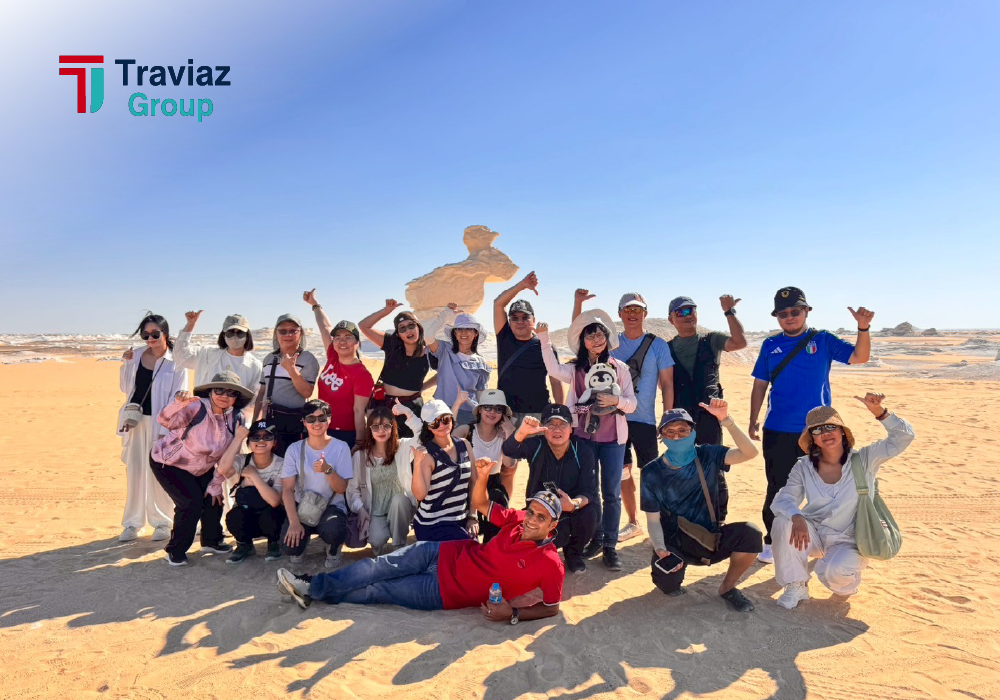
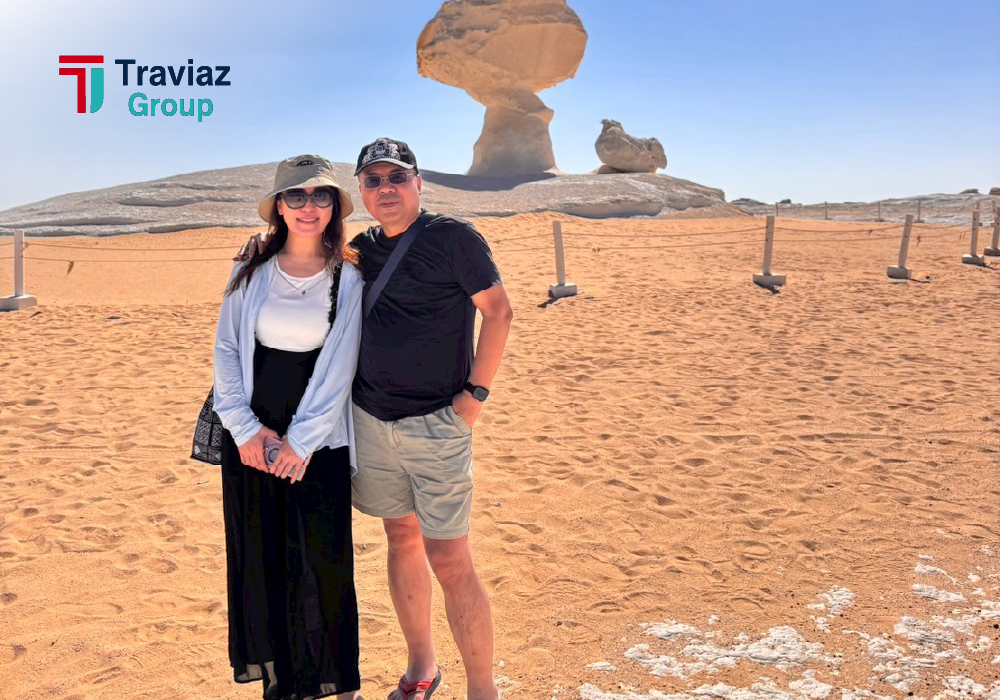
This package alone brings together Cairo, Alexandria, the Bahariya Oasis, and the White Desert within a single Deluxe program. A full night in a camp in the middle of the White Desert under the stars, alongside a private Egyptology guide throughout the trip.
The program extends over three days that combine archaeological sites, geological formations, and desert life, starting from Bahariya Oasis and ending with camping under the sky of the White Desert.
Come with TRAVIAZ on a 4-day luxury trip to two of the most adventurous cities in Egypt. If you love comfy rides, history, and unrushed sight-seeing, this package is for you. You get to see Cairo’s world-famous museums and monuments, and the beauty of Alexandria’s coastal nature on an exquisite tour. Enjoy 4 full days of luxury rides and guides exploring cultures, history, and creating life-long memories.