7 day egypt tour package, classified as the only Deluxe option at Traviaz, brings together three different Egyptian worlds within a single 7 days egypt tour package. The experience begins with pharaonic Cairo, with its pyramids and museums, then moves to cosmopolitan Alexandria with its Roman-Greek-Egyptian coast, before heading 360 kilometers west to the Bahariya Oasis, the Black Desert, Crystal Mountain, and the White Desert.
7 days in egypt extends from the Cairo pyramids to the Citadel, then to the Mediterranean, and all the way to the terrain of the Western Desert and a stargazing camp. The 7-day Egypt tour starts from $910 with a private Egyptology guide and a private air-conditioned vehicle at every stop
egypt itinerary 7 days began from The moment you arrive at Cairo International Airport, your Traviaz Egyptology specialist is waiting to assist with arrival procedures and baggage collection. You then transfer directly by private air-conditioned vehicle to your luxury hotel in Cairo.
Meals: No meals. Accommodation: Hotel in Cairo.
The day begins after breakfast with an intensive tour spanning three thousand years of Egyptian history, covering some of Cairo and Giza's most prominent archaeological sites.
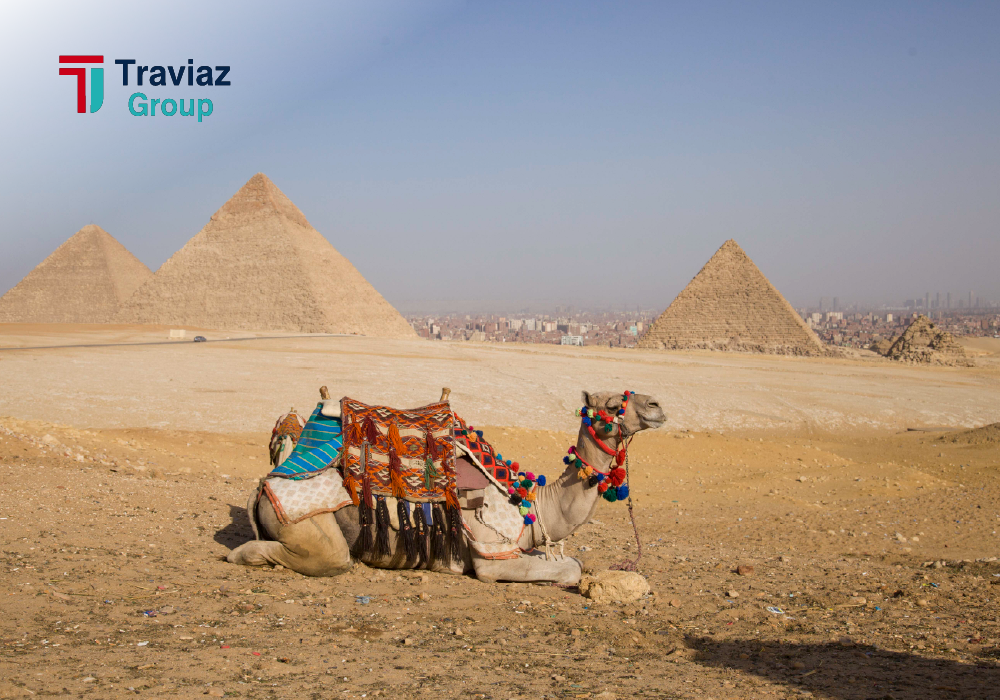
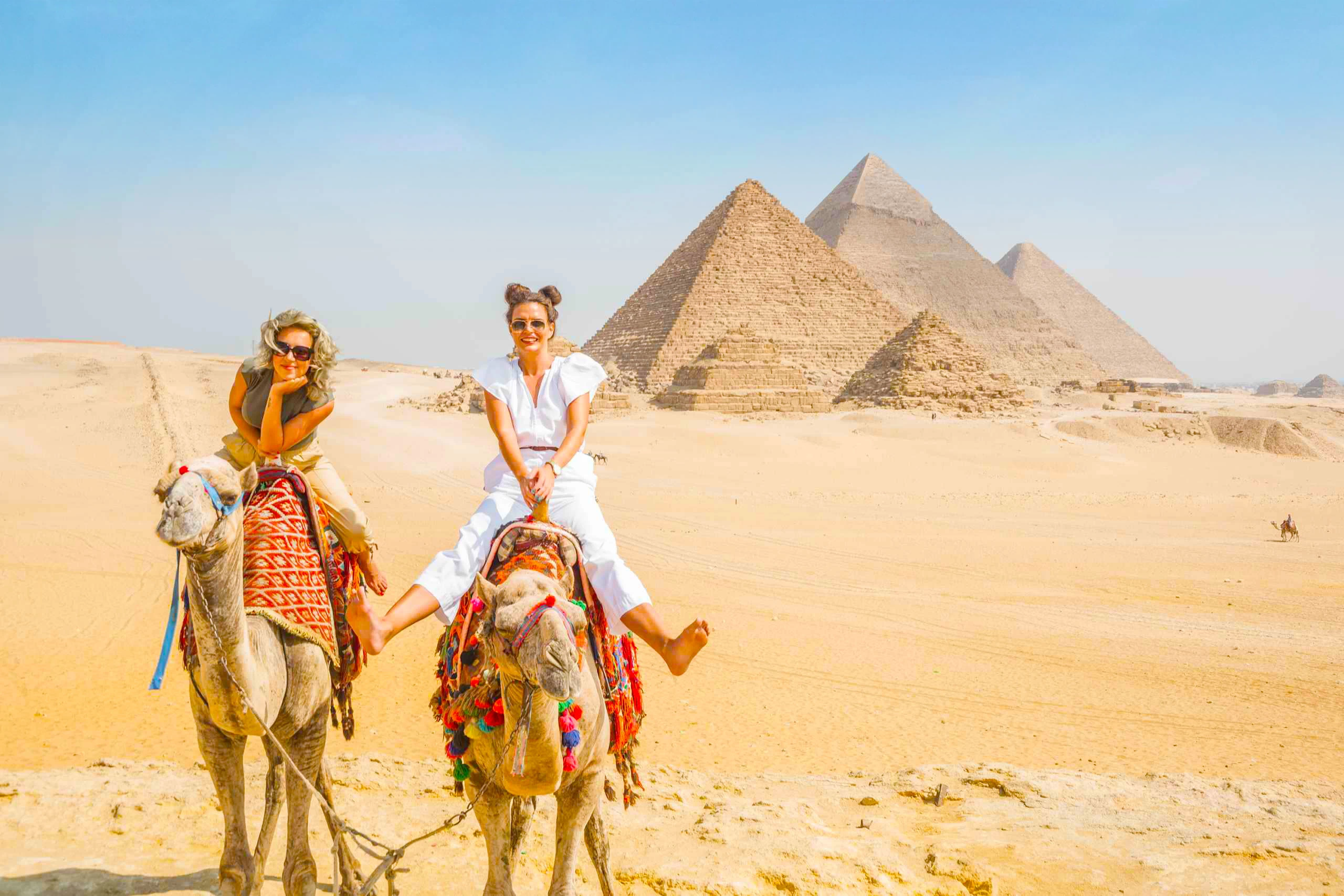
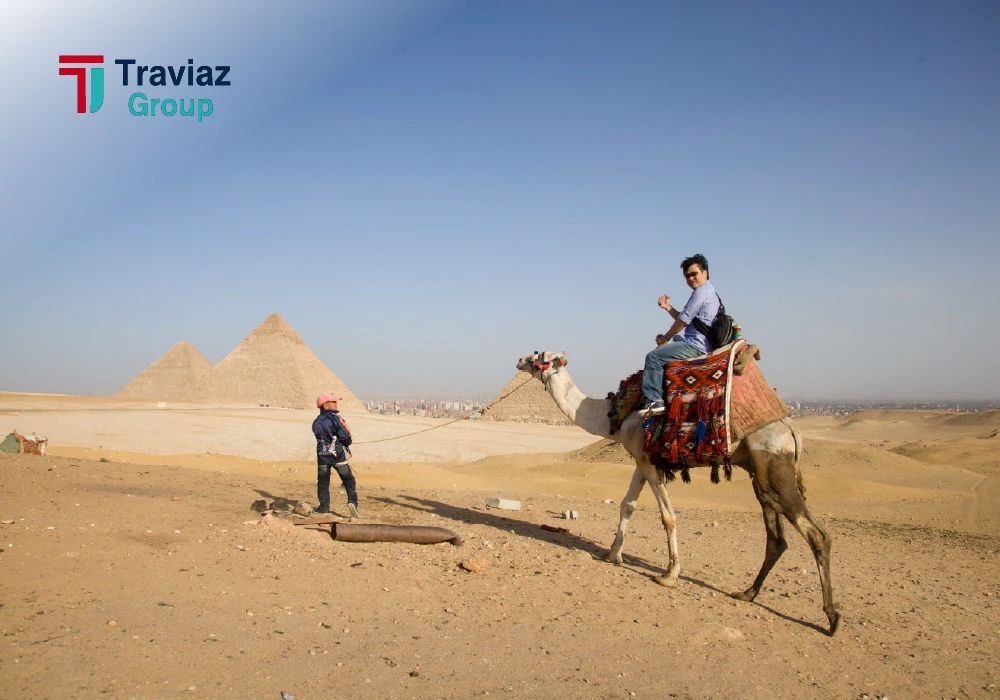
More than 16,000 hectares make up the Giza Plateau, a royal funerary complex dating back to the Fourth Dynasty. The Pyramid of Khufu was built between 2580 and 2560 BC using six million tons of limestone and granite, and remained the tallest structure in the world for more than 3,800 years. To this day it remains the only surviving wonder of the ancient Seven Wonders of the World.
From a single block of limestone the Great Sphinx was carved, measuring 73 meters in length and 20 meters in height, while its face points east toward the sunrise during the spring and autumn equinoxes. Its construction dates back to around 2500 BC, and its features are believed to represent Pharaoh Khafre.
Massive stone blocks, some exceeding one hundred tons in weight, form the Valley Temple, considered one of the oldest preserved stone buildings in the world. The temple was linked to the king's purification and mummification rituals.
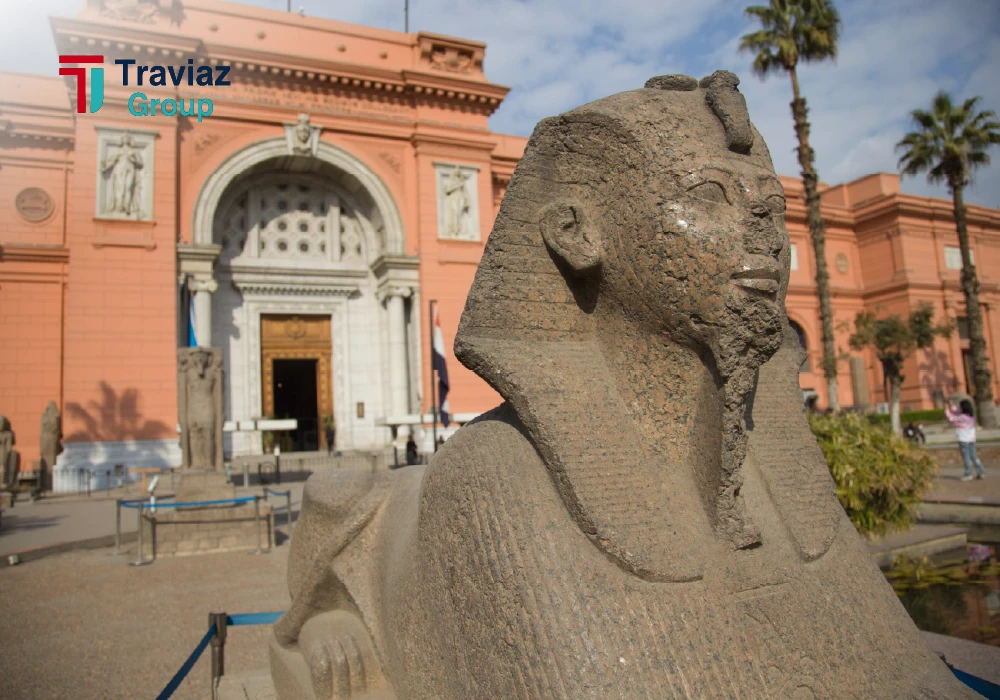
Memphis was the first unified capital of Egypt, founded by King Menes around 3100 BC. Inside its open-air museum stands the massive statue of Ramesses II exceeding 10 meters in length, alongside the Alabaster Sphinx carved from a single block of alabaster.
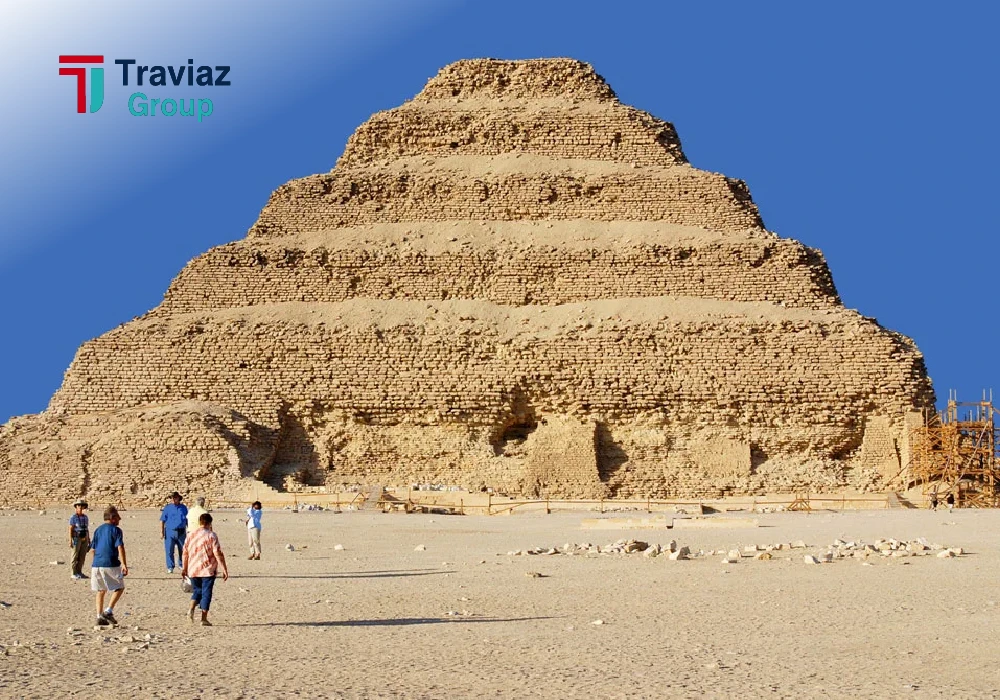
Between 2667 and 2648 BC, the Step Pyramid of Pharaoh Djoser was built to become the first pyramid in human history and the first large-scale stone structure in the world.
Behind its architectural design stands Imhotep, who was later deified as a god of wisdom and medicine.
Two kilometers from the Giza Plateau sits the Grand Egyptian Museum, which officially opened in November 2025. For the first time, the complete Tutankhamun collection of 5,398 artifacts is displayed in a single sequence within a wing covering 7,500 square meters.
At the entrance the 82-ton statue of Ramesses II welcomes you, while behind it extends the grand staircase adorned with 87 massive statues.
Meals: Breakfast and Lunch. Accommodation: Hotel in Cairo
alexandria cairo tour begins after breakfast inside a private air-conditioned vehicle, and the journey from Cairo takes approximately two and a half hours via the North Coast road.
The new Bibliotheca Alexandrina opened in 2002 to revive the memory of the ancient Library of Alexandria, which was one of the greatest centers of knowledge in the Hellenistic world.
The building's design takes the form of a tilted solar disk facing the Mediterranean, with a diameter of 160 meters, while its outer wall carries letters from 120 human languages.
The library today holds more than 8 million books alongside multiple museums and cultural centers.
Pompey's Pillar reaches 27 meters in height and 9 meters in circumference, carved from a single piece of granite, making it one of the largest single standing columns in the ancient world.
Its construction dates back to 297 AD and it was erected in honor of the Roman Emperor Diocletian, not Pompey as was widely believed.
Amid the ruins of the Serapeum Temple, one of the greatest temples in the Hellenistic world, the column still stands today.
In 1477 AD the Citadel of Qaitbay was built on the exact site where the Lighthouse of Alexandria, one of the ancient Seven Wonders of the World, once stood.
The lighthouse's own stones were used in building the citadel, and its walls provide a direct view over the Mediterranean Sea.
The Catacombs of Kom El Shoqafa date back to the second century AD and extend underground across three floors reaching a depth of 35 meters, holding more than 300 tombs.
Their design brings together ancient pharaonic Egyptian decorations, Greek architecture, and Roman sculpture, presenting the three cultures within a single cohesive structure.
The catacombs were discovered by accident in 1900 after a donkey fell through the hidden entrance. After the tour ends, you return to Cairo.
This day is dedicated, after breakfast, to discovering the historical layers of Cairo stretching from the pharaonic era through the Islamic period.
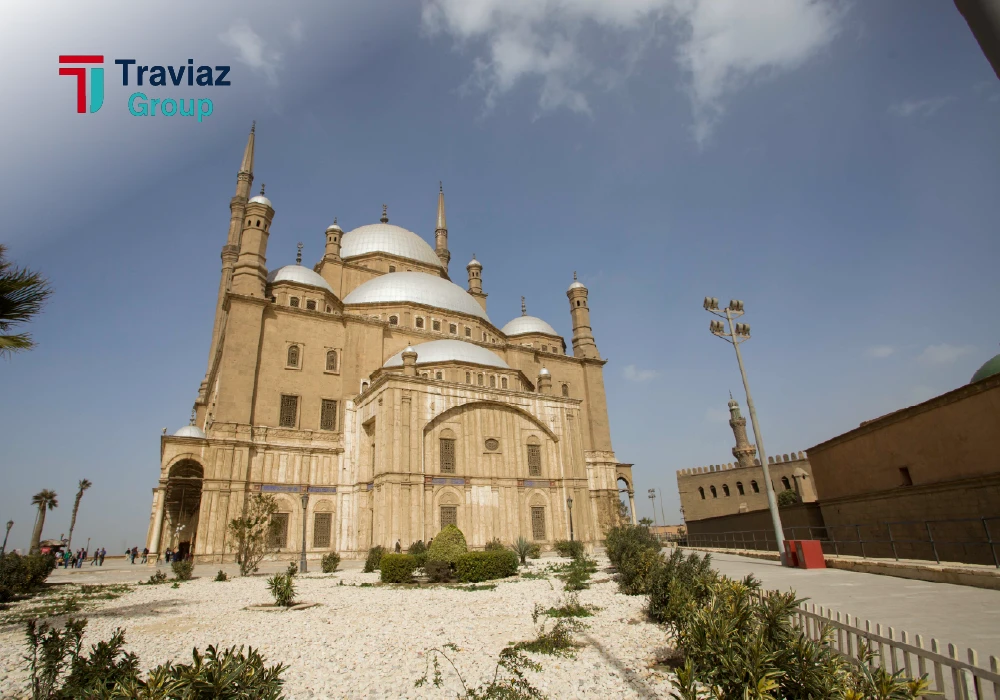
Above the Muqattam hills, construction of the Citadel of Salah El-Din began in 1176 AD, and the citadel remained a center of Egypt's governance for approximately 700 years.
The Mosque of Muhammad Ali Pasha inside the citadel was built between 1830 and 1857, and displays Ottoman domes, towering minarets, and alabaster-covered walls. From the citadel's walls Cairo can be seen stretching across a wide expanse.
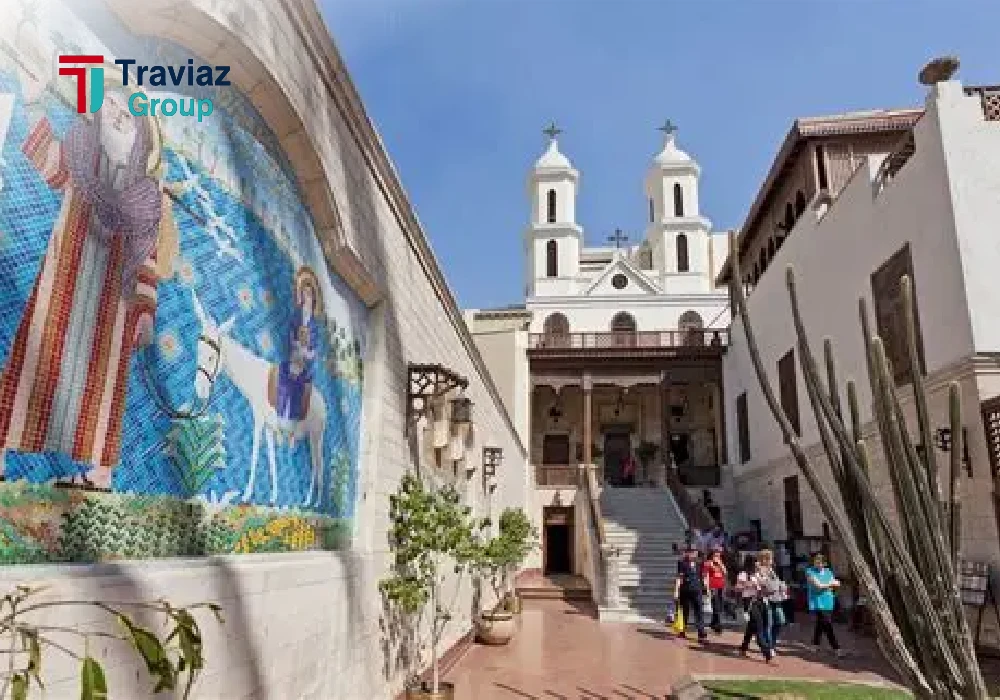
Above two towers of the Roman Babylon Fortress stands the Hanging Church, considered one of the oldest Christian churches in Egypt.
Nearby sits the Ben Ezra Synagogue, the oldest preserved Jewish site in Cairo, linked by local tradition to the place where the infant Moses was found.
The meeting of the two sites in this area makes it a point where the three civilizations come together within a single district.
After breakfast, a private air-conditioned vehicle departs west of Cairo on a journey stretching approximately four to five hours toward white desert bahariya oasis, located 365 kilometers away.
The Black Desert spreads north of Bahariya, where black basaltic deposits resulting from ancient volcanic activity cover a large number of hills. The meeting of the dark rocks with the golden sands creates a visually distinctive contrast.
The area also holds the peak of English Mountain, which was used as a British observation post during World War I, while its elevated position today provides a panoramic view over the oasis and the desert.
Between the Bahariya and Farafra oases, Crystal Mountain appears as an exceptional geological formation dating back 50 to 60 million years to the Eocene epoch.
The formation is a small rock arch composed of barite crystals (BaSO4) and calcite (CaCO3), and these crystals glitter under the desert sunlight as though they were precious stones.
Although many sources incorrectly describe it as composed of quartz, geological studies confirm that the hardness of its crystals ranges between 3.0 and 3.5, a range consistent with barite and calcite.
Touching the crystals is permitted, while collecting them is prohibited as the site is officially protected under the 2002 Environmental Protection Law.
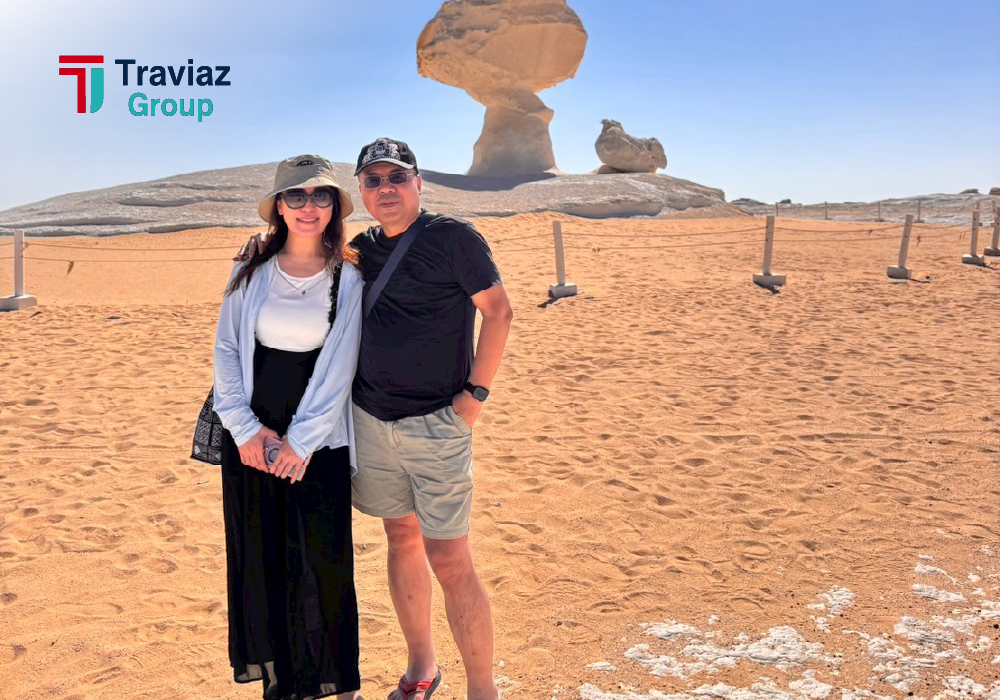
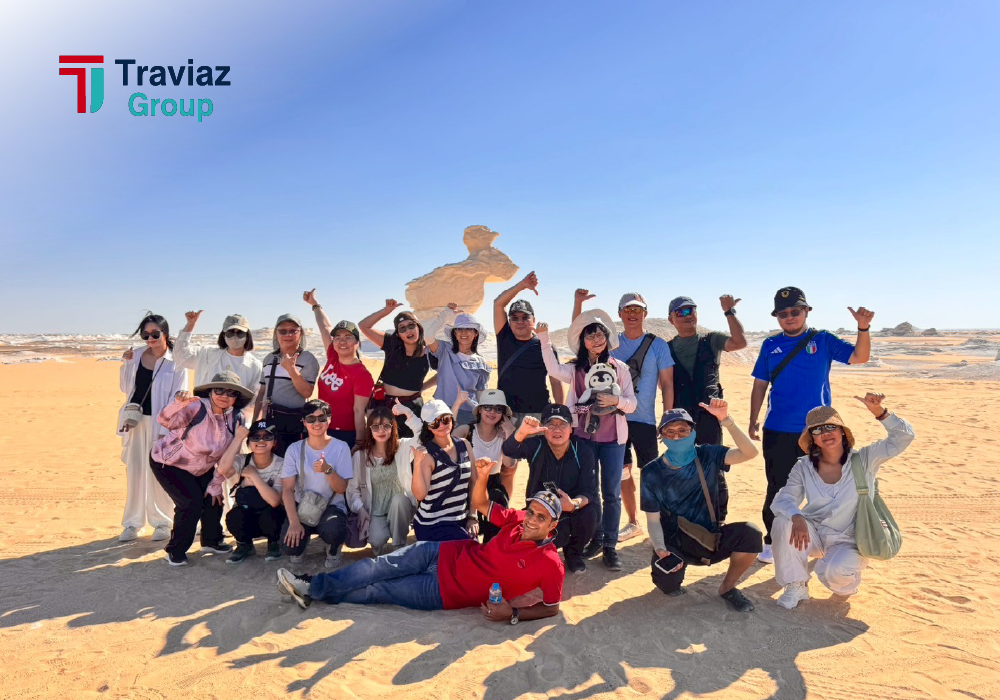
white desert cairo Reserve covers more than 3,000 square kilometers and is known for its massive white limestone formations shaped by wind erosion over millions of years.
The shapes of the rocks vary between mushrooms, domes, minarets, and towering columns, and as the sun sets they graduate through gold, pink, and orange, making them look as though they belong to another world.
After nightfall, the camp amid these formations offers the chance to see the Milky Way with the naked eye thanks to the desert sky's low light pollution. In the heart of the desert, the Traviaz team prepares the dinner meal over fire.
The morning begins with a quiet breakfast amid the White Desert formations, while the first rays of light strike the white rocks and give them colors that are difficult to describe in words.
New areas of the White Desert not covered during the previous day's tour are then explored.
The first period after dawn gives the White Desert a side light that reveals the details of the rocks and the depth of their formations in a way completely different from the rest of the day's hours.
In the Valley of the Tents, natural formations resembling tents appear, while the mushroom area holds massive white rocks balanced on narrow bases, looking as though they defy gravity.
Natural hot springs with temperatures ranging between 30 and 50 degrees Celsius also exist in the Bahariya area and can be stopped at during the trip. Following the morning exploration, a 4×4 vehicle departs on the return road to Cairo, arriving during the afternoon.
After the final breakfast at the hotel, the Traviaz representative arrives in a private air-conditioned vehicle to transfer you to Cairo International Airport and assist you through departure procedures.
Meals: Breakfast.

Three days dedicated to discovering Cairo and Giza, with visits to the Giza Pyramids, the Great Sphinx, the Grand Egyptian Museum, the Citadel of Salah El-Din, and Old Cairo. Five-star accommodation, with a private Egyptology guide accompanying you throughout the program.
The program extends over three days that combine archaeological sites, geological formations, and desert life, starting from Bahariya Oasis and ending with camping under the sky of the White Desert.
Come with TRAVIAZ on a 4-day luxury trip to two of the most adventurous cities in Egypt. If you love comfy rides, history, and unrushed sight-seeing, this package is for you. You get to see Cairo’s world-famous museums and monuments, and the beauty of Alexandria’s coastal nature on an exquisite tour. Enjoy 4 full days of luxury rides and guides exploring cultures, history, and creating life-long memories.