This trip puts you in front of a complete Egyptian experience without having to choose between the Pyramids and the temples, or between pharaonic history and the charm of the Mediterranean.
Across this 6 day Egypt tour you will explore Cairo with its pyramids and the Grand Egyptian Museum, then head to Alexandria to discover its coastline and Greco-Roman heritage, before continuing to Luxor and the temples of Karnak, Luxor Temple, and the famous Avenue of Sphinxes.
Your journey concludes at Abu Simbel, 290 kilometers south of Luxor in the far south of Egypt, where Ramesses II carved his temple into the mountain rock to stand as a testament to the greatness of Egyptian civilization.
This 6 day Egypt itinerary is designed for travelers who want to discover Egypt in its full diversity, not settle for just one side of it
Upon arrival at Cairo International Airport, a Traviaz representative meets you to assist with arrival procedures and baggage collection, then accompanies you to a private air-conditioned vehicle that transfers you to your five-star hotel.
This day is reserved for rest after travel and preparation for the Giza tour on the following day.
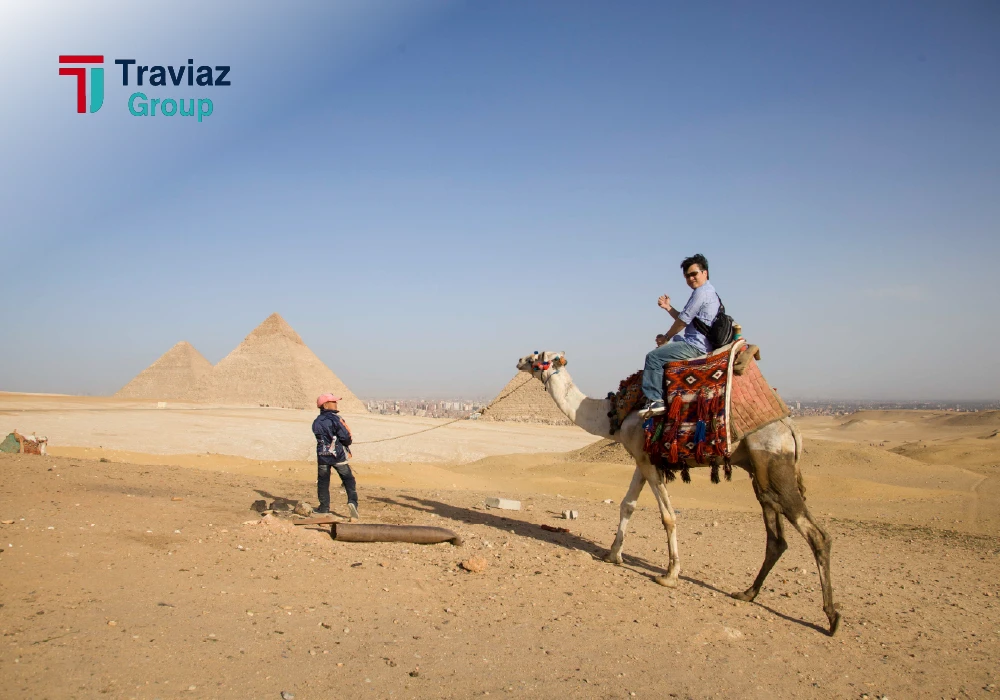
After breakfast at the hotel, your tour begins with an Egyptologist guide to explore Cairo and Giza's most famous archaeological landmarks.
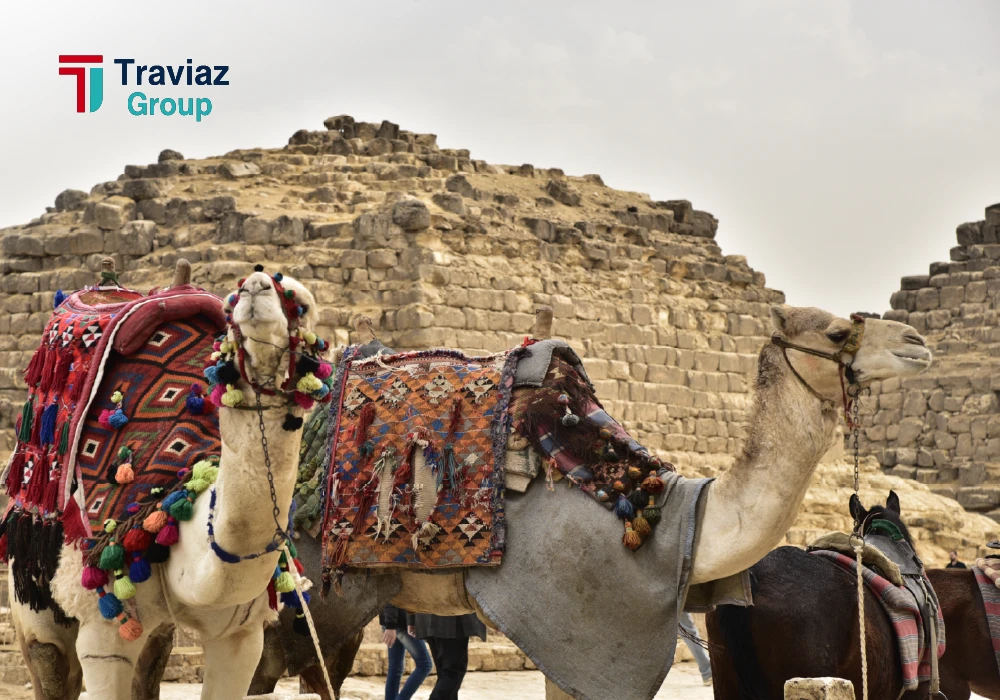
The Giza Plateau holds seven pyramids built for kings of the Fourth Dynasty during the Old Kingdom era.
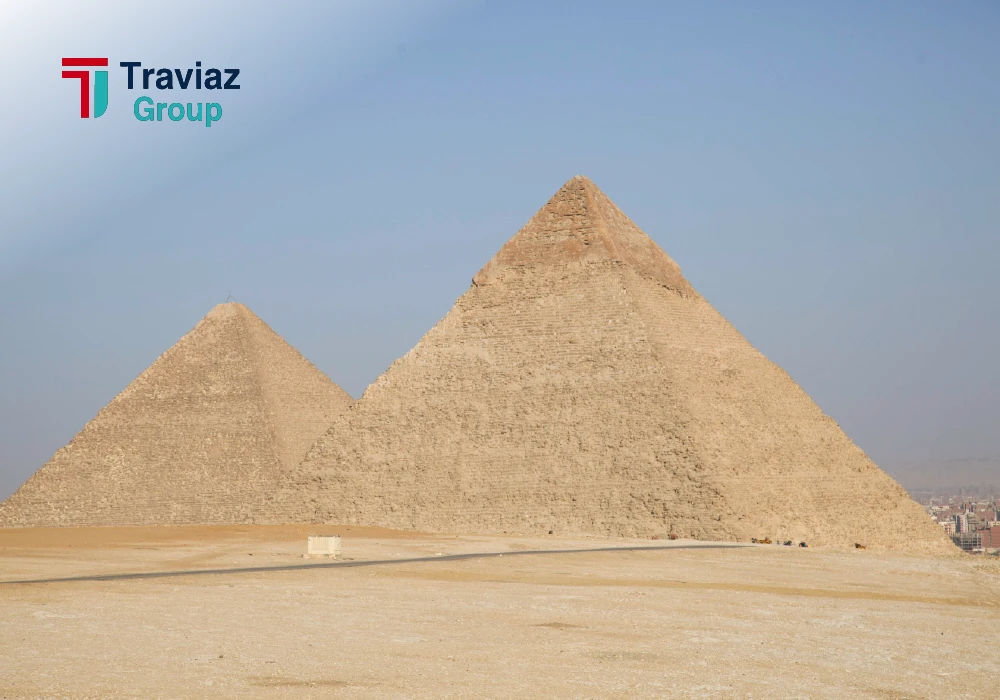
The Pyramid of Khufu was built between 2580 and 2560 BC with an original height of 146.6 meters, while each side of its base measures approximately 230 meters.
The pyramid consists of around 2.3 million stone blocks, some weighing more than 50 tons, and it remained the tallest structure built by humans for more than 3,800 years.
The neighboring Pyramid of Khafre still shows parts of its original limestone casing at the summit, and its elevated position makes it appear larger than it actually is.
The Great Sphinx extends 73 meters in length and was carved from a single block of limestone.
Between its paws stands the Dream Stele erected by Pharaoh Thutmose IV around 1400 BC, which tells the story of the dream in which the statue linked his receiving the kingship to the removal of the sand that covered its body.
The Grand Egyptian Museum is located near the Giza Pyramids and officially opened on November 1, 2025.
The museum houses more than 100,000 artifacts and presents a wide display of the stages of ancient Egyptian civilization.
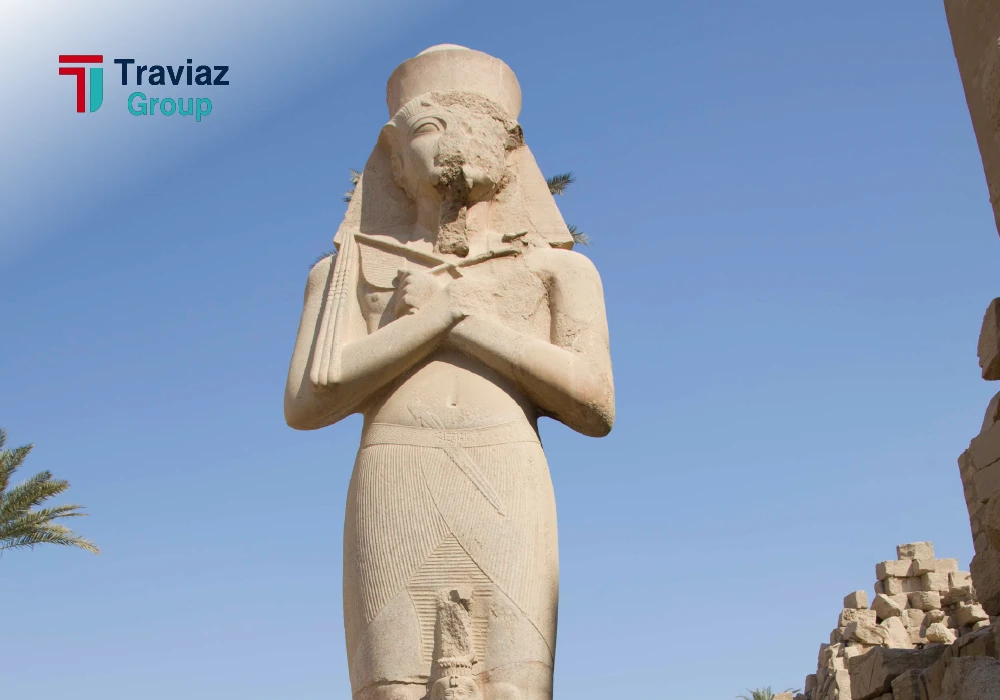
A colossal statue of Ramesses II greets you in the atrium hall, while the Grand Staircase, lined with around sixty artifacts, leads to twelve main exhibition galleries.
The Tutankhamun collection is one of the visit's most prominent stops, containing more than 5,000 pieces displayed together for the first time since the tomb's discovery in 1922.
The collection includes the golden mask made from approximately 11 kilograms of gold, alongside the sarcophagus, the throne, the war chariots, and other pieces that had never previously been on public display.
You depart by car from Cairo to Alexandria in a journey of approximately three hours heading north.
Alexandria differs from the capital in its coastal atmosphere, its Mediterranean character, and its Greco-Roman heritage, which took shape over centuries of interaction between Egyptian civilization and Greek and Roman cultures.
The Catacombs of Kom El Shoqafa were discovered in 1900 after a donkey fell into an opening that revealed the entrance to this important funerary site.
The complex dates to the second century AD and extends across three underground levels reaching a depth of approximately 35 meters.
Its uniqueness lies in the clear blending of elements from Egyptian, Greek, and Roman civilizations, with Egyptian figures such as the god Anubis appearing in a form linked to Roman military dress, while the tombs combine Greek architectural designs with pharaonic decorations.
The site gives you a rare opportunity to see this civilizational overlap within a single archaeological complex.
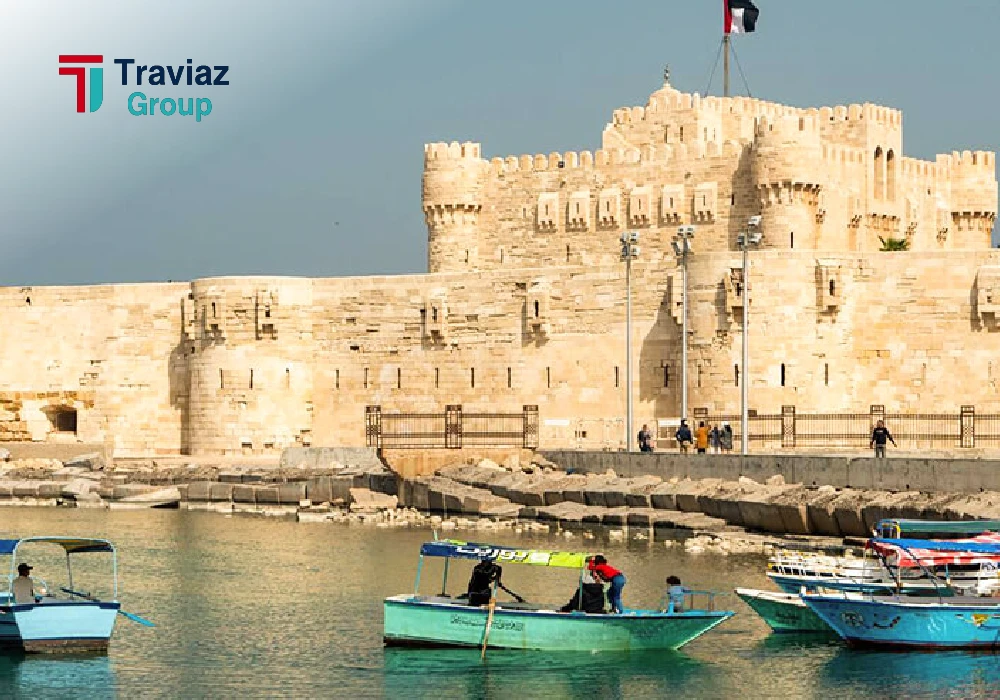
The Citadel of Qaitbay was built in 1477 AD by order of the Mamluk Sultan Qaitbay, on the site where the ancient Lighthouse of Alexandria once stood, one of the Seven Wonders of the ancient world.
The lighthouse was destroyed by a series of earthquakes during the medieval period, and some of its ancient stones were used in later structures in the area.
Some of the red granite columns inside the citadel's mosque are believed to be remnants of the lighthouse. From the top of the citadel's walls, you can enjoy sweeping views of the Mediterranean and Alexandria's harbor.
The modern Bibliotheca Alexandrina opened in October 2002 near the site of Alexandria's ancient harbor.
The historic library, founded by the Ptolemies in the third century BC, was one of the most important centers of learning and knowledge in the ancient world, associated with prominent scholars such as Euclid, Archimedes, and Eratosthenes.
The modern building draws on this scholarly legacy through its slanted circular design and cultural facilities, accommodating around eight million books and continuing the city's role in supporting knowledge, research, and culture.
You head to the airport to fly from Cairo to Luxor, then begin your tour of the archaeological landmarks in the city once known as Thebes, one of ancient Egypt's most important capitals.
The Karnak Temple Complex is one of the most massive religious complexes the ancient world ever knew, extending across approximately 200 acres.
Its construction developed over around two thousand years, from approximately 2055 BC through the first century AD.
The main temple was dedicated to the god Amun-Ra in Thebes, and a large number of Egypt's kings participated in expanding it and adding new structures to it.
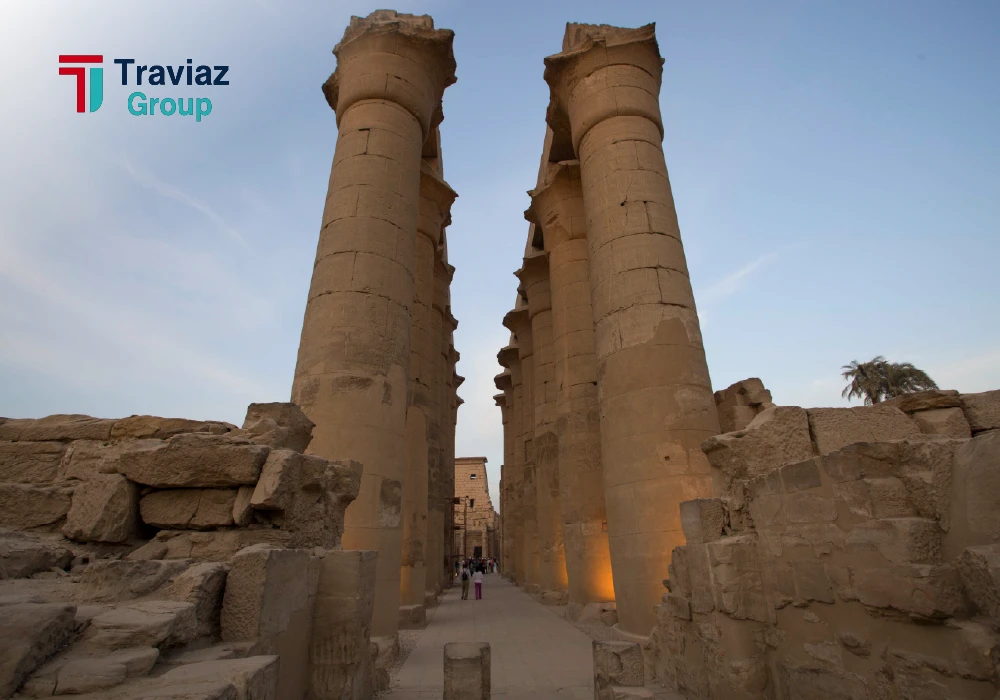
The Great Hypostyle Hall contains 134 massive stone columns arranged in 16 rows, covering an area of approximately 5,000 square meters.
The twelve columns in the central aisle reach approximately 24 meters in height, with construction beginning under Seti I and Ramesses II completing important sections of them.
Fine carvings covering the columns and surfaces document religious rites, royal victories, and scenes from ancient Egypt's political life.
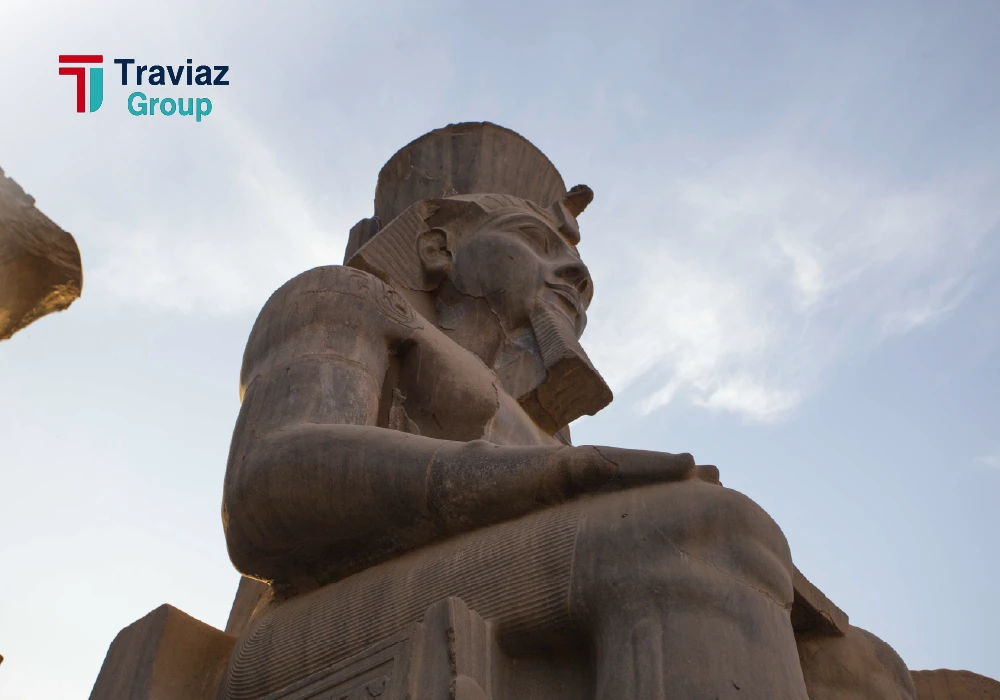
Luxor Temple sits in the heart of the modern city, with the bulk of its construction carried out under Amenhotep III during the fourteenth century BC, after which Ramesses II added the massive gateway and the courtyard containing his large statues.
One of the temple's two obelisks was part of its original facade, while the other was transferred to the Place de la Concorde in Paris in 1836.
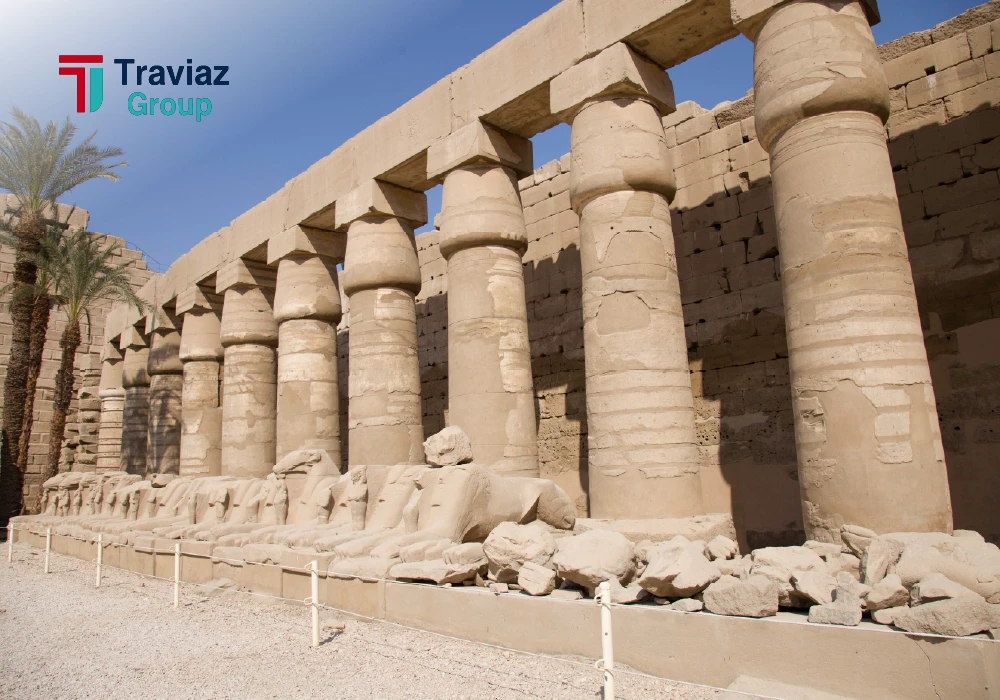
In front of the temple extends the Avenue of Sphinxes, the ceremonial road connecting Luxor Temple to the Karnak Complex over a distance of approximately 2.7 kilometers.
Sphinx statues line both sides of it, which underwent restoration and rehabilitation work, and the road was reopened to visitors in 2021 to become one of the most prominent archaeological paths that can be explored in Luxor.
You begin your day early to head to Abu Simbel, where one of ancient Egypt's most architecturally impressive structures awaits you.
This Abu Simbel tour from Cairo passes through Luxor as the base for the trip and includes traveling south by plane or car according to the program arrangements.
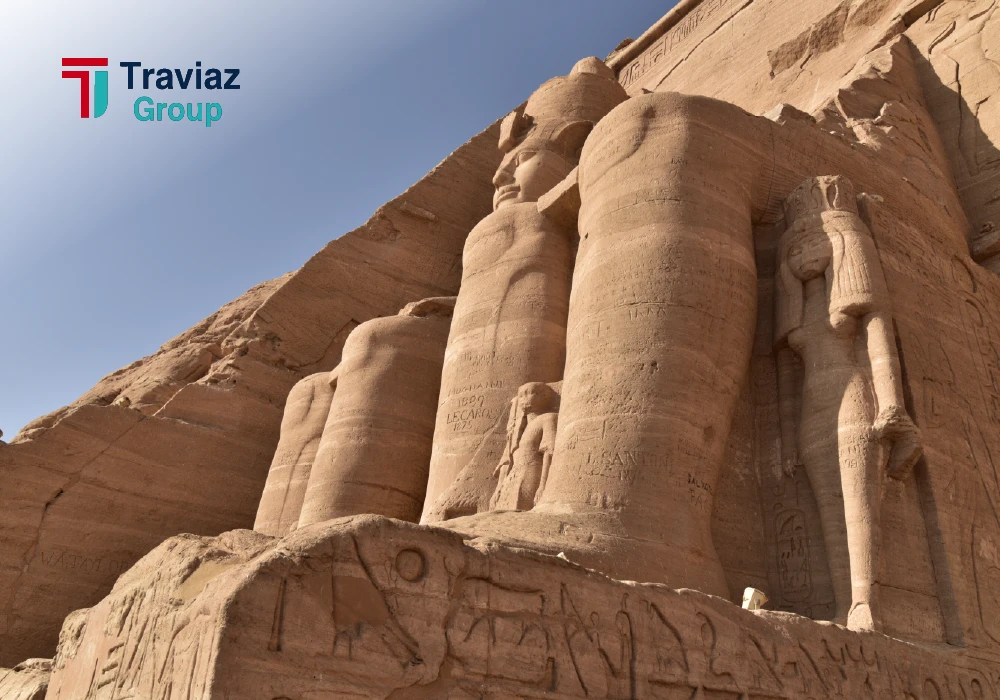
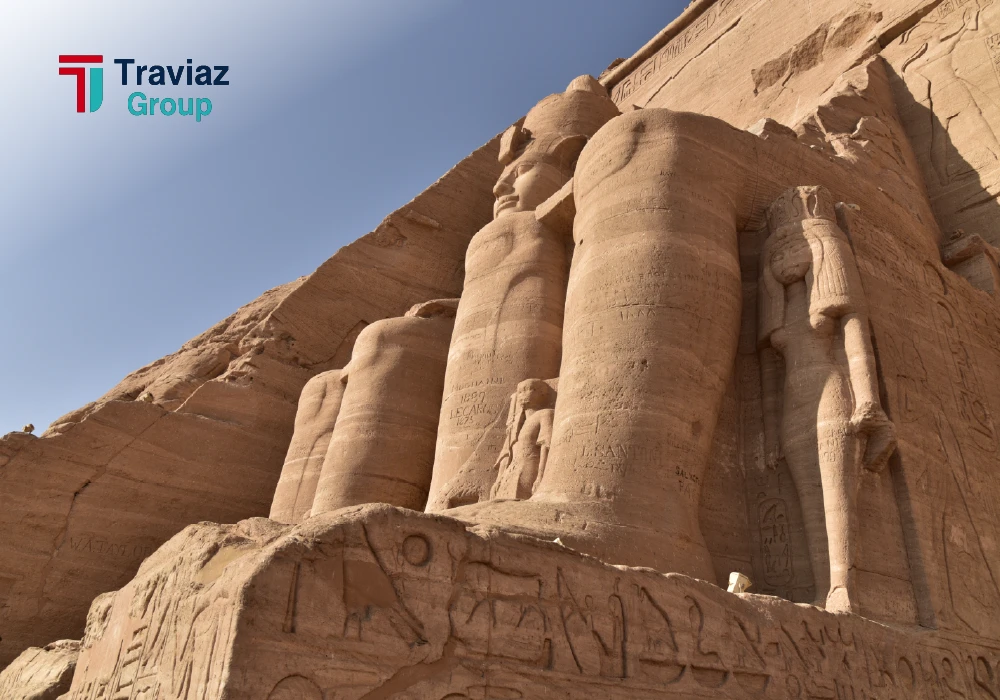
Abu Simbel represents an exceptional architectural achievement from the reign of Ramesses II, who ordered the construction of both temples during the thirteenth century BC in the far south of Egypt near the Nubian border.
The Great Temple was carved directly into sandstone rock, and four massive seated statues of the king face its entrance, each standing approximately 20 meters tall.
The size and position of these statues sent a clear message about the pharaoh's power and status to the Nubian communities in Egypt's south.
Inside the Great Temple, carvings cover the walls with scenes from the Battle of Kadesh, which took place around 1274 BC between the Egyptians and the Hittites.
The battle is one of the most famous military confrontations in the ancient world and was later linked to a peace treaty generally cited as one of the earliest documented international peace agreements.
The carvings present the royal account of the battle, while historical research indicates that the subsequent agreement reflected a political settlement between the two powers.
The Abu Simbel temples are also known for the sun alignment phenomenon, which traditionally occurs on February 22 and October 22.
On these two days, the sun's rays pass through the temple's corridor to reach its innermost chamber and illuminate the statues of Ramesses II, Amun-Ra, and Ra-Horakhty, while the statue of Ptah remains in shadow.
This phenomenon shows the extent of the ancient Egyptians' interest in engineering and astronomy, though the precise details linked to its dates and interpretation remain a subject of study.
During the twentieth century, both temples faced the risk of submersion beneath the waters of Lake Nasser following the construction of the High Dam.
UNESCO launched an international rescue project between 1964 and 1968, during which the structures were cut into stone blocks and reassembled at a site approximately 65 meters higher.
The project preserved both temples and the famous sun phenomenon, making it one of the most important archaeological heritage rescue projects in modern history.
After breakfast at the Luxor hotel, you head to the airport to board your flight to Cairo. Upon arrival, a Traviaz representative assists you with international departure procedures, bringing your journey to a close after six days of exploring Egypt's most prominent historical and cultural landmarks.
Meals: Breakfast

Our most comprehensive sightseeing package. Cairo, Alexandria, and a complete Nile cruise between Luxor and Aswan with a private Egyptologist guide throughout the trip. For those who want to see all of Egypt.
Three faces of Egypt in five days: Hurghada with its beaches and safaris, Cairo with its Pyramids, and Luxor with its temples. History, adventure, and relaxation in a single package.
Most visitors to Egypt pass through Cairo, but only a few give it enough time to discover its different layers.