
Best Time to Visit Aswan Egypt: The Ultimate Guide to Weather, Ancient Landmarks & Nile Cruises
The best period to visit Aswan runs from October to March, when daytime temperatures range between 22 and 30 degrees Celsius, making it more comfortable to explore Philae Temple, Abu Simbel, and the Unfinished Obelisk. Budget-conscious travelers can choose March and April or September and October to take advantage of lower prices while the weather remains acceptable. Traviaz handles the logistical details of the trip, from booking Abu Simbel flights to selecting the best time for a felucca ride on the Nile.
When Is the Overall Best Month to Travel to Aswan for Most Visitors?
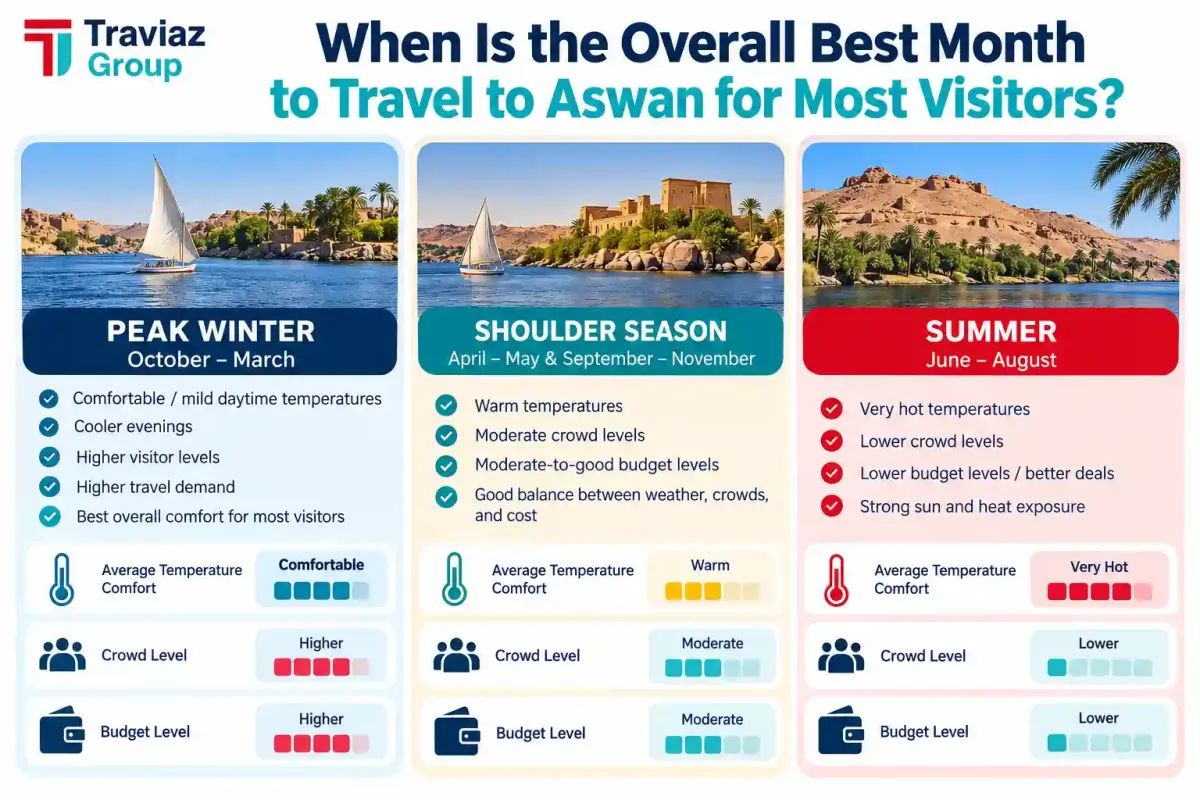
Aswan differs from Cairo and Luxor in the nature of its climate, as temperatures rise noticeably during summer and the atmosphere becomes more moderate during winter.
This difference makes the choice of travel date a key factor for every type of visitor, and below are the details of the two main seasons:
Peak Tourist Season in Aswan (December to January)
Tourist turnout in Aswan reaches its peak during December and January, with daytime temperatures ranging between 22 and 26 degrees Celsius, clear skies, and more than ten hours of daily sunshine.
This mild weather attracts thousands of visitors, which raises congestion levels at Philae Temple and Abu Simbel, especially between 10:00 AM and 2:00 PM.
Arriving at Abu Simbel at 6:00 AM helps avoid the pressure of large groups, while visiting Philae before 8:30 AM allows you to benefit from a quieter period.
Traviaz coordinates these timings within organized schedules for its visitors in order to distribute visits more effectively.
Is Aswan in Winter (October to March) the Most Comfortable Period?
Yes, winter is the most comfortable period to visit Aswan, especially for the traveler who plans long archaeological tours during daytime hours. The moderate temperatures allow for longer exploration of outdoor sites, while nighttime temperatures represent a side that needs preparation. Temperatures at night range between 8 and 12 degrees Celsius, and can drop in January to 8 or 9 degrees after midnight. It is therefore preferable to bring a light jacket or a thick scarf when planning sunset trips or outdoor dinners aboard boats.
Should You Consider Shoulder Season Egypt Travel for a Balanced Trip?
The transitional seasons between winter and summer offer a suitable option for those who want to combine lower cost with manageable weather during visits. Temperatures differ during spring and autumn, so understanding the nature of each period helps determine the most suitable date for the trip:
What Should You Expect from Aswan in Spring and Autumn Transitions?
Spring in Aswan runs from March to May, while the autumn period begins in September and continues through November, and travel conditions differ during each phase. Daytime temperatures in March and April reach between 31 and 36 degrees Celsius, which are relatively high but remain manageable when tour timings are chosen carefully. October and November offer conditions closer to winter with prices 15 to 25% lower compared to December and January. Visitor numbers also drop during these months, giving the traveler a greater opportunity to explore Philae Temple and the Nubian villages away from the congestion of large tourist groups.
When Is the Cheapest Time to Visit Aswan for Budget-Conscious Tourists?
Accommodation prices in Aswan drop during the summer months alongside the decline in tourist turnout caused by rising temperatures.
Budget-conscious travelers can take advantage of this period, but organizing visits requires accounting for weather conditions, and below are the most important details:
How Hot Is Aswan in the Summer and Can You Still Visit Peacefully?
Aswan records its highest temperatures during June, July, and August, where the heat regularly exceeds 42 degrees Celsius and can reach 45 degrees on some days.
Hotel prices, on the other hand, drop between 30 and 50% compared to peak season, and archaeological sites become nearly empty of visitors.
Summer offers a clear opportunity to reduce trip costs, but it requires tolerating high desert heat and reorganizing the entire program.
Is Aswan Too Hot in July for a Traditional Tourist Itinerary?
Visiting Aswan during July and August is possible, but executing the usual tourist program requires essential adjustments due to the high temperatures.
The success of a summer trip depends on distributing outdoor visits across the cooler periods, and the practical tips include the following:
- Start visiting sites at 6:00 AM and finish by 9:30 AM before peak heat.
- Reserve the hours from 10:00 AM to 4:00 PM for air-conditioned museums and hotel accommodation.
- Resume outdoor visits at 5:00 PM when the heat begins to drop.
- Carry a water bottle of at least one and a half liters and drink every fifteen minutes without waiting to feel thirsty.
- Use a head covering, sunglasses, and SPF 50 sunscreen during direct sun exposure.
Aswan Weather and Climate Breakdown: Month-by-Month Guide
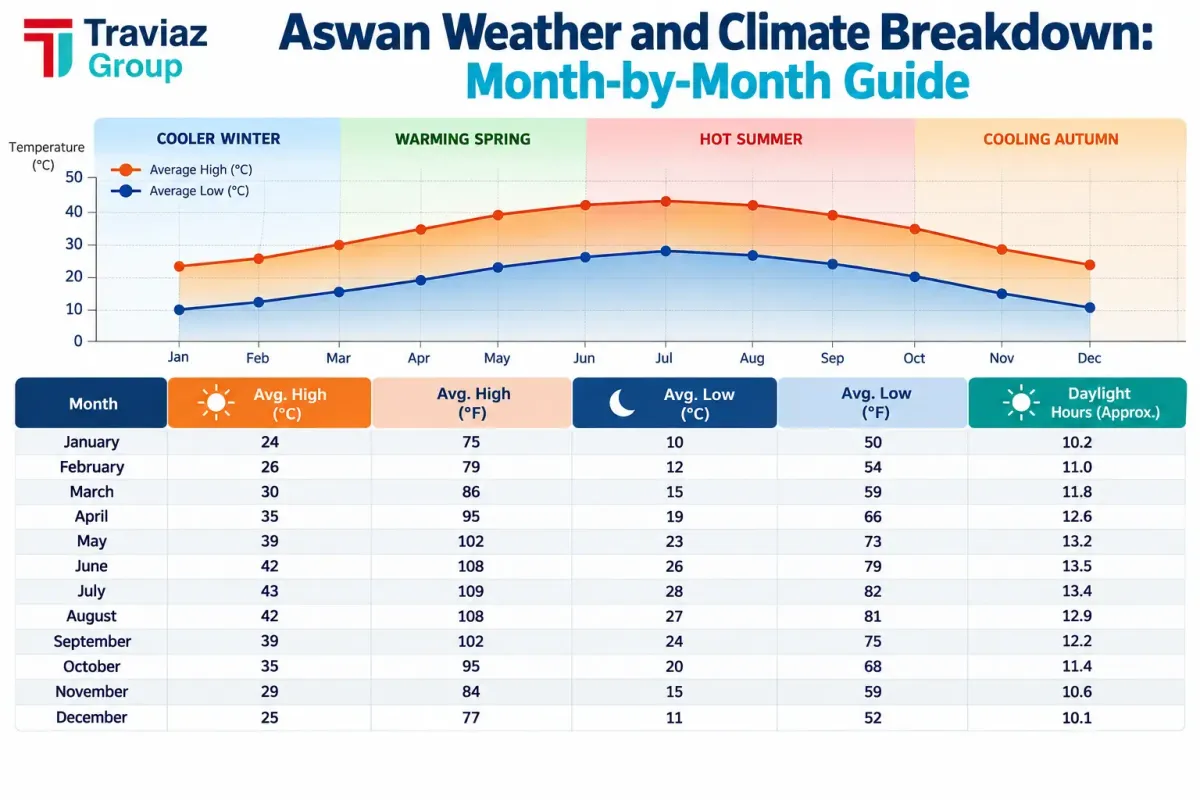
Aswan is characterized by an extremely dry climate and a large number of sunshine hours, recording less than 2mm of rainfall annually. The following table shows monthly temperatures and how suitable each month is for planning a trip:
|
Month |
High |
Low |
Suitability |
|
January |
23°C |
9°C |
Excellent |
|
February |
26°C |
11°C |
Excellent |
|
March |
31°C |
14°C |
Very Good |
|
April |
36°C |
19°C |
Good with Planning |
|
May |
40°C |
24°C |
Acceptable for Morning Only |
|
June |
42°C |
27°C |
Difficult |
|
July |
42°C |
28°C |
Very Difficult |
|
August |
42°C |
27°C |
Very Difficult |
|
September |
40°C |
26°C |
Acceptable for Morning Only |
|
October |
37°C |
22°C |
Good |
|
November |
30°C |
16°C |
Very Good |
|
December |
26°C |
11°C |
Excellent |
Does It Rain in Aswan Egypt Frequently?
Aswan does not see frequent rain, as the full annual average does not exceed 2mm, and some years pass without recording a single drop of rain.
Relative humidity peaks in January and February at 42%, which is very low compared to coastal cities, then drops to 16% in summer.
This dryness makes the air harsher on the body during prolonged heat exposure, and the skin and mucous membranes lose moisture quickly.
It is therefore important to moisturize the skin and drink adequate amounts of water even during the moderate winter months.
What Is the Aswan Weather Forecast 14 Days Leading Up to a Trip?
Monitoring weather forecasts during the two weeks before the trip helps make early adjustments to the visit schedule when needed. Weather.com or AccuWeather can be checked daily, especially when planning Abu Simbel trips and outdoor activities.
Rare sandstorms can disrupt Abu Simbel flights without much advance warning, which is what Abu Simbel Airport experienced in January 2026 when EgyptAir temporarily suspended its flights due to a sandstorm.
Traviaz monitors these forecasts daily on behalf of its clients and rearranges schedules as soon as any significant warning appears.
Best Time of Day to Visit Aswan's Archaeological Sites
The choice of visit time during the day affects the level of congestion, temperature, and lighting quality, especially for those interested in photography.
Conditions differ between sites, so the most suitable timing for each major landmark in Aswan can be identified as follows:
What Is the Best Time of Day to Visit Abu Simbel?

An early morning visit is the best option for Abu Simbel, especially when arriving between 6:00 and 7:00 AM.
The site opens daily from 6:00 AM to 5:00 PM, and early arrival gives the visitor a chance to see the temple in a quieter atmosphere with golden light reaching the massive facade from the left side.
Crowds start rising after 10:00 AM with the arrival of group tour buses from Aswan. The period after 3:00 PM offers different warm lighting and fewer crowds, but it leaves less time before closing.
For content photographers interested in the details of statues and inscriptions, the side light between 6:00 and 8:00 AM brings out depths and shadows clearly.
When Is the Best Time to Explore Philae Temple and the High Dam?
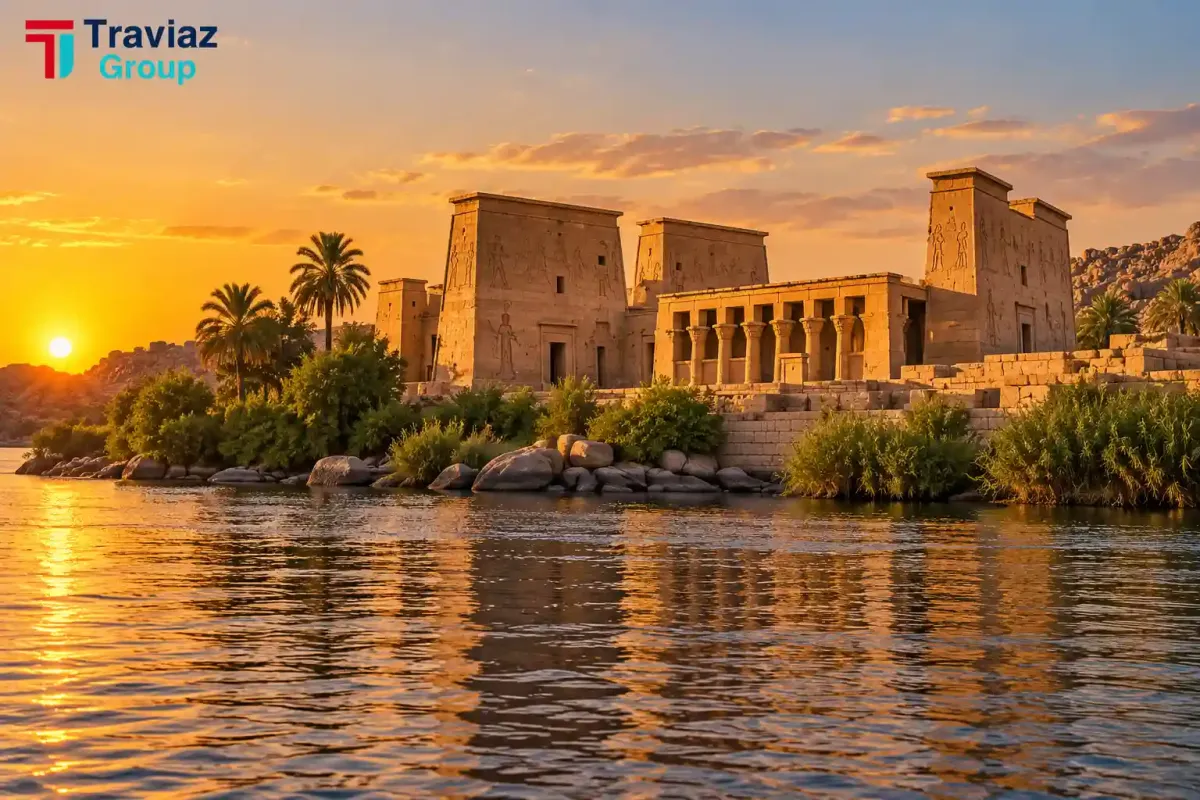
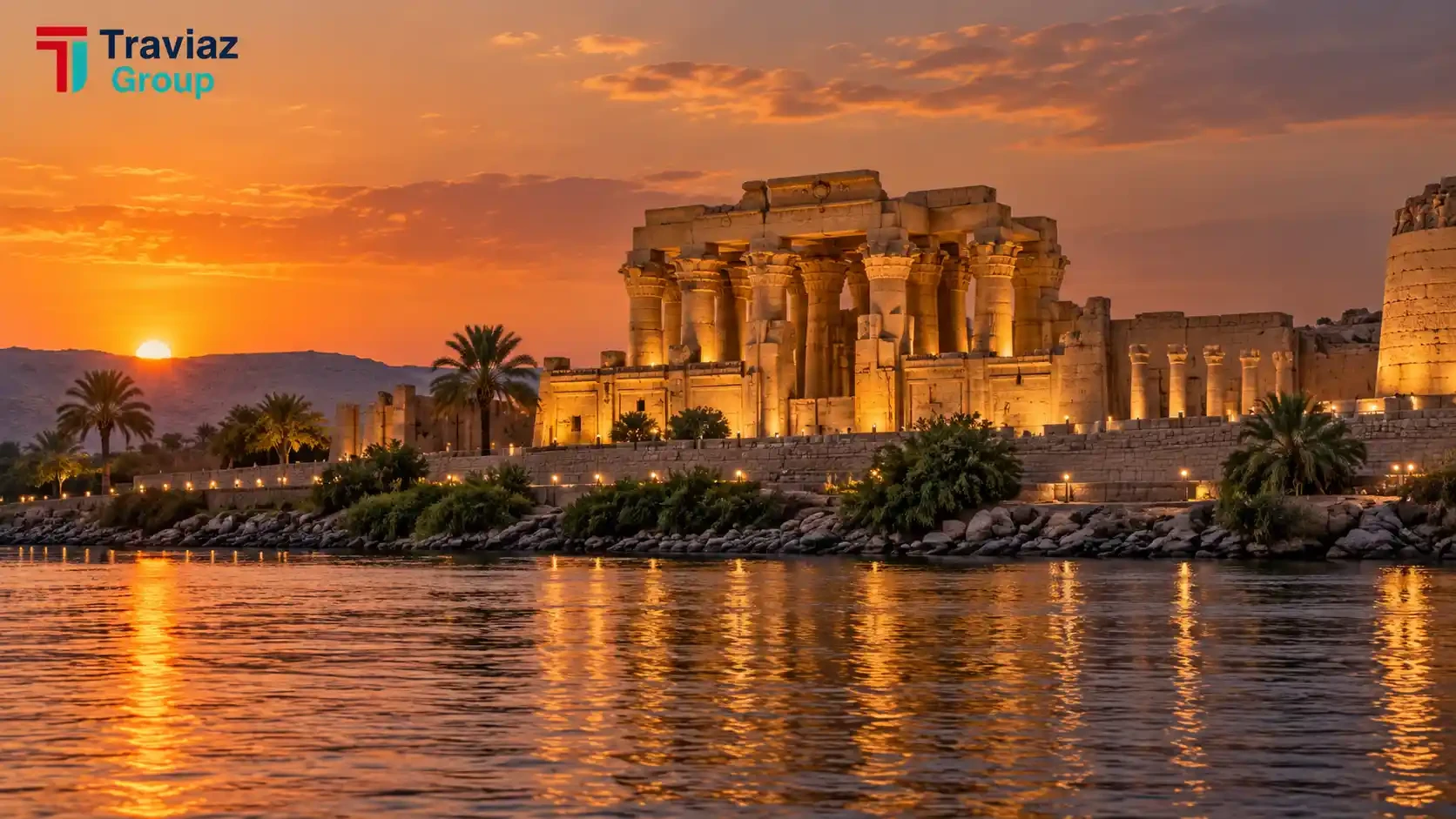
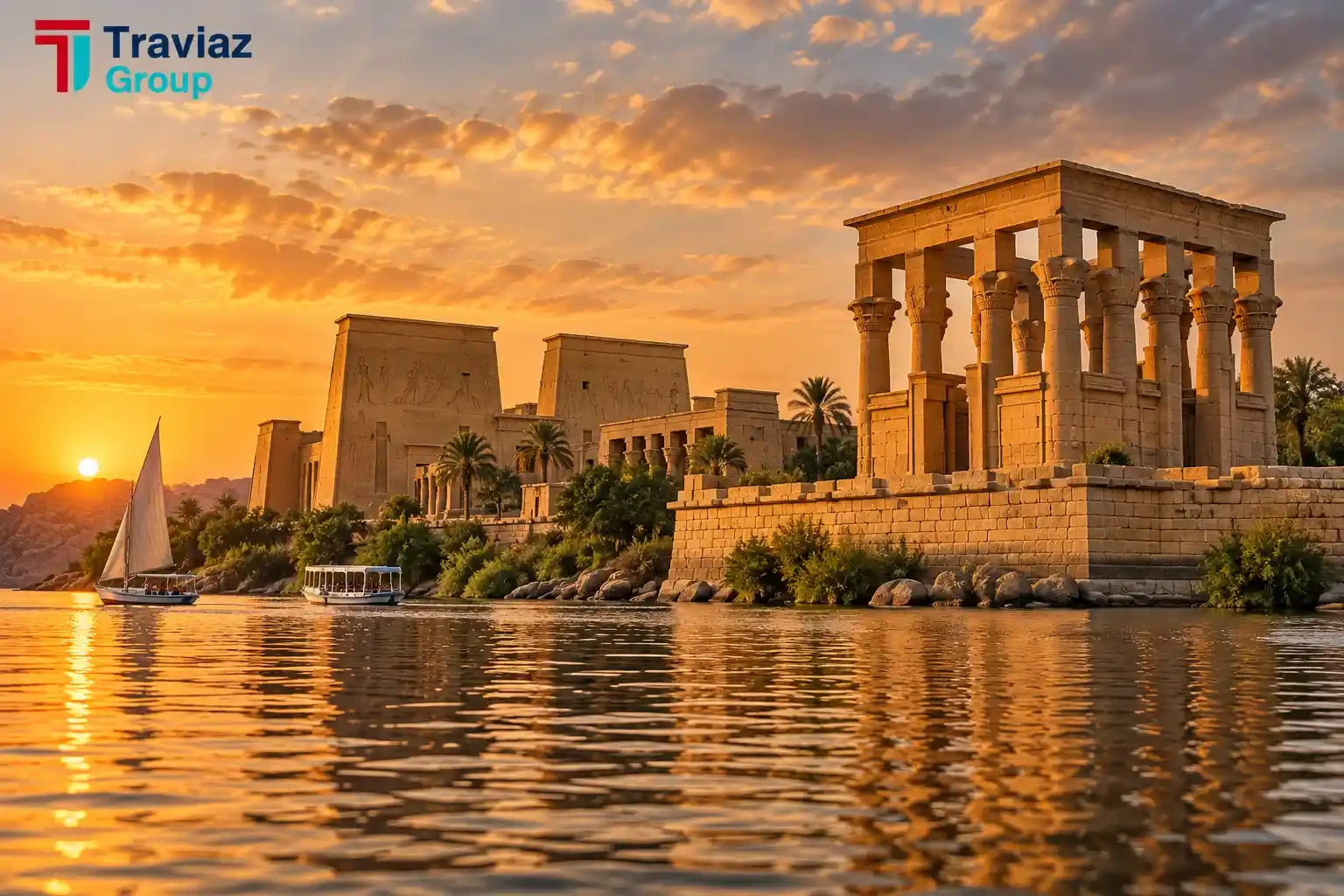
Philae Temple reaches its best lighting conditions about an hour before sunset, when warm rays fall on the granite stones and reflect off the waters of Lake Nasser surrounding the site.
The morning period between 8:00 and 10:00 AM provides suitable weather and clean lighting for general photography.
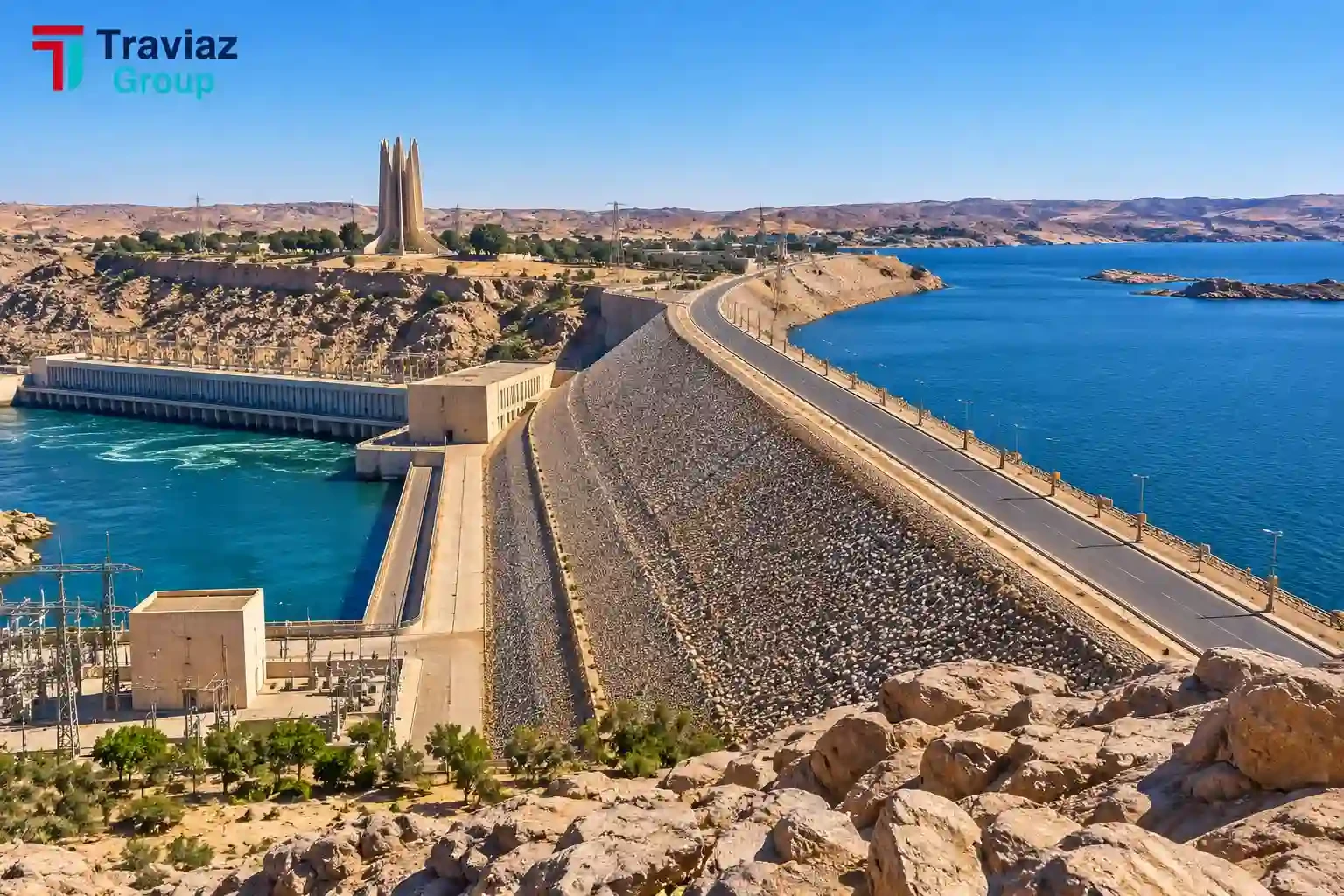
The High Dam, for its part, is best viewed in the afternoon hours when its overlooking views of the lake show the water calm and glistening.
A visit to the High Dam takes about thirty minutes, so it can easily be added to the day's program dedicated to Philae Temple.
Best Time to See Elephantine Island and the Nubian Village

Elephantine Island and the Nubian villages begin their activity gradually during the morning, reaching peak activity between 9:00 AM and 12:00 PM.
During this period the visitor can observe daily life, get to know the area, and enjoy the vibrant colors of the Nubian houses in the mild morning light.
After 4:00 PM the area offers suitable conditions for watching the sunset over the Nile as boats return to shore, making this timing well suited for photography.
When Is the Best Season for Nile Cruise Aswan Experiences?
The most suitable period for Nile cruises in Aswan runs from October to April, when moderate temperatures combine the comfort of sailing with the possibility of spending more time on the deck.
The felucca experience differs depending on the season, wind direction, and trip timing, so sailing timing is a key element in planning:
Best Time for Felucca Cruises & Sunset Rides
The best season for felucca trips in Aswan runs from October to April, where the moderate weather allows sitting on the deck and watching the temples spread along both banks of the Nile.
A sunset felucca trip ideally begins between 4:00 and 4:30 PM, when the sun descends toward the horizon and orange and golden colors reflect across the sky and the Nile. North winds blow regularly during winter, making it easier to sail north by felucca without an engine.
Wind speeds peak in June, which can make controlling the felucca more difficult, while December and January offer moderate and steady winds that help make a felucca trip smooth and calm.
What Are the Best Festivals in Aswan for Cultural Enthusiasts?
Aswan holds cultural events tied to its archaeological sites and Nubian heritage, and the Abu Simbel Sun Festival ranks among the most prominent occasions that attract visitors.
Planning for these events requires knowing the dates in advance, especially when wanting to book accommodation and transport during periods of high turnout:
What Are the Exact Abu Simbel Sun Festival Dates for 2026?
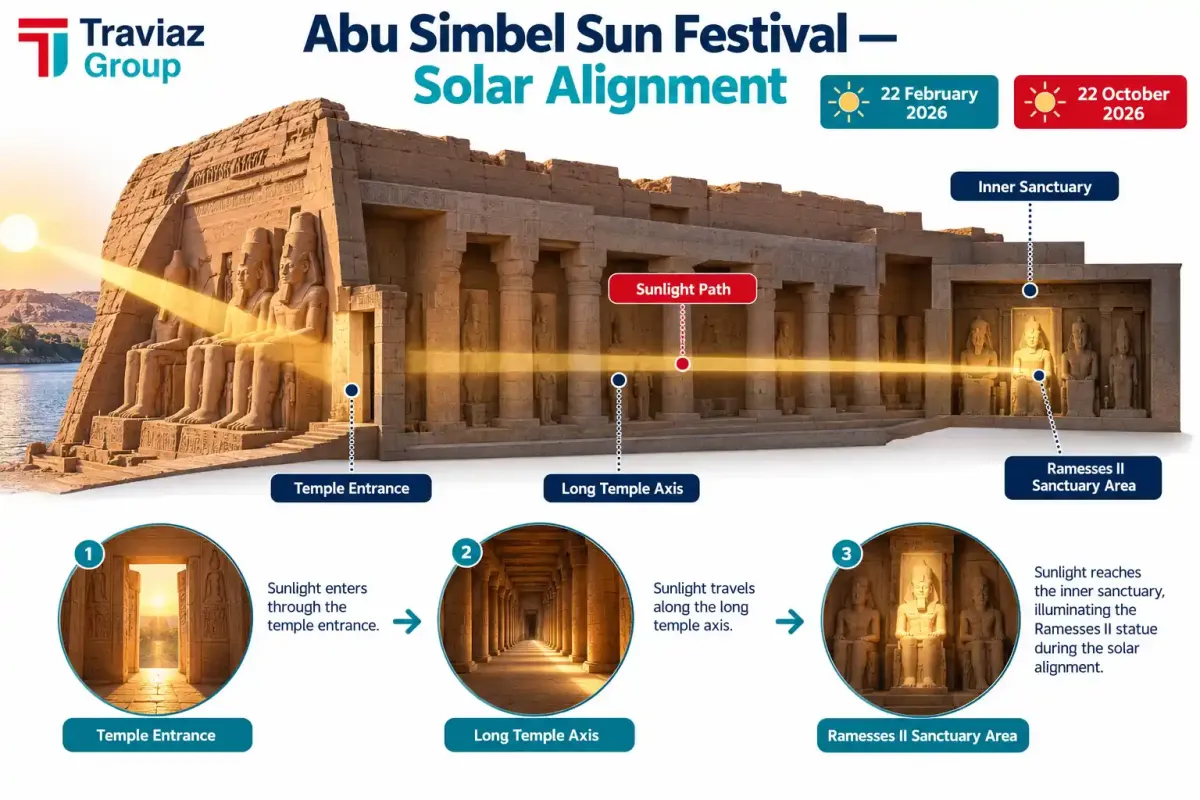
The Abu Simbel sun phenomenon occurs twice a year on February 22 and October 22, when sunrays at sunrise penetrate deep into the temple to illuminate three of the four statues in the innermost sanctuary.
The fourth statue represents Ptah, the god of darkness, and so it always remains in shadow, which is tied to the precision of the ancient Egyptians' architectural design.
The illumination phenomenon lasts about twenty minutes, and Nubian celebrations, folk markets, and cultural events precede and follow it.
It should be noted that relocating the temple in the 1960s away from the High Dam waters caused a shift of approximately one day, so visitors typically gather on the twenty-first and twenty-second of both months to ensure they do not miss the moment.
Accommodation in Abu Simbel village or Aswan for these dates must be booked at least six months in advance through Traviaz, as rooms sell out very early.
The entrance ticket on festival days rises to 1,200 Egyptian pounds for adults compared to 750 pounds on regular days.
What Should You Pack for Aswan Based on Your Selected Travel Time?

Trip preparations for Aswan differ considerably between winter and summer due to the clear difference in temperatures.
Dividing essentials by season helps in choosing clothing and tools suited to travel conditions, and below is the packing list for each season:
For a winter visit from October to March:
- Light cotton or linen daywear for temperatures of 22 to 30 degrees.
- A light jacket or woolen sweater for evenings and nights when the temperature drops to 9 degrees.
- A multi-purpose scarf for religious sites and protection against the cold of the night.
- Comfortable shoes with good grip for the uneven stone floors of temples.
- SPF 50 sunscreen even in winter, as the desert sun is harsh throughout the year.
For a summer visit from June to September:
- A wide-brimmed hat is a vital necessity, not an option, at 42 degrees.
- Light-colored linen or rayon clothing that reflects heat and allows ventilation.
- A two-liter water bottle per visitor with a regular drinking schedule.
- UV100% sunglasses to protect the eyes from direct sun on granite stones.
- Eye drops to combat severe dryness in the desert air.
For all visits at any time:
- Modest clothing covering the shoulders and knees for visiting Nubian villages and religious sites.
- Sealed plastic bags to protect the camera and phone from sand on windy days.
Why Book Your Aswan Trip with Traviaz? Your Expert Gateway to Egypt's Ancient South
Aswan is not a destination suited to improvisation, as the distances between sites are large, the choice of timing affects the program, and coordinating between Abu Simbel, Philae, Nubia, and the Nile requires genuine field knowledge.
The Traviaz team has accumulated experience in southern Egypt and knows that the quality of the trip depends on precise details such as the timing of arrival at Abu Simbel, matching the felucca trip with wind direction, and booking accommodation before rooms run out during the Sun Festival days.
Traviaz designs a customized itinerary based on the type of visitor, travel date, and required priorities, whether the traveler is a photographer looking for the golden hour at Philae or a luxury traveler who prefers a private Nile trip away from the congestion of groups.
Prices include entrance tickets, transport, a certified guide, and accommodation, with the full cost clearly stated and no hidden fees appearing at the last moment.
Planning your Aswan trip can begin through Traviaz by connecting with a specialized team that has visited these sites dozens of times and knows their details.
FAQs
How does Traviaz help me find the ideal timing for an archaeological trip?
The Traviaz team reviews weather forecasts, festival dates, and congestion levels daily, then builds a customized itinerary that brings together Abu Simbel, Philae, and Nubia at optimal times while ensuring the availability of accommodation and transport.
What is the best month to travel to Aswan for a balance between weather and breeze?
November is the ideal choice for achieving a balance between weather, breeze, and cost, as temperatures reach around 30 degrees during the day with a pleasant Nile breeze in the evening. Prices are lower than the December and January season, while congestion levels drop noticeably.
How much do temperatures drop in Aswan at night in winter?
Temperatures drop at night in January and February to 8 or 9 degrees Celsius, which is a cold that can surprise many visitors coming from warm climates. A light jacket or thick scarf becomes necessary for sunset trips and outdoor dinners.
What is the best time to visit Abu Simbel, morning or evening?
Early morning at 6:00 or 7:00 AM is the best option, as it provides good lighting with limited visitor numbers. Group tourism groups begin arriving after 10:00 AM, and visitor numbers then multiply gradually until noon