
Nubian Village Aswan: The Complete Guide to Experiencing Egypt’s Most Vibrant Cultural Escape
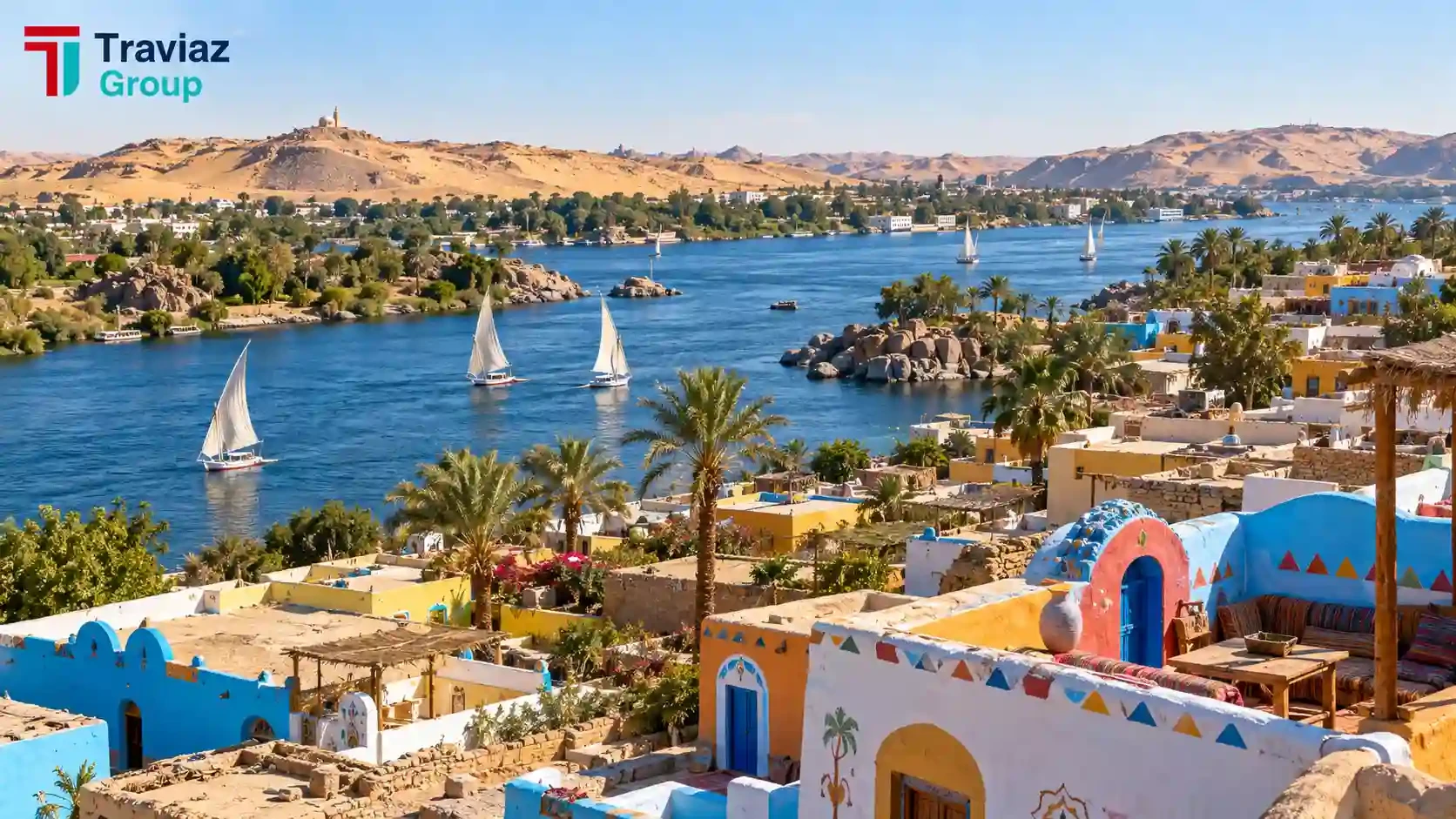
The Nubian Village in Aswan is the village of Gharb Soheil on the western bank of the Nile, about 30 to 40 minutes by boat from the Aswan Corniche. It is distinguished by its mud houses painted in blue, yellow, red, and pink, and it represents a civilizational heritage of one of Africa's most ancient peoples who lived along the banks of the Nile for more than 5,000 years.
What is the Nubian Village in Aswan and Why is it so Colorful?
The Nubian people are among the oldest civilizations on the African continent, and their roots extending along the banks of the Nile between southern Egypt and northern Sudan predate the pharaonic civilization itself by thousands of years.
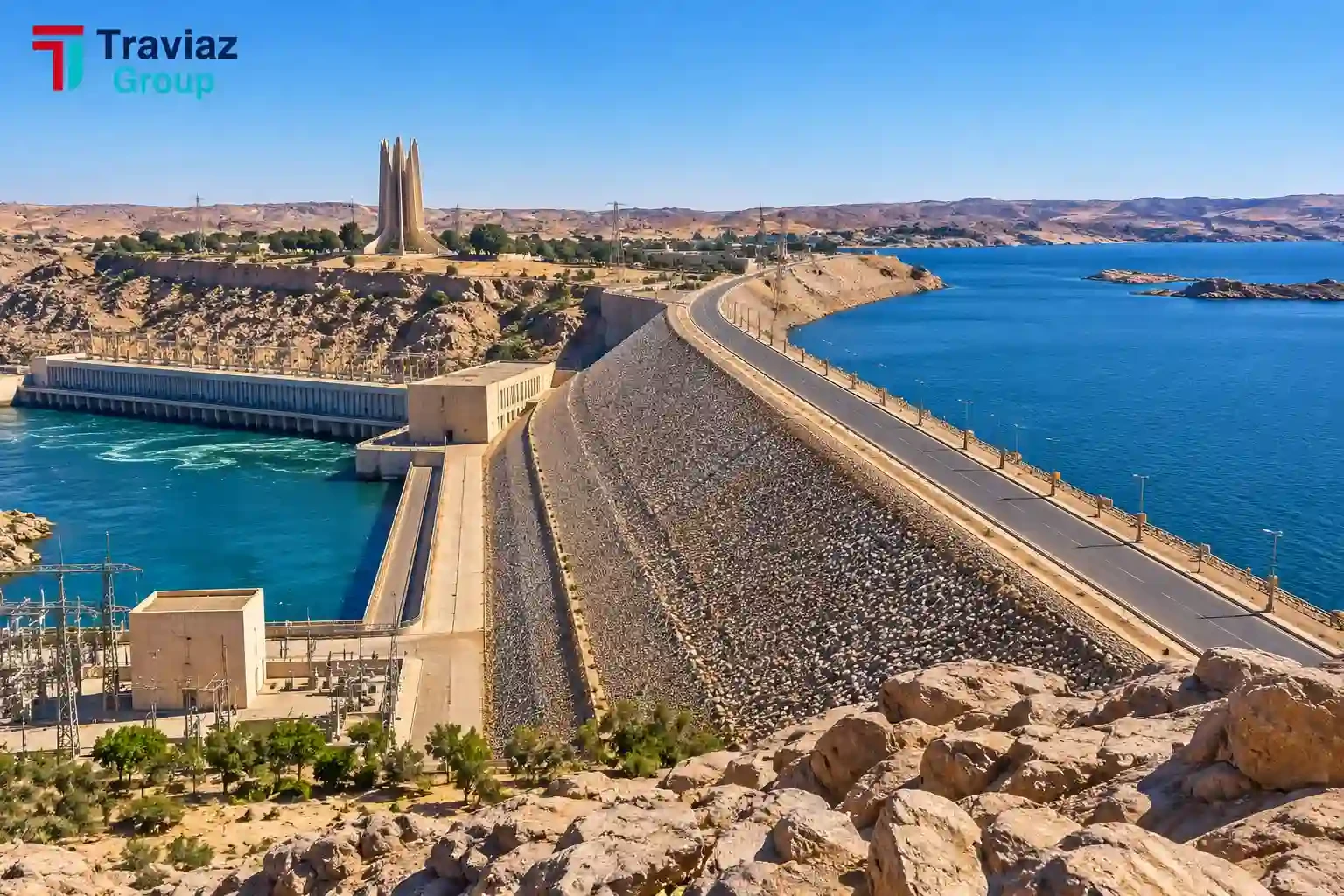
When construction of the High Dam began in the 1960s, the water level of Lake Nasser gradually rose and submerged the original Nubian villages underwater, forcing approximately 80,000 Nubians to leave their ancestral lands for new areas they did not choose.
Gharb Soheil is one of these rebuilt villages, where residents re-embody their architectural and cultural heritage in a different environment.
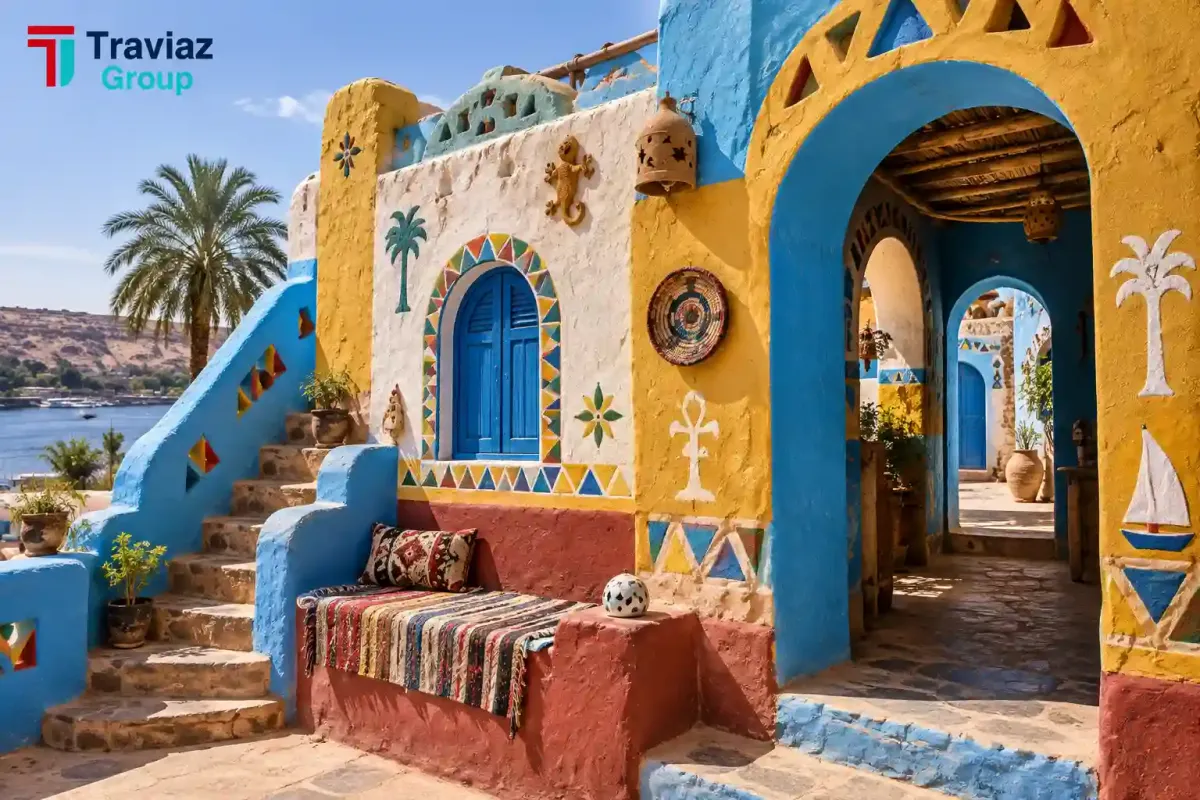
The vivid colors that distinguish Nubian houses are not merely aesthetic but a visual language loaded with meaning. Blue symbolizes the Nile and water and is considered a protective color against evil in Nubian tradition.
The geometric shapes and abstract drawings on the exterior walls document pilgrimage journeys and major life events such as marriage and birth.
The materials used in construction are dried mud and straw, natural materials that keep houses cool in the scorching summer in a way that sometimes surpasses modern air conditioning.
Is the Nubian Village Authentic or Just a Tourist Trap?
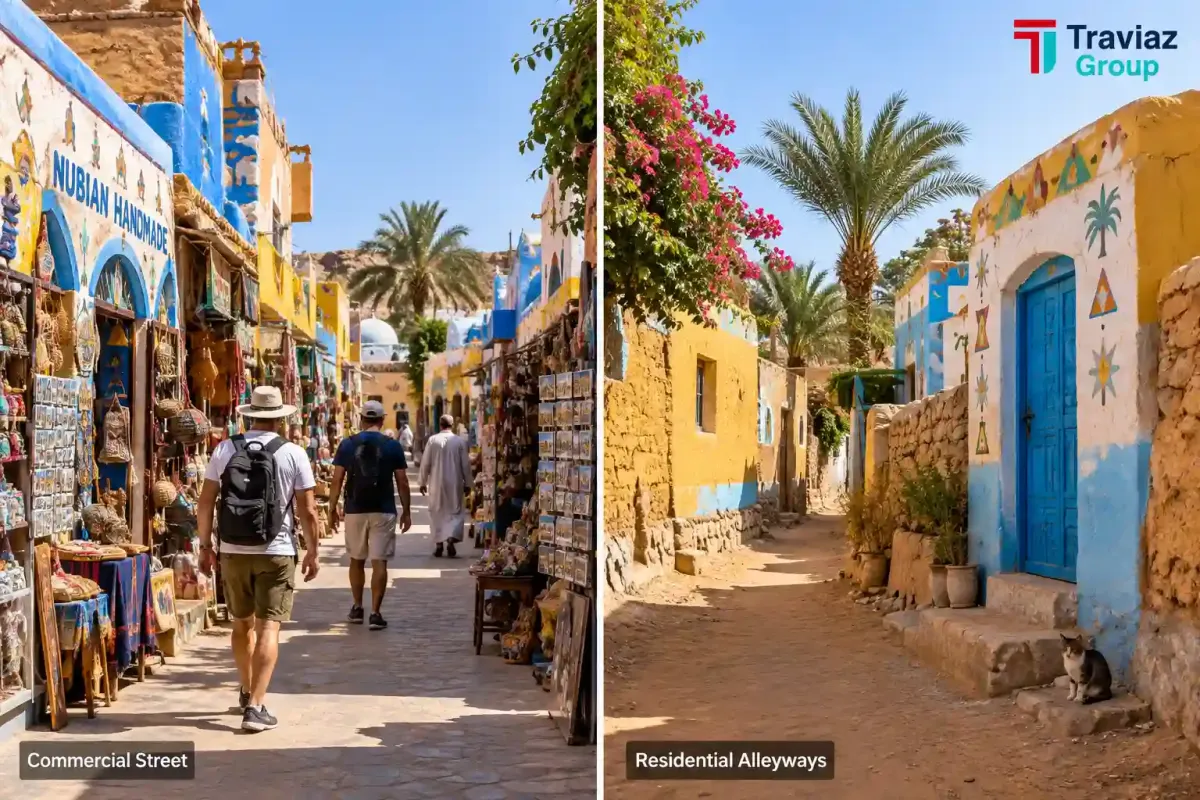
This question is asked often, and the aware visitor has every right to ask it. The honest answer is that Gharb Soheil carries both at once: main streets targeted by commercial tourism and side alleys where Nubian families live their daily lives far from the glitter of shops.
The difference between the two experiences lies in the choice of route. Whoever walks along the main road parallel to the Nile will find vendors offering the same tourist goods repeated throughout Aswan.
Whoever heads with a trusted guide toward the inner alleys will find women sitting in front of their homes, children playing, small farms, and an elder talking about the original village that was submerged under the waters of Lake Nasser.
Ensuring that your money reaches families directly means buying spices and handicrafts from shops run by the residents themselves rather than middlemen, and accepting an invitation to drink tea in a real Nubian home rather than limiting yourself to commercial shops.
Top Things to Do in the Nubian Village
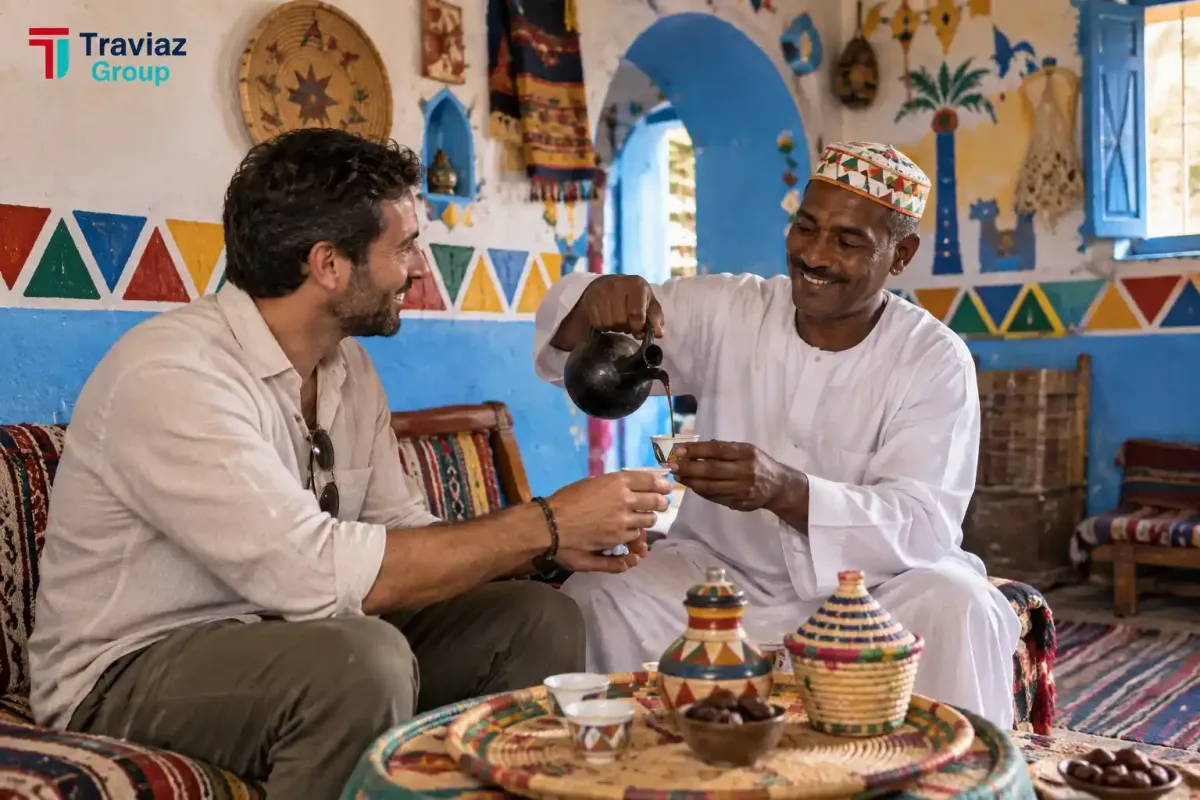
Gharb Soheil offers varied activities that go beyond simply walking and photographing, and the most prominent are those that allow genuine interaction with the residents rather than mere observation from a distance. Below are the most worthwhile things to do in the village:
- Exploring the colorful houses and walking through the side alleys away from the main road.
- Visiting a traditional Nubian home to drink Jabana coffee or hibiscus tea with the family.
- Shopping in the popular market for Nubian spices, henna, and handicrafts.
- Seeing mummified or live crocodiles kept in some Nubian homes.
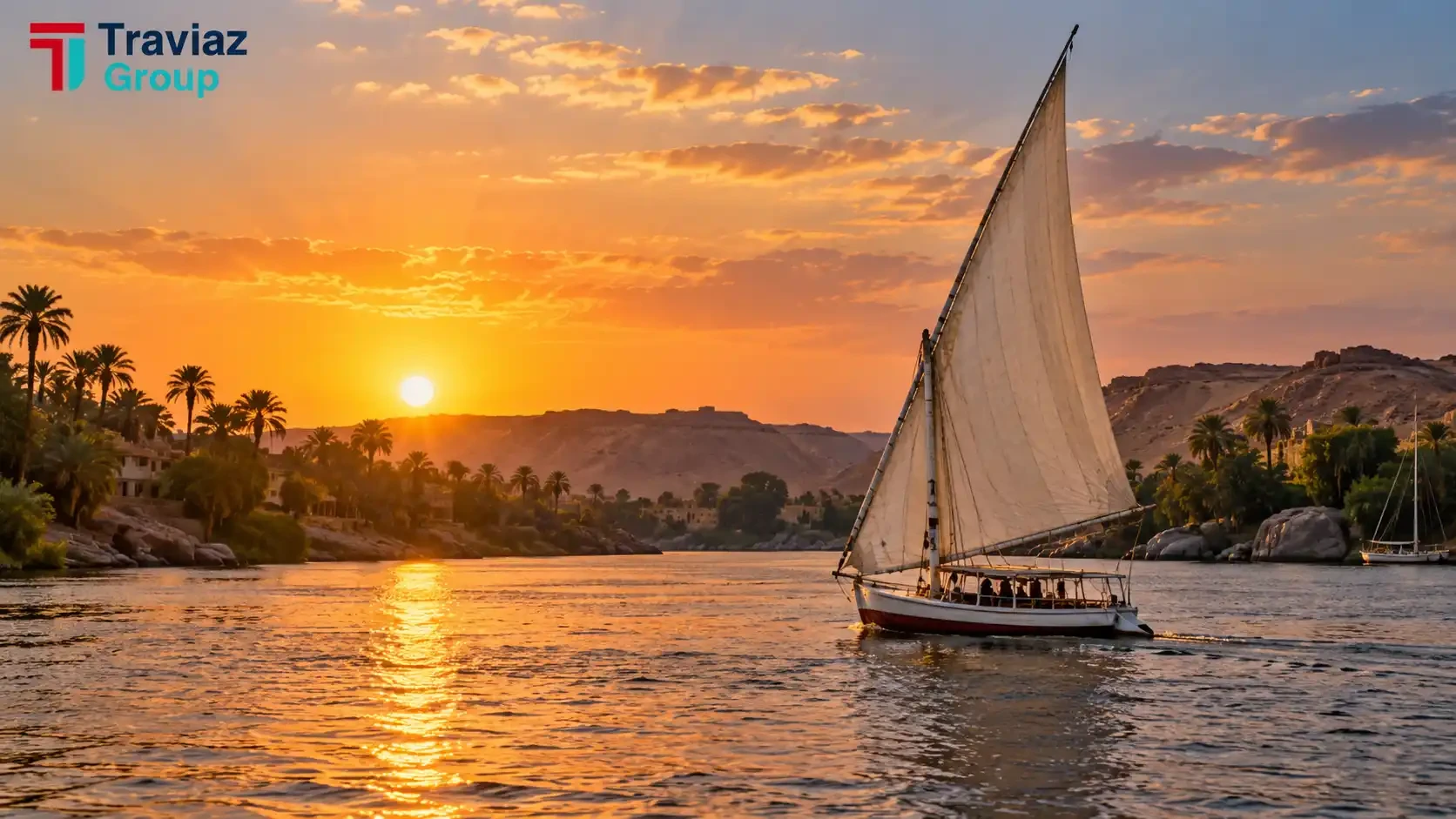
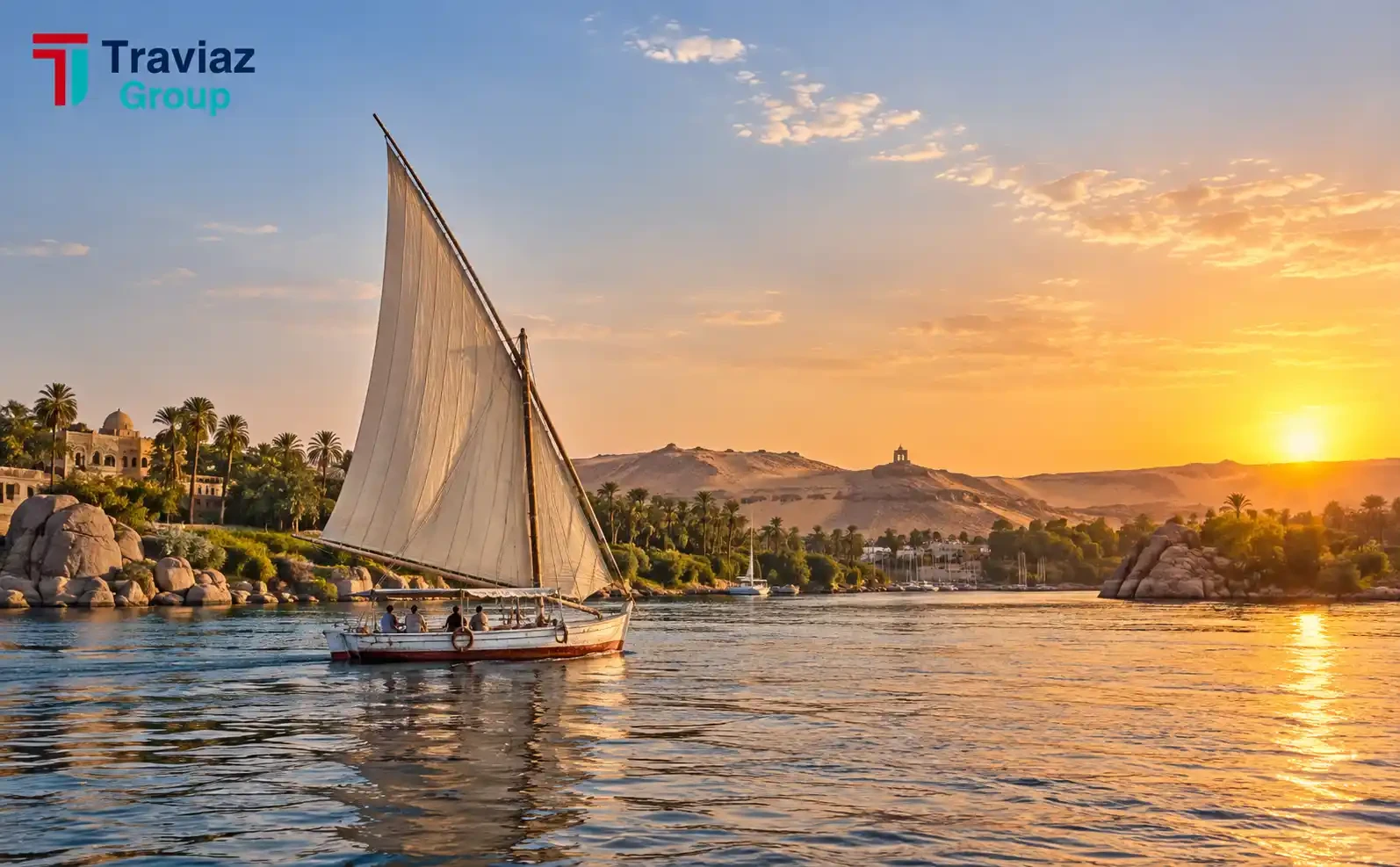
- Taking a felucca ride at sunset on the Nile against the backdrop of the colorful houses.
- Having henna patterns drawn on your hands by local women.
- Enjoying a traditional Nubian meal at one of the village's restaurants overlooking the Nile.
Jabana Coffee: An Unforgettable Experience
Jabana is an authentic Nubian social ritual in which coffee is served in a small clay pot with spices such as cardamom and ginger.
An invitation to drink it in a Nubian home means the family is welcoming you into the circle of their real guests rather than commercial visitors.
The host usually refills the cup three times according to Nubian tradition, and declining a refill before the third time is considered a signal of having had enough.
This simple moment offers a genuine human connection that cannot be bought in any tourist shop.
How to Get to the Nubian Village from Aswan
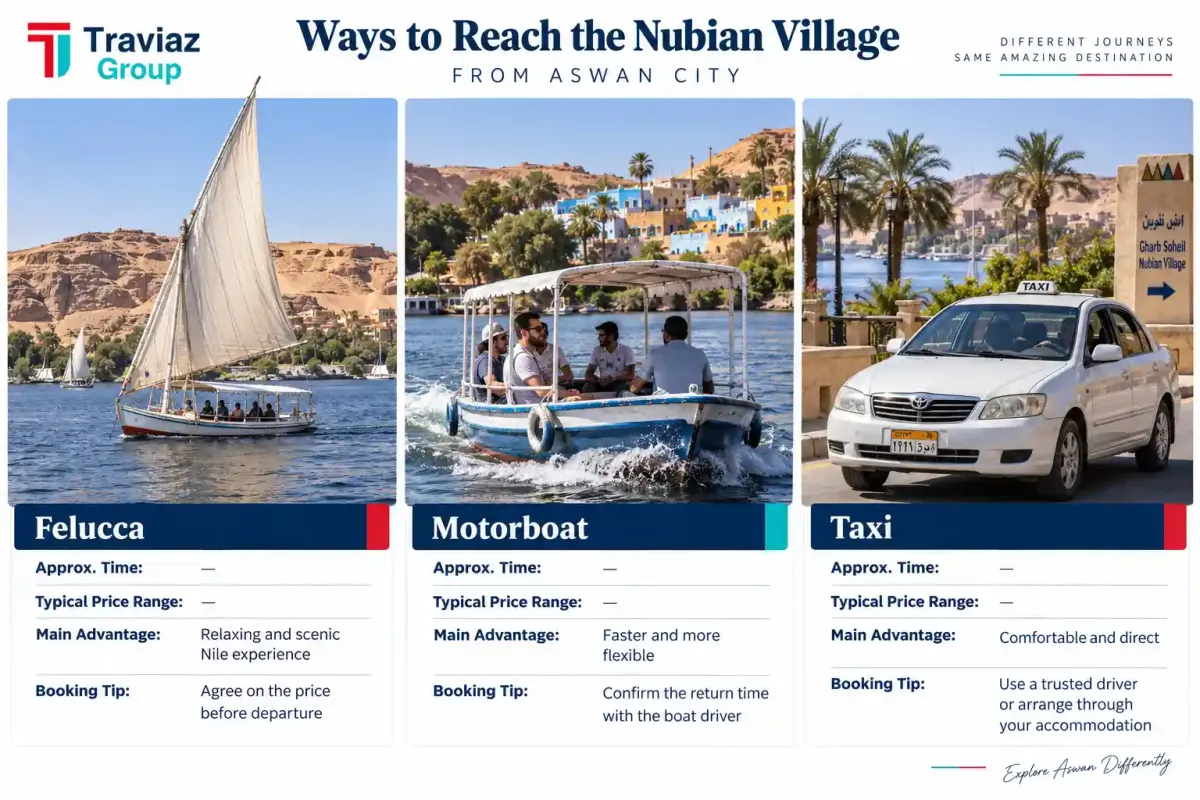
Reaching Gharb Soheil necessarily passes through the Nile, and this water journey is an inseparable part of the experience itself. Below is a comparison of the available options with expected costs:
|
Transport |
Cost | Time | Advantages |
|
Private felucca |
200 to 300 pounds per boat | 30–40 minutes |
Quiet, romantic, and ideal for sunset |
|
Private motorboat |
400 to 600 pounds per boat | 15–20 minutes | Faster and more suitable for families |
| Group tour | 300 pounds per person | 30–40 minutes | Cheapest but tied to a fixed schedule |
| Taxi + boat | Variable | 45–60 minutes | Suitable for those coming from outside the city |
Aswan to Nubian Village Felucca Ride vs. Motorboat
The felucca is the authentic traditional experience and offers a silent wind-powered sail that passes by the Aga Khan Mausoleum, Elephantine Island, and the historic Corniche.
The best time for it is an hour before sunset when the sky changes colors and the Nubian houses transform into a living painting on the opposite bank. The motorboat is faster and more suitable for families with young children or for those with limited time.
In either case, agree on the round-trip price before boarding, as many tourist problems arise from return pricing being set separately.
Why Pre-Arranged Transport is Best
The Corniche in Aswan is full of boat operators calling out to tourists with prices that start high and drop during negotiation, and this process is exhausting for those who do not know the reference prices.
Traviaz handles booking the appropriate boat at a pre-agreed price with a driver who knows the route and times it well, which eliminates the Corniche negotiation experience that sours the mood before the trip even begins. Integrated packages that include transport, the guide, and the visit start from $40 per person.
Essential Tips for Visiting: Safety, Dress Code, and Best Times
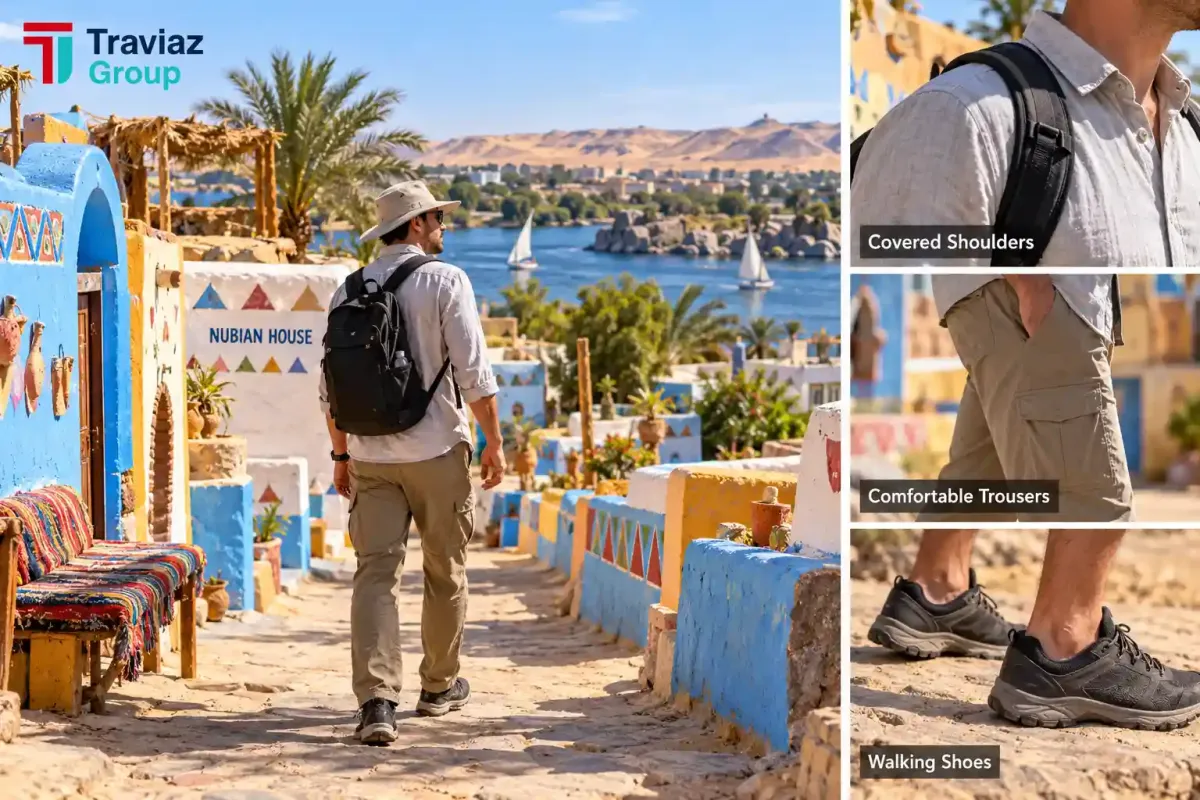
A Nubian village visit is a warm and inherently welcoming experience, but some practical considerations determine the quality of the experience, especially for women traveling alone and families with children. Below is what every visitor needs to know:
Is the Nubian Village Safe for Solo Female Travelers?
Gharb Soheil is one of the most welcoming and safe tourism environments in Egypt. The Nubian community is historically distinguished by genuine openness and generosity, and women traveling alone find themselves in an environment calmer than the streets of Aswan or Cairo.
Modest clothing covering the shoulders and knees is necessary to show respect and to avoid any unwanted attention. Visiting with a certified Traviaz guide adds an extra layer of security and allows access to parts of the village that an individual visit does not easily reach.
Best Time of Day to Visit to Avoid Crowds and Heat
Visiting in the middle of the day between eleven and three means facing Aswan's desert heat in a location with insufficient natural shade.
The two best times are early morning before nine when the colors are in their most beautiful light and the streets are nearly empty, or after four in the afternoon when the sun's heat begins to retreat and the colorful houses take on exceptional golden lighting.
An evening visit after six is possible and beautiful, as residents light their homes and sit in front of them in quiet daily atmospheres that offer a scene completely different from the daytime bustle.
Gharb Soheil vs. Elephantine Island: Which Nubian Village Should You Visit?
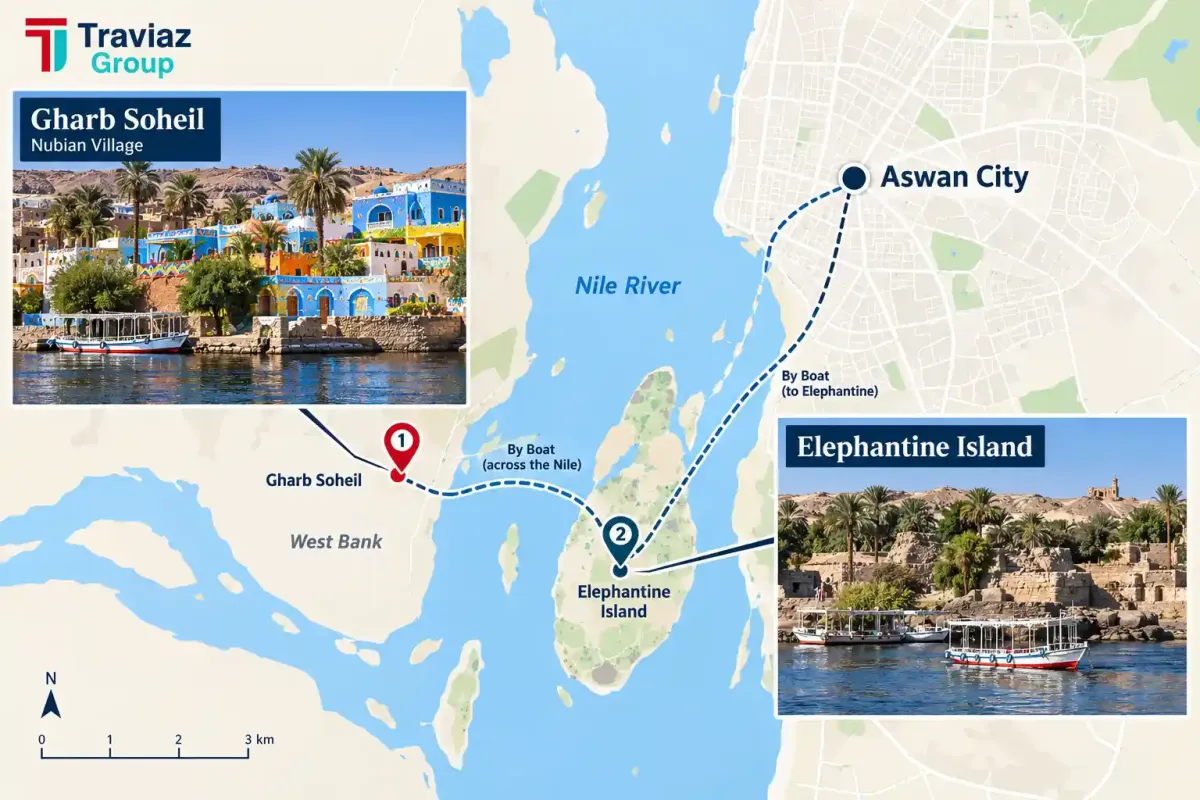
Visitors often confuse the two locations because both carry a Nubian character, but the experience they offer is fundamentally different and suits two different types of visitors.
Gharb Soheil on the western bank is the more famous and more visited destination, distinguished by its dense vivid colors, its shops, its markets, and its restaurants overlooking the Nile.
Elephantine Island in the middle of the Nile opposite the Aswan Corniche holds two quieter and less commercial villages, along with the Animalia center that cares for local animals.
The choice between them depends on travel style: whoever wants vibrancy, colors, shopping, and exceptional photos will find Gharb Soheil their destination.
Whoever is looking for genuine quiet and interaction with Nubian families away from tourist noise will find what they want at Elephantine. Combining both in a single day is possible and rewarding for those who have six hours or more in Aswan.
Combining the Nubian Village with Aswan's Top Archaeological Sites
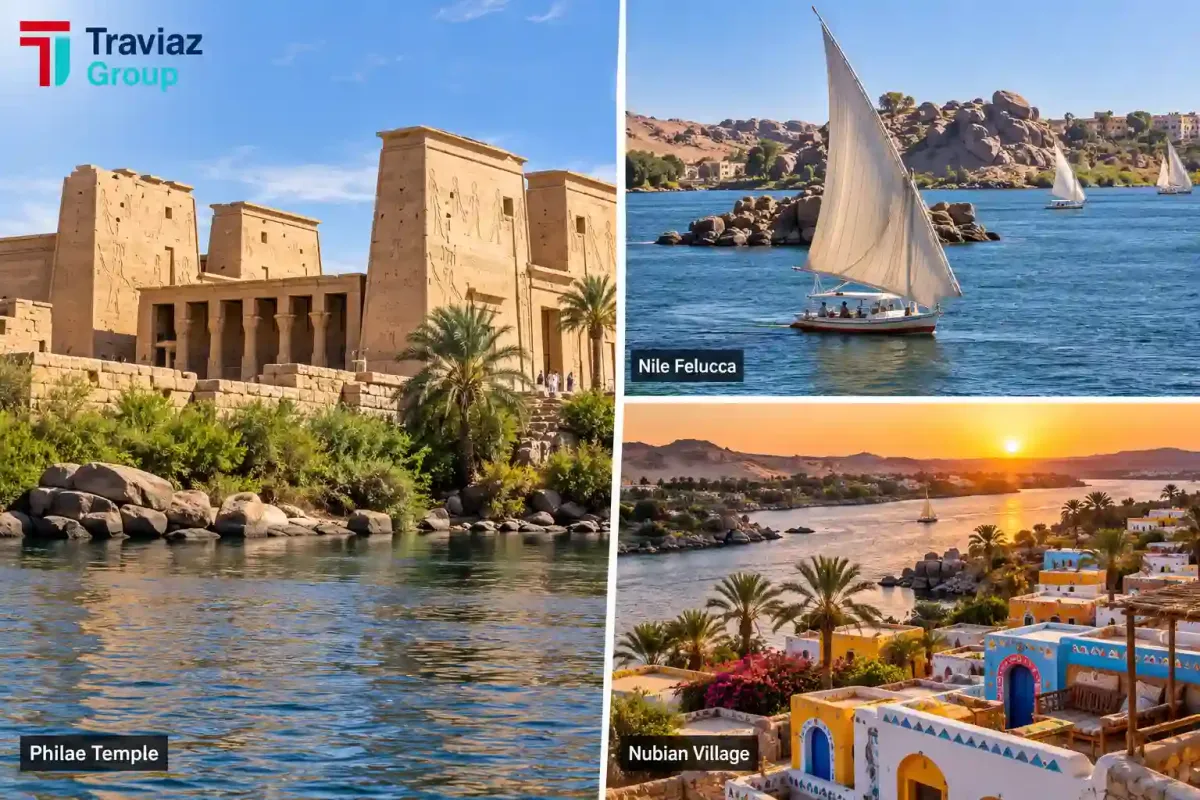
The most common problem with visiting the Nubian village is random combination with archaeological sites without coordinating times.
Whoever starts their day at Abu Simbel before dawn and includes the Nubian village in the morning arrives exhausted and unable to walk through the alleys.
The correct arrangement dedicates the archaeological sites to the early morning and keeps the Nubian village for the afternoon or sunset when the mood is right for slowly enjoying a different experience.
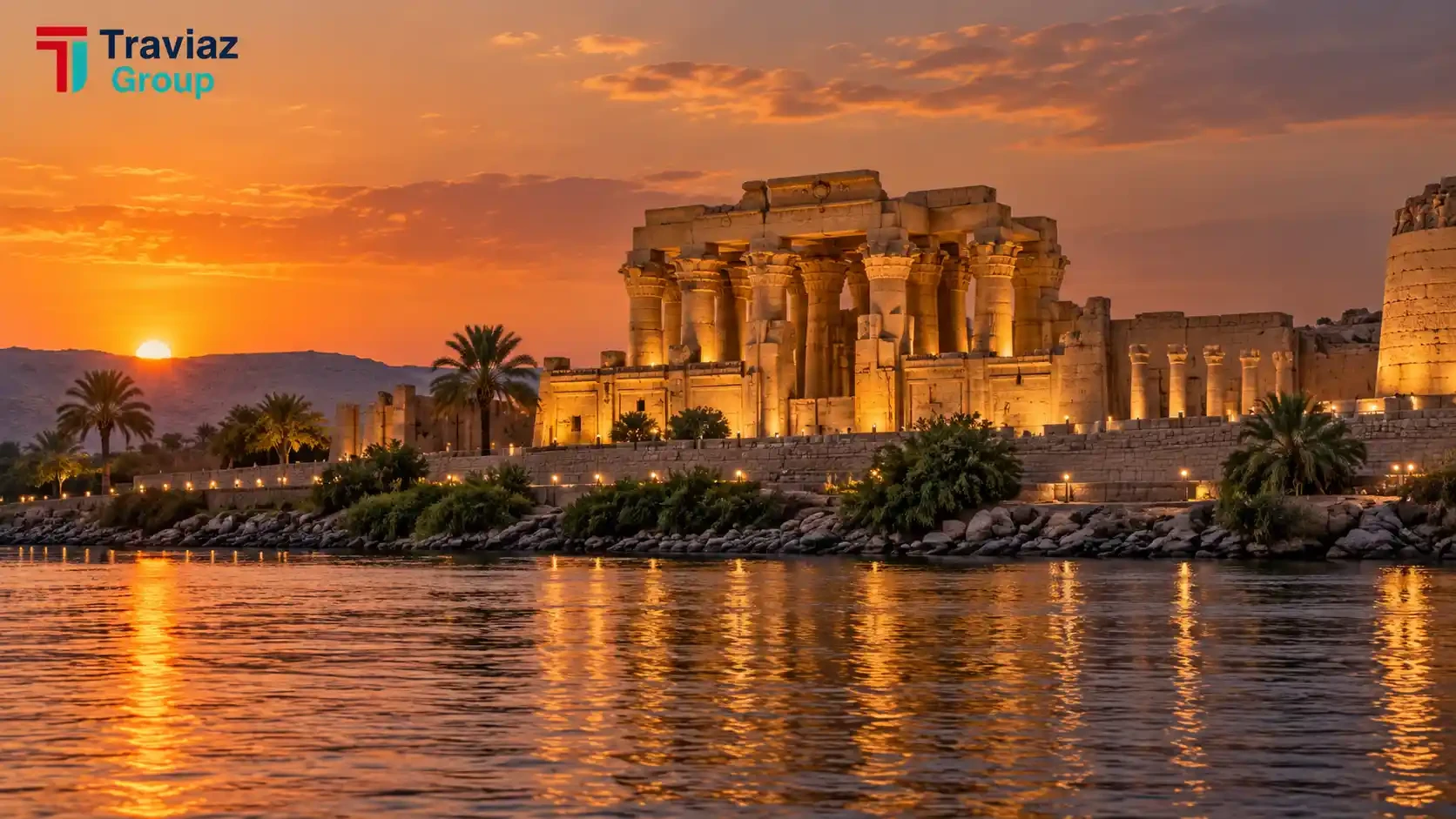
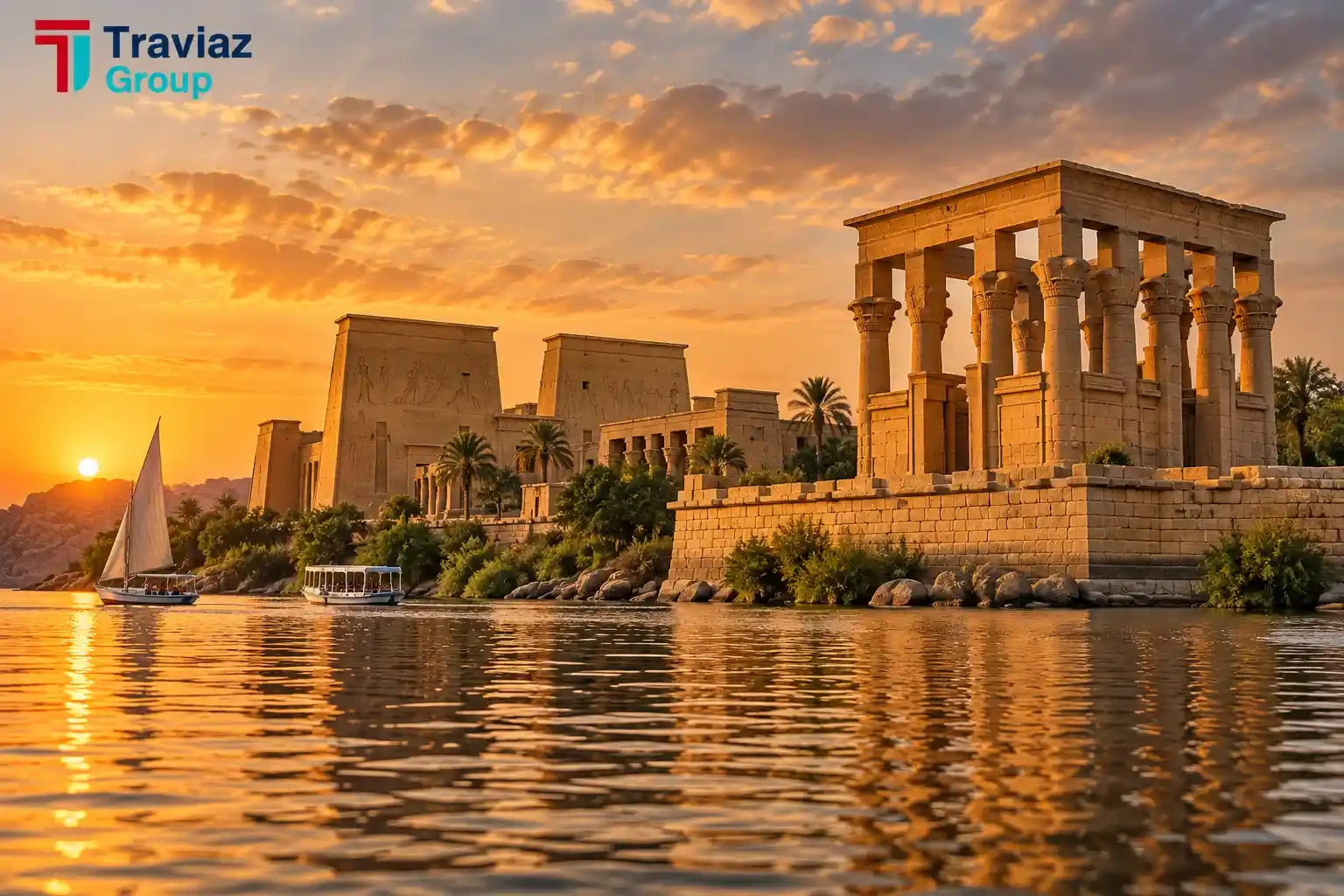
Traviaz designs the Aswan day in this logical order: the Unfinished Obelisk, the High Dam, and Philae Temple in the first half of the day, then the Nubian village at sunset by a boat that carries you across the Nile in the most beautiful light of the setting sun. This itinerary presents archaeological Egypt and living Egypt within a single complete day.
Can You Stay Overnight? Nubian Village Guest Houses vs. Hotels
Staying in a Nubian guesthouse inside Gharb Soheil is a completely different experience from an Aswan hotel. The rooms are simple and furnished with traditional Nubian furnishings, and breakfast usually includes local bread, white cheese, eggs, and fresh hibiscus tea.
An evening in the village without the city's noise allows hearing the sounds of the Nile and the gathering of residents in front of their homes in atmospheres not available to those who return to the hotel before sunset.
Aswan hotels such as the Old Cataract and Sofitel Legend, on the other hand, offer a different level of service with panoramic views of the Nile, swimming pools, and around-the-clock room service.
The choice between them depends on the experience priority: whoever wants genuine immersion in Nubian culture chooses the guesthouse, and whoever needs guaranteed comfort after a busy day chooses the hotel.
Why Book Your Nubian Village Tour with Traviaz?
Visiting the Nubian village independently is possible but strips the visitor of layers of depth and smoothness that turn the trip from an ordinary outing into a genuine experience.
Traviaz provides an English-speaking guide who knows Nubian families by name and brings visitors into private gatherings that do not open for passing tourists.
Transport prices are agreed upon in advance without surprises, and ethical tourism practices ensure that your spending reaches the local community directly.
Traviaz integrated packages that include the Nubian village with Abu Simbel, Philae, or the High Dam are available for booking at traviaz.com.
FAQs
How far is the Nubian Village from Aswan city?
Gharb Soheil sits on the western bank of the Nile south of Aswan, and the boat journey takes between 30 and 40 minutes from the Aswan Corniche. A motorboat cuts the time down to 15 to 20 minutes.
How much time do you need to spend in the Nubian Village?
Two to three hours are enough to see the colorful houses, shop in the market, and sit in a Nubian home for tea. Whoever wants a deeper experience with a meal and a felucca ride needs a full half-day.
Do they speak English in the Nubian Village?
Residents in the tourist areas of Gharb Soheil speak basic English sufficient for communication and shopping. A capable guide is necessary for deep understanding of the history and traditions and for genuine communication with families away from the main streets.
What is the entrance fee to the Nubian Village?
There are no official entrance fees to the village. The main cost is the boat fare ranging between 200 and 600 pounds depending on the type of boat, with a small tip when visiting private homes.
Can you swim in the Nile at the Nubian Village?
The sandy beach at Gharb Soheil is considered safe for swimming according to local residents. It is always advisable to consult the residents about specifically safe spots, as Nile currents vary from one area to another.