
The Ultimate Guide to the Best Things to Do in Aswan: Egypt's Southern Jewel
The best things to do in Aswan include exploring Philae Temple, taking a day trip to Abu Simbel, sailing the Nile by felucca, and discovering Nubian culture and villages. Aswan offers a distinctive blend of ancient monuments, desert landscapes, peaceful Nile scenery, and living Nubian traditions.
We visit the city regularly with Traviaz guests, helping travelers navigate boat prices, avoid the intense heat, and discover places beyond the main attractions. This 2026 guide covers the essential Aswan activities, from famous temples to quieter experiences that make the city worth exploring.
What to Know Before You Arrive in Aswan
Aswan differs from most Egyptian cities, so understanding its nature helps you plan a more comfortable and organized visit. Below are the most important pieces of information you need to know before arriving in the city:
What is Aswan Famous for?
Aswan once carried the name "Swenet," a name linked to the word for market in the ancient Egyptian language. The city's location helped trade flourish between Egypt, Nubia, and the regions of Africa south of the Sahara.
The ancient Egyptians relied on the pink granite quarries to obtain the stones used in building temples and obelisks. This role continued for thousands of years and left a clear mark on ancient Egyptian architecture.
Aswan's current fame is tied to several main landmarks and experiences:
- Abu Simbel Temple.
- Philae Temple.
- The High Dam.
- Living Nubian civilization.
Nubian culture gives the city a character different from most other Egyptian cities.
Vibe, Climate, and Culture
After arriving in Aswan from Cairo, many visitors feel that the pace of life has become quieter. The streets appear less crowded, vendors are less insistent, and Nubian warmth shows in daily interactions.
The weather is dry throughout the year, with winter temperatures ranging between 22 and 26 degrees Celsius. During July and August, the heat exceeds 42 degrees, which makes the timing of the visit important.
The most suitable season for visiting open archaeological sites runs from October to April.
Is Swimming in the Nile in Aswan Safe?
Swimming in the Nile at Aswan is not safe in all areas, so the location must be chosen carefully. Near the First Cataract south of the city, the water rushes between rocks with strong currents that make swimming dangerous. There are quieter areas that can be considered:
- The calm sandy beaches at Gharb Soheil.
- Some Nile islands identified by local residents.
- Areas recommended by local guides.
Traviaz guides identify suitable spots for their guests before any water activity begins.
The Absolute Must-See Archaeological Sites in Aswan
Aswan holds a large collection of important archaeological sites, but limited time makes arranging visits a necessity. These are the most prominent sites we recommend during our tours:
The Majestic Philae Temple (Temple of Isis)
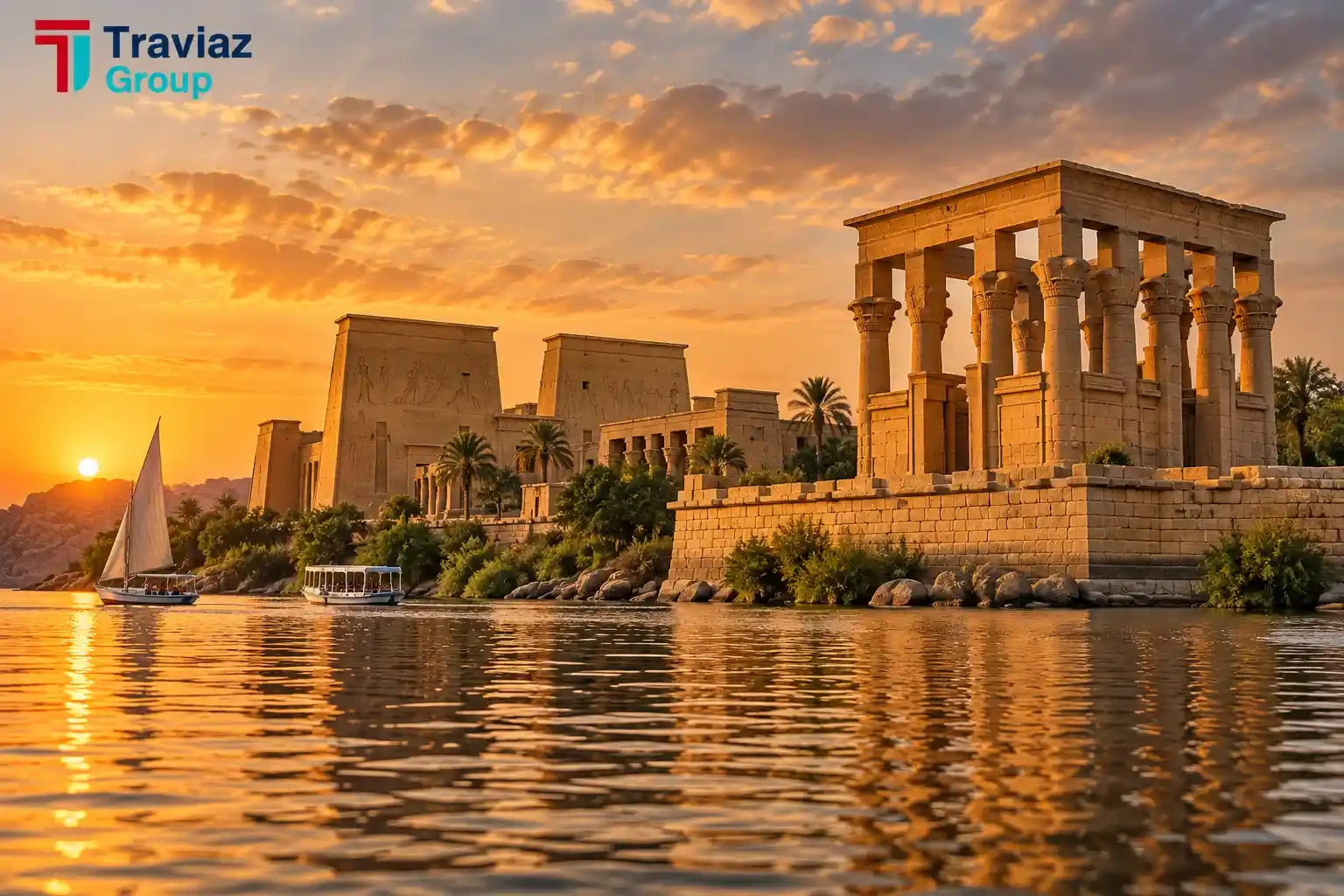
Philae Temple sits on Agilkia Island and is considered one of the most beautiful archaeological sites that can be visited in Aswan.
The temple was dedicated to the worship of Isis, goddess of motherhood and magic, and its design brought together Egyptian, Greek, and Roman styles.
A prominent rescue story is linked to the temple, carried out by UNESCO with the participation of 50 countries in 1972.
The temple was dismantled block by block, then transferred to a neighboring island higher than the waters of Lake Nasser.
The temple can be reached by boat from the marina, and the full round-trip boat costs approximately 300 pounds. The entrance ticket for foreign adults is 550 pounds according to the price mentioned in the guide.
For a quieter visit, arriving between 7:00 and 9:00 AM is preferable. The temple is more crowded after Nile cruise groups arrive. The sunset visit gives the place a different appearance because of the golden light reflecting off the pylons and Trajan's Kiosk.
Abu Simbel Temple Complex (The Ultimate Day Trip)
The Abu Simbel trip is worth the long drive, especially for visitors seeing Aswan for the first time. The journey takes about three hours in one direction, but the scale of the site justifies the time spent.
Four statues of Ramesses II stand before the main temple, and each statue reaches 20 meters in height. The true scale of the facade and its visual impact is difficult to convey through photographs alone. Abu Simbel opens its doors from 6:00 AM to 5:00 PM. Ticket prices differ by season:
- The ticket costs 1,200 pounds from February to October.
- The cost drops to 750 pounds during the remaining months.
The site can be reached through two main options:
- A private car departing at 4:00 AM to arrive when the gates open, which is the option Traviaz provides.
- A domestic flight from Aswan Airport, which takes about 45 minutes.
Personal phone photography is allowed inside the temple without flash. Professional cameras require a prior permit before shooting.
Philae Temple vs. Abu Simbel: Which Should You Prioritize?
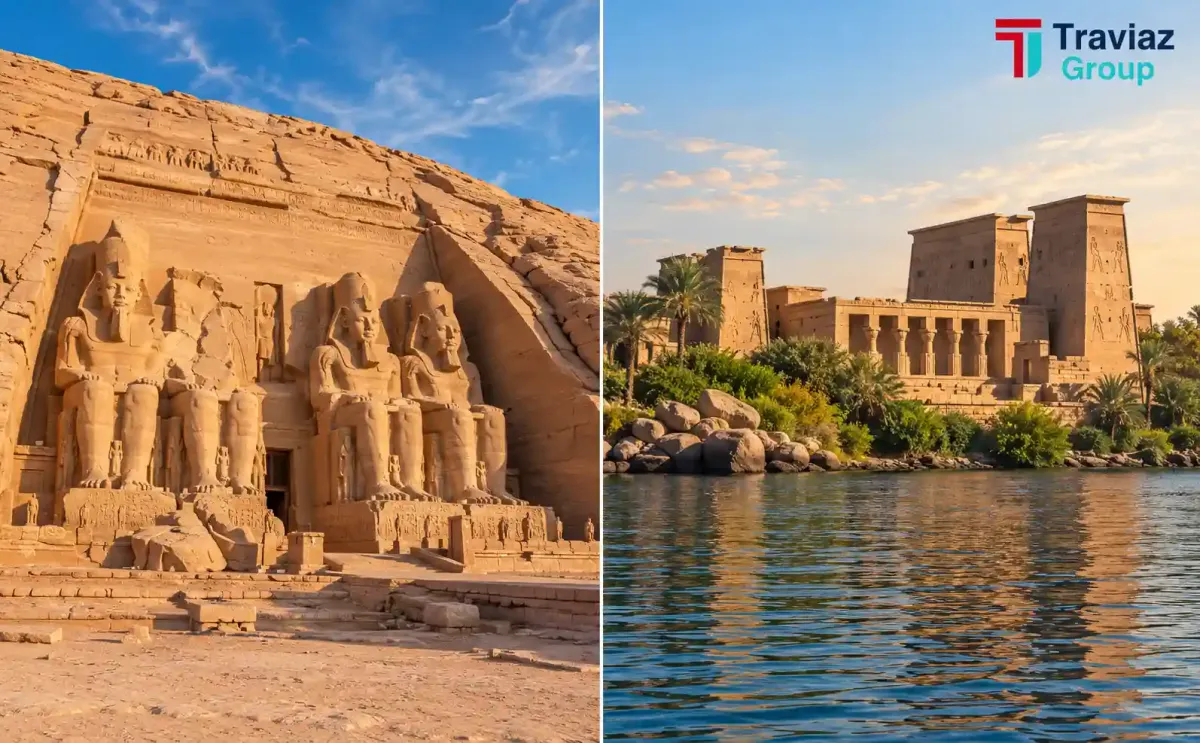
If your time in Aswan is limited to a single day, make Abu Simbel your morning stop and dedicate the evening to Philae. Abu Simbel is distinguished by its massive scale and direct visual impact that is difficult to compare with most other sites.
Philae, on the other hand, offers greater architectural diversity, alongside its historical story and its location above the island. Those with two days can visit each temple on a separate day and enjoy the details without time pressure.
The Unfinished Obelisk & Ancient Stone-Working
Some visitors arrive at the Unfinished Obelisk expecting it to be just a large stone in the ground. The story of the site, however, reveals a massive engineering project ordered by Hatshepsut to become the largest obelisk in history.
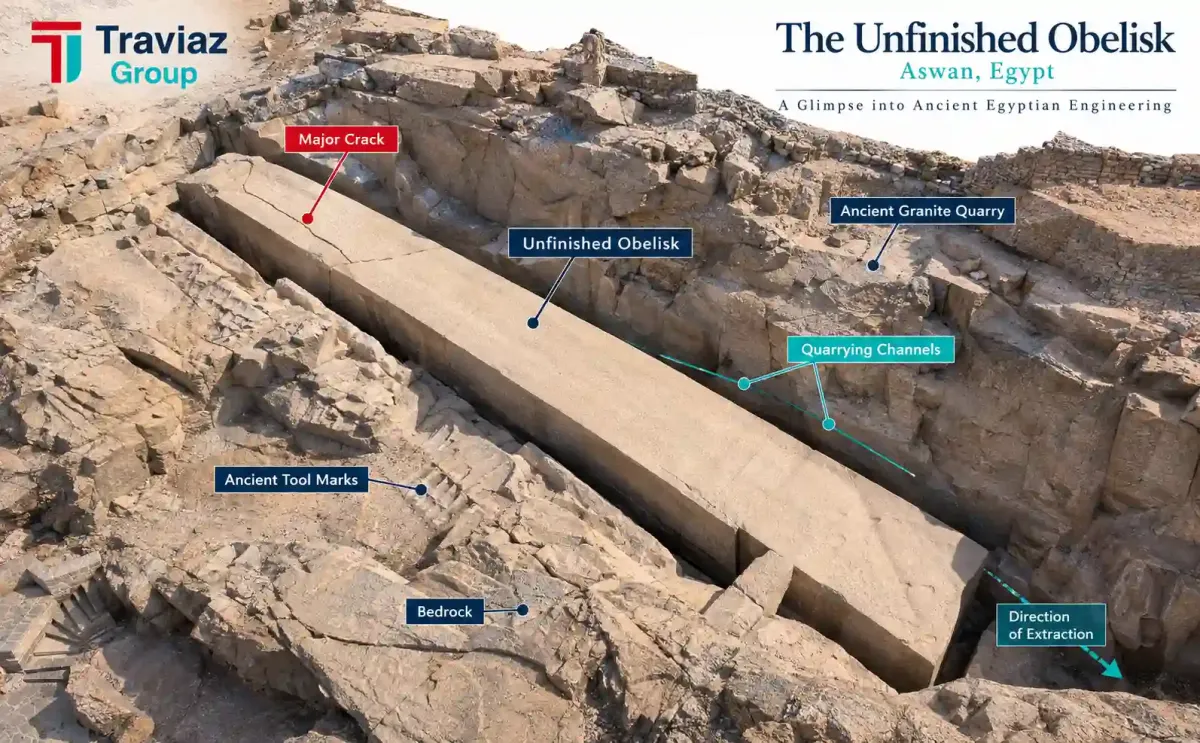
The obelisk's expected weight reached 1,197 tons, and work stopped after the rock cracked before it was completed. The site displays the stone-carving methods that the ancient Egyptians used with copper and stone tools. The entrance ticket is 220 pounds, and the visit takes about 45 minutes.
Aswan High Dam (Is it worth seeing?)
The importance of the High Dam does not depend on its visual beauty, but on its role in understanding the region's history.
The dam is linked to the Nubian temple rescue project in which UNESCO participated to protect them from the waters of Lake Nasser.
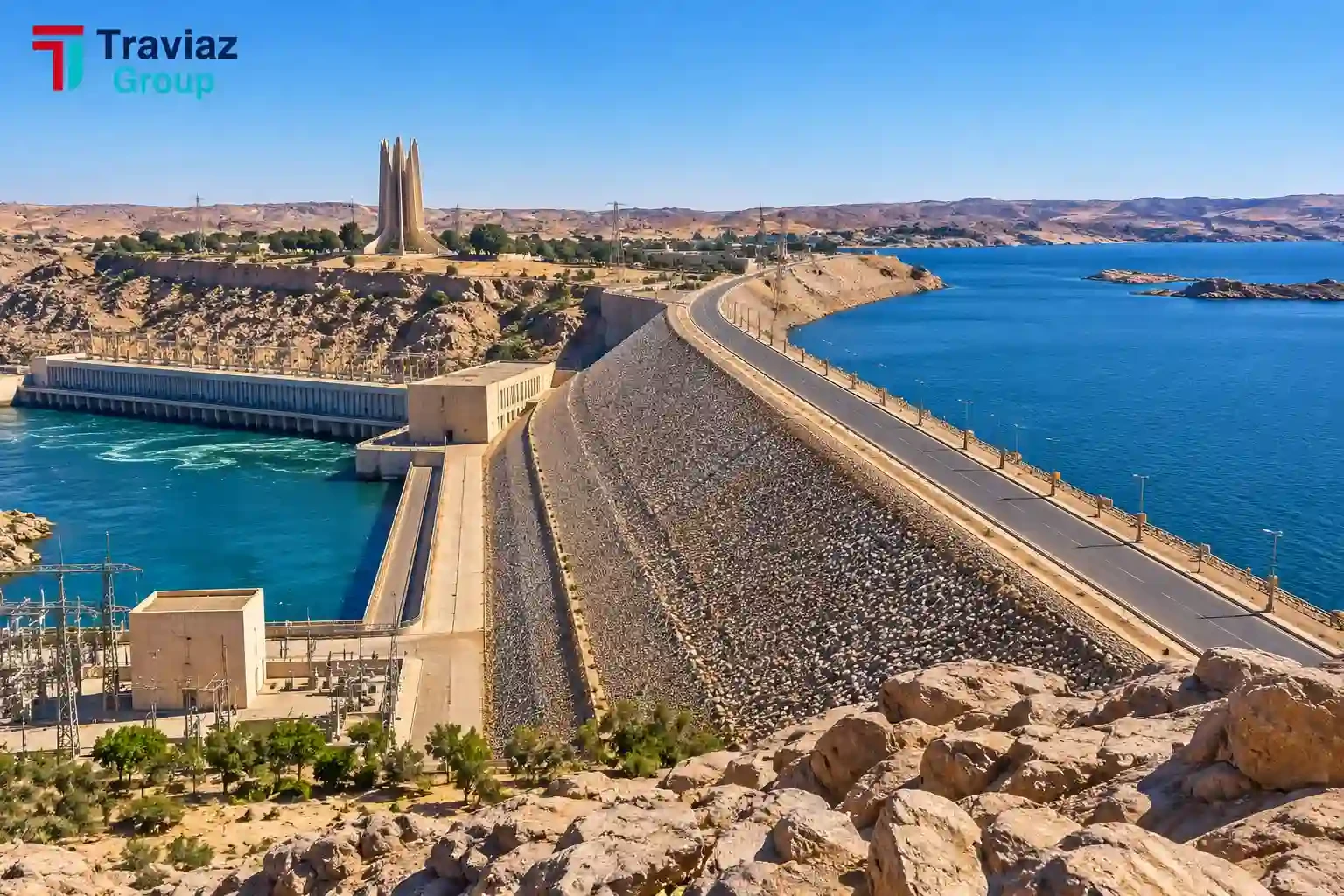
The dam was built between 1960 and 1970 with Soviet assistance and contributed to the formation of Lake Nasser. The lake is considered the third largest artificial water reservoir in the world according to the information mentioned in the guide.
The dam body extends for 3.8 kilometers, and visitors can walk across it and see the lake to the south.
In the northern direction, the Nile appears returning to its natural course inside Egypt. The visit usually does not need more than an hour, but it adds important context to the rest of the sites.
Deep-Dive Temples and Ruins (For History Enthusiasts)
Aswan hides historical sites less famous than Philae and Abu Simbel, but they deserve the attention of those who love ancient details. These places need extra time, which is why we usually include them in programs that allow for deeper visits:
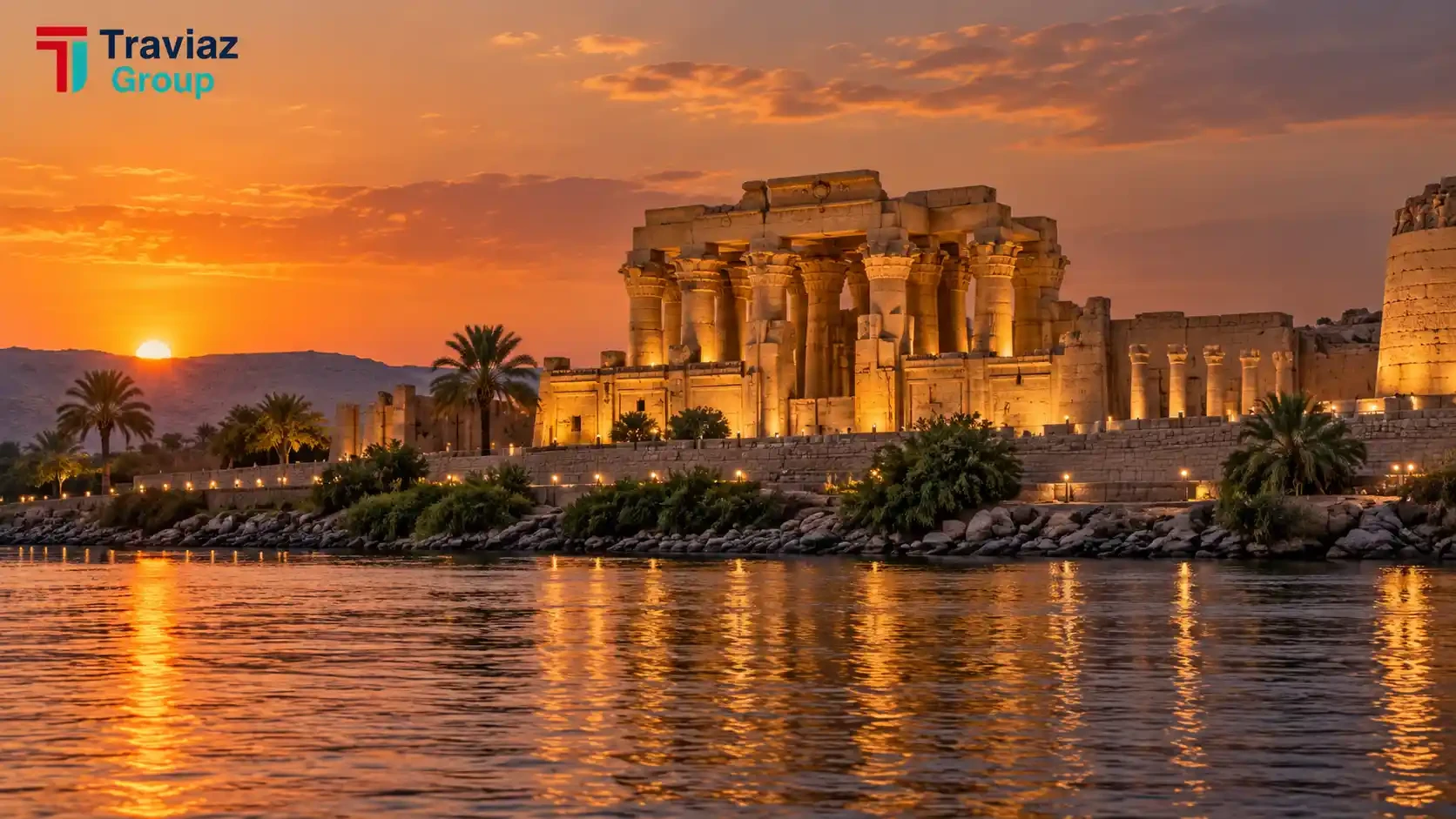
Temple of Kom Ombo & Crocodile Museum
Kom Ombo Temple differs from others, as it is the only double temple in Egypt. The design divides the temple between two different gods:
- Sobek, the crocodile god, in the southern section.
- Haroeris, the falcon god, in the northern section.
Inscriptions of medical and surgical instruments dating back to the Ptolemaic era appear on the outer walls.
These inscriptions are regarded as among the oldest known documentation of organized medical practice. The adjacent Crocodile Museum displays 22 crocodile mummies that were buried in honor of the god Sobek.
The mummies add a different dimension to the visit and suit visitors of different ages.
Temple of Kalabsha
Kalabsha Temple is considered the largest Nubian stone temple outside Abu Simbel. It was built during the Roman era in honor of Mandulis, the sun god in Nubian beliefs.
The temple was moved to a small island near the High Dam as part of the UNESCO project to rescue Nubian monuments. Visitors reach the site by a short boat ride, and it can be combined with a High Dam visit during a half-day tour.
Tombs of the Nobles
The Tombs of the Nobles sit inside a rocky cliff on the west bank and look directly over the Nile. The area holds the tombs of Aswan's governors and senior officials of the Old and Middle Kingdoms.
These tombs differ from the tombs in the Valley of the Kings because of their focus on daily life details. Multiple scenes appear on the walls:
- Fishing.
- Bread-making.
- Family life.
- Details of society in ancient southern Egypt.
These paintings offer a picture closer to people's lives, rather than limiting themselves to royal scenes.
Monastery of St. Simeon
The Monastery of St. Simeon dates back to the seventh century AD and sits above a desert plateau behind the west bank.
The monastery is classified among the largest preserved Coptic monasteries in Egypt. It can be reached in two ways:
- Walking through the desert.
- Riding camels, which our guides usually prefer.
The camel ride adds a desert dimension to the visit, especially for those who want a different experience. Massive walls surround the monastery, while parts of the central church have survived as witnesses to its history.
Qasr Ibrim & Aga Khan Mausoleum
Qasr Ibrim is distinctive as the only site in the region that was not moved during the Nubian monument rescue project.
The site currently appears from the water only, as an island above Lake Nasser. Its remains contain historical layers extending from the pharaonic era through the Ottoman period.
A visit to Qasr Ibrim usually falls within specialized Lake Nasser cruises. The Aga Khan Mausoleum, meanwhile, shows its white dome clearly from the west bank above the Nile.
The mausoleum remains closed to interior visits, but it offers a distinctive photographic backdrop from the felucca.
Navigating the Nile: Islands, Feluccas, and Cruising
The Nile plays a core role in movement between Aswan's islands and sites, and is not merely a visual element in the scene. Each boat journey gives a different perspective of the mountains, the desert, and the Nubian houses:
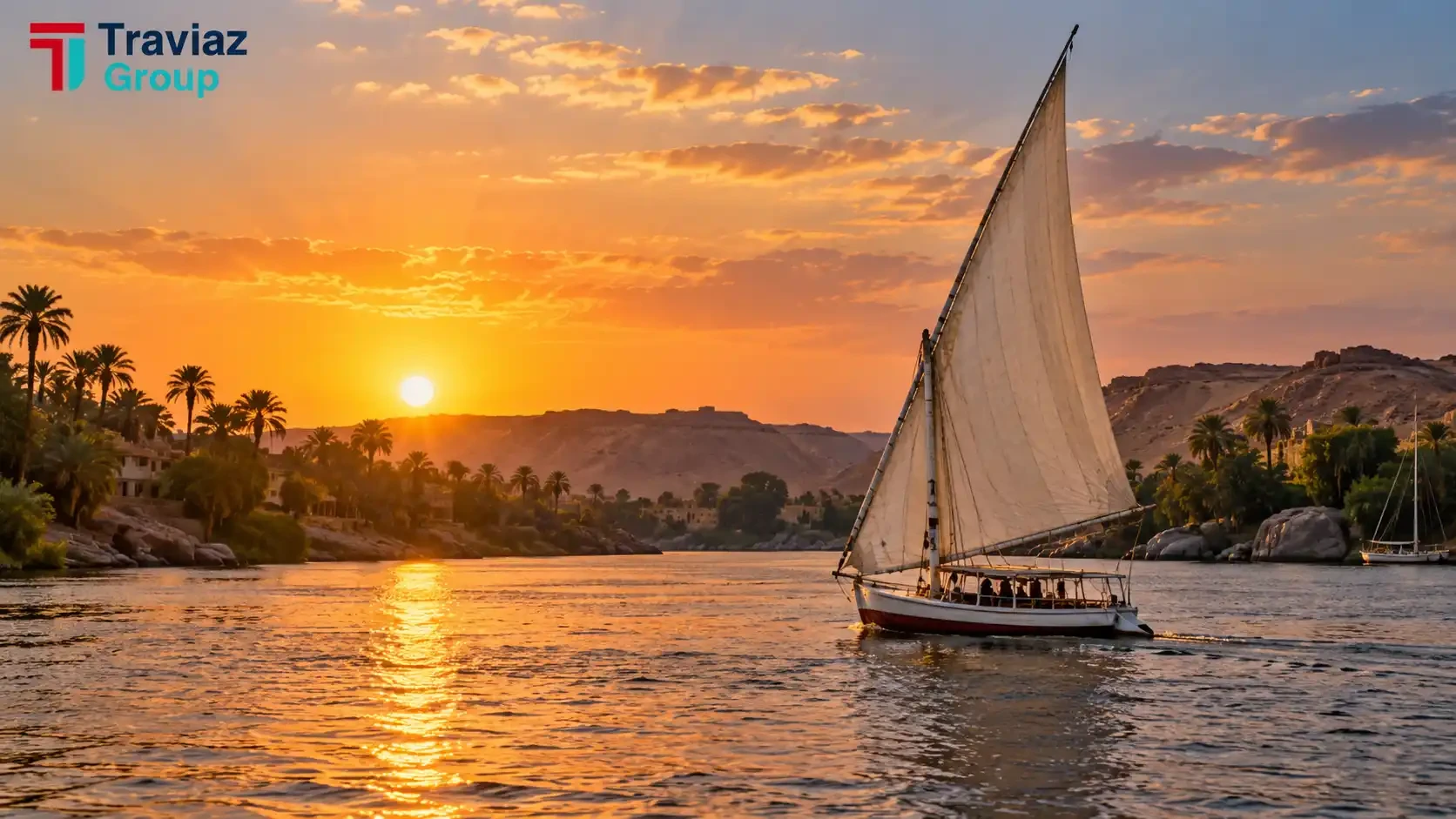
Felucca Sailing at Sunset
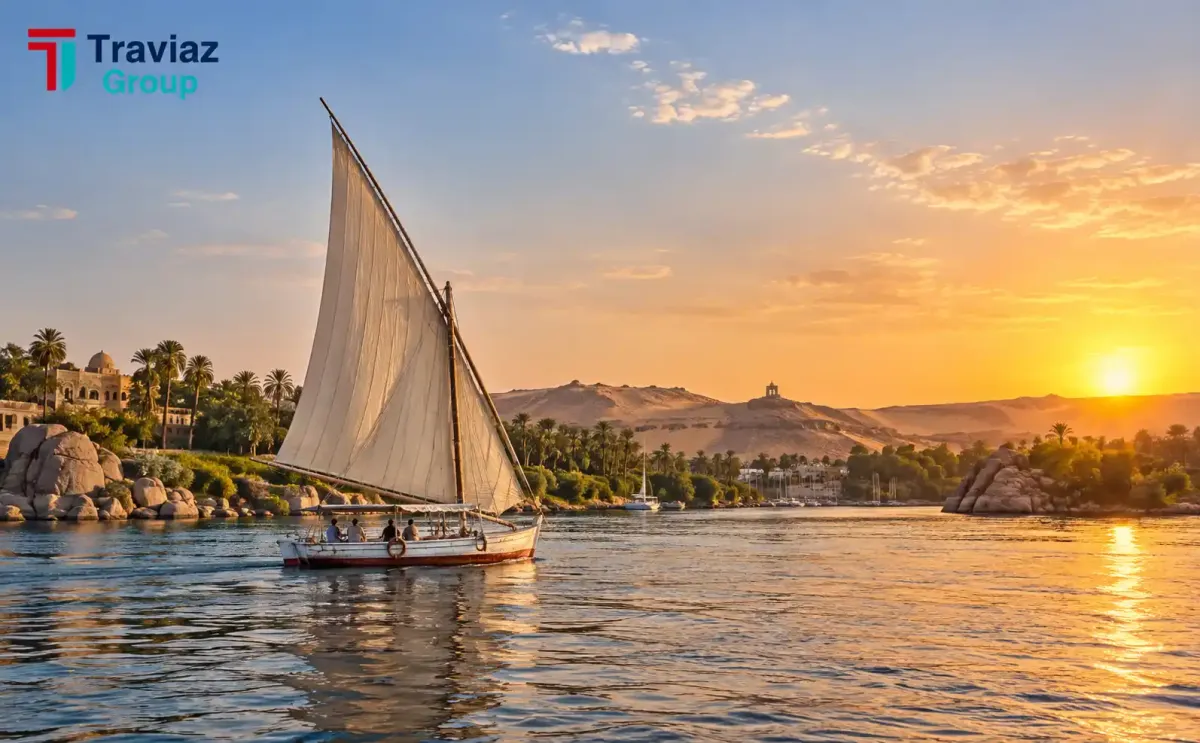
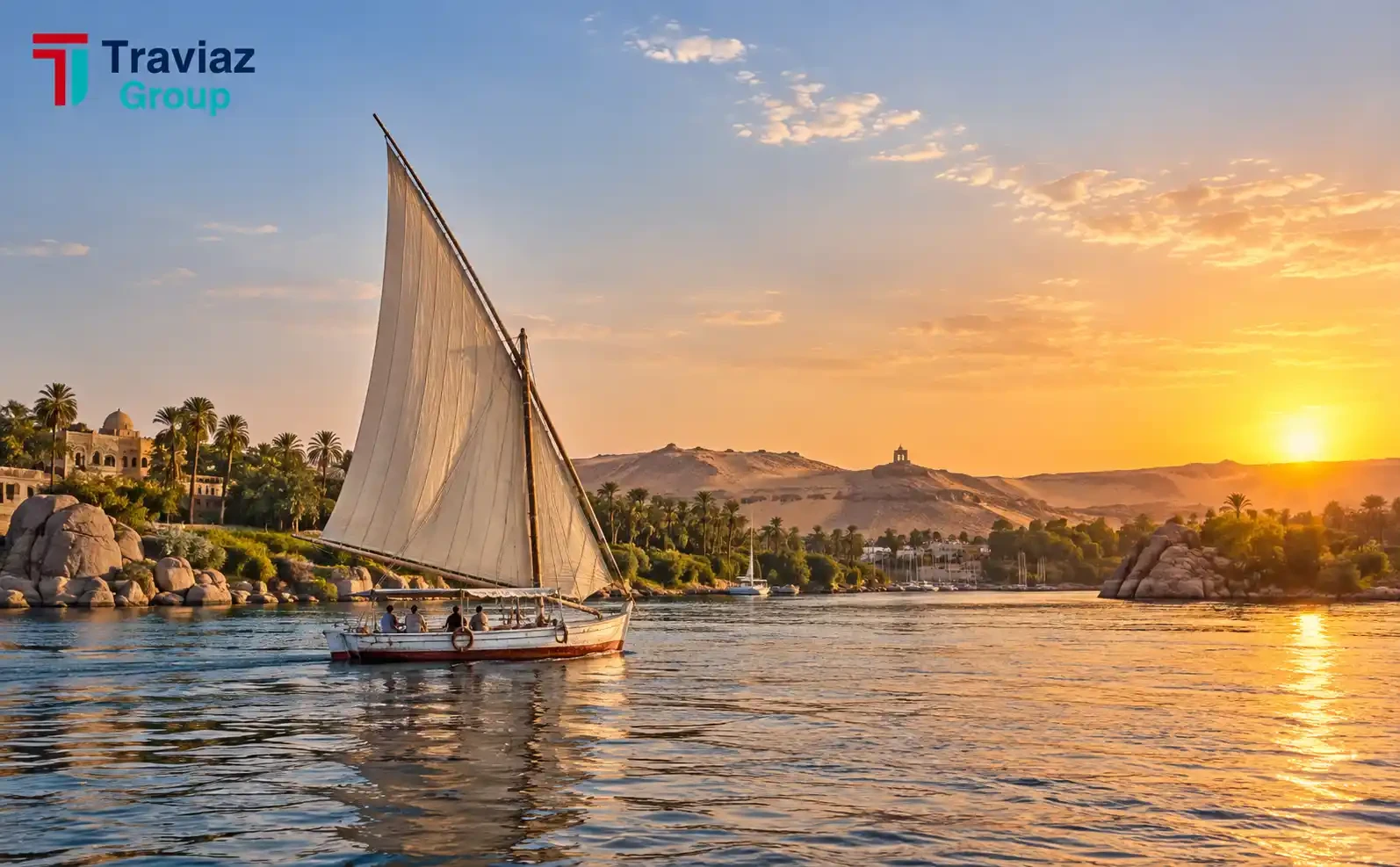
The traditional wooden sailing felucca is the most authentic way to enjoy the Nile in Aswan. We usually choose the hour before sunset, when the colors of the mountains, houses, and water change gradually.
Shades of orange and gold cover the scene and give the trip a character that is difficult to replicate. The felucca fare for one hour ranges between 200 and 300 pounds for the entire boat.
Reaching this price requires knowing the reference rates, which is information the Traviaz guide provides before any negotiation.
Exploring Elephantine Island (Ruins of Abu)
Elephantine Island sits in the middle of the Nile opposite the Aswan Corniche, and holds the remains of the ancient city of Abu.
The city was the capital of the southern region in ancient Egypt and occupied an important position on trade routes. The Nilometer on the island is considered one of the oldest flood measurement instruments known in history.
Its use dates back more than two thousand years, which shows the importance of the Nile in the residents' lives. The public ferry reaches the island for a few pounds and gives the visitor a simple local experience.
Kitchener's Island (Botanical Garden)
The Botanical Garden Island is also known as Kitchener's Island and offers a rare green space amid the desert environment. The island holds hundreds of tropical species brought from different regions in Africa and Asia.
We recommend it for families traveling with children, especially as a rest period between temple visits. Reaching it by felucca takes about ten minutes from the Aswan Corniche and costs very little.
The atmosphere is quieter in the early morning, before the heat rises and the archaeological sites become crowded.
Sehel Island
Sehel Island contains more than 250 hieroglyphic inscriptions carved above granite rocks. Among its most famous inscriptions is the Famine Stele attributed to the era of Ptolemy V.
The inscription addresses a drought crisis that lasted seven years, and shows the role of priests in facing the famine. Visitor numbers at Sehel are lower compared to Gharb Soheil, so the experience feels more authentic.
The island suits those who want to discover history away from markets and crowded tourist areas.
What to Expect on a Nile Cruise from Aswan to Luxor
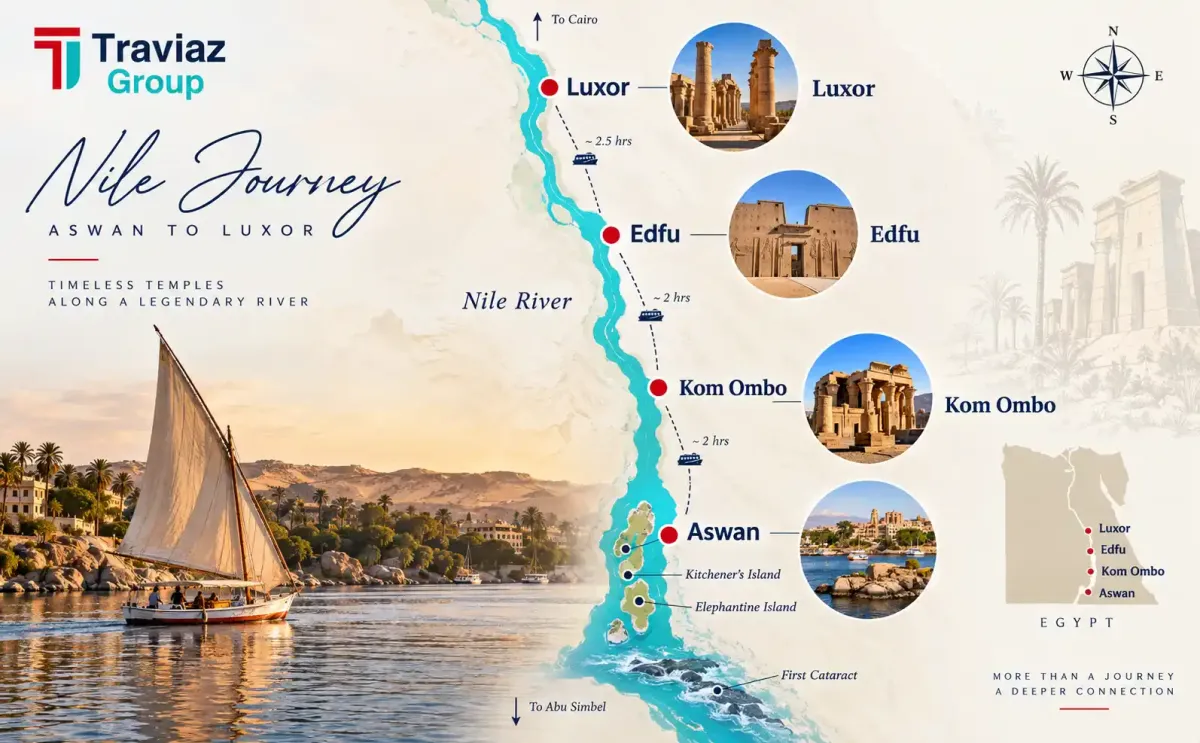
The Nile cruise from Aswan to Luxor offers one of the most famous water travel experiences in Egypt. The usual trip takes three or four days and includes stops at several sites:
- Kom Ombo.
- Edfu.
- Esna.
- Luxor at the end of the journey.
Two main types of trips are available:
- Large ships accommodating 80 guests or more and providing services close to hotel level.
- Private dahabiyas receiving between 8 and 12 guests and offering a more private atmosphere.
We usually prefer the dahabiya for couples and small families looking for calm and flexibility.
Experiencing Authentic Nubian Culture (Without the Tourist Traps)
Nubian culture represents the essential spirit of Aswan and is not limited to colorful houses or tourist markets. Some tours lead visitors to commercial experiences that do not reflect genuine Nubian life.
At Traviaz we focus on supporting local families and providing social interaction that goes beyond taking photographs. Below are the most important ways to choose a more authentic Nubian experience:
Which is the Best Nubian Village to Visit?
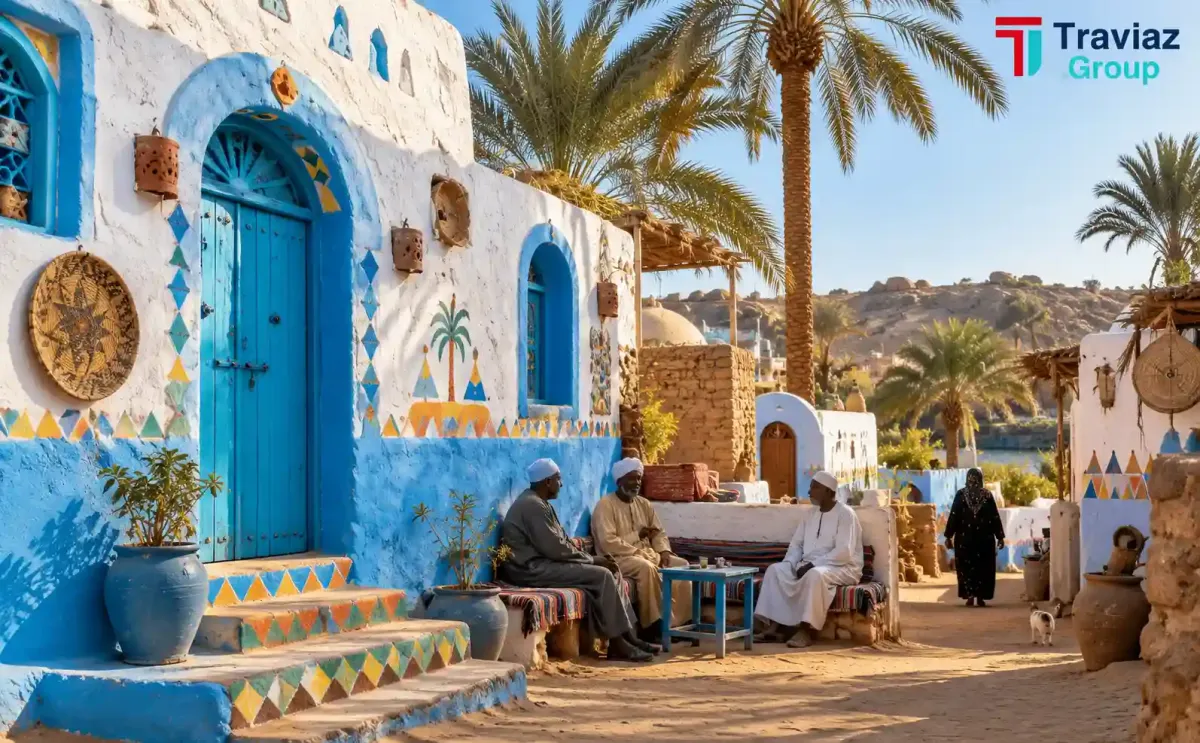
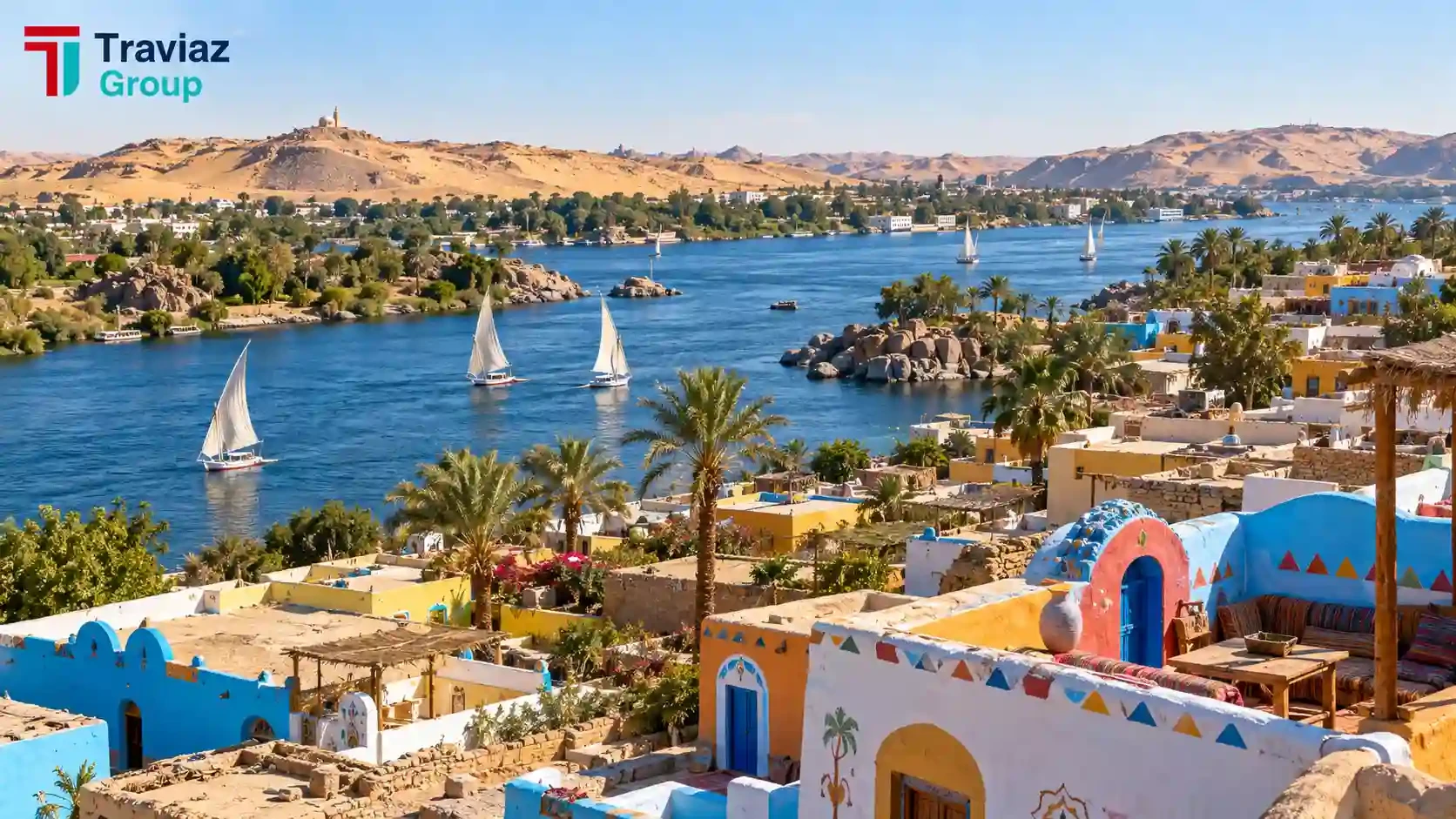
Gharb Soheil is the most famous and most colorful village, and offers wide opportunities for photography. The area includes main streets with many vendors and tourism traders, especially during peak times.
The Nubian villages on Elephantine Island are less commercial and provide quieter interaction with the residents. Traviaz guests are usually taken to the side alleys of Gharb Soheil away from the main road.
Local homes, children, and residents appear there in an atmosphere closer to natural daily life.
Nubian Museum
The Nubian Museum sits in central Aswan and displays the history of a civilization that extended for approximately 5,000 years. The museum links the development of Nubian civilization with the villages that were submerged by the waters of Lake Nasser.
We recommend visiting the museum before the Nubian village, as it explains the meanings of the colors and shapes used in the houses. This historical context helps the visitor understand the details they see during their tour inside the village.
The museum is fully air-conditioned, so it suits a break during the hottest hours between eleven and three in the afternoon.
How to Arrange a Verified Authentic Nubian Village Tour
Traviaz Nubian tours help direct spending directly to local families and projects. We deal with well-known Nubian families and arrange visits to private gatherings to hear stories of displacement and resettlement. The visit includes a range of experiences:
- Drinking Jabana coffee.
- Listening to Nubian family stories.
- Buying spices from local shops.
- Purchasing handicrafts from residents.
This approach ensures that money reaches the project owners and benefiting families directly.
Things to Do in Aswan by Travel Style
The best Aswan activities differ according to the nature of the traveler, their priorities, and the time available.
At Traviaz we design trips according to the guest's personality, rather than relying on a single program for everyone:
Romantic Things to Do for Honeymooners
Aswan brings together the golden sunset, relative calm, and the Nile, which makes it suitable for honeymoon trips. A private felucca at sunset offers a different atmosphere from restaurants and traditional experiences.
Staying on a private dahabiya on the Nile gives couples a quiet space away from the noise. The Old Cataract Hotel offers a luxury experience thanks to its gardens, terrace overlooking the Nile, and spa.
Accommodation prices at the hotel start from $300 per night during the regular season.
Family-Friendly Activities in Aswan
Families find in Aswan a suitable mix of learning, entertainment, and open activities. The small crocodiles in Nubian homes and the colors of Gharb Soheil clearly spark children's curiosity.
Camel riding between the Monastery of St. Simeon and the west bank gives children a different experience they remember after returning home.
The Botanical Garden Island offers a quiet natural space for rest between successive archaeological visits. The Sound and Light Show at Philae suits older children because of its dramatic character.
We recommend dedicating the hottest period between eleven and three to air-conditioned museums and rest inside the hotel.
Cheap and Free Things to Do in Aswan
Aswan offers many options for travelers who want to enjoy themselves without spending large amounts. A range of low-cost or free activities can be chosen:
- Walking along the Aswan Corniche in the morning or evening.
- Watching the sunset from the Corniche at no cost.
- Visiting the Monastery of St. Simeon for 40 pounds.
- Exploring the popular market and getting to know daily life.
Aswan Quick Hits for Fast Travelers
The traveler with only one day needs to arrange visits according to location, time, and temperature. The suggested route can be followed in this order:
- Visiting the Unfinished Obelisk at 8:00 AM for 45 minutes.
- Moving to the High Dam for one hour.
- Visiting Philae Temple before noon for two hours.
- Returning to the hotel during peak heat.
- Taking a felucca ride at sunset.
- Visiting the Nubian village in the evening.
Best Things to Do in Aswan at Night
Aswan's atmosphere changes at night, especially after the heat drops and street movement quiets down.
The Sound and Light Show at Philae is the most prominent nighttime experience, as the visitor reaches the island by boat. The temples appear illuminated in the middle of the Nile, giving the visit a scene different from the daytime tour.
Corniche cafes open in the evening and offer tea and shisha in moderate Nile atmospheres. The tourist market continues operating until late hours and is more comfortable during the evening.
Shopping at Aswan Souq (Spice Market)
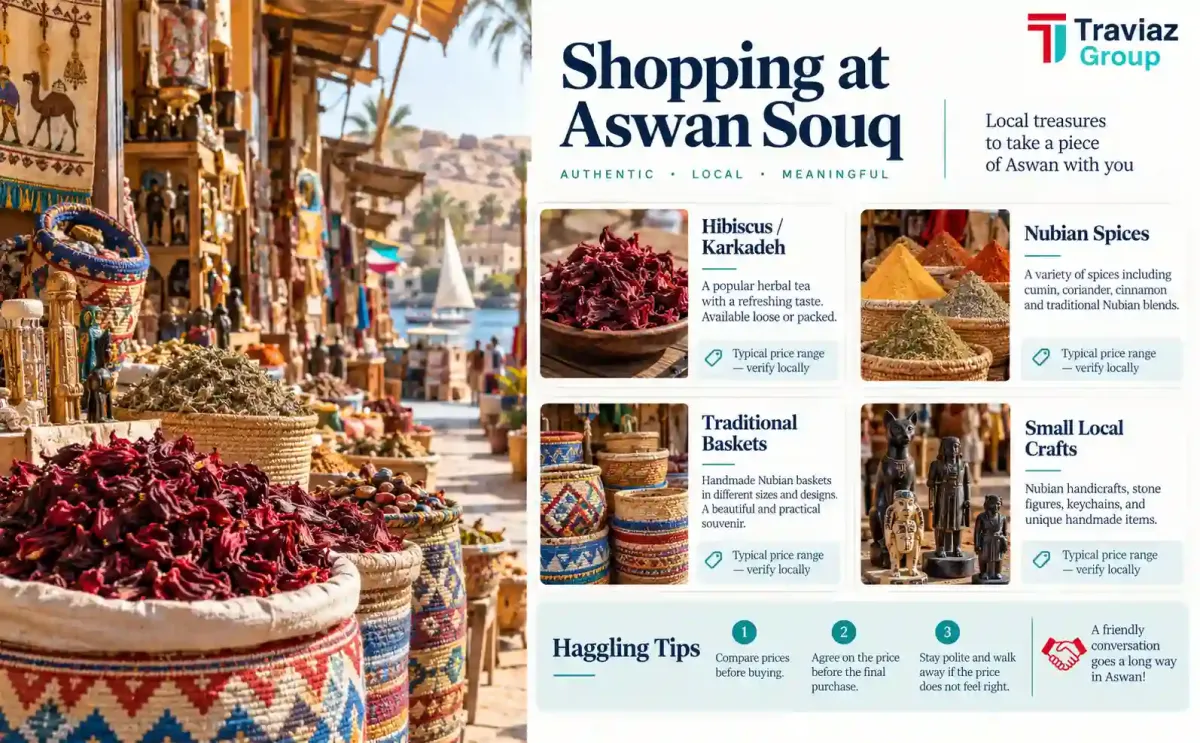
Aswan's market is distinguished by an atmosphere less insistent than the famous tourist markets in Cairo. A range of local products are spread throughout it:
- Hibiscus.
- Fenugreek.
- Cinnamon.
- Saffron.
- Nubian spices.
Start negotiating by offering half the asking price, then try to reach 60 or 70 percent of it. Avoid shops located directly on the main street and look for stores frequented by local residents. This choice helps reach better quality at a price closer to real value.
Where to Stay in Aswan
The choice of hotel affects the nature of the experience, especially when comparing historic hotels with Nubian guesthouses.
Luxury accommodation differs from the local experience in terms of services, atmosphere, location, and cost:
The Legendary Old Cataract Hotel
The Old Cataract Hotel was built in 1899 above granite rocks looking directly over the Nile. Agatha Christie stayed there and wrote part of her novel "Death on the Nile" inside one of its rooms.
The hotel hosted well-known figures throughout its history, among them:
- Princess Diana.
- Aga Khan.
- A number of presidents and kings.
Breakfast on the terrace overlooking the Nile offers a distinctive experience worth the cost for some visitors. Accommodation prices start from $300 per night during the regular season.
Old Cataract Hotel vs. Charming Nubian Guesthouses
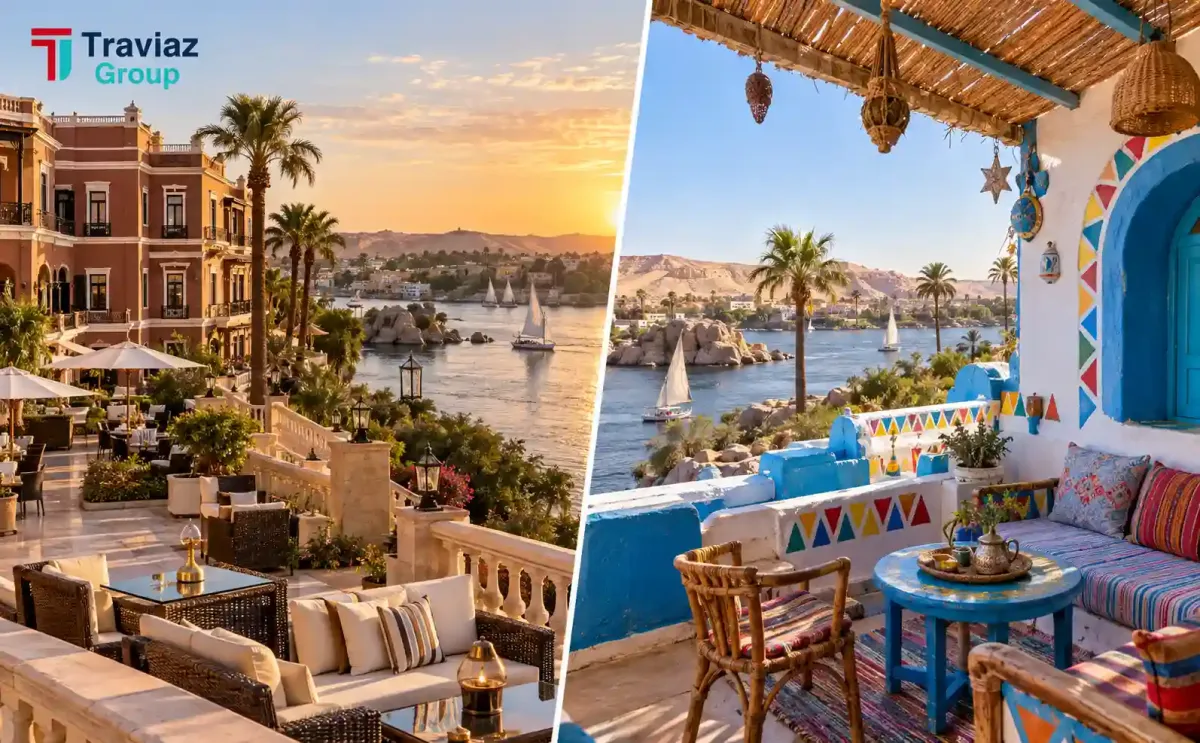
Guesthouses in Gharb Soheil offer an experience closer to Nubian life than luxury hotels. The rooms are simple and contain Nubian furnishings, and breakfast includes a range of foods:
- Local bread.
- Cheese.
- Eggs.
- Hibiscus tea.
Quiet atmospheres prevail in the village in the evening, away from the city's noise. The sounds of the Nile and the gathering of residents in front of their homes offer a local experience that traditional hotels do not provide.
How to Plan Your Aswan Itinerary
Good planning for Aswan depends on prioritizing, accounting for the heat, and trip timings. We see the ideal duration as ranging between two and four days, depending on the number of sites and experiences required:
Things to Do in Aswan in 2 Days
Day One:
- Departing at 4:00 AM with the Traviaz driver toward Abu Simbel.
- Returning before noon.
- Resting at the hotel during peak heat.
- Taking a felucca ride at sunset.
- Visiting the Nubian village in the evening.
Day Two:
- Visiting the Unfinished Obelisk in the morning.
- Heading to the High Dam.
- Visiting Philae Temple in the afternoon.
- Attending the Sound and Light Show in the evening when available.
3 Day Aswan Itinerary
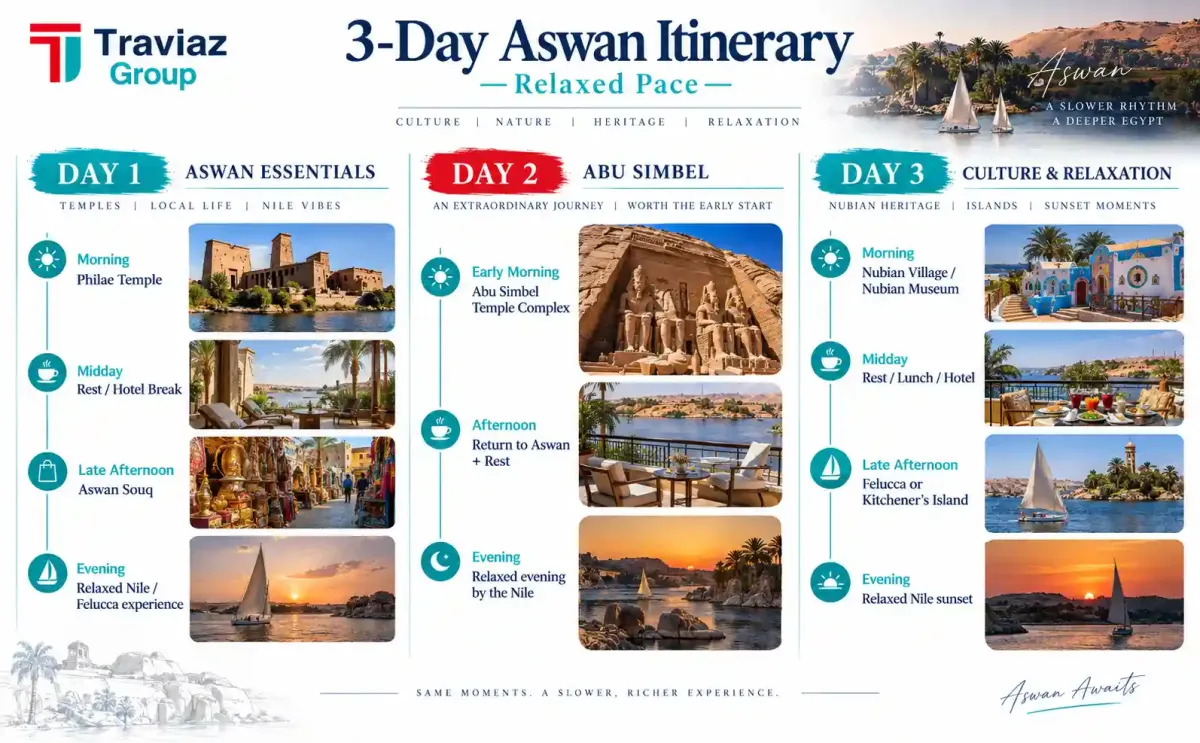
Day One: Dedicating the full day to visiting Abu Simbel.
Day Two:
- Visiting the High Dam.
- Exploring the Unfinished Obelisk.
- Visiting Philae Temple.
- Attending the Sound and Light Show.
Day Three:
- Visiting the Nubian Museum in the morning.
- Exploring Elephantine Island.
- Visiting the Botanical Garden Island.
- Taking a felucca ride.
- Visiting the Nubian village at sunset.
- Visiting Kom Ombo in the evening.
Avoid scheduling outdoor tours between eleven and three during summer. Do not delay booking the Abu Simbel trip to the day before, as limited convoy spots may sell out early.
DIY vs. Guided Travel: What's the Best Way to Tour Aswan?
The way of visiting Aswan depends on the type of experience you are looking for and your ability to manage the trip's details. Each approach offers different advantages, so comparing the options before booking is better:
Pros and Cons of DIY vs. Hiring a Private Driver vs. Escorted Tours
An independent visit offers great freedom, but requires managing a range of details:
- Negotiating boat prices.
- Researching current ticket prices.
- Organizing movement between sites.
- Dealing with the possibility of tourist scams.
A private driver without a guide offers a middle solution for the traveler who wants independence with guaranteed transport. An organized tour with a certified guide, on the other hand, reduces these concerns and adds historical explanation that is difficult to obtain through reading alone.
Should You Hire a Private Guide for Aswan Temples?
The visitor may see the surgical instruments inscription at Kom Ombo without realizing its historical significance. The specialist guide explains the inscription's connection to Ptolemaic medicine, the nature of the temple as a healing center, and its link to the worship of Sobek.
A guide certified by the Ministry of Antiquities turns every wall and inscription into a document that explains an aspect of civilization. This difference leads some visitors to return with clear historical memories, while others settle for photographs.
Why Choose Traviaz Aswan Packages?
Traviaz handles the trip's details in Aswan from arrival at the airport until departure. The company's services include a range of advantages:
- Air-conditioned vehicles with reliable drivers.
- Transport to Abu Simbel, the dam, and distant sites.
- Guides certified by the Ministry of Antiquities.
- Specialists in pharaonic and Nubian history.
- Pre-booked boats for Philae and the Nubian village.
- Fixed prices without the need for negotiation.
- Customized programs for one day or a full week.
For booking, visit traviaz.com.
How to Secure a Half-Day Tour or Private Transport
A half-day or full day with Traviaz can be booked in three steps:
- Identifying the sites you want to visit.
- Choosing the service between driver only or driver and guide.
- Setting the departure time.
The team confirms the booking and sends the trip details and the driver's number the day before the appointment. The service does not include hidden fees or surprises in ticket prices.
FAQs
How much does visiting the main sites in Aswan cost?
The cost of visiting sites differs by location and season. The Abu Simbel ticket is 1,200 pounds during peak season and 750 pounds during the rest of the year, while Philae is 550 pounds, the Obelisk is 220 pounds, the High Dam is 200 pounds, Kom Ombo is 400 pounds, and the Nubian Museum is 200 pounds.
What is the best travel agency in Aswan?
Choosing the right travel agency depends on price transparency, guide experience, and organization quality. We recommend choosing a company that provides certified guides, deals with reliable local suppliers, and supports Nubian families directly. Traviaz follows these standards in the tours it organizes inside Aswan.
What should I wear when visiting temples in Aswan?
Light, light-colored cotton or linen clothing suits Aswan's dry heat. Wearing clothes that cover the shoulders and knees is preferable when visiting temples and religious sites. Bring a light scarf for sun and sand protection, with comfortable sports shoes suited to the uneven archaeological surfaces.