
Kom Ombo Temple Egypt: Why Is This Ancient Double Temple A Must-See In Aswan?
A single Egyptian temple rarely combines a dual dedication to two different gods, rare medical inscriptions, and a distinctive location on the bank of the Nile. Kom Ombo sits on the eastern bank of the Nile between Aswan and Luxor, and its walls are known for medical inscriptions documenting ancient surgical instruments. Traviaz relies on dedicated Kom Ombo visits that combine depth of historical experience with travel comfort, along with visit information for 2026.
Is Kom Ombo Temple Worth Visiting or Should You Skip It?
The direct answer is that Kom Ombo is not worth skipping during a Nile trip or a stay of more than two nights in Aswan.
Parts of the temple have crumbled over the centuries, but its core value is tied to its unique architectural concept more than its size.
In Karnak, sheer scale appears as the dominant element, while Kom Ombo presents a complete design built on two identical halves with precise geometric symmetry.
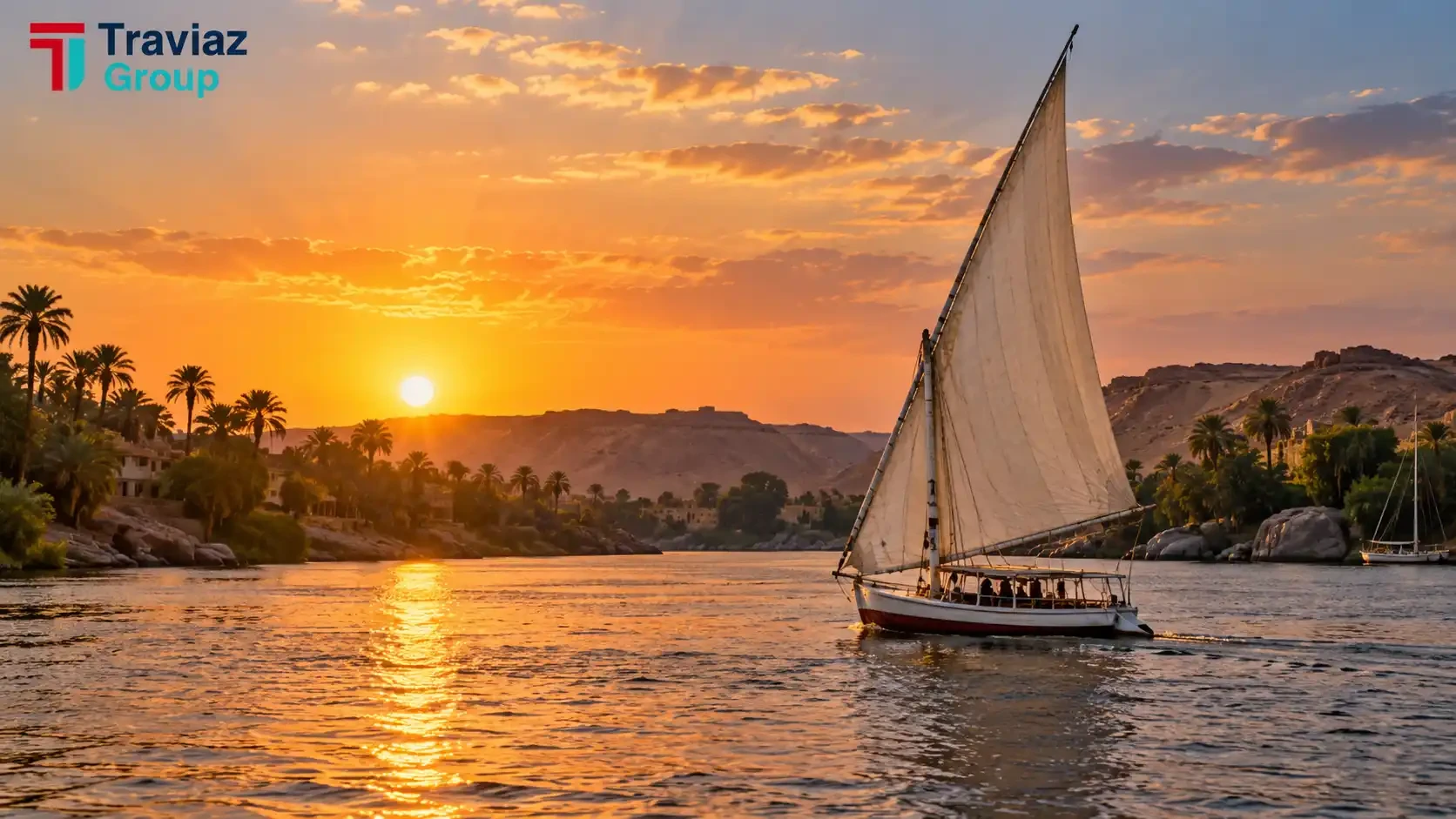
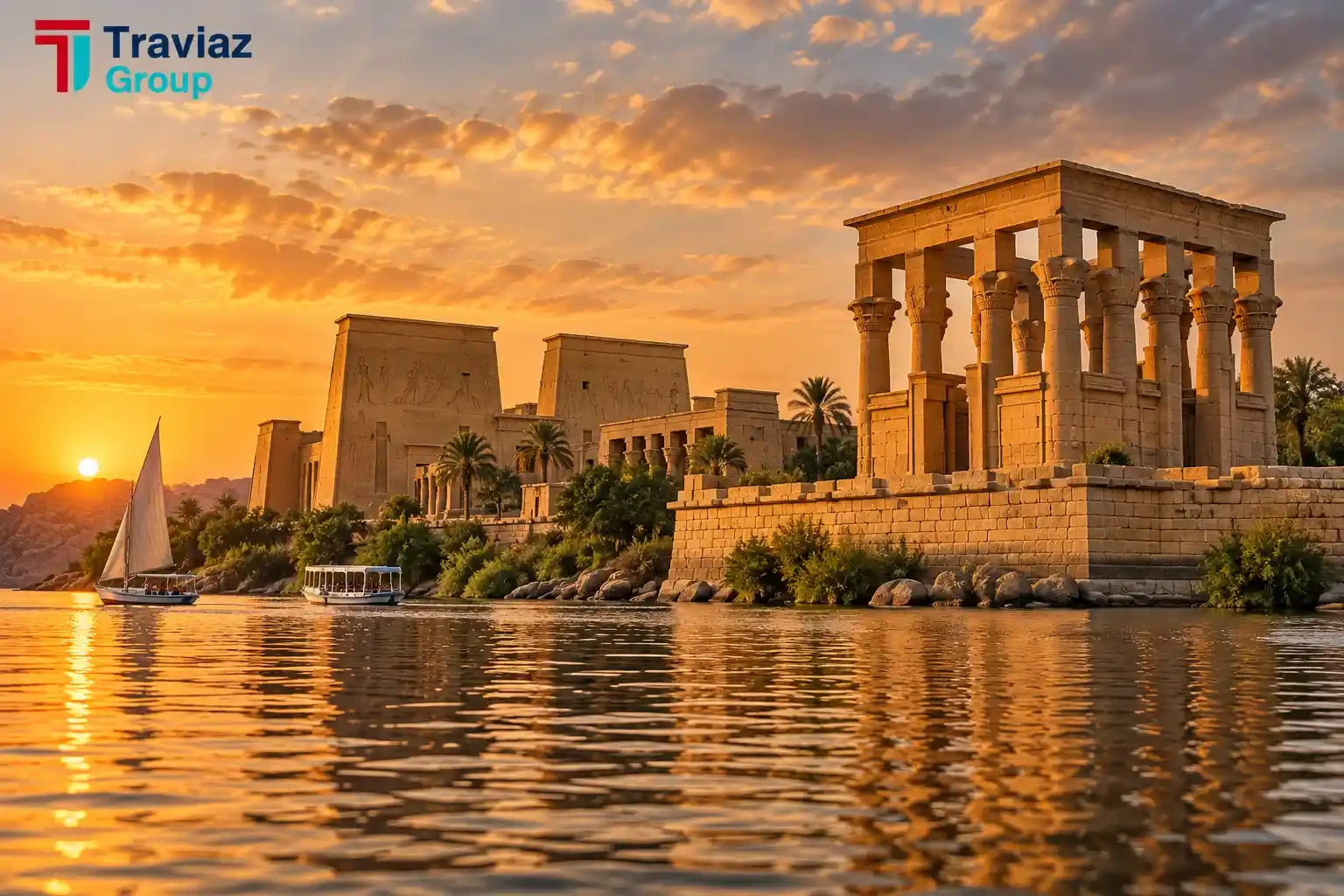
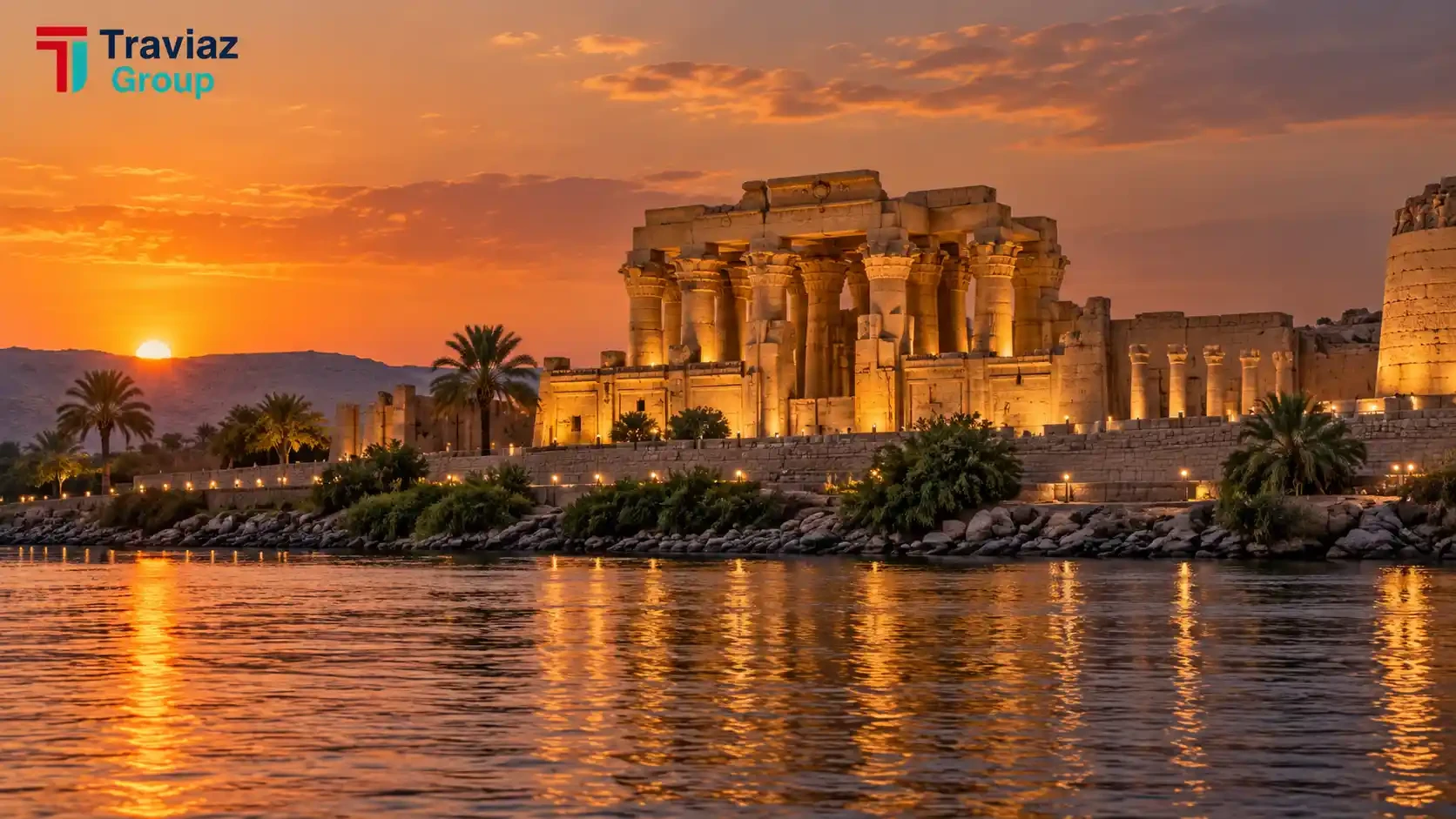
Sunset at Kom Ombo is a different experience, as the granite stone turns golden under the sunlight above the Nile.
After six in the evening, the floodlighting gives the temple a different appearance and pushes the photographer to adjust his settings repeatedly.
The double temple model does not repeat itself along the Nile, and this uniqueness alone gives it a value that makes the visit worthwhile.
The Most Fascinating Facts About Kom Ombo Temple
Kom Ombo is known for three rare elements: dual dedication to two rival gods, crocodile mummies, and the surgical inscription.
The temple's construction dates primarily to the second century BC during the Ptolemaic period, and the Romans then added multiple sections that remain visible to this day.
What Does the Name Kom Ombo Mean in English?
The Arabic word "Kom" means a mound or hill, which is a description of the elevated site the temple occupies above the bank of the Nile.
"Ombo" is a distortion of the Coptic name "Ombos," itself derived from the ancient Egyptian name "Nubt" meaning the city of gold.
Gold was not present in the literal sense, but the area was a strategic point on the caravan routes heading toward Nubia through the Nile Valley.
Geographic Location and the Crocodiles
The choice of location was tied to a clear practical factor, as the bend in the Nile formed a natural refuge for crocodiles that would approach fishermen and farmers.
The worship of Sobek arose in this context, as Egyptians believed that appeasing the god protected them from the sacred animal.
Fear of crocodiles thus transformed into an established religious ritual among the communities that lived along the banks of the river.
History and Origins: Who Built Kom Ombo and How Old Is It?
Construction of Kom Ombo Temple began under Ptolemy VI Philometor during the second century BC, and his successors then added successive sections over two centuries.
The Romans completed some of the halls and decorations during the first and second centuries AD, while Emperor Augustus left clear inscriptions in the outer halls.
Did Cleopatra Have a Connection to Kom Ombo?
Yes, Cleopatra VII and her ancestors from the Ptolemaic dynasty are connected to the architectural legacy of Kom Ombo Temple.
Inscriptions of Ptolemaic kings presenting offerings to both gods appear inside the great hypostyle hall, and Cleopatra belongs to that same ruling dynasty.
The temple embodies a period in which Hellenistic civilization merged with ancient Egyptian traditions within a single cultural fabric.
The Theology of Two Gods: Sobek and Haroeris
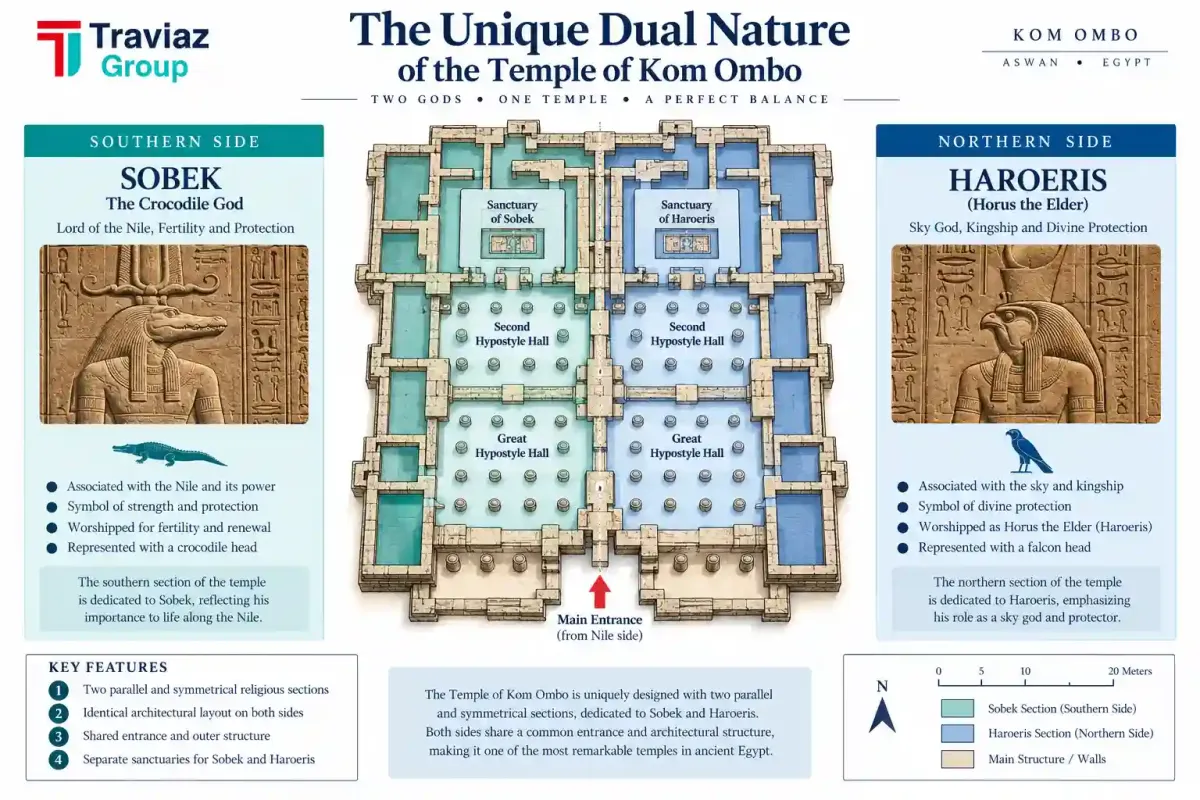
No other temple in Egypt is dedicated to two gods with this degree of balance, and understanding the character of each god adds clear depth to the visit experience.
Viewing the inscriptions after knowing this background transforms from a visual experience into a clearer reading of ancient Egyptian civilization.
Sobek, the Crocodile God
Sobek was associated with fertility and the Nile, and appeared in some religious narratives as a creator of the world.
The Nile flood brought the land to life, while the river's crocodiles were considered sacred embodiments of the god.
Appeasing Sobek was therefore tied to protection and life for the communities living along the banks of the river.
Haroeris, the Falcon God
Also known as "Horus the Elder," he is associated with the sun, war, and the sky.
Haroeris was linked to kingship and the divine protection of the pharaohs, while his falcon image reflected meanings of power and sharp vision.
The Dual Nature of the Temple
The symmetry in Kom Ombo goes beyond the architectural aspect, as it expresses a clear theological concept within the stone, and below is the complete division between the two gods:
|
Element |
Southern Side (Sobek) |
Northern Side (Haroeris) |
|
Entrance |
Independent gateway |
Independent gateway |
|
Courtyard |
Dedicated courtyard |
Dedicated courtyard |
|
Hypostyle Hall |
Southern side columns |
Northern side columns |
|
Sanctuary |
Chamber of Sobek |
Chamber of Haroeris |
|
Sacred Triad |
Sobek, Hathor, and Khonsu |
Haroeris, Tasenetnofret, and Panebtawy |
Architectural Layout: A Masterclass in Symmetry
Kom Ombo is built on a longitudinal axis that divides the temple into two identical halves, with two entrances, two courtyards, two hypostyle halls, and two sanctuaries.
This layout embodies the principle of balance between the two gods, as each step inside the temple mirrors its counterpart on the opposite side.
Movement through the complex can be traced from the outside inward to the deeper sections in the following sequence:
Navigating the Complex
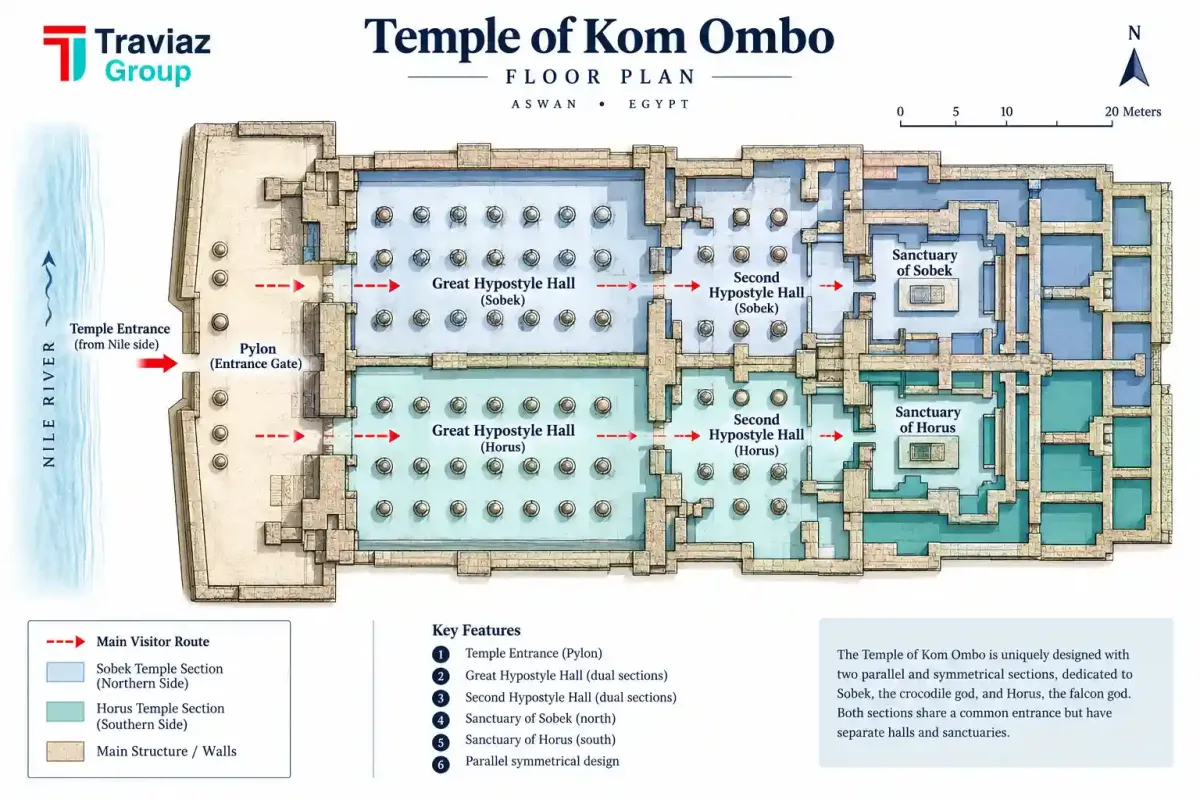
The Entrance and Great Hypostyle Hall
The area holds 15 massive columns with capitals decorated with lotus and papyrus leaves, and it is one of the best-preserved parts of the temple.
Scenes of offering presentations and manifestations of both gods appear on the walls, alongside images of several Ptolemaic kings.
The Second Hypostyle Hall
The hall represents a transitional stage toward the deeper and more sacred areas inside the temple.
Column heights are lower here and the light becomes dimmer, which is a deliberate design that reinforces the sense of sanctity as one moves further inward.
The Two Sanctuaries
Little remains of either section, but the surrounding walls still retain important ritual inscriptions.
These inscriptions clarify the religious hierarchy of each god and the rituals associated with his worship.
The World's Most Significant Reliefs and Carvings
The inscriptions of Kom Ombo go beyond religious decoration, as the walls preserve important documents within the history of human knowledge.
Each of the following elements requires a separate pause and an explanation that clarifies its full context:
The Medical and Surgical Instruments Relief
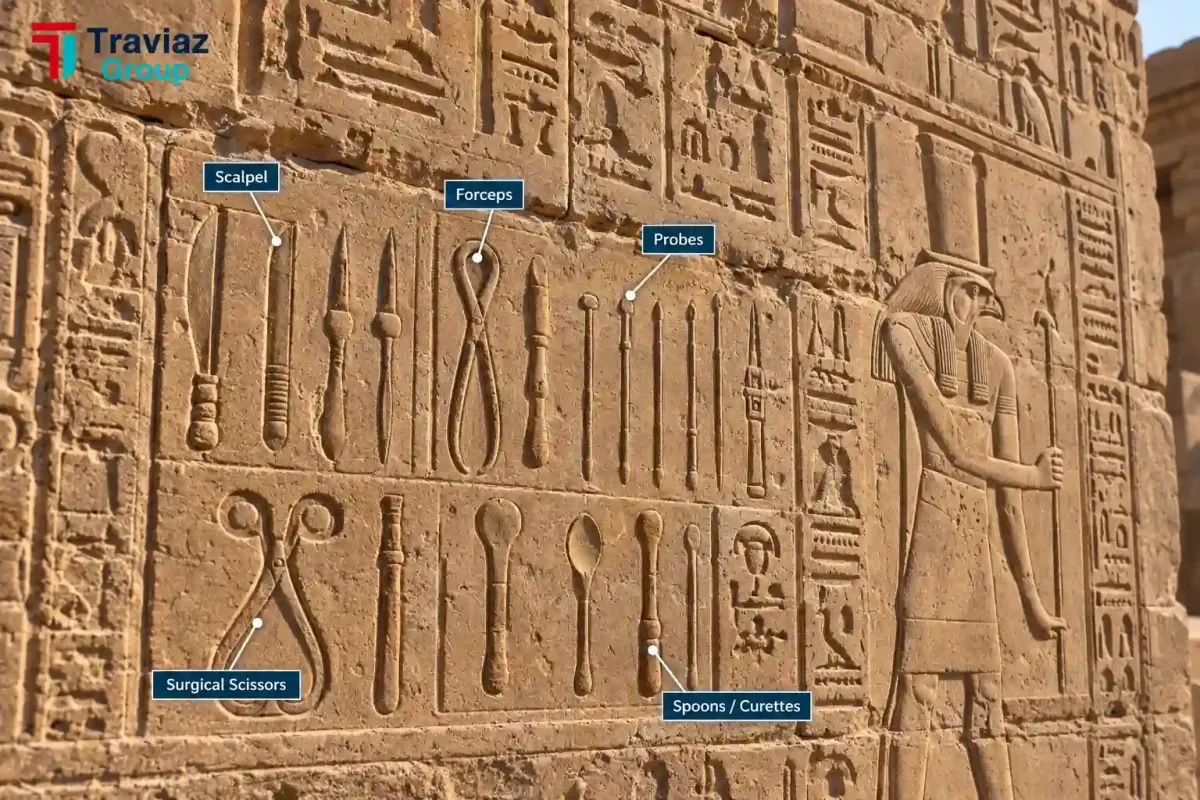
On the outer wall of the temple, in the rear corridor, an exceptional inscription depicts a set of instruments believed to have been used in ancient medicine and surgery.
The instruments include scalpels, various lancets, forceps-like tongs, and cups resembling cupping tools. Some researchers believe that other precise instruments were designated for specific medical uses, which increases the historical significance of the scene.
The inscription points to an advanced level of Ptolemaic medical practice, as the temple combined a therapeutic function with a religious role.
The Kom Ombo Calendar Relief
One of the interior walls carries an inscription depicting the Egyptian religious festival calendar divided into three pharaonic seasons. Akhet represents the flood season, while Peret refers to agriculture, and Shemu is tied to the harvest season.
The priests used this calendar to determine the timing of rituals and celebrations and to organize temple activities throughout the year.
The Nilometer at Kom Ombo
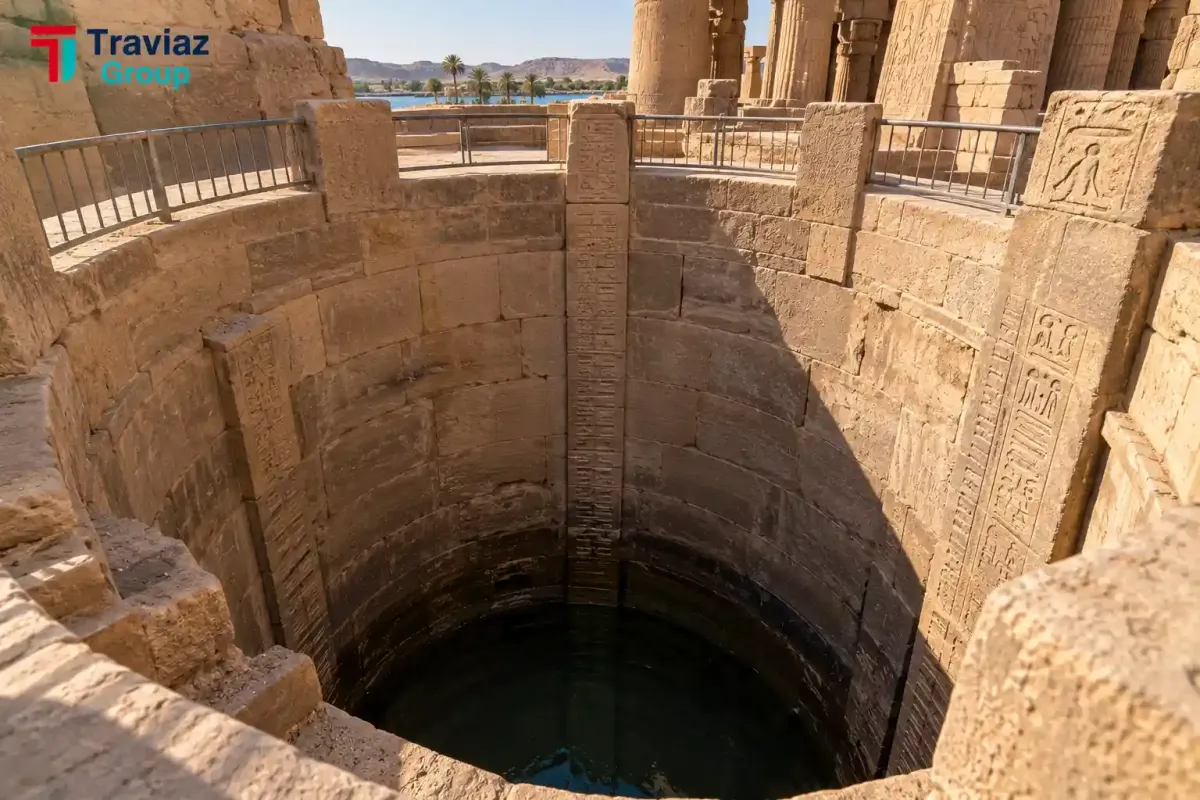
In the northeastern section of the complex sits the Nilometer, which is a deep stone well used to measure water levels. This gauge is considered one of the oldest known hydrological measuring instruments in history.
The priests relied on its readings to estimate the strength of the flood, and the results were then tied to calculating agricultural taxes and distributing water to farmers.
The Crocodile Museum: Is It Worth It?
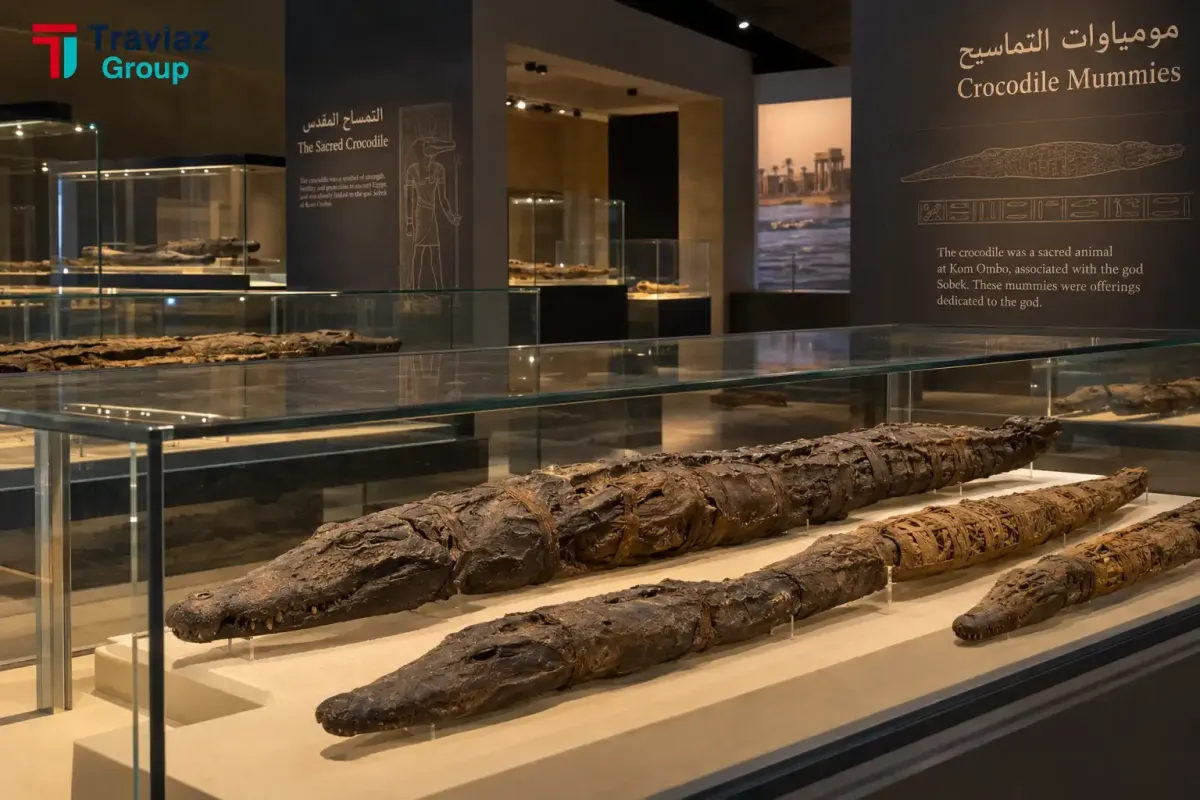
The Crocodile Museum adjacent to the temple is one of the most attractive elements for visitors, especially children looking for a different experience.
The museum displays 22 mummified crocodile specimens found near the temple, along with wooden statues, ritual tools, and stone tablets related to the worship of Sobek.
The museum is fully air-conditioned, and this feature becomes more valuable during the heat of Aswan, while admission to it is included in the basic temple ticket.
2026 Practical Guide: Planning Your Visit
Planning ahead determines the difference between a comfortable visit and an exhausting one, especially for those coming from Aswan or as part of a Nile cruise. The important details cover entry times, tickets, and the most suitable means of access for visitors:
How Much Does It Cost?
The Kom Ombo Temple ticket in 2026 costs approximately 400 Egyptian pounds, which is around $8 for foreign adults, and it includes the Crocodile Museum. Students receive a 50% discount upon presenting a valid student card.
Tickets for Nile cruise passengers are usually included in the trip package. Tickets can be purchased online through the official Egyptian Antiquities Authority website to avoid waiting in line.
Opening Hours and Night Visits
The temple opens daily from 7:00 AM to 9:00 PM, with the last admission at 8:00 PM.
After six in the evening, the floodlighting provides a visual experience different from the daytime visit, and the details of the inscriptions stand out in a way that daylight does not offer.
Best Time of Day to Visit to Avoid Crowds
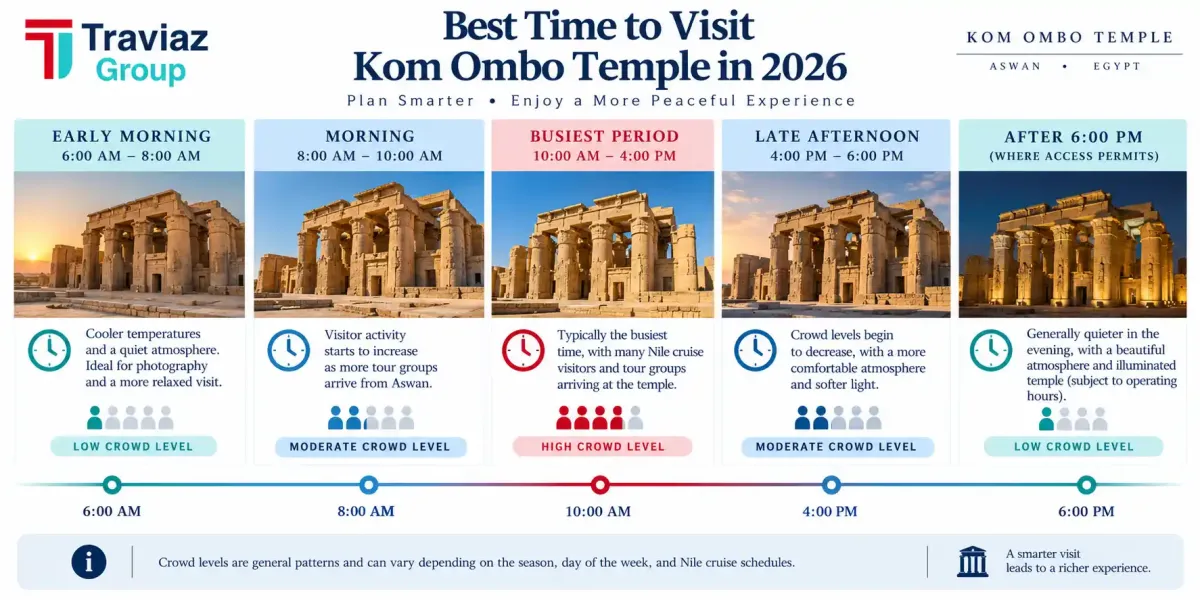
Nile cruises typically arrive between 3:00 and 5:00 PM, so this period is almost certainly the most congested.
Morning before nine suits those looking for calm and soft lighting, while the evening after six offers another option after most groups have departed.
Logistics: How to Get to Kom Ombo
Kom Ombo is 43 kilometers from Aswan, and the trip by car takes about 40 to 45 minutes, making it suitable for a day trip or half-day visit. Transport options vary in cost, time, and flexibility, and they can be compared as follows:
|
Transport |
Cost |
Time |
Note |
|
Private car via Traviaz |
Varies |
45 minutes |
Most comfortable and reliable |
|
Negotiated taxi |
$4–5 per trip |
40 minutes |
Requires negotiation |
|
Train |
20 to 450 pounds depending on class |
34 minutes |
Irregular schedule |
From Luxor and Edfu
The distance between Luxor and Kom Ombo is approximately 175 kilometers, and the trip by car takes about two and a half hours.
The route can be arranged heading south from Luxor through Edfu and then Kom Ombo all the way to Aswan in a single day.
The distance between Edfu and Kom Ombo does not exceed 65 kilometers, which makes combining both sites a suitable option.
Nile Cruise Logistics
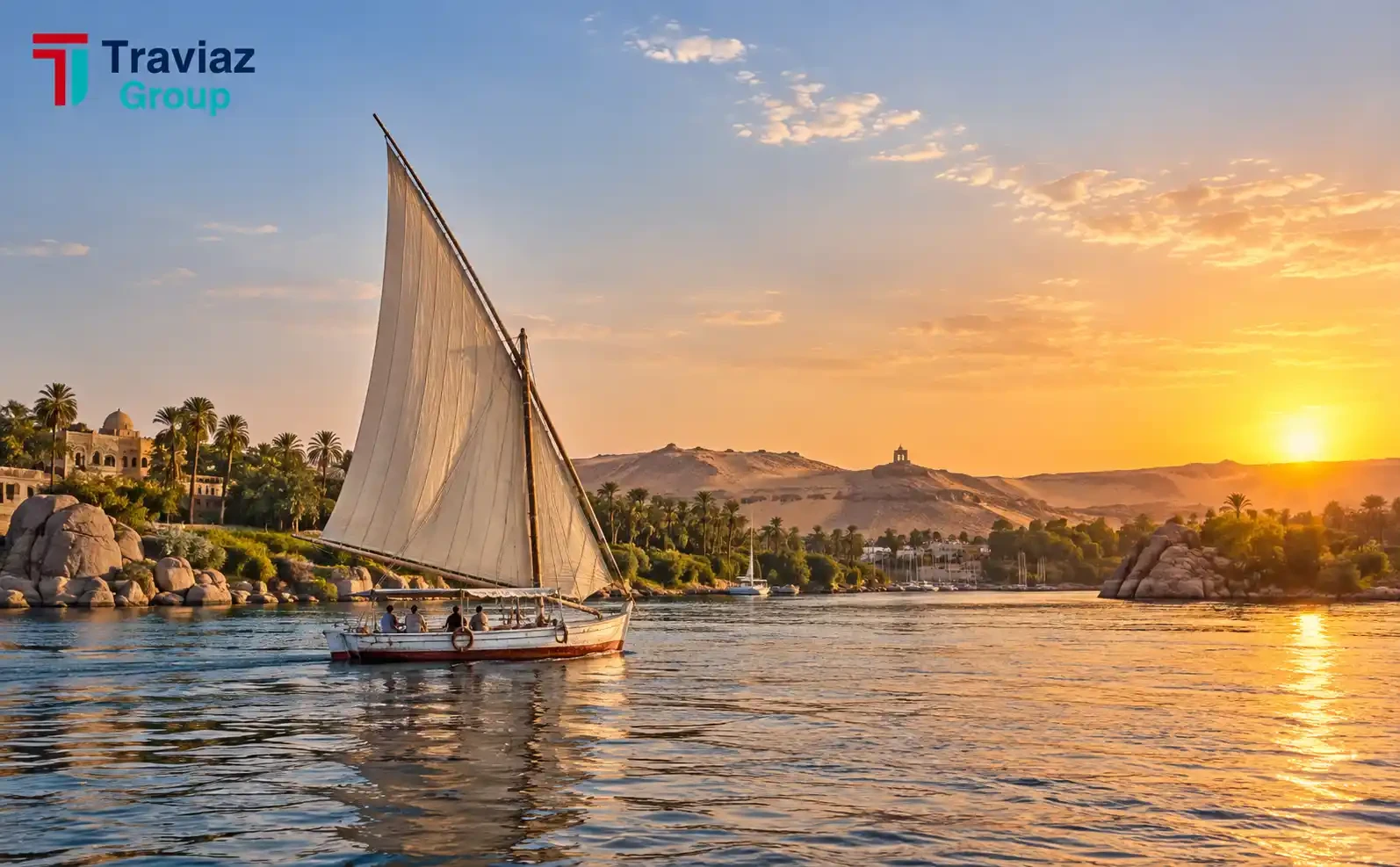
Nile cruises dock directly at the base of the temple mound, and the transfer from the dock to the entrance takes no more than five minutes.
The return time to the ship must be respected, as Nile cruises operate on fixed schedules and the captain does not wait for latecomers. Allow at least an hour and a half for the visit, then return twenty minutes before the scheduled departure time.
Visitor Rules, Accessibility, and Safety
A visit to Kom Ombo goes smoothly for most travelers, but some practical details are worth knowing before arrival. The most important points concern clothing, photography, and ease of movement within the site:
Dress Code
Modest clothing covering the shoulders and knees is required, and light linen clothing suits the heat of Aswan during most months of the year.
Photography
Personal photography with a phone or camera is permitted throughout the temple, while flash photography is prohibited inside the Crocodile Museum to protect the mummies. Commercial photography requires a prior permit.
Wheelchair Accessibility
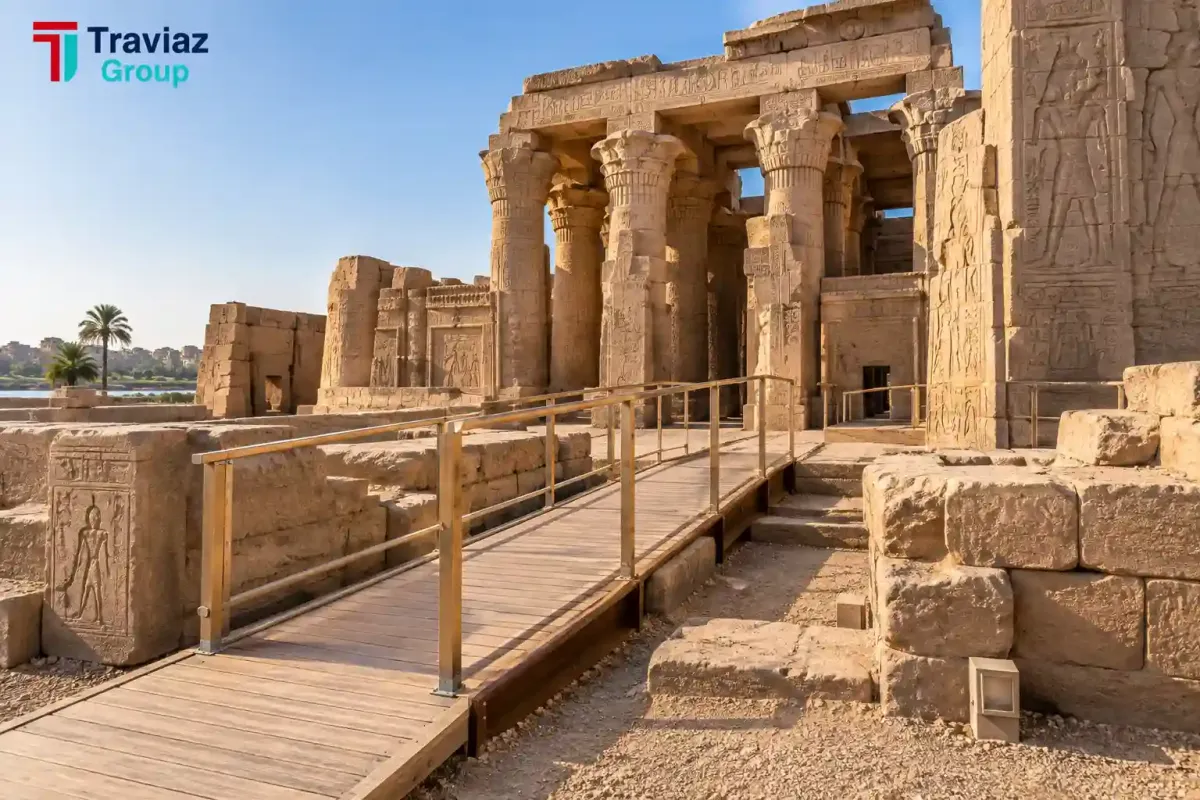
Kom Ombo's floors vary between uneven ancient stones, sandy areas, and modern wooden walkways added in recent years. A wheelchair can be brought into the main areas, but some of the narrower interior sections remain more difficult to access.
It is recommended to contact Traviaz in advance to arrange a visit that accommodates mobility needs and provides a suitable means of transport.
Dealing with Vendors
A row of street vendors waits at the exit of the temple, and a clear "no thank you" without stopping or making eye contact is the most effective response.
Stopping for any reason may be interpreted as interest, which prolongs the interaction, while those who wish to buy prefer choosing the surrounding shops where prices are more transparent.
Booking Your Kom Ombo Experience with Traviaz
Kom Ombo Temple carries layers of meaning that are difficult to grasp during a quick pass through a 45-minute group tour.
Visitors often miss the surgical instruments inscription in the rear corridor, while the Nilometer requires an explanation that places it within its civilizational context.
A private Traviaz guide allows these details to be explained in depth, with sufficient time to reflect on each section away from the pressure of large groups.
To book and build a customized Aswan itinerary that includes Kom Ombo, Edfu, Philae, and Abu Simbel, you can contact Traviaz.
How much time do you need at Kom Ombo?
An hour and a half to two hours is enough to see the temple carefully and complete a visit to the Crocodile Museum. Nile cruise passengers usually get an hour and a quarter, which is a tight window but sufficient for the most prominent landmarks.
Does the intense heat prevent a visit in summer?
The heat does not prevent a visit in summer, but it makes the choice of timing more important. A visit before nine in the morning or after six in the evening suits July and August, as most of the temple is open-air.
Do you need a guide at Kom Ombo?
Explanatory signage is limited, so an independent visit offers a good visual experience. Understanding the medical inscriptions, the calendar, and the Nilometer within their full context, however, requires a specialist guide.
Can you combine Abu Simbel and Kom Ombo in one day?
Combining both sites is theoretically possible, but the trip would be extremely exhausting and is not recommended. An Abu Simbel trip starts before dawn and takes a full day, while Kom Ombo adds more hours of travel and walking.
Kom Ombo or Edfu: which is better?
Each site offers a different experience, as Edfu is distinguished by a better architectural condition, preserved ceilings, and dense inscriptions. Kom Ombo, on the other hand, stands out with its dual theological concept, its riverside location, and its medical inscriptions. Combining both in an Aswan–Kom Ombo–Edfu route therefore represents the most complete option.