
Ancient Egyptian Gods: Discover the Divine Legends & Top Temples to Visit
Ancient Egypt was home to more than two thousand gods and goddesses over three thousand years of continuous religious practice. When you stand before the massive pillars of Karnak or walk through the corridors of the Valley of the Kings, knowing even a handful of their stories transforms what you see from carved stone into living mythology.
This guide focuses on the gods that matter most for any traveler to Egypt, the twelve most prominent deities, the temples built in their honor, and the beliefs that shaped one of the greatest civilizations in human history. You do not need to memorize them all. The ones covered here are enough to make every wall, every carving, and every monument speak.
Who Were the Most Powerful Ancient Egyptian Gods?
Ancient Egyptian religion included more than two thousand deities over three thousand years, but twelve gods and goddesses stand above the rest in terms of influence, temple presence, and relevance to the sites travelers visit today:
|
God/Goddess |
Domain |
|
Amun-Ra |
King of the gods, sun and creation |
|
Osiris |
Death, resurrection, and the underworld |
|
Isis |
Magic, motherhood, and healing |
|
Horus |
Sky, kingship, and divine order |
|
Anubis |
Mummification and the dead |
|
Thoth |
Wisdom, writing, and the moon |
|
Hathor |
Love, beauty, music, and the afterlife |
|
Sekhmet |
War, destruction, and healing |
|
Ptah |
Creation, craftsmanship, and architecture |
|
Sobek |
The Nile, crocodiles, and fertility |
|
Set |
Chaos, storms, and the desert |
|
Maat |
Truth, justice, and cosmic order |
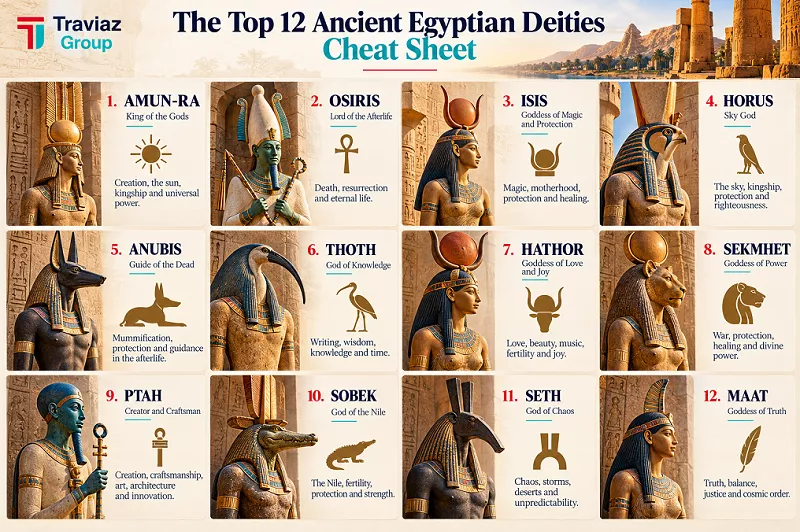
Ra: The Supreme Sun God
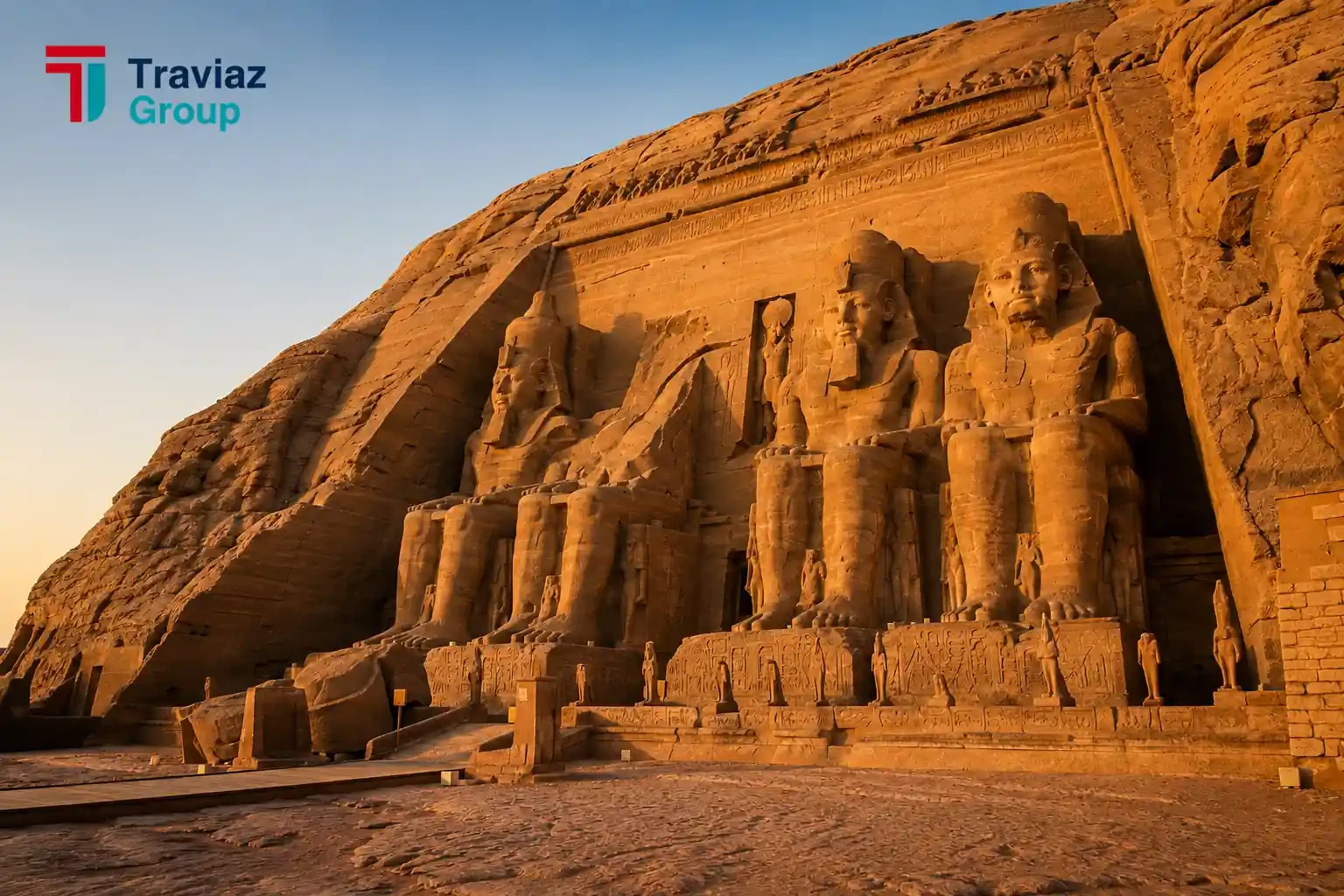
No deity held a higher place in the Egyptian cosmos. Lord of the gods and creator of the universe through light, Ra crossed the sky by day in a solar barque and traveled through the underworld at night, reborn every dawn. Depicted with a falcon's head and a solar disc, he merged over time with Amun to become Amun-Ra. Abu Simbel Temple was designed so that the sun illuminates his statue directly twice a year.
Amun and Amun-Ra: King of the Gods
What began as a local cult in Thebes grew into the most powerful religious force in ancient Egypt. When Amun merged with Ra, the resulting deity commanded temples across four continents and priests whose influence rivaled the pharaohs themselves. Karnak Temple in Luxor stands as the greatest monument to that power.
Osiris: God of the Afterlife
Killed by his brother Set and resurrected by his wife Isis, Osiris became the ruler of the underworld and the model every Egyptian hoped to follow after death. His skin was painted green for resurrection or black for fertile soil, and Abydos, where his head was believed to be buried, remained his most sacred city throughout Egyptian history.
Isis: Goddess of Magic and Motherhood
No goddess in the ancient world traveled as far as Isis. Starting in Egypt as the devoted wife who restored her murdered husband Osiris to life, her cult eventually reached Rome, Greece, and North Africa. Philae Temple in Aswan, set on an island in the Nile, remains her most beautiful surviving sanctuary.
Horus: God of the Sky and Kingship
Every pharaoh who ever ruled Egypt was considered a living embodiment of Horus. Son of Osiris and Isis, he reclaimed the throne from his uncle Set in a battle that Egyptian religion interpreted as the eternal struggle of order against chaos. Edfu Temple between Luxor and Aswan preserves the full story of that battle on its walls.
Anubis: God of Mummification
Before Osiris took over as ruler of the dead, Anubis held that role, and his duties never diminished. With his unmistakable jackal's head, he guided souls through the underworld, oversaw the weighing of the heart, and protected tombs from violation. No tomb in the Valley of the Kings is without his image.
Thoth: God of Wisdom and Writing
Scribes across Egypt began their working day with an offering to Thoth. Inventor of writing and mathematics, recorder of divine judgments, and witness to the weighing of the heart, he appears with an ibis head or as a baboon throughout Egyptian art.
Hathor: Goddess of Beauty and Music
Daughter of Ra and wife of Horus, Hathor presided over love, beauty, music, and the joy of living. Depicted with cow's horns and a solar disc, her most vibrant surviving temple is Dendera, north of Luxor.
Set: God of Chaos and Storms
Murder, betrayal, and raw destructive power defined Set in Egyptian mythology, yet his story is more complicated than simple villainy. Some pharaohs actively invoked his strength in warfare, and he sometimes sailed alongside Ra to defend the solar barque against the forces of chaos. His strange unidentifiable animal head made him instantly recognizable on any temple wall.
Maat: Goddess of Justice and Truth
Without Maat, nothing in the Egyptian universe could function. She was not simply a deity but the principle on which all existence rested, the cosmic balance that kept order from collapsing into chaos. After death, every soul faced her feather in the Hall of Two Truths, and the outcome of that weighing determined everything that followed.
Bastet: Goddess of Cats and Fertility
She began as a lioness of war before softening over centuries into the cat goddess of joy and protection. Sacred cats lived in her temples, and killing one, even accidentally, carried severe consequences under Egyptian law.
Sobek: God of the Nile and Crocodiles
The Nile gave life and the crocodile took it, and Sobek embodied both at once. Travelers prayed to him before setting out on the river, and armies invoked his strength before battle. At Kom Ombo Temple between Aswan and Luxor, his sanctuary sits side by side with that of Horus the Elder, a double temple unique in all of Egypt.
Khnum: Creator God and Source of the Nile
At the First Cataract of the Nile in Aswan, Khnum was believed to sit at his potter's wheel shaping every human being from Nile clay before birth. He also controlled the annual flood that made Egyptian agriculture possible. The Famine Stele, carved into the rock near Aswan, records desperate pleas to him when the flood failed for seven years.
Nut: Goddess of the Sky
Every night the sun disappeared inside her body and every morning she gave birth to it again. Nut was the sky itself, and Egyptian artists painted her as a star-covered woman arching her elongated body over the earth. Her image covers the ceilings of tombs and the insides of coffin lids throughout ancient Egypt.
Geb: God of the Earth
Father of Osiris, Isis, Set, and Nephthys, Geb was the earth beneath every Egyptian's feet. His laughter caused earthquakes, his body held the dead within it, and his fertility fed the living. He and Nut were inseparable in Egyptian cosmology, earth and sky locked in an eternal embrace before Shu, god of air, pushed them apart.
Nephthys: Goddess of Mourning and the Dead
Despite being the wife of Set, Nephthys stood with Isis at every critical moment: gathering the body of Osiris, protecting the dead, and spreading her wings above coffins to shelter the departed. She and Isis appear together so consistently in funerary art that the two sisters became inseparable symbols of protection in death.
Sekhmet: Goddess of War and Power
Sent by Ra to punish humanity in ancient Egyptian belief, her destructive power made her equally a goddess of healing. Her lioness-headed statues line the halls of Karnak Temple.
Neith: Goddess of Hunting, War, and Creation
Among the oldest deities in the Egyptian pantheon, Neith wore the red crown of Lower Egypt and presided simultaneously over hunting, war, weaving, and creation itself. She was both maker and destroyer, a force that defied the simple categories most gods occupied. Her bow and arrows appear in some of the earliest Egyptian temple carvings known.
Decoding the Walls: How to Identify Gods by Their Animal Heads and Symbols
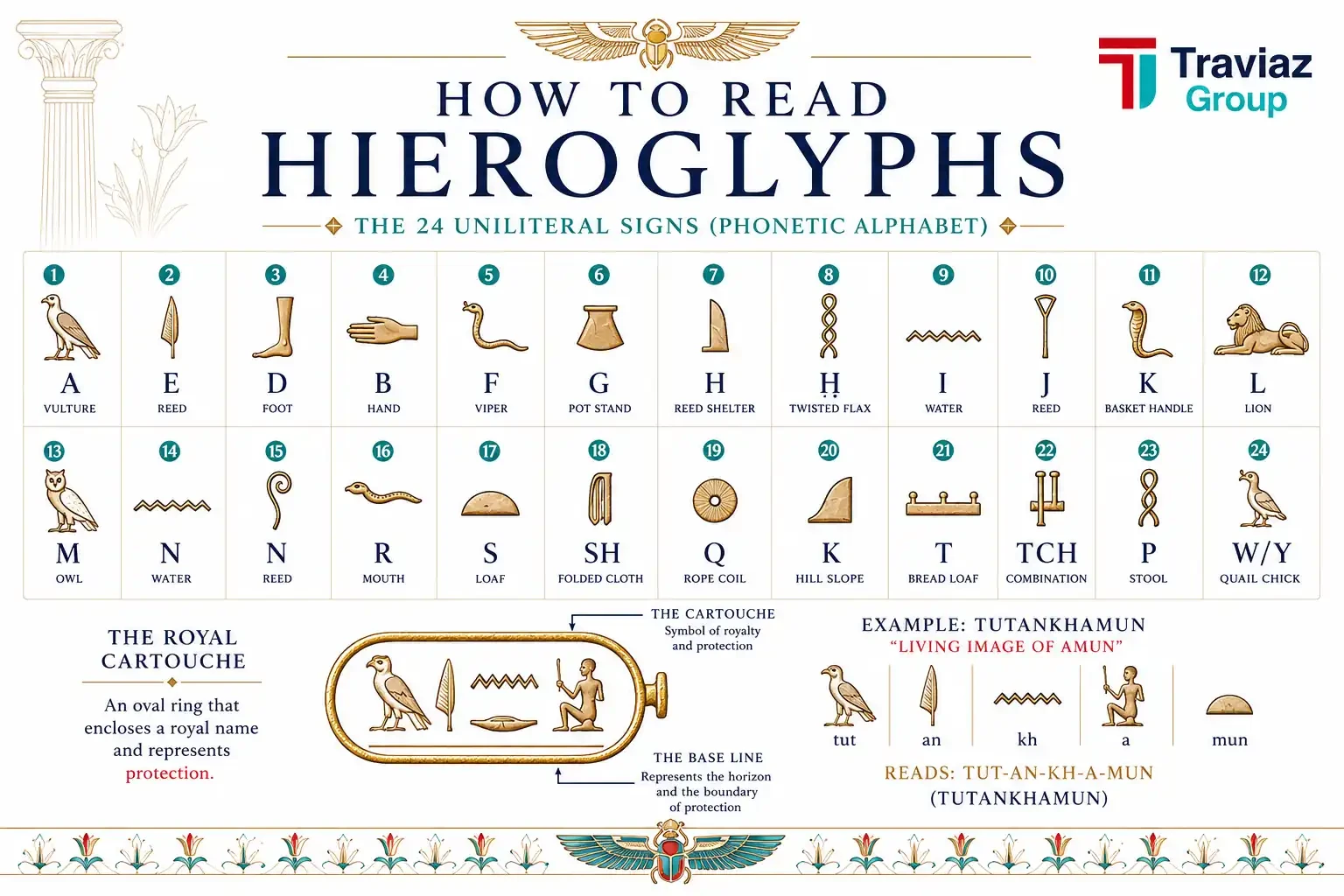
The ancient Egyptians did not give their gods animal heads arbitrarily. According to ancient Egyptian religious belief, each animal embodied a specific quality or cosmic force that the deity represented, and depicting the god in that form was a way of making that quality visible and immediate. The falcon's mastery of the sky made it the natural form of Horus and Ra.
The jackal's association with desert cemeteries made it the form of Anubis. The ibis, known for its patience and precision, became the symbol of Thoth. The lioness conveyed a ferocity that no other creature matched, making it the form of Sekhmet. Understanding this logic turns every temple wall into a readable text rather than a collection of unfamiliar imagery.
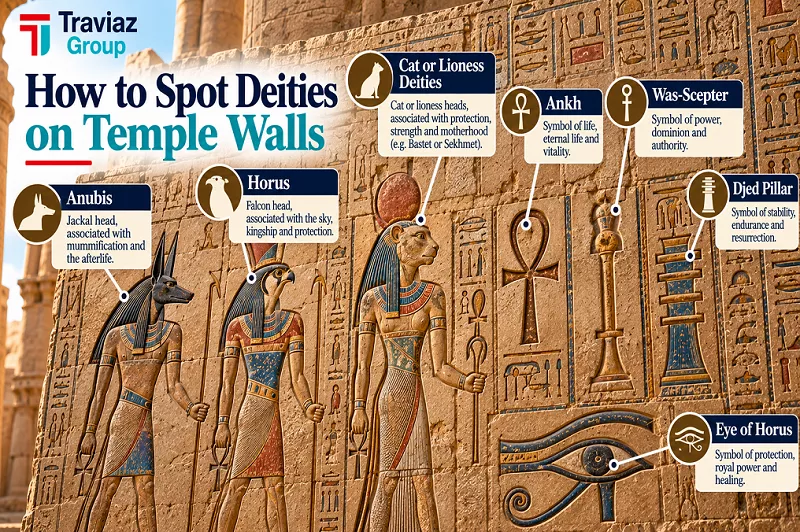
Four symbols appear more consistently than any others across Egyptian temples and artifacts:
- The Ankh, shaped like a cross with a loop at the top, is the hieroglyph for life itself and appears in the hands of gods as a gift extended to the pharaoh.
- The Was-scepter, a staff with an animal head at the top, represents divine power and authority and is carried by major deities throughout Egyptian art.
- The Djed-pillar, resembling a column with horizontal bands at the top, is the symbol of Osiris and represents stability, endurance, and resurrection in Egyptian belief.
The Eye of Horus
According to ancient Egyptian mythology, Set gouged out the eye of Horus during their battle, and its restoration by Thoth became one of the most powerful symbols in Egyptian religion. Painted on amulets, tombs, and boats, the Eye of Horus was believed to represent healing, protection, and the triumph of order over chaos. Today it remains the most widely recognized ancient Egyptian symbol and the most popular authentic amulet souvenir in Egypt, available in gold, silver, and lapis lazuli in the established shops of Khan El-Khalili and the markets of Luxor and Aswan.
The Four Sons of Horus
These four deities guarded the mummified organs inside the canopic jars. Imsety, with a human head, protected the liver. Duamutef, with a jackal's head, guarded the stomach. Hapy, with a baboon's head, protected the lungs. Qebehsenuef, with a falcon's head, guarded the intestines.
The Creation Myths: How the Ancients Understood the Universe
Two creation accounts stand out as the most prominent in ancient Egyptian religion:
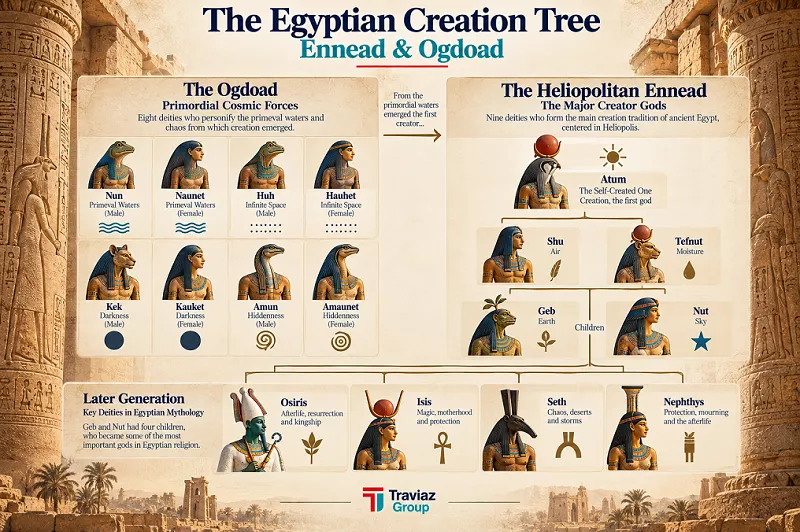
The Ennead
The universe began with a single god named Atum who emerged from the primordial waters of chaos called Nun. From him came Shu and Tefnut, who produced Geb and Nut, who in turn gave birth to Osiris, Isis, Set, and Nephthys. These nine gods together formed the divine framework that explained the entire cosmos.
The Ogdoad
Before creation existed, eight gods embodied the forces of chaos that preceded the world. This group, known as the Ogdoad or the sacred Eight, included Amun before his rise to prominence, at a time when he represented nothing more than concealment and the unknown.
Ptah: The Creator of the World
While the Ennead explained the cosmos through genealogy and the Ogdoad through primordial forces, Memphis had its own creation tradition. Ancient Egyptian belief held that Ptah created the world through thought and speech alone, conceiving every being in his heart and bringing it into existence by speaking its name.
As the patron god of craftsmen, architects, and artists, he was considered the divine model for the builders who carved the monuments travelers see in Egypt today. The architect Imhotep, who designed the first pyramid, was later deified as a son of Ptah, a measure of how closely the Egyptians linked this god to human creative achievement.
Amun-Ra vs. Ra
Ra was the original sun god and center of worship in the Old Kingdom. Amun began as a local deity of Thebes associated with mystery before the two were merged during the rise of Thebes in the Middle and New Kingdoms. Amun-Ra combined cosmic solar power with royal authority, making him king of the gods and his priests among the most powerful figures in Egyptian history.
Cosmic Forces, Wisdom, and Daily Protectors
Ancient Egyptian belief extended far beyond the major temple gods. Three categories of deities shaped daily life in ways that the grand temple carvings rarely show: gods of wisdom who mediated between humans and the divine, gods of war whose destructive power doubled as healing, and household gods who protected ordinary Egyptians in their homes and on their travels.
Thoth and Sekhmet: Wisdom and War
Thoth stood apart from the other gods as the deity who operated outside the conflicts that defined Egyptian mythology. Ancient Egyptians believed he invented writing, mathematics, and the calendar, and that he recorded divine judgments and mediated disputes between gods. Scribes across Egypt began their working day with an offering to him. When Horus lost his eye, it was Thoth who reassembled it. The Greeks admired him so deeply that they identified him with Hermes.
Sekhmet carried the opposite energy. According to ancient Egyptian belief, when Ra decided humanity had grown too corrupt, he sent Sekhmet to punish them, and her destruction nearly wiped out the human race entirely. Stopping her required flooding the fields with red-dyed beer she mistook for blood. That same destructive power made her a goddess of healing, on the logic that the force capable of causing illness was the only force powerful enough to cure it. Her lioness-headed statues still line the halls of Karnak Temple in rows that extend further than most visitors expect.
Hathor, Bastet, and the Sky Goddess Nut
Ancient Egyptians believed Hathor presided over love, beauty, music, and the joy of living, and that she welcomed the dead into the afterlife with food and drink for the journey ahead. Her most complete surviving sanctuary at Dendera, north of Luxor, preserves painted ceilings and carved astronomical charts that remain vivid after two thousand years.
Bastet began as a lioness of war before centuries of popular devotion transformed her into the cat goddess of protection and the home. According to ancient Egyptian law, killing a sacred cat carried severe consequences, and her cult center at Bubastis drew worshippers from across Egypt for annual festivals that, according to the Greek historian Herodotus, attracted larger crowds than any other gathering in the country.
Nut was the sky itself in ancient Egyptian belief, depicted as a star-covered woman arching her elongated body over the earth. Ancient Egyptians believed she swallowed the sun every night and gave birth to it again every morning. Her image covers the ceilings of tombs and the insides of coffin lids throughout ancient Egypt, placing the dead literally within her protective body.
Are There Specific Egyptian Gods Who Protect Travelers?
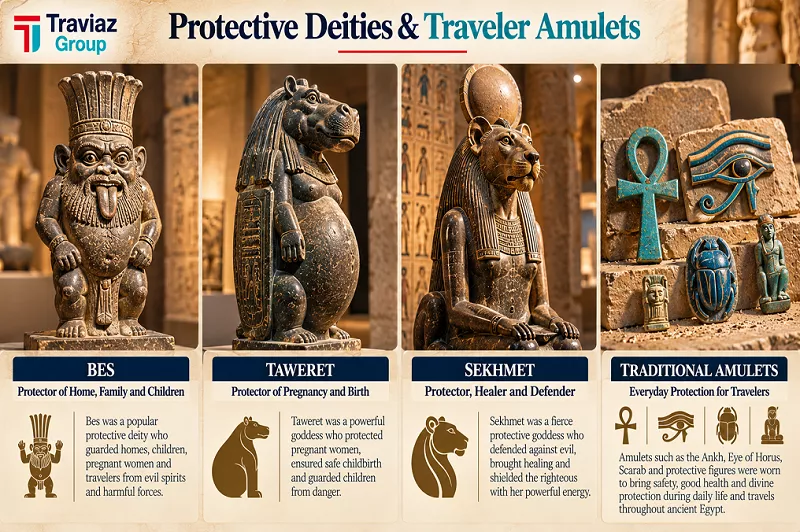
Two household deities appear consistently in ancient Egyptian homes and smaller temples that larger tours tend to skip. Bes, depicted as a dwarf with a lion's face always shown facing forward rather than in profile, was believed to drive away demons, protect women in childbirth, and keep dangerous animals from the home. Taweret, the standing hippopotamus goddess, was one of the most common protective amulets in ancient Egyptian households, believed to watch over pregnant women and newborn children. Both can be found carved into the smaller chambers of major temple complexes that most visitors pass through without stopping.
The Afterlife, Mummification, and the Underworld
Ancient Egyptians believed death was not an end but a transition, and that the fate of the soul depended entirely on how the deceased had lived. Two stories sit at the center of this belief system: the myth of Osiris, which explained how death and resurrection were possible, and the judgment of the heart, which determined what happened to every soul after it arrived in the underworld.
What Is the Story of Isis and Osiris, and Why Is It Important?
According to ancient Egyptian mythology, Osiris was the first king of Egypt, killed and dismembered by his brother Set, who then seized the throne. His wife Isis gathered the scattered pieces of his body and used her magic to restore him to life long enough to conceive their son Horus, after which Osiris descended to rule the underworld as god of the dead.
Horus grew in secret under his mother's care, confronted Set, and reclaimed the throne of Egypt. Ancient Egyptians believed this myth established the divine right of the pharaoh and provided every Egyptian with the promise of resurrection after death, mirroring what Osiris himself had experienced.
Which Egyptian God Weighs the Hearts of the Dead?
They believed that after death, every soul faced a divine court in the underworld presided over by Osiris. The heart of the deceased was weighed against the feather of Maat, goddess of truth and justice, in a ceremony recorded by Thoth. Anubis, the jackal-headed god of mummification, oversaw the weighing itself.
If the heart was lighter than the feather, the soul entered paradise. If it was heavier, a creature called Ammit, combining the features of a crocodile, a lion, and a hippopotamus, devoured it, condemning the soul to oblivion. The Book of the Dead was placed in tombs as a guide to help the deceased navigate this judgment.
Where Were Ancient Egyptian Gods Worshipped? Top Temple Guide
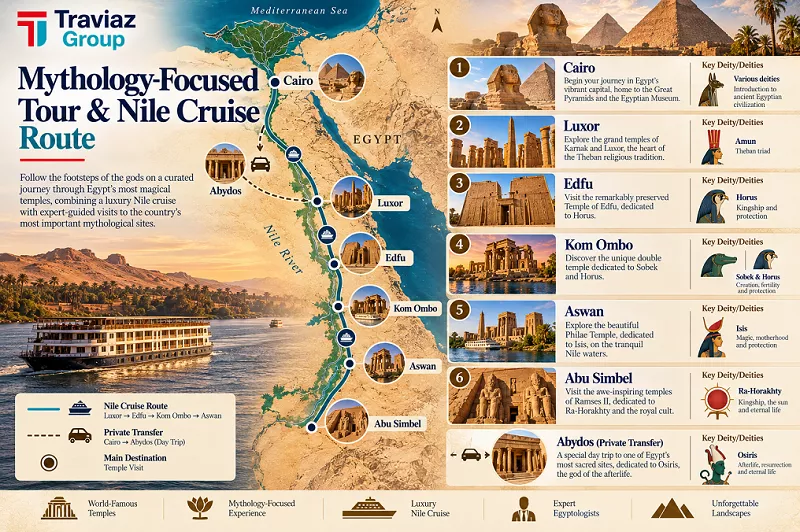
These are the most significant surviving temples where the gods are still present on the walls, organized by the deity each was built to honor.
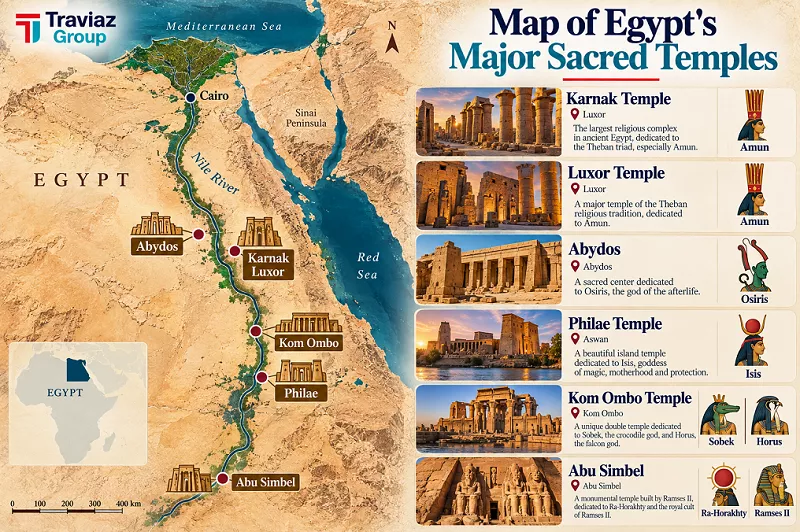
The Theban Triad: Karnak and Luxor Temples
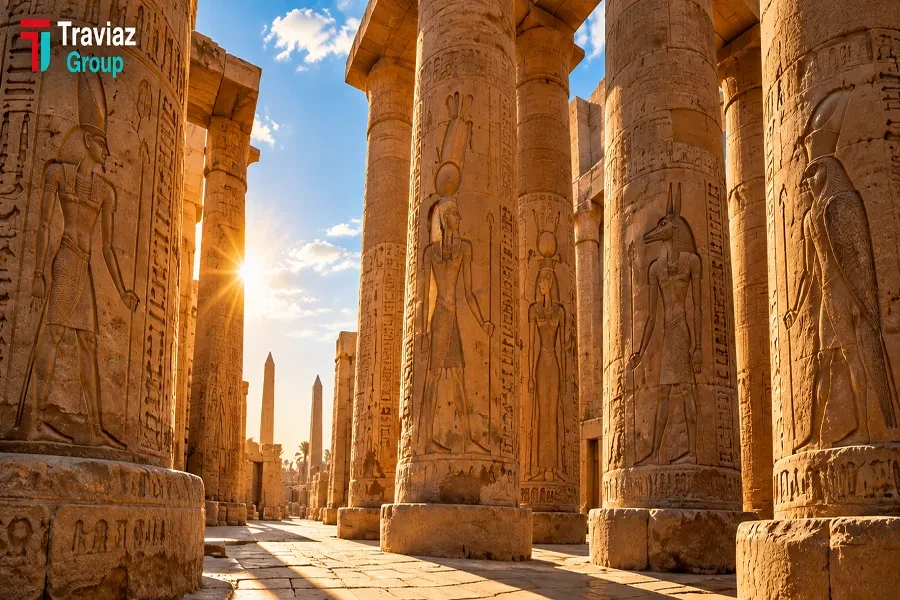
Ancient Egyptians worshipped three principal deities at Thebes, the city known today as Luxor: Amun, his wife Mut, and their son Khonsu. Karnak Temple, the largest religious complex ever built, was dedicated principally to Amun-Ra and expanded by every major pharaoh for over a thousand years.
Its Great Hypostyle Hall, with 134 massive columns, remains one of the most awe-inspiring spaces the ancient world produced. Luxor Temple, connected to Karnak by the Avenue of Sphinxes, was associated with the annual Opet Festival celebrating the renewal of royal divine power. Both temples are central stops on any Nile itinerary and require no separate logistics for travelers on a structured tour.
The Cult of Isis: How Do I Visit the Temple of Philae?
Philae Temple in Aswan is dedicated to Isis and reached today by boat across the Nile to Agilkia Island, where UNESCO relocated it in the 1970s to save it from the rising waters of the Aswan High Dam. For travelers drawn to the spiritual dimension of ancient Egyptian religion, Philae carries a particular atmosphere that larger temple complexes in Luxor do not replicate. The island setting, the scale of the sanctuary, and the carvings of Isis spreading her wings over the dead make it unlike any other site in Egypt.
Which Temple in Egypt Is Dedicated to the Crocodile God Sobek?
Kom Ombo Temple, located between Aswan and Luxor on the Nile cruise route, is unique in Egyptian architecture: a double temple serving both Sobek and Horus the Elder, with every element repeated in perfect symmetry for both gods. A museum beside the temple displays mummified sacred crocodiles recovered from the site. Most Nile cruises stop here automatically, making it one of the easiest major temples to include without separate logistics.
Why Should History Lovers Explore Abydos and Abu Simbel?
Abydos was the most important center of Osiris worship in ancient Egypt. Ancient Egyptians believed his head was buried there, and annual festivals reenacted the story of his death and resurrection for centuries. The Temple of Seti I at Abydos contains some of the finest painted relief carvings anywhere in Egypt and is far less visited than Luxor or Aswan, making it a genuine discovery for travelers willing to make the journey from Luxor by private car.
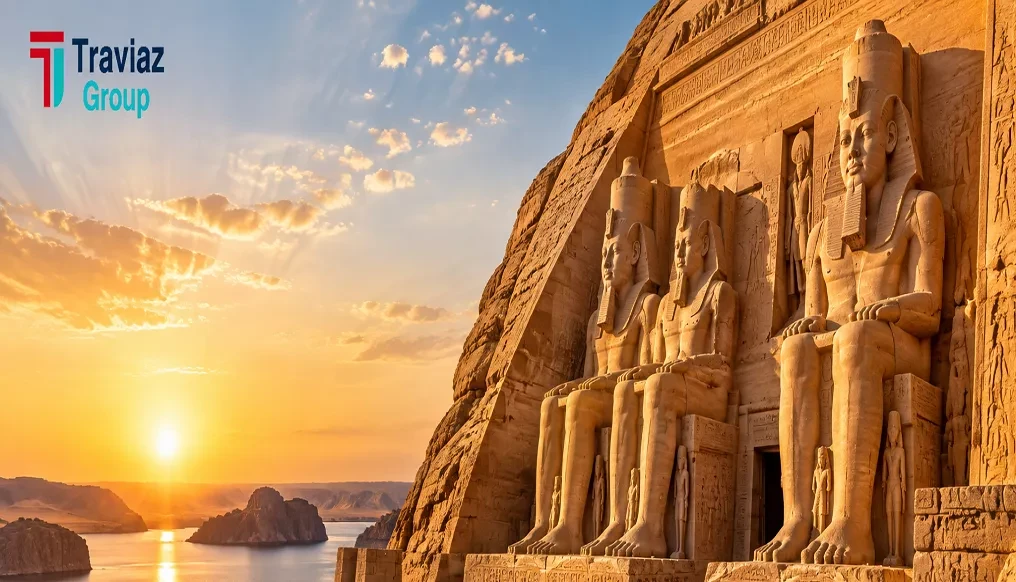
Abu Simbel, in the far south near the Sudanese border, was built by Ramses II and dedicated to Ra-Horakhty, Amun-Ra, Ptah, and the divine pharaoh himself. Ancient Egyptians designed it with astronomical precision so that the sun illuminates the inner sanctuary twice a year. Relocated in the 1960s by UNESCO to save it from Lake Nasser, it remains one of the most extraordinary architectural achievements in Egyptian history and is most commonly visited by early morning flight from Aswan.
Plan Your God-Specific Itinerary with Traviaz
Knowing which gods were worshipped where is one thing. Standing inside the temple that was built for them, with someone who can read the inscriptions on the walls and explain what each carving means, is another experience entirely.
What Are the Best Mythology-Focused Egypt Tours Available Right Now?
The difference between a standard Egypt tour and a mythology-focused one comes down to the guide. Most general tours move quickly through the major sites and provide surface-level context about the gods depicted on the walls. Traviaz's specialist Egyptologist guides know the mythology in depth, can identify and read hieroglyphic inscriptions directly from the temple walls, and build each visit around the specific deity associated with each site. For travelers who want to connect the myths they have read about to the physical monuments, this is the practical difference that changes what a temple visit actually means.
Does Traviaz Offer Nile Cruises That Stop at Kom Ombo and Edfu?
A Nile cruise from Luxor to Aswan is the most efficient and logistically straightforward way for first-time visitors to cover the major deity temples in a single itinerary. Traviaz's Nile cruise itineraries include Edfu, the most complete surviving temple of Horus, and Kom Ombo, the double temple of Sobek and Horus the Elder, as standard stops. The cruise format eliminates the need to arrange separate transport to each site and ensures arrival times that avoid the largest crowds.
How Can I Book an Itinerary That Includes Abydos or Abu Simbel?
Both Abydos and Abu Simbel require dedicated planning because neither sits on the standard Nile cruise route. Abydos is best reached by private car from Luxor, and Abu Simbel is most commonly visited by early morning flight from Aswan or by an overnight stay in the area. Traviaz offers custom itineraries that incorporate both sites with pre-arranged private transport, timed arrivals, and specialist guides who explain the specific mythology of each temple in context.
Conclusion
The gods of ancient Egypt did not disappear when the temples closed. They left behind Karnak and Philae and Edfu and Abydos, sites where their stories are still legible on the walls for anyone who knows how to read them. Traviaz's mythology-focused tours are built around exactly that: specialist Egyptologist guides who bring each deity to life in the temple dedicated to them, at a pace that lets the carvings speak. To plan your god-specific itinerary, visit traviaz.com.
FAQs
Who is the goddess of magic and motherhood?
Isis held both titles in ancient Egyptian belief. She was the devoted wife who restored Osiris to life after Set murdered him, the mother who raised Horus in secret and guided him to reclaim his father's throne, and the most powerful magician in the Egyptian pantheon. By the first millennium BC her cult had spread beyond Egypt to Greece, Rome, and as far as Britain.
Which Egyptian god has a cat's head?
Bastet is depicted with the head of a cat in most of her surviving representations. In earlier periods she appeared with the head of a lioness, but popular devotion over centuries transformed her into the gentler cat goddess of protection, the home, and fertility.
Who is the god of the Nile and fertility?
Two gods shared this domain in ancient Egyptian belief. Sobek, depicted with a crocodile head, embodied the power and danger of the Nile and was invoked by travelers before river journeys. Khnum, depicted with a ram's head, was believed to control the annual flood from his seat at the First Cataract in Aswan and to shape every human being on his potter's wheel before birth.
Who were the most powerful ancient Egyptian goddesses?
Isis, Hathor, Sekhmet, and Maat stand as the four most prominent goddesses in the Egyptian pantheon. Isis commanded magic and motherhood, Hathor presided over love and the afterlife, Sekhmet embodied war and healing in equal measure, and Maat represented the cosmic principle of truth and justice on which the entire Egyptian universe depended.
Who was the most powerful god in ancient Egypt?
Ra held that position in the Old Kingdom as creator of the universe through light. Amun-Ra later claimed it when the two were merged during the New Kingdom, combining cosmic solar power with the political authority of Thebes.
How many gods were there in ancient Egypt?
More than two thousand gods and goddesses appear across the full span of Egyptian history, though the number with established temples and active cult centers was considerably smaller.
Where can you see images of ancient Egyptian gods today?
Karnak Temple, Philae Temple, Edfu Temple, Kom Ombo Temple, and the Valley of the Kings offer the richest surviving collections of divine imagery in Egypt