
Daily Life in Ancient Egypt: Discover the Past & Walk Through It Today
While pharaohs lived in palaces decorated with gold, blue, and yellow colors, the ordinary Egyptian would start his day before dawn heading to the fields, workshops, or temples to perform his work. Daily life in ancient Egypt was not tied to pyramids and gold alone, but revolved around millions of people who loved their families, ate their bread, drank their beer, and enjoyed times of play and entertainment. The Traviaz team of certified archaeologists accompanies you in this guide to discover the details of this life, with a chance to see the places where ancient Egyptians lived and walk today in the land of the exact same houses and streets.
How Did the Social Hierarchy Separate Royalty from Peasants?
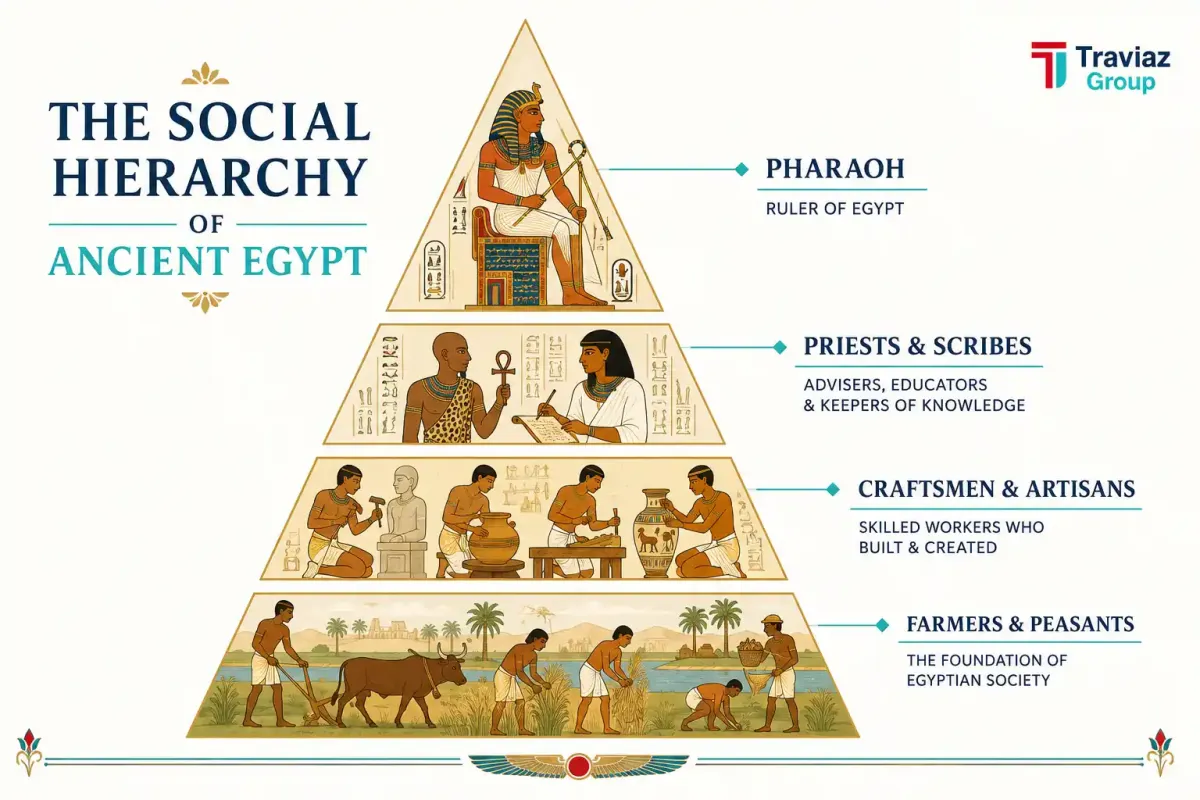
Ancient Egyptian society took a clear hierarchical shape, topped by the pharaoh as the representative of the gods on earth, then the rest of the groups were distributed into specific social classes.
Understanding this hierarchy reveals an important aspect of the reasons for the great difference in food, clothing, and housing among members of the same society.
The Daily Life of a Pharaoh vs. Peasant
The pharaoh lived in luxurious palaces, among them the palace of Amenhotep III known today as Malqata, which spanned an area exceeding 30,000 square meters and included reception halls, gardens, libraries, a festival hall, and a harem wing.
On the other hand, the peasant resided in a house mostly consisting of one or two rooms with mud-brick walls, a roof made of plant bundles, and a floor of packed dirt covered with mats. Animals sharing the same space with the inhabitants was a common matter in some houses.
Despite the huge difference between classes, Egyptians maintained their appreciation for life and enjoyed it, as they believed that life in Egypt represented the best imaginable.
What Were the Most Common Jobs in Ancient Egypt?
Jobs in ancient Egypt passed in many cases from father to son, and the nature of the work was also linked to social class. Among the most prominent professions upon which daily life was based:
- Peasants: They represented the largest base of society, cultivated the lands of the king and nobles, and presented most of the crop to the landowner while keeping the remaining part.
- Scribes: They possessed the skill of reading and writing and recorded the details of daily life, from taxes to religious rituals, and were also considered among the chosen ones of the god Thoth.
- Priests: They combined writing and religious duties, and assumed managing temple affairs, offering sacrifices, and executing funerary rituals.
- Craftsmen: This category included sculptors, painters, carpenters, and jewelry goldsmiths, and provided works for the palace, the temple, and the sarcophagus.
- Builders and laborers: They participated in constructing pyramids and temples in exchange for a real wage, and they were free Egyptians receiving salaries of bread, beer, and clothes.
The village of Deir el-Medina on the West Bank of Luxor offers a tangible picture of this professional world; the builders of royal tombs lived in it for more than 400 years, and left letters, documents, and houses whose ruins still stand today.
The Influence of the Nile River on Ancient Egyptian Daily Routines
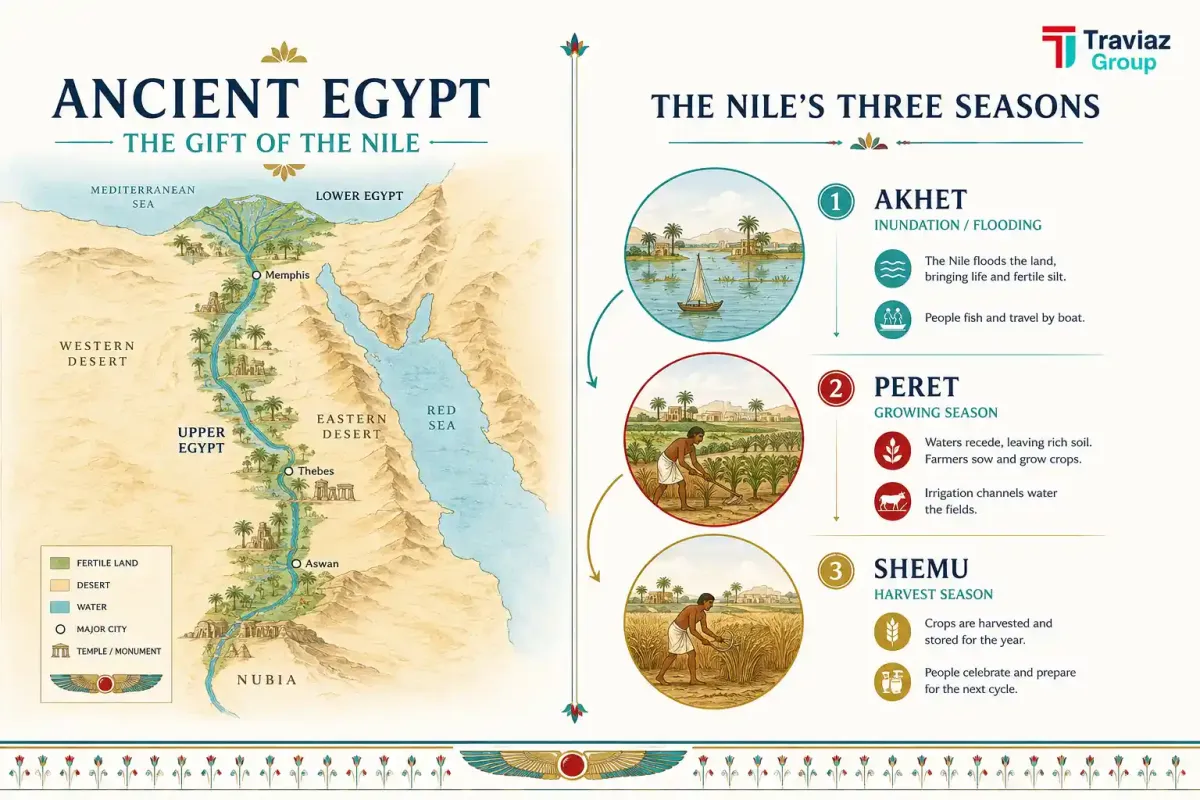
The details of ancient Egyptian life were closely linked to the Nile, starting from waking times and up to the end of the day. The annual flood that inundated the lands between July and October determined the planting and harvesting seasons, and also provided periods of free time utilized in building temples and pyramids.
Cities and villages chose elevated locations near the river to avoid flood waters and secure an easy water source. The Nile also represented the main trade route connecting Egypt from the Delta in the north to Aswan in the south, and through it massive stones, goods, soldiers, and pilgrims were transported.
Along both river banks, most villages where ancient Egyptians lived spread, while major cities like Memphis and Thebes appeared in strategic locations on the river.
What Did Ancient Egyptians Actually Look Like in Daily Life?
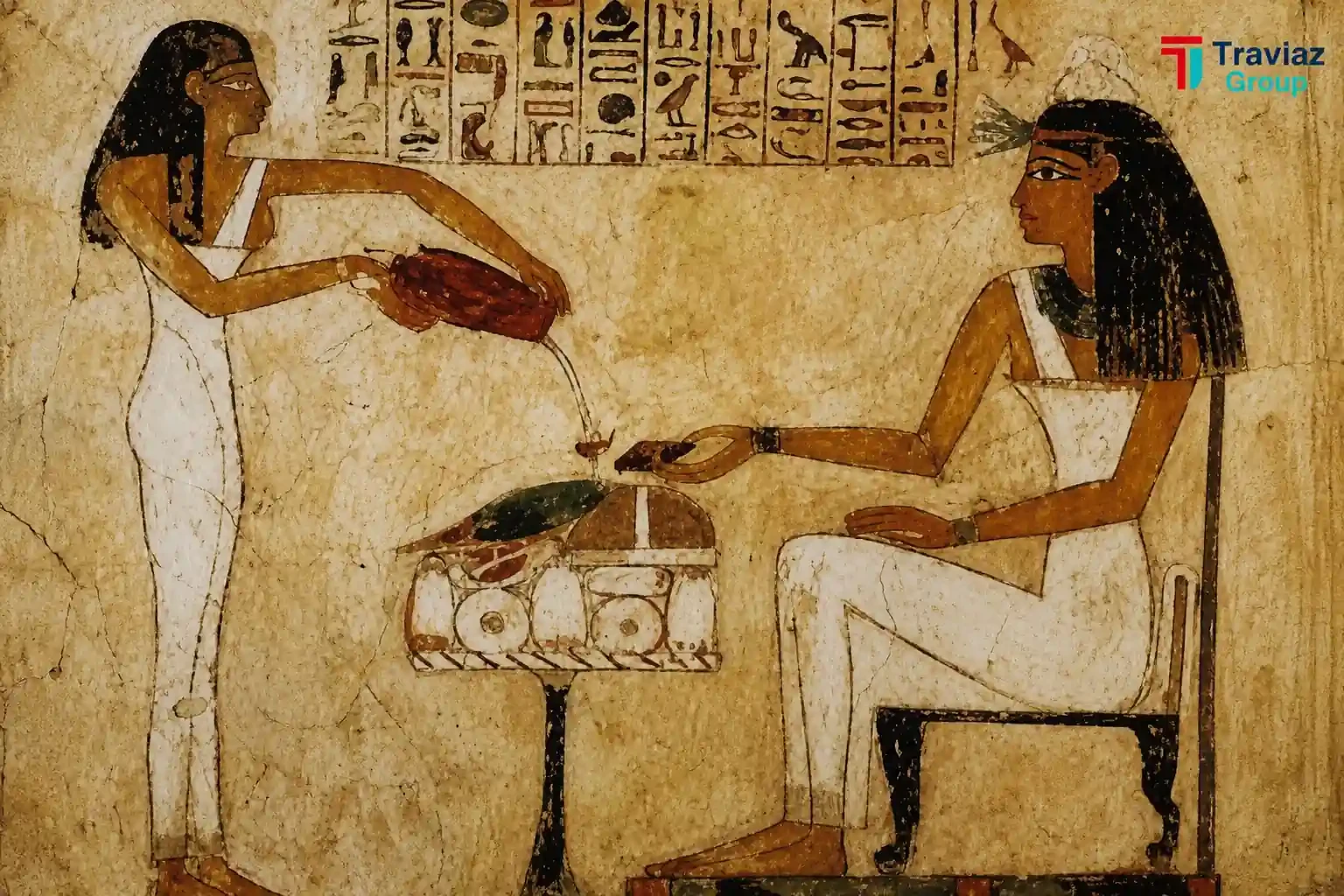
Ancient Egyptian murals display women with fair skin and men with darker skin, and this difference was not an expression of ethnic division, but reflected the nature of work and sun exposure conditions. Ancient Egyptians showed a great interest in hygiene and appearance, which is an aspect that might surprise many modern visitors.
What Kind of Clothes and Jewelry Did Ancient Egyptians Wear?
Ancient Egyptians relied on linen as the primary fabric for clothing, as cotton and silk were unknown in Egypt at that time. Men mostly wore short clothes or a simple kilt, while women appeared in long straight dresses reaching the ankles. The clothes of the upper classes featured more complex designs, folds, and decorations reflecting social status.
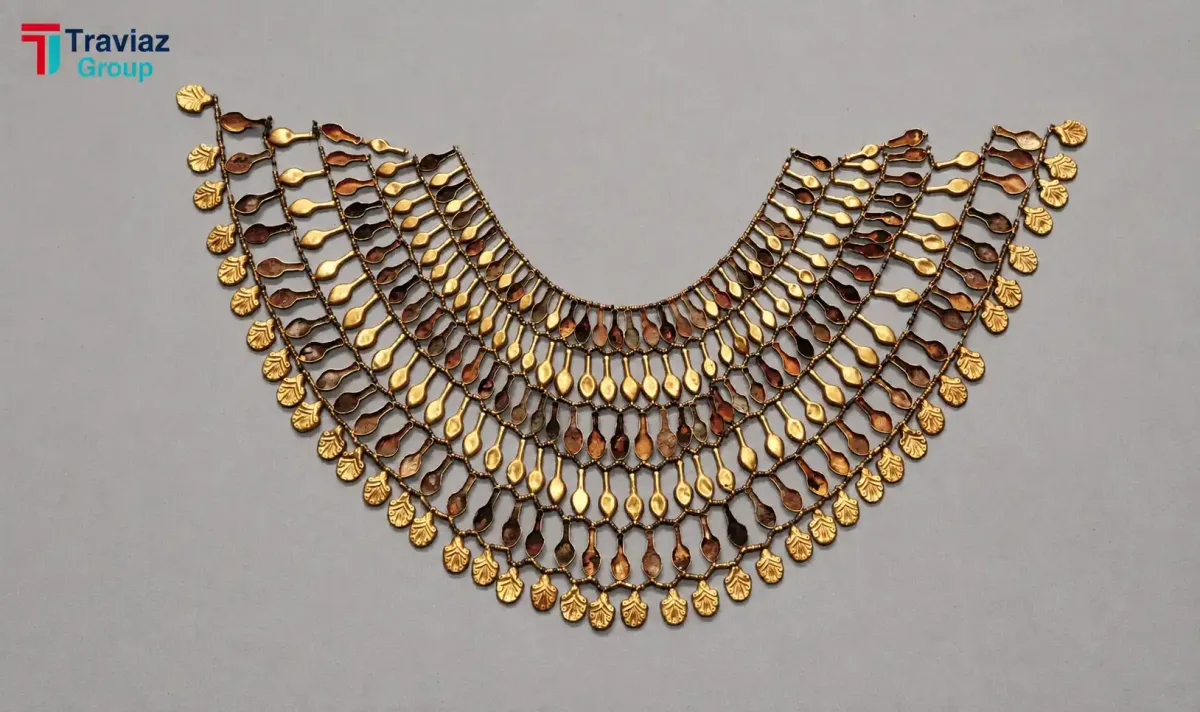
Men and women alike used jewelry, and it included amulets with religious symbols for protection from evil, along with bracelets, collars, and rings made of copper, gold, and precious stones. Most people walked barefoot, while sandals were made of palm fronds for the poor and leather for the wealthy.
Why Did Ancient Egyptians Wear Heavy Eye Makeup and Perfumes?
Black kohl was not just a means for decoration; men and women used it for protection from sun glare and insects. Ground green malachite was used to line the eyes, and it was believed to have a role in preventing eye infections common in the desert climate.
Perfumes and aromatic oils were present in daily life and religious rituals, and were made from plant oils and imported resins. Hygiene occupied an important position in society, and therefore priests would shave their heads and bodies completely to maintain ritual cleanliness.
What Did Ancient Egyptians Eat and Drink on a Daily Basis?
The ancient Egyptian's food came simple in its ingredients but varied and nutritious thanks to the fertility of the Nile land. The poor and the rich shared some staple foods, with a clear difference in quantity, variety, and quality according to social status.
Staples of the Diet: Bread and Beer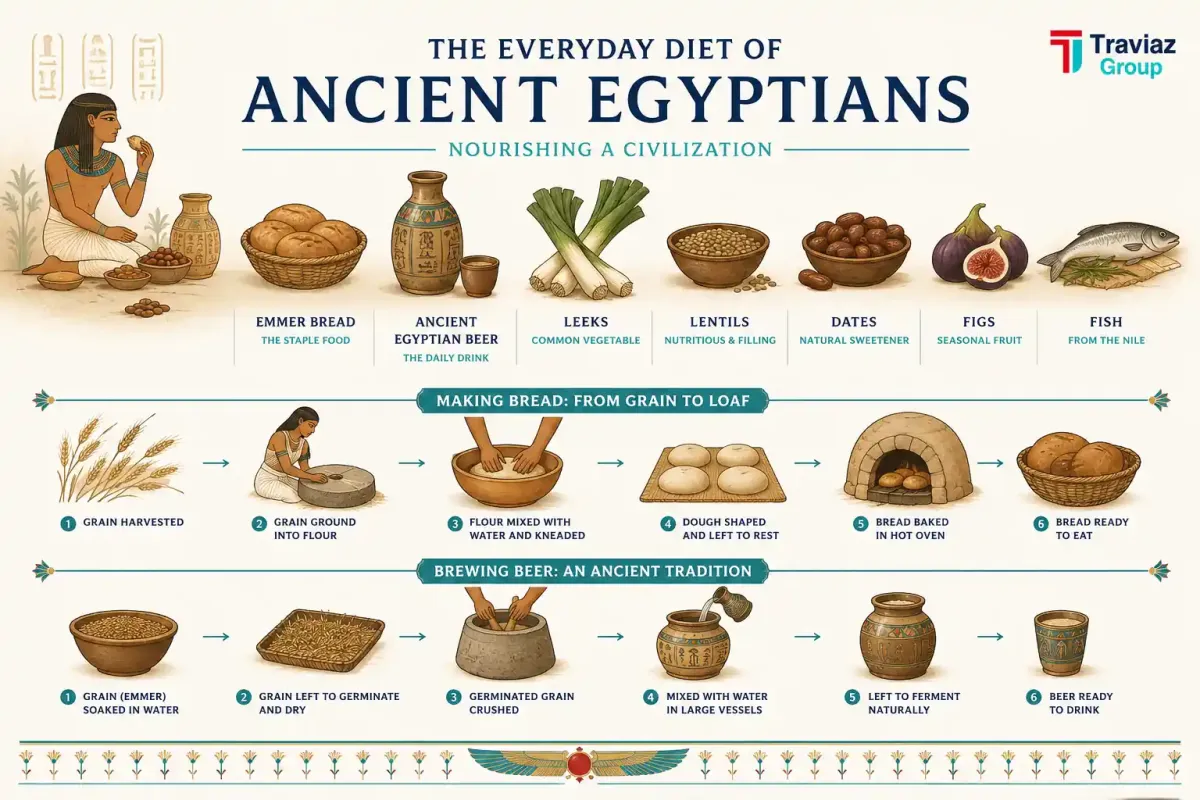
Bread formed the basis of the ancient Egyptian diet, from the pharaoh to the peasant, and temples received hundreds of loaves daily as offerings. Egyptians used ground wheat or barley on a millstone to make bread, then baked it inside clay ovens. Some loaves contained fine sand particles that caused dental wear, which appeared in examining many mummies.
Beer occupied the position of the main daily drink instead of water, and it was thick, sweet, and low in alcohol, and was also considered safer than open Nile water. The Giza workers received three daily rations of beer as part of their wages, and Egyptians linked its origin to the god Osiris.
Meat, Vegetables, Fruit, and Agriculture
Onions, garlic, leeks, lentils, and fava beans were among the most common vegetables in ancient Egyptian food, and garlic specifically enjoyed wide popularity. The available fruits included dates, figs, grapes, pomegranates, and watermelons. Meat occupied a less present position, and was often associated with upper classes and religious festivals, while birds like pigeons, geese, and ducks were more available than beef. Nile fish provided an essential protein source for the poor, especially in areas close to the river.
Home, Family Life, and Education
The family occupied a central position in ancient Egyptian society, and provided the primary social support network in light of the absence of an integrated social welfare system. Understanding the ancient Egyptian family's way of living gives visiting archaeological sites a different dimension that goes beyond just seeing buildings and stones.
What Were Ancient Egyptian Houses Made of and What Did They Look Like?
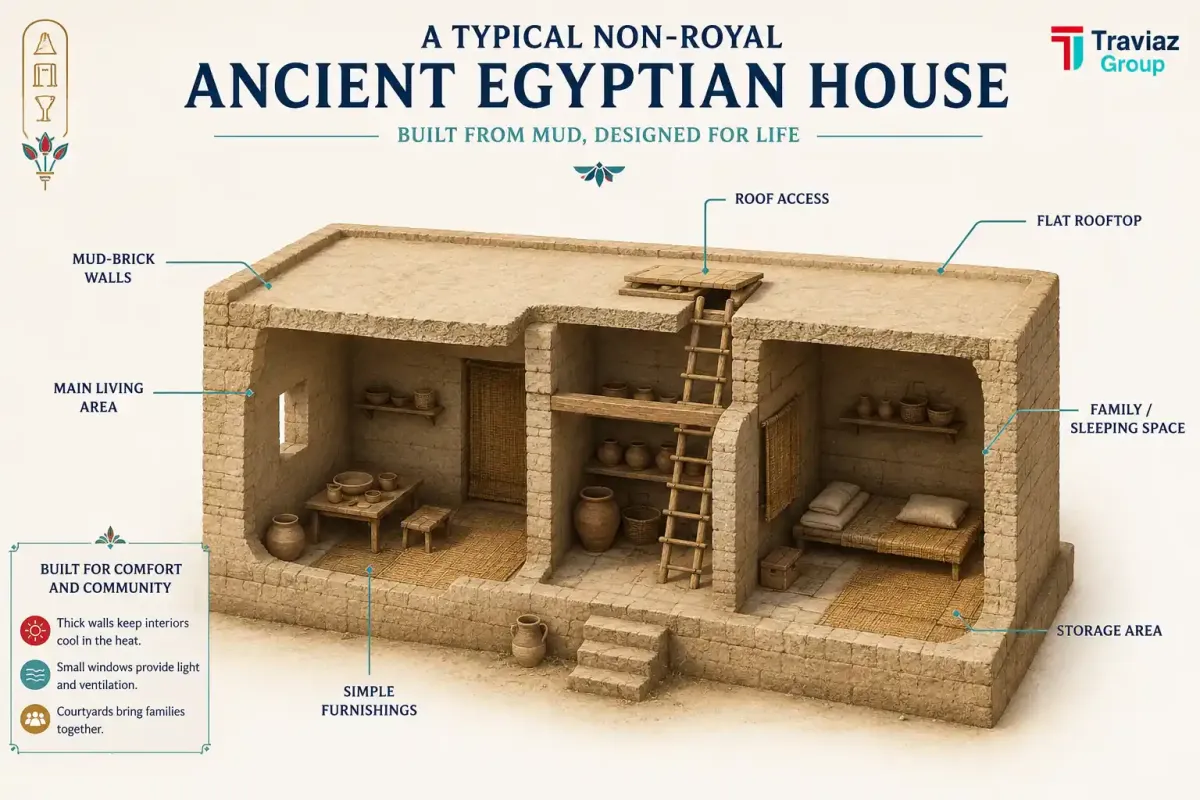
Mud-brick made from Nile mud and straw dried under the sun was the primary material for building houses. The reason goes back to the fact that stone was allocated to a greater degree for temples and tombs as eternal dwellings, while the house was considered a temporary place for life. Mud-brick walls helped insulate heat and maintain a more moderate internal temperature.
The flat roof turned into an additional space for eating, resting, and sleeping during hot nights. Furniture was mostly limited to reed mats, wooden chests, and wooden headrests instead of pillows. The kitchen was placed in many cases on the roof or in an open area to get rid of smoke.
Family Life, Marriage, and the Roles of Women
Marriage in ancient Egypt took a practical character more than being a religious procedure, and girls often married around the age of twelve and boys around fifteen. Ancient Egyptian women enjoyed broad legal rights compared to many ancient civilizations, including owning land, managing businesses, requesting divorce, and contracting independently.
The lower-class woman undertook the responsibilities of the house, children, raising animals, and caring for the family garden, while the aristocratic woman shared with her husband in receiving guests and managing properties.
Ancient Egyptian Schools, Education, and Language
Education in ancient Egypt was largely limited to those preparing for the scribal profession, and education took place in schools associated with temples known as Houses of Life. Most children learned their fathers' profession through immersion and daily training.
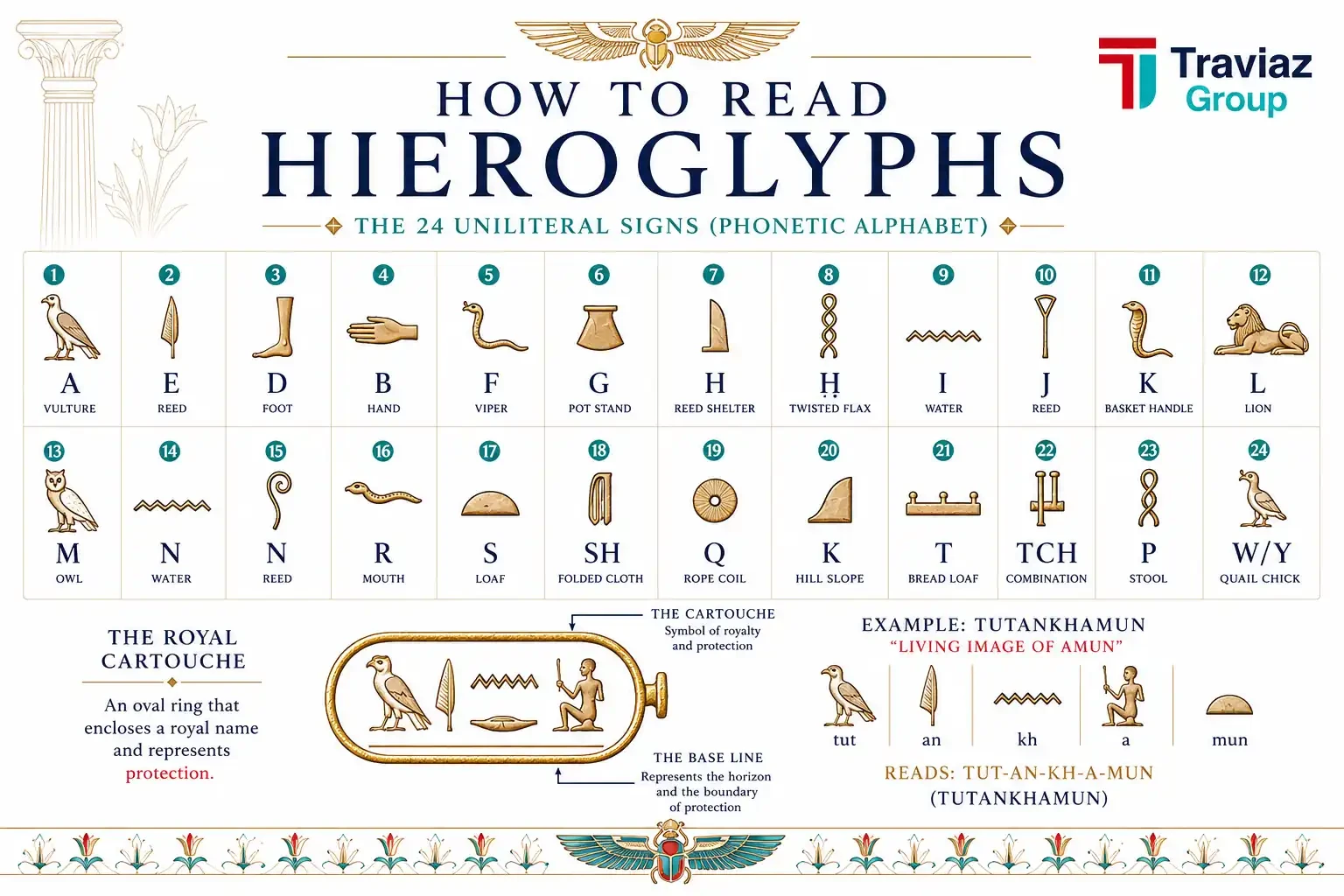
Scribes mastered the formal hieroglyphic script alongside the faster hieratic script for daily use. Some women also appeared in writing and medicine professions, indicating that education was not restricted to males absolutely.
What Animals Were Kept as Pets?
Cats were linked to special importance in ancient Egyptian homes, and they were also linked to the goddess Bastet, and people benefited from them in protecting grain silos from mice and snakes. Dogs also enjoyed a position as pets, and some were buried with their owners.
Monkeys, geese, and pigeons appeared among the animals raised in homes. Some wealthy people owned more exotic animals like leopards and lions, and these animals were sometimes used to express social status.
Top 5 Facts About School Children's Daily Life:
- Bread and beer were the basis of every Egyptian's food regardless of his wealth.
- Ancient Egyptian children played with toys made of papyrus and leather shaped like animals and humans.
- Houses were built of mud-brick made from Nile mud, and the roof was an additional living space.
- Writing and reading were a rare skill possessed only by scribes, and they were less than 1% of the population.
- Cats were respected to the degree that harming them was considered a crime punishable by law.
Leisure Activities, Religious Beliefs, and Daily Rituals
Ancient Egyptians loved life clearly, and therefore they imagined the afterlife as an extension of the life they knew and not a replacement for it. Amidst the daily working hours, people found space for entertainment, celebrations, and social occasions.
Entertainment, Hobbies, and Sports
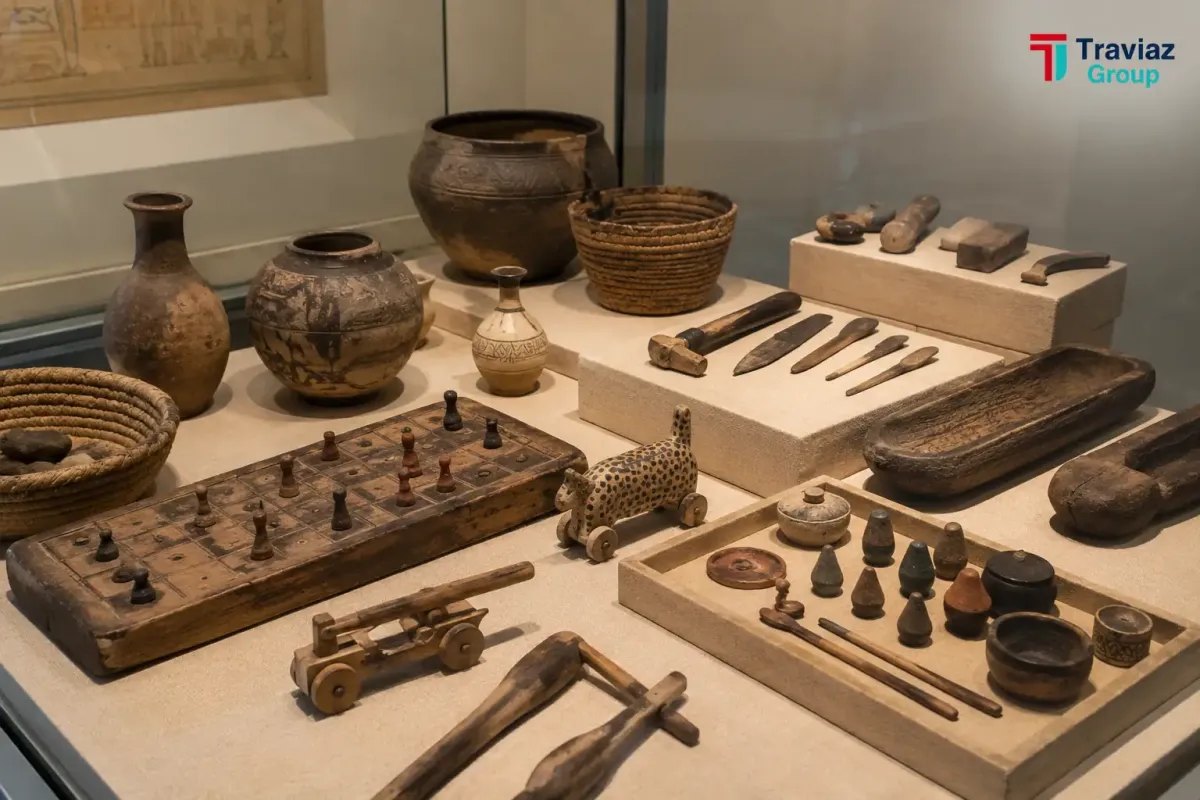
The game of Senet occupied a prominent position among board games, and it represented the soul's journey through the other world, and it also spread among various classes from the pharaoh to the peasant. Sports activities included swimming, wrestling, archery, rowing, boxing, and even the sport of "shooting the rapids" in the Nile with small boats.
Music and dancing were present at weddings, holidays, and religious festivals. Children practiced playing with handmade tools, and many of them learned swimming at an early age.
How Did Belief in the Afterlife Influence Daily Behavior?
The concept of Ma'at, with its meanings of balance, justice, and cosmic harmony, influenced the daily behavior of the ancient Egyptian. The Egyptian believed that his heart would be weighed after death before the god Osiris against the feather of the goddess Ma'at; therefore, a good deed lightened the heart's weight, while injustice increased its heaviness. Religious festivals granted workers rest periods from work, and they turned into occasions for eating, drinking, and celebrating on a large scale.
Daily prayers to minor and local gods entered the Egyptians' routine, while major temples remained allocated for priests and the pharaoh.
Can You Visit Surviving Ancient Egyptian Homes Today?
There are indeed dwellings and streets from ancient Egypt whose ruins still stand and can be visited today, allowing the visitor to approach the details of daily life away from famous royal landmarks. Many traditional tours focus on pyramids and temples, therefore these sites do not always get the same attention.
Exploring Deir el-Medina: The Workers' Village
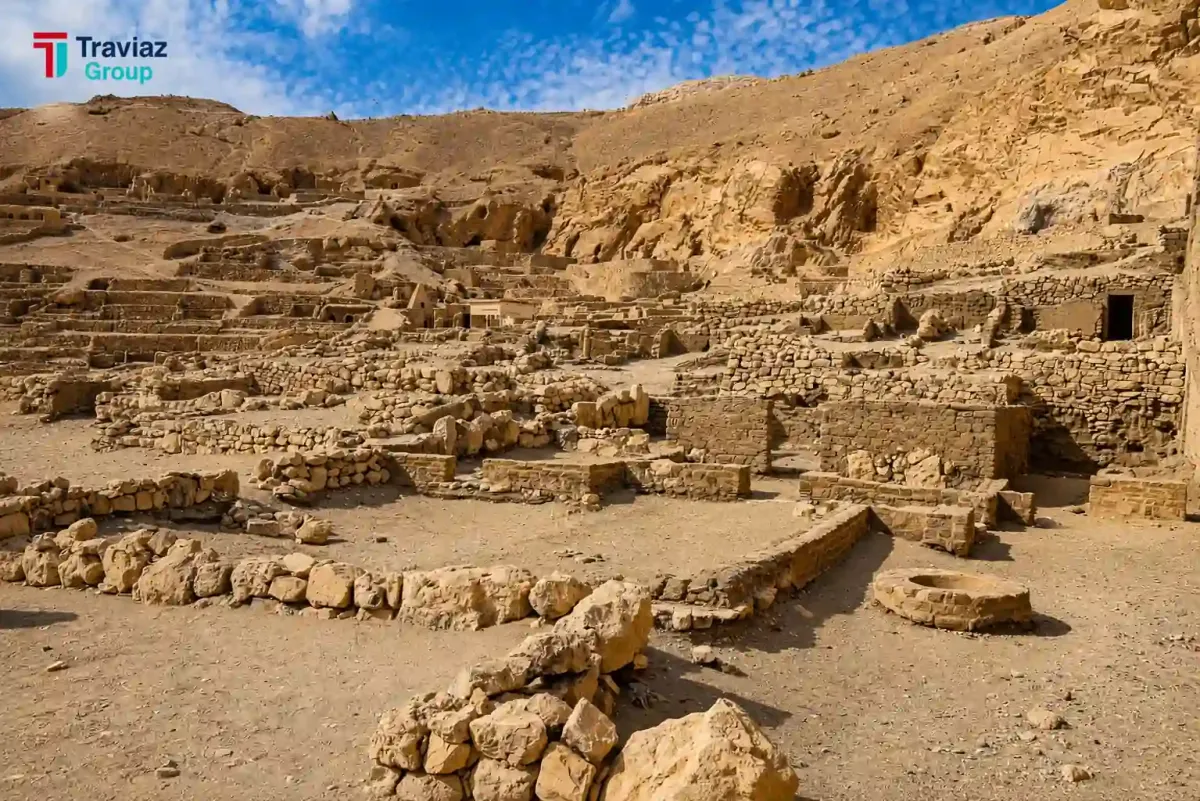
Deir el-Medina on the West Bank of Luxor is considered one of the most important sites for understanding the ordinary Egyptian's life away from the pharaohs' lives. The builders of royal tombs and their families resided in it for more than 400 years during the New Kingdom, and they left letters, contracts, complaints, and even labor strikes considered among the oldest documented strikes in history.
The remains of the mud houses reveal the layout of narrow streets and the distribution of rooms and kitchens on the roofs. The site can be visited and easily included within the West Bank tour in Luxor, which usually includes the Valley of the Kings and Hatshepsut Temple.
Which Museums Offer the Best Look at Ancient Egyptian Daily Life?
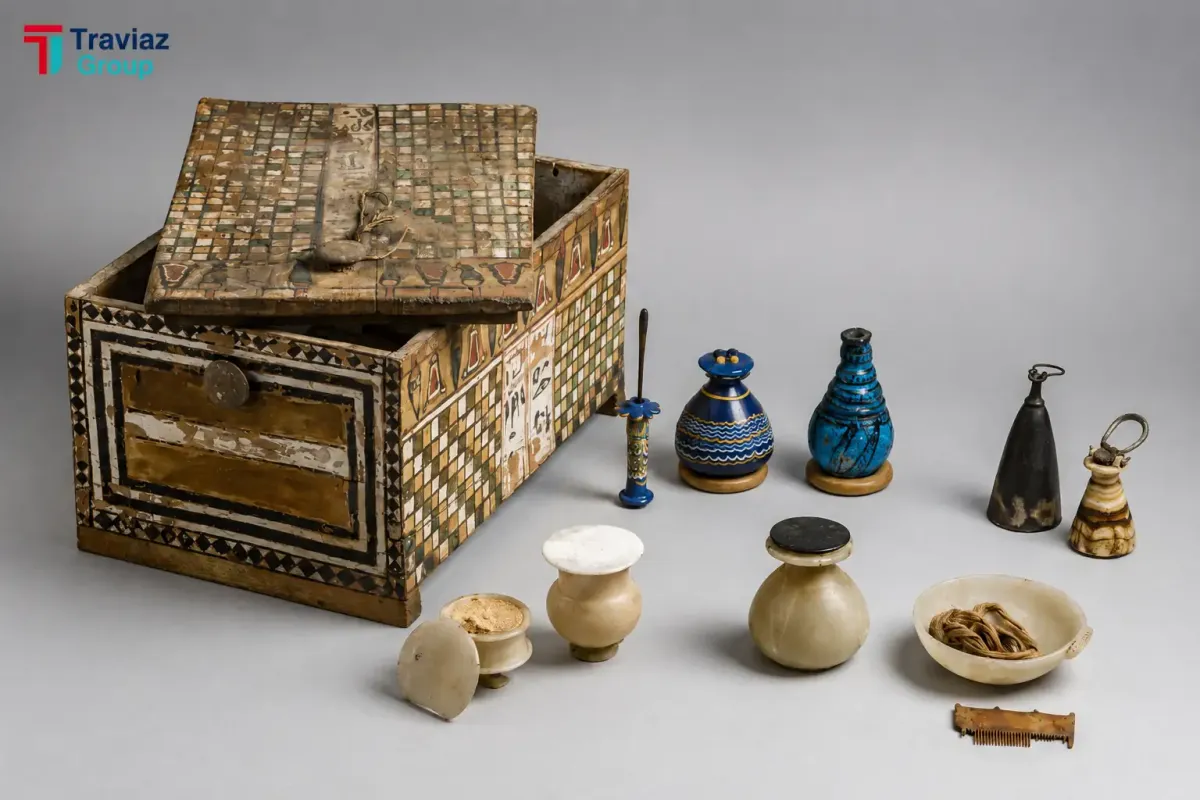
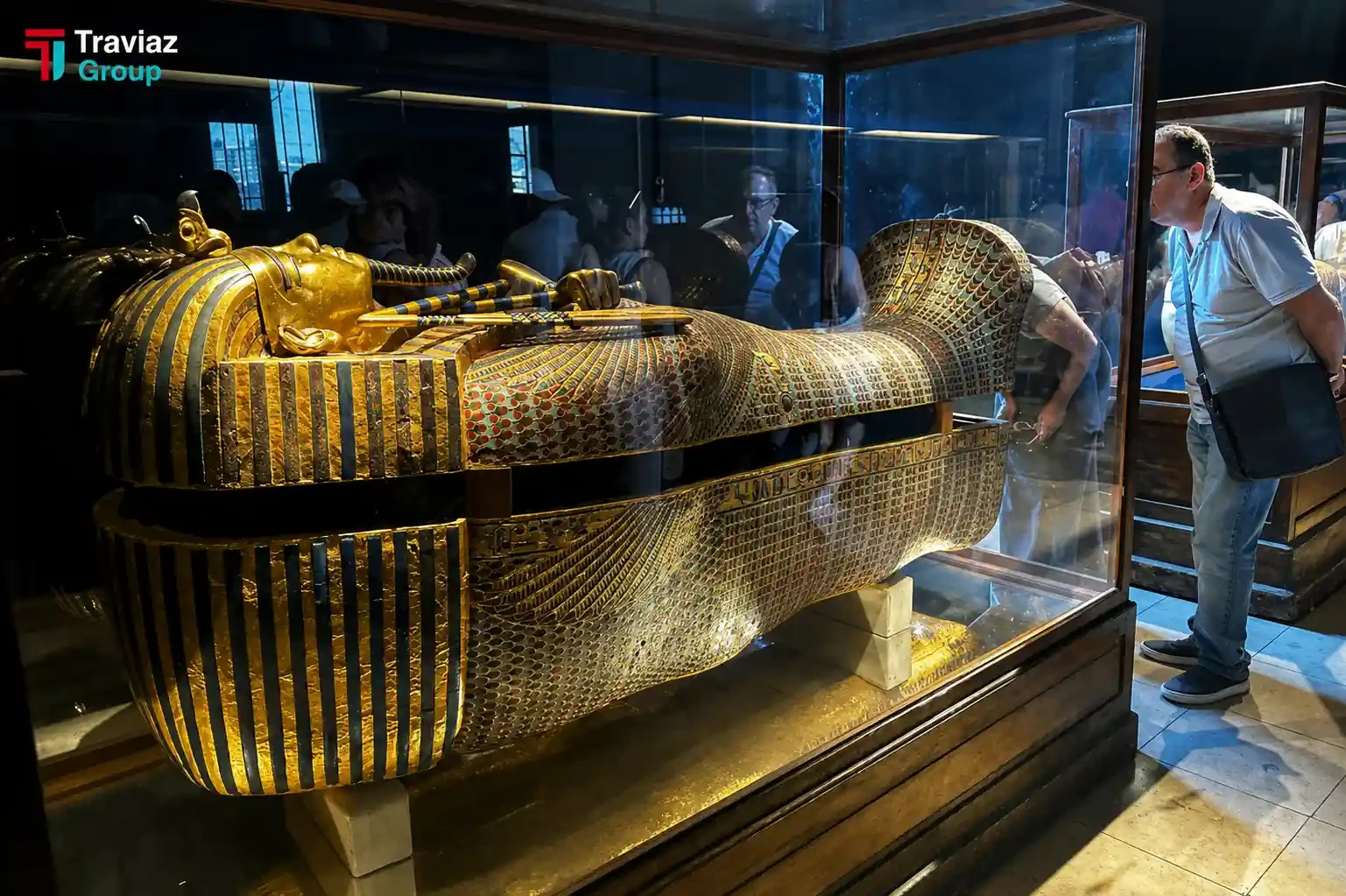
The Grand Egyptian Museum GEM offers exceptional collections of daily tools, toys, pottery, and fabrics, which are materials helping to understand the lives of ordinary Egyptians away from royal treasures. The Tutankhamun section houses his complete collection for the first time, including his personal furniture, his walking stick, and his clothes that reveal aspects of the daily life of a young pharaoh. The Egyptian Museum in Tahrir Square also contains household tools, jewelry, and cosmetics helping to complete the picture.
How to Experience Authentic Ancient Egyptian History with Traviaz
Traditional tourist tours often stop at the pyramids, while details of real history can be found in Deir el-Medina, the halls of the Grand Egyptian Museum, and sites that do not receive the attention of most guides. Traviaz designs its itineraries for whoever looks for details of daily life and not traditional tourist landmarks alone.
Customized & Off-the-Beaten-Path History Tours
Every Traviaz tour is built according to the visitor's interests, schedule, and budget, with the possibility of integrating Deir el-Medina, the Grand Egyptian Museum, and other less famous sites within one itinerary. Certified archaeological guides know the walls bearing scenes about daily life, the inscriptions documenting religious festivals, and the antiquities telling about workers' strikes. This specialized knowledge turns into stories making stones and archaeological sites clearer and more vivid.
Safe and Educational Family Travel Packages
Traviaz itineraries give families with children a chance to turn school history into a direct experience. When a child stands before an ancient Egyptian millstone in the GEM museum and hears from the guide how the mother ground grain daily to prepare the family's bread, the information becomes more firmly established. Traviaz handles local logistics, including transportation, tickets, and entry times, to provide an organized and stress-free trip.
Tour Pricing & Guided Options
The cost varies according to the tour duration, the number of participants, and the required customization level. The one-day family tour including Deir el-Medina and the museum has a different cost than an integrated weekly program. Traviaz can be contacted through the official website to get a customized price quote according to the trip details.
FAQs
Did Ancient Egyptians Travel for Pleasure or Trade Within Their Borders?
Internal travel in ancient Egypt was linked basically to trade and religious pilgrimage more than leisure. Peasants rarely left their villages, while merchants, soldiers, priests, and scribes moved regularly between cities via the Nile, which represented the main route for moving around. The pilgrimage to Abydos for the god Osiris constituted one of the most prominent forms of religious travel, and Egyptians from different social classes participated in it.
Is It Safe and Easy to Travel to Off-the-Beaten-Path Archaeological Sites in Egypt?
Deir el-Medina and lesser-known sites in Luxor are located at a close distance from major landmarks like the Valley of the Kings, and can be included within tourist tours easily. The visitor only needs to know opening times, ticket prices, and access methods, which are details local Traviaz guides handle.
Why Should I Choose Traviaz Over Generic Tour Operators for an Authentic Historical Trip to Egypt?
Traditional tours focus on royal landmarks, while Traviaz cares about social history helping to understand ancient Egypt more deeply. The company combines certified archaeological expertise, flexibility in designing the itinerary, and knowledge of lesser-known sites, allowing the visitor to discover the story of the ordinary Egyptian human in a way difficult to obtain within a traditional group tour