
Mummification in Ancient Egypt: The Process, History, and How to See Real Mummies Today
Before the deceased was buried in ancient Egypt, their body went through a precise and complex process lasting a full 70 days at the hands of specialized priests who had received years of training. Mummification was closely tied to ancient Egyptian belief, as it was considered an essential means of preserving the body and ensuring the soul's passage to eternal life. This guide from Traviaz's team of certified archaeologists explains the stages of the process in detail, alongside the most important places you can visit today to see real mummies.
Why Did Ancient Egyptians Mummify Their Dead?
The afterlife in the ancient Egyptians' conception was a continuation of earthly life, and for this reason preserving the body was linked to their beliefs about death and resurrection.
Every stage of mummification was tied to the idea of the person's continued existence after death and the protection of their body during its journey to the other world.
The Afterlife, the Ka, and the Ba
The ancient Egyptians believed that a person is made up of multiple spiritual elements, the most prominent of which were the Ka and the Ba. The Ka represented the spiritual double of the person and remained linked to the body after death, needing a shelter to return to, while the Ba expressed the person's unique personality and was depicted in the form of a bird with a human head moving between the two worlds.
For this reason, preserving the body held a fundamental place in funerary belief, as its deterioration was linked to the loss of the Ka and the severance of the deceased's existence in the afterlife.
Who Was Anubis, the God of Mummification?
In the form of a god with a black jackal's head, Anubis was associated with the dead, mummification, and the protection of the deceased. Priests used the mask of Anubis during some ritual stages to embody his divine role during the mummification process.
His association also extended to the deceased's journey in the other world, where his role appeared in the rituals of judgment and the weighing of the heart before Osiris.
The Opening of the Mouth Ceremony
The "Opening of the Mouth" ritual was among the most important ceremonies that preceded burial, where priests used special tools to touch the mummy's mouth, eyes, and ears. The ritual aimed to restore the deceased's senses in the afterlife so they could eat, drink, see, and hear during their new life.
How Did Mummification Affect the Soul's Journey to the Afterlife?
In the Hall of Judgment, the deceased's heart was weighed before the god Osiris as part of the soul's journey to the afterlife. The heart was placed against the feather of the goddess Ma'at, which represented balance and justice, while a heart burdened with injustice was exposed to the monster Ammit.
Preserving the body gave the soul an anchor point to return to, which is what made the mummification process an important part of the journey toward eternal life.
The 7-Step Mummification Process
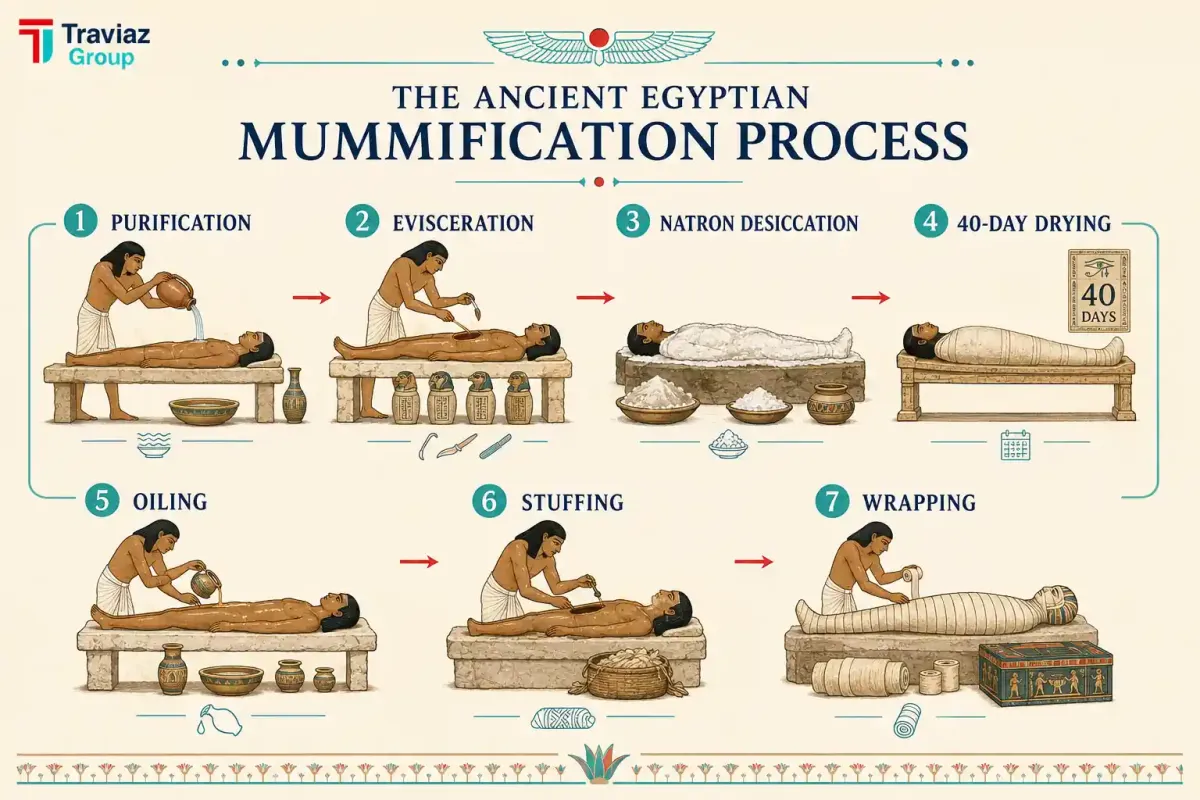
Seventy days was the traditional duration of the complete mummification process, which combined practical procedures with religious rituals. Drying the body with natron took around 40 days, then came the stages of wrapping, amulets, rituals, and preparation for burial during the remaining period.
1- Purification in the Ibu
The body was first taken to the "ibu," the place of purification, before any other step in the mummification process could begin. There, priests washed the body thoroughly with water from the Nile and palm wine to cleanse it of impurities.
This ritual purification was not merely physical but carried deep religious significance, as it prepared the deceased to enter the sacred stages that followed and marked the formal beginning of their transformation toward eternal life.
2- Evisceration
Removing the internal organs was the first step in the mummification process, done through a small incision on the left side of the abdomen. The stomach, intestines, lungs, and liver were preserved in their designated canopic jars.
The heart, however, remained inside the body in most cases, as it was considered the center of the mind and soul and the organ that would later undergo the heart-weighing ritual.
3- Removing the Brain
Through the nose, priests reached the brain using a thin metal hook after dealing with the nasal cartilage. The brain was gradually removed from the skull and was not granted the spiritual significance that the heart held in Egyptian belief, so it was not usually preserved inside a designated jar.
4- Desiccation with Natron
Natron, a natural salt extracted from the Wadi El Natrun area west of the Nile Delta, played the primary role in drying the body and preventing its decomposition.
The mummy was covered with natron and a portion was placed inside the body cavities, then it was left for around 40 days until the tissues lost most of their moisture.
After drying was complete, the natron was removed and the body cavities were stuffed with linen, sawdust, and aromatic materials to help restore its shape.
5- Oiling the Skin
Once the body had fully dried, priests applied oils and softening agents to the skin to restore some of its flexibility and prevent cracking. This step helped maintain the body's integrity before wrapping began and was considered a preparation of the physical form for its final presentation.
6- Wrapping with Linen and Amulets
Hundreds of meters of white linen were used to wrap the mummy, starting from the fingers, then the limbs, trunk, and head. During this stage, priests recited spells and placed amulets between the linen layers at specific positions.
Scarab amulets were placed over the heart in some cases, while symbols such as the Eye of Horus and Osiris figurines were used to protect different parts of the body. The bandage layers accumulated on top of each other until they reached dozens of layers in some royal mummies.
7- Applying Resins and Oils
On the outer linen layers, the mummy was coated with resins and aromatic oils imported from different regions, including frankincense and myrrh. These materials helped protect the bandages from moisture and fix them around the body, and also contributed to the dark color and rigidity that characterize many ancient Egyptian mummies.
Canopic Jars: The Guardians of the Organs
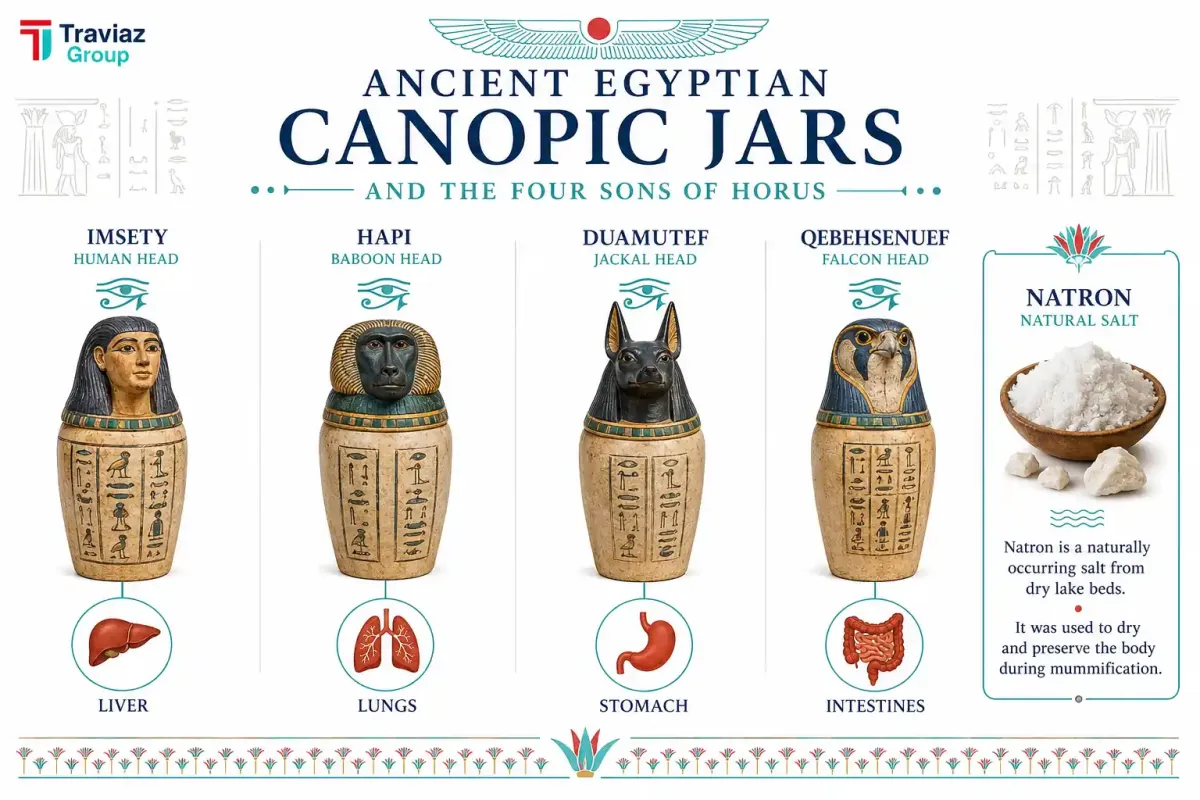
Four jars of limestone or pottery were designated for preserving the internal organs removed during mummification, and each one was associated with one of the four sons of the god Horus:
- Imsety: With a human head, preserving the liver.
- Hapy: With a baboon's head, preserving the lungs.
- Duamutef: With a jackal's head, preserving the stomach.
- Qebehsenuef: With a falcon's head, preserving the intestines.
Inside a special chest near the coffin, the canopic jars preserved the organs beside the body throughout eternal life.
Tombs, Funerary Goods, and the Role of the Sarcophagus
The ancient Egyptian tomb was designed as a space connected to the deceased's eternal life, and not merely a place to deposit the body. Some pharaohs began preparing their tombs in the early years of their reign, and work on them continued for years or decades depending on the scale of the project.
The Role of the Sarcophagus and Coffins
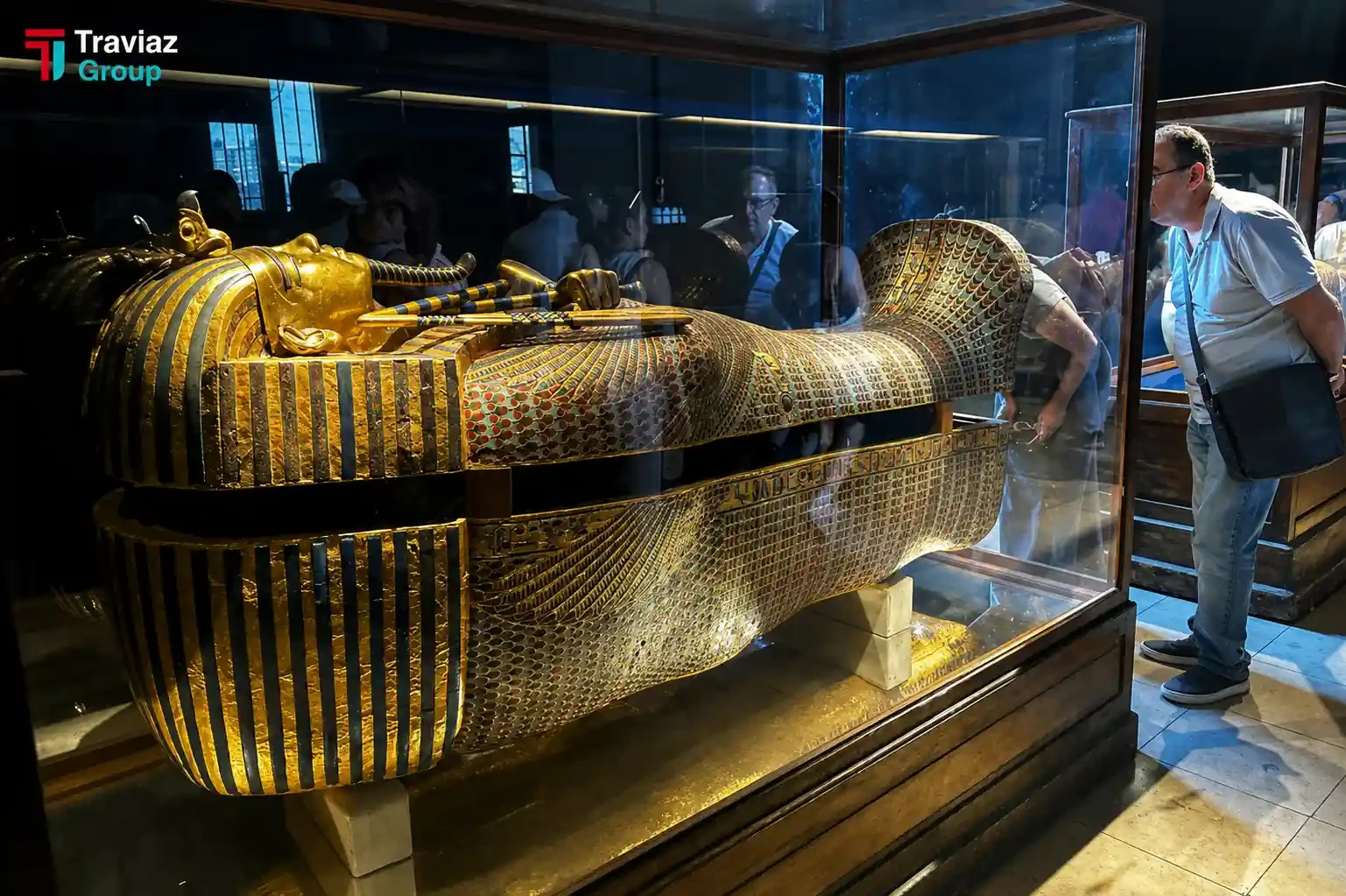
The outer stone sarcophagus was the last line of defense for the mummy and was made from materials such as granite and limestone. Inside it were placed nested wooden coffins, some of which carried layers of gold, religious inscriptions, and the features of the deceased.
Tutankhamun was buried inside four layers of nested coffins, the innermost of which was made of pure gold and weighed around 110 kilograms. The walls of the coffins and sarcophagi carried religious texts and images related to protecting the deceased and assisting them on their journey to the other world.
Funerary Goods and Tomb Preparation
Funerary goods reflected the deceased's status and met their perceived needs in the afterlife. Pharaohs and the wealthy were buried with beds, chairs, clothing, shoes, jewelry, weapons, chariots, and miniature boats.
Ushabtis were small figurines placed in large numbers in tombs to work on behalf of the deceased in the other world. The tomb of Tutankhamun, discovered by Howard Carter in 1922, revealed thousands of pieces that illustrate the scale of royal funerary preparations.
Who Got Mummified in Ancient Egypt?
Mummification began as a privilege for pharaohs and senior nobles, then gradually spread to wider classes of ancient Egyptian society. The method of mummification and the degree of care for the body differed according to social standing and financial capacity.
Did Poor People Get Mummified?
The poor received methods far simpler than royal mummification. The dry desert sands helped preserve some bodies naturally through heat and aridity, while less costly methods relied on natron and wrappings without the expensive procedures used with pharaohs.
Complete royal mummification required 70 days and large quantities of linen and resins, and was therefore extremely costly.
Animal Mummification
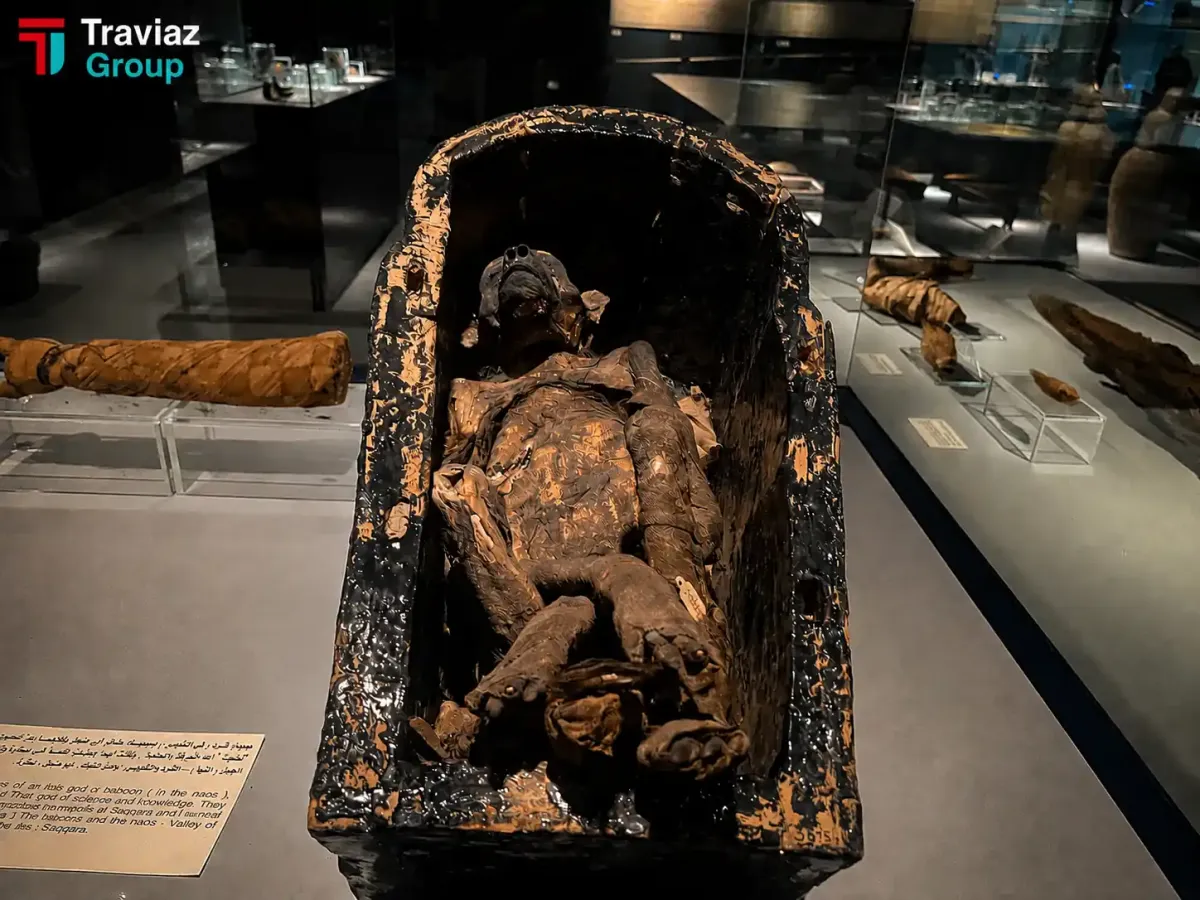
Animal mummification spread widely in ancient Egypt and much of it was connected to worship and offerings. Cats were associated with the goddess Bastet, crocodiles with the god Sobek, the ibis with the god Thoth, and rams with Amun. Large numbers of mummified animals were found at various sites, and some pet animals were buried with their owners in the tombs.
Famous Egyptian Mummies Discovered
Famous Egyptian mummies have revealed important information about the health, lives, and political eras of the pharaohs. A number of these mummies can be seen today in Egyptian museums or inside the original tombs.
Ramesses II: The Greatest Pharaoh
Ramesses II ruled for 67 years and died at an age close to 90, and his mummy reveals his facial features and the condition of his teeth. In 1974, the mummy was transferred to Paris for treatment of fungal damage and received an Egyptian passport in which his profession was listed as "deceased king." The mummy's reception in France was conducted with official ceremonies that included a military salute.
Hatshepsut: The Female Pharaoh
Identifying the mummy of Hatshepsut remained uncertain for decades after its discovery. In 2007, Dr. Zahi Hawass announced the identification of her mummy through matching a tooth found inside a box bearing her name with an unidentified mummy. The mummy is currently at NMEC within the royal mummies collection.
Seti I: The Most Beautiful Mummy
The facial features of Seti I's mummy, the father of Ramesses II, remained exceptionally clear despite more than 3,200 years having passed. It was found in the Deir el-Bahari cache in 1881 along with a large group of royal mummies that the priests had hidden to protect them from looting.
His tomb KV17 in the Valley of the Kings is distinguished by its detailed drawings and inscriptions, and its entry ticket costs 2,000 Egyptian pounds.
Tutankhamun: The Boy King
The mummy of Tutankhamun remains in his original tomb KV62 in the Valley of the Kings. Howard Carter discovered the tomb in 1922 and found 5,398 artifacts inside it.
Modern examinations indicate the pharaoh died at the age of 18-19, with evidence of a leg injury and malaria infection before his death.
How Old is the Oldest Mummy in Egypt?
One of the oldest intentionally preserved Egyptian mummies dates back to around 3500 BC in the pre-dynastic era, and it is the "Gebelein" mummy in the British Museum.
The natural "Gebelein Desert" mummy dates back to around 3400 BC and illustrates the effect of the desert environment in preserving bodies before the advent of intentional mummification.
The Curse of the Pharaohs: Myth vs. Reality
The legend of the pharaoh's curse spread widely after the opening of Tutankhamun's tomb in 1922, especially following the death of Lord Carnarvon, Howard Carter's excavation sponsor, months after the tomb was opened.
The press spoke of a death warning on the tomb's door, but this inscription was never actually found, making the story closer to a journalistic myth than an archaeological fact.
What Science Says
Howard Carter lived until 1939, 17 years after the tomb's discovery, and most members of the discovery team lived normal lifespans. Inside some tombs sealed for thousands of years, studies have found fungi and microbes that may affect people with weakened immune systems. This scientific aspect explains some potential risks of ancient tombs without the need to interpret them through the idea of a curse.
Myths vs. Reality
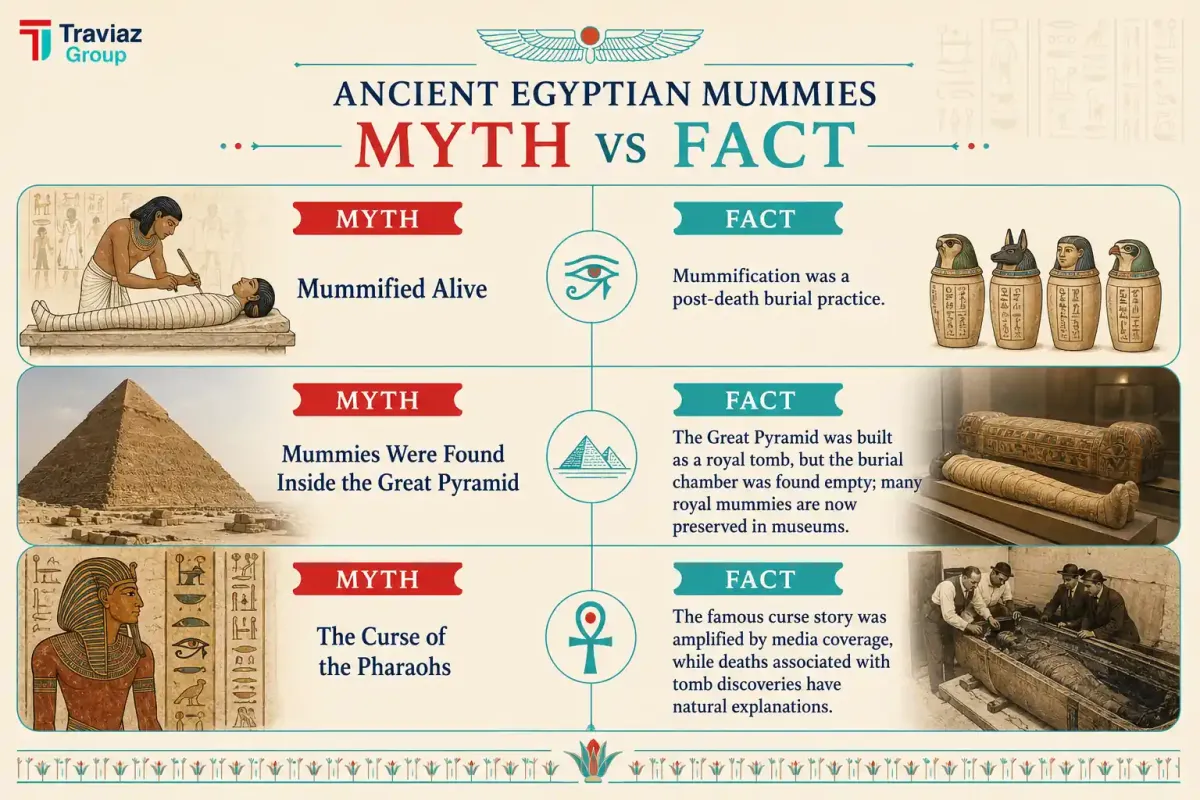
|
Hollywood Myth |
Historical Reality |
|
They mummified people while alive |
Mummification began after confirming death |
|
Mummies chase visitors and take revenge |
Mummies are preserved inside burial sites or museums |
|
The pyramids are full of mummies |
The great pyramids were looted and found empty |
|
The pharaoh's curse killed the discoverers |
Howard Carter lived 17 years after discovering Tutankhamun's tomb |
|
The bandages are pure white |
Their color changed due to resins and the passage of time |
|
Mummification was exclusive to pharaohs |
Mummification spread in varying degrees across classes of society |
Where to See Real Mummies in Egypt Today
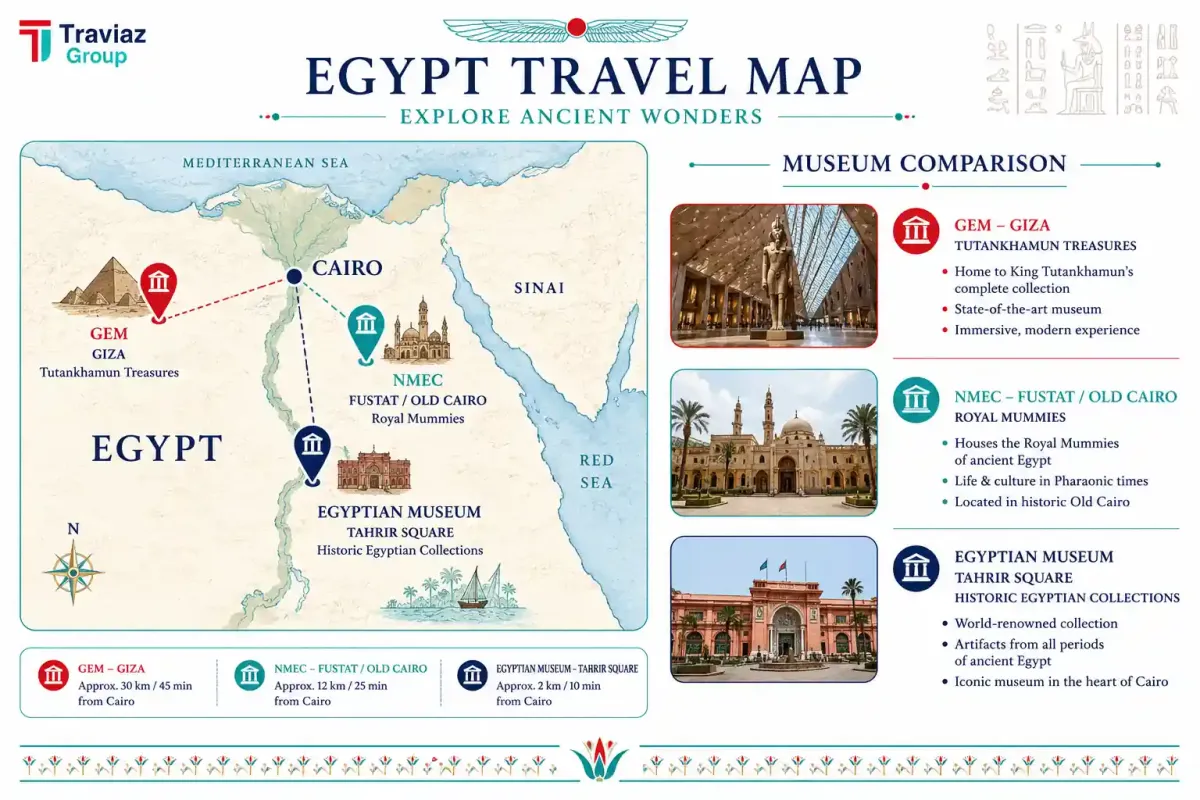
Distinguishing between museums and archaeological sites helps in choosing the most suitable place to see mummies and understand their history. The contents of NMEC differ from GEM, the Luxor Mummification Museum, and the tomb of Tutankhamun, so each site offers a different experience.
NMEC vs. GEM: The Clearest Comparison
|
Criterion |
NMEC National Museum of Egyptian Civilization |
GEM Grand Egyptian Museum |
|
Royal mummies |
22 royal mummies |
Does not contain royal mummies |
|
Tutankhamun's treasures |
No |
Complete collection and golden mask |
|
Location |
Fustat, Old Cairo |
Next to the Pyramids, Giza |
|
Ticket price 2026 |
550 pounds for foreigners, 300 for students |
1,450 pounds |
|
Photography in the mummy hall |
Completely prohibited |
Available in other halls |
|
Working hours |
9 AM - 5 PM daily, until 9 PM on Fridays |
9 AM - 5 PM |
|
Ideal time |
An hour and a half for the hall, 2-3 hours for the full museum |
At least half a day |
The Royal Mummies Hall at NMEC
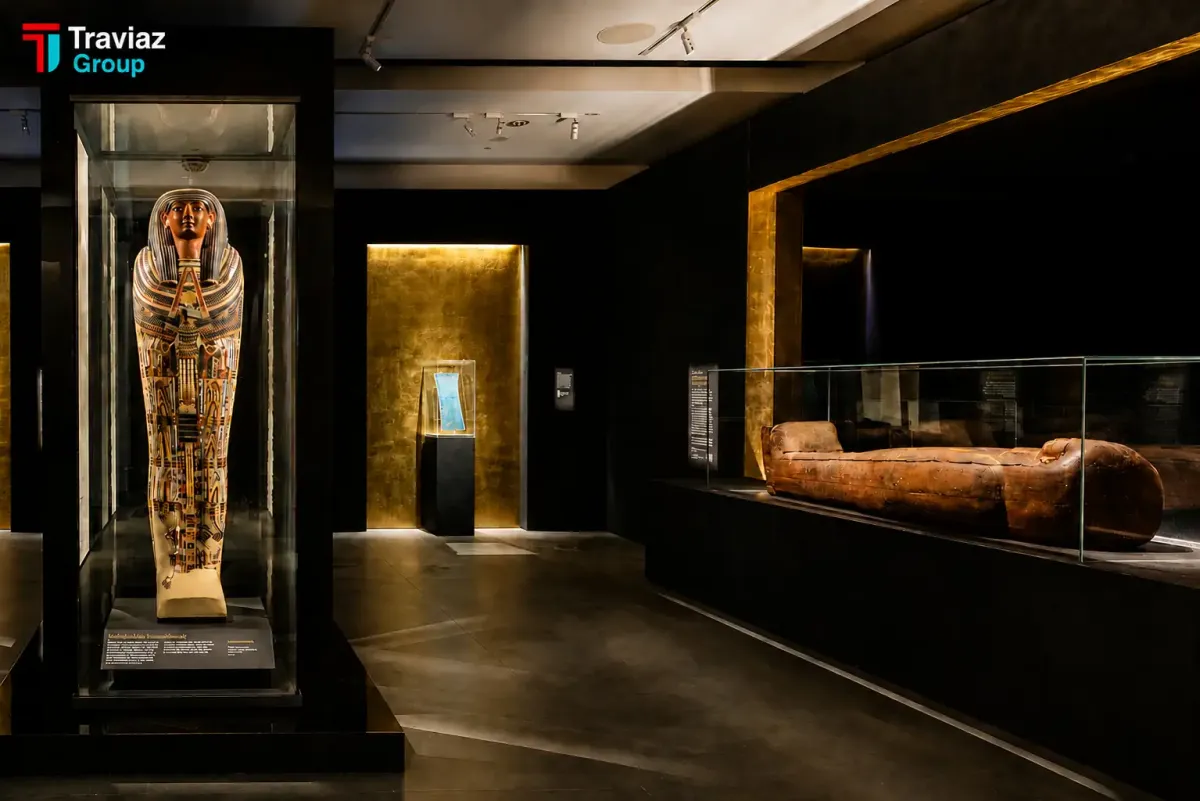
The Royal Mummies Hall at NMEC contains 22 mummies transferred there during the Royal Mummies Parade in April 2021. Dim lighting and a climate-controlled display environment surround each mummy, with a design that draws inspiration from the atmosphere of the original tombs. Ramesses II, Seti I, Hatshepsut, and Thutmose III are all present in the same hall.
Photography inside the mummies hall is prohibited, while photography is permitted in the rest of the museum's sections according to the applicable rules. Access is possible via the Mar Girgis metro station then a taxi or Uber, and advance online booking helps avoid ticket queues during peak seasons.
Luxor Mummification Museum
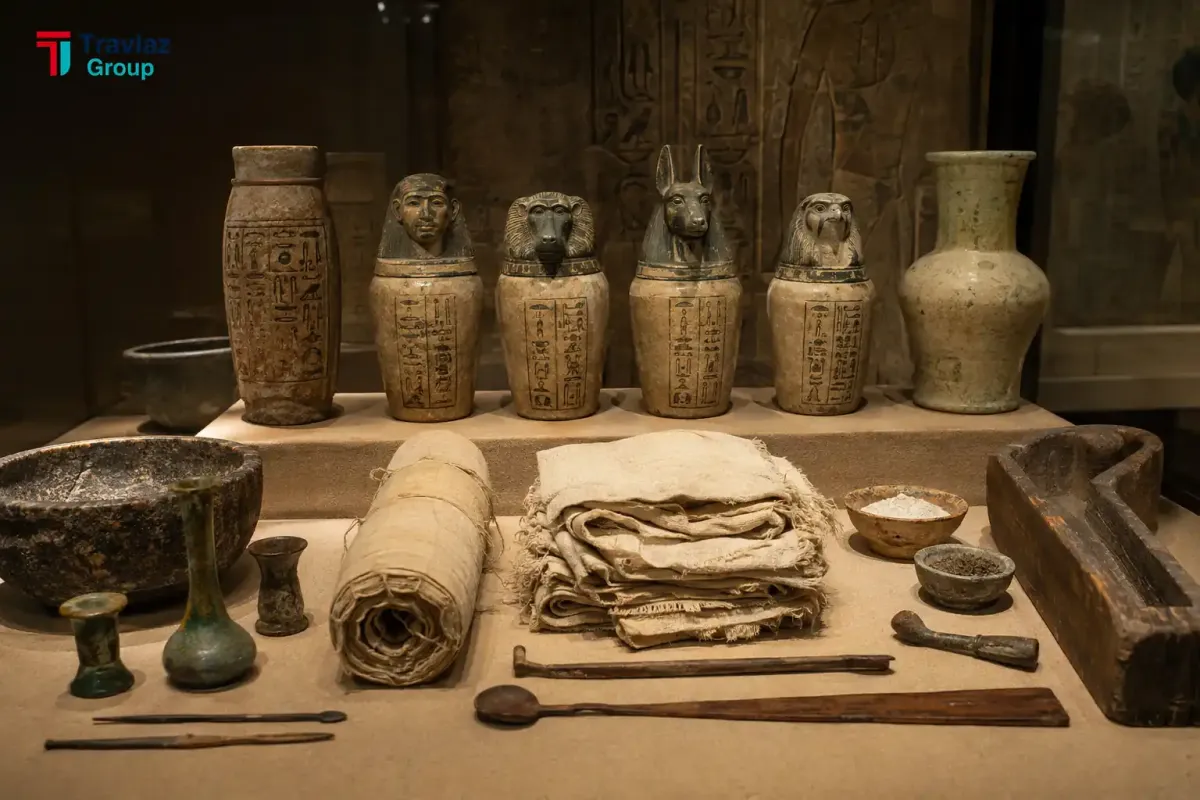
On the Nile Corniche near Luxor Temple, the Mummification Museum offers a specialized experience in the science of mummification. The exhibits include mummification tools and canopic jars, alongside the mummy of the priest of Amun I Maserharti and animal mummies.
Working hours extend from 9 AM to 2 PM, then from 5 PM to 9 PM, and the ticket costs 200 Egyptian pounds. The period between nine and eleven in the morning suits those looking for a quieter visit, and the museum's small size makes it a suitable option for families.
King Tut's Mummy at KV62
Inside the original burial chamber of KV62 in the Valley of the Kings, the mummy of Tutankhamun is still displayed inside a climate-controlled glass case. The boy pharaoh has rested in the same place for thousands of years, and you can see him today inside his original tomb. The KV62 ticket costs around 700 Egyptian pounds separately from the general Valley of the Kings ticket.
During 2026, mobile phone photography without flash is permitted without additional fees, while professional cameras require a photography permit costing 300 Egyptian pounds. Flash is prohibited under all circumstances.
Are There Mummies in the Great Pyramid of Giza?
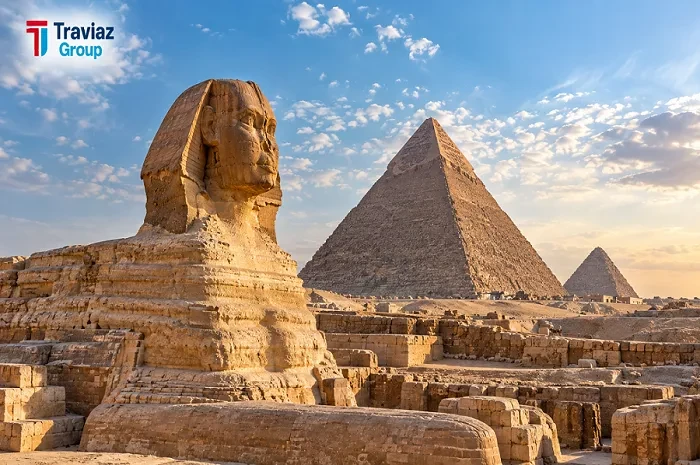
The inner chamber of the Great Pyramid of Khufu was found empty, and there is no mummy of Khufu inside the pyramid. The great pyramids were looted in ancient times, while the known royal mummies are currently in other sites and museums.
The Great Pyramid is worth visiting for its architectural design and history, and not because of the presence of a mummy inside it.
Planning Your Mummy Experience with Traviaz
Seeing real mummies gives the visitor a direct opportunity to understand an important aspect of ancient Egyptian civilization. Advance planning and a specialized guide make a clear difference in understanding the details of each mummy and the site associated with it.
Custom Tours for History Enthusiasts
Traviaz combines in its itineraries NMEC, GEM, the Luxor Mummification Museum, and the tomb of Tutankhamun within an organized program. The certified archaeologist connects each mummy to its historical context, explaining its story, life, family, era, and the rituals associated with its burial.
Family-Friendly Mummy Packages
The small size of the Luxor Mummification Museum and the way its pieces are displayed make the experience suitable for families and children. Traviaz takes into account the ages of children and the pace of the trip through rest periods and simplified explanations of historical information. For younger children, the program can be adjusted according to how suitable the mummies hall at NMEC is for them.
VIP Access and Skip-the-Line Options
Advance booking with Traviaz allows coordination of tickets and private transportation between the different sites. During peak seasons, especially from October to April, early planning helps reduce waiting time.
Morning visits to the Valley of the Kings and the tomb of Tutankhamun can also be arranged before large tourist groups arrive. Contact Traviaz through the official website to book a customized experience.
FAQs
Is It Disrespectful to Look at Mummies?
Mummies are displayed in Egyptian museums within an environment that maintains respect for human remains and provides information about their owners and historical context. This approach helps the visitor understand the mummy as part of a real human history.
What Did Mummies Look Like Originally?
A freshly mummified mummy retained clear features and relatively dark skin as a result of drying with natron. The bandages appeared light in color initially, then changed due to resins and the passage of time. The facial features are still visible in a number of preserved mummies to this day.
Are There Still Mummies Being Discovered in Egypt Today?
Archaeological discoveries in Egypt continue on an ongoing basis. Work at Saqqara in 2023 revealed a mummification workshop and human and animal mummies, while archaeological missions continue excavating for new tombs and mummies in various areas.
How Much Does It Cost to Travel to Egypt and See Mummies?
The cost depends on the trip duration, accommodation level, transportation, and included services. Some 7-10 day programs that include NMEC, the Luxor Mummification Museum, and the tomb of Tutankhamun range between $1,500 and $3,500 per person depending on the package level. Traviaz provides a customized price quote according to the trip details