
Ancient Egypt: A Guide to Pharaohs & the Sites You Can Still Visit
A thousand years before Rome was built, ancient Egypt had already established a fully developed civilization that endured for three continuous millennia. It began with King Narmer’s unification of Egypt around 3150 BC and lasted until the fall of Cleopatra in 30 BC. This was a civilization that built the pyramids, developed writing, established some of the earliest schools of medicine and engineering, and left a legacy that continues to endure to this day.
This guide is for anyone who knows little or nothing about ancient Egypt and wants to understand its history, its gods and religious beliefs, its pharaohs, and its ancient sites—whether before visiting Egypt or simply as an alternative to relying on what museum labels tell you. It is based on the expertise of Traviaz’s certified Egyptologist guides, who know these sites from the inside.
Who Were the Ancient Egyptians?
The Nile is the first and last reason ancient Egypt existed at all. In the middle of a barren desert, it supplied drinking water, irrigation, and the fertile silt left by its annual flood along both banks, and it served as the waterway that connected the north of the country to the south.
What sets ancient Egypt apart from contemporary civilizations like Mesopotamia and Greece is continuity. It lasted three thousand years under one cohesive system of governance, religion, and culture, while other civilizations collapsed and were replaced by entirely different ones.
A Timeline of Ancient Egypt
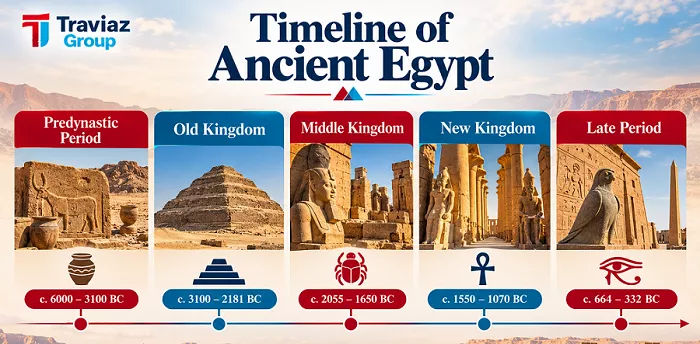
Ancient Egypt evolved through distinct historical periods, each marking major shifts in power, culture, and civilization:
|
Period |
Dates |
Key Rulers |
Defining Event |
|
Predynastic and Early Dynastic |
6000–2575 BC |
King Narmer |
Narmer unifies Upper and Lower Egypt and establishes the first dynasty with Memphis as its capital |
|
Old Kingdom |
2575–2150 BC |
Khufu, Khafre, Menkaure |
Age of the Pyramids; Khufu commissions the Great Pyramid at Giza, the only surviving wonder of the ancient world |
|
First Intermediate Period |
2150–1938 BC |
None dominant |
Drought weakens central authority and Egypt fractures into rival regions governed by local rulers |
|
Middle Kingdom |
1938–1630 BC |
Mentuhotep II |
Mentuhotep II reunifies Egypt; arts, literature, and storytelling flourish for the first time |
|
Second Intermediate Period |
1630–1540 BC |
Hyksos rulers |
Hyksos invaders from western Asia seize control of northern Egypt and introduce the horse-drawn chariot |
|
New Kingdom |
1540–1075 BC |
Hatshepsut, Akhenaten, Tutankhamun, Ramses II |
Peak of Egyptian power and territorial expansion; era of the greatest pharaohs and the most celebrated temples |
|
Late Period |
1075–332 BC |
Various foreign rulers |
Egypt ruled successively by Libyans, Nubians, Assyrians, and Persians as central power weakens |
|
Ptolemaic Period |
332–30 BC |
Alexander the Great, Cleopatra VII |
Alexander conquers Egypt without a fight; Greek Ptolemaic dynasty rules until Cleopatra VII's defeat ends the age of the pharaohs |
The Most Famous Pharaohs of Ancient Egypt
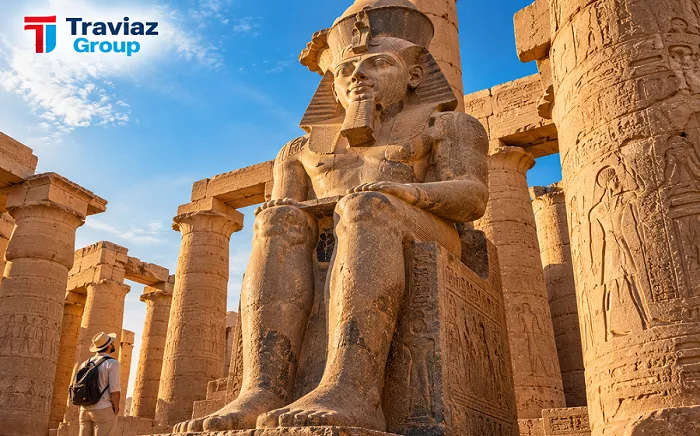
In ancient Egyptian belief, the pharaoh was not simply a king. He was considered a living god on earth, the human embodiment of Horus during his reign and of Osiris after his death. Egyptians believed he was simultaneously the head of state, the commander of the army, and the high priest of every temple in Egypt. Every law, every war, and every temple built in ancient Egypt was carried out in his name and under his divine authority:
Khufu
Khufu ruled during the Old Kingdom and commissioned the Great Pyramid at Giza around 2550 BC, the largest tomb in the history of ancient Egypt and the only surviving wonder of the ancient Seven Wonders of the World.
Hatshepsut
She ruled from 1479 to 1458 BC and is considered one of the most powerful pharaohs in Egyptian history. She wore the male pharaoh's attire including the ceremonial beard, oversaw major trade expeditions, and built the Deir el-Bahari temple in Luxor, which still stands today.
Akhenaten
He ruled from 1353 to 1336 BC and initiated the greatest religious revolution in the history of ancient Egypt by ordering the worship of a single god, Aten, and relocating the capital to a newly built city. After his death, his son Tutankhamun reversed everything back to the way it had been.
Ramses II
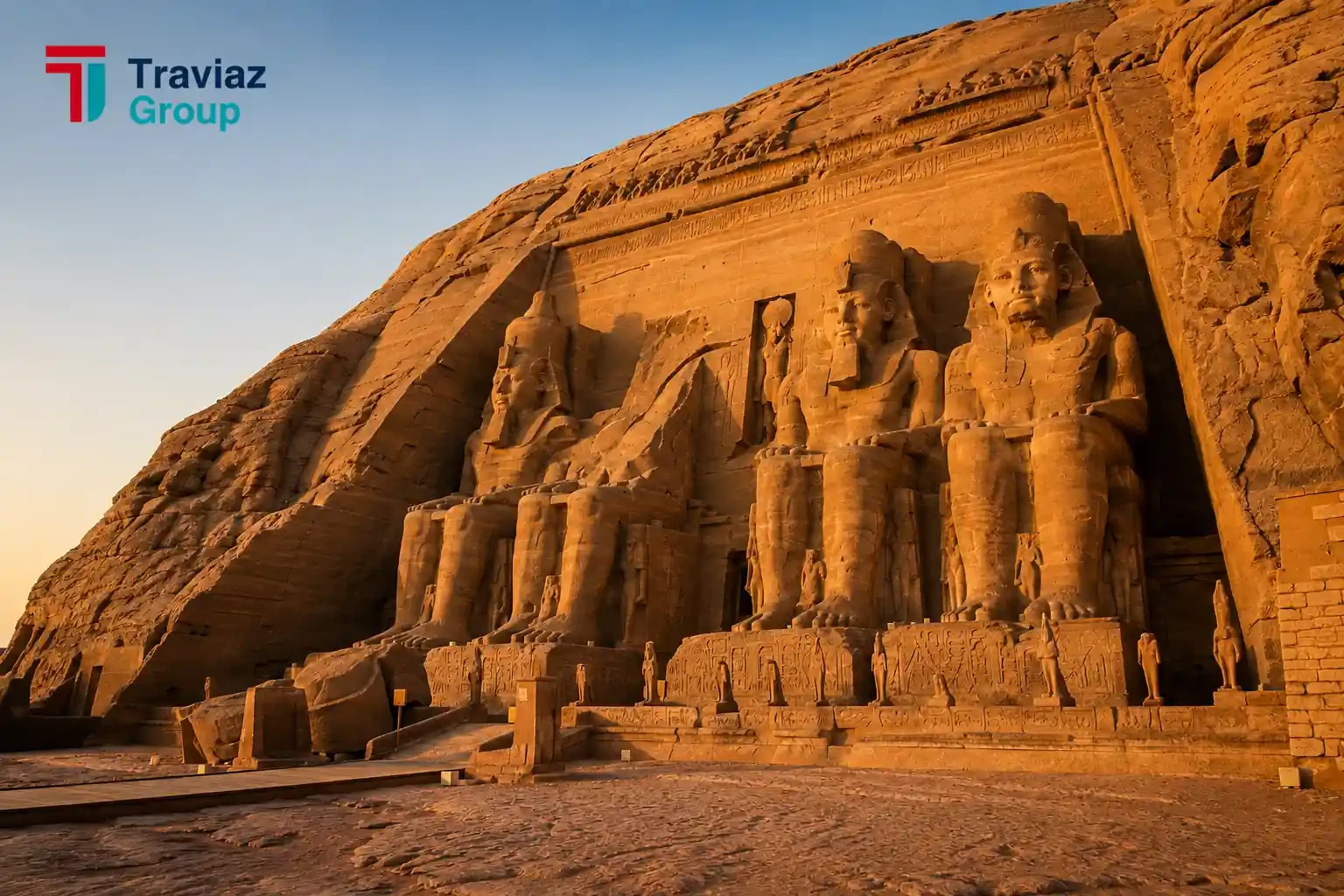
He ruled for 66 years, the longest reign in the history of ancient Egypt. He built the Abu Simbel temples and added massive expansions to Karnak Temple. He fought the Battle of Kadesh against the Hittites in 1274 BC, which ended with the first written peace treaty in human history.
Tutankhamun
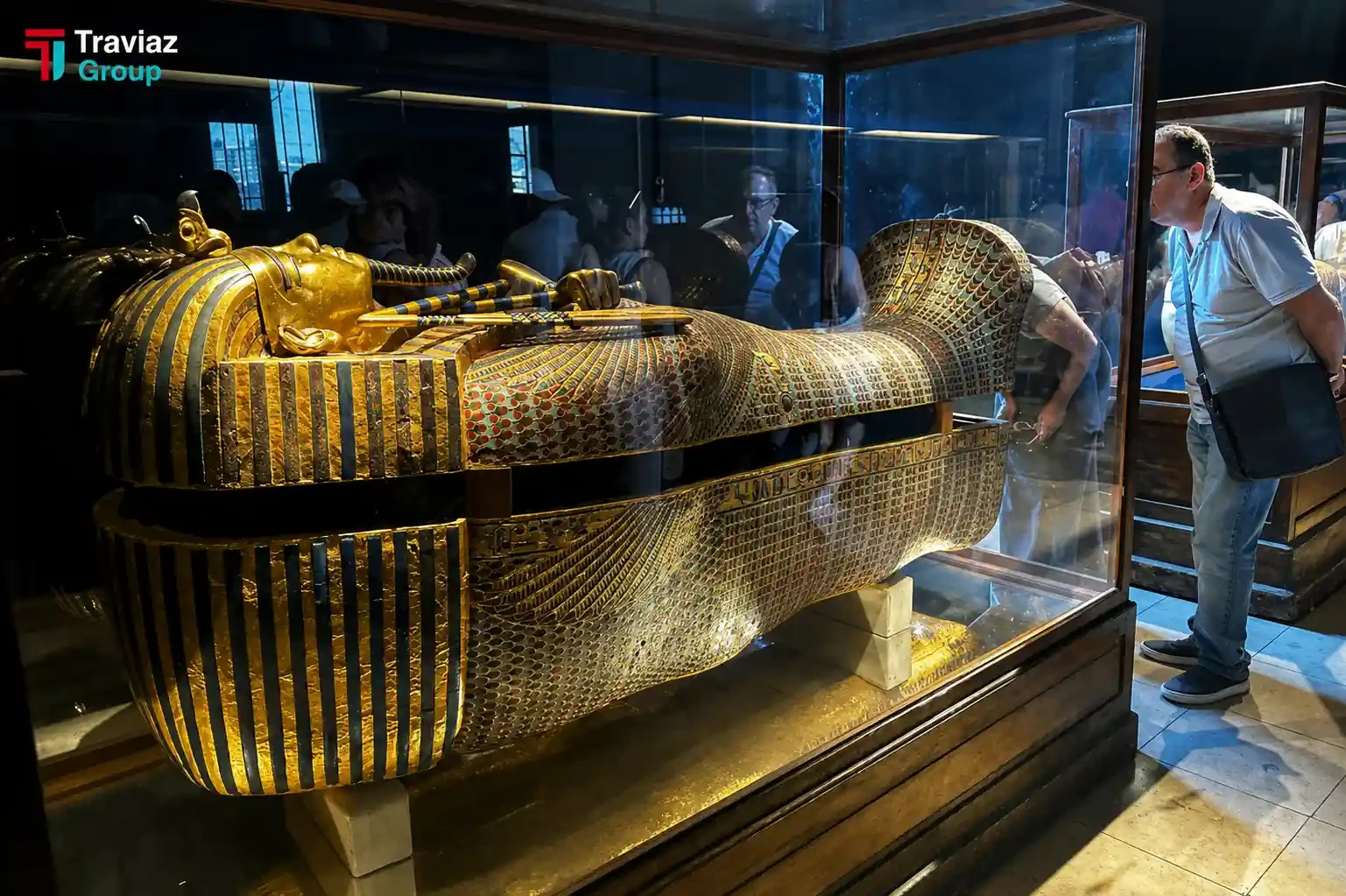
He took the throne at age nine and died between eighteen and nineteen. His reign was short, but the discovery of his intact tomb in 1922 made him the most famous pharaoh in the modern world.
Cleopatra VII
The last of Egypt's pharaohs, she ruled from 51 to 30 BC. She was of Macedonian Greek origin but learned the Egyptian language, becoming the first ruler of the Ptolemaic dynasty to do so. Her defeat at the hands of Octavian brought the age of the pharaohs to a permanent end.
Ancient Egyptian Mythology: The Gods and Legends of Ancient Egypt
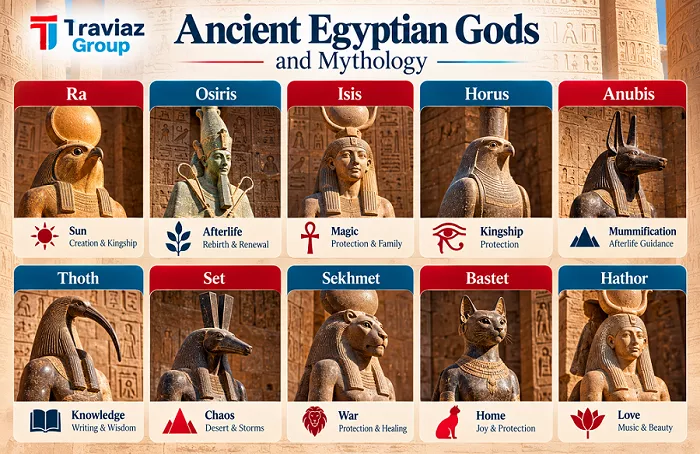
The ancient Egyptians believed in more than 2,000 gods and goddesses, each with a specific role in the cosmos, in daily life, and in death. The relationship between the gods, the pharaohs, and the people was a central pillar of ancient Egyptian mythology, and the pharaoh was considered a living embodiment of the god Horus. Below are the most prominent gods and the most celebrated myths associated with them:
The Principal Gods: A List of Ancient Egyptian Gods
The major deities in the Egyptian religious system each presided over a distinct domain:
- Ra: God of the sun and the supreme creator, depicted with a falcon head and a solar disc. He later merged with Amun to become Amun-Ra.
- Osiris: God of the underworld and resurrection, depicted as a mummified man holding a crook and flail.
- Isis: Goddess of magic, motherhood, and healing, wife of Osiris and mother of Horus.
- Horus: God of the sky and protector of the pharaohs, depicted with a falcon head. The pharaoh was considered his earthly embodiment.
- Anubis: God of mummification and the underworld, depicted with a jackal head.
- Thoth: God of knowledge, writing, and the moon, depicted with an ibis head.
- Set: God of chaos, storms, and the desert, who killed his brother Osiris and waged a prolonged conflict against his son Horus.
- Bastet: Goddess of protection and the home, depicted as a cat.
- Hathor: Goddess of love, music, and joy.
- Ptah: God of creation and craftsmanship, patron of artisans and architects.
Horus and the Eye of Horus
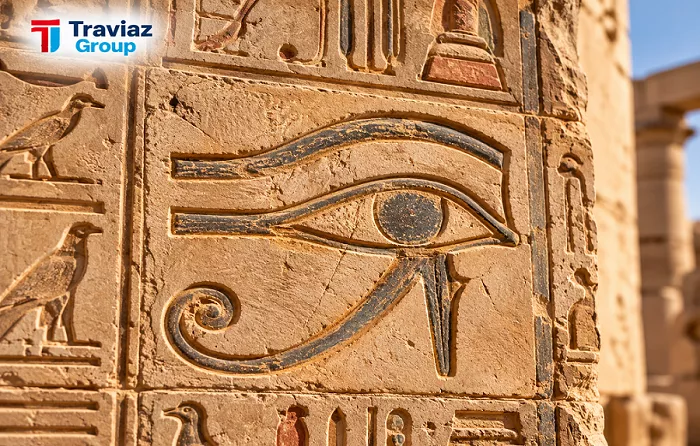
In their beliefs, Horus is the god of the sky and protector of the pharaohs, and the pharaoh was considered his living embodiment on earth. As for the Eye of Horus, known as the Wadjet, mythology holds that Horus lost it during his battle with the god Set and then reclaimed it, making it a symbol of protection, healing, and divine power. It remains one of the most widely recognized ancient Egyptian symbols to this day.
Anubis and the Afterlife
Anubis is the god of mummification and guardian of the underworld, always depicted with the black head of a jackal as a symbol of resurrection. Ancient Egyptians believed Anubis accompanied the soul on its journey after death and weighed its heart before the scales of justice. This belief is the direct bridge connecting the world of the gods to the mummification rituals Egyptians developed over centuries.
The Myth of Osiris
The most celebrated myth in ancient Egyptian mythology is the story of Osiris. Set plotted to kill his brother Osiris, crafting a coffin to his exact measurements and inviting him to try it at a banquet, then sealing the lid and throwing it into the Nile. Isis searched for her husband's body until she found it in Byblos in Lebanon.
She restored him to life through her magic long enough to conceive Horus before Osiris descended to rule the underworld. Horus then waged an eighty-year war against Set until he reclaimed the throne of Egypt. This myth was the foundation upon which the Egyptians built their entire understanding of death, resurrection, and the afterlife.
The Weighing of the Heart
In ancient Egyptian mythology, the dead passed through a court in the underworld where the heart of the deceased was weighed against the feather of Maat, goddess of truth and justice. If the heart was lighter than the feather, the deceased entered paradise. If it was heavier, a beast called Ammit, combining the features of a crocodile, a lion, and a hippopotamus, devoured it.
Hieroglyphic Writing: How the Ancient Egyptians Wrote?
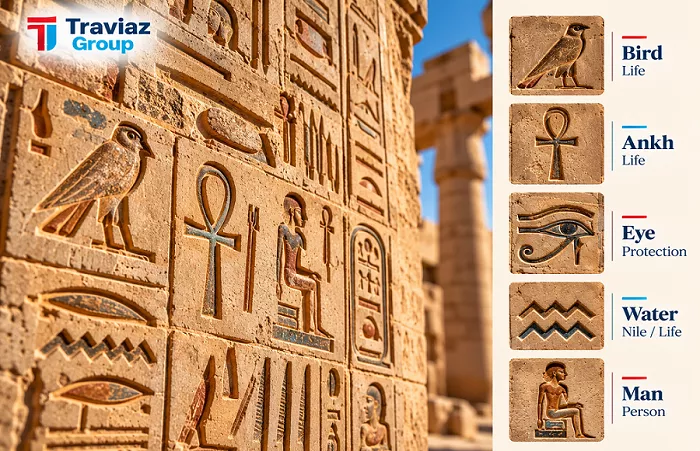
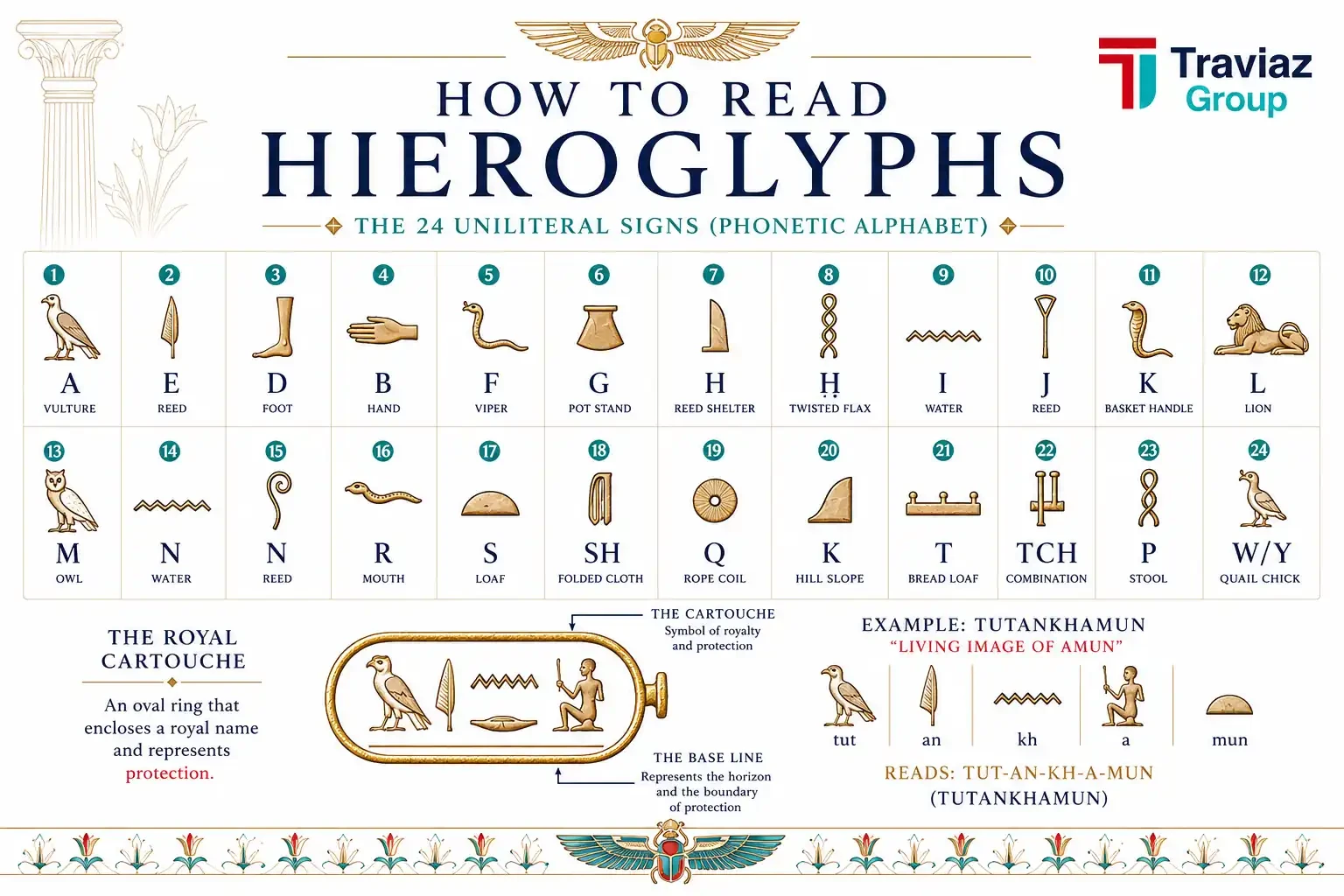
Hieroglyphics is a complete writing system combining symbols that represent meaning directly with symbols that represent sounds. Egyptians developed it around 3000 BC and used it to carve religious texts on temple and tomb walls and to record administrative documents on papyrus.
It remained an unsolved mystery for more than fourteen centuries until Napoleon's scholars discovered the Rosetta Stone in 1799, and in 1822 the French scholar Champollion finally decoded it, opening the door to reading everything the ancient Egyptians ever wrote.
Today, these inscriptions can still be seen on the walls of Karnak, Luxor Temple, Abu Simbel, and Philae. Traviaz's Egyptologist guides read them on-site and explain their meaning in context, turning what would otherwise be decorative carvings into a story you can actually follow.
Inventions, Technology and Achievements of Ancient Egypt
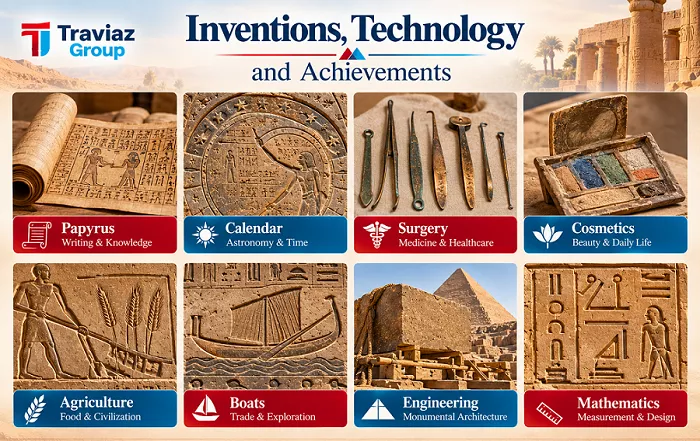
The ancient Egyptians developed a system of inventions and technologies that altered the course of human civilization. Ancient Egypt inventions were not simply tools for daily life but practical solutions to real challenges in agriculture, construction, medicine, and administration. These are the most significant contributions of ancient Egyptian civilization inventions to the world:
Writing and Papyrus
The Egyptians developed the hieroglyphic writing system around 3000 BC, a system based on symbolic characters. On papyrus, a material made from a Nile plant, they recorded their accounts, stories, and religious instructions. Papyrus was the first flexible writing surface in history, and the English word "paper" is derived from "papyrus."
The Solar Calendar
The Egyptians produced the first solar calendar consisting of 365 days. They relied on observations of the star Sirius to predict the annual Nile flood and organize the agricultural season. This calendar later influenced the Roman calendar and through it the Gregorian calendar used today.
Medicine and Surgery
The Egyptians documented their medical knowledge in the Ebers Papyrus, which contains more than 700 remedies, and the Edwin Smith Papyrus, considered the oldest surgical document in history. They used scalpels, scissors, copper needles, and surgical hooks, and invented toothpaste from ingredients including salt, mint, and flower seeds.
Mathematics and Engineering
Ancient Egyptian technology in mathematics covered addition, subtraction, multiplication, division, and fractions. The Rhind Mathematical Papyrus documented this knowledge around 1650 BC. They applied spatial geometry to calculate pyramid volumes and construction angles with exceptional precision, and invented the sundial and the water clock to measure time by day and by night.
Irrigation and Agriculture
The Egyptians developed a network of canals to carry Nile water to distant fields, making agriculture possible in a desert environment. They invented the plow and grain mills, and their principal crops were wheat, barley, flax, and papyrus.
Mummification and Architecture
Mummification was a complex technique for preserving bodies that took centuries to develop. Ancient Egyptian achievements in architecture include the pyramids, temples, and obelisks, all of which were built using levers, ramps, and precise calculations without any modern technology.
Daily Life in Ancient Egypt
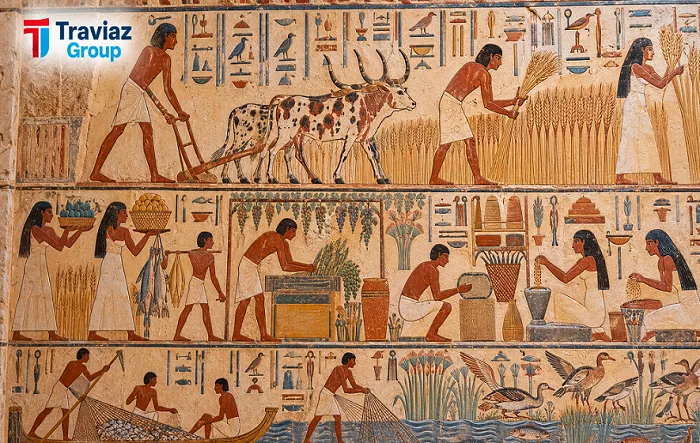
Most people in ancient Egypt were farmers who lived in mud-brick houses close to the Nile. The Nile was the source of everything: food, fertile soil, water, and transportation. The annual flood season left behind a layer of rich silt that made farming possible in the middle of the desert.
Ancient Egyptian society was hierarchical. At the top sat the pharaoh, who was both political ruler and religious figure. Below him were the priests and scribes, who held considerable influence because literacy was exclusive to them. Then came the craftsmen and merchants, and at the base were the farmers and laborers. Women in ancient Egypt enjoyed broader rights than was typical for civilizations of the same era, as they could own property, run businesses, and work as scribes, physicians, and priests.
Entertainment was part of daily life, with Egyptians swimming and rowing on the Nile, playing board games, making music, and dancing. Religion was present in every detail of life, from food and clothing to the names given to children and the way the dead were buried.
What Did the Ancient Egyptians Eat?
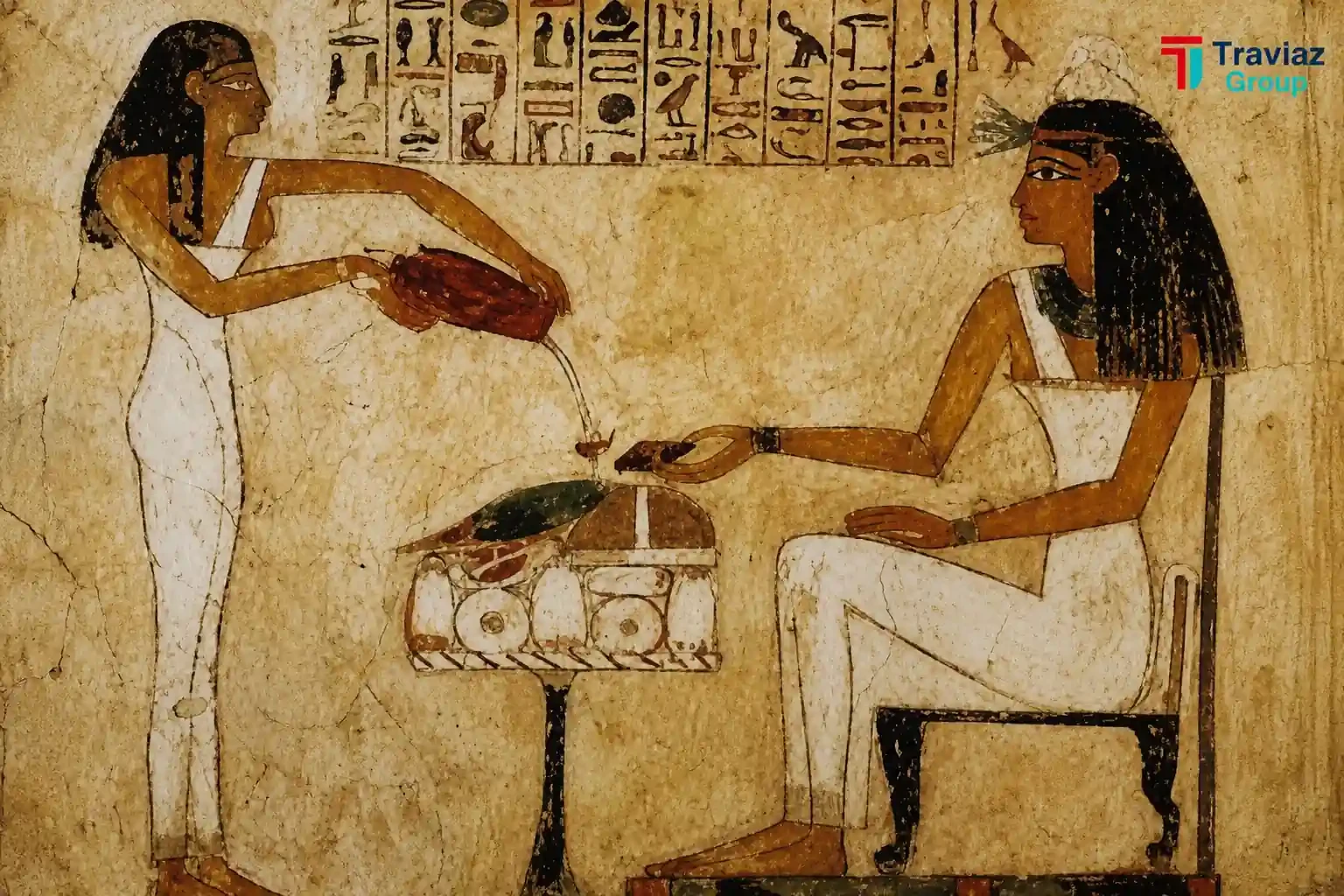
Bread and beer, a type of light ale brewed from barley, formed the staple diet of ordinary Egyptians. Alongside these, they ate dried and salted Nile fish, onions, garlic, lentils, dates, and figs, while meat appeared on the tables of the wealthy and at religious occasions only. Worth noting is that many of these foods are still present in the Egyptian kitchen today.
Temples of Ancient Egypt
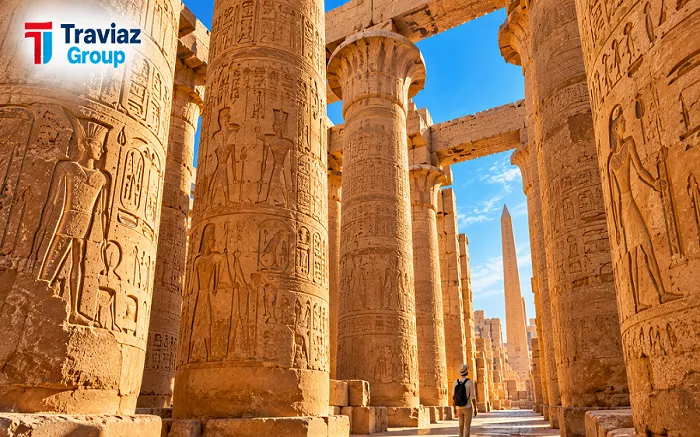
A temple in ancient Egypt was not a place of communal worship as we understand it today. It was the home of the god, where priests cared for the deity's statue daily with offerings of food, incense, and ritual. Ordinary Egyptians were not permitted to enter the inner sanctuary and performed their devotions in the outer courtyard only. The most significant temples still standing today:
Karnak
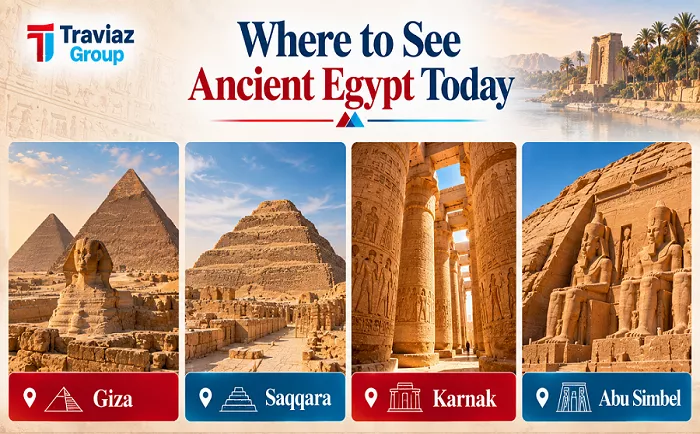
The largest temple complex in the ancient world, built over 1,300 years and covering 62 acres. Its Great Hypostyle Hall alone contains 134 massive columns, each carved from floor to ceiling with hieroglyphic inscriptions and painted reliefs.
Luxor Temple
Located in the heart of modern Luxor, it was dedicated to the renewal of royal power and is connected to Karnak by the Avenue of Sphinxes, a 2.7-kilometer processional road lined with sphinx statues.
Abu Simbel
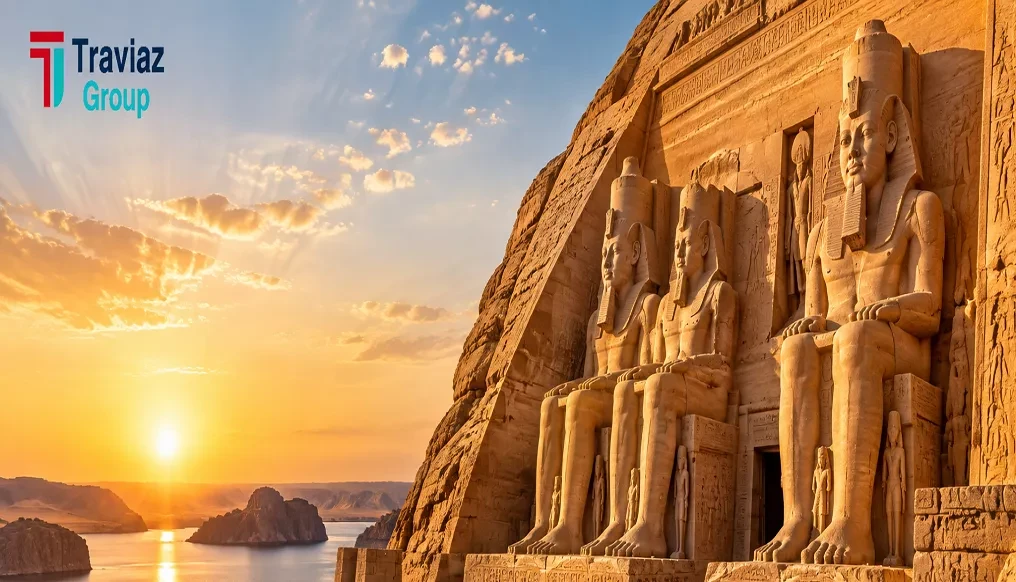
Carved directly into the rock face by Ramses II in the thirteenth century BC, its facade features four colossal statues each standing 20 meters tall. In the 1960s the entire temple was relocated to save it from the rising waters of Lake Nasser in a UNESCO-funded engineering operation.
Philae
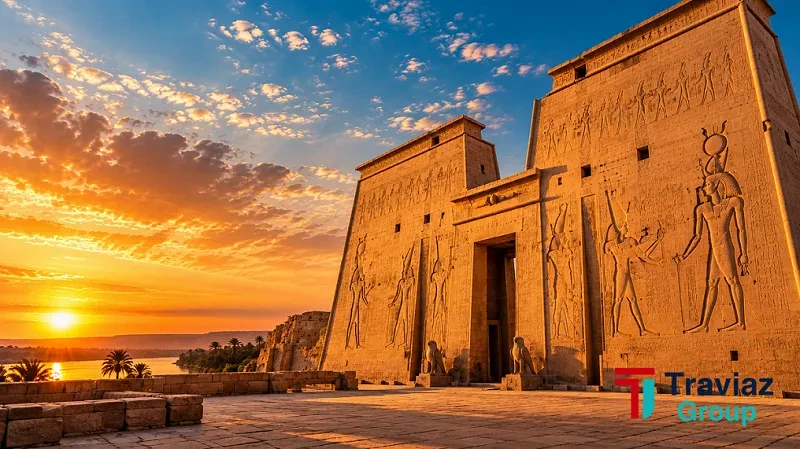
Dedicated to the goddess Isis and relocated to Agilkia Island to save it from the waters of the Aswan High Dam. Visitors reach it by boat from Aswan.
These are the sites that Traviaz's private Egyptologist-led tours cover in Luxor and Aswan, where certified guides read the inscriptions on the walls and explain the story behind every column and every relief.
Where to See Ancient Egypt Today?
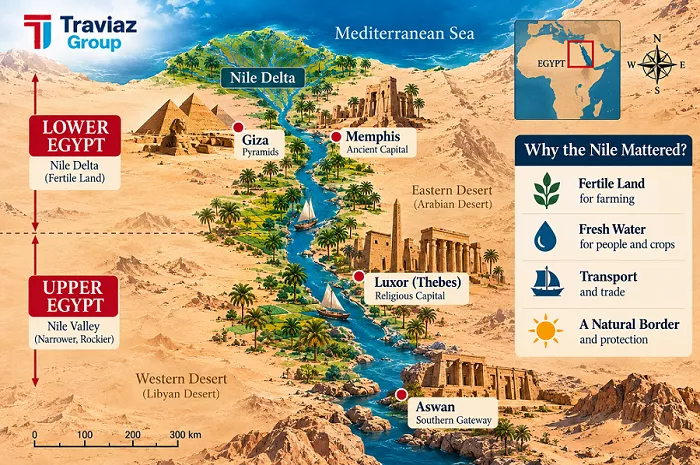
Ancient Egypt did not disappear, and its archaeological sites still stand, drawing millions of visitors every year. These are the most significant sites that represent the achievements of this civilization on the ground today:
The Pyramids of Giza and the Sphinx
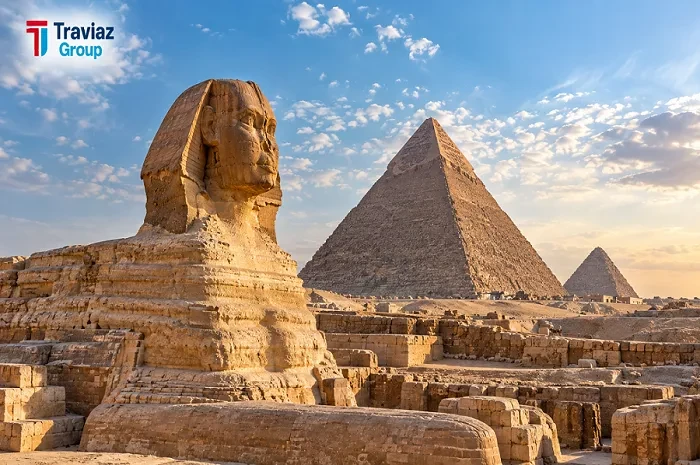
Located just a few kilometers from Cairo, the site holds three pyramids built by Khufu, Khafre, and Menkaure during the Old Kingdom. The Great Pyramid originally stood 146 meters tall and was covered in polished white limestone. Beside it stands the Sphinx, the stone statue combining the body of a lion with a human head.
Valley of the Kings
Located on the West Bank of Luxor, it holds 62 tombs of New Kingdom pharaohs. This is where Tutankhamun's intact tomb was discovered in 1922. A standard entrance ticket allows visits to three tombs, and the colors of the carvings inside many of them remain vivid because the tombs were sealed under sand for centuries.
Aswan
Aswan is a quieter city than Luxor, located further south on the Nile. The route from Luxor to Aswan by boat passes Kom Ombo and Edfu temples, two of the best-preserved temples in all of Egypt.
Mummification and the Afterlife
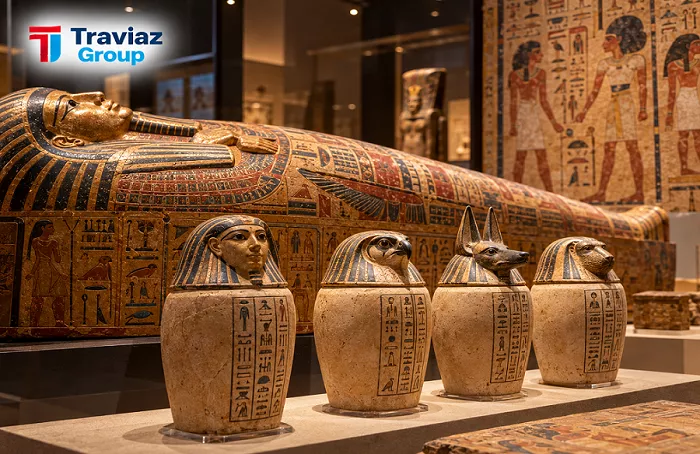
Ancient Egyptians believed death was not an end but the beginning of a journey, and that the body had to remain preserved so the soul could return to it. The mummification process took seventy days. It began with the removal of the internal organs and their preservation in four canopic jars, each protecting a specific organ. The body was then packed with natron to dry and preserve it, and wrapped in linen along with amulets and religious texts from the Book of the Dead.
In the Hall of Judgment in the afterlife, the heart of the deceased was weighed against the feather of Maat, goddess of justice, under the supervision of Anubis. If the heart was lighter than the feather, its owner entered paradise. If it was heavier, a beast called Ammit, combining the features of a crocodile, a lion, and a hippopotamus, devoured it.
What Ancient Egypt Left the World
Ancient Egyptian achievements go far beyond the pyramids. The Egyptians developed the first accurate solar calendar of 365 days, which influenced every calendar that came after it. They invented writing on papyrus, which transformed the nature of administration and record-keeping in the ancient world. They advanced ancient Egyptian technology in medicine to a level unmatched by any contemporary civilization. And they made contributions in mathematics, astronomy, and engineering that laid the foundations for the sciences of the Greeks and Romans. All of this makes ancient Egypt the true starting point for much of what we consider human civilization today.
Experience Ancient Egypt the Way It Was Meant to Be Seen
Ancient Egypt is not history confined to books. The pyramids, temples, and tombs covered in this guide have stood for thousands of years and can still be visited today. Experiencing them with a certified Egyptologist guide transforms what you have read into something you can see, touch, and understand in its original context. Traviaz's private tours cover all of these sites, from Giza to Abu Simbel, with guides who bring every inscription and every monument to life.
Browse Our Egypt Tours
FAQs
What is ancient Egypt known for?
A civilization that emerged along the banks of the Nile River in North Africa and lasted from 3150 BC to 30 BC, making it one of the longest-lived civilizations in human history.
How Long Did Ancient Egyptian Civilization Last?
Ancient Egyptian civilization lasted for more than 3,000 years, from the unification of Egypt under King Narmer around 3150 BC until the death of Cleopatra VII and Roman conquest in 30 BC.
Who is the most famous pharaoh of ancient Egypt?
Tutankhamun is the most famous in the modern world because of the discovery of his intact tomb in 1922, while Ramses II was the most celebrated in the ancient world because of his military and architectural achievements.
What are the most notable ancient Egypt inventions?
Hieroglyphic writing, papyrus, the 365-day solar calendar, surgery, mathematics, agricultural irrigation, and mummification are all ancient Egyptian inventions that influenced civilizations for centuries to come.
What is the difference between Upper and Lower Egypt?
Lower Egypt covers the Nile Delta in the north stretching to the Mediterranean, while Upper Egypt covers the Nile Valley to the south. The names relate to the direction of the Nile's flow, which runs from south to north.