
hieroglyphics: How Can You Uncover the Secrets of Egypt’s Ancient Script on Your Next Trip?
Three things alone are enough for you to decode hieroglyphics on your next trip: knowing the reading direction, understanding the meaning of colors on the walls, and knowing where to find the best preserved inscriptions in Egypt. This complete writing system was used by the ancient Egyptians from 3400 BC until 394 AD, and understanding it transforms your visit from looking at images to reading real history on the walls. This guide was prepared by Traviaz's team of certified archaeologists to give you everything you need on the ground.
Origins and True Meanings: Why It Was the "Writing of the Gods"
Hieroglyphics is the oldest writing system discovered in human history, and its earliest examples were found in Abydos in Upper Egypt dating back to 3400 BC.
Understanding its origin gives you a completely different perspective when you stand before temple walls and realize you are in front of a language upon which the Egyptians built an entire civilization.
The Literal Meaning
The word hieroglyphic is derived from the two Greek words "hieros" meaning sacred and "glyfo" meaning carving, and it literally means "sacred carving."
The ancient Egyptians called it "medu netjer" meaning "words of the gods," and in this name is enough to understand its deep spiritual standing in their society.
The Legend of Thoth
In ancient Egyptian belief, the god Thoth, god of wisdom, was the one who taught them writing and arithmetic, which made writing a sacred act practiced only by the chosen few.
For this reason, scribes included his name in their daily rituals before beginning any religious text over thousands of years.
Magical Properties
Writing the name of the deceased on the walls of their tomb guaranteed them immortality in the afterlife according to ancient Egyptian belief.
The loss of the name meant complete annihilation, and for this reason, the Egyptians made preserving the inscriptions an uncompromising religious duty over thousands of years.
Historical Evolution
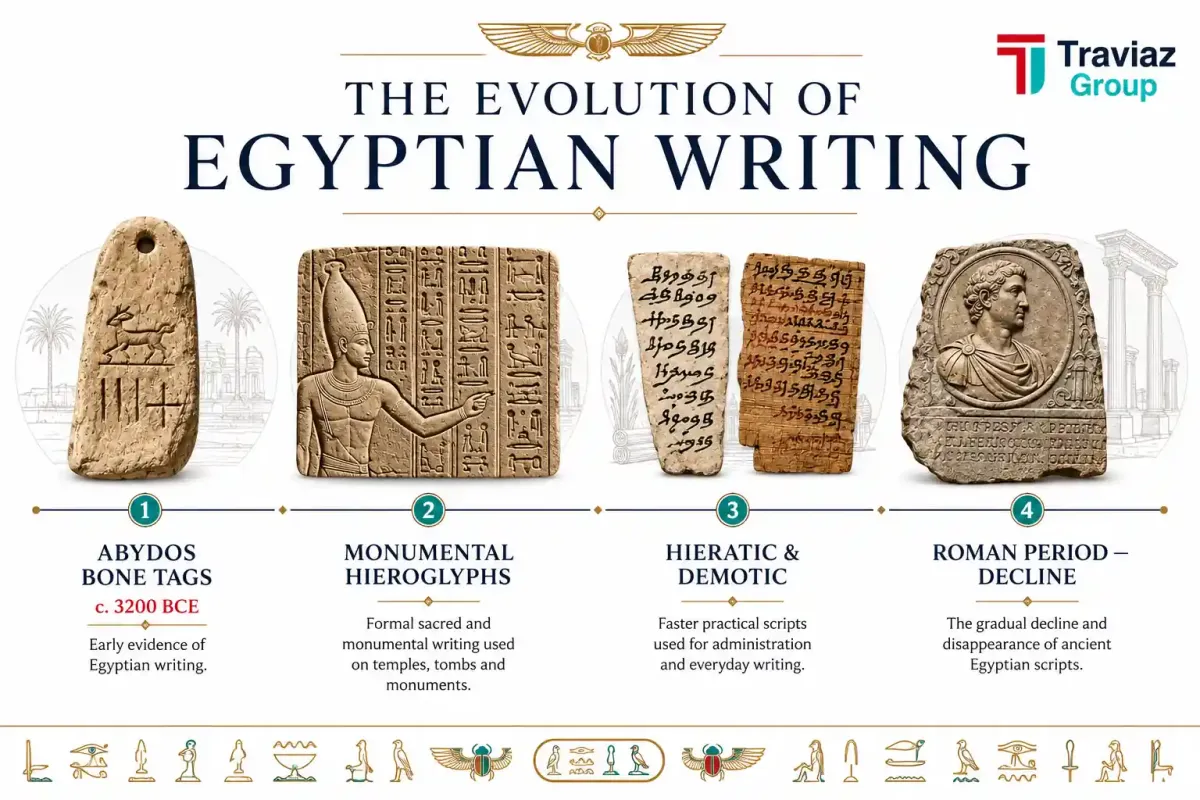
Hieroglyphics began around 3400 BC on small bone tags in Abydos carrying primitive symbols. During the Third Dynasty around 2650 BC, the rules of writing were completed and settled at 700 basic signs that remained fixed for more than two thousand years.
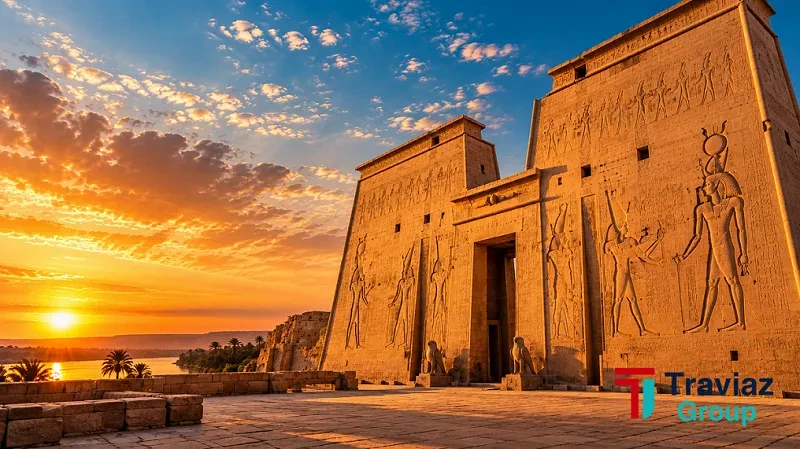
Today, you can see the last known hieroglyphic inscription recorded on the gate of the Temple of Philae in Aswan, dating back to 394 AD, and with the closure of the pagan temples knowledge of reading them was lost entirely.
Decoding the Script: A Beginner's Guide to Reading Symbols
The tools for reading hieroglyphics are distinguished by their simplicity and can be learned in minutes before your visit. The system combines three types of symbols that work together in a single text, and understanding this division makes every wall before you comprehensible even without prior archaeological experience.
Is There a Hieroglyphic Alphabet?
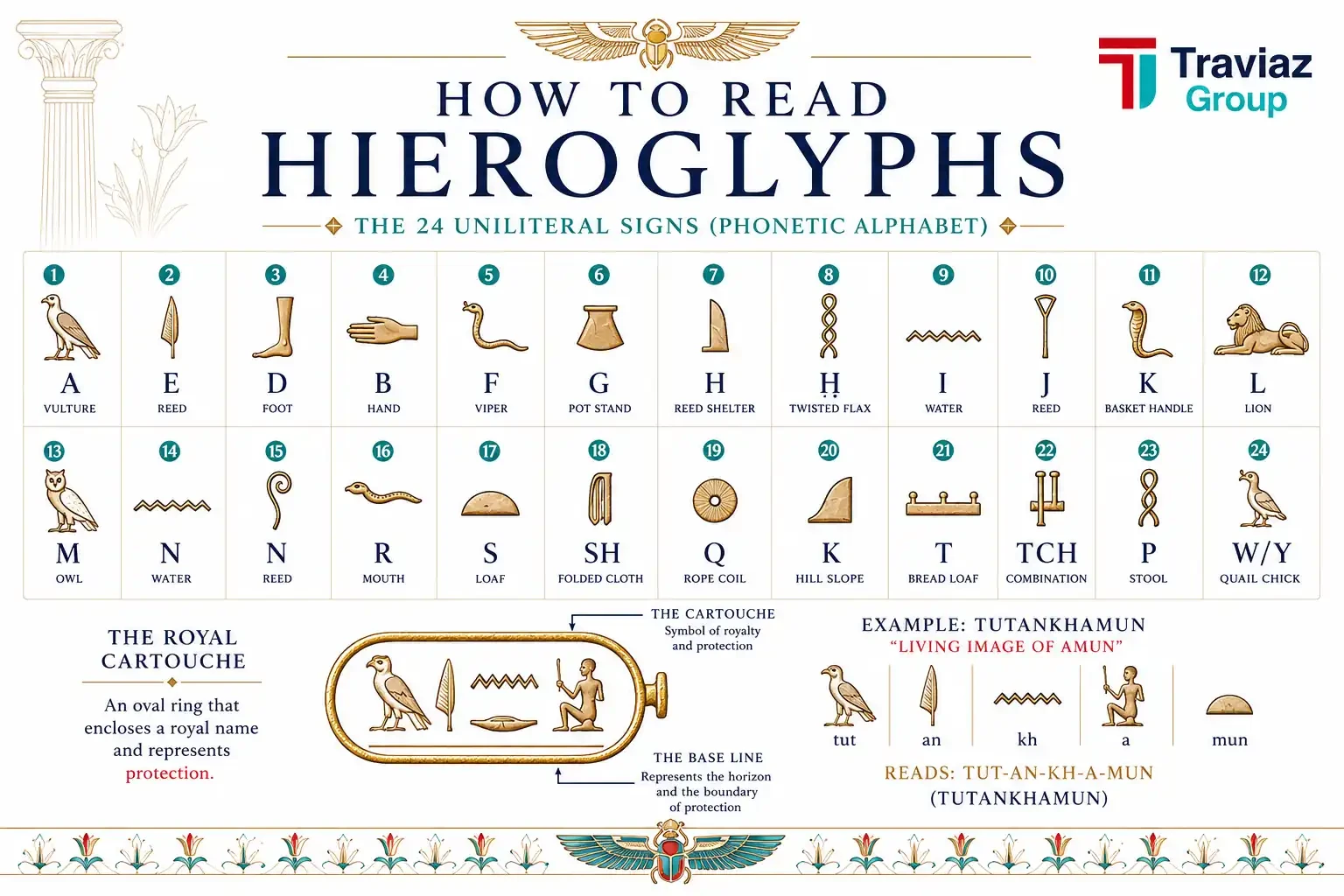
The hieroglyphics system includes twenty-four single-sound signs that form something resembling an alphabet and are the closest to the letters known today. Notably, the ancient Egyptians did not write vowels and left the reader to infer pronunciation from context.
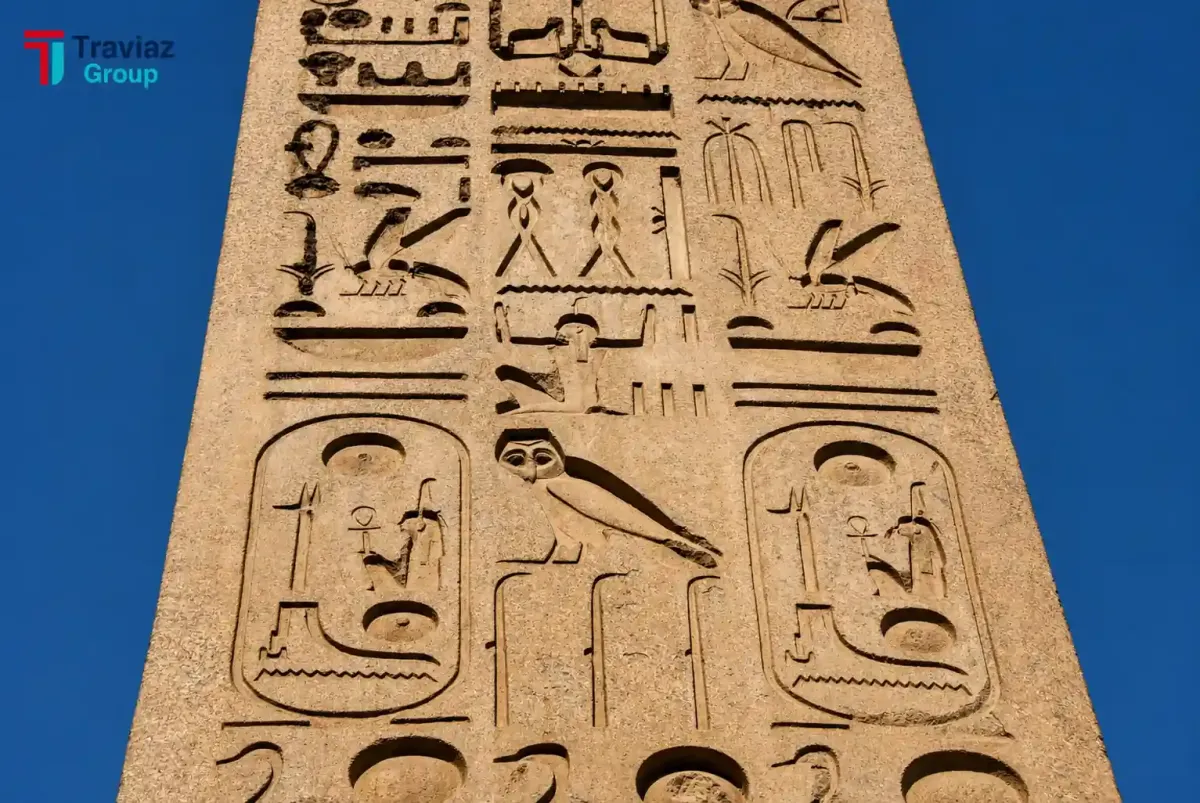
These 24 signs are the smartest starting point for any visitor who wants to recognize the names of pharaohs in cartouches.
The Golden Rule of Direction
You can determine the reading direction in any hieroglyphic text simply by looking at the faces of animals and humans in the inscriptions. When birds and faces look to the right, reading goes from right to left, and when they look to the left, the opposite applies. This rule alone is enough to determine the starting point in any text without needing to know the symbols themselves.
Letters vs. Words
Hieroglyphic symbols are divided into three functional groups that work together in a single text:
- Phonograms: Symbols representing sounds like letters, divided into single, double, and triple-sound types.
- Ideograms: Symbols representing the concept directly, such as the image of the sun meaning "sun" or "day" or the god Ra depending on context.
- Determinatives: Silent symbols added after the word to clarify its meaning, and include symbols for man, woman, king, and body parts.
Write Your Name in a Cartouche
The cartouche is an oval ring surrounded by a rope symbolizing protection from evil spirits, and it was used exclusively to write the names of pharaohs and gods.
When you see a cartouche on a temple wall, you are in front of a royal name whose letters you can decode using the 24-sign alphabet. This simple skill makes your tour of Karnak and the Valley of the Kings a genuinely interactive experience.
The Visual Masterpiece: How Hieroglyphs Met Art
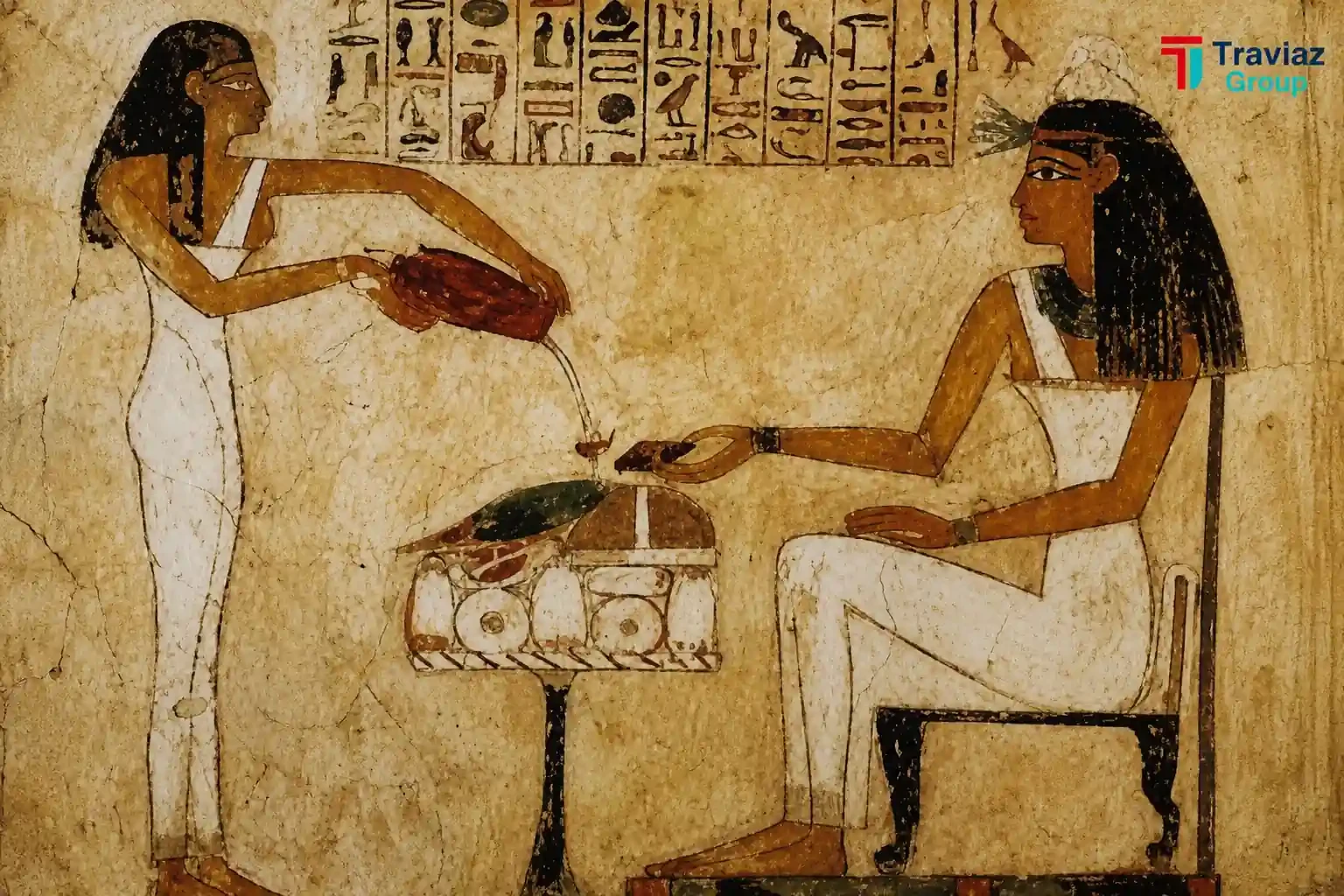
Hieroglyphics was art and writing at the same time on the walls of temples and tombs, and this unification of the aesthetic and the functional is what made these walls a visual experience like no other.
Understanding how the ancient artists made them lets you see what most visitors miss entirely.
The Scribe's Craft
The Houses of Life "per ankh" are the temple schools where Egyptian scribes trained from around the age of five, and the training took years of repeated copying of religious and legal texts under the supervision of experienced scribes.
Before beginning to inscribe any wall, the trainee would coat the surface with a plaster layer then draw a grid of red squares to maintain precise proportions, and the grid system divided the human body into 18 horizontal units from the hairline to the foot.
Carving Techniques
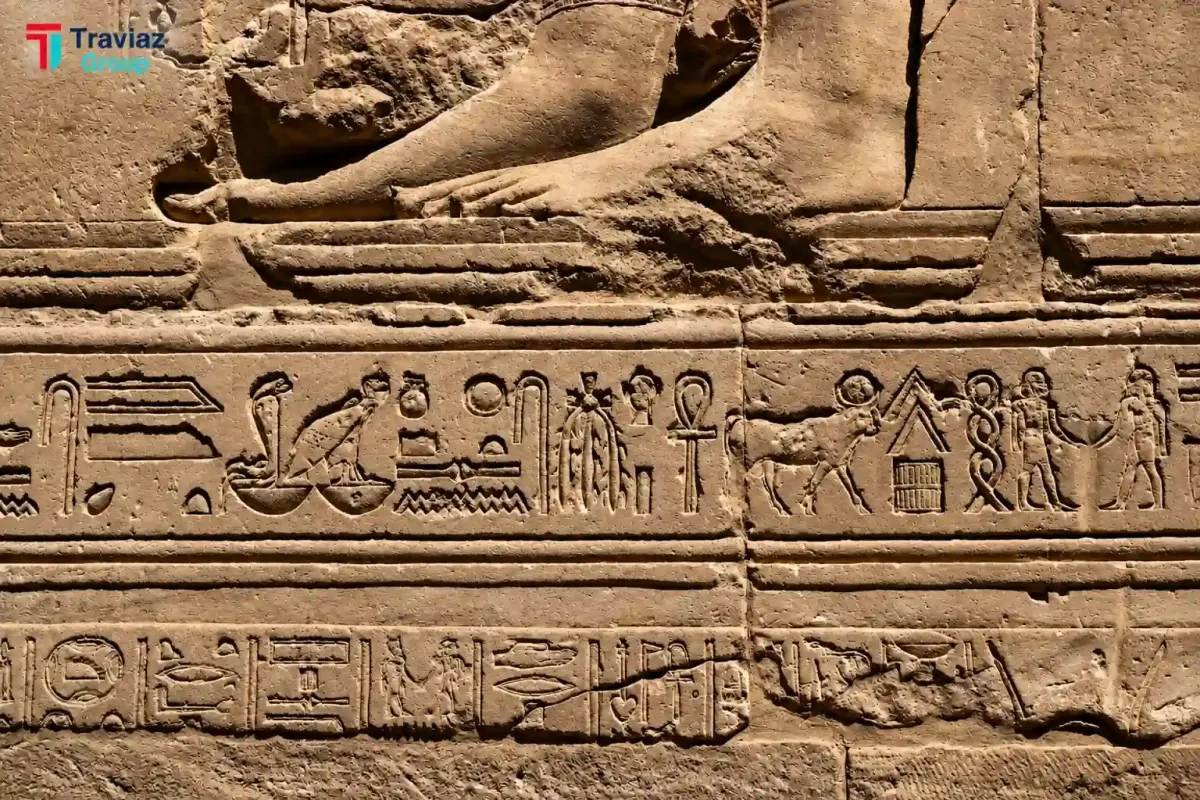
Egyptian sculptors used two main techniques that you can clearly distinguish at archaeological sites:
- Relief carving: The sculptor removes the rock from around the image leaving it projecting forward, and it is used in sun-lit temples because it highlights the shadows and gives the images a powerful presence.
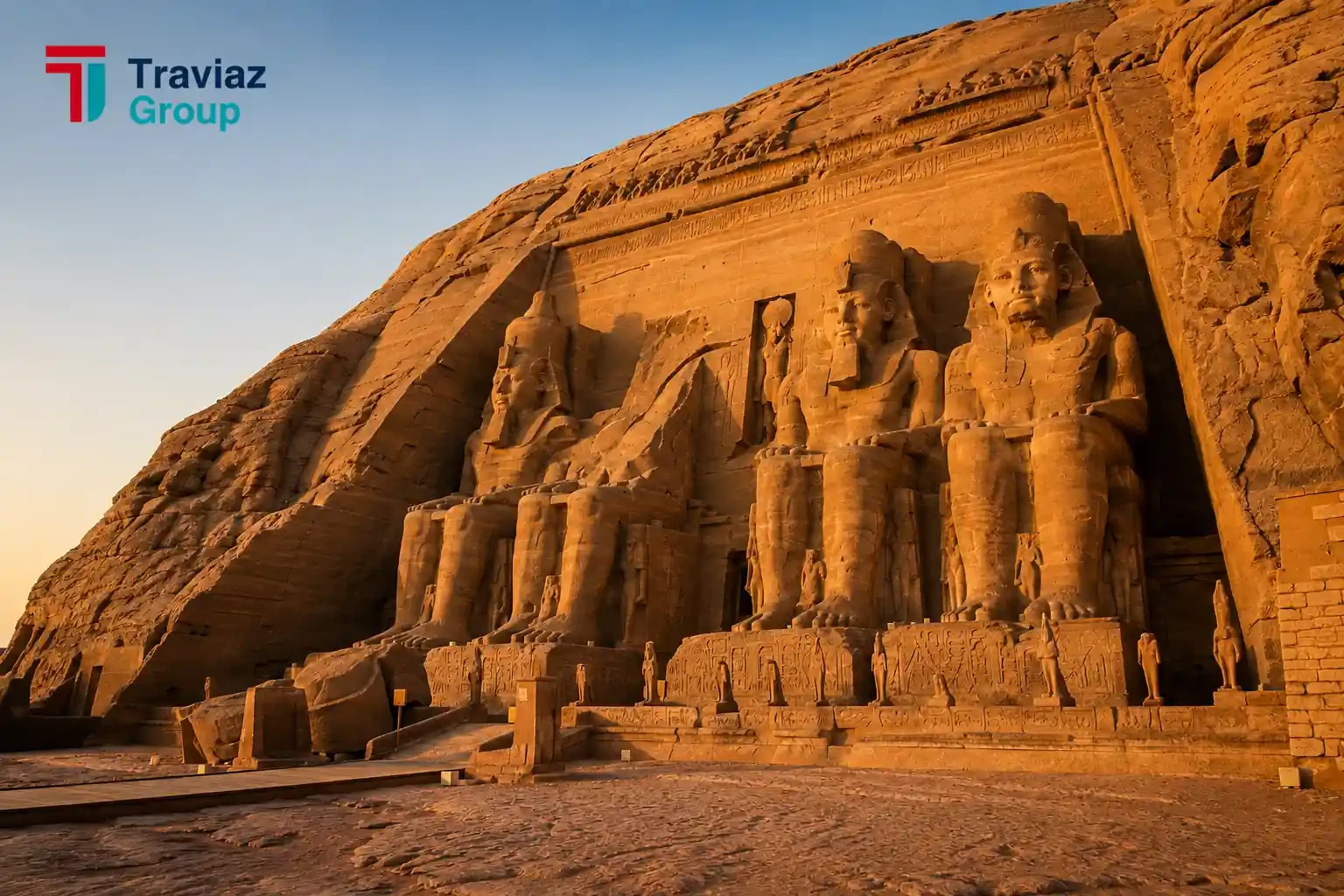
- Sunk relief: The sculptor carves the image into the surface leaving the background raised, and it is used in exposed places like Abu Simbel because the falling sunlight highlights the details of the carved image exceptionally.
The Language of Color
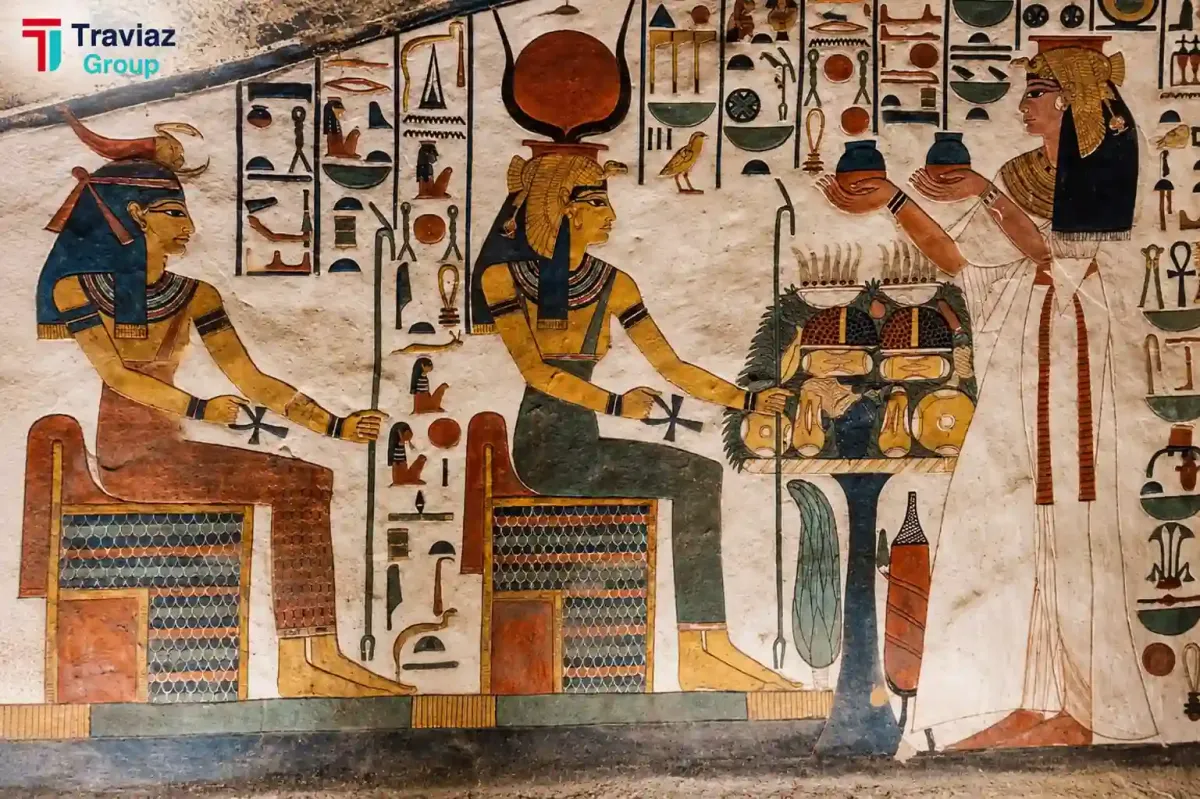
Colors in hieroglyphics were a precise spiritual communication system that the educated Egyptian read before reading the text itself. The most prominent colors and their meanings are:
- Blue: Symbolizes divine closeness and the sky, and the god Amun was depicted with blue skin to express the infinity of the universe.
- Green: Symbolizes fertility, resurrection, and eternal life, and the god Osiris was depicted with green skin to express his role in rebirth.
- Red: Symbolizes power, vitality, and danger simultaneously, and the god Set was depicted in red to distinguish him as the god of chaos.
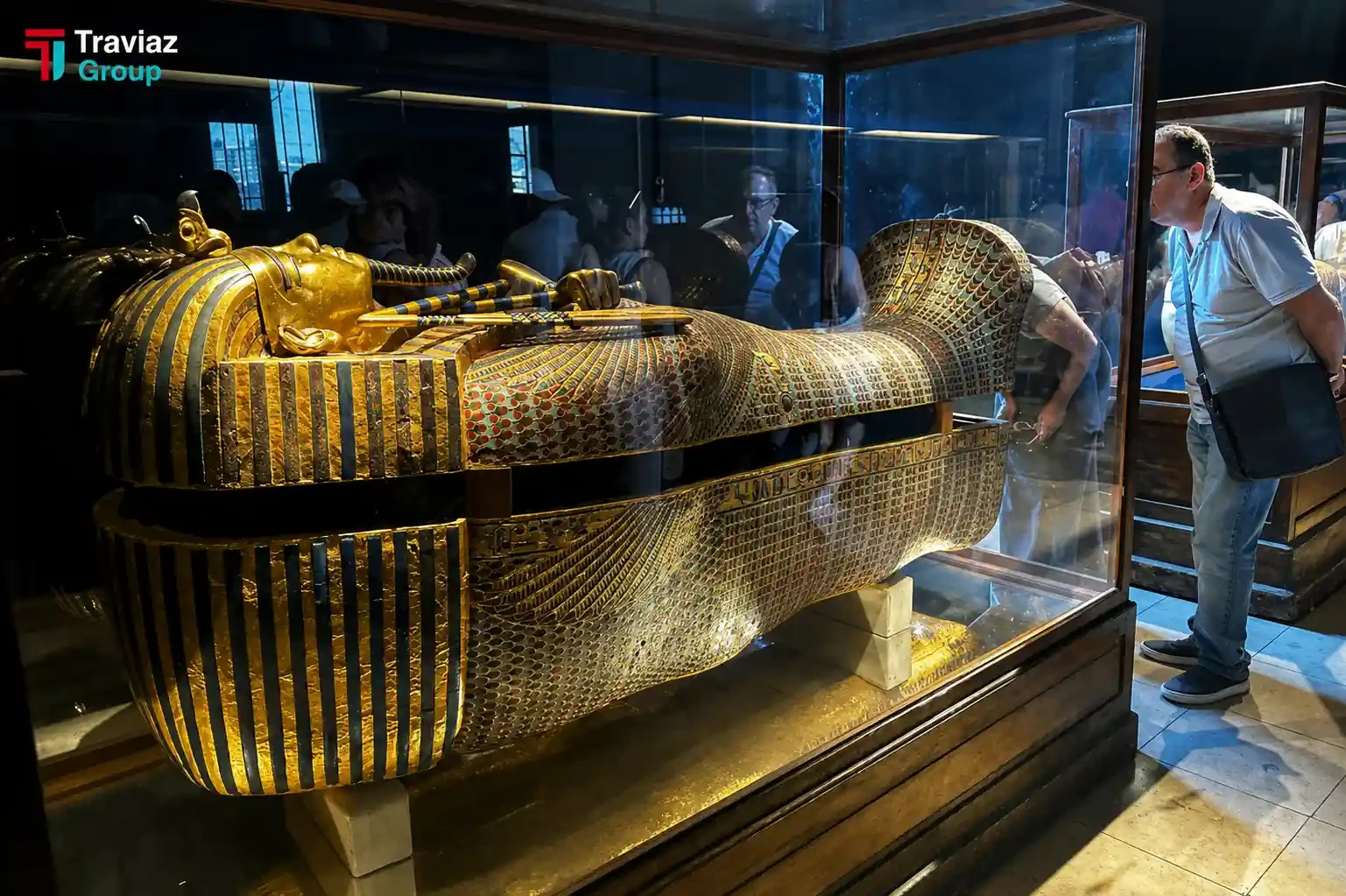
- Gold and Yellow: Symbolize the skin of the gods and their immortality, and for this reason, the masks of the pharaohs were covered in gold to affirm their divinity after death.
Natural mineral pigments such as malachite for green, azurite for blue, and red ochre are what preserved the colors of Nefertari's tomb vivid after more than 3,300 years.
Where to See the Best Preserved Hieroglyphics in Egypt
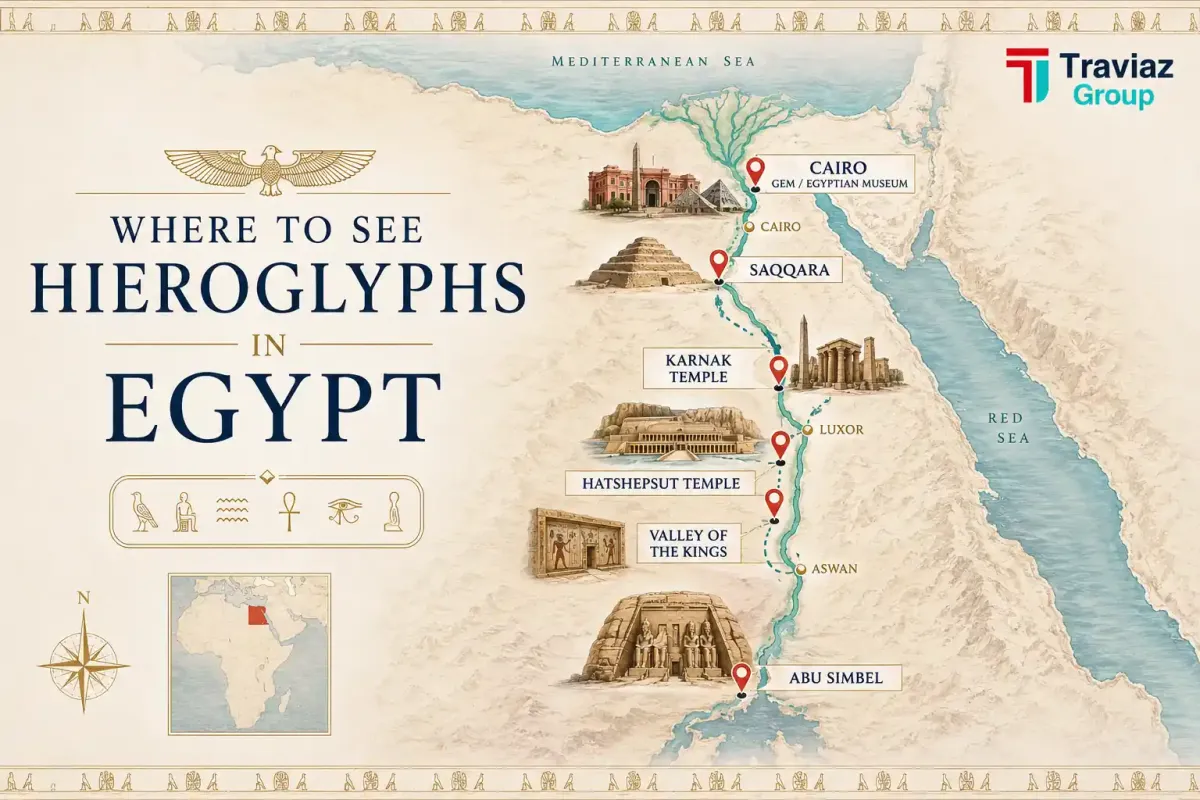
Knowing the right places multiplies the value of your trip many times over, as hieroglyphics sites in Egypt vary greatly in terms of preservation quality, detail, and visual impact. These are the sites that Traviaz's archaeologists recommend on the ground.
The Great Pyramid Misconception
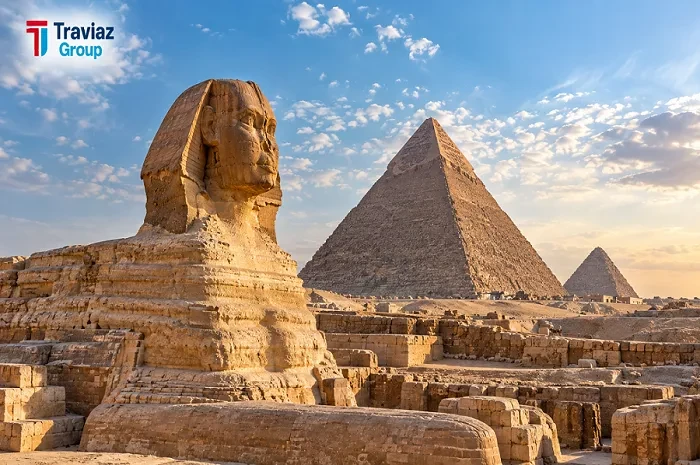
Inside the Great Pyramid of Khufu there are no hieroglyphics at all, as its contents are limited to stone passageways and the empty King's Chamber without any inscriptions or drawings.
Those who want to see actual hieroglyphics head to Saqqara, where the pyramids of the Fifth and Sixth Dynasties hold the "Pyramid Texts," the oldest religious texts ever written, dating back to 2400 BC.
The Valley of the Kings
The Valley of the Kings contains some of the finest and most beautiful hieroglyphics inscriptions in the entire world. The tomb of Ramses VI KV9 is distinguished by its stunning astronomical ceiling covered with complete texts from the Book of the Dead in exceptionally preserved colors, while the tomb of Seti I KV17 is considered the most beautiful and detailed, with delicate inscriptions that resemble painting more than carving.
Monumental Temples
The most prominent temples holding exceptionally preserved and beautiful hieroglyphics are:
- Karnak: Its 134 towering columns in the Great Hypostyle Hall are carved from base to top with deep inscriptions that cast exceptional shadows in the early morning light.
- Hatshepsut's Temple: It holds what resembles a pictorial "travel record" of the trade expedition to the Land of Punt, with unprecedented details of plants, animals, and goods in Egyptian art.
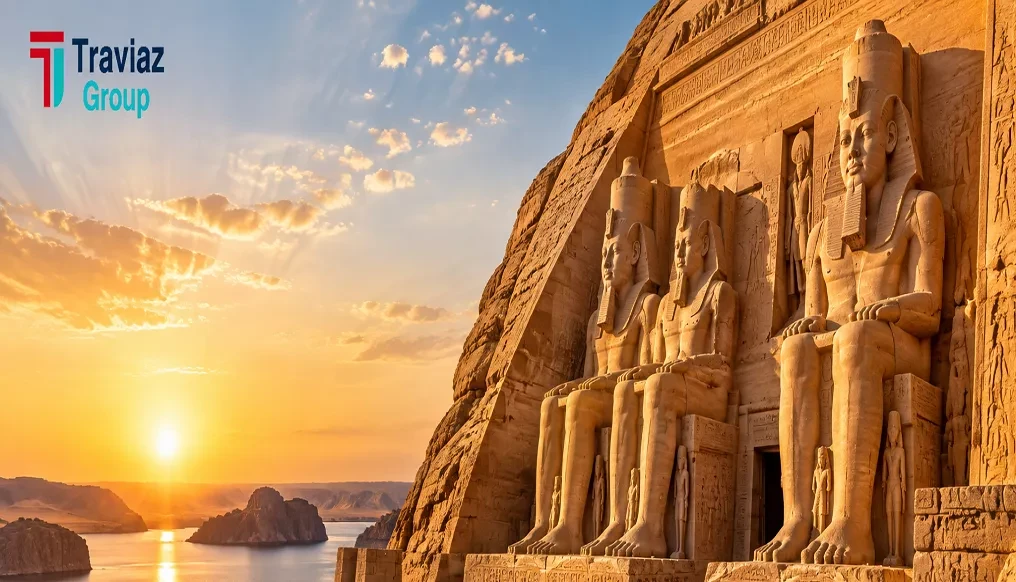
- Abu Simbel: The massive sunk relief inscriptions of Ramses II show the maximum potential of sunk relief carving, and on February 22 and October 22 the sun's rays penetrate the temple to illuminate the statues of the gods in a stunning astronomical phenomenon.
Cairo's Museum Treasures
The Grand Egyptian Museum GEM holds an exceptional collection of inscribed pieces that document the evolution of hieroglyphics across successive dynasties.
The Egyptian Museum in Tahrir Square holds inscribed stone tablets dating to different eras that can be compared to see how the script and style evolved over the centuries.
Practical Tips for Modern Travelers
Visiting hieroglyphics sites in Egypt requires prior knowledge of some logistical details that save you from surprises that spoil the experience. These tips are passed on by Traviaz's archaeologists to every visitor before the tour.
Using Hieroglyphic Translators
Apps like Google Lens and the Hieroglyphics Initiative allow scanning symbols with your phone camera to get an instant interpretation of large, clear symbols.
The full context of the scene is determined by the certified archaeological guide with a precision no app can replace, because a single symbol may carry completely different meanings depending on its position in the scene.
Photography Rules & Passes
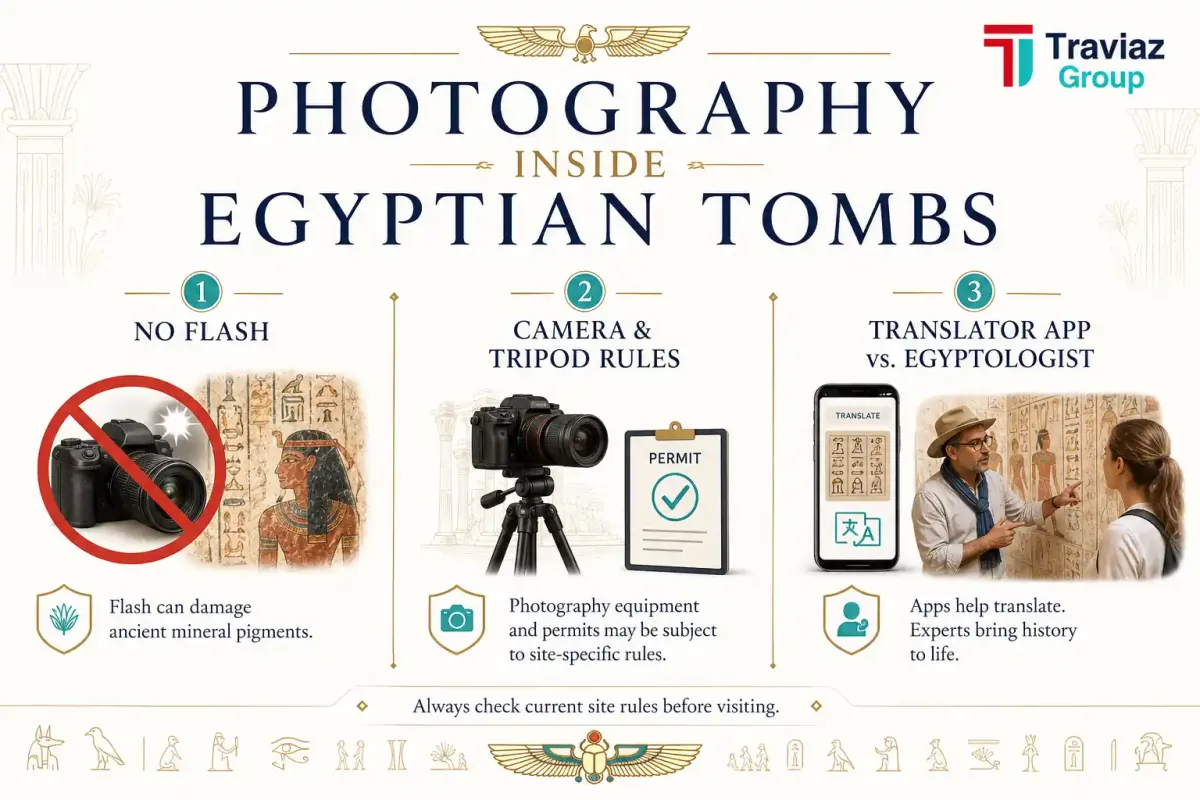
Photography rules in 2026 vary by site and require prior knowledge:
- Inside the Great Pyramid: Photography is officially prohibited and guards enforce the ban strictly.
- Valley of the Kings: A photography permit at 300 Egyptian pounds allows photography without flash in most tombs.
- Open temples like Karnak, Luxor, and Philae: Photography is included in the entry ticket without additional fees.
- The Grand Egyptian Museum GEM: Photography is permitted in the main halls without flash.
- Flash: Prohibited in all tombs and museums to protect the ancient mineral pigments from deterioration.
Inside the tombs, raise the ISO to 1600 or 3200 with a lens aperture of f/1.8 or f/2.8 to get a clear image in dim lighting. The best time for photography in open temples is between six and nine in the morning, when sunlight penetrates the columns and highlights the relief inscriptions with dramatic shadows.
The Traviaz Edge
The difference between an independent visit and a tour with Traviaz is the difference between seeing walls and reading history.
The certified archaeological guide explains to you why the king was drawn larger than the gods in a particular scene, tells you which chapters of the Book of the Dead you are looking at, and knows which tombs are open that same day and which are the least crowded. Contact Traviaz through the official website to book your customized itinerary.
The Recovery of the Lost Script: The Rosetta Stone
For more than 1,400 years after knowledge of reading hieroglyphics was lost in the fourth century AD, this language remained a secret hidden from the entire world. The story of its recovery is one of the most exciting scientific discovery stories in modern history.
The Trilingual Key
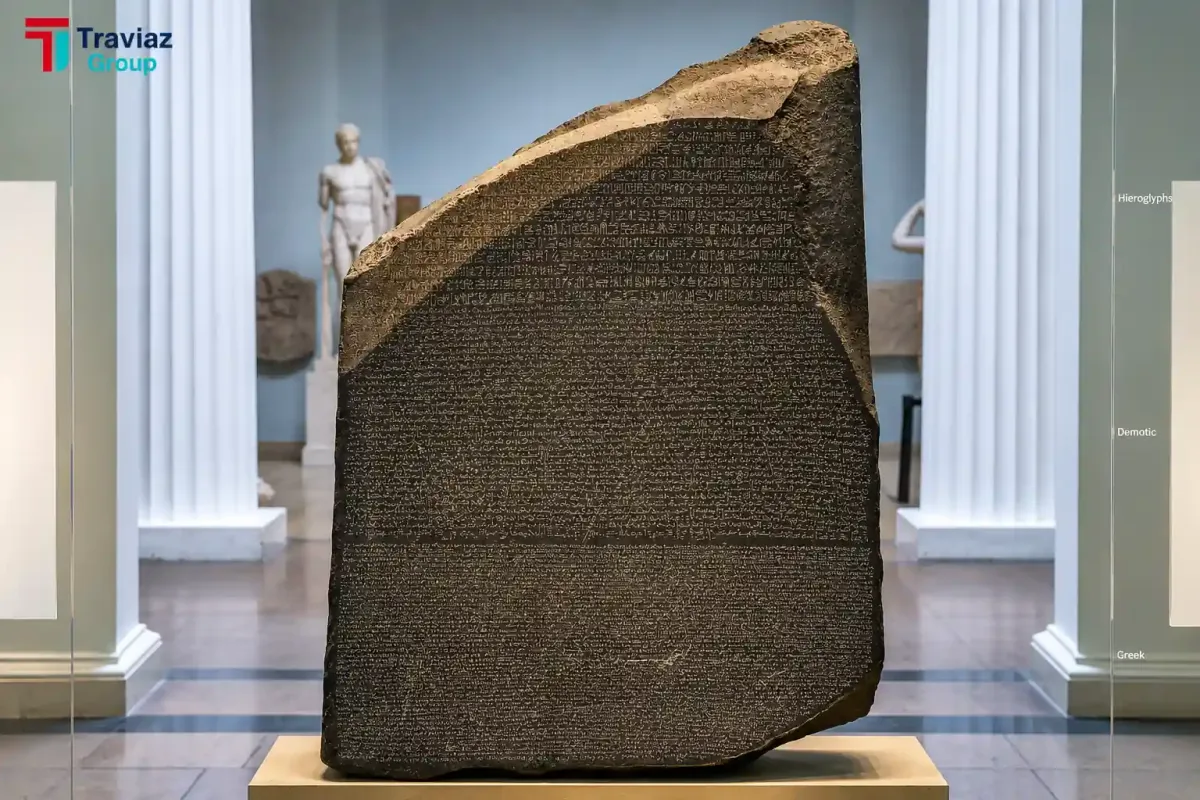
Soldiers of the French expedition discovered the Rosetta Stone in 1799 near the city of Rosetta in the Egyptian Delta. The black basalt stone carries a decree issued in 196 BC by the priests to honor the Ptolemaic King V, written in three scripts: hieroglyphic, Demotic, and Greek.
The presence of the understood Greek text alongside the unknown hieroglyphic text gave scholars for the first time a real key for comparison.
The Race to Decipher
The English scholar Thomas Young made initial progress when he correctly identified five of the hieroglyphic symbols in 1814.
The Frenchman Jean-François Champollion was at the age of sixteen fluent in six ancient Eastern languages in addition to Greek and Latin, and this exceptional linguistic background is what qualified him to achieve what others could not.
1822 Breakthrough
In 1822, Champollion announced his historic discovery that hieroglyphics are phonetic symbols representing the sounds of a real language. This discovery restored the pharaohs' voices after a silence of 1,400 years and opened the door of Egyptology wide. The stone is currently preserved in the British Museum in London, while the Grand Egyptian Museum GEM displays an exact replica of it.
FAQs
Can Anyone Learn to Read Hieroglyphics?
Recognizing royal names inside cartouches is possible for any visitor after learning the basic 24-sign alphabet. Full reading of complex religious texts requires years of specialized academic study, and this is what makes the presence of a certified archaeological guide a genuine necessity in deep archaeological tours.
Why Did People Stop Using Hieroglyphics?
Emperor Theodosius ordered in 391 AD the closure of all pagan temples in the Roman Empire, and the chain of transmission of hieroglyphic knowledge from priests to their students was severed. Coptic writing built on the Greek alphabet gradually replaced it, and the last known hieroglyphic inscription was recorded in 394 AD on the gate of the Temple of Philae.
What is the Oldest Known Hieroglyphic Inscription?
The oldest discovered examples of hieroglyphics are small bone tags found in Abydos dating back to around 3400 BC during the reign of King Scorpion. In 2017, a team from Yale University discovered at the El-Kab site large rock inscriptions dating back to 3250 BC, among the largest early hieroglyphics discovered, with a single sign measuring more than half a meter in height.
How Long Did It Take to Train an Ancient Scribe?
Training in the Houses of Life began from around the age of five and continued for years of repeated copying and strict instruction. The outstanding among them received additional training in administration, land surveying, and medicine, and the title of "scribe" was added to its holder's name as a high social honor in ancient Egyptian society