
Ancient Egyptian Pharaohs: Uncover the Legendary Rulers & How to Visit Their Monuments Today
Behind every golden mask and every tomb carved into rock you find a ruler who believed he embodied the will of the gods on earth. Ancient Egyptian pharaohs built a civilization that stretched for more than 3,000 years and left their pyramids and tombs as testimony to a power unmatched in human history. In this guide prepared by Traviaz's team of certified archaeologists, you will get to know the most prominent of these rulers and find everything you need to visit their sites today with confidence and without any logistical complications.
Who Were the Egyptian Pharaohs?
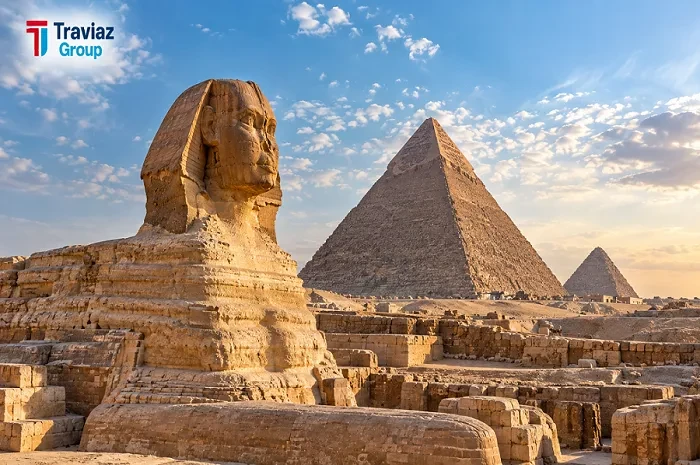
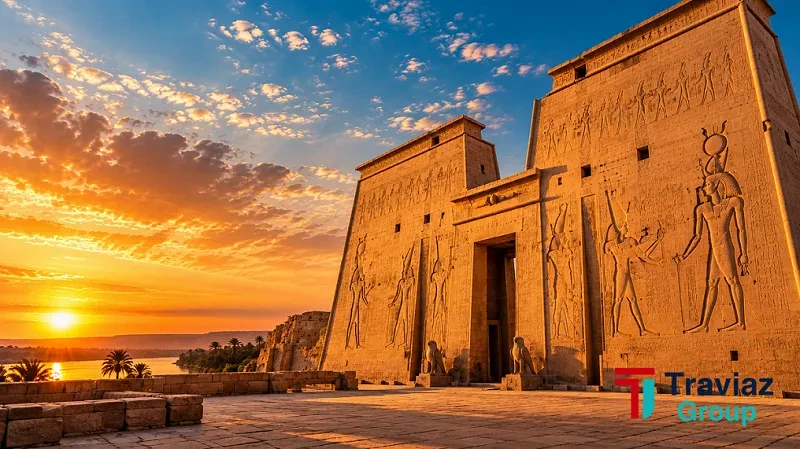
More than 170 pharaohs ruled Egypt across 30 successive dynasties, and each one left a different mark on history, architecture, and religion. Understanding these rulers gives you a deeper experience when you stand before their temples and tombs in Luxor, Giza, and Abu Simbel.
What is the Difference Between a King and a Pharaoh?
The word "pharaoh" is derived from the ancient Egyptian term "per-aa" meaning "the great house," referring originally to the royal palace and not to the ruler himself. The title was used to refer to the king specifically during the New Kingdom around 1200 BC, then spread through the Hebrew Bible to describe all ancient Egyptian kings retroactively.
What Was the Role of a Pharaoh in Ancient Society?
The pharaoh was not merely a political ruler but the high priest and the sole intermediary between the gods and humans. His role was to ensure "Ma'at," meaning balance, justice, and cosmic order, and without him Egypt would live in chaos according to ancient Egyptian belief.
Did Pharaohs Believe They Were Gods?
The pharaoh was considered a living embodiment of the god Horus, son of Osiris, and upon his death he transformed to become Osiris himself in the afterlife. This religious belief is what gave his authority a sacred character that accepted no challenge, and drove the Egyptians to build the most massive architectural structures in history to receive his body.
Are There Any Descendants of Pharaohs Alive Today?
Contemporary Egyptian inhabitants certainly carry genes from the ancient pharaonic civilization given the continuous habitation of the Nile Valley for thousands of years. Tracing a direct lineage to a specific pharaonic dynasty is scientifically impossible, however, because of thousands of years of intermarriage and successive conquests.
The Great Dynasties & Famous Pharaohs You Should Know
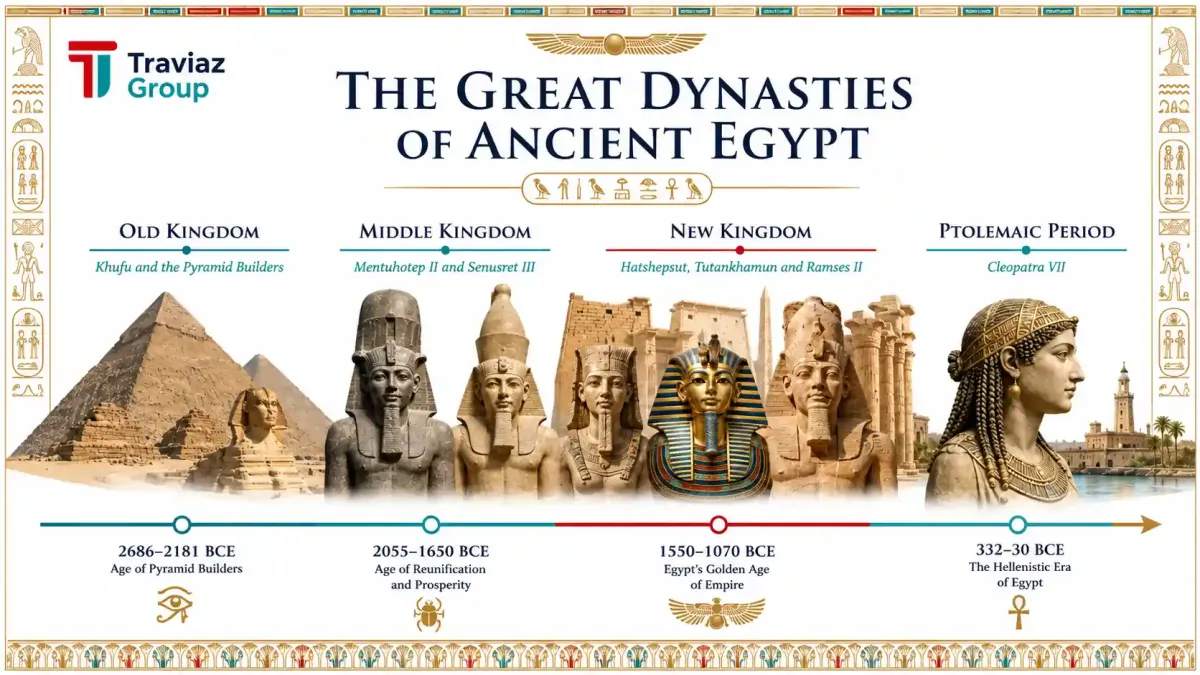
The pharaonic civilization extended across three major eras: the Old, Middle, and New Kingdoms, and each era produced rulers who changed the course of history in completely different ways. Getting to know the most prominent of these rulers transforms visiting their sites from a tourist experience into a genuine intellectual journey.
The Old Kingdom & the Pyramid Builders
The Old Kingdom produced three pharaohs who changed the history of human architecture forever, and their monuments still stand in Giza and Saqqara to this day:
- Narmer: The first pharaoh to unite Upper and Lower Egypt around 2900 BC and drew the borders of the unified state for the first time in history.
- Djoser: Built the Step Pyramid in Saqqara in 2650 BC, the first massive stone structure in all of human history.
- Khufu: The owner of the Great Pyramid of Giza, which reached a height of 146 meters and remained the tallest man-made structure in the world for more than 3,800 consecutive years.
Hatshepsut: The Female Pharaoh
The second female pharaoh in history ruled from 1479 to 1458 BC and adopted the masculine appearance of the false beard and shaved head to reinforce her authority before the men of the state.
She established massive trade networks with the Land of Punt and built the Deir el-Bahari temple in Luxor with its stunning symmetrical design that predates the Roman Parthenon by centuries.
Her successors sought to erase her name from historical records but archaeologists discovered her identity in the nineteenth century and restored her true standing.
Akhenaten: The Heretic King
Akhenaten declared a complete religious revolution by proclaiming Aten, the sun god, the sole deity and abolishing all other gods in a move no one before him had taken in Egypt's history. He moved the capital from Thebes to Amarna and established a completely new city dedicated to worship, but the power of the old priesthood, military defeats, and plague shook his reign. His successors rushed to demolish his city and erase his name from all inscriptions upon his death, and he remained unknown for three thousand years until the Amarna clay tablets were discovered in 1887.
Tutankhamun: The Boy King
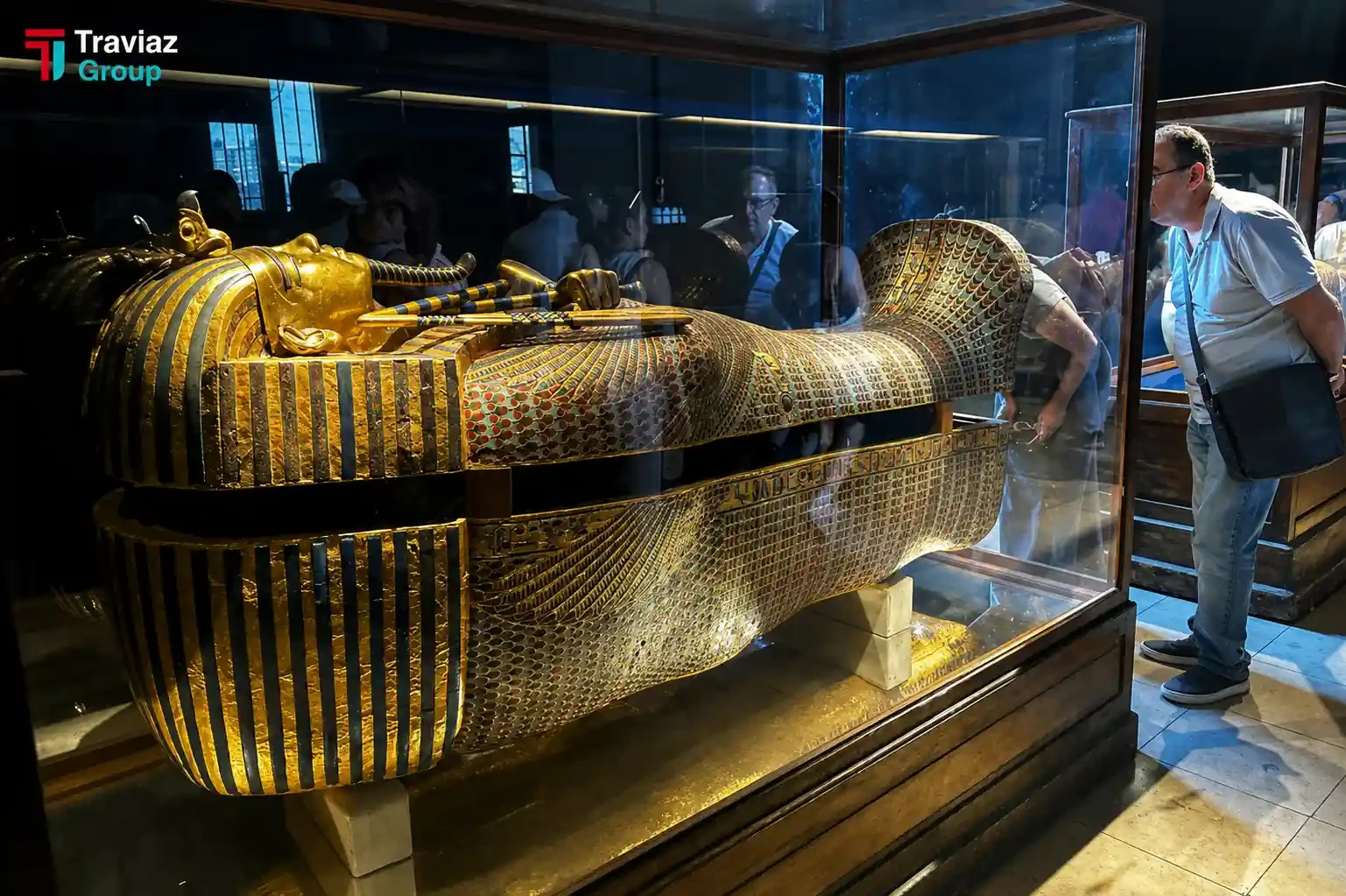
Tutankhamun ascended to the throne at nine years old after the death of his father Akhenaten, and under the supervision of senior advisors he restored the traditional religion and changed his name from Tutankhaten. He ruled for only ten years and died at nineteen under circumstances that still puzzle archaeologists to this day. Howard Carter discovered his tomb intact in 1922 with its five thousand pieces of golden treasures, making him the most famous pharaoh in history despite the modest scale of his reign.
Ramses II: The Great Ancestor
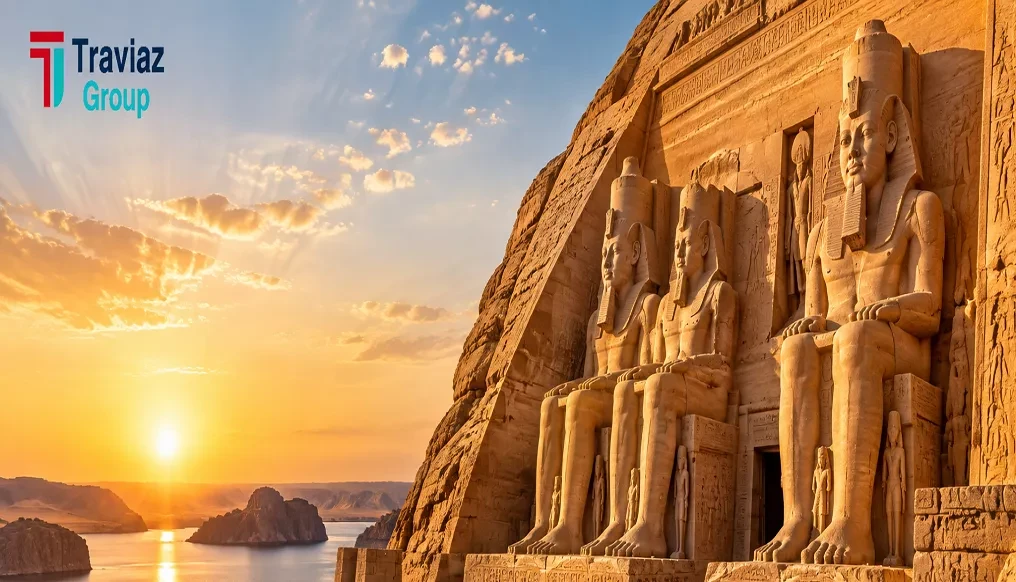
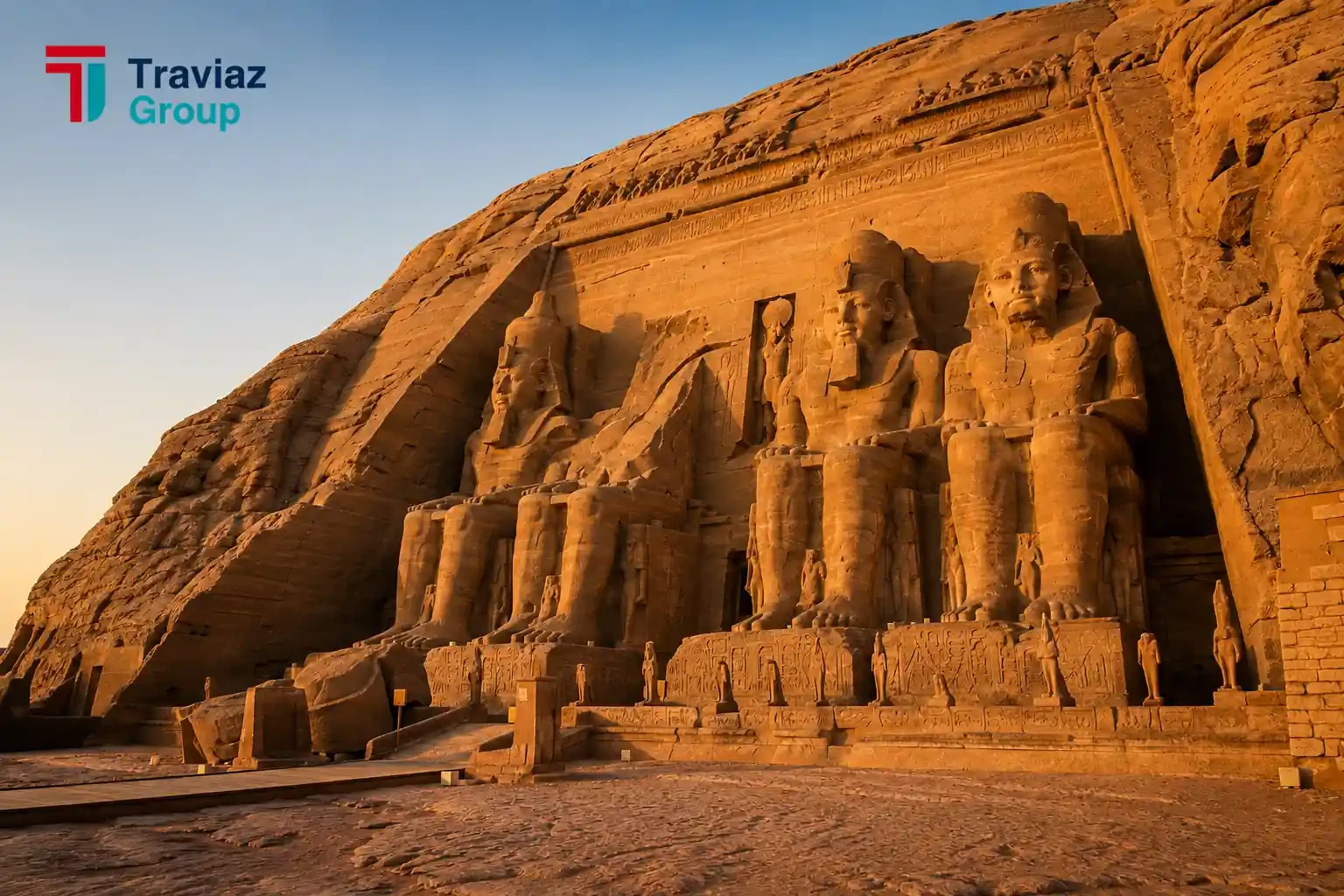
Ramses II ruled for 67 years from 1279 to 1213 BC and fathered more than 100 sons and fought the Battle of Kadesh against the Hittites in 1274 BC in one of the earliest documented peace treaties in history. He covered Egypt from the Delta to Nubia with his statues and temples, and Abu Simbel temple with its four towering statues is his most prominent surviving legacy. He died at 90 and the opening of his sarcophagus revealed worn teeth and a large nose that sculptors chose to ignore in all his statues.
Cleopatra VII: The Last Pharaoh
Cleopatra VII, of Macedonian Greek descent, was the first of the Ptolemaic rulers to speak the Egyptian language alongside six other languages. She formed strategic alliances with Julius Caesar and then Mark Antony in defense of Egypt's sovereignty against Roman expansion. The pharaonic era ended with her suicide on the twelfth of August 30 BC following Antony's defeat at the hands of Octavian.
Royal Life, Unsolved Mysteries & The Curse of the Pharaohs
Royal pharaonic life was a mixture of religious rituals, material splendor, and secrets that have not been resolved to this day. These human aspects of the pharaohs' lives give visiting their sites an additional depth that goes beyond merely looking at ancient stones.
What Did Egyptian Pharaohs Look Like and Wear?
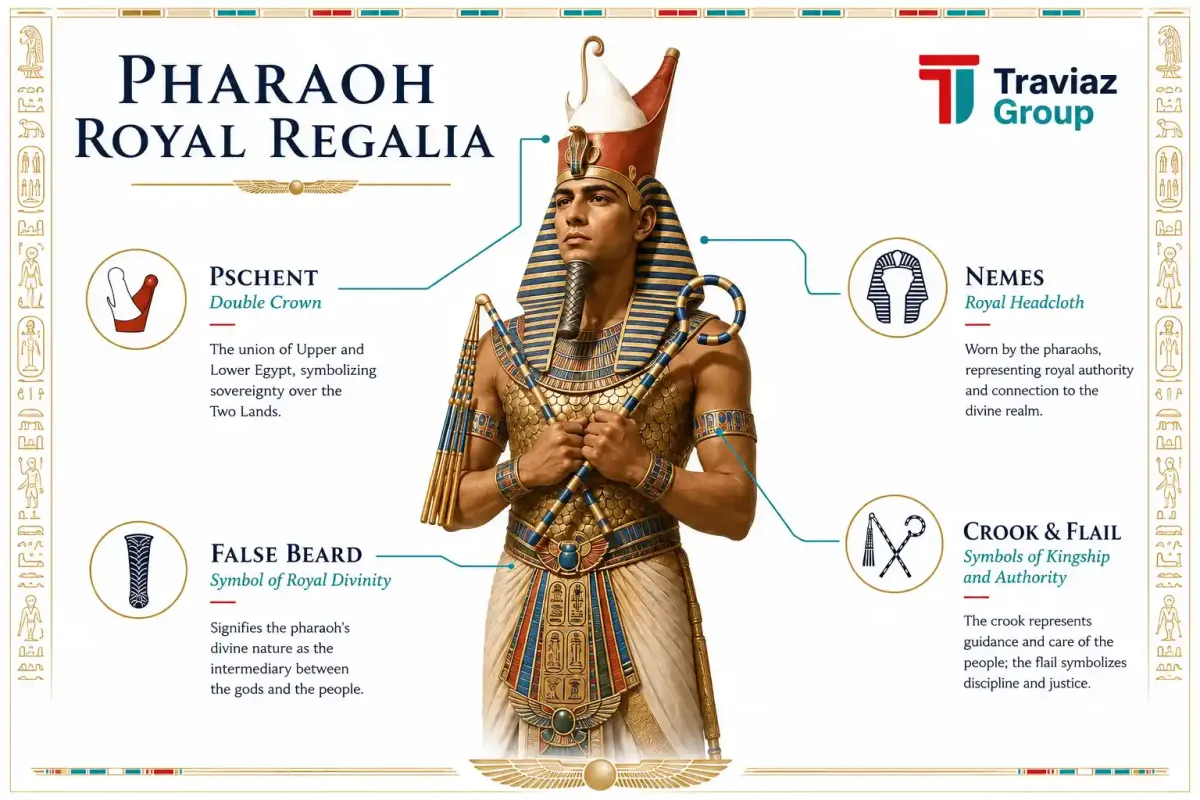
The golden masks covering the mummy's face were not for decoration but to preserve the pharaoh's features so the gods could recognize him in the afterlife. Three visual symbols distinguished the pharaoh's official appearance in all inscriptions and statues:
- The double Pschent crown: White and red, a symbol of the unification of Upper and Lower Egypt, worn by the pharaoh on official occasions.
- The false beard: A symbol of divinity worn even by Hatshepsut despite her femininity to reinforce her royal standing.
- The crook and flail: The two symbols of royal authority present in the pharaoh's hands in all coronation scenes and official rituals.
Royal Lifestyle: What Did They Eat, and Did They Have Pets?
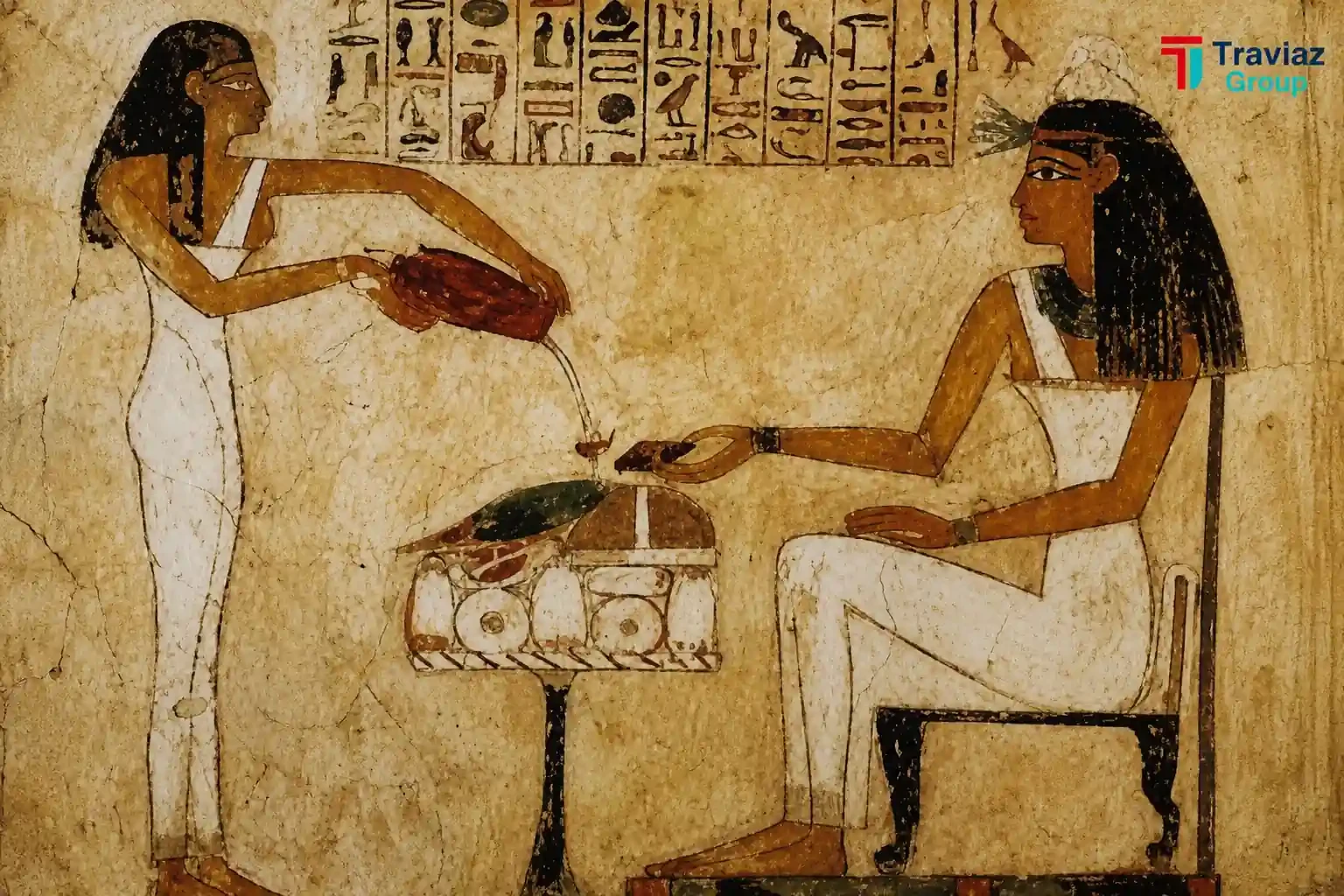
The pharaohs' tables included poultry, fish, rabbits, pigeons, fruit, and wine, and food prepared for the king for his journey to the afterlife was found in some tombs. Hunting and falconry were an exclusive royal privilege and lions were hunted as a display of power and courage. The pharaoh's marriage to his sister or half-sister was not an aberration but a strategy to preserve the divine bloodline within the ruling family away from mixing with common people.
Is the Pharaoh's Curse Real or Fake?
British newspapers published accounts of "the curse of the pharaohs" in 1922 following the death of Lord Carnarvon, Carter's excavation sponsor, months after opening Tutankhamun's tomb. Modern science attributes the deaths to ancient bacteria and fungi that accumulated inside sealed tombs and may weaken immunity when inhaled. Howard Carter himself, who entered the tomb first, lived 17 years after the discovery until 1939, which refutes the curse narrative that the popular press ignited.
Life After Death: Mummies, Tombs & Magnificent Pyramids
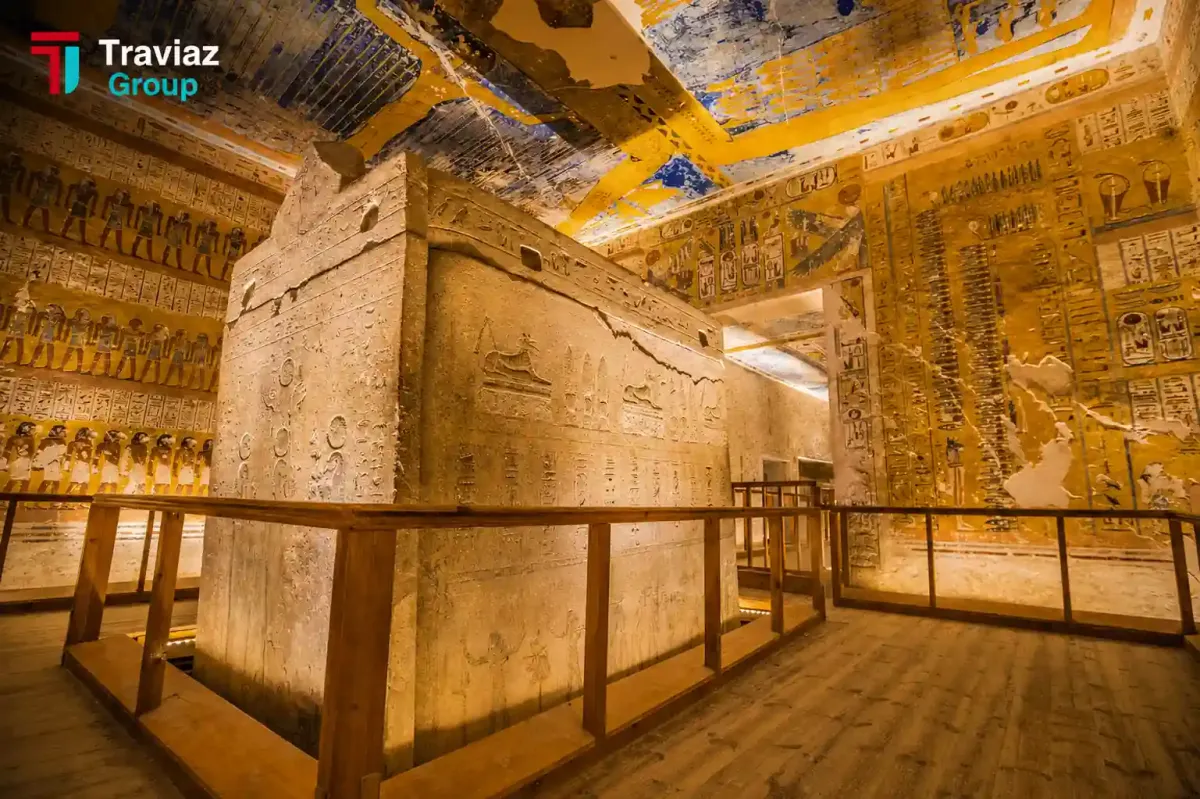
Death in pharaonic belief was not an end but the beginning of another journey that required precise preparation. This philosophy is what drove the pharaohs to build the most massive and costly structures in all of human history.
Why Did Pharaohs Build Pyramids, and Which Ones Have Pharaohs Inside?
The pyramids were built as tombs to help the pharaoh's soul ascend to the sky and merge with the gods according to ancient religious belief. Most Giza pyramids were looted in ancient times and archaeologists found the burial chambers completely empty upon discovery. Rock-cut tombs in the Valley of the Kings replaced the pyramids from 1550 BC onward because the pyramid's sheer size was an obvious indicator of treasure for robbers.
Where Are the Pharaohs Buried Today?
Old Kingdom pharaohs were buried in pyramids stretching from Abu Rawash in the north to Meidum in the south. The Eighteenth Dynasty began choosing the Valley of the Kings in Luxor as a secret alternative to the pyramids and usage continued until the Twentieth Dynasty. Queens and princes were buried in the adjacent Valley of the Queens, which contains more than 90 tombs, the most prominent being the tomb of Nefertari.
Where to See Pharaoh Mummies in Egypt Today
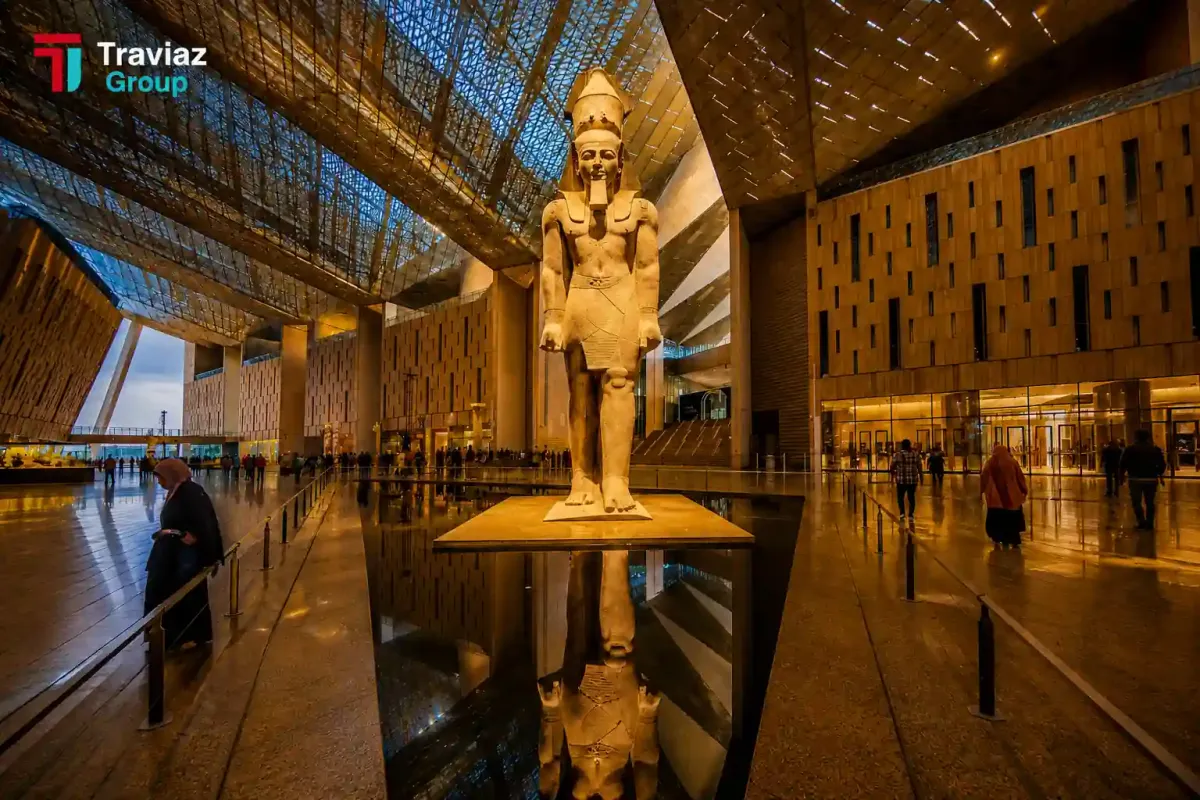
The National Museum of Egyptian Civilization NMEC in Fustat in Old Cairo is the only place where you can view the real royal mummies. Twenty-two royal mummies were transferred there in the famous Golden Parade of the Pharaohs in April 2021 and they are surrounded by dim lighting and an atmosphere that replicates the original tombs. The most important things to know before your visit are:
- NMEC mummies: Include Ramses II, Seti I, Hatshepsut, Thutmose III, and Ahmose I, with a ticket price of 550 pounds for foreigners.
- Photography: Completely prohibited inside the mummy hall and strictly enforced by supervisors.
- Tutankhamun: The sole exception whose mummy remains in his original tomb KV62 in the Valley of the Kings.
- The Grand Egyptian Museum GEM: Houses the complete collection of Tutankhamun's treasures including his iconic golden mask.
Visiting the Valley of the Kings: A Modern Traveler's Guide
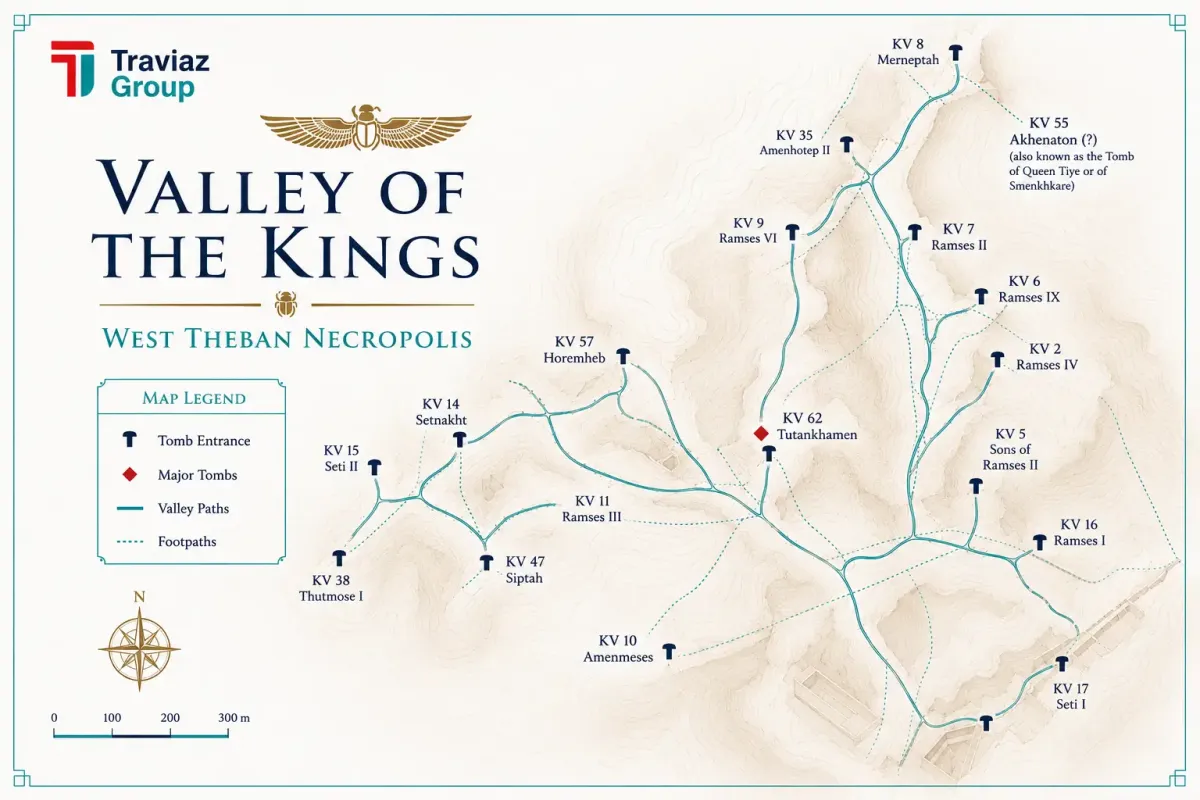
The Valley of the Kings is the most impactful archaeological destination in all of Egypt for those who want to truly get close to the world of the pharaohs. Visiting it requires careful advance planning to avoid common mistakes that spoil the experience.
What is the Valley of the Kings, and is it Worth Visiting?
The Valley of the Kings is an archaeological area on the west bank of Luxor containing more than 65 pharaonic tombs carved into rock between 1550 and 1070 BC. Luxor surpasses Cairo in the depth of the pharaonic experience because it combines tombs and temples in one complete location. The Valley of the Kings differs fundamentally from the adjacent Valley of the Queens, as the former is for pharaohs and the latter for queens and princes, with the tomb of Nefertari being the most prominent.
How Do You Get from Cairo to the Valley of the Kings?
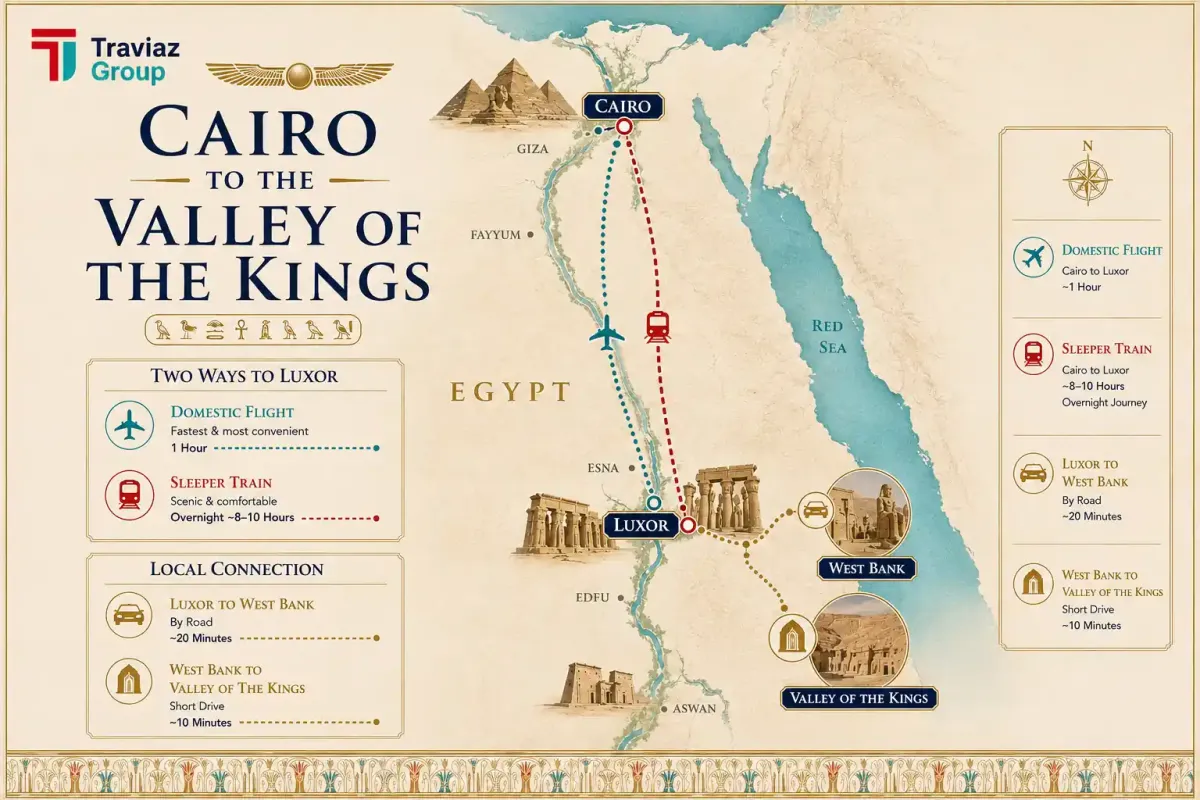
Two main options connect Cairo to Luxor but they differ in experience, time, and cost:
- Domestic flight: One hour with prices starting from $80, the fastest and most comfortable for those with limited time.
- Sleeper train: 12 hours with a comfortable private cabin, a classic romantic experience that suits those who want to enjoy the journey.
From central Luxor the traveler reaches the Valley of the Kings by private car in 30 minutes or via the ferry to the west bank and then by car.
The King Tut Tomb Visiting Experience
Visiting the tomb of Tutankhamun is a unique experience because it is the only one that still holds the pharaoh's mummy in his original burial chamber. The most important things to know before your visit in 2026 are:
- Standard ticket: 750 Egyptian pounds, approximately $15, and includes three tombs from those available.
- Tutankhamun's tomb KV62: A separate ticket at 700 pounds, an additional $14.
- Photography permit: 300 additional pounds and flash is completely prohibited in all tombs.
- Clothing: Light linen or cotton fabrics with comfortable closed shoes for the long passageways.
- Best time to arrive: Six in the morning right at opening to avoid crowds.
Can You Go Inside the Pharaohs' Tombs?
Yes, the tombs currently open to the public in 2026 included in the standard ticket are KV1, KV2, KV6, KV8, KV11, KV14, KV15, KV16, KV43, and KV47. The premium tombs worth their additional ticket are:
- Seti I's tomb KV17: At 2,000 pounds and considered the most beautiful and best-preserved in color in all of Egypt.
- Ramses VI's tomb KV9: At 220 pounds with its stunning astronomical ceiling, the best visually for the average visitor.
- Tutankhamun's tomb KV62: At 700 pounds and the only one that holds a pharaoh's mummy in its original location.
How to Book the Best Egyptian Pharaoh Tours & Vacation Packages
Choosing the right agency and guide makes the fundamental difference between a trip where you walk without understanding what you see and one that changes your view of all human history. Traviaz works exclusively with licensed archaeologists who turn every site into an unforgettable experience.
Are Egypt Pharaoh Tours Legitimate?
The first sign of a trustworthy agency is that its guide holds an official license from the Egyptian Ministry of Tourism. Transparent pricing that lists additional entry fees such as the Tutankhamun and Seti I tombs clearly in advance is a basic criterion for an honest agency. Traviaz presents complete cost details before booking and avoids surprise fees that shock visitors upon arrival.
Guided vs. Independent Tours
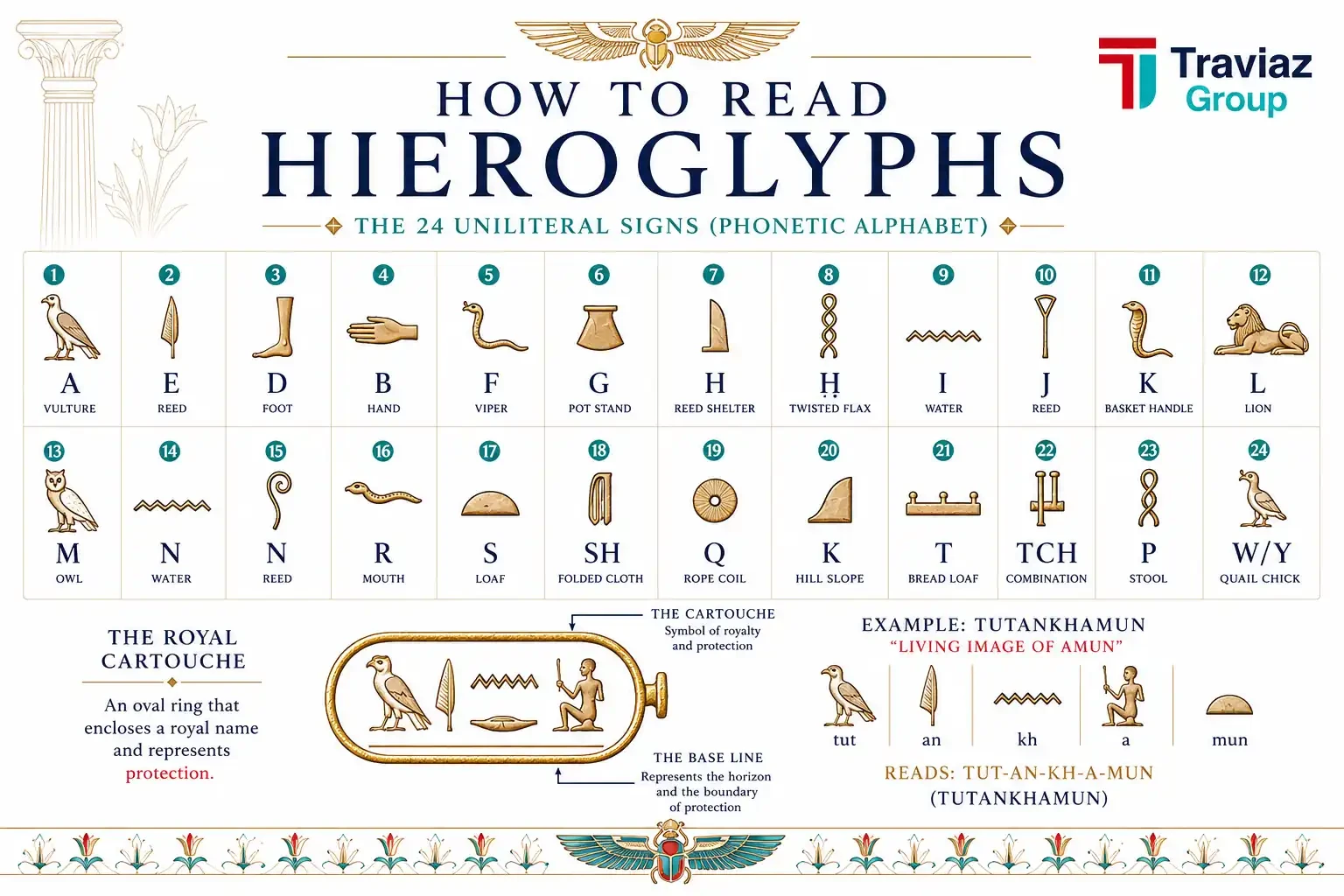
A certified archaeological guide deciphers the hieroglyphics on the tomb walls and transforms the wall paintings from beautiful decorations into fully meaningful living stories. The independent traveler sees what they see but loses 80% of the true meaning of every scene inscribed on the walls. The guide also knows the best time to arrive and the least crowded tombs at every hour of the day.
Booking VIP Access and Luxury Experiences
The best hotels near the Valley of the Kings in Luxor include Al Moudira Hotel with its unique Nubian atmosphere and Njoum Oasis Hotel with its pool overlooking the green agricultural fields. Arriving at six in the morning right at gate opening gives you the tombs free of crowds for a full hour before tourist convoys arrive. Traviaz organizes luxury Nile cruises between Luxor and Aswan with a private archaeologist accompanying you at every site throughout the trip.
What is the Best Time of Year to Visit Egypt's Pharaoh Sites?
The period between October and April is the ideal window with daytime temperatures between 20 and 28 degrees comfortable for long open-air tours. In July and August Luxor temperatures exceed 42 degrees and make visiting open sites an exhausting experience even for the seasoned traveler. November, December, and January are the highest in demand and their bookings sell out at least six months in advance.
FAQs
Which Pharaoh Built the Great Pyramid?
Pharaoh Khufu of the Fourth Dynasty built it around 2509 BC, and at its original height of 146 meters it remained the tallest man-made structure in the world for more than 3,800 years until the construction of Lincoln Cathedral in England in 1311 AD.
Who Was the Youngest Pharaoh to Rule Egypt?
Tutankhamun ascended the throne at nine years old around 1333 BC to become the youngest known pharaoh, and he ruled for ten years before dying at nineteen under circumstances that remain a subject of scientific debate to this day.
Which Pharaoh is Mentioned in the Bible?
Ramses II is most associated with the Biblical accounts of the Exodus and the mission of Moses, but archaeologists have not reached conclusive evidence that definitively proves his identity and the matter remains a subject of academic debate.
How Long Did the Era of the Pharaohs Last?
The pharaonic era extended from the unification of Egypt under Narmer around 3000 BC until the suicide of Cleopatra VII in 30 BC, approximately 3,000 years of continuous rule.
How Much Time Do You Need at the Valley of the Kings?
Three hours are enough to visit three tombs from the standard ticket at a comfortable pace, and four to five hours allow adding the tombs of Tutankhamun and Seti I and a tour of the small museum at the entrance