
Ancient Egyptian Tombs: The Ultimate 2026 Guide to Egypt’s Hidden Underworld
Ancient Egyptian tombs rank among the most compelling archaeological sites in the world, concentrated in two main areas: the Giza Plateau in the north and the west bank of Luxor in the south. The ancient Egyptians built them out of a deep belief in the afterlife and the necessity of preparing the deceased for the journey ahead. Step into a corridor carved from limestone, feel the temperature drop within seconds, and find yourself facing walls covered in three-thousand-year-old painted reliefs. No museum in the world produces that feeling.
The Evolution of Egyptian Tombs: From Desert Sands to the Great Pyramids
Ancient Egyptian tombs changed dramatically over thousands of years. Each era produced a new architectural form shaped by shifts in religious belief, political power, and engineering capability.
Mastaba Tombs: The Earliest Structures
Before the pyramids, there was the mastaba: a flat-roofed structure with slightly sloping walls, built first from mud brick and later from cut stone. Beneath it, shafts led down to burial chambers dug into the earth. The tomb of Mereruka at Saqqara alone contained twenty-one rooms for the deceased, six for his wife, and five for his son, which tells you something about how seriously Egyptians took the afterlife even for their officials. Outside, white geometric patterns decorated the facades. Inside, a chapel received offerings while a shaft dropped to the burial chamber below.
Step Pyramids and the Great Pyramids: Icons of Eternity
Around the twenty-sixth century BC, everything changed. Imhotep, the architect of Djoser's Step Pyramid at Saqqara, stacked six diminishing mastabas on top of each other and became the first builder in history to use cut stone on a monumental scale. From that single idea, Egyptian architecture evolved over centuries into the Great Pyramid of Khufu at Giza: two hundred and thirty meters along each base side, roughly two million three hundred thousand stone blocks, and three internal chambers connected by the Grand Gallery, a sloping passage fifty-one meters long and eight and a half meters high. Above the King's Chamber, five relieving chambers distribute the weight of everything pressing down from above. That detail alone says a great deal about what these builders understood.
Rock-Cut Tombs and the Shift to Secrecy
Visible pyramids kept attracting robbers, so by the New Kingdom the pharaohs made a different choice. They moved their burials underground into a remote valley on the west bank of Luxor, what we now call the Valley of the Kings, and filled the walls with more decoration than any pyramid ever held.
The interior space made it possible, and the craftsmen took full advantage. Sacred animals got their own tombs too. Bulls, birds, crocodiles, and cats were mummified and buried with dedicated rituals, and the Serapeum at Saqqara, where the massive sarcophagi of the Apis bulls still sit, is the most extraordinary example.
Pyramids vs. Tombs: What Is the Main Difference?
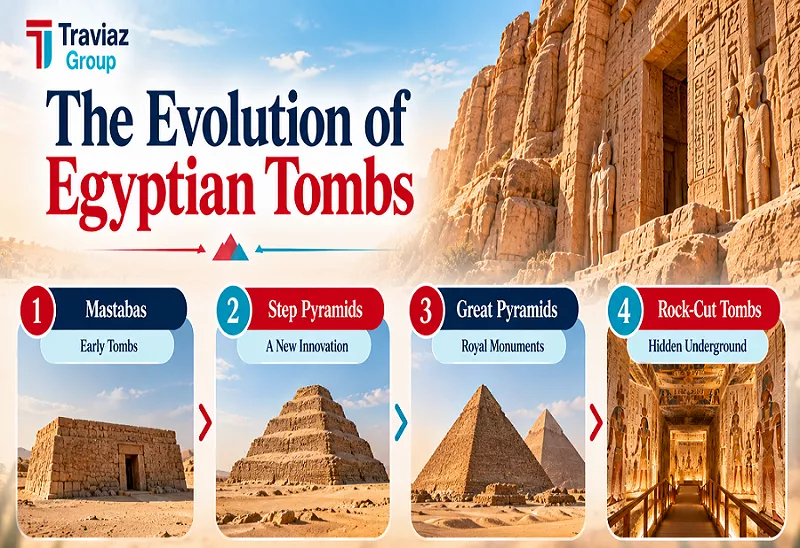
A lot of visitors arrive thinking pyramids and rock-cut tombs are the same thing. They are not. Pyramids belong to the Old and Middle Kingdoms and sit above ground at Giza, Saqqara, and Dahshur. Rock-cut tombs belong to the New Kingdom and go underground across Luxor and Aswan. The interior decoration tells you the difference immediately: pyramids are relatively bare inside, while the rock-cut tombs cover every surface with reliefs and color. Same purpose, completely different approach.
What Is Actually Inside an Ancient Egyptian Tomb?
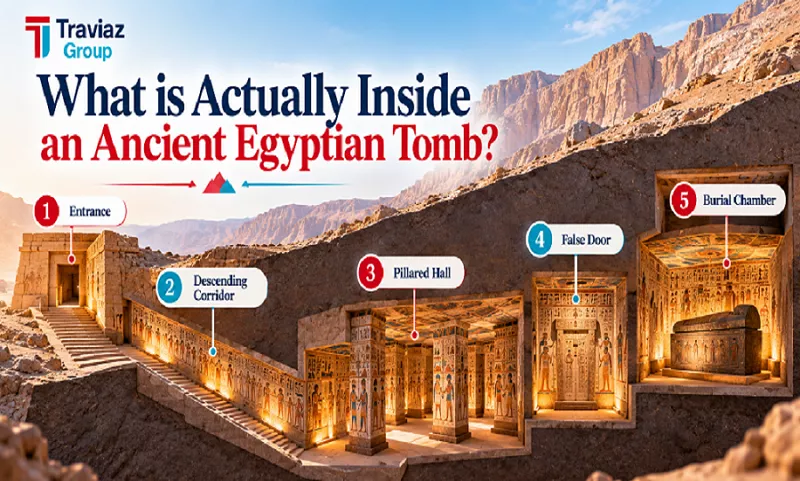
Two architectural components appear in every ancient Egyptian tomb without exception. Below ground, the burial chamber held the body and everything the deceased would need. Above ground, the funerary chapel was where the living came to make offerings. The burial chamber itself was never meant for human eyes after the sealing. Its walls were covered in funerary texts that functioned as a guidebook for the deceased, instructions for navigating what came next.
Structural Layouts and the False Door
Walk into any tomb from any dynasty and you find the same elements. False doors appear carved into the chapel walls, designed to look like real gateways cut into solid stone, through which the soul could pass between the world of the living and the world of the dead. Clay cylinders called funerary cones, each inscribed with the tomb owner's name, were pressed above the entrance.
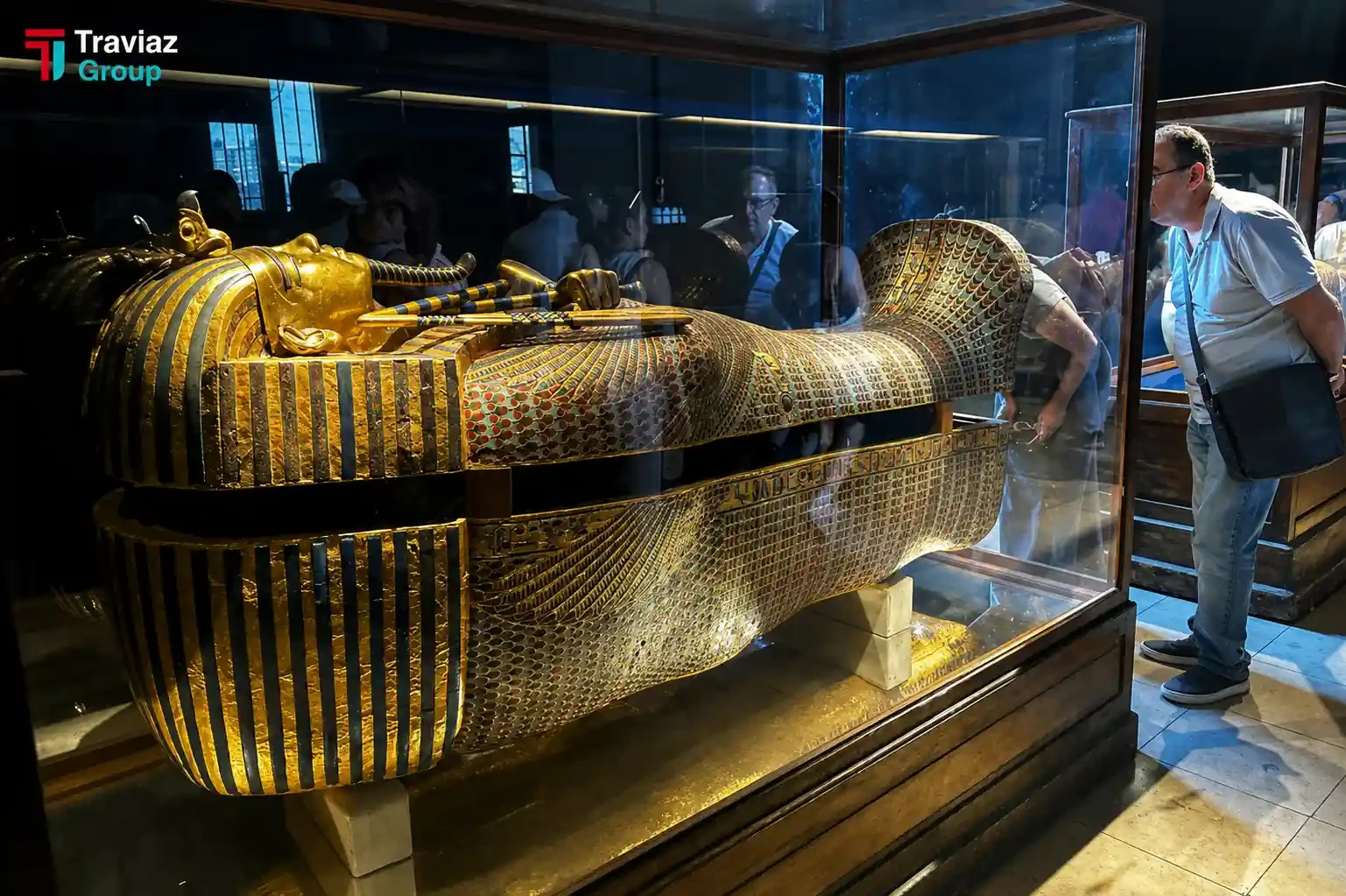
At the center of the burial chamber, granite sarcophagi nested inside one another in multiple layers. Around them sat the furniture, jewelry, pottery, and daily tools the deceased would need. Every element served the same belief: that death was a transition, not an ending.
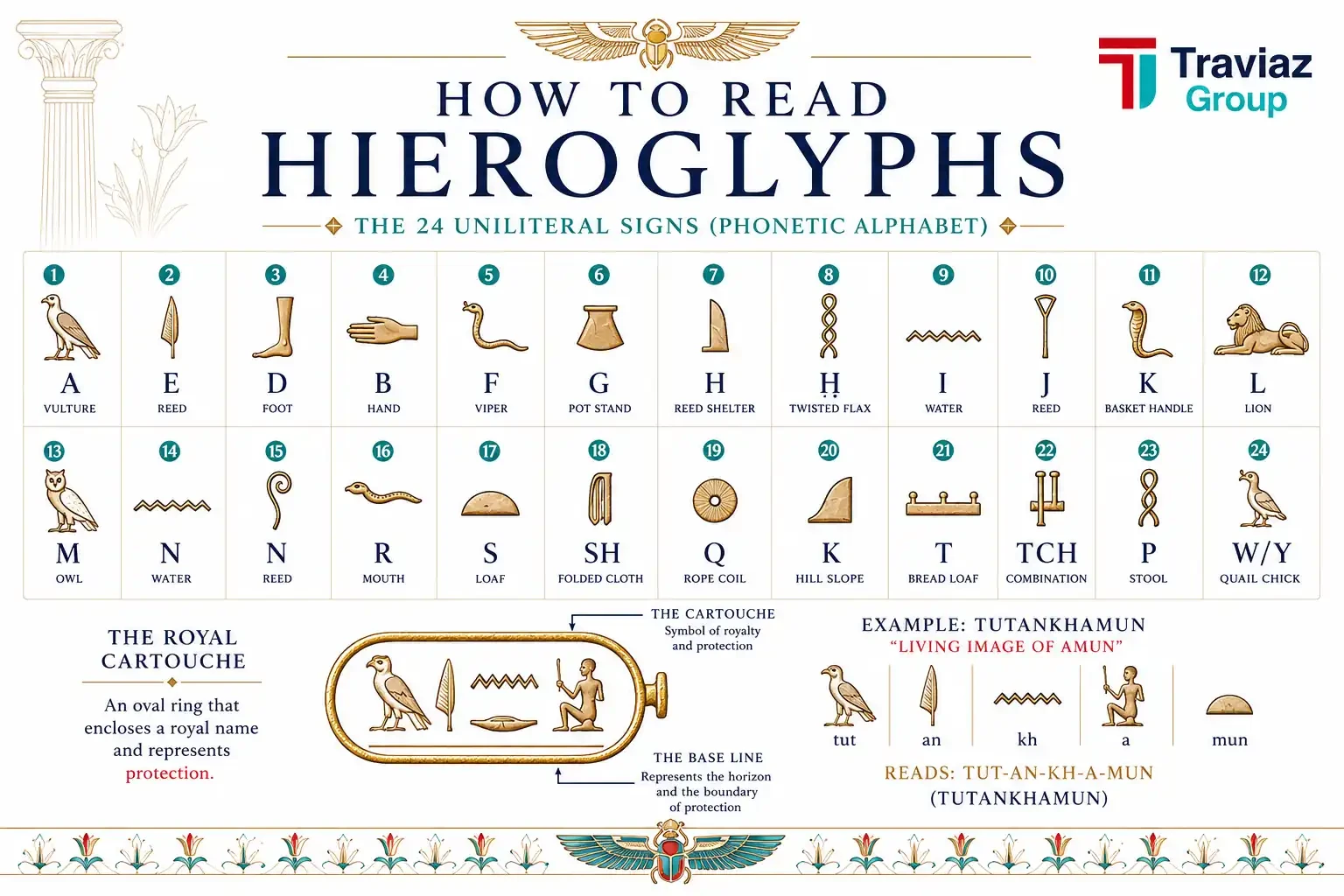
Hieroglyphics and Internal Decorations
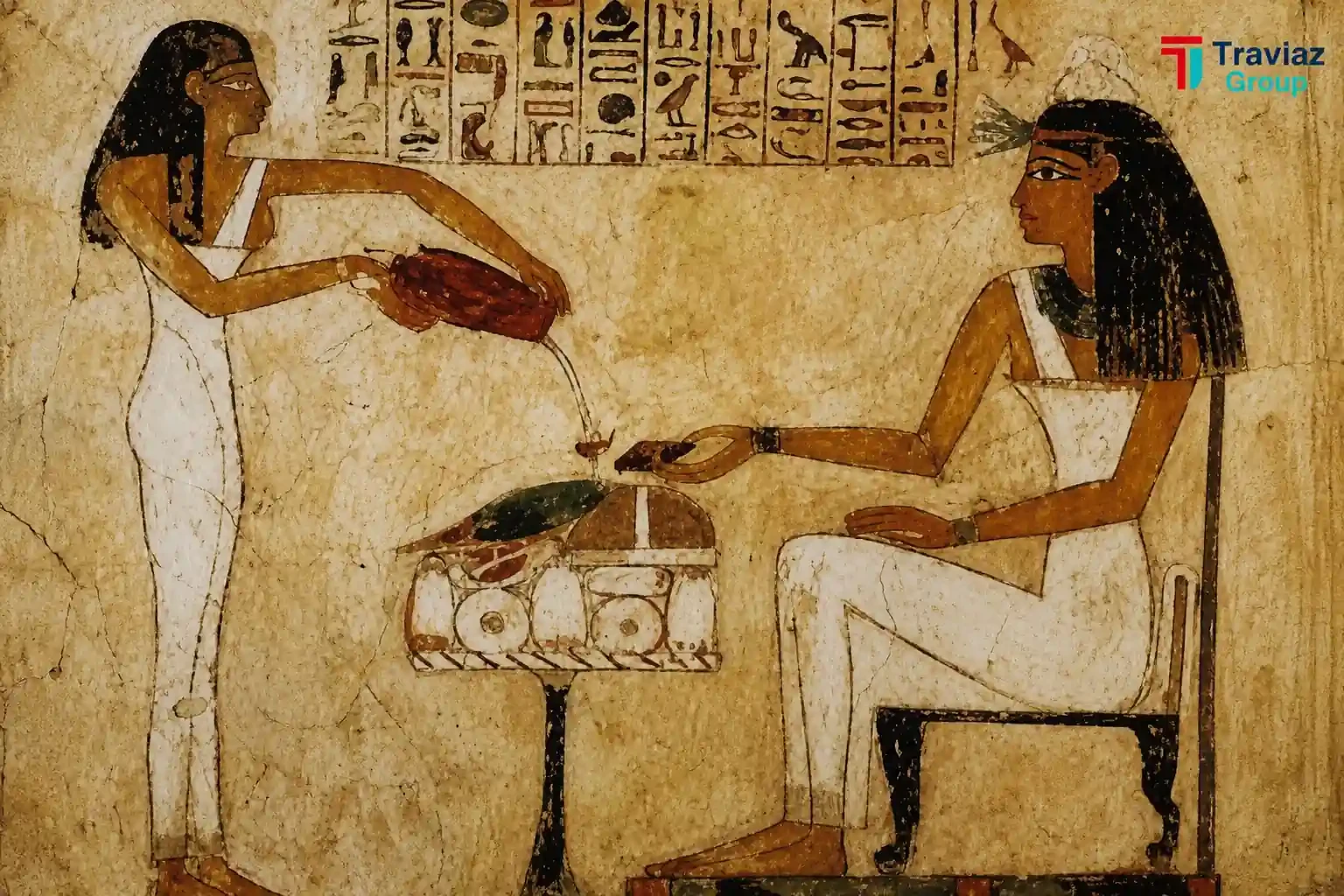
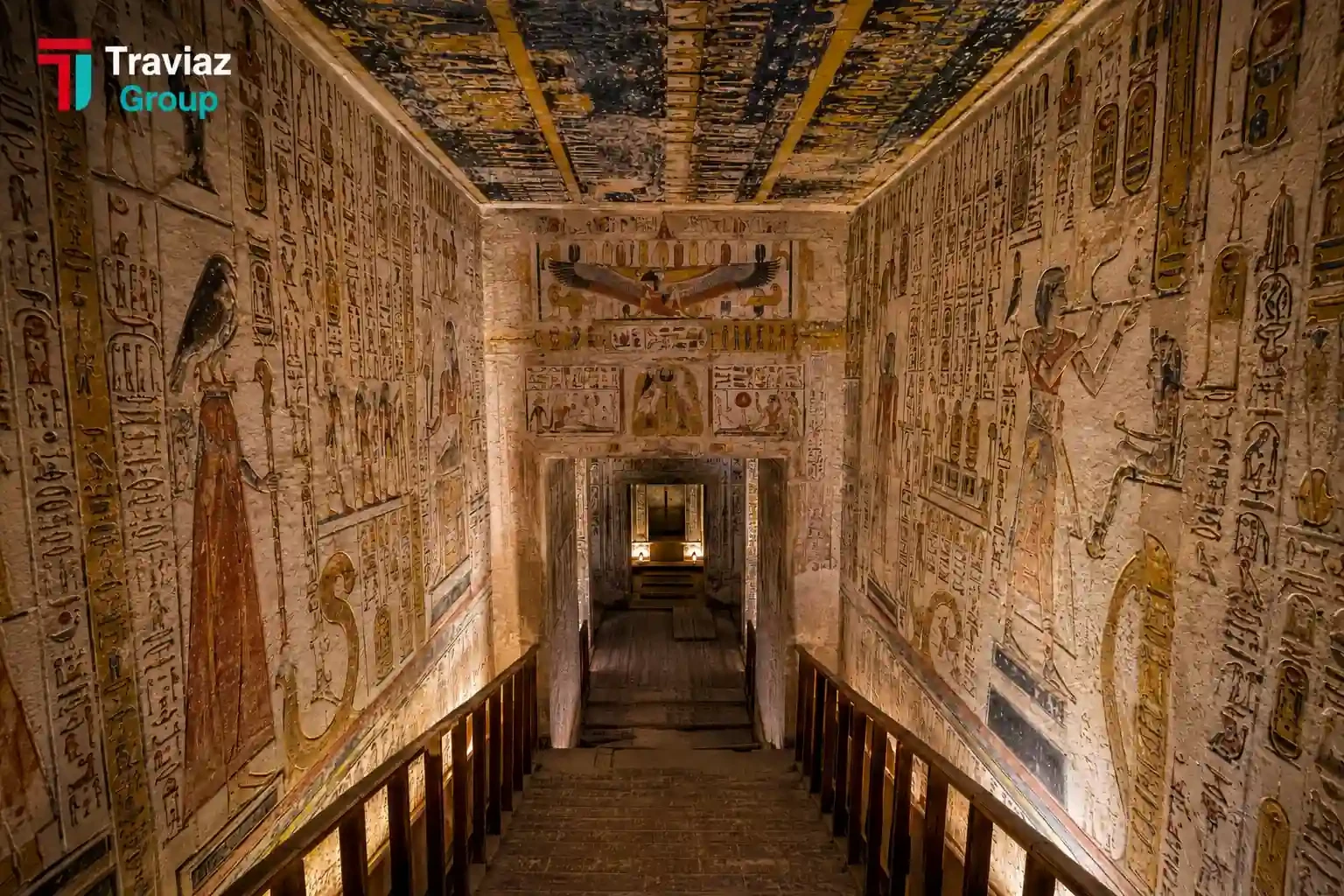
Three thousand years later, the colors still hold. Copper produced the blue, ochre the red, iron oxide the yellow, malachite the green. These mineral pigments did not fade the way organic dyes would have, which is why you can still read the walls today.
Ceilings in most royal tombs carry astronomical scenes: the sun's path, star charts, planetary movements. The texts themselves come from the Book of the Dead, the Book of Caverns, and the Book of Praising Ra, each functioning as a protective spell for the journey ahead. Of everything that survives, Nefertari's tomb in the Valley of the Queens holds the finest colors and the most complete decoration anywhere in Egypt.
Were Ancient Egyptian Tombs Actually Protected by Booby Traps and Curses?
Hollywood has been telling this story for a century and the archaeology consistently disagrees. No mechanical trap has ever been confirmed in any Egyptian tomb. The Pharaoh's Curse has no scientific basis, and the people who discovered these tombs died of entirely ordinary causes.
What the Egyptians actually used was more practical: granite plugs sealing the corridors after burial, multiple false entrances to confuse intruders, warning inscriptions on the walls, and locations chosen specifically for their remoteness. None of it worked particularly well. Most tombs were looted in ancient times, usually by people from the surrounding communities who knew exactly where to look.
Are There Tombs Located Inside the Great Pyramids of Giza Today?
Yes, and you can enter them. The Great Pyramid of Khufu contains three chambers: the King's Chamber, the Queen's Chamber, and a subterranean room. Red granite lines the King's Chamber on every surface, and a granite sarcophagus still sits inside it, empty for thousands of years. Running fifty-one meters from entrance to chamber, the Grand Gallery leading up to it is one of the most impressive interior spaces ever built in the ancient world.
At Dahshur, the Bent Pyramid tells a different story: partway through construction the builders changed the angle from fifty-five degrees to forty-three degrees for structural reasons, leaving a visible kink that you can see from a distance. It is open to enter and rarely crowded.
The Best Ancient Egyptian Tombs to Visit Right Now
Sixty-three tombs have been discovered in the Valley of the Kings so far, dating back to 1539 BC when New Kingdom pharaohs first chose this remote valley for their burials. The standard entry ticket covers three tombs from those currently open. Certain premium tombs require a separate ticket. Here is where to focus your time depending on what you are looking for.
The Premium Bucket-List Tombs (Best for History Enthusiasts)
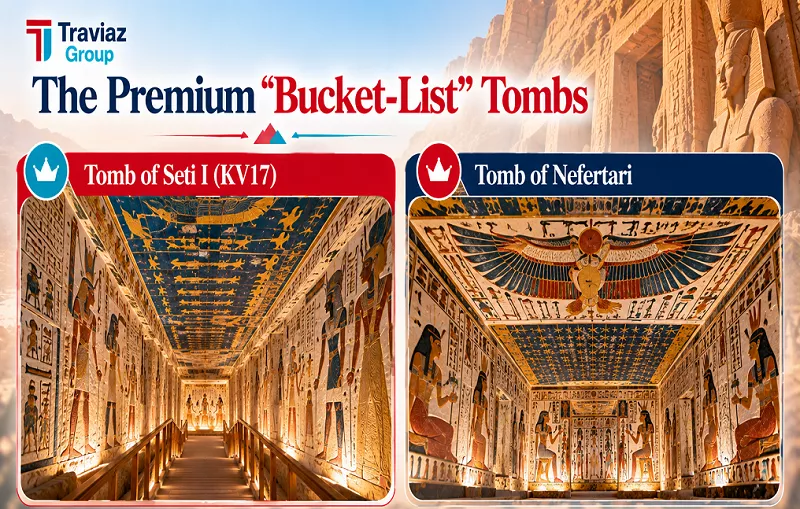
Two tombs stand apart from everything else in the valley. Seti I's tomb, KV17, is the longest, deepest, and most elaborately decorated in the entire Valley of the Kings, running one hundred meters into the mountain with a burial chamber ceiling carrying astronomical scenes of exceptional precision. The quality of its reliefs has no equal among all the royal tombs discovered so far.
It requires a separate ticket of one thousand four hundred pounds, the corridors are narrow and deep, and reasonable physical fitness helps. Nefertari's tomb in the Valley of the Queens is the other unmissable choice, the most visually stunning tomb in Egypt by most measures, with colors and reliefs among the best preserved anywhere. It also requires a separate ticket of one thousand four hundred pounds. Neither allows photography inside.
The Best Tombs for Kids (Best for Educational Family Planners)
For families with children, Ramesses VI's tomb, KV9, is the right starting point. The ceiling carries vivid astronomical scenes depicting the sun's journey that children respond to immediately, and the tomb is spacious enough that movement inside feels comfortable.
Ramesses IV's tomb, KV2, works well alongside it: the scenes from the Book of the Dead are clear and readable, and the massive granite sarcophagus still sitting in the burial chamber tends to make an impression. The electric cart from the entrance saves the walk between tombs, which matters with young children in the heat. Restrooms are only at the main valley entrance, so plan accordingly before going in.
The Least Crowded Tombs for a Private Experience (Best for Independent Smart Travelers)
The nobles' tombs at Sheikh Abd el-Qurna and Deir el-Medina give you something the royal tombs cannot: scenes from actual daily life. Farming, fishing, banquets, music, and work fill these walls instead of the abstract religious imagery that dominates the kings' tombs.
Deir el-Medina belonged to the craftsmen who built the royal tombs themselves, and the precision of their own burial decoration reflects exactly what they were capable of. Crowds here are a fraction of what you find in the Valley of the Kings, the ticket costs two hundred pounds, and you have the space to actually look. Ramesses IX's tomb, KV6, is another good option: left unfinished, it shows you the construction and decoration process in stages, and foot traffic there stays low.
What Is the Most Colorful Tomb in Egypt?
Nefertari's tomb in the Valley of the Queens takes that distinction without serious competition. Its colors are the best preserved of any tomb in Egypt and the overall effect is unlike anything else on the west bank. KV9, Ramesses VI's tomb, comes next with its vivid ceiling still readable after thousands of years. Seti I's tomb, KV17, sits third, with relief quality and color preservation that no other tomb in the valley matches.
Deep Dive: The Valley of the Kings vs. The Valley of the Queens
The Theban Necropolis covers all the burial sites on the west bank of Luxor: the Valley of the Kings, the Valley of the Queens, the nobles' tombs, the village of Deir el-Medina, Hatshepsut's Temple, the Ramesseum, and Medinet Habu, all forming one integrated archaeological system. Three full days is the realistic minimum to cover it without rushing.
The Valley of the Kings: The Eternal Resting Place
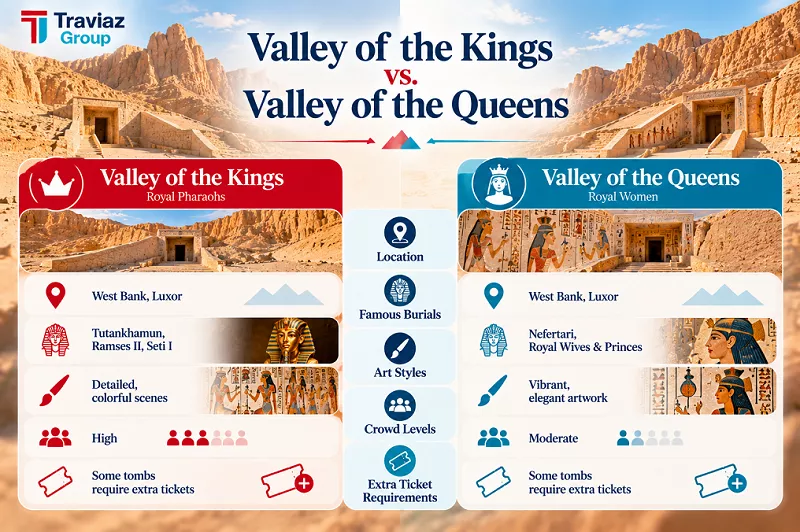
In 1539 BC, New Kingdom pharaohs began choosing this remote valley specifically because it was hard to find and harder to watch. Sixty-three tombs have been discovered since, numbered in the KV system and spanning the Eighteenth through Twentieth Dynasties, with a mix of pharaohs, queens, and senior nobles among those buried here. The oldest tombs from the Eighteenth Dynasty tend to have long, steeply descending corridors. Later tombs grew wider and more architecturally complex as each dynasty refined the format.
The Discovery of Tutankhamun's Tomb (KV62)
Howard Carter found it in 1922 in better condition than almost any other royal tomb. His notes from the moment he first looked inside describe strange animals, statues, and gold everywhere. Tutankhamun became pharaoh at nine and died at approximately eighteen, most likely from an accident. Because his reign was so short, his tomb is smaller and less decorated than those of longer-ruling kings. A visit takes around thirty minutes and the space is manageable for those with mild claustrophobia. A separate ticket of three hundred pounds is required and it does not count toward the standard three.
Is King Tut Still in His Tomb or a Museum?
His body remains inside KV62 in the Valley of the Kings. The gold, the artifacts, and everything else that made the discovery extraordinary have moved to the Grand Egyptian Museum in Giza.
The Valley of the Queens: Is Nefertari's Tomb Worth It?
Two kilometers from the Valley of the Kings, the Valley of the Queens holds more than thirty tombs belonging to queens, princesses, and princes. The tombs here are smaller than the royal ones but tighter in their artistic detail. Nefertari's tomb, wife of Ramesses II, is the finest in the valley by a significant margin, with decoration that justifies the separate ticket of one thousand four hundred pounds on top of the four-hundred-pound valley entry. For anyone who cares about Egyptian art and history, it is worth it.
What Happens if a Tomb Is Closed for Restoration?
The rotation system in the Valley of the Kings exists to protect fragile pigments from the humidity and carbon dioxide that visitor breath produces over time. Tombs close periodically for restoration and reopen when the work is done. Between ten and fifteen tombs are open at any given time. If a specific tomb is closed when you arrive, a suitable alternative is always available. The most reliable way to check current status before your trip is through Traviaz, which monitors official Ministry of Tourism and Antiquities updates regularly.
Essential Logistics: Planning and Budgeting Your Trip to the West Bank
Since 2026, all tickets are sold electronically through the official Egymonuments website. Cash is no longer accepted at official ticket windows, so advance digital booking is not optional.
Ticket Pricing and the Digital Pass System
Current official prices for the main sites are as follows, subject to change by the Ministry of Tourism and Antiquities:
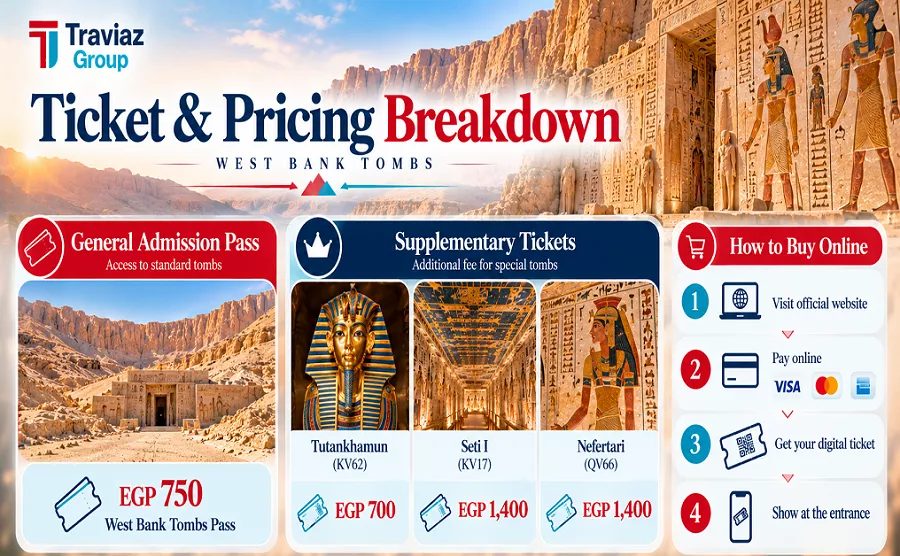
- Valley of the Kings, three tombs: 600 EGP, approximately $12.
- Tutankhamun's tomb: 300 EGP additional and separate, approximately $6.
- Seti I's tomb: 1,400 EGP additional and separate, approximately $28.
- Valley of the Queens: 400 EGP, approximately $8.
- Nefertari's tomb: 1,400 EGP additional and separate, approximately $28.
- Nobles' tombs: 200 EGP, approximately $4.
Tipping and How Much Cash to Bring
Baksheesh is part of Egyptian culture and avoiding it entirely is unrealistic. Unofficial guides inside the tombs will point out details or offer unofficial photography permissions that do not actually exist. Carry small bills of five and ten pounds for situations where you choose to tip voluntarily, and keep your wallet out of sight. Joining a Traviaz tour reduces these situations considerably since the guide handles them directly.
How to Get to the Tombs from Cairo and Central Luxor
From Cairo, a one-hour flight to Luxor Airport is the fastest option. The overnight express train takes around ten hours and offers a different kind of travel experience. From your hotel on the east bank, a short ferry crossing gets you to the west bank for a minimal fare. From there, tuk-tuks, local taxis, and the electric cart inside the Valley of the Kings itself handle the rest.
Photography Rules and Camera Tickets
Most open tombs allow free phone photography. Nefertari's and Seti I's tombs prohibit it entirely. Tripods are banned in all tombs without exception. Touching the walls is strictly prohibited since skin oils damage pigments that have survived thousands of years. Flash photography is also banned in most tombs due to its cumulative effect on ancient mineral pigments.
Surviving the Desert: Practical Visitor Advice and On-Site Etiquette
Seven to nine in the morning is the window that gives you the lowest crowds and the best experience. October through April keeps the temperatures manageable. August in Upper Egypt is brutal, and while a visit is possible it demands serious preparation.

Beating the Heat and the Best Time of Day to Visit
Arriving before nine combines three advantages at once: fewer people, cooler air, and better light for photography. By midday outside the tombs the heat becomes genuinely uncomfortable in summer, though inside the rock the temperature stays lower than the surface. Carry enough water, bring a hat, and build in a short rest in the shaded area at the valley entrance between every two tombs.
Navigating Claustrophobia Inside Egyptian Tombs
KV9 and KV2 are the right choices for anyone with claustrophobia. Both are relatively spacious and the movement inside feels manageable. KV17 and KV8 are not suitable: narrow corridors descending at steep angles make them genuinely difficult for anyone prone to the condition. KV62 sits somewhere in between and most people find it manageable. If you feel uncomfortable inside any tomb, walking out immediately is the right call and nobody will think less of you for it.
Are the Tombs Wheelchair Accessible and Air-Conditioned?
No air conditioning exists in any of the tombs. The air inside is heavy and warm, particularly in summer, though the rock itself insulates against the worst of the outside heat. The Ministry of Antiquities monitors humidity and carbon dioxide levels in sensitive tombs and adjusts visitor numbers accordingly. Wheelchair access is limited by the sloping, narrow nature of most corridors, with KV9 and KV2 being the most manageable options. The electric cart from the valley entrance reduces the walking distance significantly.
Common Scams to Avoid at the Valley of the Kings
Unofficial guards present themselves as guides inside the tombs and ask for tips in exchange for pointing out specific details or granting photography permissions that have no official existence. Ticket sellers occasionally claim a particular tomb is closed and offer alternatives at inflated prices. Check Egymonuments before you travel to verify what is actually open, and joining a Traviaz tour removes most of these situations entirely by putting an experienced local between you and them.
Guided Tours vs. Independent Exploration: Which Is Right for You?
The choice comes down to one question: do you want to see these tombs or understand them? Independent visits are technically straightforward since the electronic tickets require no guide. But the reliefs inside ancient Egyptian tombs tell complex religious stories that need context to mean anything. Licensed guides cannot enter the tombs themselves, but what they explain before and after the entry is what turns a walk through corridors into something you actually remember.
Do I Really Need a Guide for the Valley of the Kings?
If you have a serious interest in Egyptology or ancient history, a specialist guide is a clear investment. If your visit is more visual than scholarly, independent exploration with good preparation works fine. The middle ground is a Traviaz tour that combines a knowledgeable guide for context with the flexibility to move at your own pace inside the tombs.
Is a Nile Cruise the Ultimate Way to See Upper Egypt?
A Nile cruise puts you in a floating hotel that moves between sites while you sleep, eliminating the daily logistics of getting to and from the archaeological zones. Most cruises run from Luxor to Aswan or the reverse, stopping at the main temples and tombs along the way. The built-in schedule means you visit sites at reasonable times without having to plan each day from scratch. For anyone wanting a comprehensive and comfortable experience without daily logistical decisions, it is the most practical format available.
Booking with Traviaz: VIP Access and Peace of Mind
Traviaz runs integrated tours of the Valley of the Kings, the Valley of the Queens, and the full west bank, covering tickets, transfers, and multilingual specialist guides who know which tombs are open on any given day and which premium tickets are worth the extra cost. Private tours let you choose exactly which tombs to visit based on your interests, with timing flexibility built in to avoid peak crowds. Getting in touch with Traviaz before you travel saves hours of research and guarantees a smoother, more informed experience on the ground.
FAQs
What are the latest tomb discoveries in Egypt for 2026?
Three new tombs at Bahnasa Oasis and eighteen Ptolemaic tombs at Marsa Matruh, including mummies with golden tongues and a rare Eye of Horus tongue.
Can you visit archaeological tombs in Cairo beyond the Giza Pyramids?
Yes. Saqqara holds the Step Pyramid and dozens of mastabas. Dahshur has the Bent and Red Pyramids, both open for entry.
What is the largest tomb discovered in Egypt so far?
KV5 in the Valley of the Kings, built for the sons of Ramesses II, with over one hundred and twenty chambers. Excavation is still ongoing.
How long does it take to see the main tombs properly?
The Valley of the Kings needs half a day. Add two to three hours for the Valley of the Queens. The nobles' tombs deserve a separate day entirely.
Are the tombs in Luxor safe for international tourists right now?
Yes. Security presence at archaeological sites is heavy and consistent. Luxor's economy depends on tourism, making it one of the safest areas in Egypt.