
Egyptian Culture Explained: History, Customs, and Practical Travel Advice
Egyptian culture is a one-of-a-kind tapestry that weaves together a 5,000-year Pharaonic legacy with deep Islamic, Coptic, and Mediterranean roots that run through every corner of daily life. Traveling to Egypt is exciting and unlike any other destination, but it requires some advance understanding of local customs and social norms to avoid awkward moments and ensure a richer experience. Your gateway to the real Egypt, beyond surface-level tourism, is Traviaz, where certified guides know how to make every moment count.
5 Interesting Facts About Egyptian Culture
Egypt holds some remarkable cultural facts that catch most visitors completely off guard, and these facts reveal just how deep this civilization runs and how continuously it shapes modern life today.
The Calendar
Dating back thousands of years, the ancient Egyptian calendar divided the year into 365 days across 12 months based on the annual flood cycles of the Nile. That same calendar is the direct foundation on which the Gregorian calendar used worldwide today was built.
Sacred Cats
Cats still hold a place of special respect in modern Egypt, and that respect traces back to the goddess Bastet, who was depicted with a cat's head and was considered the guardian of homes against evil spirits and dangerous animals.
Sham El-Nessim Festival
One of a kind among spring celebrations, Sham El-Nessim has been observed by both Muslims and Christians together for thousands of years. Held on the day after Coptic Easter, it brings family outings and traditional foods like feseekh and colored eggs.
Al-Azhar University
Founded in 970 AD in the heart of Islamic Cairo, Al-Azhar University is the oldest continuously operating university in the world and welcomes students from more than 100 countries.
Shadow Puppet Theater
Shadow puppetry is a deep-rooted theatrical tradition stretching back centuries, and it is still performed at popular festivals and major Egyptian celebrations as a living expression of Egyptian cultural memory.
11 Essential Things You Should Know About Egyptian Culture
Understanding these aspects makes your time in Egypt far richer and far less confusing. Think of them not as rules but as keys to understanding how Egyptians think and move through their daily lives.
Family is the Foundation of Society
At the core of Egyptian society sits the family, and many Egyptians live in extended family units or maintain close ties with relatives even in major cities. Any guest invited into an Egyptian home is genuinely treated as a member of the family.
A Flexible Relationship with Time
Social appointments in Egypt tend to run late, and showing up behind schedule to informal gatherings is culturally accepted. Certified tour guides and professional tourism services, however, operate on time without exception.
Bread is Sacred
Called "eish" in Egyptian Arabic, the word for bread literally means "life." Throwing it away or treating it disrespectfully is considered offensive, and this is worth keeping in mind when eating in Egyptian homes or local restaurants.
Humor as a Social Tool
Wit and light sarcasm are how Egyptians navigate the pressures of daily life, and this approach is deeply embedded in Egyptian identity. It also makes connecting with locals feel genuinely warm and spontaneous.
Soccer as a Second Religion
Beyond sport, soccer is a national passion in Egypt. Saying anything critical about either Al Ahly or Zamalek can spark a debate that never quite ends, because the game here is identity and belonging, not just a match.
Respect for Elders is Non-Negotiable
Honoring older people is a firmly held value in Egyptian culture. Younger people are expected to stand when an elder enters the room, defer to them in conversation, and never interrupt them, even in intimate family discussions.
The Culture of the Ahwa
The neighborhood café, or "ahwa," is the informal social gathering place for Egyptian men, where they come together to drink tea, follow soccer matches, and talk through politics and everyday life.
Loud Voices Are Not a Fight
Public conversations that get noisy, or voices that carry in the street, do not necessarily signal a conflict. That is simply a normal style of social communication in Egyptian culture, and it catches many Western visitors completely off guard.
Hospitality as Character, Not Courtesy
Generosity in Egypt is not a social performance. Food and drink are placed in front of a guest the moment they walk through the door, even without being asked, and a flat refusal of that hospitality can genuinely offend the host.
The Evil Eye is Real
Belief in the evil eye remains strong in contemporary Egyptian culture. Many Egyptians wear the blue bead or recite protective prayers to guard against envy, whether in their homes, cars, or shops.
Egypt is Not One Culture
Rather than a single unified culture, Egypt is a layered blend of Pharaonic, Islamic, Coptic, and Mediterranean heritage, and that diversity surfaces clearly in art, food, and the distinct dialects spoken between northern and southern Egypt.
Ancient vs. Modern Egypt: How History Shapes Today's Lifestyle
Contemporary Egyptian culture cannot be understood apart from its deep Pharaonic roots. Every Egyptian today lives in an ongoing conversation between past and present, and that dialogue shows up in the smallest details of daily life.
What Was Life in Ancient Egypt Like?
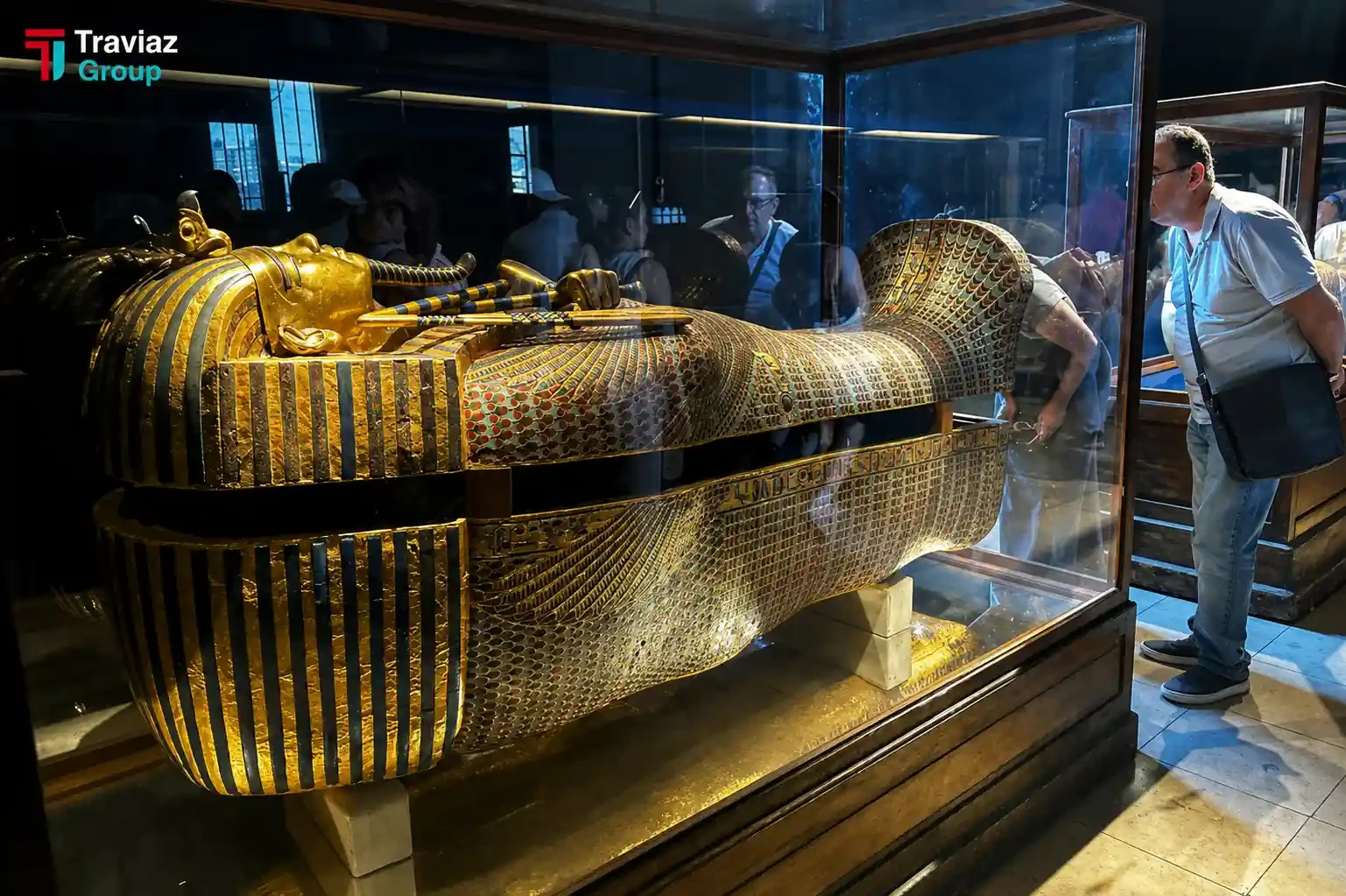
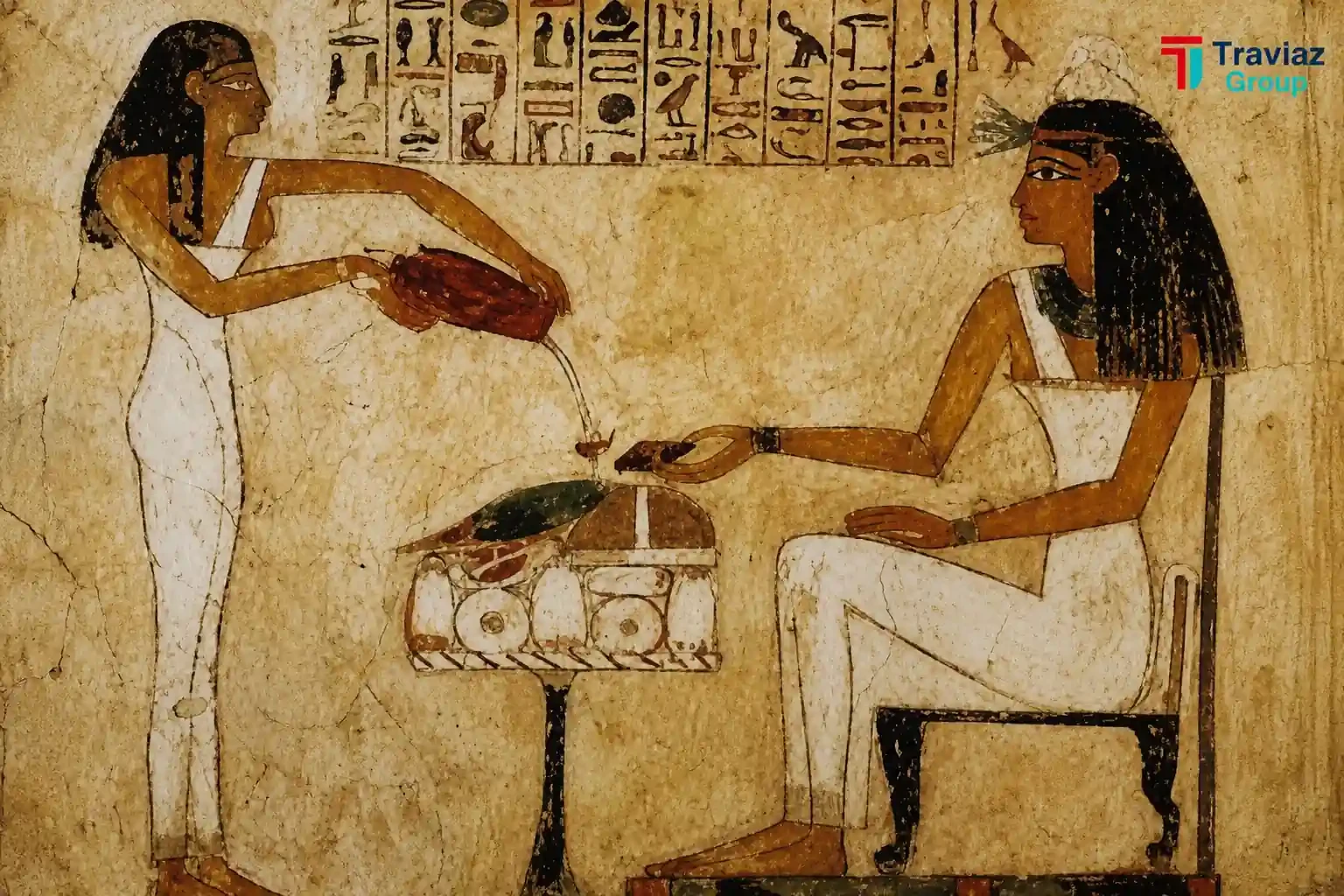
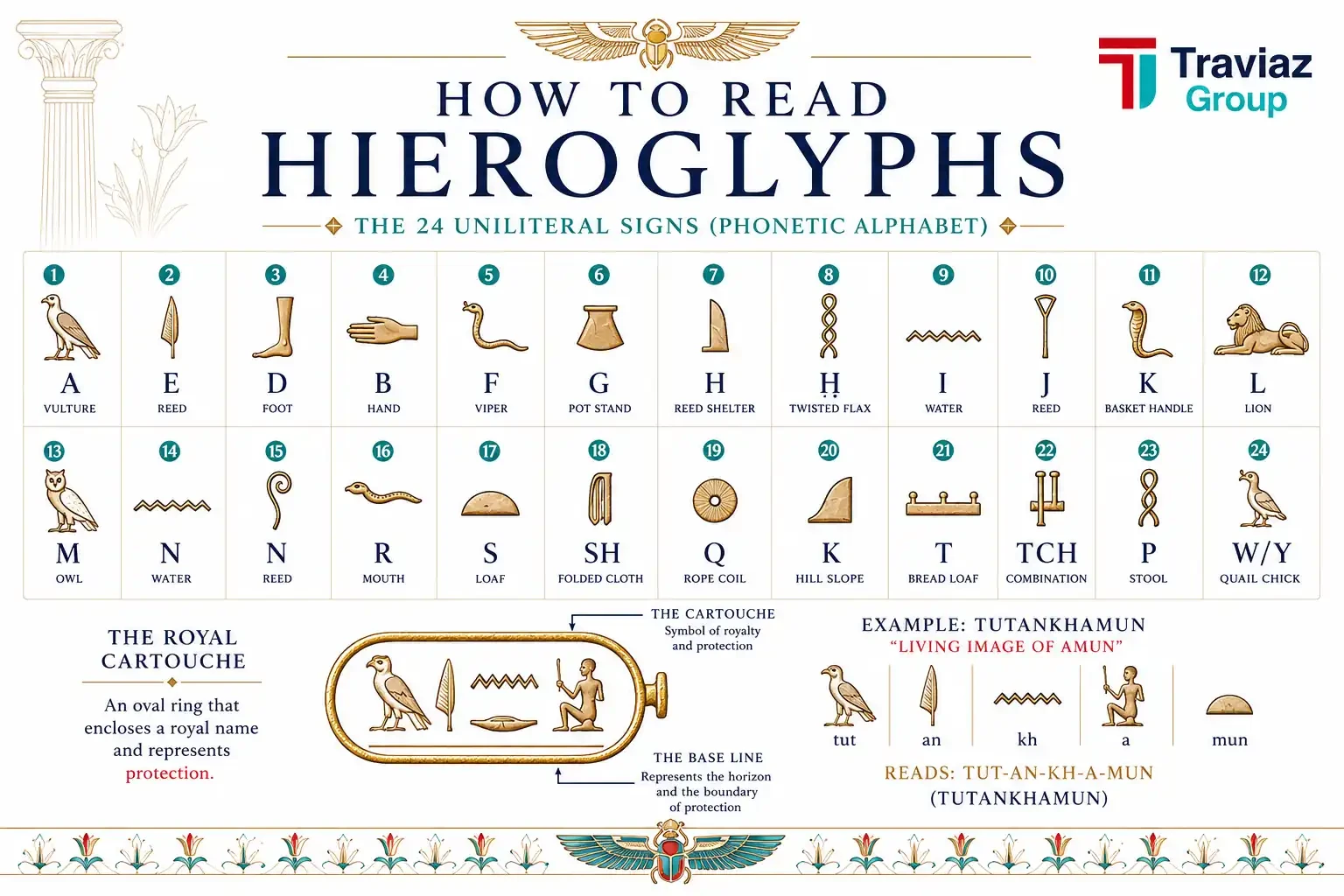
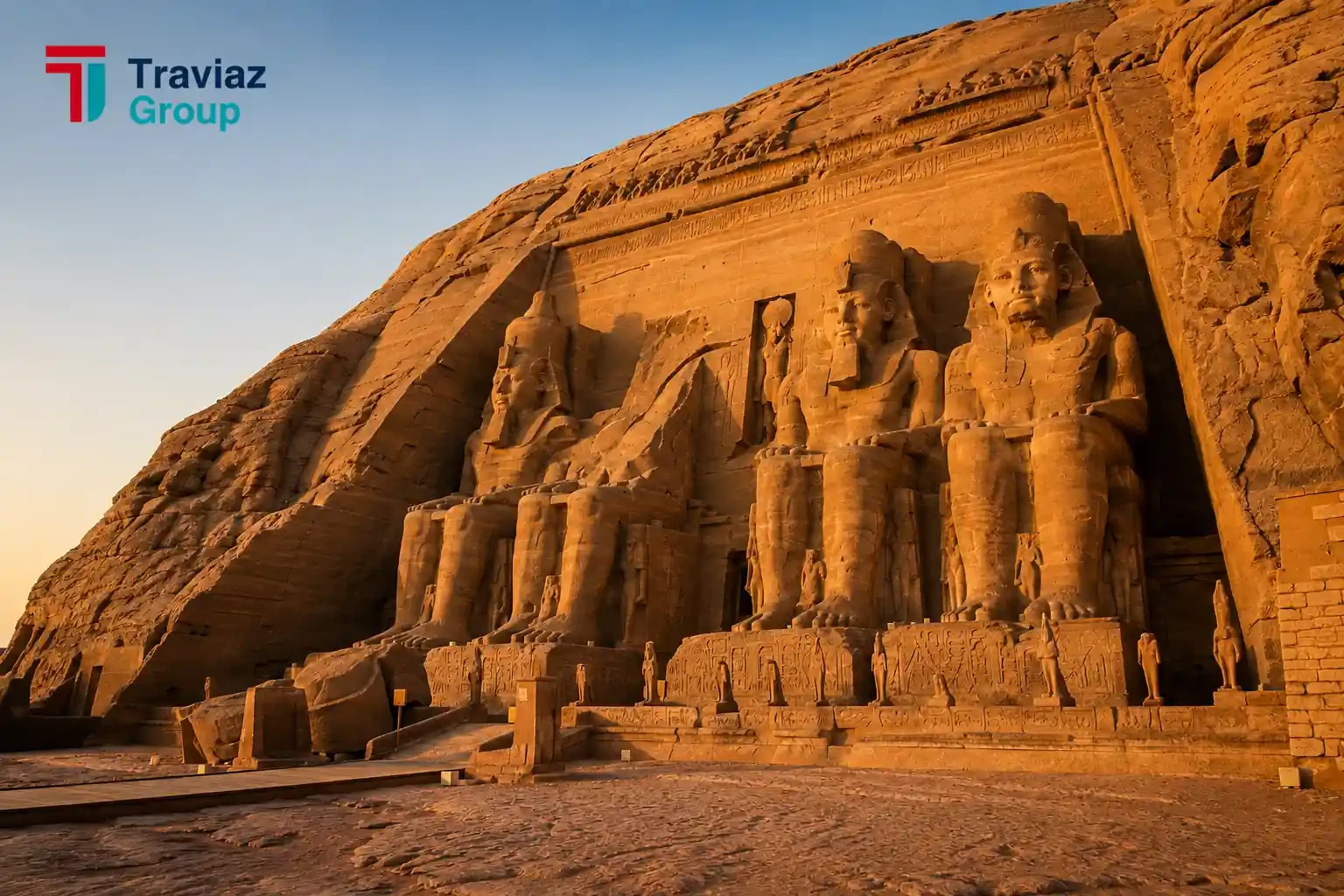
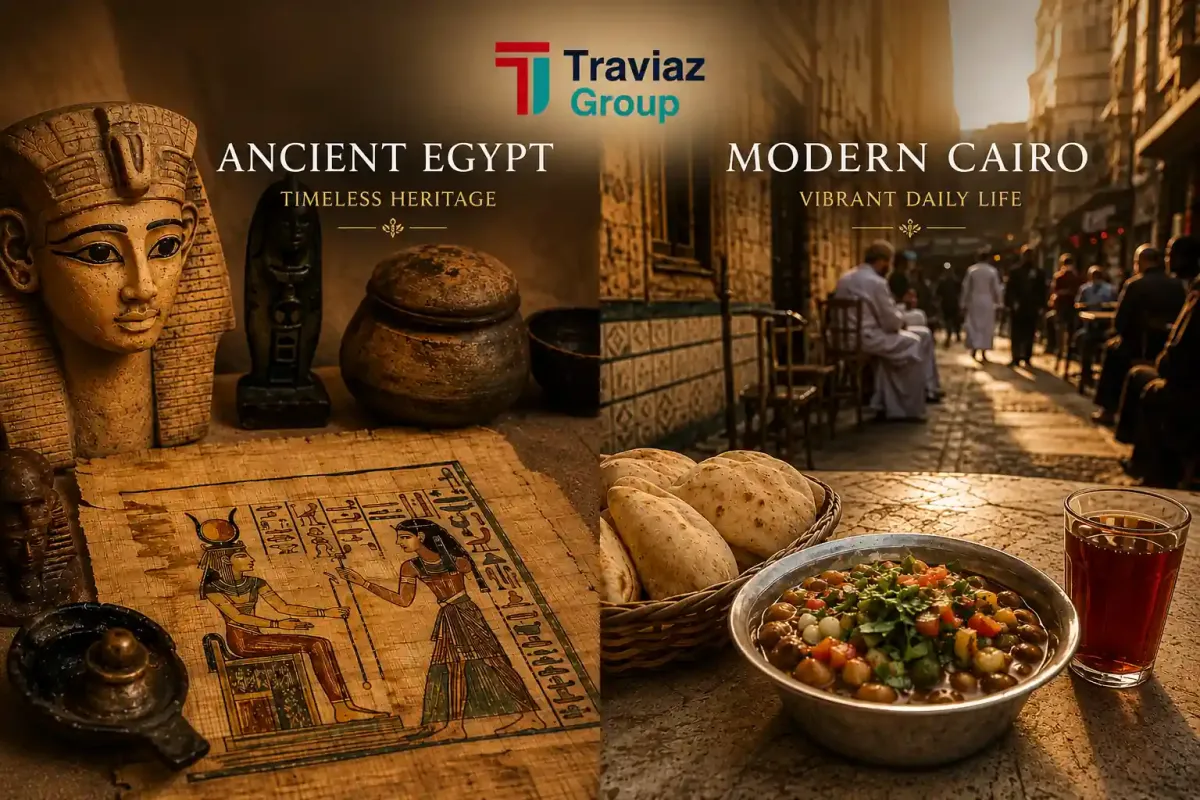
Pharaonic society was organized around a strict hierarchy headed by the divine Pharaoh, followed by priests, scribes, craftsmen, and farmers. Daily life was organically tied to the Nile floods, which determined the seasons for agriculture, rest, and construction. Hieroglyphics served as the official writing system, documenting laws, myths, and commercial transactions on temple walls and papyrus. Mummification and beliefs about the afterlife formed the entire civilization's axis and left behind an architectural legacy that still has no equal.
How Does Ancient Egyptian Culture Influence Modern-Day Society?
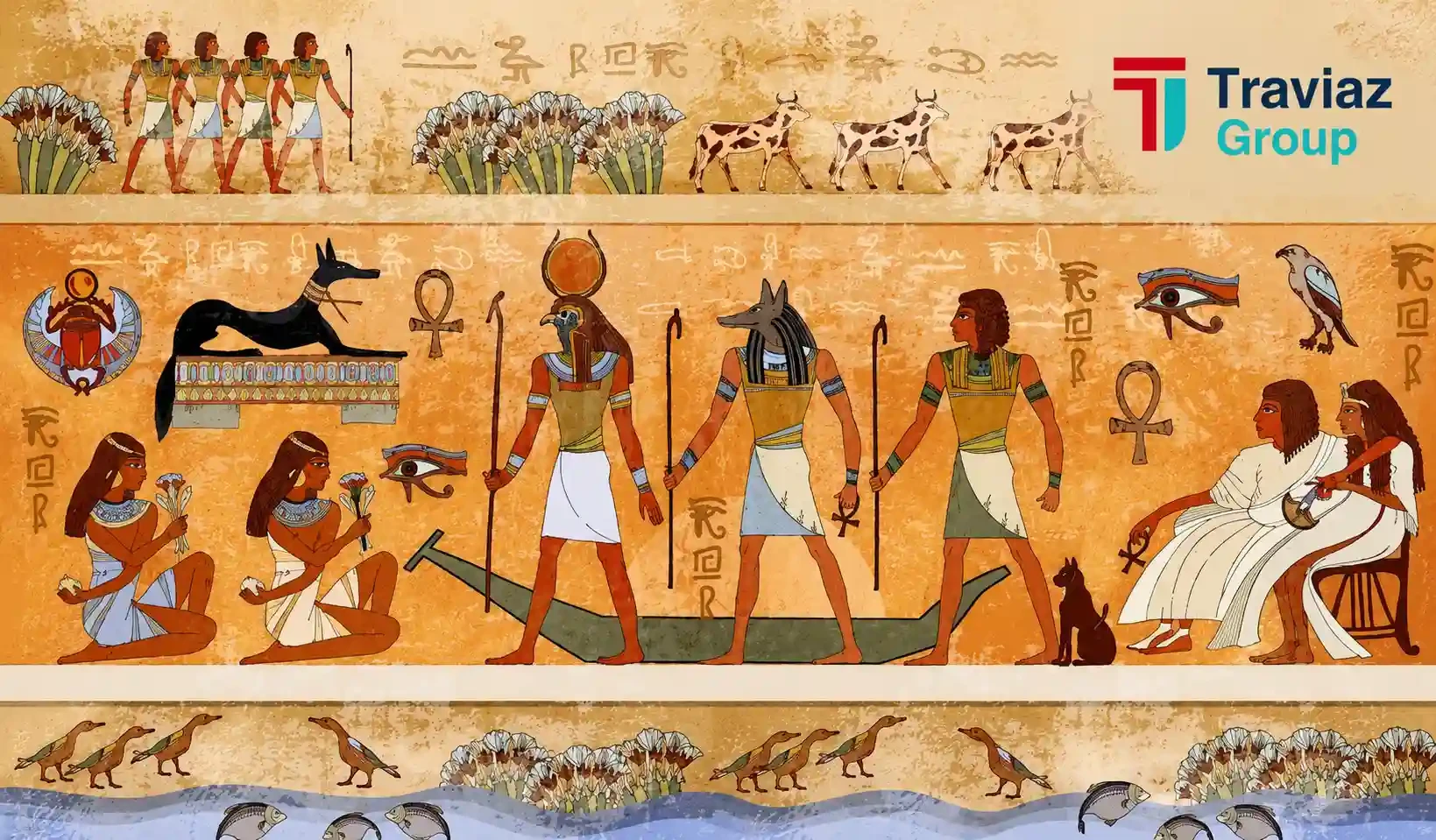
Symbols like the Eye of Horus, the scarab, and the ankh are still present in contemporary Egyptian jewelry, art, and interior design. Pharaonic engineering, mathematics, and medical techniques contributed to a body of human knowledge whose effects remain visible to this day. Kohl, which ancient Egyptian women used as protection against the sun, is still widely worn in Egypt. Extended family values and a deep attachment to the land and the Nile continue in the Egyptian countryside in an almost literal way.
What is the Difference Between Ancient vs. Modern Egypt Lifestyle?
Pharaonic society was fundamentally agricultural, governed by Nile cycles and fixed religious rituals. Egypt today is a rapidly urbanizing country with a digital economy, social media platforms, and a massive entertainment industry that exports content to the entire Arab world.
Daily Life in Modern Cairo
A Cairene's day opens with the Fajr call to prayer and a plate of ful medames, followed by roads that take twice as long as they should. Real social life picks up after midnight in cafés, along the corniche, and in local restaurants. Cairo is a city that never sleeps, and that late-night rhythm catches many Western visitors completely off guard.
Egyptian Hospitality, Social Norms, and Religion
Hospitality, religion, and social norms are three interwoven threads that make up the fabric of daily life in Egypt. Grasping these threads transforms a tourist visit into a genuine human experience with people, not just a walk past buildings.
Is Egypt a Friendly Country for Tourists?
Among the most welcoming destinations in the world, Egypt is a place where locals are known for their immediate openness with strangers. The smiles and spontaneous offers of help on the street are not a performance for tourists. They are a deeply rooted cultural trait, built on the belief that treating a guest like a brother is a moral obligation.
How Do Egyptians Typically Greet Each Other?
A handshake is the standard greeting between men, often accompanied by a light touch on the shoulder among friends. Between women and between friends of the same gender, a kiss on both cheeks is very common. Verbal greetings are extended and meaningful, and cutting them short or skipping them entirely is considered openly rude.
The Concept of Insh'Allah
Far more than a religious phrase, "Insh'Allah" is a complete life philosophy that reflects the Egyptian's acceptance that the future belongs to God, not to any individual. A Western visitor expecting a clear yes or no may find it puzzling, but in the Egyptian context it means: "I will do my best, and the rest is in God's hands."
The Role of Religion in Daily Life
Sunni Islam is the religion of roughly 90% of Egyptians and sets the rhythm of the day through five prayers announced by the call to prayer. Coptic Christians make up approximately 10% of the population and have their own churches, holidays, and institutions firmly embedded in Egyptian society. Zakat and ongoing charitable giving are deeply held values in the Egyptian conscience regardless of religious affiliation.
The Tourist's Etiquette Guide: Navigating Social Boundaries Safely
Egyptian culture welcomes visitors, but it does expect a basic level of respect for local norms. Knowing these boundaries protects you from uncomfortable situations and opens the door to genuine connection with Egyptians.
What is Considered Rude in Egyptian Culture?
Pointing the sole of your shoe toward someone seated is a direct insult in Egyptian culture. Flatly refusing tea or coffee when it is offered is considered social coldness. Displaying public anger and shouting at anyone causes the person to lose all respect in the eyes of everyone around them.
Taboos in Egyptian Society to Avoid
Criticizing religion or religious institutions in any public setting is an absolute red line. Public political criticism is sensitive territory and is best avoided entirely with strangers. Eating, drinking, or smoking openly during Ramadan daylight hours causes genuine discomfort to those around you and is considered disrespectful.
What is the Proper Etiquette for Visiting a Mosque in Egypt?
Removing your shoes before entering is mandatory, not optional, in all Egyptian mosques. Silence and respect for worshippers are required, especially during the five prayer times. Women must cover their head, shoulders, and knees before entering, and scarves are usually available at the entrances of major mosques for visitors.
How Do You Handle Physical Touch and Social Boundaries in Public?
When shaking hands across genders, it is best to wait for the woman to extend her hand first before initiating. Public displays of affection between couples, such as kissing or embracing, are considered inappropriate in public spaces. Traditional ahwa cafés are historically male spaces, and while female tourists are welcome in modern cafés, traditional ahwas are a different matter entirely.
Rules for Taking Photos of Locals
Asking permission before photographing anyone is both a moral and cultural obligation in Egypt. A small tip after taking someone's photo is greatly appreciated, especially from vendors and village residents. Photographing military installations, bridges, or police stations is prohibited by law and can lead to serious trouble.
Dress Code: What to Wear in Egypt
Clothing in Egypt is not just a personal preference. It is a message of respect to the surrounding community, and dressing appropriately reduces unwanted attention and opens the door to more comfortable social interaction.
What Are the Characteristics of Traditional Egyptian Clothing?
The loose-fitting galabiya is the traditional garment for both men and women in rural areas and working-class Cairo neighborhoods. Lightweight linen and cotton fabrics dominate due to the high heat that persists for most of the year. The hijab is common among Muslim women but is not required for female tourists in public spaces.
What Should a Female Tourist Wear in Egypt?
A maxi dress or wide-leg pants with a shoulder-covering top are the ideal choices for city tours and market visits. Keeping a lightweight scarf in your bag is a practical necessity for covering your head when entering mosques and religious sites. Outside coastal resorts, tight, sheer, or revealing clothing is best avoided to minimize unwanted attention.
Do Tourists Have to Cover Their Hair in Egypt?
No, covering your hair is not legally required for female tourists in Egyptian public spaces. The only binding requirement is inside mosques, and scarves are typically available free of charge or for a small donation at the entrances of major mosques for visitors.
Surviving the Logistics: Toilets, Tipping, and Haggling
This section addresses the practical concerns that polished travel guides tend to skip but that occupy every first-time visitor to Egypt.
What Should I Know About Using Public Toilets in Egypt?
Western-style toilets are the norm in hotels, tourist restaurants, and major archaeological sites. Squat toilets are still found at remote stations, older mosques, and some local eateries. The essentials to carry in your day bag are:
- Tissues: Toilet paper is scarce in public restrooms and is sometimes offered in exchange for a small tip.
- Hand sanitizer: Soap is not always available, even at tourist sites.
- Small change: Entry fees at some restrooms do not exceed 2 to 5 Egyptian pounds and are paid at the door.
Remember: do not put paper in the toilet. Place it in the bin beside it, as the plumbing cannot handle it.
The Reality of Baksheesh Explained
Baksheesh in Egypt is not an optional gratuity. It is a structural part of the tourism economy. Workers in the tourism sector earn base salaries that can fall below $100 a month and rely on baksheesh for 50 to 75% of their actual income. Not tipping is considered offensive behavior and directly affects that person's daily livelihood.
How Much Should You Tip a Tour Guide?
The documented benchmarks for 2026, based on an exchange rate of 48 to 50 Egyptian pounds to the dollar, are:
- Private guide, full day: $10 to $15 per person, or $20 to $30 per couple.
- Group guide: $5 to $8 per person per day.
- Private driver: $5 to $8 per person per day.
- Nile cruise crew: $10 to $12 per person per night in a shared box.
- Hotel porter: 20 to 50 Egyptian pounds per bag.
- Public restrooms: 10 to 20 Egyptian pounds per visit.
US dollars and euros are preferred by guides and drivers. Egyptian pounds work fine for small daily tips.
How Do You Haggle Successfully in Khan el Khalili?
Bargaining in Khan el Khalili is not just commerce. It is a social ritual that vendors themselves enjoy. Opening prices are always inflated, and the final discount typically lands between 30 and 50% off the first number quoted. The steps to a successful negotiation are:
- Start by offering half the asking price as your opening position.
- Keep smiling and stay lighthearted throughout the entire exchange.
- Say "la shukran" and walk away, and the vendor will usually call you back with a better price.
- Learn simple Arabic phrases like "bikam?" and "ghali awi," because they open doors to warmth and better deals at the same time.
Traditional Egyptian Dining and Social Food Events
Food in Egypt is not just sustenance. It is a social act that brings people together and expresses generosity and belonging. Understanding Egyptian table customs turns every meal into a complete cultural experience.
What Are the Unspoken Rules of Traditional Egyptian Dining?
Sharing from a single dish is perfectly normal in Egyptian homes, and refusing to do so makes the host uncomfortable. Accepting whatever food is offered is a social obligation, even if you only take a small piece. Leaving a small amount on your plate signals that you are fully satisfied, while clearing it entirely may prompt the host to refill it.
Famous Egyptian Food Dishes Tourists Must Try
The standout dishes that no visit is complete without trying are:
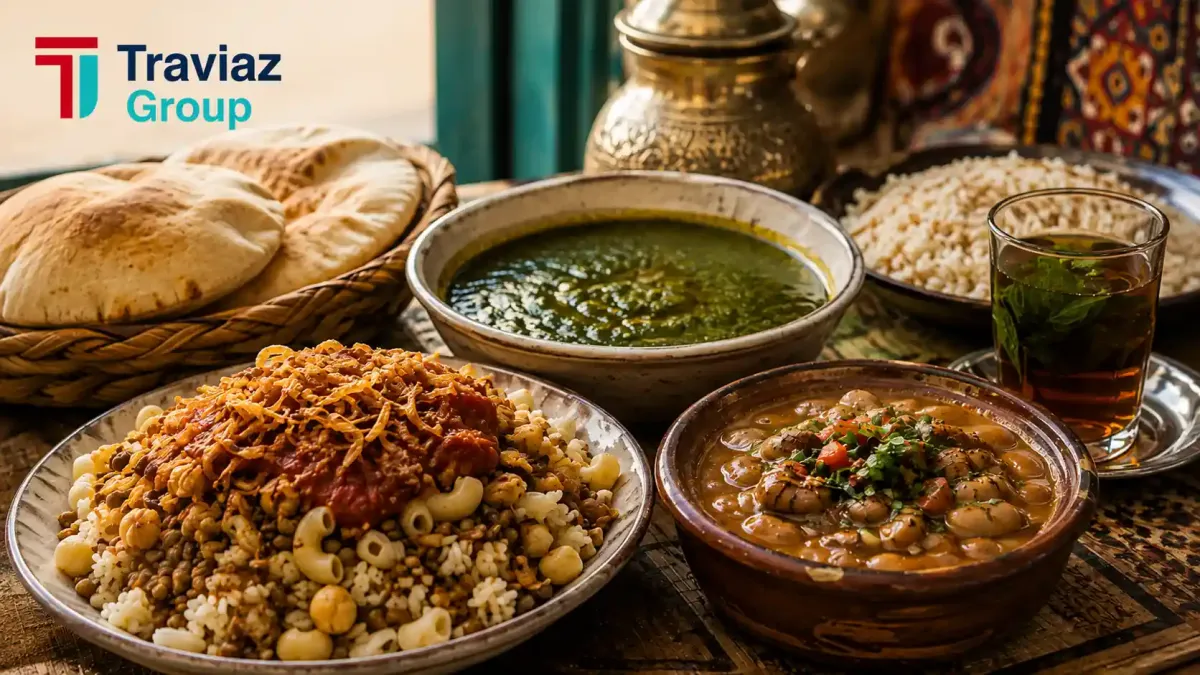
- Koshari: A mix of lentils, pasta, rice, and spicy tomato sauce, and the most beloved street dish in all of Egypt.
- Ful Medames: Slow-cooked fava beans with lemon and oil, and the most widely eaten breakfast in the country.
- Molokhia: A thick soup made from jute leaves with garlic, served with chicken or rabbit.
- Ta'meya: Egyptian falafel made from fava beans rather than chickpeas, and older and more flavorful than its regional counterparts.
Why is Egypt Famous as a Tea-Loving Nation?
Strong black tea with mint, known as "shay bel na'na'," is the backbone of Egyptian hospitality and is served the moment any guest arrives, before any conversation or business begins. Flatly refusing it can be read as coldness, but politely declining due to a caffeine sensitivity is always met with understanding and warmth.
Where Can I Find Authentic Hygienic Local Food Tours?
Booking with a trusted agency like Traviaz guarantees food tours at carefully selected local restaurants that meet reliable hygiene standards. Eating at random street carts in crowded tourist areas carries real risks. Traviaz arranges food tours in downtown Cairo covering koshari, ful, and ta'meya with a guide who knows the best and cleanest spots in the city.
Cultural Immersion: Arts and Indigenous Heritage
Egyptian culture holds an artistic and human richness that goes far beyond what you see in museums and archaeological sites.
Bedouin and Nubian Cultures
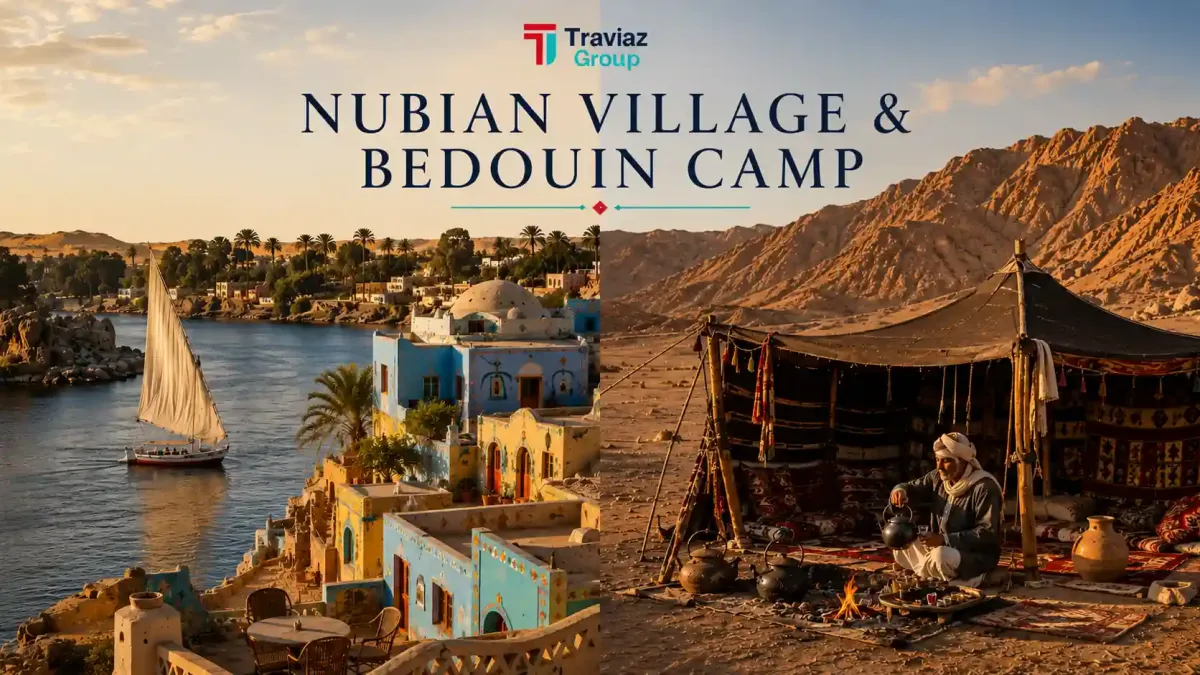
The Sinai Bedouin are an authentic nomadic community that has lived on the Sinai Peninsula for thousands of years and maintains its own tribal customs and laws. Nubians live in southern Egypt around Aswan and stand apart with their own language, music, and brightly colored homes that look nothing like the rest of Egypt.
How to Book an Authentic Bedouin Camp Experience in Sinai?
Spending a night in a Bedouin camp in Sinai is an experience that includes a traditional zarb dinner cooked under the sand and a tea session around the fire under a sky full of stars. Booking through Traviaz ensures certified camps that respect the environment and support the local Bedouin community directly.
How Do I Book a Reputable Nubian Village Tour in Aswan?
A Nubian village tour begins with a felucca ride on the Nile to the colorful villages on the west bank, where residents welcome you with tea and share stories of their displacement and return. Traviaz organizes Nubian tours that ensure the proceeds go directly to the host families and not to commercial middlemen.
Planning Your Cultural Trip to Egypt with Traviaz
The difference between an ordinary trip and one that changes you is the guide beside you and the agency that planned your journey.
Cairo vs Luxor: Which is Better for Cultural Immersion?
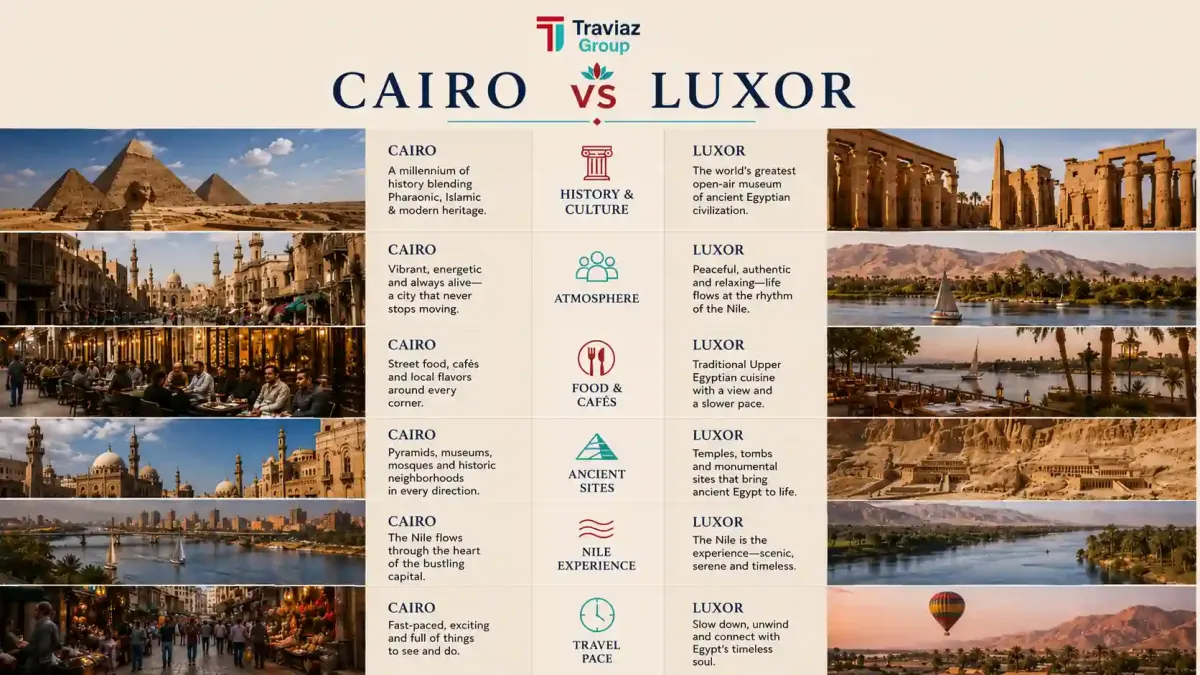
Cairo delivers the Islamic, Coptic, and contemporary urban experience all at once in a restless, layered mix that never sleeps. Luxor offers a concentrated Pharaonic archaeological experience in a quieter and more digestible setting. The honest answer is that both are necessities, not options, and a week that combines them gives you the full picture.
How Do I Choose Between Luxury and Budget Cultural Trips?
A luxury package with Traviaz means a private licensed Egyptologist, approved hotels, and seamless transfers. The budget option means a group guide with a small number of travelers, three-star accommodation, and more time for independent exploration. Both get you to the same archaeological sites at different service levels.
How Can I Hire a Private Certified English-Speaking Guide in Cairo?
Traviaz provides licensed English-speaking Egyptologists in Cairo, Luxor, and Aswan, and they serve as an effective barrier against pushy vendors while unlocking a depth of knowledge you will not find in any guidebook. Reach out through traviaz.com to book your private guide.
Can Unmarried Foreign Couples Share a Hotel Room in Egypt?
Yes, foreign couples without Egyptian passports can share hotel rooms without any legal complications. Egyptian law applies to Egyptian nationals only, and international hotels like Marriott, Hilton, and Sofitel handle foreign couples in the standard Western way.
How Do You Safely Prepare for Cultural Trips as a Solo Female Traveler?
Staying in upscale neighborhoods like Zamalek and Maadi reduces unwanted attention significantly. Booking with Traviaz means having a guide who acts as an effective social buffer at busy archaeological sites. Uber in Cairo is a safer choice than a random taxi because every ride is tracked and recorded.
FAQs
What Language is Primarily Spoken in Egypt?
Egyptian Arabic is the dialect used in daily communication between Egyptians, and Modern Standard Arabic is the official language of writing and media. English and French are widely spoken in tourist areas and among staff at major hotels and restaurants.
What Are the Top-Rated Boutique Agencies for Cultural Tours in Egypt?
Traviaz is one of the most prominent boutique agencies specializing in cultural tours in Egypt, and it stands out through its licensed Egyptologists and custom itineraries that stay well away from repetitive mass tourism.
Where Can I Find a Reliable Khan el Khalili Market Guide?
Booking in advance with Traviaz gets you a local guide who knows Khan el Khalili from the inside, helps you negotiate, and steers you away from shops selling Chinese-made products under the label of Egyptian authenticity.
What Will You See on an Islamic Cairo or Coptic Cairo Walking Tour?
Islamic Cairo holds the Ibn Tulun Mosque, Al-Azhar, Al-Muizz Street, and Khan el Khalili within an urban fabric that is more than a thousand years old. Coptic Cairo brings together the Hanging Church, the Roman fortress, the Coptic Museum, and the Holy Family Cave all within one compact and cohesive area.
Why Take an Alexandria Cultural Day Trip?
Alexandria adds a Hellenistic and Roman dimension that is entirely different from the Pharaonic character of the rest of Egypt. The Bibliotheca Alexandrina, the Roman Theater, Qaitbay Citadel, and the famous fish market make it a complete cultural destination that is well worth a full day, just two and a half hours from Cairo.