
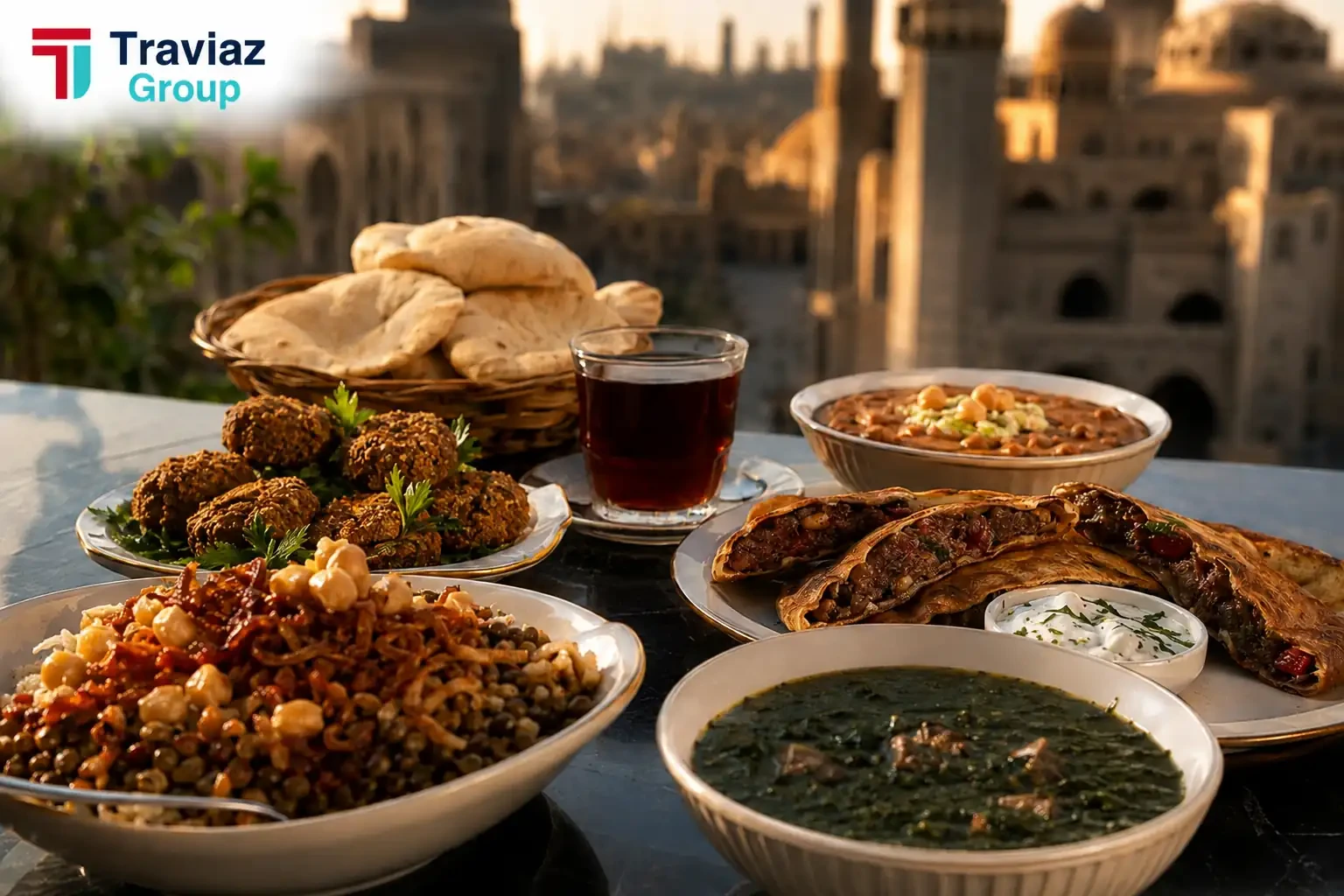
Egyptian Food: Why It's the Ultimate Culinary Adventure for Your Next Trip
The smell hits you before you see anything. Cumin and coriander rising from a street cart, garlic frying in oil somewhere in a narrow alley, the sweetness of fresh sugarcane juice cutting through the heat. Walking through Cairo's historic districts or along Alexandria's Corniche, food is not something you go looking for — it finds you.
Egyptian food is a blend of Mediterranean, Middle Eastern, and African influences built on legumes, fresh vegetables, warm spices, and bread that has been central to daily life for thousands of years. It is one of the richest and least-exported cuisines in the world, which means the only way to experience it properly is to come here.
This guide covers the ten traditional dishes every visitor should try, how to eat street food safely, what things cost and how much to tip, where to find authentic spots from the Pyramids to Nile cruises, and how Traviaz's local food guides make the whole experience easier and safer.
What Are the Staples of the Egyptian Diet?
Egyptian cuisine is built on a short list of ingredients that appear in almost every meal in some form. Understanding them makes every dish on this list easier to read.
Bread (Aish Baladi)
The Arabic word for bread in Egypt is aish, which also means life, and that tells you everything about its place at the table. Aish baladi is a round, flat, wholemeal loaf baked in a wood-fired oven until it puffs up and chars slightly at the edges. It comes with every meal, costs almost nothing, and serves as both utensil and accompaniment. No Egyptian breakfast, lunch, or street food experience is complete without it.
Legumes and Fresh Spices
Fava beans, lentils, and chickpeas form the protein backbone of everyday Egyptian cooking, particularly for the majority of the population that eats little or no meat on a daily basis. Cumin, coriander, garlic, and parsley appear in almost every savory dish, giving Egyptian food its warm, earthy character. The spice profile is aromatic rather than hot. Egyptian food is heavily spiced but rarely chili-hot.
How Does Egyptian Food Compare to Middle Eastern Cuisine?
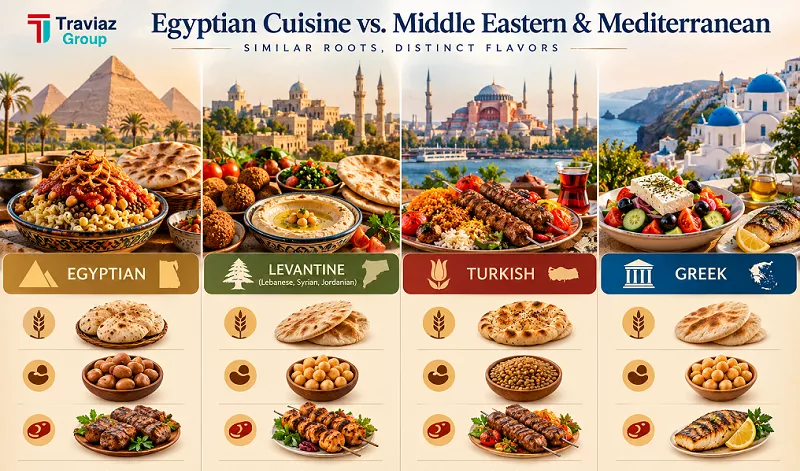
Egyptian food shares some dishes with Lebanese, Turkish, and Greek cuisines, but its identity is distinct. The Egyptian diet relies far more heavily on legumes and far less on meat than most Levantine cuisines. The use of fava beans instead of chickpeas in falafel, the specific spice combinations, and dishes like koshari and molokhia exist nowhere else in the region in the same form. Egyptian food is also generally less acidic than Lebanese cuisine and less rich than Turkish cooking.
10 traditional egyptian dishes you must try
Every dish on this list is either a national institution, a street food staple, or a cultural experience that tells you something about how Egyptians eat and live.
1. Koshari: Egypt's National Dish
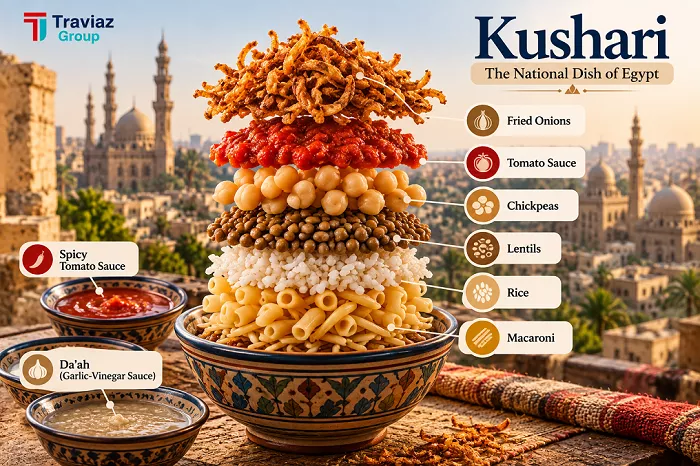
Koshari holds the place of the national dish in every Egyptian's heart. This dish combines rice, lentils, pasta, and chickpeas together in one bowl. Crispy fried onions and spicy tomato sauce go on top. Koshari originated in the early Islamic era and evolved over the centuries.
No other dish offers this variety of ingredients at this low a price. Koshary Abou Tarek restaurant in downtown Cairo is the most famous destination to try it. Visiting this lively restaurant is a tourist experience in itself. Koshari is an ideal option for vegetarians as it contains no animal products whatsoever.
2. Ful Medames: The Breakfast of Egyptian Champions
Millions of Egyptians start their day with a plate of ful medames every morning. Egyptian fava beans slow-cook for hours until they reach a creamy consistency. Garlic, olive oil, cumin, and lemon juice go in alongside them.
Ful always comes served with fresh baladi bread. This dish most likely traces its history back to ancient Pharaonic Egypt. Despite the simplicity of its ingredients, the taste differs from one vendor to another. You find it on every corner of Cairo from dawn until mid-morning.
3. Ta'meya: Egyptian Falafel with Its Own Identity
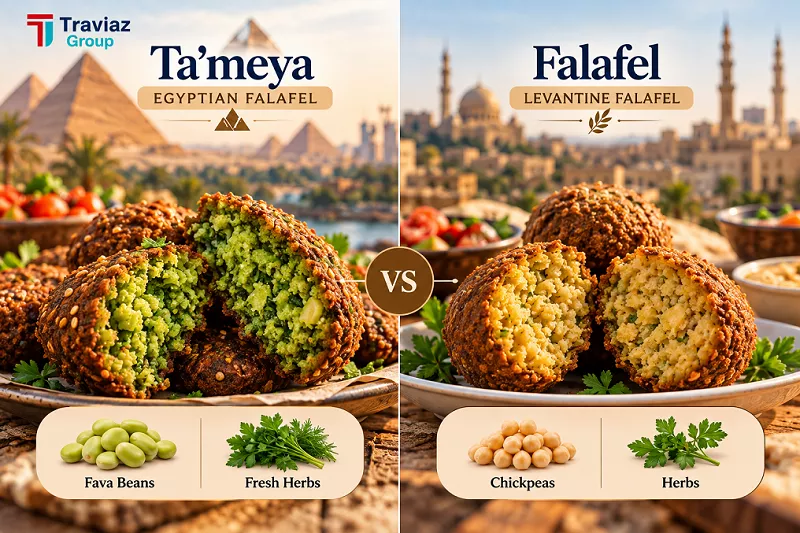
Egyptian ta'meya differs from the falafel known in the rest of the region. Crushed fava beans replace the chickpeas used in the Levant. Parsley, coriander, dill, onion, and garlic go into the mix. Cooks shape it into flat discs and dip it in sesame seeds before frying. The outside comes out crispy while the inside stays soft and green.
Ta'meya usually comes served in baladi bread with cucumber salad and tahini. You find it everywhere from early morning until midday.
4. Molokhia: The Pharaohs' Soup
Molokhia holds a very special place in the hearts of Egyptians. Finely chopped molokhia leaves are cooked in meat broth to make this dish. Garlic and coriander go in to give it an unforgettable aroma. The texture is thick and sticky, and the flavor is deep and entirely distinctive. Cooks serve it over white rice with grilled chicken or rabbit.
This dish appears in historical records going back to the Fatimid era and earlier. Its true flavor exists only in Egyptian homes or specialist restaurants.
5. Hawawshi: The King of Egyptian Street Sandwiches
Hawawshi ranks among the most famous Egyptian street foods of all time. Baladi bread gets stuffed with minced meat seasoned with onion, pepper, and spices. Cooks then place it on a hot griddle with a heavy iron press on top. The bread comes out golden and crispy while the inside stays packed with tender meat.
The high fat content of the meat is the secret behind its exceptional flavor. Hawawshi usually comes with tahini or a simple side salad. El Rifai Hawawshi restaurant behind Abdeen Palace in Cairo is one of its most famous spots.
6- Kebab, Kofta and Fattah
Halal beef and lamb are the most common meats in Egyptian cuisine. Pork is not served in popular Egyptian restaurants because Egypt is a predominantly Muslim country, and pork is not part of the local food culture. Kebab comes from seasoned cuts of lamb or beef grilled on skewers over charcoal.
Kofta is minced meat mixed with spices and parsley, shaped onto skewers and grilled. Fattah layers fried bread, rice, and slow-cooked meat with a broth of garlic and vinegar poured over the top, and appears at weddings and large family gatherings. The smell of charcoal from these restaurants pulls you in straight from the street.
7. Stuffed Pigeon: One of Egypt's Most Prestigious Dishes
Many visitors are surprised to learn that pigeon is a prestigious dish in Egypt. Farmers raise pigeons specifically for eating in towers spread across Egypt. The pigeon gets stuffed with seasoned rice or freekeh, then grilled or baked.
The meat is tender with a rich flavor that differs entirely from chicken. Farahat restaurant in Islamic Cairo near Al-Azhar Mosque is the primary reference for this dish. Trying it once is enough to understand why Egyptians love it.
8. Sayadeya Fish: The Taste of the Egyptian Sea
Sayadeya fish ranks among the most prominent dishes of Egypt's coastal cities. White fish such as sea bass or tilapia are cooked with yellow rice and onion. Spices and tomato sauce go in to give it a balanced and distinctive flavor.
Alexandria, Suez, and Port Said are more famous for it than anywhere else. It usually comes served in clay pots that preserve its heat and flavor. Visiting Alexandria to taste this dish beside the sea is an experience like no other.
9. Basbousa and Kanafeh
Basbousa is a dense semolina cake soaked in sugar syrup, sometimes topped with cream or nuts, with a texture that is firm, sweet, and slightly grainy in the best possible way. Kanafeh is made from thin strands of shredded pastry stuffed with soft white cheese or nuts, baked until golden, then soaked in syrup. Both are Egyptian staples available in every sweet shop in the country, and both are best eaten warm and fresh.
10. Umm Ali
Umm Ali is Egypt's answer to bread pudding, and it is considerably richer than the British version. Layers of puff pastry go into a deep dish with milk, cream, sugar, raisins, and nuts, then bake until the top turns golden and the inside becomes a warm, soft, deeply comforting mass. It is served hot, usually as a shared dish, and it is the kind of dessert that makes you stop mid-conversation.
Navigating Dietary Restrictions in Egypt
Egyptian cuisine accommodates a wide range of dietary needs more easily than most visitors expect, but knowing what to ask for and what to avoid makes the difference between a stress-free trip and a difficult one.
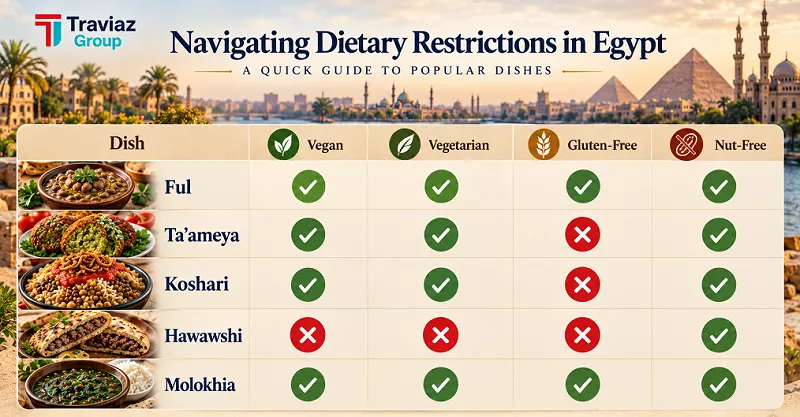
Are There Vegetarian, Vegan, or Gluten-Free Options?
Egyptian food is one of the most naturally plant-friendly cuisines in the world. Koshari, ful medames, ta'meya, molokhia, besara, baba ghanoug, and most of the mezze spread are all authentically vegetarian without any modification. Vegans can eat well at almost every price point. The challenge is not finding plant-based food but identifying which dishes use meat broth as a base. Molokhia in particular is often cooked in chicken or rabbit stock, and asking specifically is important.
For gluten-free travelers, rice, ful, and ta'meya are safe staples. The difficulty comes in cross-contamination in kitchens that also handle bread and pastry. A Traviaz guide who speaks Arabic can communicate your requirements directly and steer you toward kitchens that can accommodate them.
Traveling to Egypt with a Nut Allergy
Nuts appear in baklava, kanafeh, kunafa, fattah, and many other dishes, but they also appear unexpectedly in spice blends and in some savory preparations. Egyptian spice markets are a genuine risk environment for anyone with a severe nut allergy, as the open-air mixing and shared scooping equipment means cross-contamination is difficult to avoid.
The safest approach is to stick to dishes you know and to communicate your allergy clearly before ordering. A local guide who can read ingredient labels and speak directly to kitchen staff in Arabic is the most reliable solution for travelers with serious allergies.
Drinks in Egypt: What to Pair with Your Meals
Egyptian coffee comes served in popular cafes throughout the day, thick and cardamom-scented in the traditional style. Mint tea is a staple in every home and cafe, served sweet and poured from a height to create a slight foam. Fresh fruit juices are everywhere on the streets at very affordable prices, with sugarcane, mango, and guava among the most popular in Cairo.
Alcohol is not served in most popular Egyptian restaurants. In hotels, upscale tourist restaurants, and some licensed establishments in tourist areas it is available, but it is not part of everyday Egyptian dining culture. Travelers who want to drink with their meals should book restaurants specifically licensed to serve alcohol or dine in their hotel.
Is It Safe for Tourists to Eat Street Food in Egypt?
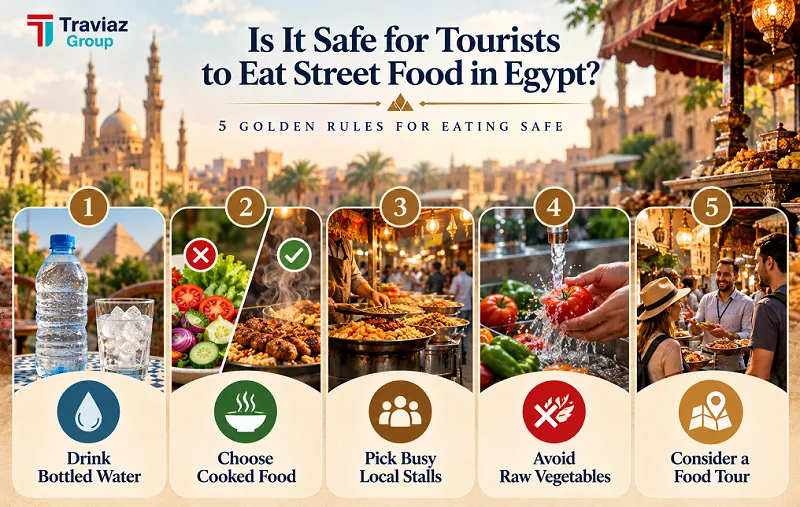
Street food in Egypt is generally safe when you know what to look for. The risk is not the food itself but the conditions it is prepared and stored in. These rules cover the essentials:
- Eat where locals eat and where turnover is high. A busy cart means the food is fresh.
- Stick to cooked food. Avoid unpeeled raw vegetables and salads washed in tap water.
- Drink bottled water throughout your trip. Ice in drinks may come from non-bottled water in some establishments.
- Avoid fresh juices that include ice unless you are in a high-end venue that uses factory-made ice.
- Peeled fruit is safe. Unpeeled fruit eaten without washing in bottled water is not.
Booking a Cairo nighttime food tasting tour with Traviaz removes all of this uncertainty. Every vendor on the tour is pre-vetted, the kitchens are known, and your guide has eaten at every stop personally.
Egyptian Dining Etiquette, Tipping, and Budgeting
Understanding how Egyptians eat, what things cost, and how tipping works saves you from the two most common tourist frustrations: overpaying and undertipping.
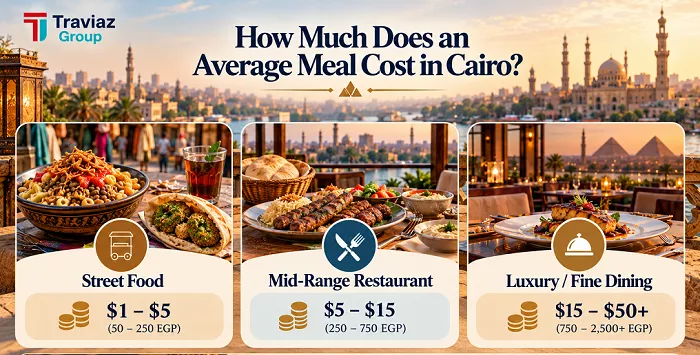
How Much Does an Average Meal Cost in Cairo?
Egyptian food is among the most affordable dining experiences available anywhere in the world for international travelers.
|
Meal Type |
Cost Level |
|
Street food (koshari, ful, ta'meya, hawawshi) |
$ — budget-friendly |
|
Sit-down local restaurant |
$$ — mid-range |
|
Upscale tourist or Nile-view restaurant |
$$$ — premium |
|
Organized food tour |
$$$ — premium |
Dining Etiquette and Baksheesh
Egyptians eat dinner late. Nine or ten in the evening is normal, and restaurants in popular areas stay busy well past midnight. Lunch is the main meal of the day for many families, typically eaten between two and four in the afternoon.
Tipping is customary and expected. In sit-down restaurants, ten to fifteen percent is standard. In street food settings, rounding up the bill or leaving small change is appreciated. Baksheesh, a small tip given for minor services, is a normal part of everyday Egyptian life and refusing it entirely can cause awkwardness. The simplest approach is to carry small bills and tip modestly and consistently.
Cairo vs. Alexandria: Which Is Better for Food Lovers?
There are some differences between Cairo and Alexandria for food lovers:
|
Comparison |
Cairo |
Alexandria |
|
Most famous dish |
Koshari and hawawshi |
Alexandrian liver and sayadeya fish |
|
Food culture |
Popular, lively, and diverse |
Coastal and more relaxed |
|
Seafood |
Relatively limited |
Essential and very fresh |
|
Street food scene |
Vast and spread across all neighborhoods |
Concentrated along the Corniche and old markets |
|
Upscale options |
Many and very varied |
Fewer but overlooking the sea |
Seafood lovers prefer Alexandria for the freshness of its fish and its distinctive atmosphere. Those who want the full variety of Egyptian food will find no substitute for Cairo. The ideal trip combines both cities in one complete itinerary.
Where to Eat: From the Pyramids to Luxury Nile Cruises

For travelers near the Giza Plateau, several restaurants with direct Pyramid views serve Egyptian and international menus at premium prices. The experience of eating within sight of the Great Pyramid is worth it for one meal. For everyday eating in the area, the local neighborhoods around Giza have street food and sit-down restaurants at a fraction of the tourist-facing price.
In Luxor, the best traditional Egyptian food is found in local restaurants away from the main tourist strip, where the menus are in Arabic and the clientele is mostly Egyptian.
Nile cruise food quality varies enormously. The standard cruise buffet tends toward a generic international menu designed to be inoffensive rather than authentic. Booking a cruise through Traviaz ensures that the onboard food reflects the actual Egyptian culinary tradition, with fresh ingredients, regional dishes, and a menu that changes with the geography of the river rather than staying fixed from Luxor to Aswan.
Why Book Your Culinary Vacation with Traviaz?
Egyptian food at its best is not found in hotel restaurants or in the places that show up first in tourist searches. It is found in specific streets, specific carts, and specific family-run kitchens that a local guide knows by name. Traviaz's food guides are Cairo residents who eat at these places regularly, not researchers who memorized a list.
The Cairo nighttime street food tour covers the historic districts after dark, when the food scene peaks and the city is at its most alive. The Alexandria day trip builds around the morning fish market and the Corniche seafood restaurants, with a guide who knows which vendors have been operating for generations. Private English-speaking food guides are available for travelers who want a fully customized itinerary built around their specific interests and dietary requirements.
For travelers who worry about food safety, dietary restrictions, or simply not knowing where to start, booking through Traviaz removes every logistical obstacle. Your guide handles the language, knows the kitchens, and has already vetted every stop on the tour.
FAQs
What are the main spices used in Egyptian cooking?
Cumin, coriander, garlic, and a spice blend called baharat are the foundation of most savory Egyptian dishes. Cinnamon and cardamom appear in rice dishes and some meat preparations. Egyptian food is aromatic rather than hot, and fresh herbs, particularly parsley, dill, and coriander, are used generously.
What not to eat in Egypt?
Unpeeled raw vegetables, salads washed in tap water, and juices made with non-bottled ice carry the highest risk of stomach upset for visitors. Shellfish from unknown sources in inland cities is also worth avoiding. The safest approach is to stick to cooked food from busy, high-turnover establishments and to drink bottled water throughout your trip.
Are dairy products common in Egyptian meals?
Yes. White cheese, similar to feta, appears at almost every Egyptian breakfast alongside yogurt and butter. Cream features in desserts like kunafa and Om Ali. Fresh milk is widely available but most travelers stick to packaged dairy for safety reasons.
What is the national dish of Egypt?
Koshari is Egypt's unofficial national dish. It combines rice, lentils, pasta, and chickpeas in one bowl. Tomato sauce and crispy fried onions go on top.
What is the most famous Egyptian breakfast?
Ful medames is by far the most common breakfast in Egypt. Ta'meya, baladi bread, cheese, and olives follow alongside it. Visitors find it everywhere from dawn until midday