
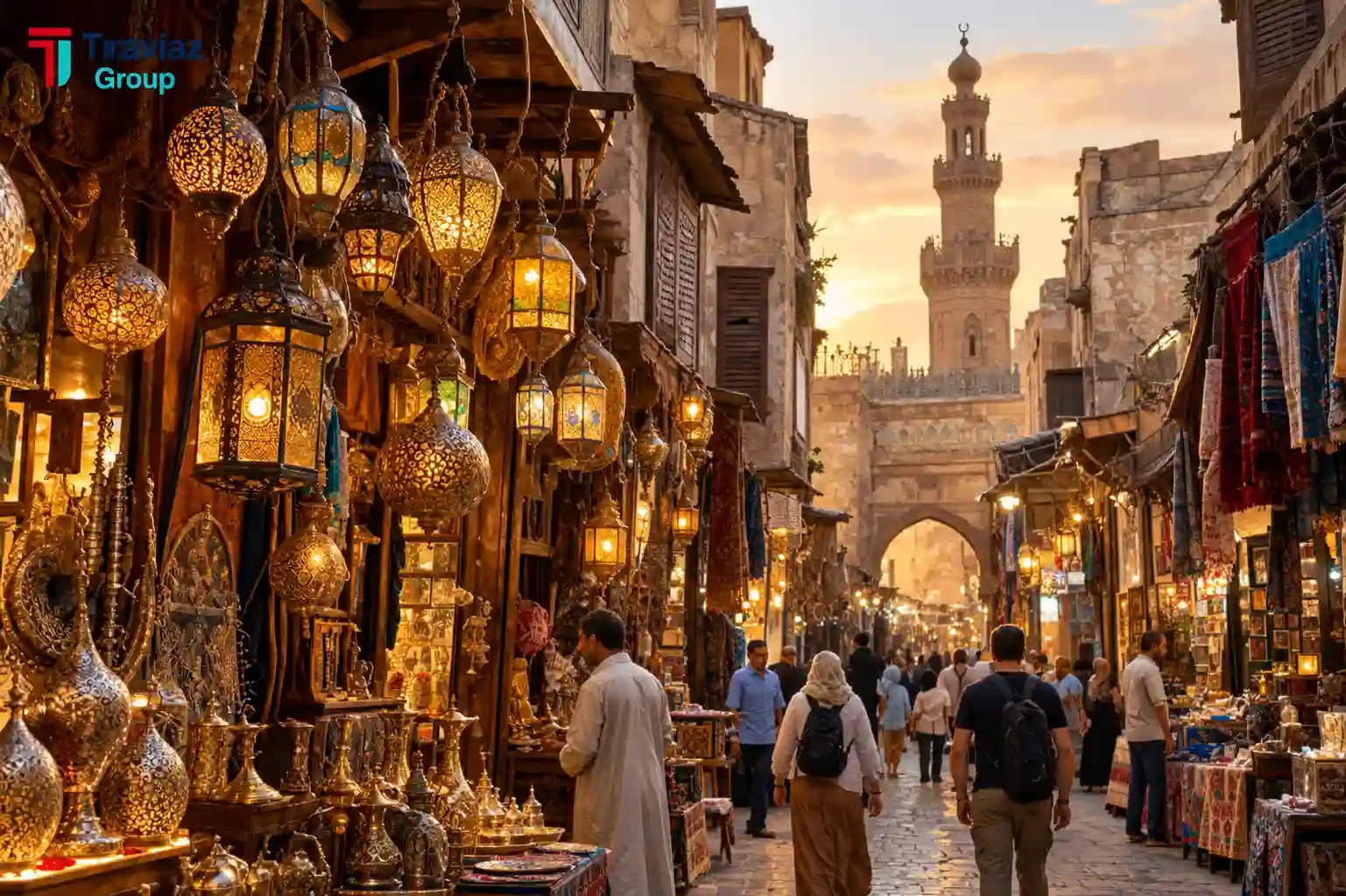
Best Local Markets and Bazaars in Cairo: Which Hidden Gems Should You Explore?
 Cairo's markets offer more than shopping, combining the scents, sounds, and craftsmanship of Islamic Cairo with centuries-old traditions. From the historic Khan el-Khalili, known for lanterns and spices, to the Street of the Tentmakers for embroidery, Souq al-Fustat for ceramics and carved wood, Wekalet el-Balah for Egyptian cotton and fabrics, and El Sagha for gold and silver, each market reveals a distinct side of authentic Cairo.
Experience the Authentic Soul of Cairo with Traviaz
A shopping experience in Cairo's markets needs more than a random stroll, as the city that created some of the most storied markets in the Islamic world deserves a guide who knows when the narrow alleys turn from a maze into a treasure.
This is the role Traviaz offers visitors to Cairo in 2026, by combining the chaos and beauty of the markets into a smoother experience that takes you to the right places at the right time with a guide who knows the details of every alley.
The authentic markets in Cairo extend from the best local markets in Cairo besides Khan el-Khalili, such as Souq al-Fustat and Street of the Tentmakers, to the popular neighborhoods where Egyptians themselves shop away from the usual tourist routes.
This diversity makes a list of authentic markets in Cairo that are not touristy suitable for those seeking a local experience, and for the serious collector and designer who wants to tell the difference between a genuine Egyptian product and a Chinese imitation.
Khan el-Khalili: The Historic Heart and Tourist Favorite
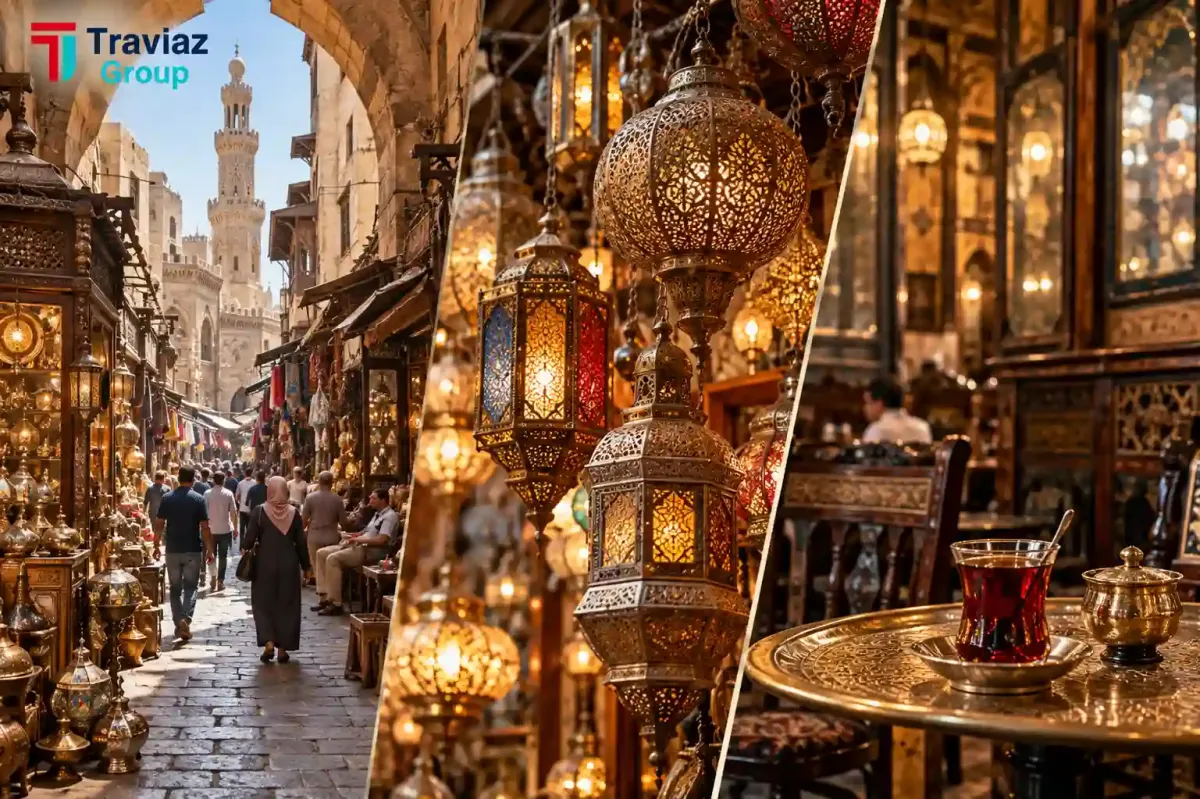
Khan el-Khalili stands as a witness to six centuries of trade, craftsmanship, and life in the heart of Islamic Cairo.
The market is not just a collection of shops, but a complete commercial district holding more than twenty interconnected caravanserais linked by a network of alleys and interior squares, and so its history, character, and secrets hold details that are worth exploring.
History and Vibe
Khan el-Khalili traces its origins to 1382, when the Mamluk prince Jaharkas al-Khalili ordered the demolition of the Fatimid caliphs' cemeteries and the construction of a khan or caravanserai on the cleared land.
This happened during the reign of Sultan Barquq, who launched a campaign to rebuild Cairo after the losses of the Great Plague in the thirteenth and fourteenth centuries.
By the end of the fifteenth century, the khan had become a major center in Cairo for merchants coming from Africa and the Mediterranean.
It was then demolished and rebuilt at the start of the sixteenth century with the addition of two massive historic gateways.
What you see today is the result of these accumulated centuries inside a network that combines authentic Mamluk art with the movement of contemporary trade.
Navigating the Alleys
The easiest reference point when moving through Khan el-Khalili is Al-Hussein Square, which can be relied upon when entering and exiting the market.
From there, the alleys branch toward the gold district to the east, the spice market to the north, and the craft workshops to the west.
Rather than staying in the main corridors crowded with tourists, you can head toward the side alleys where the real workshops and less inflated prices appear.
Tourist police in both official and plain-clothes uniforms are also present throughout the market during peak hours.
Photography Tip
The best time for photography in Khan el-Khalili is close to sunset, when the golden light covers the domes of the surrounding mosques and the brass lanterns illuminate the alleys.
This period is suitable for capturing the atmosphere of Islamic Cairo and the backdrop of minarets.
For those who prefer photographing in a quieter atmosphere away from tourist crowds, the early morning hours before ten are the most suitable.
Must-Visit Spot
Before leaving Khan el-Khalili, set aside some time for El-Fishawy Cafe, which has operated continuously since 1773 and remains owned by the founding family to this day through seven generations.
Naguib Mahfouz and a number of Egypt's leading intellectuals frequented the place during the twentieth century.
You can order mint tea or hibiscus and spend a quarter of an hour amid the atmosphere of old Cairo.
Beyond the Famous Bazaar: Authentic Markets in Cairo Not Touristy
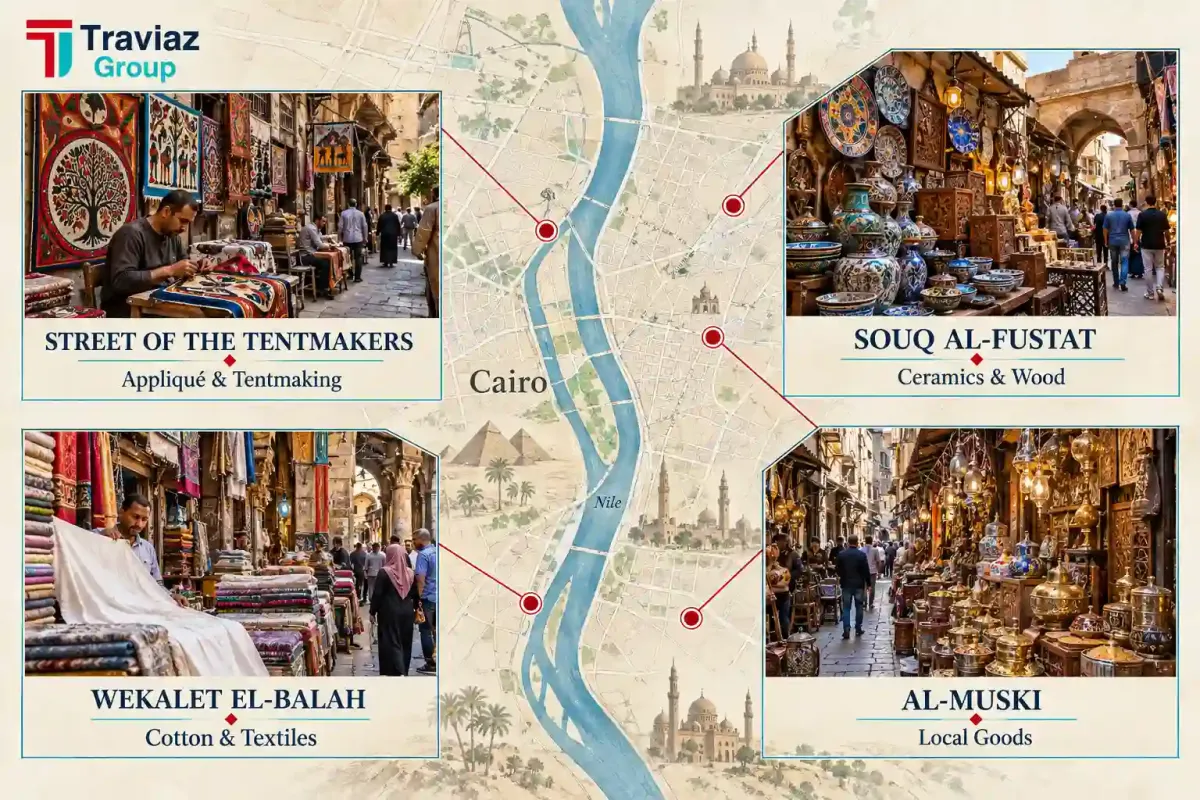
The local shopping experience in Cairo extends well beyond Khan el-Khalili, and markets exist that combine traditional crafts and daily trade away from the more crowded tourist routes.
These places are frequented by Egyptians and Cairo residents, and they also attract collectors and designers looking for distinctive pieces.
Street of the Tentmakers: Sharia al-Khayamiya
The Street of the Tentmakers, or Sharia al-Khayamiya, is located directly south of the historic Bab Zuweila gate, which dates to 1092 AD.
The market is covered, and its construction dates to the seventeenth century when Ridwan Bey al-Faqari, the prince of the Hajj caravans to Mecca, ordered the alley to be prepared to supply the pilgrims' needs of tents, saddles, water vessels, and ropes.
Today, a limited number of traditional craftsmen continue practicing the craft of Khayamiya, or applied embroidery, in this historic covered alley, which is the only one of its kind in the world still producing this art.
Khayamiya consists of colored fabric pieces decorated with geometric and Islamic patterns, stitched by hand layer upon layer.
A single piece may take weeks to complete, so the serious collector and interior designer finds Traditional Applique Work here at a distinguished level, and at prices that differ clearly from the products found in tourist shops.
These pieces can be used as part of home decor and not only as a gift.
Souq al-Fustat: The Artisan Hub
Souq al-Fustat is located in the heart of Old Cairo, opposite the religious complex that houses the Coptic Museum, the Hanging Church, and the Mosque of Amr ibn al-As, the first mosque in Africa.
The market was founded in 2002 inside a building designed in Hashemite stone in the style of the neighboring Babylon Fortress, and it holds around fifty workshops and galleries specializing in handicrafts, including ceramics, handmade glass, leather and copper products, carpets, carved wood, and Nubian and Bedouin creations from various Egyptian governorates.
The policy of fixed prices written on the pieces makes Souq al-Fustat a suitable option for a safe shopping tour in Cairo, Egypt, as the purchase process does not depend on bargaining and the visitor knows the price from the start.
Sales pressure is also noticeably lower compared to a number of Cairo's other markets.
Wekalet el-Balah: The Textile Haven
Wekalet el-Balah is one of the places where Egyptians actually shop for clothing and fabrics.
Textile trading in the area began centuries ago, when the goods of trading expeditions arriving via the Nile were unloaded and sold there directly.
Today the market extends through dense and branching alleys, and authentic Egyptian cotton and fabrics can be found there at prices far from the levels of tourist shops.
Moving through the area requires patience and some experience, as maps do not reveal all the details of the intertwining alleys.
Al-Muski Market: The General Market
Al-Muski Market represents a side of daily life in Cairo, as it is a popular market where Cairenes shop for household goods, clothing, and personal items.
The market does not rely on a tourist experience designed for visitors, which makes it suitable for those who want to see a daily aspect of Cairo away from tourist routes.
For the photographer, Al-Muski offers scenes from everyday Egyptian life that can be documented in a more local environment.
The Shopper's Guide: What to Buy and Where to Find It
Cairo's markets offer a wide range of craft products, fabrics, jewelry, and spices, but knowing where to buy and how to verify authenticity helps you tell the difference between a genuine piece and an imitation product:
Where to Buy Authentic Egyptian Cotton and Papyrus
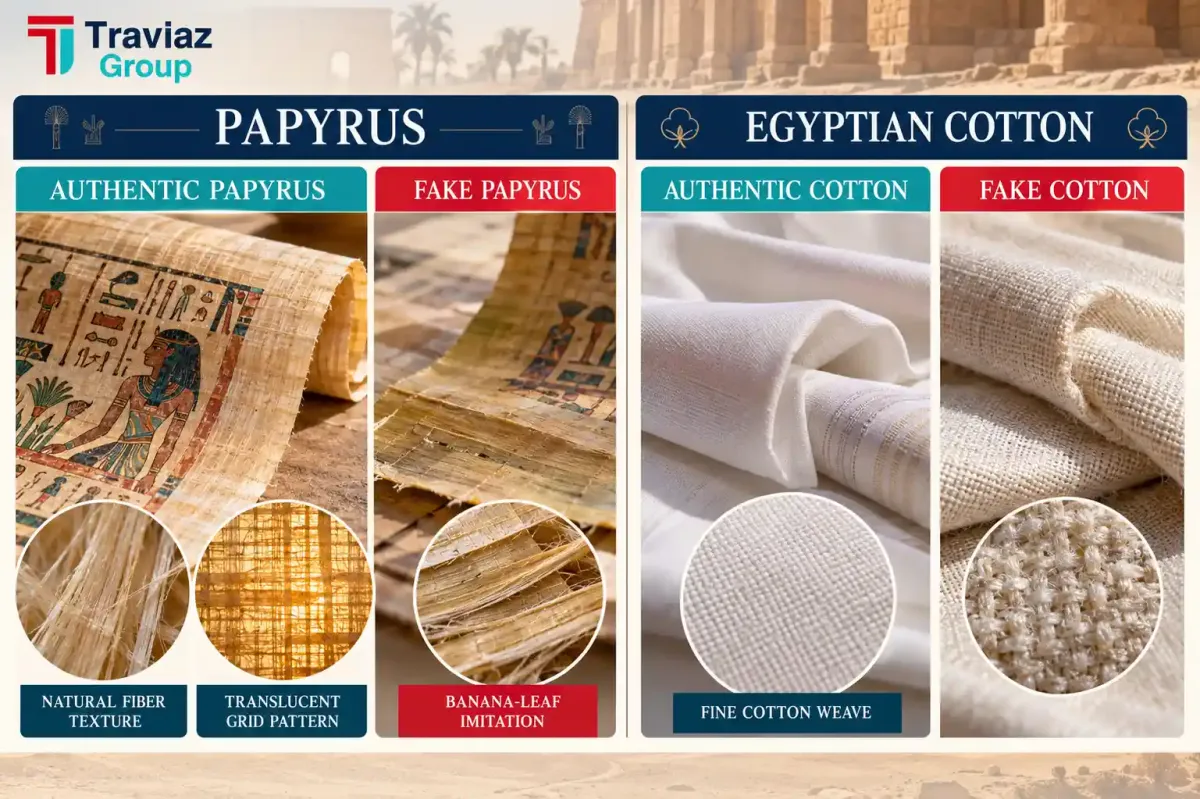
Genuine papyrus is made from the Cyperus papyrus plant through a process that includes soaking the roots for weeks, then cutting them into strips and arranging them in two perpendicular layers, pressing them, and drying them.
The result is a durable and flexible sheet that can be bent without breaking, and an interwoven fibrous structure appears in it when held up to sunlight.
Fake sheets made from banana leaves or sugarcane crumble quickly and do not show the same crosshatch structure.
A simple test can be done by gently bending the sheet: if it breaks or cracks, it is fake.
The best place to buy is a certified papyrus workshop that allows you to watch the manufacturing process, not just a street shop.
As for authentic Egyptian cotton, Wekalet el-Balah is a suitable place to buy it directly from traders away from the markups of tourist shops.
El Sagha Gold Market
El Sagha is the historic gold district inside Khan el-Khalili and is considered one of Egypt's oldest gold markets.
The selling process is based on the weight of the metal and the daily announced price per gram, with the addition of craftsmanship fees, which makes prices more comparable.
For silver, a wide range can be found in the alleys branching off the main khan, especially from goldsmiths who work in their workshops in front of visitors.
Spices and Lanterns
The best spice market in Cairo is located in the northern area of Khan el-Khalili, where bags of spices line up and the aromas of saffron, cumin, and hibiscus fill the air.
Buying spices whole rather than ground helps preserve the flavor and freshness.
As for the brass lanterns known as Fanoos, the craftsmen specializing in them can be found in the inner alleys away from the main facades.
Traditional Crafts
The traditional crafts and products worth seeking out include alabaster, which is distinguished by its translucency when held up to sunlight, and hand-woven carpets found in Souq al-Fustat and some Khan el-Khalili workshops.
Wooden products inlaid with mother-of-pearl are also available, with a clear variation in quality between pieces made by traditional craftsmen and ready-made imported products.
Mastering the Art of Haggling and Avoiding Scams
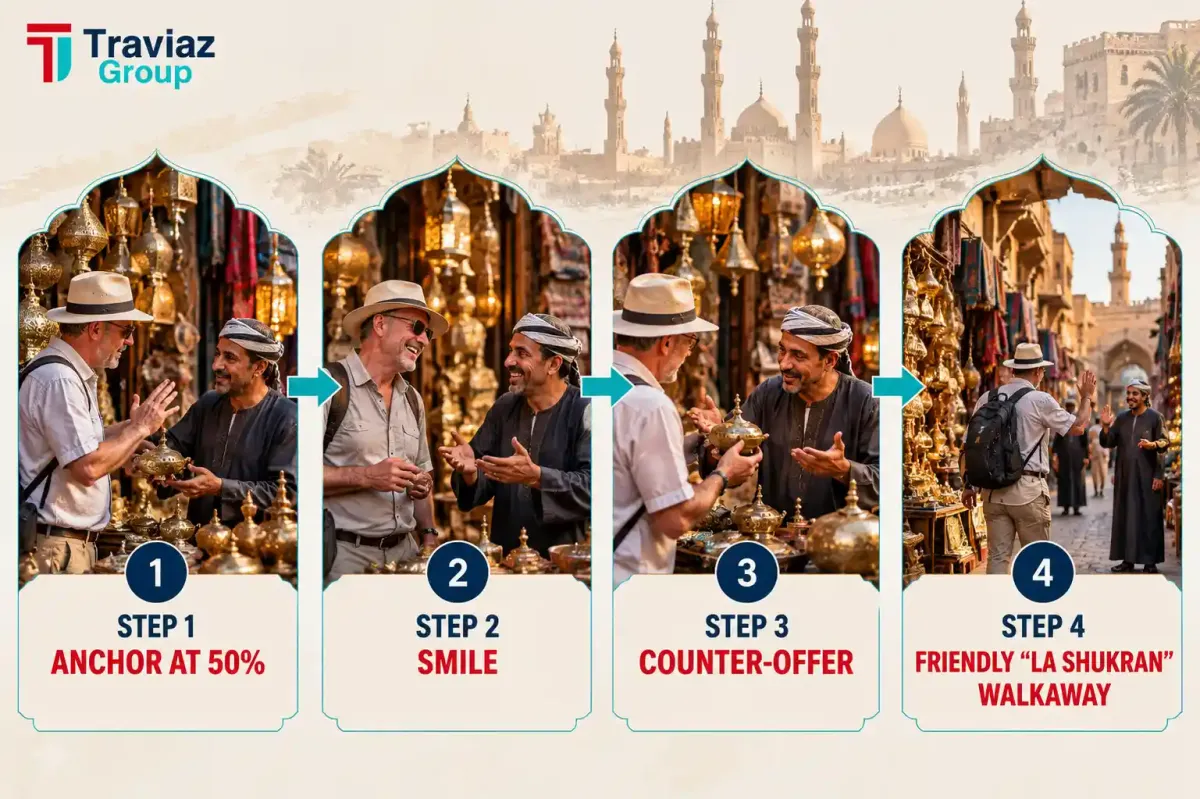
Bargaining is an essential part of the shopping experience in many Cairo markets, and understanding how to handle it makes the purchasing process easier.
Haggling here is not just negotiating a price, but a social interaction based on respect and light humor between seller and buyer:
The Art of Haggling
Bargaining in Cairo's markets is a social culture as much as it is a means of price negotiation.
When the seller starts with a high price, the buyer can respond calmly with a counter offer and then compare the available options.
Walking away calmly if the price is not suitable can sometimes lead to a better offer being made.
Bargaining Tips
Among the most important bargaining tips for Cairo souqs that help during shopping:
- Start your offer at around 40 to 50 percent of the asking price, as the seller expects room for negotiation.
- Maintain a pleasant manner, as a smile and calm engagement help keep the negotiation going.
- Do not show strong admiration for a piece before agreeing on its price, as this may weaken your negotiating position.
- After agreeing on a price, honor it ethically even if you find the piece at a lower price elsewhere later.
Pushy Vendors
Dealing with a persistent vendor does not require confrontation, and simply saying "no thank you" or "La Shukran" firmly while continuing to walk is enough.
A clear refusal is sufficient in most cases, and if the persistence continues, walking on without stopping helps end the situation.
Scam Prevention
The most notable tricks that visitors may encounter in Khan el-Khalili and other markets include:
- Selling fake papyrus made from banana leaves as genuine papyrus. The simple test can be done by bending the sheet: if it cracks, it is fake.
- Selling Chinese-imported products as Egyptian handmade crafts. Buying pieces from workshops that make them in front of you reduces the likelihood of falling into this problem.
- Selling synthetic cotton as authentic Egyptian cotton. You can head to Wekalet el-Balah where Egyptians themselves shop for fabrics.
- Inflating the initial price to levels that may reach five times the real price, especially in shops located in front of tourist bus stops.
Logistics, Safety, and Cultural Etiquette
Visiting Cairo's markets requires some practical and cultural preparation, especially given the difference between the nature of the old markets and modern shopping centers:
Is it Safe to Walk Around Cairo Markets at Night?
Cairo's major markets, especially Khan el-Khalili, are active in the evening and until late at night, and tourist police in both official and plain-clothes uniforms are present throughout the Khan area during working hours.
For a solo female traveler or groups of women, it is better to avoid the narrow and empty side alleys after midnight, and to stay in the lit and crowded areas, which represent the majority of the district.
During the day, movement is easier throughout the Khan.
Dress Code
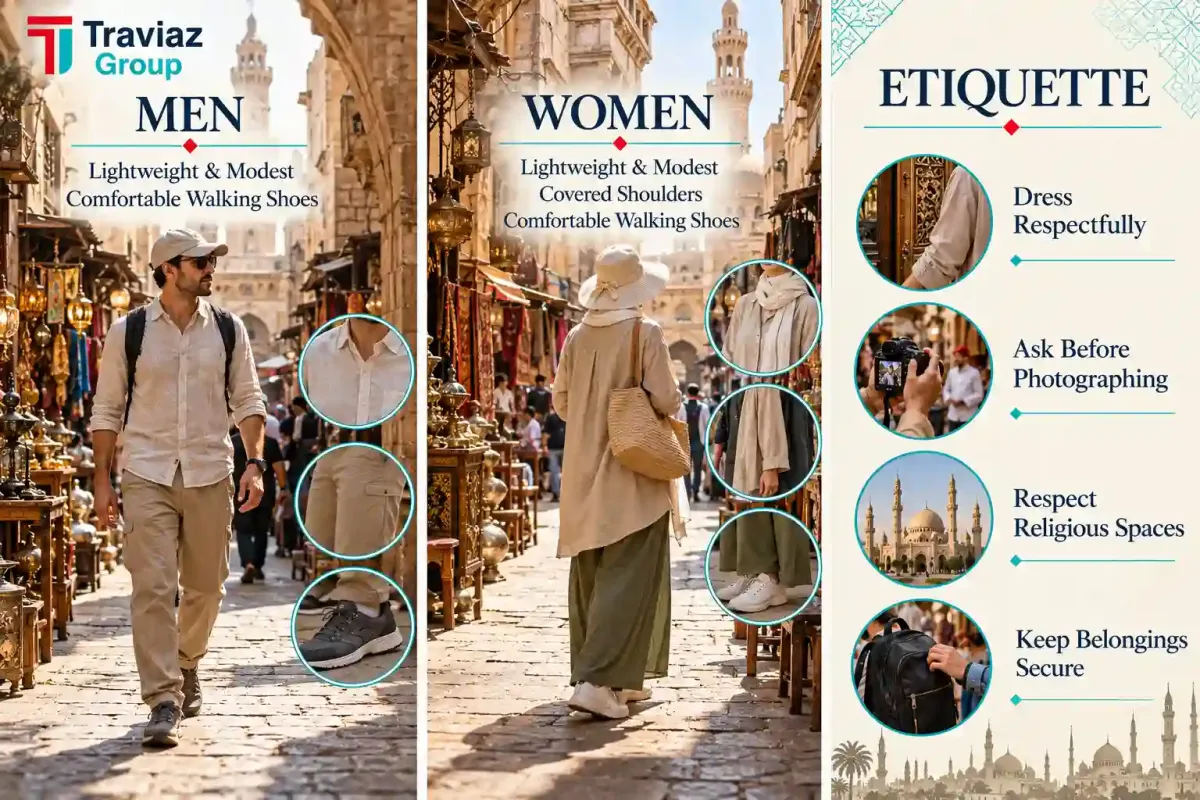
Women are not required to cover their heads in public markets such as Khan el-Khalili and Al-Muski, but modest clothing that covers the arms and legs is more appropriate out of respect for the local community and to reduce the likelihood of unwanted attention.
Wearing shorts in the Islamic Cairo area is not recommended, though it is not officially prohibited. Inside mosques, the hijab is required for women, and both men and women must remove their shoes.
Logistics: How to Get There
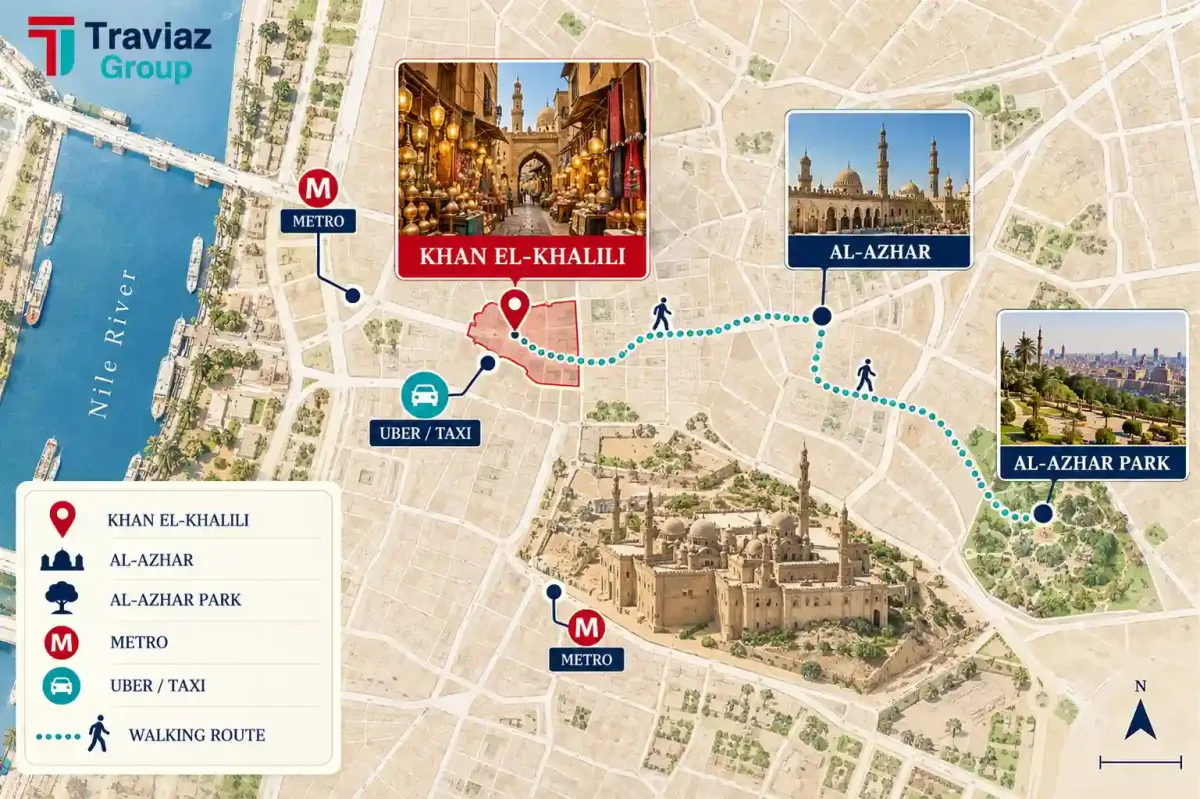
To reach Khan el-Khalili from Tahrir Square, several options are available:
- Uber or Careem: the easiest and most comfortable option, and Al-Hussein Square can be set as the destination to reach the main entrance.
- Metro: the nearest station is Attaba on lines two and three, from which you can walk about 15 to 20 minutes south or take a short taxi ride.
- Walking from Al-Azhar Park: a pleasant route through historic Cairo that takes about 10 to 15 minutes of direct walking.
Opening Hours
Most Khan el-Khalili shops open from nine in the morning until late in the evening throughout the week, with the exception of Friday morning until after the Friday prayer, while a number of the more authentic shops close on Sunday and the tourist shops generally remain open.
The best time for photography is the golden hour before sunset, while shopping in a quieter atmosphere suits the time between ten and twelve in the morning on weekdays.
Why Book a Cairo Shopping Tour Guide with Traviaz?
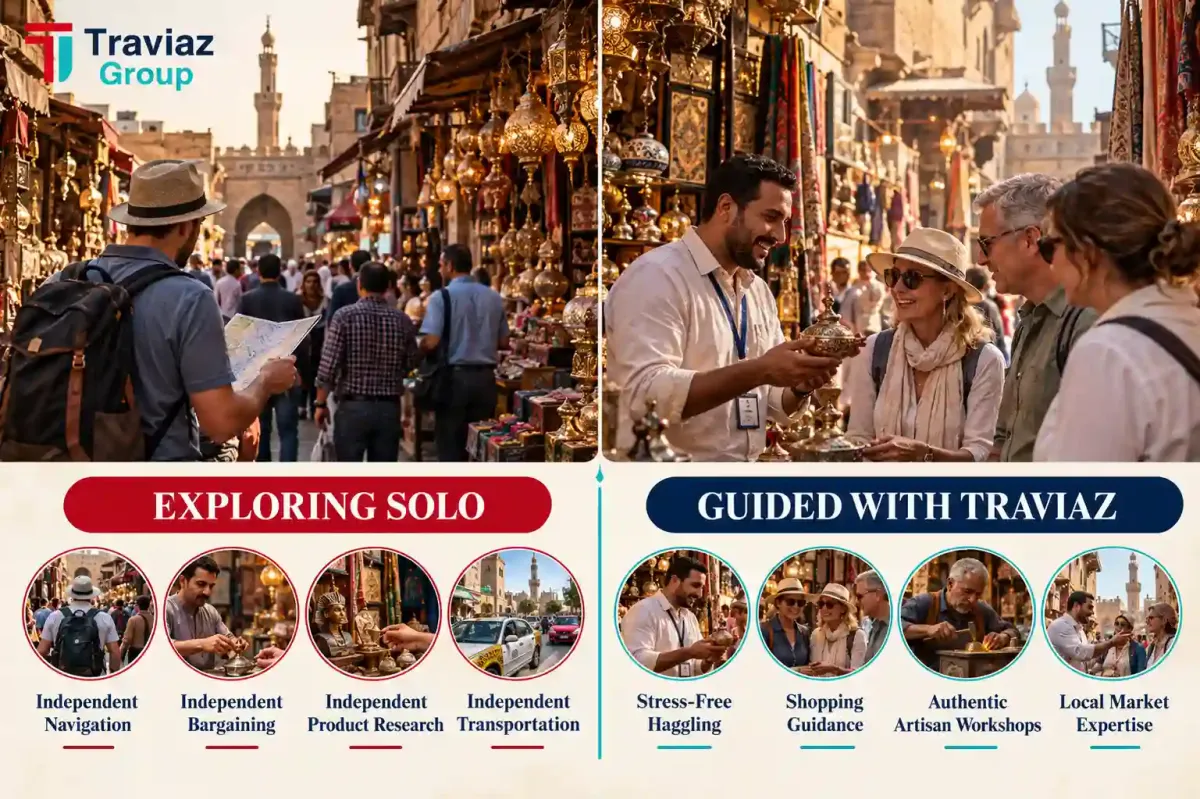
A local guide can help turn a visit to Cairo's markets from a random stroll through the alleys into a more organized experience, especially for those looking for specific products or particular craft workshops:
The Value Add
The value of a Traviaz guide appears in three main areas. The first is negotiation, as the local guide knows the prevailing prices and can negotiate directly in Arabic, which helps reduce the price gap associated with tourism.
The second is access to the real craftsmen's workshops that may not appear on tourist maps and are located inside the inner alleys.
The third is comfort, as having the guide helps in dealing with persistent situations and moving between the different markets.
Packages
Traviaz offers options suitable for different types of visitors, including the Cairo half-day shopping tour that covers Khan el-Khalili and the Street of the Tentmakers in an intensive morning tour.
There is also a custom shopping itinerary in Cairo designed for collectors and designers who are looking for specific pieces in specialized markets such as Souq al-Fustat, El Sagha, and Wekalet el-Balah.
The tours include transport, a licensed guide, and a negotiation service.
FAQs
What Payment Methods Are Accepted in Cairo's Markets?
Cash in Egyptian pounds is the most common payment method in traditional markets, although some shops accept cards. Tourist-area traders may accept dollars, but exchange rates can be unfavorable.
How Much Is a Tip in Cairo's Markets?
For simple assistance, 5 to 10 Egyptian pounds may be appropriate. More substantial help, such as carrying purchases or extended guidance, may warrant 20 to 50 pounds.
What Is the Best Street Food in Cairo's Markets?
Popular choices include hawawshi, koshary, and traditional syrup-based sweets. They are commonly found around areas such as Khan el-Khalili and Al-Hussein Square.
What Are the Best Cairo Markets for Photography?
Khan el-Khalili offers architectural scenes, Al-Muski captures everyday life, and the Street of the Tentmakers showcases craftsmen and textiles. Always ask permission before photographing people.