
Esna Sightseeing: Why You Should Add This Hidden Nile Gem to Your Egypt Itinerary
Esna sightseeing is worth adding to your Egypt itinerary because this overlooked Nile city combines an extraordinary ancient temple, a historic lock, and a traditional Upper Egyptian market in one stop.
Located between Luxor and Edfu, Esna is home to the Temple of Khnum, which lies below street level and preserves remarkable inscriptions and colorful reliefs revealed through recent restoration.
The city also offers a glimpse of local life beyond Egypt’s major tourist sites. This 2026 guide explains what to see in Esna and why it deserves more than a passing stop.
The Temple of Khnum: A Masterpiece of Greco-Roman Architecture
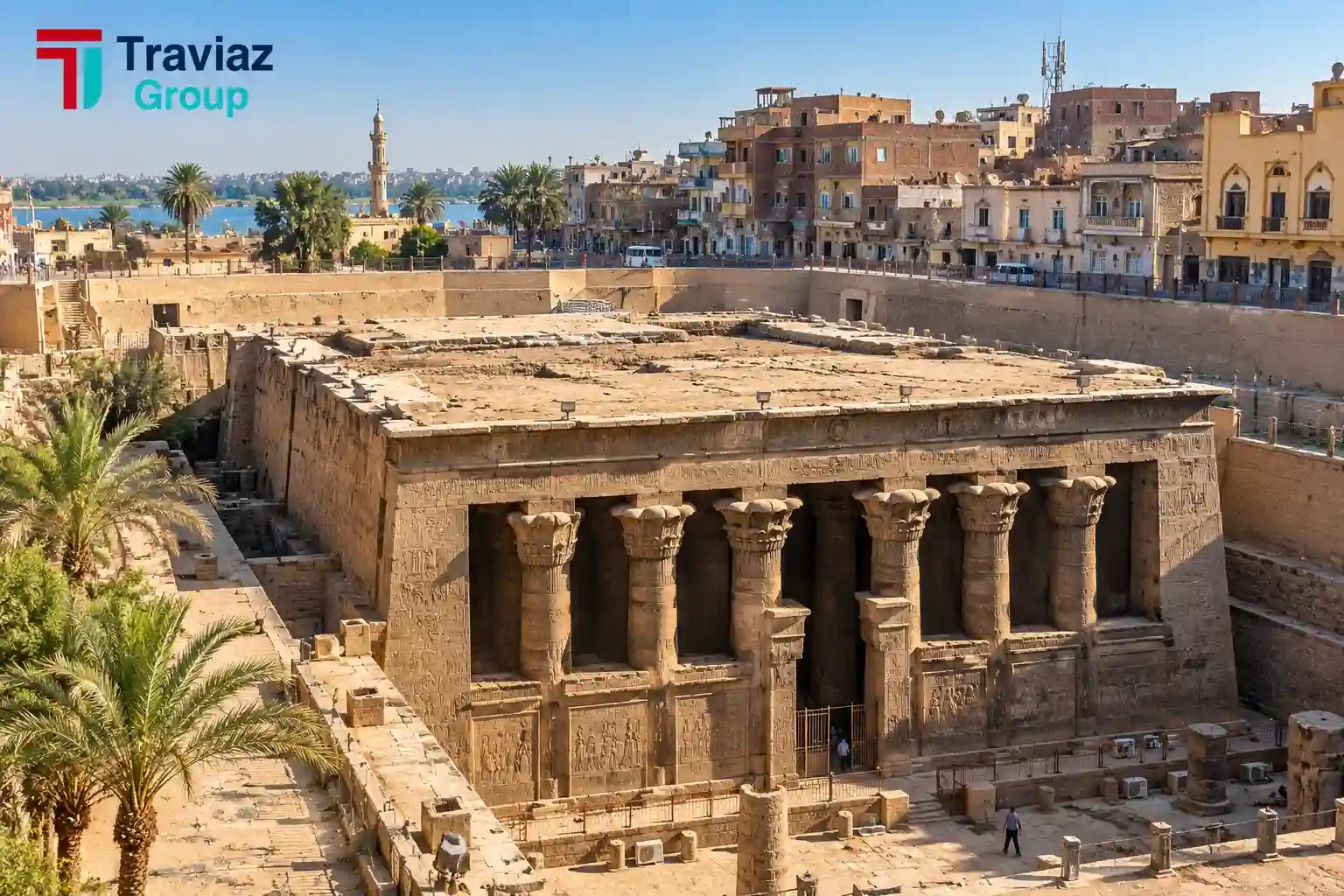
The Temple of Khnum in Esna represents one of the most complete examples of religious architecture from the Roman period in the Nile Valley, and what survives today is the pronaos, which measures 37 meters in length, 20 meters in width, and 15 meters in height.
Remarkably, this archaeological section sits approximately 9 meters below the level of the modern street, inside an archaeological pit in the middle of the inhabited city.
Architectural activity at the site dates back to the reign of King Thutmose III of the Eighteenth Dynasty, while the current standing structure belongs to the Ptolemaic and Roman periods, with construction continuing from the first through the third century AD.
The last known inscriptions date to the reign of Emperor Decius between 249 and 251 AD, which gives the Temple of Esna a special status as the holder of the most recent known complete hieroglyphic text from ancient Egyptian civilization.
The irony is that what saved the temple's decorations was its use for centuries after the closure of pagan temples in the fourth century AD, as it was converted into a warehouse for storing cotton for more than a thousand years.
The soot from cotton fires accumulated over the carvings and colors, covering and protecting them from deterioration, and the restoration then removed these layers to reveal what had been hidden beneath them.
The Architecture of the Temple: The Roman Hypostyle Hall
Inside the Roman hall, 24 columns appear with clearly different capitals, while the eighteen free-standing columns carry plant capitals inspired by palm, papyrus, lotus, and other plants.
The same design does not repeat among these capitals, which is an exceptional variety in ancient Egyptian religious architecture, and completing the hall's decorations took approximately two hundred years.
On the walls appear scenes of Roman emperors in pharaonic dress while presenting offerings to local gods, and among the most distinctive scenes is the depiction of Emperor Commodus fishing alongside the god Khnum.
The names of other emperors also appear on the temple walls, including Septimius Severus, Caracalla, and Geta.
The Astronomical Ceiling
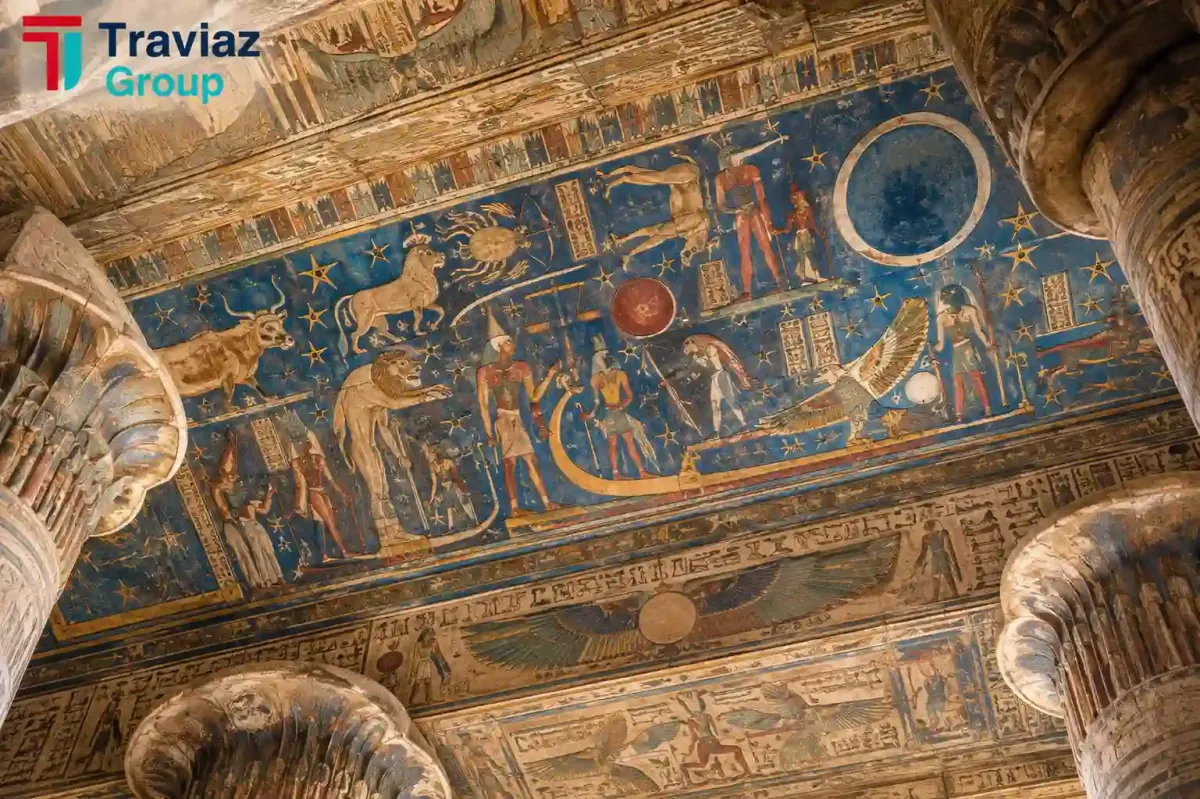
The astronomical ceiling at Esna was among the most prominent recent archaeological discoveries in the field of Egyptology.
Around 30 specialists from Egypt and Germany worked between 2018 and 2023, led by Professor Christian Leitz from the University of Tübingen and Dr. Hisham el-Leithy from Egypt's Ministry of Antiquities, to remove the soot layers that covered the ceiling.
The result revealed hundreds of astronomical depictions and inscriptions in their original colors, alongside approximately 200 ink inscriptions that were previously unknown, containing the ancient Egyptian names of stellar constellations.
The ceiling is divided into seven thematic sections covering the sun's daily course, the moon's phases, the hours of the night, the ancient Egyptian New Year, and other astronomical subjects.
Red, yellow, and blue are the most prominent colors visible after restoration, while the ceiling holds religious astronomical scenes in which Orion appears in the form of Osiris and Sothis in the form of Isis.
Unique Features of the Temple of Khnum
Three elements give the Temple of Khnum its special place among Egyptian temples, and they can be summarized in the following points:
- Esna Capitals: 18 plant capitals different in shape and design, with no two alike, which is an exceptional variety in ancient Egyptian temple architecture.
- Last hieroglyphic inscriptions: the inscriptions written during the reign of Emperor Decius between 249 and 251 AD represent the most recent known complete hieroglyphic writing to reach us from ancient Egyptian civilization.
- Unique theological composition: the god Khnum, the ram associated with creating humans on a potter's wheel, appears within a worship system that includes the goddess Neith associated with creation and the source of the universe in Egyptian mythology, alongside the sacred Lathus fish of the region associated with the god Khnum.
Esna vs. Edfu vs. Karnak
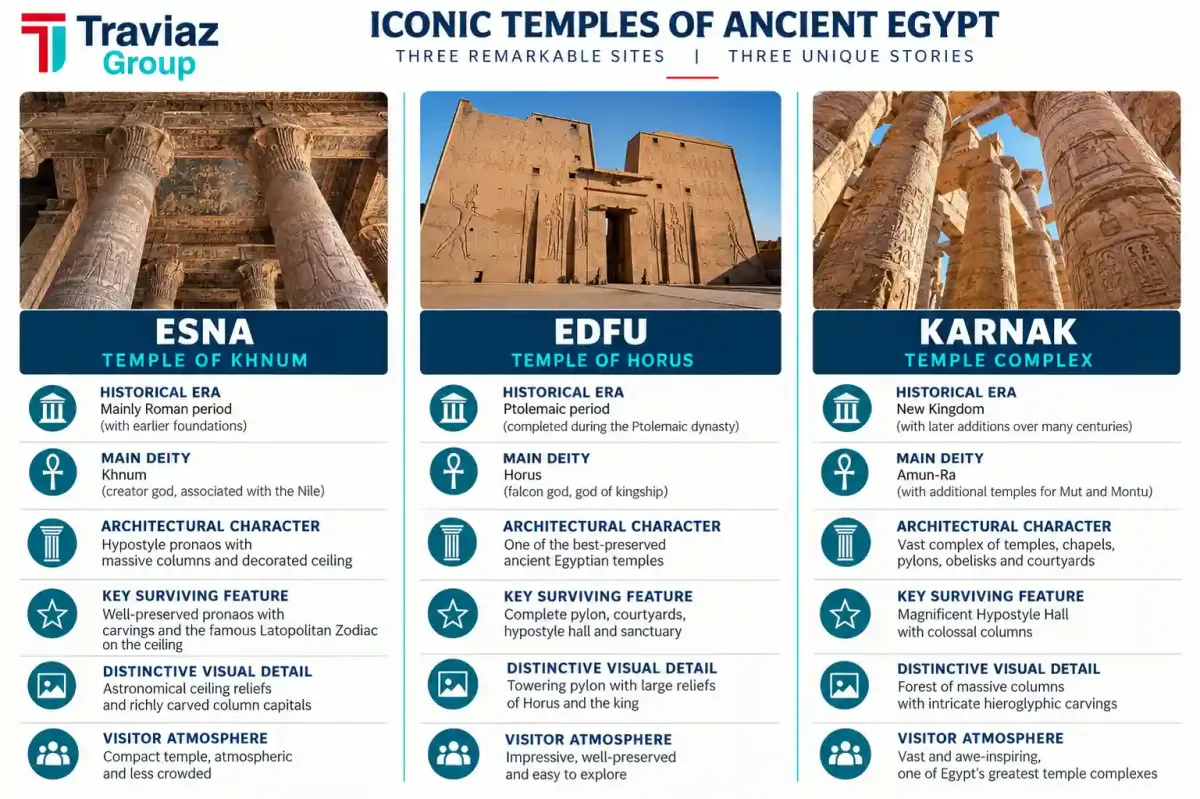
Here is a comparison between the Temple of Esna and the most prominent other temples along the route:
|
Criterion |
Esna |
Edfu |
Karnak |
|
Dominant period |
Roman |
Ptolemaic |
Classic Pharaonic |
|
Preservation |
Excellent partially |
The best completely |
Good but exposed |
|
Size |
Small and concentrated |
Large and complete |
The largest in Egypt |
|
Original colors |
Revealed recently in 2023 |
Good |
Rare |
|
Crowds |
The lowest |
Moderate to high |
The highest |
|
Unique distinction |
Last hieroglyphic and astronomical ceiling |
The most architecturally complete |
The most historically grand |
Navigating the Famous Esna Lock Experience
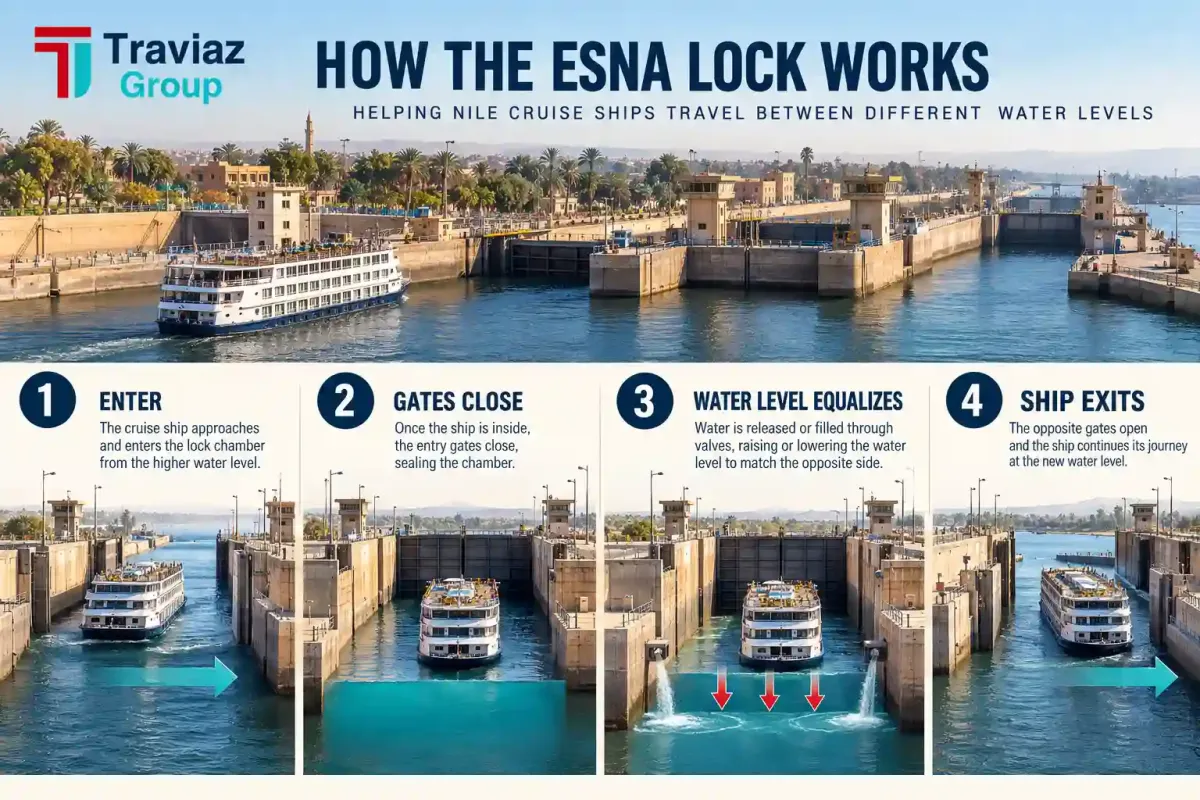
The Esna Lock represents an essential part of the Nile navigation movement in the area, as vessels move through it between the two different river levels at the Esna Dam. For Nile cruise passengers, the crossing process itself becomes an engineering experience that can be observed from close range.
How the Esna Lock Works
The Esna Dam was built between 1989 and 1994 to replace the old barrage built by the British in 1906, and the dam created a difference in water levels between the north and south of the river.
A vessel therefore enters the lock chamber, then the gates close and the water level is gradually raised or lowered until it reaches the required level, after which the opposite gates open to continue the journey.
The process from entering to exiting the lock usually takes two to three hours, with the duration varying according to vessel traffic on that day.
The Waiting Room Strategy
Waiting at the old Esna Lock was once one of the most frustrating parts of Nile cruise trips, as vessels sometimes waited a full day or more before crossing because of the narrow old lock.
The situation has become faster with the new dam, and most vessels cross within two to three hours, so the right strategy can cut part of the waiting time, especially when arriving in the morning before vessels accumulate.
The waiting time itself can be used to visit the Temple of Khnum, as the temple is only about 200 meters from the Nile dock, which allows a visit of an hour and a half to two hours to be organized before returning to the vessel.
The Floating Market

Local traders used to exploit the vessels' waiting periods in a striking way, with small boats approaching the moored ships and robes, fabrics, and textiles being thrown by ropes to the deck.
Passengers would examine the products and negotiate from the upper floors, then goods that were not purchased would return the same way.
This trade scene associated with boats became one of the distinctive images historically linked to the Esna Lock, especially during the long waiting periods.
Nile Cruise Schedule
Most modern cruise lines treat Esna as more of a transit stop than an independent tourist destination, while some luxury cruise companies add a visit to the Temple of Khnum as a paid optional activity.
If the visit is not included in the ship's program, it can be organized with Traviaz as a private tour starting from Luxor and ending before the ship's departure time.
Beyond the Temple: Other Significant Landmarks in Esna
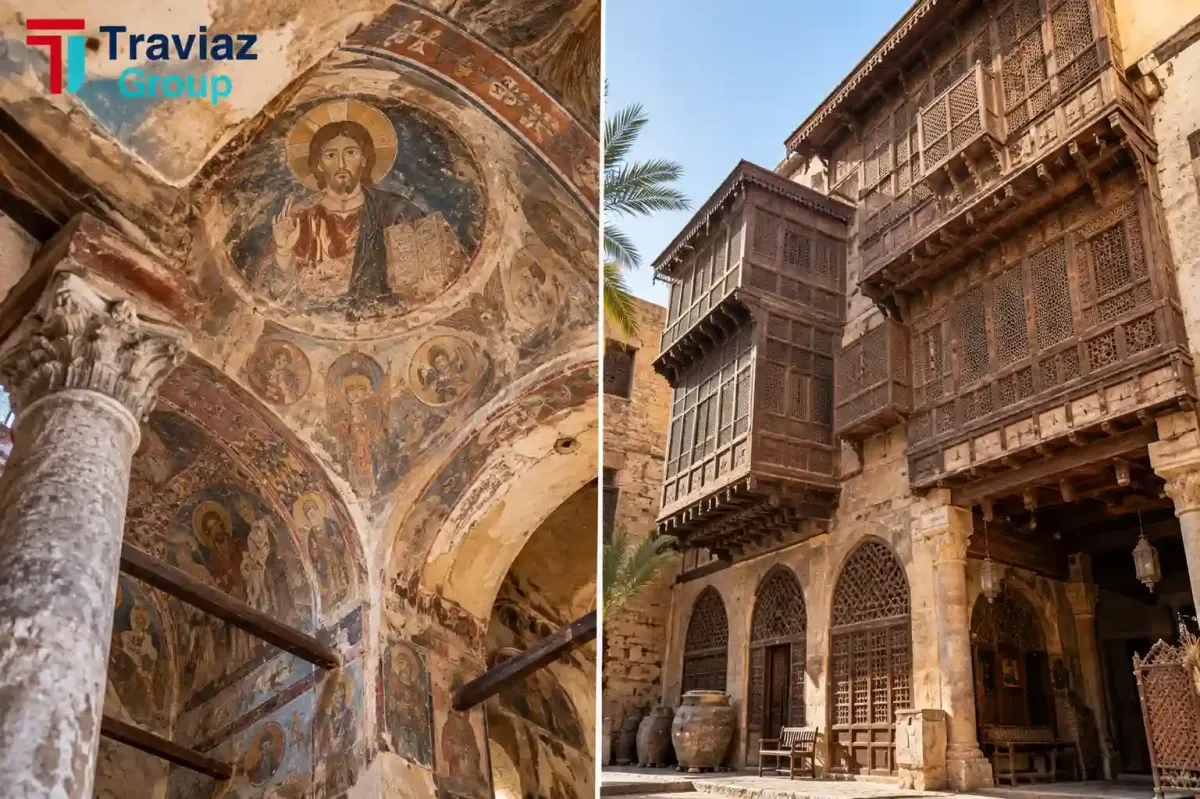
Esna is not limited to the Temple of Khnum and the Nile Lock. The city carries multiple historical layers extending from the Roman period through the Ottoman era and beyond. Some of these landmarks are less well-known, but they add a different dimension to the tour.
Monastery of the Martyrs: Deir al-Shuhada
The Monastery of the Martyrs is one of the oldest surviving Coptic monasteries in Upper Egypt, located a few kilometers from Esna's center.
On its walls are medieval murals depicting scenes from the Bible and Coptic traditions in a style that differs from the well-known decorations in Cairo's churches and Lower Egypt's villages.
For visitors interested in the history of Christianity in Egypt, the monastery can represent a natural extension of the archaeological tour in Esna.
The Victorian-Era Esna Barrage
Near the modern lock stands the Esna barrage built by the British in 1906, with parts of its original structure still standing today.
Its engineering importance stems from its connection to the early projects for controlling the Nile's waters and floods during the British colonial period in Egypt.
Wakalat al-Jidda
Khan al-Jidda represents the remains of a period when Esna was an important trading stop on the pilgrimage and trade routes between Upper Egypt and Sudan. What remains of its construction reflects the characteristics of Ottoman architecture used in commercial caravan rest stops.
The Historic Streets: Mashrabiyas and Old Quarter
The road extending from the Nile dock toward the Temple of Khnum reveals another side of Esna: narrow alleys interspersed with buildings featuring wooden mashrabiya screens from the Ottoman period and stone facades dating to Egypt's royal era.
Daily life inside these streets makes the tour feel more like exploring a genuine Egyptian neighborhood than passing between separate tourist landmarks.
Walking Through the Esna Old Market Safely
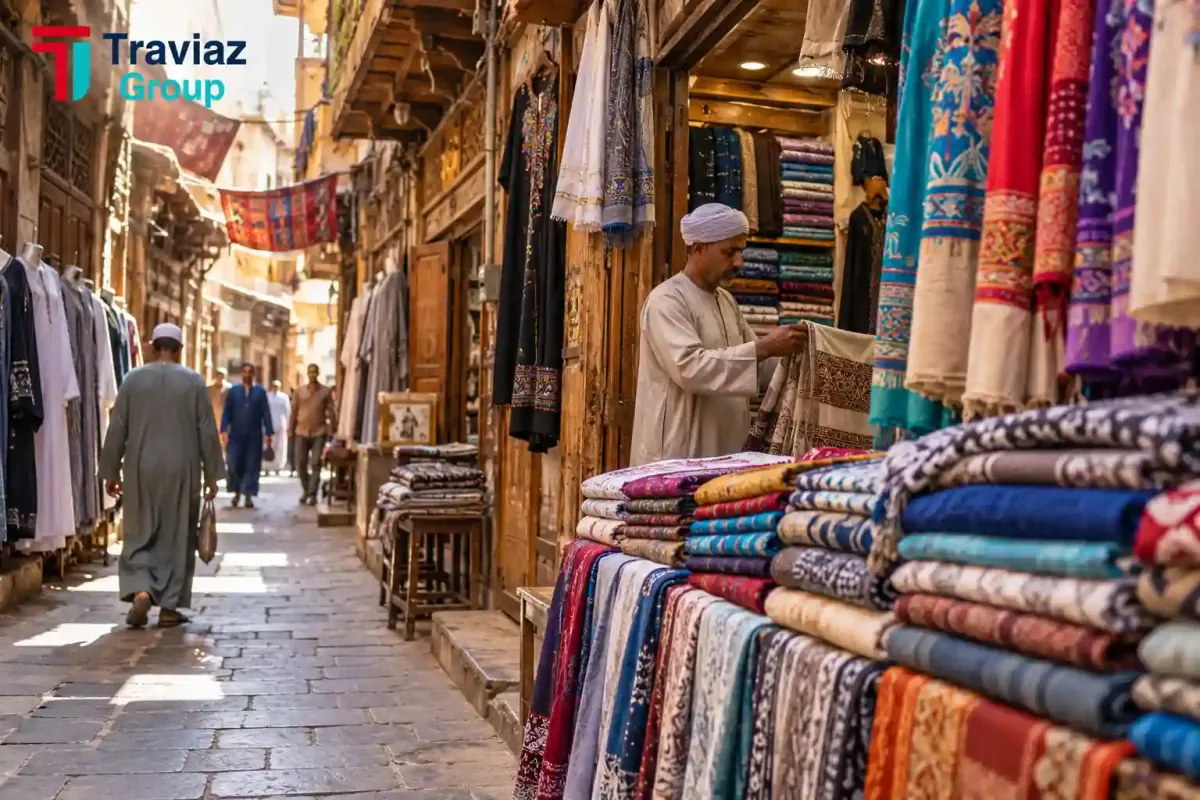
Esna's traditional market is an essential part of the city's character and not just a route leading to the temple. Esna has historically been associated with the textile industry and the movement of fabrics along the trade and caravan routes that linked Upper Egypt to Sudan.
The Textile Industry
Traditional cotton products lead the list of purchases worth attention in the market, including jalabiyyas, scarves, and towels made from Upper Egypt's white cotton.
Some shops also display printed fabrics with popular colors and patterns that reflect local taste, far from the products designed specifically for the tourist markets of Luxor and Aswan.
Handling the Touts
Dealing with vendors in the area between the Nile dock and the temple needs quiet firmness more than confrontation, and a clear "no thank you" while continuing to walk is enough in most cases.
Stopping to examine products you do not intend to buy may prolong the situation unnecessarily.
Having a specialist Traviaz guide reduces this type of friction, as the guide handles local communication and movement within the market naturally, while you remain free to observe the place.
Safety and Atmosphere
Esna is a genuine Egyptian popular city and not an artificial tourist zone, and this is precisely what gives it its distinctive character.
During daytime hours, the inhabited areas remain full of movement and open shops, and the visitor can explore them with the usual precautions taken when moving through any busy market.
Essential Logistics: Planning Your Visit
A private car with a driver from Luxor is a practical option for the visit, and the journey takes about an hour in normal traffic conditions via the direct road between the two cities.
How to Get to Esna
A private car with a driver from Luxor is a practical option for the visit, and the journey takes about an hour in normal traffic conditions via the direct road between the two cities.
The train is also available but less flexible in terms of timing, while shared buses from Luxor reach Esna's center and then require a short taxi to reach the temple.
Those coming from Aswan cover approximately 130 kilometers to Esna, and the journey takes about two and a half hours by car. This distance makes including Esna with Edfu and Kom Ombo along a full-day route from Aswan to Luxor, or in the opposite direction, a practical option.
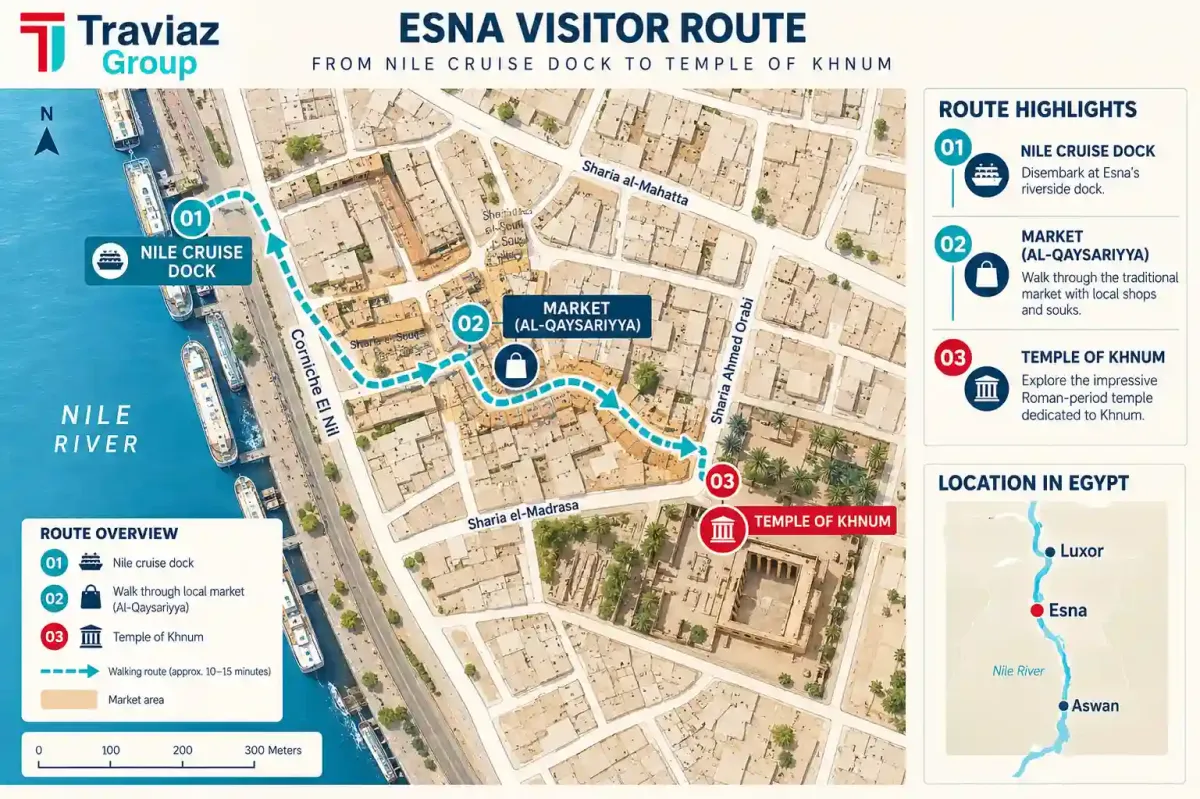
The Boat Dock to Temple Path
From the ship's dock or the parking area at the city's entrance, the road extends about 200 meters westward into the residential neighborhood. Along the way you pass fabric shops, perfumeries, and craft stores before reaching the archaeological pit that houses the temple hall, and the visitor then descends via stone steps to the temple level 9 meters below street level.
Ticket Prices and Hours 2026
The Temple of Khnum opens from nine in the morning until five in the evening daily according to the usual schedules of Egyptian archaeological sites, while the foreign adult entry ticket is approximately 100 Egyptian pounds based on information available from 2024, with the price possibly changing in 2026.
It is therefore preferable to check the official website at egymonuments.gov.eg before visiting, especially as ticket prices at Egyptian archaeological sites are subject to updates.
Phone photography is permitted at most sites without additional fees according to the information available.
Best Time to Visit
Arriving between nine and ten in the morning gives the visitor the chance to explore the temple before the midday heat intensifies, which is usually strongest between twelve noon and four in the afternoon. An early arrival also helps avoid the period when many Nile cruise passengers arrive, which typically falls between ten and twelve.
The months of October, March, and April provide more moderate conditions, while temperatures may exceed 40 degrees Celsius during the period from June to August, which makes a midday visit more tiring.
Book your tour to Esna with Traviaz now and explore the Temple of Khnum with a specialist Egyptologist guide who opens the secrets of the last hieroglyphic inscriptions and the astronomical ceiling colors that came back to life after two thousand years: [Esna packages link]
Accessibility and Family Travel
Reaching the Temple of Khnum for wheelchair users requires advance planning, as access to the temple requires descending via stone steps to a depth of approximately 9 meters. Some assistance ramps exist but do not cover all sections, while movement inside the main hall becomes easier once reached.
Travelers with special needs benefit from contacting Traviaz in advance to assess the route and arrange assistance according to the actual trip's requirements.
A visit to the Monastery of the Martyrs requires a head covering for women inside the monastery, and wearing comfortable closed shoes helps when descending the stone steps and walking on the archaeological floors.
The Temple of Khnum is an archaeological site and not a religious site according to its official classification, but modest clothing covering shoulders and knees remains appropriate when visiting Esna with its conservative character.
Wheelchair Access at Esna Temple
Reaching the Temple of Khnum for wheelchair users requires advance planning, as access to the temple requires descending via stone steps to a depth of approximately 9 meters. Some assistance ramps exist but do not cover all sections, while movement inside the main hall becomes easier once reached.
Travelers with special needs benefit from contacting Traviaz in advance to assess the route and arrange assistance according to the actual trip's requirements.
Dress Code
The Temple of Khnum is an archaeological site and not a religious site according to its official classification, but modest clothing covering shoulders and knees remains appropriate when visiting Esna with its conservative character. A visit to the Monastery of the Martyrs requires a head covering for women inside the monastery, and wearing comfortable closed shoes helps when descending the stone steps and walking on the archaeological floors.
Why Book with Traviaz?
Using a Traviaz guide adds more than just site explanations to a visit to Esna, as the difference begins with reading the hieroglyphic inscriptions and understanding the Roman emperors' images, then extends to organizing movement between the Nile dock, the temple, and the market.
A program can also be built around a route combining Esna, Edfu, and Kom Ombo in a single day, making it possible to use the time well without burdening the trip with unnecessary transfers.
FAQs
Is Esna Safe for Tourists?
Esna is a genuine Egyptian popular city that receives tourists within Nile cruise routes and overland tours coming from Luxor, and it is not an area of conflict or a destination associated with a specific security threat. Dealing calmly with street vendors around the market and the temple remains the most important practical precaution during the visit.
How Long Do You Need at the Temple of Esna?
An hour and a half is enough for a comfortable tour inside the main hall with a view of the astronomical ceiling and the most prominent carvings, while two hours provide more space for explaining the archaeological and religious details with a specialist guide. If the traditional market is added to the program, setting aside about three hours for the full experience is better.
Do All Nile Ships Stop at Esna?
All vessels that take this route pass through the Esna Lock and wait to cross the dam, but visiting the Temple of Khnum is not necessarily a mandatory part of every ship's tourist program. Some luxury cruise companies offer the visit as an additional option, and those who want to use the waiting period to visit the temple need to coordinate in advance with the trip organizer.
What Are the Best Esna Packages from Luxor?
Esna, Edfu, and Kom Ombo can be combined in a full-day trip from Luxor, stopping at all three temples and returning in the evening. Traviaz provides this type of program with a specialist guide, an air-conditioned car, site entry, and lunch in the area, while those who want a shorter program can choose a half-day trip focused on Esna alone, departing from Luxor and returning in approximately four hours total