
The Grand Egyptian Museum (GEM): A Complete Visitor Guide to the World’s Newest Wonder
Planning your Grand Egyptian Museum visit in 2026 starts with knowing what to see, when to go, and how to combine it with the nearby Giza Pyramids. Officially opened on November 1, 2025, GEM houses over 100,000 artifacts, including the complete Tutankhamun collection, Khufu’s solar boat, and the Grand Staircase. This guide covers everything you need to plan your visit, from tickets and opening hours to must-see exhibits, transportation, and practical tips for a smooth museum experience.
When is the Grand Egyptian Museum Officially Opening?
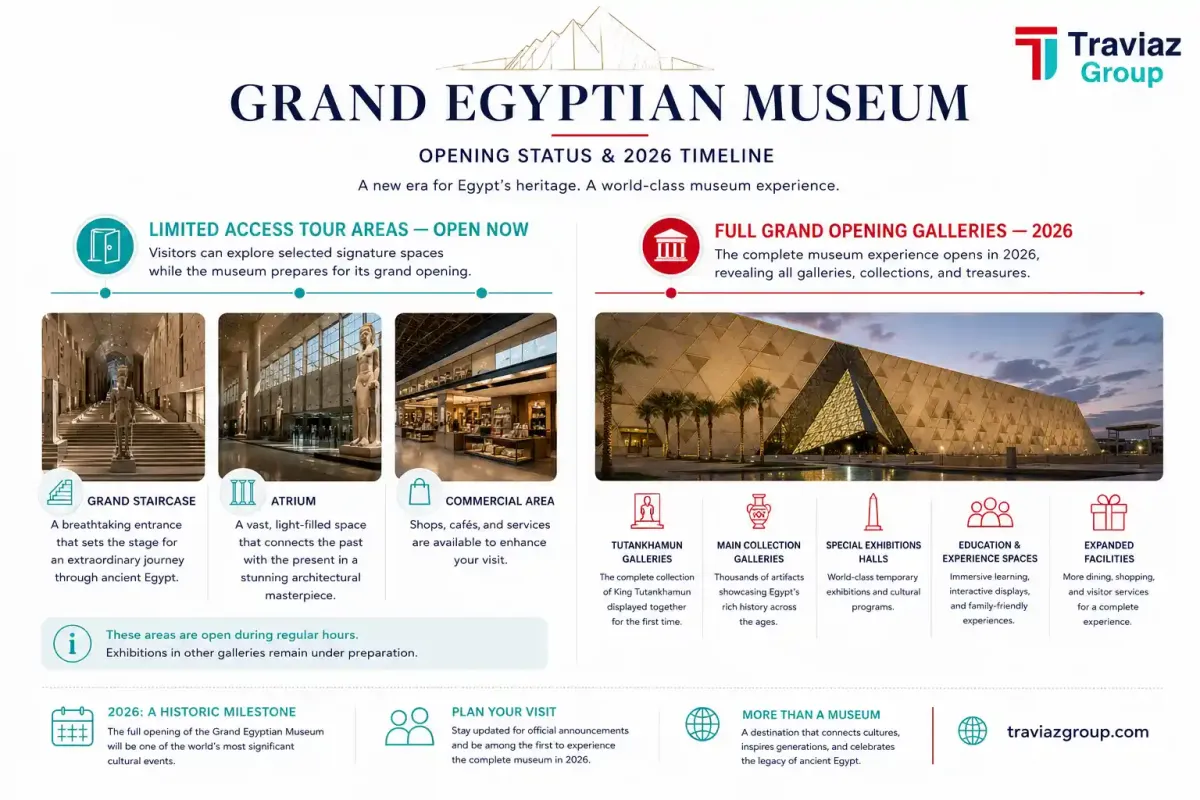
The Grand Egyptian Museum is today fully open to visitors from all over the world, after a long journey of delays spanning more than a decade. Egyptian Prime Minister Mostafa Madbouly announced on the sixth of August 2025 that the first of November had been set as the final date for the official opening.
President Abdel Fattah el-Sisi and a number of kings and heads of state attended the opening ceremony, in a historic celebration the likes of which Egypt had never seen.
The museum went through multiple delays beginning with the Covid-19 pandemic in 2020, then logistical challenges, and finally the regional tensions in June 2025 that postponed the opening originally planned for the third of July.
During the soft opening phase since October 2024, the museum received approximately 1.5 million visitors, at a rate of 4,000 visitors per day before the official opening. On its first day after the full opening, the museum received more than 18,000 visitors, a figure that reflects the enormous global interest in this landmark.
What Can You See Now?
The moment you enter the Grand Egyptian Museum, the Grand Atrium welcomes you with the towering statue of Ramesses II standing 11 meters tall. The six-story Grand Staircase houses more than 60 artifacts arranged chronologically, taking you on a journey through the ages of the pharaohs. The twelve main galleries are fully open, including the two Tutankhamun halls that display his complete collection for the first time in history.
Planning Your Trip: Location, Directions, and Transit Secrets
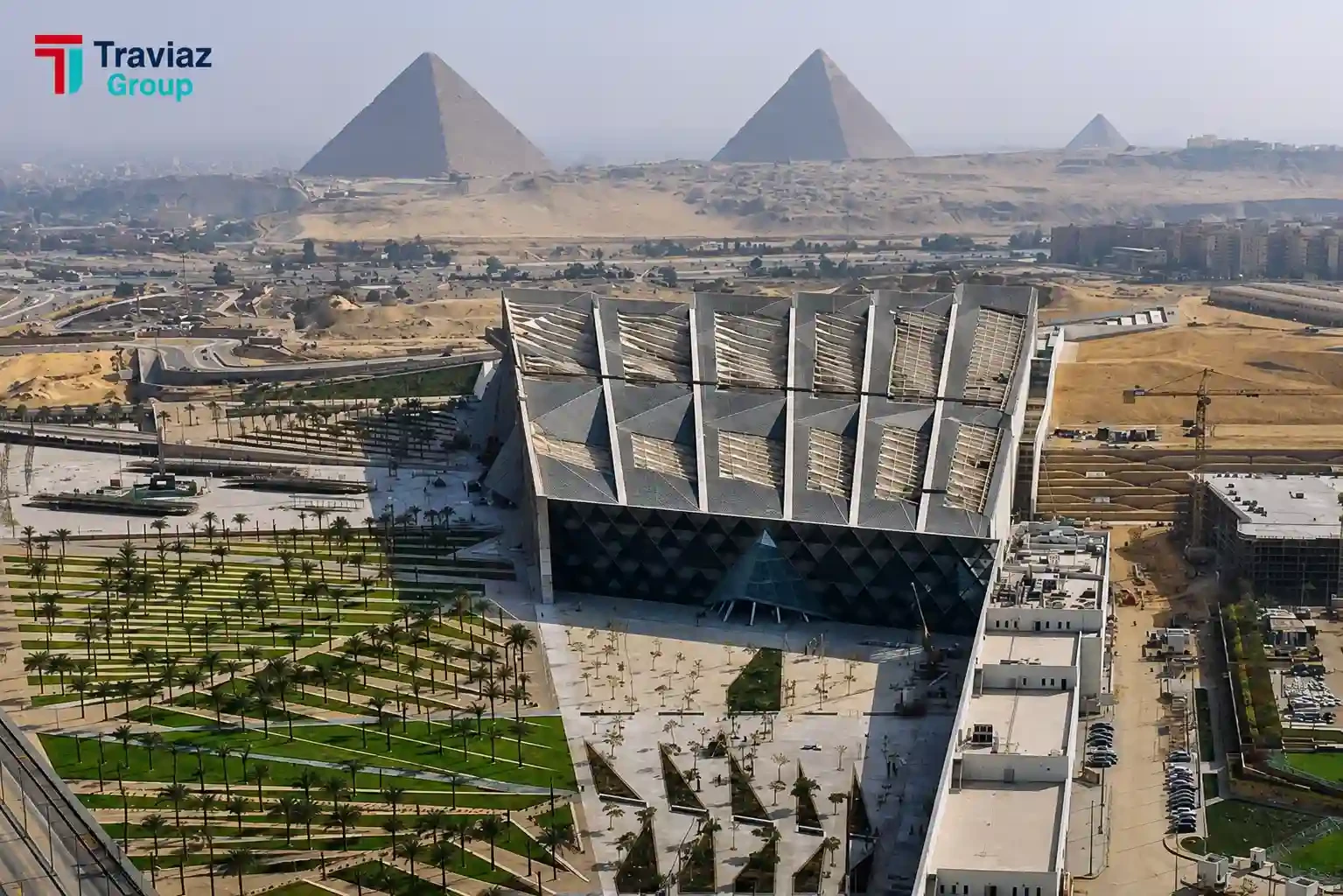
The Grand Egyptian Museum sits on the Giza plateau near the Cairo Ring Road, in a strategic location that combines proximity to the pyramids with easy access from both main airports. The museum's exterior walls are lined with semi-transparent stones decorated with hieroglyphics, making the building itself a standalone architectural masterpiece.
The Pyramids and the Museum: Distance and Route
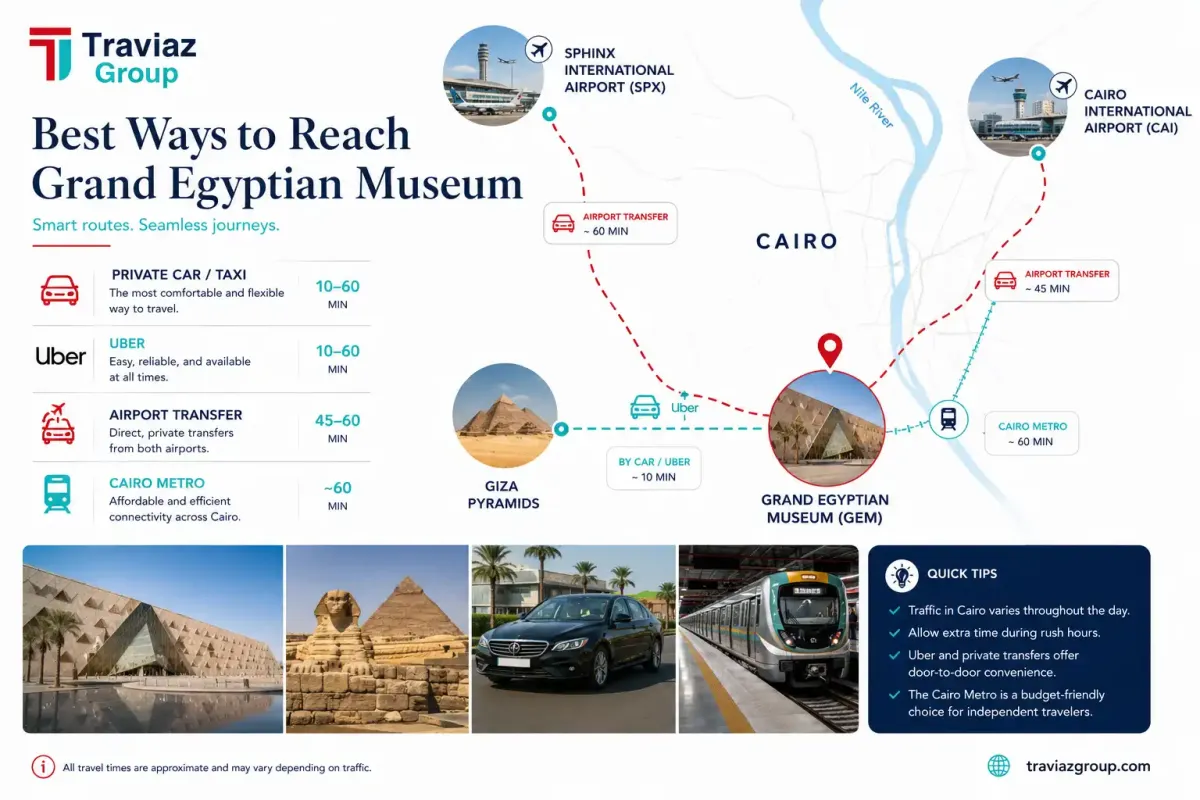
The Grand Egyptian Museum is approximately two kilometers north-west of the Giza Pyramid complex, a distance that seems short on the map but is not suitable for walking. The rugged terrain and highways between the two sites make walking an unsafe and impractical option in all circumstances. The best option is to travel by taxi or Uber between the two sites, as the journey takes no more than 5 minutes at a minimal cost.
Distance from Both Airports
Abu el-Haul International Airport (SPX) is the closest airport to the museum by far, with a distance of only 8 kilometers covered in 10 to 15 minutes by car. Cairo International Airport (CAI) is approximately 35 kilometers away, and a car journey from there to the museum takes around 34 minutes under normal conditions.
The cost of a private transfer from Cairo Airport ranges between 50 and 70 dollars, while the museum can be reached by taxi and metro for no more than 2 to 4 dollars in approximately 56 minutes.
Uber vs. Metro: The Resident's Guide
Uber is the smartest option for reaching the Grand Egyptian Museum at a cost ranging between 280 and 350 Egyptian pounds with complete comfort and air conditioning. Metro Line 2 with a short taxi costs between one and three dollars and takes approximately 21 minutes from central Cairo.
Metro Line 4, which will connect directly to the Pyramids station, is still under construction, and will bring a significant improvement to accessibility upon completion.
Layover Excellence: How to Make the Most of 6 to 12 Hours at the Museum
The transit visitor passing through Cairo from Abu el-Haul Airport has an exceptional advantage, as the museum is only 10 minutes from the airport. The ideal plan for a half-day visit begins by heading directly to the two Tutankhamun halls, then Khufu's boat, then the Atrium and the Grand Staircase.
Three to four hours are sufficient to see the most prominent exhibits without exhaustion, with time for lunch in the restaurant area before returning to the airport.
GEM Tickets 2026: How to Buy and Avoid Common Scams
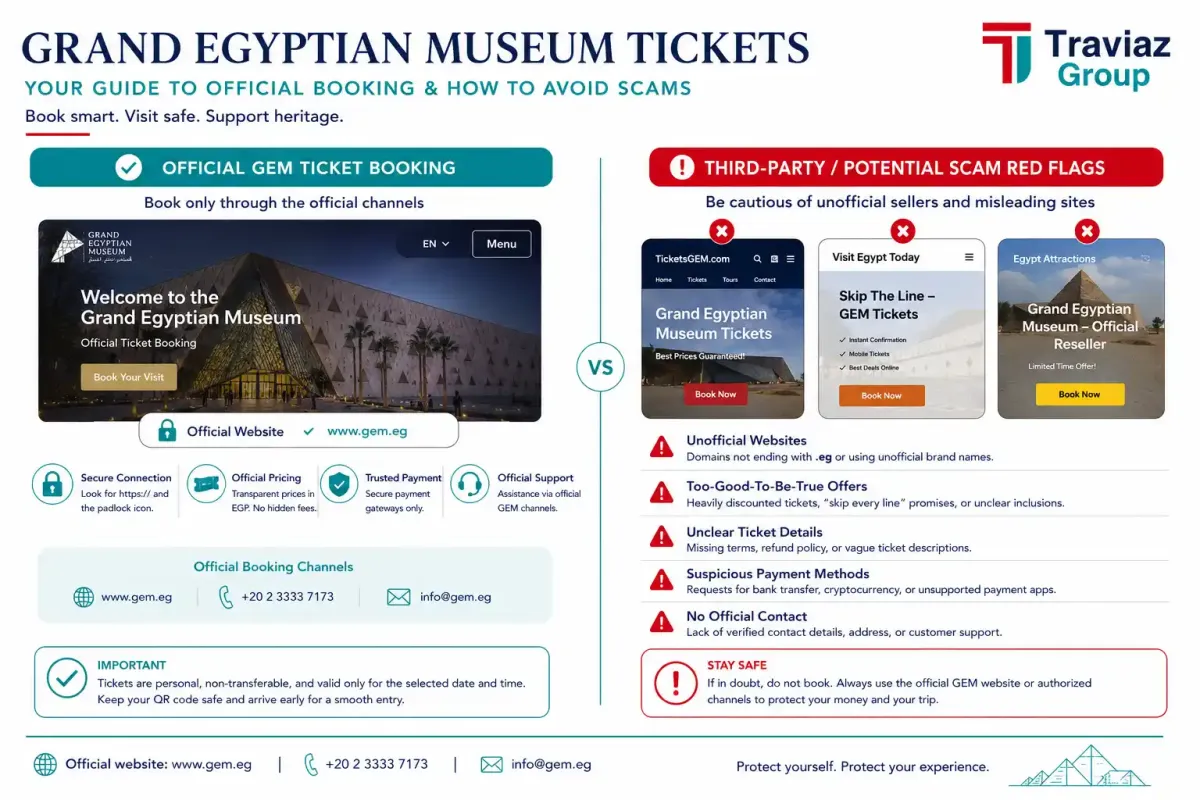
The only officially approved website for ticket sales is www.visit-gem.com, and no other website is officially licensed by the museum's management. The museum issued an official warning in May 2026 about a widespread wave of fraudulent websites impersonating the museum and targeting international visitors.
The entry ticket price for non-Egyptian adults is 1,450 Egyptian pounds, equivalent to approximately 30 US dollars. Students aged 12 to 25 receive a 50% discount provided they present a valid student card bearing a photo and expiry date. Children under the age of six enter free of charge, while persons with disabilities receive full exemption from entry fees.
The museum operates a pre-booking system online with specific entry time slots: 8:30 AM, 11 AM, 1 PM, and 3 PM, with an evening slot from 5 to 8 PM added on Wednesdays and Saturdays.
Tickets are tied to a specific date and time and cannot be changed, so it is advisable not to book more than 5 days before the visit to avoid changes of plan. The website accepts Visa and MasterCard only, and you may need a verification code sent to the phone linked to your card.
Identifying a Fake Ticket: How to Protect Yourself
The Grand Egyptian Museum and the Ministry of Tourism shut down a number of fraudulent websites that were selling fake tickets and withdrawing doubled amounts from visitors' cards. The signs that reveal a fake website are prices far below the official price, language errors, and the absence of the HTTPS protocol in the website link.
Anyone offering you tickets on the pavement outside the museum or at the hotel is without exception a fraudster, and the museum bears no responsibility for bookings from unofficial sources.
The "Sold Out Tickets" Protocol: What to Do When Tickets Run Out
If the Grand Egyptian Museum appears fully booked on the official website, try nearby alternative dates, particularly Tuesdays, Wednesdays, and Thursdays which see less pressure.
The museum has mechanical ticket vending machines but they experience long queues and may run out before you arrive. The safest option is to book through a trusted tour company such as Traviaz, which handles securing tickets as part of a comprehensive package.
The VIP Advantage
VIP tours with a private English-speaking guide offer a completely different experience from an individual visit to the Grand Egyptian Museum. A guide accredited by the Ministry of Antiquities carries no less than 12 years of experience and tells stories not found on the informational signs inside the galleries.
Skip-the-Line packages available through accredited tour companies start from 189 dollars per person within a group of four, and include transport, the guide, tickets, and full coordination.
Refund Policy and Lost Tickets
Tickets purchased from the official website are non-refundable under all circumstances, except in cases of force majeure as determined solely by the museum. The ticket is valid for a single entry on the specified date and time, and re-entry is not permitted after departure.
If the electronic ticket is lost, it can be re-downloaded from the email address to which it was sent at the time of purchase, so ensure your email is accessible throughout your visit.
Must-See Exhibits: Beyond the King Tutankhamun Collection
The Grand Egyptian Museum extends across 500,000 square meters, distributing more than 100,000 artifacts across 12 main galleries arranged chronologically from prehistory to the Roman era. The pieces were brought from storerooms and museums in Cairo, Luxor, Minya, Sohag, Assiut, Beni Suef, Faiyum, the Delta, and Alexandria. The average visitor needs 3 or 4 hours to see the most prominent exhibits, while true archaeology enthusiasts need two separate half-day visits.
The Full King Tutankhamun Collection
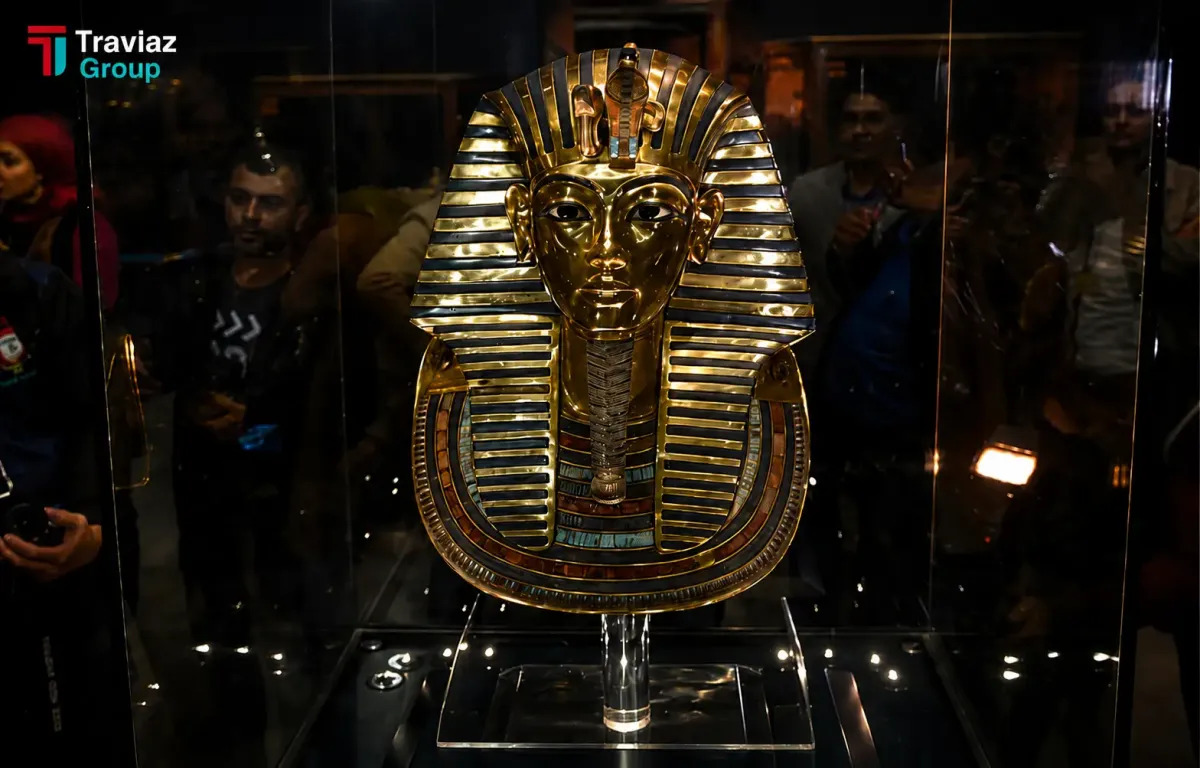
The two Tutankhamun halls in the Grand Egyptian Museum are the beating heart of the museum and the first destination for any visitor in the world. For the first time in history, the complete collection of 5,398 pieces is displayed in one place, after being distributed among several museums for long decades.
The two halls cover 7,000 square meters and were designed in the style of the king's original tomb in the Valley of the Kings, with temperature and humidity control systems to protect the sensitive pieces.
The golden mask of Tutankhamun is the centerpiece of the collection and the most iconic symbol in the history of Egyptian antiquities. Alongside it are three nested coffins, one of pure gold weighing 110 kilograms, and two of gold-plated wood.
The golden throne inlaid with silver shows an intimate scene of the king and his wife Ankhesenamun, and is one of the pieces that leaves visitors astonished by the precision of its details.
The statue of the god Anubis, the royal jewelry, hunting tools, and funerary furniture are all displayed within their original context. It should be noted that Tutankhamun's mummy will not be transferred from the Valley of the Kings and will remain in its original location forever. Visiting in the early morning when the museum opens is best to avoid the crowds in these two halls specifically.
The Solar Boat of Khufu
Khufu's wooden solar boat is one of the rarest and oldest preserved boats in the history of humanity, dating back approximately 4,600 years. It was transferred from the old Solar Boat Museum in Giza in August 2021 to find its new home in a dedicated wing within the Grand Egyptian Museum complex.
The boat itself is an engineering marvel believed to have been used to transport the king to the afterlife or in his journeys with the sun god Ra.
The wing includes interactive displays explaining the boat's probable purpose, method of construction, and the secrets of its preservation for thousands of years.
A second boat belonging to Khufu is still undergoing restoration and reassembly, and will be displayed beside the first to make this the first time visitors have seen both boats together in history.
Architectural Highlights: The Hanging Obelisk, the Atrium, and the Ramesses II Statue
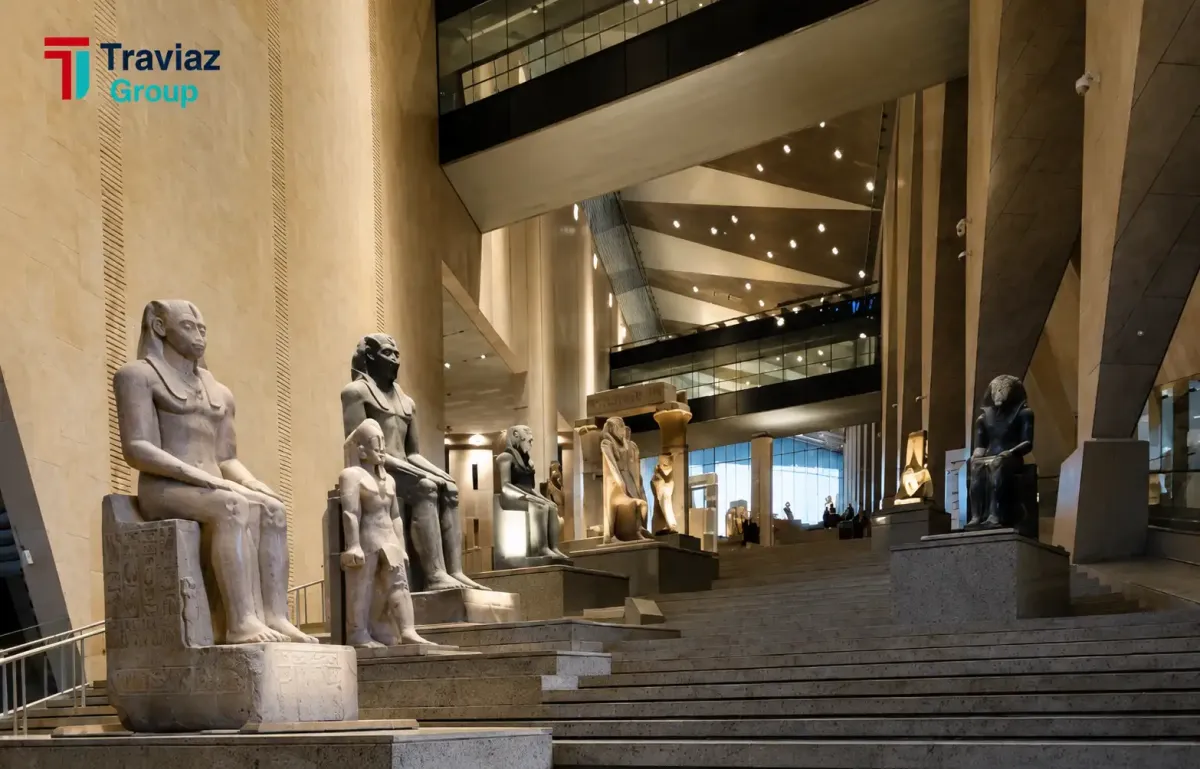
At the main entrance of the Grand Egyptian Museum, the hanging obelisk of Ramesses II welcomes you, a 3,200-year-old obelisk measuring 16 meters suspended in the air in an unprecedented engineering design.
The suspension allows visitors to see the hieroglyphic inscriptions from all sides at a 360-degree angle, which cannot be achieved with ordinary obelisks erected on the ground. This obelisk alone is worth a long pause before entering.
The Grand Atrium is the heart of the Grand Egyptian Museum, extending across 10,000 square meters with a glass ceiling through which natural sunlight pours.
The massive statue of Ramesses II welcomes visitors at the entrance at a height of 11 meters and weighing 83 tons, transferred from Ramesses Square in Cairo in 2006 in an engineering operation of extreme complexity. From inside the Atrium, the Giza Pyramids can be seen directly through the transparent glass facade, an unforgettable sight.
The Grand Staircase
The Grand Staircase is more than a bridge between galleries, it is a unique exhibition extending across 6,000 square meters over six stories. The staircase houses more than 60 artifacts arranged along four thematic axes: the royal image, temples, gods and kings, and then the funerary section.
Upon reaching the upper floor, the Grand Egyptian Museum rewards you with a panoramic view directly overlooking the Giza Plateau and the three pyramids.
A practical tip: the Atrium and the Grand Staircase remain open an additional hour after the twelve main galleries close, so save them for the end of your visit if time is short.
Visiting with Families: The Children's Museum and Comfort Features
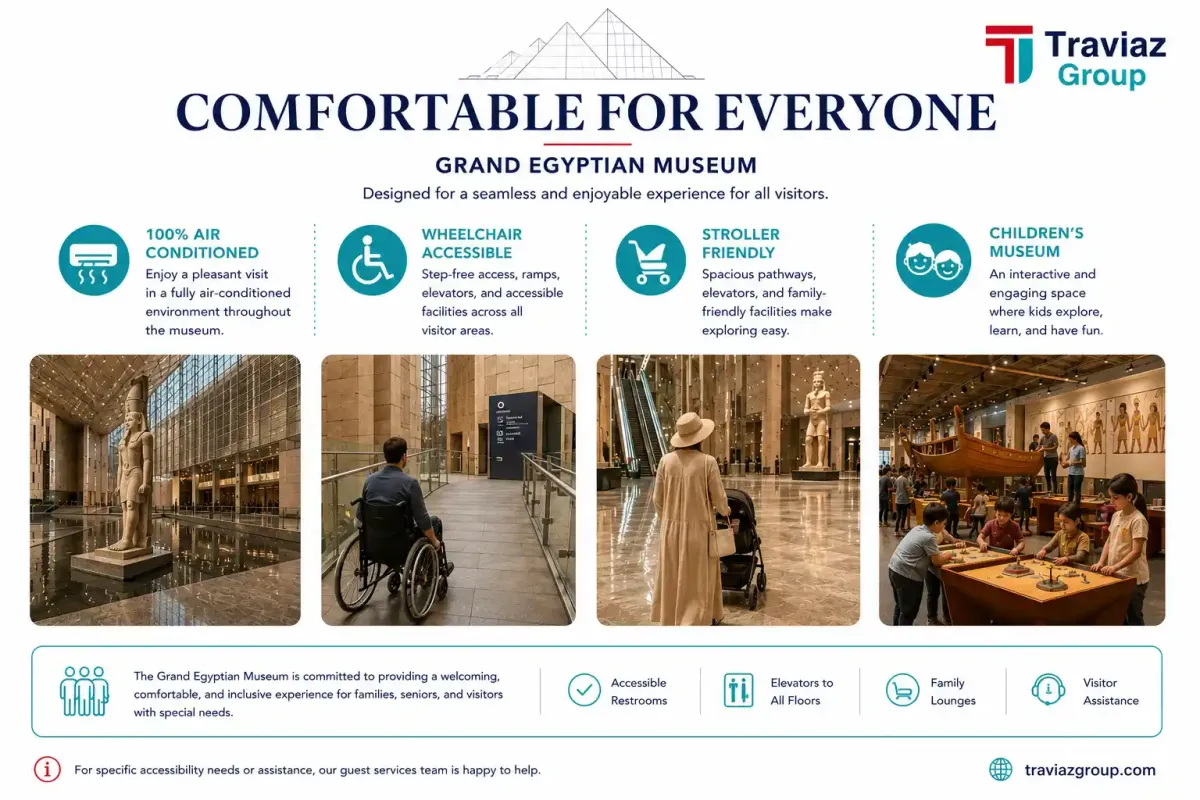
The Grand Egyptian Museum is among the most family- and child-friendly museums in the world, thanks to a design that accommodates the needs of all age groups. The spacious areas, comfortable passageways, and full air conditioning make the visit enjoyable even at the peak of the Egyptian summer heat.
Combining a visit to the pyramids in the morning and the museum in the afternoon in one organized day is possible without exhausting children.
Engaging Children: The Children's Museum and Interactive Experiences
The Children's Museum in the Grand Egyptian Museum is dedicated to children aged 6 to 12, extending across 5,000 square meters designed for learning through play. It includes interactive screens, augmented reality technology, and educational games that take the child on an enjoyable journey through ancient Egyptian civilization.
Orientation sessions and guided programs are available in both Arabic and English, and some activities may require advance booking or small additional fees.
Solving Cairo's Heat Problem
The Grand Egyptian Museum has a complete central air conditioning system covering all galleries, passageways, and communal areas without exception. This fundamental difference from the old Egyptian Museum in Tahrir, which lacked any real air conditioning, makes the visit comfortable in any season. It is advisable to bring a light jacket in winter, as temperatures inside the galleries may be relatively cool compared to outside.
Universal Accessibility
The Grand Egyptian Museum was designed to accessibility standards that match the best museums in the world. Free wheelchairs are available at the main entrance in exchange for a deposit of an identity card, while golf carts inside the complex provide visitors with disabilities easy mobility.
Panoramic lifts connect all floors, dedicated stroller routes are available in all galleries, and fully equipped restrooms are found on every floor.
Persons with disabilities enter the Grand Egyptian Museum free of charge, and their companion receives a 50% discount on the ticket price. Those with special needs are advised to contact the visitor services team in advance via email at accessibility@gem.eg.
Dining, Shopping, and Photography at the GEM
The Grand Egyptian Museum provides a complete commercial area giving visitors an organized break between galleries without needing to leave the complex. Restaurants and cafes are intelligently distributed throughout the complex, with options to suit all tastes and budgets. Prices are reasonable compared to similar international museums, and a full lunch ranges between 8 and 15 US dollars.
Restaurants and Cafes: A Selection Guide
Zooba is the first choice for those wanting an authentic Cairo street food experience in a clean and contemporary setting. The chain founded in 2013 serves traditional Egyptian bread, feteer, and juices in traditional vessels reflecting popular Cairo culture.
Ratios is the ideal choice for those wanting a break from Egyptian food with the best sandwiches and pastries in Egypt, and its museum branch is one of its newest outlets. 30 North serves locally-sourced coffee from a chain spread across Cairo, and is an excellent alternative for visitors seeking an authentic experience away from international chains.
Photography Rules: A Photographer's Guide
The Grand Egyptian Museum allows personal photography with cameras and phones in all permanent galleries without exception, a fundamental improvement compared to the old museum in Tahrir. A single exception applies: inside the two Tutankhamun halls, still photography is permitted but video recording is not, to maintain the flow of visitors within the two halls. Selfie sticks, tripods, and drones are prohibited inside the museum and anywhere in Egypt for that matter.
Photography is permitted for personal use only, while commercial use requires prior written permission from the museum's management. Secure luggage lockers are available at the entrance for large equipment that is not permitted inside.
The finest photography spots are the Grand Staircase and the outdoor courtyard that frames the Grand Egyptian Museum and the pyramids together in a single shot.
The Gift Shop
The Grand Egyptian Museum houses the largest gift shop in Egypt, selling high-quality museum reproductions of the most famous artifacts. Papyri, jewelry, amulets, antiquity replicas, archaeological books, and exclusive museum merchandise are all available at a quality befitting this landmark.
Avoid purchasing souvenirs from street vendors outside the museum, as products inside the official shop carry a quality guarantee and directly support the institution.
Best Hotels Near the GEM: From Luxury Resorts to Budget Stays
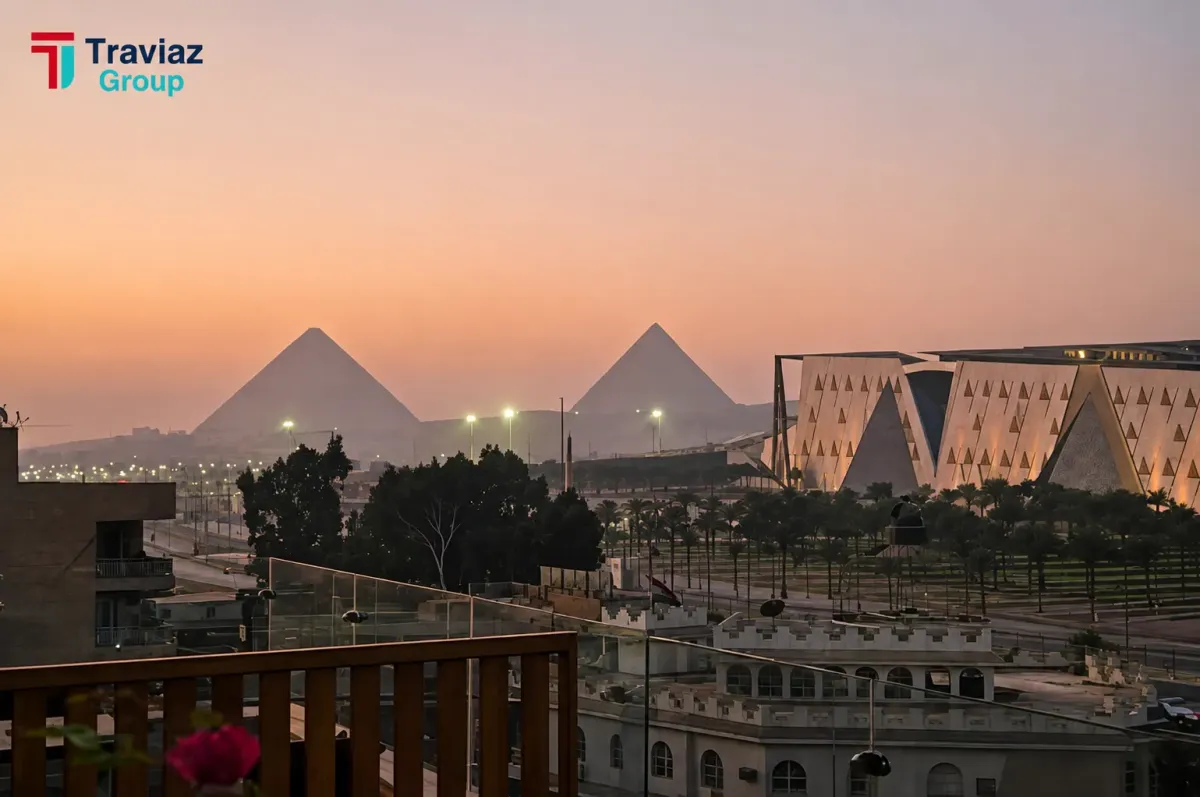
The Giza area offers options to suit all budgets, from luxury hotels with pyramid views to comfortable budget accommodation. Steigenberger Pyramids Cairo is located directly opposite the Grand Egyptian Museum, 3 kilometers from the pyramids, and is the ideal choice for those wanting the shortest possible distance between the hotel and the museum.
The rooms are equipped with private balconies overlooking the pyramids, and the hotel includes two outdoor pools, a health center, and a spa. Marriott Mena House is a legendary five-star hotel on the slopes of the Giza Plateau, having hosted throughout its history figures of the stature of Winston Churchill and Agatha Christie.
Remal Pyramids Hotel combines an excellent location near the museum and pyramids with reasonable prices and a direct view of the pyramids from the rooftop. Royal Great Pyramid Inn is the best budget option, located steps from the Giza Plateau and offering a panoramic view of the pyramids and the museum at a cost accessible to all.
Can a private tour with Traviaz be booked that includes the Grand Egyptian Museum and the Pyramids?
Yes, Traviaz offers comprehensive packages combining the Grand Egyptian Museum and the Giza Pyramids with an expert English-speaking guide, private air-conditioned transport, and pre-secured Skip-the-Line tickets. Contacting the Traviaz team allows you to customize the tour to suit your time and interests, whether a half-day or full-day visit.
The Grand Egyptian Museum represents one of the greatest cultural achievements of the twenty-first century, and an indispensable stop on any trip to Egypt. Book your ticket early through the official website www.visit-gem.com, and let Traviaz handle the full organization of your experience so you return with memories that will last a lifetime.
FAQs
Is the Grand Egyptian Museum fully open now?
Yes, the Grand Egyptian Museum officially opened on the first of November 2025 and all twelve of its galleries are currently open to visitors, including the two Tutankhamun halls.
What are the Grand Egyptian Museum's opening hours?
The museum opens daily from 8:30 AM until 6 PM, with an evening period extending until 8 PM on Wednesdays and Saturdays. It is advisable to avoid visiting on Fridays and Saturdays as these are the busiest days with Egyptian visitors.
What is the best time to visit the Grand Egyptian Museum and avoid crowds?
The first entry period at 8:30 AM is the quietest by far, heading directly to the two Tutankhamun halls upon entry. Midweek days from Tuesday to Thursday are considerably quieter than the weekend, and Fridays and Saturdays should be avoided as much as possible.
Can the Giza Pyramids be seen from inside the museum?
Yes, the pyramids are visible from inside the Atrium through the transparent glass facade, and can also be seen from the upper floor of the Grand Staircase through a large panoramic window that frames the scene with remarkable precision.
Is there an audio tour or app for the Grand Egyptian Museum?
There is no official audio guide as yet, but the official "GEM Visit" app is available free of charge on mobile and operates using indoor location technology in both Arabic and English. The app provides detailed maps and suggested routes for the most prominent exhibits in each gallery.
Can the pyramids and the museum be combined in a single day?
Yes, and it is the optimal arrangement recommended by most guides, beginning with the pyramids in the morning when they open then heading to the Grand Egyptian Museum after lunch. The distance between the two sites does not exceed two kilometers, covered in 5 minutes by car or Uber.
What are the dress code and bag rules at the Grand Egyptian Museum?
There is no official dress code, and comfort is the priority with comfortable footwear and light clothing in summer. Large bags are subject to security checks at the entrance, and free luggage lockers are available for large items outside the entry gates