
Karnak Temple: Why It Is The Most Incredible Ancient Complex In Egypt?
Karnak Temple is the largest religious complex built in the ancient world, located on Luxor’s East Bank, approximately 2.7 kilometers north of Luxor Temple. Spanning more than 80 hectares, it features monumental gateways, towering obelisks, sacred lakes, and temples developed by around 30 pharaohs over 2,000 years.
Visiting in 2026 offers an opportunity to explore this extraordinary legacy and the nearby Avenue of Sphinxes connecting Karnak with Luxor Temple. With Traviaz, you can arrange transportation, an Egyptologist guide, and entrance tickets according to your chosen package, making your visit easier to plan.
Essential Planning and Logistics
Getting the practicalities right before you arrive at Karnak Temple saves you time, money, and unnecessary stress. From clearing up the common location confusion to knowing exactly what to pay and what to wear, here is everything you need before your visit:
Is Karnak Temple in Luxor or Cairo?
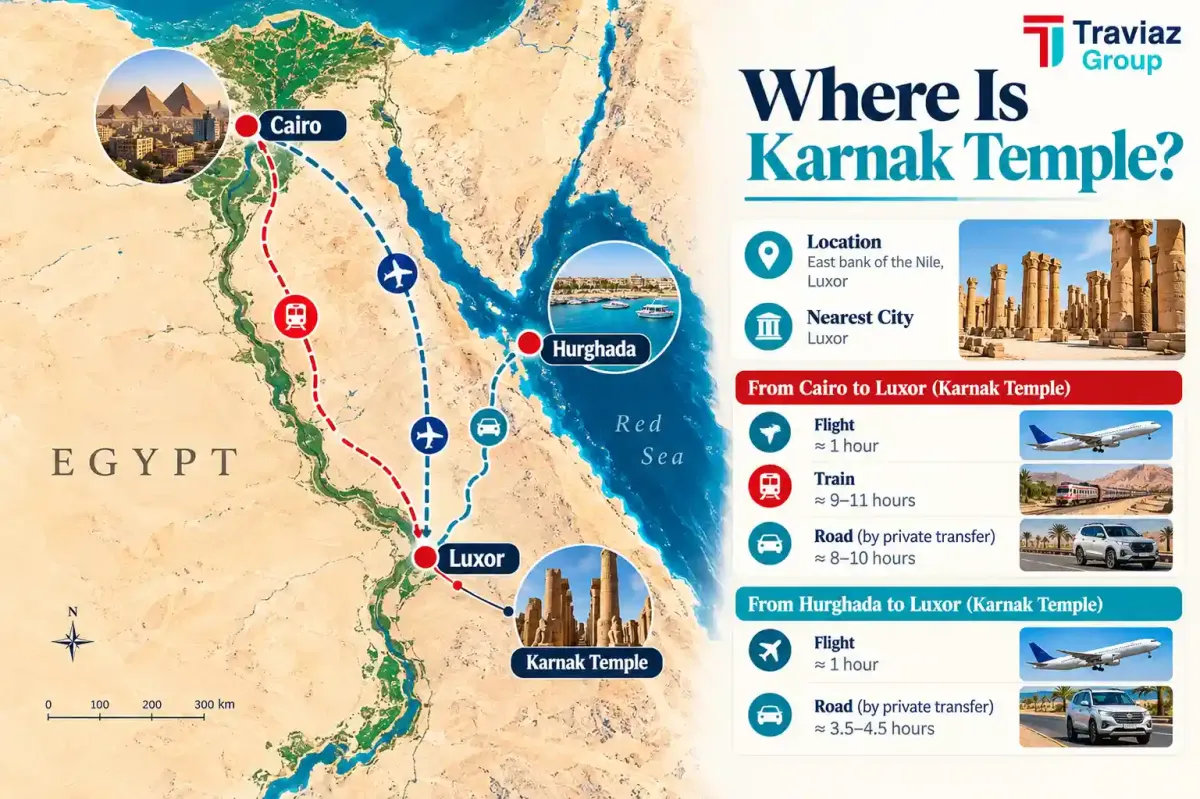
Karnak Temple is located in Luxor city, not Cairo, and confusing the two cities can cause real disruption to travel plans, especially for first-time visitors to Egypt. Luxor is in Upper Egypt approximately 670 kilometers south of Cairo, while Karnak Temple sits in the northern part of the city on the East Bank of the Nile.
Getting There
The right way to reach Luxor depends entirely on where you are starting from. Each route has its own trade-offs in terms of time, comfort, and cost:
- From Cairo: a domestic flight takes around one hour and is the fastest and most comfortable option, while the air-conditioned overnight train takes approximately 10 to 12 hours, and traveling at night can help save the cost of a hotel night.
- From Hurghada: the distance is approximately 285 kilometers and the drive takes 4 to 5 hours, making a one-day visit possible when departing before dawn. Traviaz offers trips from Hurghada to Luxor that include an air-conditioned vehicle, a tour guide, and tickets according to the package details.
- Within Luxor: a taxi from the hotel area takes around ten minutes and may cost approximately 50 EGP. Uber is also available in Luxor and gives you a fare estimate before the ride, which removes the need to negotiate. Local minibuses heading to Karnak depart from behind the train station, and it is also possible to walk from Luxor Temple along the Corniche in around 35 minutes.
2027 Visitor Information
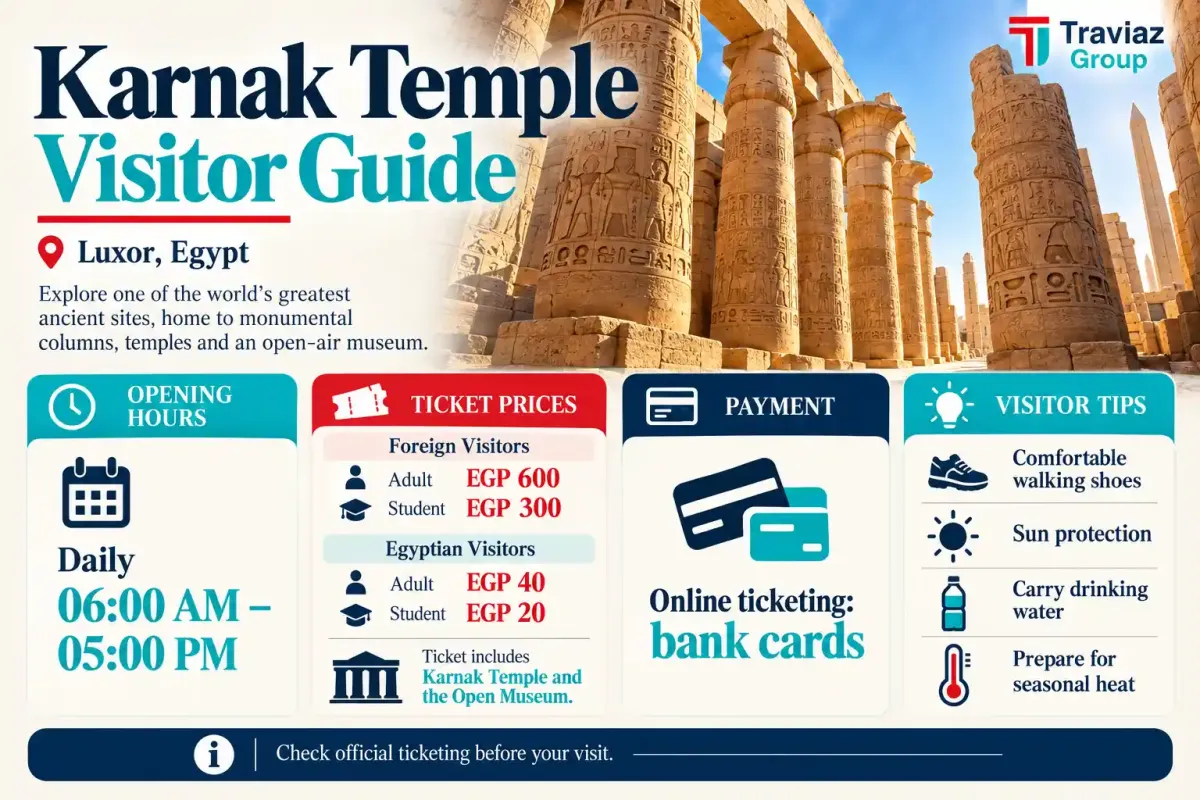
Before heading to the site, confirm these details as opening hours and fees can change:
- Opening hours: from 6:00 AM to 5:00 PM daily, with last entry at 4:00 PM. For photography, sunrise gives you soft side light that highlights the column carvings, while the golden hour before closing brings warm tones to the Sacred Lake reflections.
- Entry ticket: 600 EGP for foreign adults, 300 EGP for students, and free entry for children under six.
- Mut Temple precinct: requires a separate ticket of 200 EGP additional.
- Advance booking: the possibility of booking through egymonuments.gov.eg can be checked to reduce waiting time.
- Phone photography: free according to the information stated.
- Payment: bank cards are accepted at the official ticket window, but keeping a cash amount in Egyptian pounds remains useful as some service points inside the complex may not accept cards.
During summer, especially in August when temperatures exceed 40 degrees, wearing light, pale-colored cotton clothing is essential, along with a wide hat and sunscreen with factor 50, and carrying at least two liters of water.
Wearing closed, comfortable shoes with a stable sole is also recommended, as sandy paths and old stone floors can make open sandals unsuitable for a three to five hour walk across uneven terrain.
The Architectural Wonders: A First-Hand Walkthrough
Karnak Temple is not a single building but a complete archaeological city containing temples, sacred courtyards, obelisks, and lakes.
The visit typically begins from the northwest entrance and progresses through a series of massive gateways known as Pylons toward the more sacred areas inside the complex.
Each section you pass through was built by a different pharaoh, which means the architecture shifts subtly as you move deeper in:
The Avenue of Sphinxes
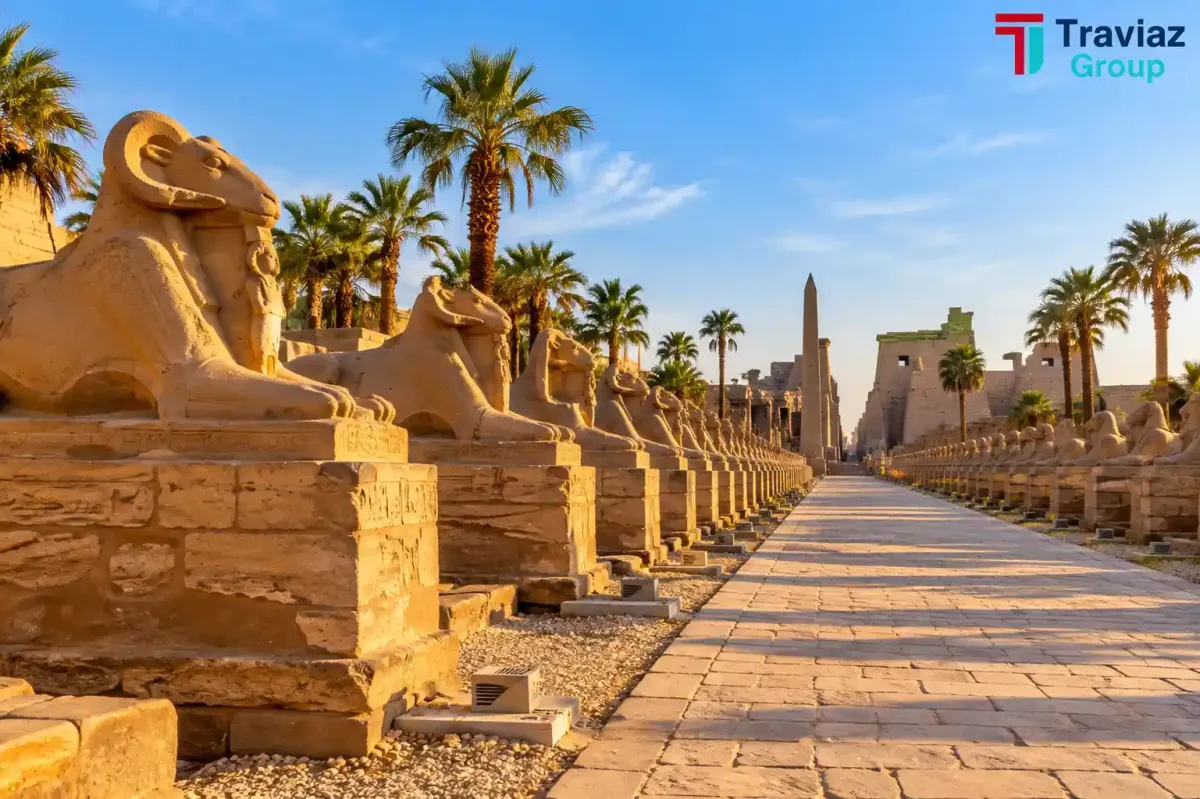
Before entering the Karnak Temple Complex, the Avenue of Sphinxes stretches southward toward Luxor Temple over a distance of approximately 3 kilometers.
Statues of sphinxes with ram heads line both sides, associated with the god Amun-Ra.
The avenue was used in religious processions during the annual Opet Festival, when statues of the gods traveled between the temples amid celebrations.
Near the Karnak Temple entrance, the ram-headed sphinxes appear in formations that reflect different stages of the area's development.
The First Pylon and Great Court
The First Pylon is the most massive of Karnak Temple's gateways and one of the largest archaeological gateways in Egypt, standing more than 40 meters tall with a width of approximately 113 meters.
Its construction was never completed, and some traces of the unfinished building work are still visible today, which gives you a rare glimpse into how these massive structures were actually raised.
Behind the gateway extends the Great Court, a space that was used to receive public gatherings during major festivals and religious occasions.
The Great Hypostyle Hall
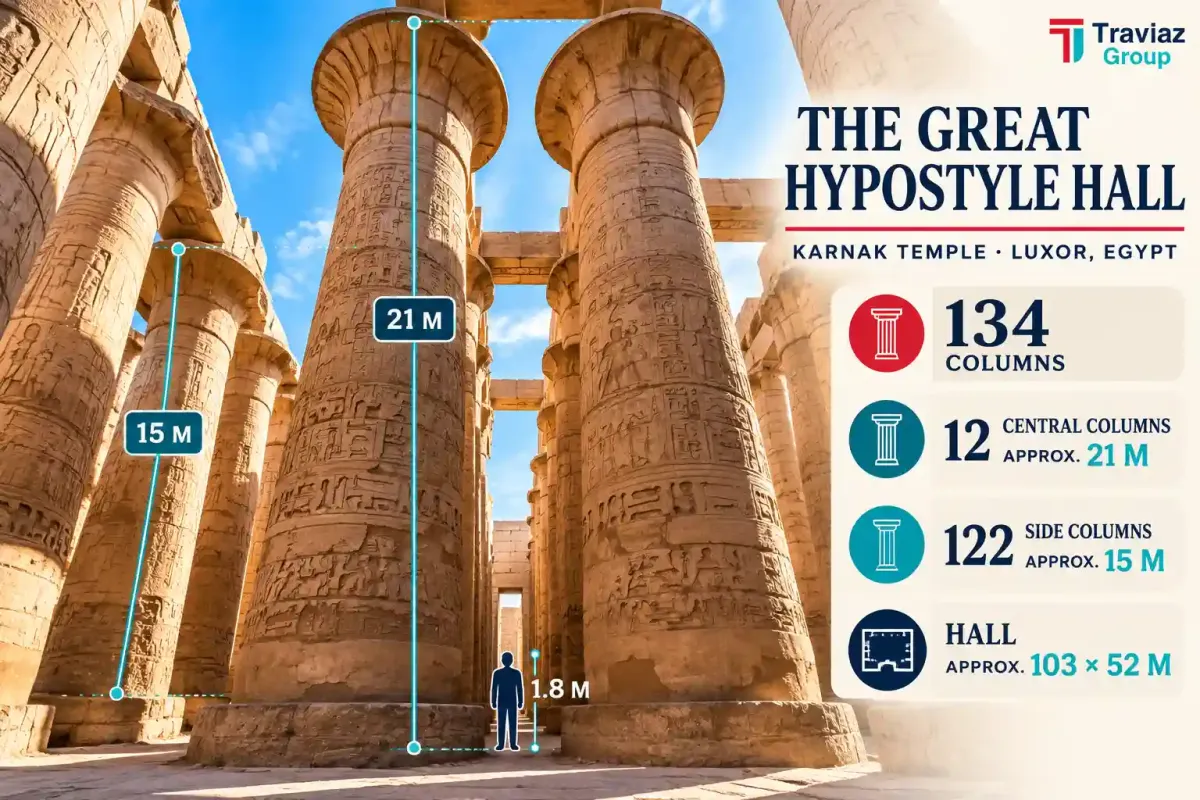
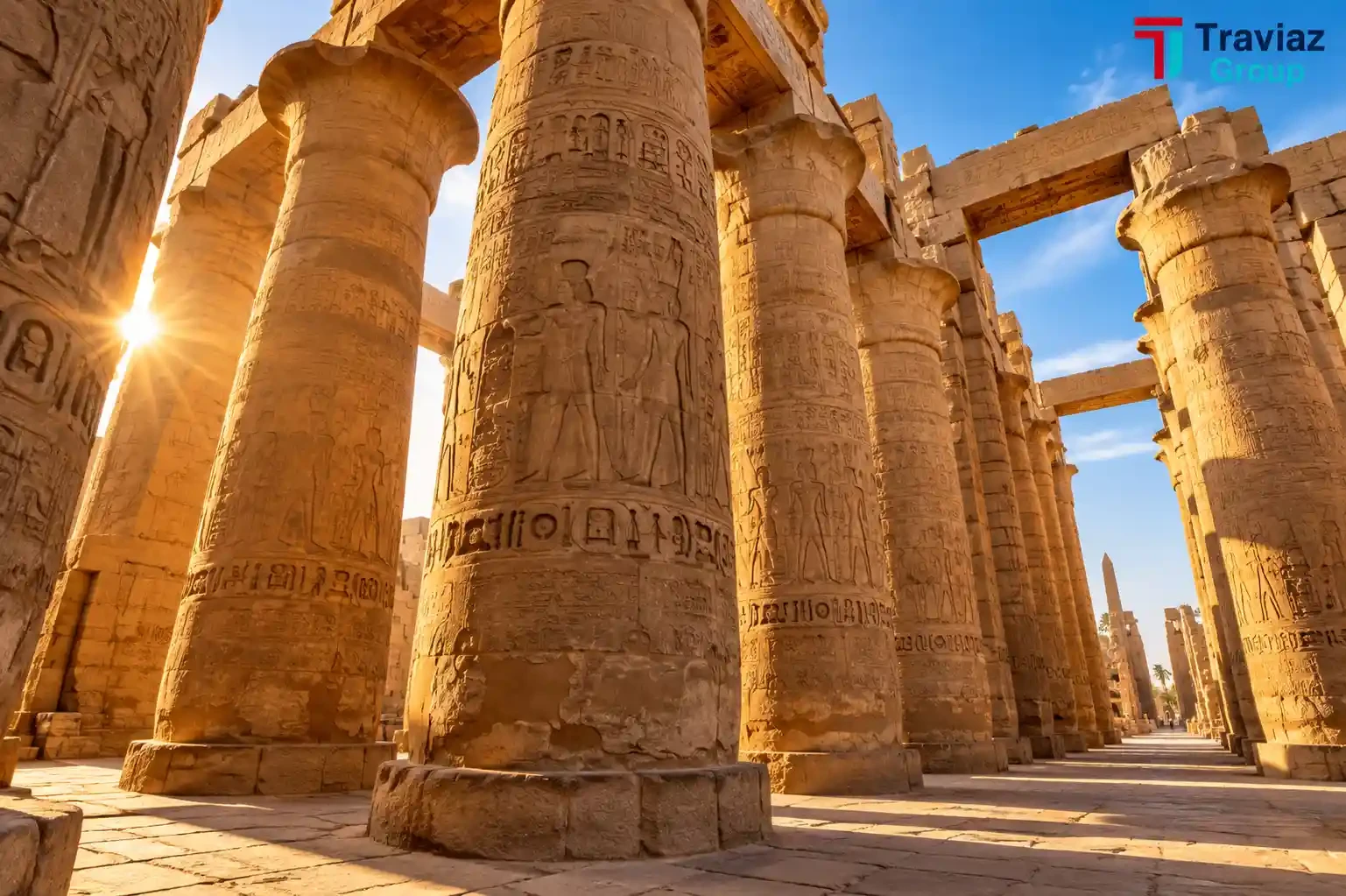
The Great Hypostyle Hall is one of the most awe-inspiring spaces in the ancient world, extending across approximately 5,000 square meters and containing 134 massive sandstone columns arranged in 16 rows.
The twelve columns in the central aisle reach approximately 24 meters in height, and the circumference of each exceeds 10 meters.
To put that in perspective for families visiting with children, the entire Leaning Tower of Pisa could fit inside this hall with room to spare, and a single column stands at the height of roughly an eight-story building.
Think of Karnak Temple as the largest LEGO set the ancient world ever produced, where each ruler added new sections over two thousand years and tried to outbuild everyone who came before him.
The Obelisks of Thutmose I and Hatshepsut
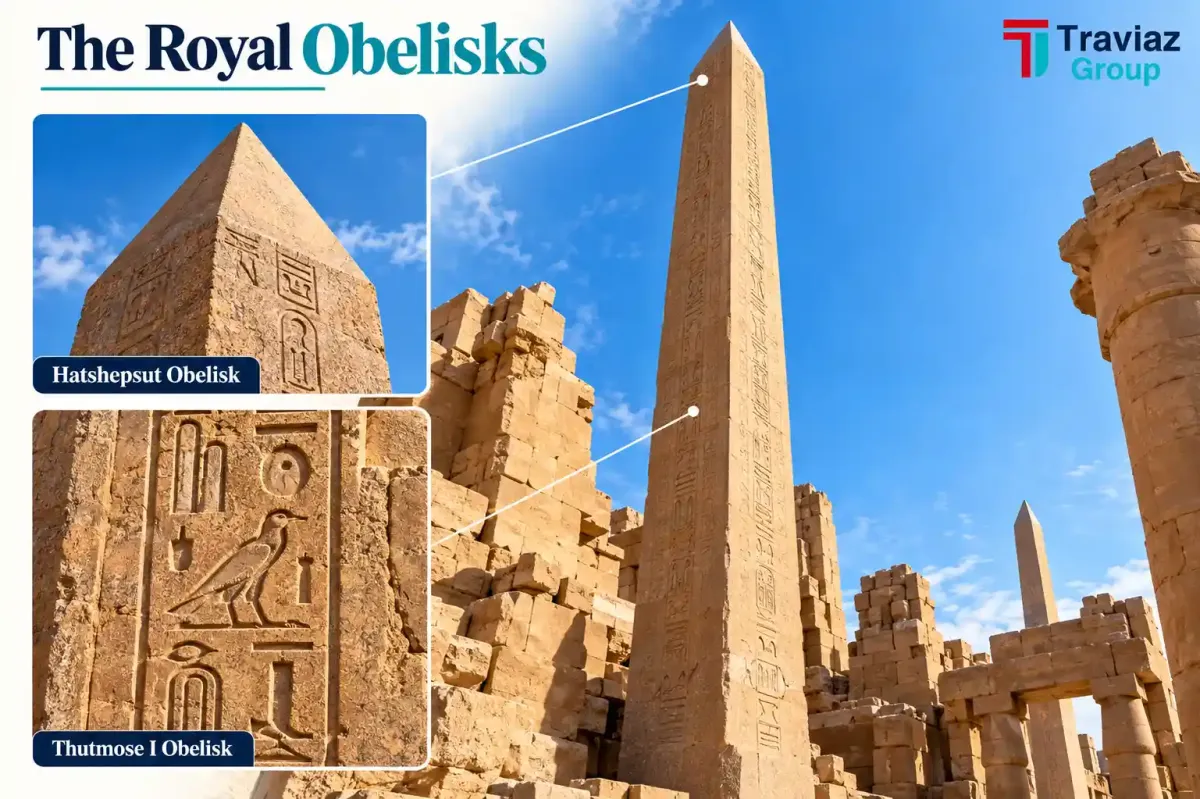
Behind the Great Hypostyle Hall, two prominent obelisks appear in a scene that reflects the ancient Egyptians' extraordinary skill in carving and raising massive stones.
The obelisk of Thutmose I stands approximately 21 meters tall and weighs 143 tons, while Hatshepsut's famous obelisk rises to approximately 29 meters and is estimated to weigh around 328 tons, making it at the time of its erection one of the tallest obelisks in the world.
Thutmose III built stone walls around the base of Hatshepsut's obelisk to hide it from view, but these walls also helped protect parts of its original colors, traces of which remain visible today.
The Sacred Lake
The Sacred Lake sits within the Karnak Temple complex, measuring approximately 120 meters in length and 77 meters in width.
Its waters reached it from the Nile through channels, and the priests used it for purification rituals before performing religious rites.
The lake was linked in ancient Egyptian beliefs to the primordial waters from which life emerged at the beginning of creation.
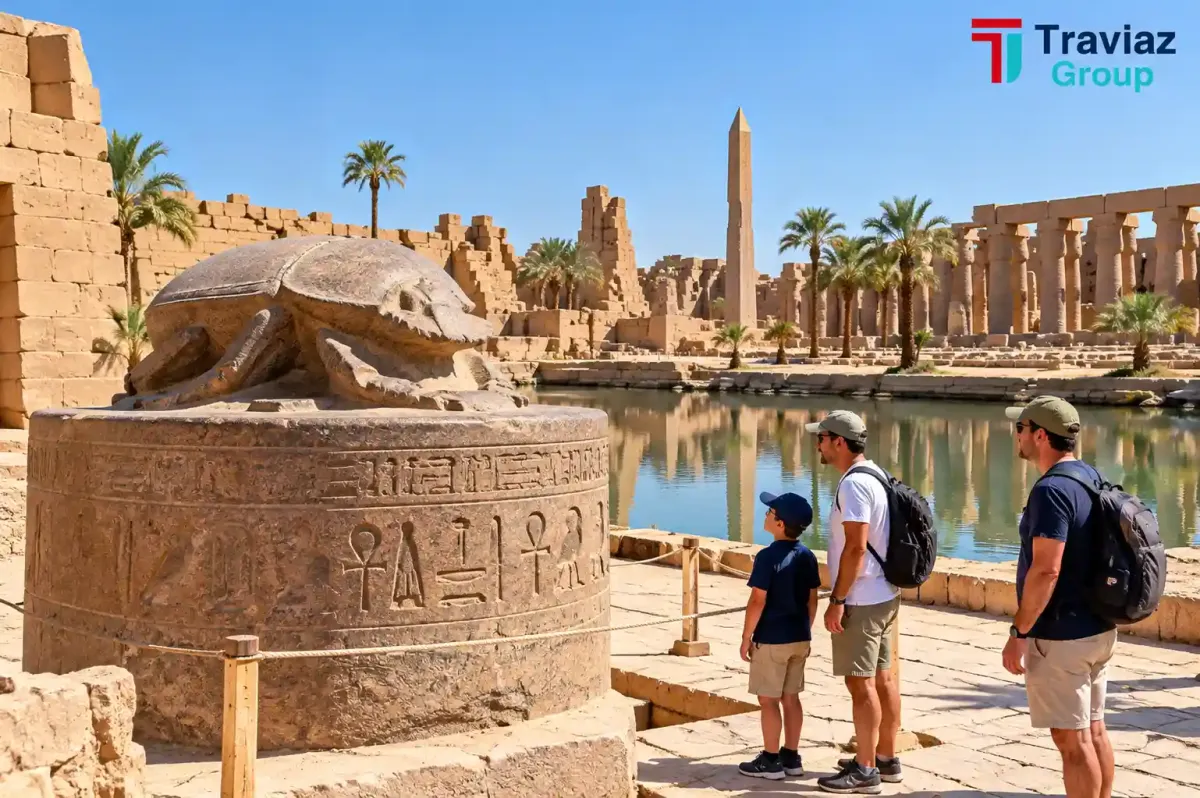
On the northern bank of the lake stands a large scarab statue associated with the god Khepri, connected to renewal and the rising sun.
Popular tradition holds the belief that circling the statue seven times brings good luck, which makes the area a beloved stop for many visitors and a natural spot to pause before moving to the next section of the complex.
Beyond the Crowds: The Luxury History Enthusiast Perspective
Most visitors to Karnak Temple focus on the Amun-Ra precinct, the Hypostyle Hall, and the Sacred Lake and then leave. If you have four hours or more, the complex rewards those who venture off the main axis with quieter spaces, older chapels, and details that most tour groups never reach:
Precincts of Amun, Mut, Montu, and Khonsu
The various Karnak Temple precincts are spread across the complex's area, and exploring the lesser-known regions requires extra time and a willingness to walk away from the usual tourist path:
- Amun-Ra Precinct: the main and largest area, and the destination most visitors head to.
- Mut Precinct: located to the south and requires a separate ticket of 200 EGP, containing a large number of granite statues associated with the goddess Sekhmet, many of which remain in place exactly where they were found.
- Montu Precinct: located to the north and is distinguished by its relative quiet and fewer visitors, associated with Montu the god of war.
- Khonsu Temple: located in the southwest corner of the complex and is considered a distinctive example of smaller Egyptian temples that have retained much of their architectural layout, giving you a sense of how a complete temple was meant to feel when its rooms were still connected.
The Open-Air Museum
The Open-Air Museum is located in the northwest section of the main precinct and contains a collection of archaeological structures that have been reassembled and displayed on site.
Among its most notable exhibits is the Chapelle Blanche, or the White Chapel of King Senusret I from the Middle Kingdom era, an important model of sculpture and hieroglyphic carvings that reflect Egyptian art from that period.
For serious history enthusiasts, this section alone justifies adding an extra hour to the visit.
The Meaning Behind the Stone
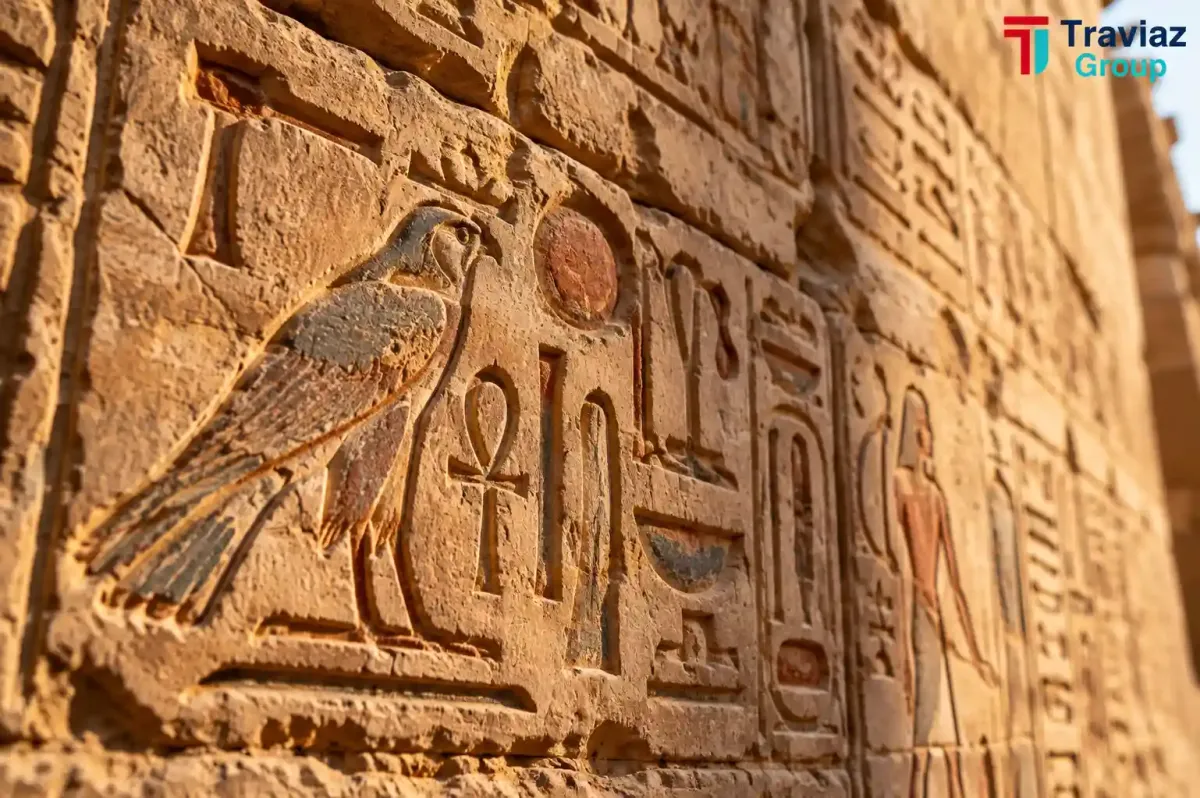
One detail that visitors may not notice during their tour of Karnak Temple is that many of the surfaces were once covered in vivid colors, and some sections were adorned with gold.
The columns, courtyards, and obelisks did not look the way they appear today in plain stone, but were far more vibrant in terms of colors and decoration.
Some positions protected from weather have allowed limited traces of the original colors to survive, and parts of them can be observed on some of the upper column surfaces.
These details give you a clearer picture of what Karnak Temple may have looked like three thousand years ago, when it functioned as the beating heart of Egyptian religious life rather than an archaeological site.
Specialized Experiences
Karnak Temple offers more than a single daytime walkthrough. Depending on who you are traveling with and what you want from the visit, there are specific experiences worth planning for separately:
Karnak for Kids
Karnak Temple can be presented to children as an adventure among monuments built by successive kings over two thousand years, with each ruler adding new sections to the complex in an attempt to leave their own mark.
The giant LEGO analogy works well here, and the sheer scale of the columns gives children something genuinely impossible to ignore.
The large scarab statue beside the Sacred Lake is a beloved interactive stop, where children can hear the popular story about circling it seven times to bring good luck.
The hieroglyphic carvings can also be explained as an ancient picture book that tells the stories of kings, gods, and battles using symbols and images rather than an alphabet.
The Sound and Light Show
The sound and light show takes place in the evening and includes sessions in English and other languages according to the available schedule.
The experience lasts around one hour, during which visitors move between sections of the illuminated site accompanied by a dramatic narration of Karnak Temple's history.
The nighttime visit offers a different perspective from the daytime tour, especially when seeing the massive columns under the lighting designed for the show.
The area near the Sacred Lake is one of the most distinctive viewing spots, as the lights reflect on the water's surface and add a visual dimension to the scene that the daytime visit cannot replicate.
The show is worth adding for anyone spending more than one evening in Luxor.
Photography Spots
If you are planning to capture distinctive photos inside the Karnak Temple complex, three locations are worth attention:
- From the central aisle inside the Hypostyle Hall, where the tall columns appear in a deep architectural composition, with the sun kept behind the shoulder rather than pointing the lens directly toward it.
- At the Sacred Lake, to capture the reflection of the obelisk and columns on the water's surface during the golden hour before closing.
- In the first hours of the morning, preferably before 8 AM, to take advantage of the side light that highlights the details of the stone carvings before the crowds arrive.
Safety, Comfort, and Accessibility
Knowing what to expect on the ground makes a real difference to how smoothly the visit goes.
Here is an honest overview of safety, scams, accessibility, and what you will find inside the complex:
Is It Safe?
Karnak Temple is one of the well-known tourist sites in Egypt, and tourist police are present at the entrances and throughout the complex.
As with any busy tourist site, following official instructions, watching personal belongings, and dealing with accredited service providers is advisable.
Visitors of all nationalities visit Karnak Temple regularly without incident, and the presence of organized tour groups and security personnel keeps the main areas well-supervised.
Avoiding Scams
Some visitors encounter persistent vendors near the outer entrance or at the First Pylon. A few straightforward habits keep these interactions manageable:
- Use the phrase "no thank you" clearly, then continue walking without stopping if you are not interested in buying.
- Do not accept a gift or unrequested service before agreeing on a price, to avoid being asked to pay for it afterward.
- Arriving with a licensed Traviaz guide removes most of these friction points entirely, as the guide handles vendor interactions and keeps the group moving without the need to negotiate on the spot.
Accessibility
Some of the main paved paths allow for wheelchair movement to a reasonable degree, but other parts of Karnak Temple contain sandy floors and uneven passages that can make movement more difficult.
If you have mobility needs, contacting Traviaz before the visit to identify the most suitable route and arrange for available assistance is the most reliable approach, as conditions on specific paths can change with ongoing restoration work.
Amenities
Karnak Temple has service facilities including restrooms near the main entrance, alongside places to buy drinks and some rest options near the Sacred Lake.
Restaurants offering views of the Nile can be found on the Corniche road between Karnak Temple and Luxor Temple, approximately five minutes away by car, and are worth factoring into the day if you are combining both sites.
Your Journey Starts with Traviaz
Karnak Temple is not simply Egypt's largest ancient monument. It is the most concentrated accumulation of pharaonic ambition, artistry, and religious devotion that still stands anywhere on earth, built across two thousand years by rulers who each believed they were adding to something eternal.
No photograph prepares you for the scale of the Hypostyle Hall, and no description fully captures the stillness of the Sacred Lake at dawn.
Traviaz organizes private Egyptologist-led tours of Karnak Temple and the wider Luxor experience, with transport, tickets, and a licensed guide who knows how to turn stone and hieroglyphs into a story you will remember.
Whether you are joining from Cairo, arriving from Hurghada for the day, or building a full Nile cruise itinerary, the team handles the details so the experience stays with you and the logistics do not.
FAQs
How much time do you need at Karnak Temple?
A basic tour of Karnak Temple takes around three hours, which is the minimum to cover the main landmarks without feeling rushed. Those who want to visit the side precincts, the Open-Air Museum, and the Sacred Lake at a relaxed pace should ideally set aside four to five hours. If you are visiting Karnak Temple and Luxor Temple on the same day, dedicating most of the day to this combination is the most realistic approach.
Can you go inside the temples at Karnak Temple?
Yes, visitors can enter a number of the main areas, including the Great Hypostyle Hall, the Great Court, and some of the structures inside Karnak Temple. Specific interior sections may be temporarily closed due to restoration work or conservation reasons, so confirming the areas available at the time of the visit is advisable.
Is Karnak Temple the largest religious complex in the world?
Karnak Temple is considered one of the most massive religious complexes in the ancient world and one of the most significant archaeological religious sites in terms of area, the diversity of its structures, and the historical periods it witnessed. Its architectural extensions and its history spanning more than two thousand years make it one of the most prominent examples of the evolution of architecture and worship in ancient Egypt.
What should I wear to Karnak Temple?
Wearing clothing that covers the shoulders and knees is preferred out of respect for the site's cultural and historical character. In summer, choose light, pale-colored cotton clothing with a wide hat and sunscreen with factor 50. Closed, comfortable shoes with a stable sole are essential, as sandy paths and uneven surfaces across a complex this size will make open sandals a poor choice by the second hour